Global Nickel Price Tracker
Weekly Report | Week 38, 2026 (15–21 September 2026)


Weekly Report | Week 38, 2026 (15–21 September 2026)
Epignosis Insights' Global Nickel Price Tracker for Week 38 of 2026 finds the nickel market in a phase of controlled retreat. The benchmark London Metal Exchange (LME) cash contract averaged US$16,115 per tonne between 15 and 21 September, a decline of US$376 or 2.3% from the prior week, and printed its lowest official settlement of the year at US$16,055/t on 18 September.
The three-month contract followed the same path, averaging US$16,259/t against US$16,645/t a week earlier. Although the week-on-week loss was meaningful, the intra-week range was narrow at just US$115/t, which suggests that the heavy selling seen on 10–11 September has given way to consolidation rather than capitulation.
The dominant catalyst this week was policy rather than demand. Indonesia's decision to reset the benchmark price for low-grade limonite ore removed part of the cost floor that had supported prices since April, while a steady rise in exchange inventories confirmed that refined metal remains readily available. Offsetting these bearish forces, supply disruptions in Indonesia's industrial parks and an improving margin picture for Chinese stainless steel mills prevented a deeper slide. Our analysis indicates that prices have now given back almost all of the policy premium built during the second quarter, leaving the market 7.3% below its year-to-date average of US$17,383/t and 17.1% below the May peak of US$19,450/t.
Official settlement data from the London Metal Exchange shows a quiet but persistently soft trading week. Cash opened the period at US$16,135/t on 15 September, dipped to US$16,090/t the following day, briefly recovered to US$16,170/t on 17 September, and then fell to the year's low before closing the week at US$16,125/t on 21 September. On a close-to-close basis, the market lost just 0.5% against 14 September, indicating that most of the damage was done in the prior week when cash prices fell by about US$470/t across three sessions.
Early trading on 22 September pointed to a modest technical bounce, with the contract-for-difference series published by Trading Economics showing nickel near US$16,476/t, up 0.3% on the day. That platform linked the recovery to reports that smelters in the Morowali Industrial Park would curtail nickel pig iron (NPI) output due to an El Niño-related water shortage, with affected volumes potentially reaching about 100,000 tonnes. Epignosis Insights treats this rebound cautiously; similar short-covering rallies in July and August failed to hold above US$17,000/t once physical buying failed to follow.
Table 1: Weekly Nickel Price Snapshot
| Indicator | Week 38 (15–21 Sep) | Week 37 (8–14 Sep) | Change |
| LME cash, weekly average (US$/t) | 16,115 | 16,491 | −2.3% |
| LME 3-month, weekly average (US$/t) | 16,259 | 16,645 | −2.3% |
| LME cash, week close (US$/t) | 16,125 | 16,205 | −0.5% |
| LME cash, weekly high / low (US$/t) | 16,170 / 16,055 | 16,675 / 16,205 | - |
| Cash-to-3M spread, average (US$/t) | −144 | −154 | +10 |
| LME stocks, week end (t) | 278,526 | 274,332 | +4,194 |
| Indonesia nickel HMA (US$/t) | 16,698 (2H Sep) | 16,733 (1H Sep) | −0.2% |
Source: Epignosis Insights analysis of LME settlement data and ESDM reference prices..
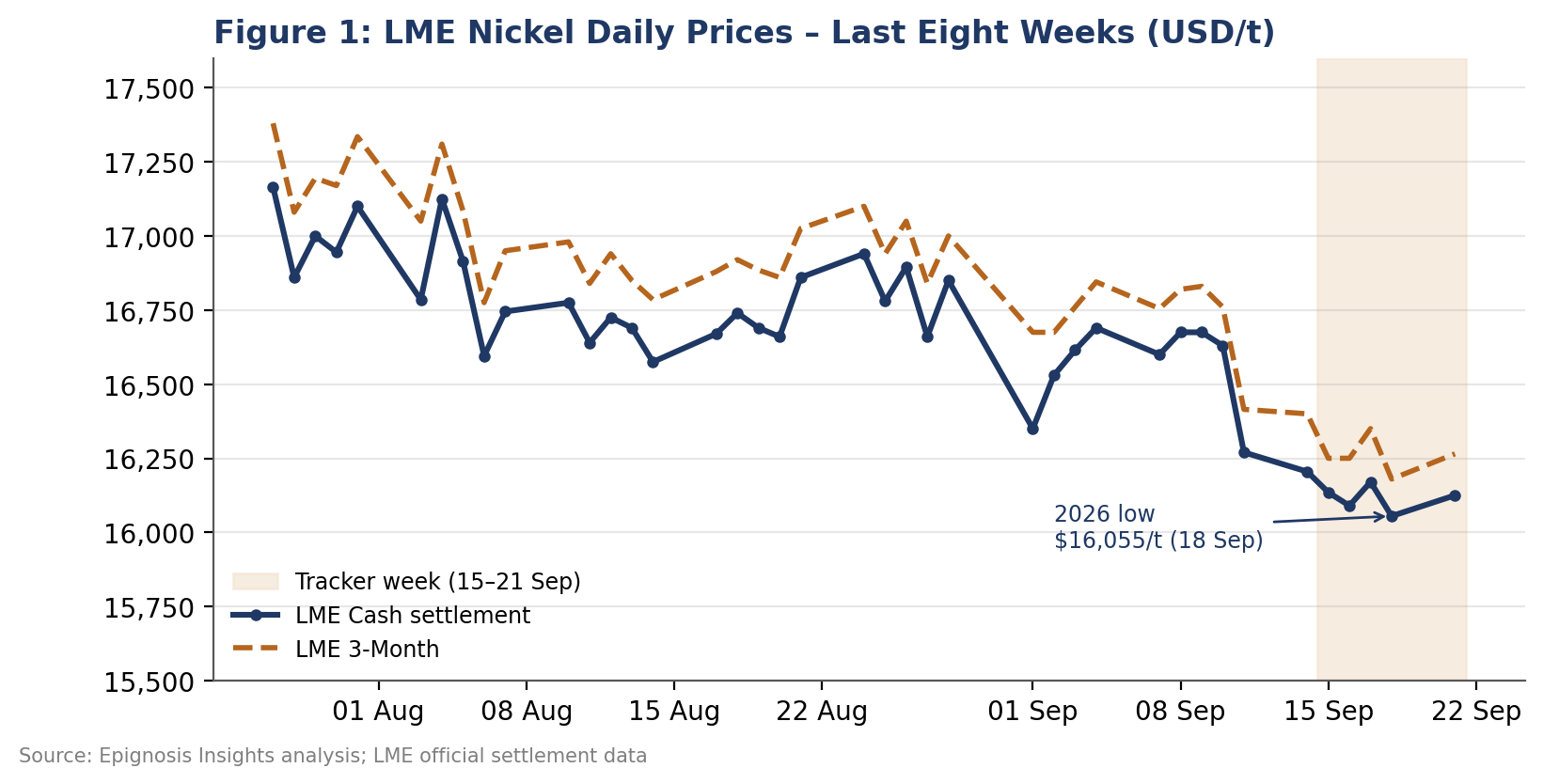
Figure 1: LME nickel cash and three-month prices over the last eight weeks, with the tracker week highlighted.
Placing the week in a longer frame shows how far the market has travelled in 2026. Monthly average cash prices climbed from US$17,844/t in January to a peak of US$18,805/t in May as Indonesia tightened ore quotas and introduced its first revised benchmark formula in April. Since then, each month has printed a lower average: US$17,664/t in June, US$16,657/t in July and US$16,766/t in August. The September month-to-date average of US$16,388/t is the weakest monthly reading of the year and sits roughly US$1,000/t below the year-to-date mean.
This pattern is consistent with a market that priced in supply tightness faster than the physical balance could deliver it. Our tracking suggests that the second-quarter rally was driven by expectations of a deficit, whereas the third quarter has been shaped by the reality of ample stocks and slow downstream consumption.
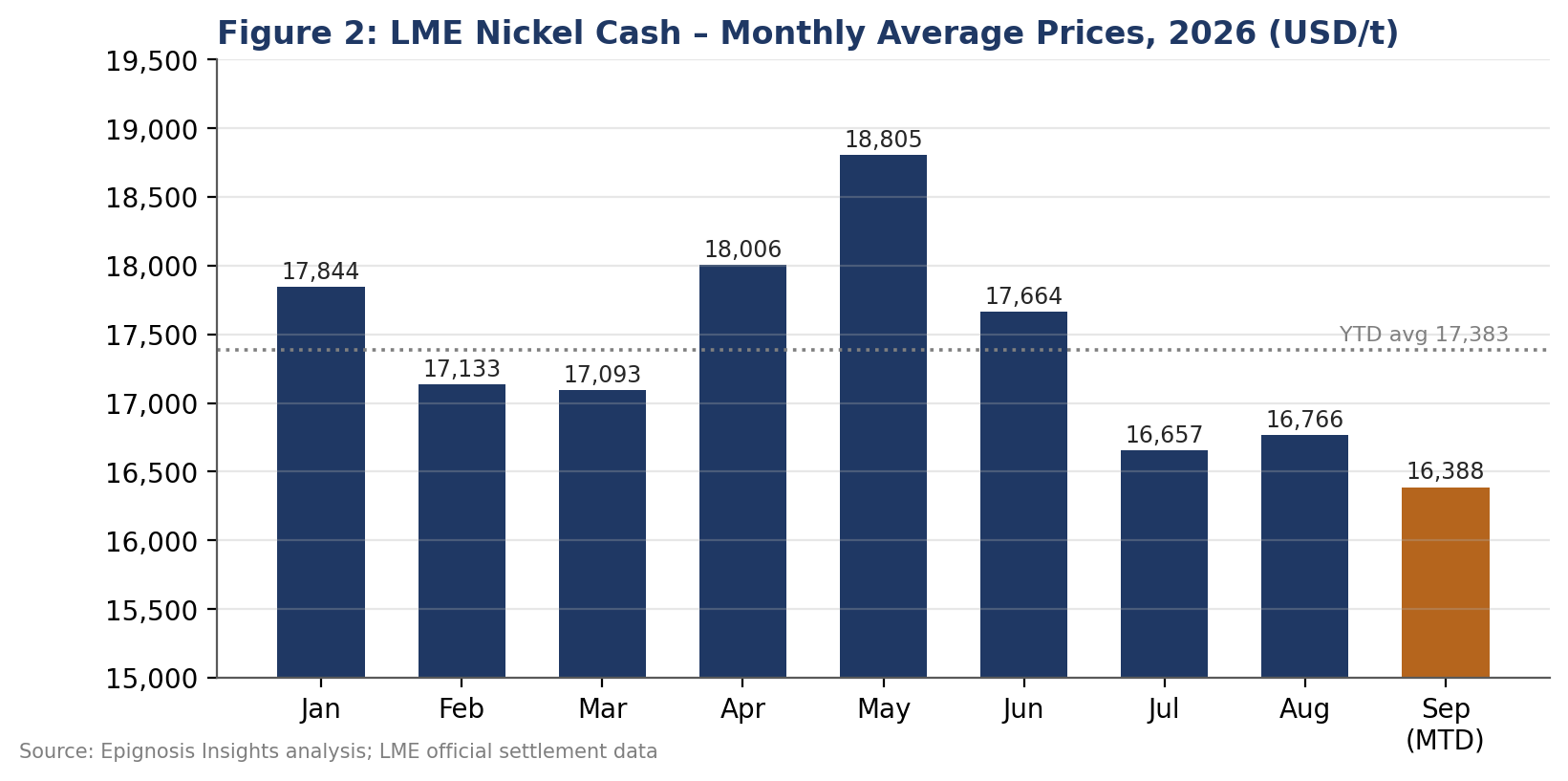
Figure 2: Monthly average LME nickel cash prices, January to September 2026 (September is month-to-date).
Exchange inventories remain the clearest signal that refined supply is not scarce. LME nickel stocks rose to 278,526 t on 21 September from 274,332 t a week earlier, an increase of 4,194 t or 1.5%. More importantly, stocks have climbed by more than 12,000 t since the end of July, reversing the brief drawdown that had encouraged buyers in the middle of the summer. Since 2 January, total LME stocks are up by more than 23,000 t, which Epignosis Insights views as evidence that Class 1 metal continues to find its way to the exchange when physical premiums are weak.
The forward curve reinforces this reading. The cash-to-three-month spread averaged a contango of US$144/t during Week 38, slightly narrower than the US$154/t of the prior week but well within the US$115–325/t range seen since July. A persistent contango of this size indicates that holders are being paid to store metal rather than rushing to deliver it, a structure that normally caps rallies until inventory begins to fall decisively.
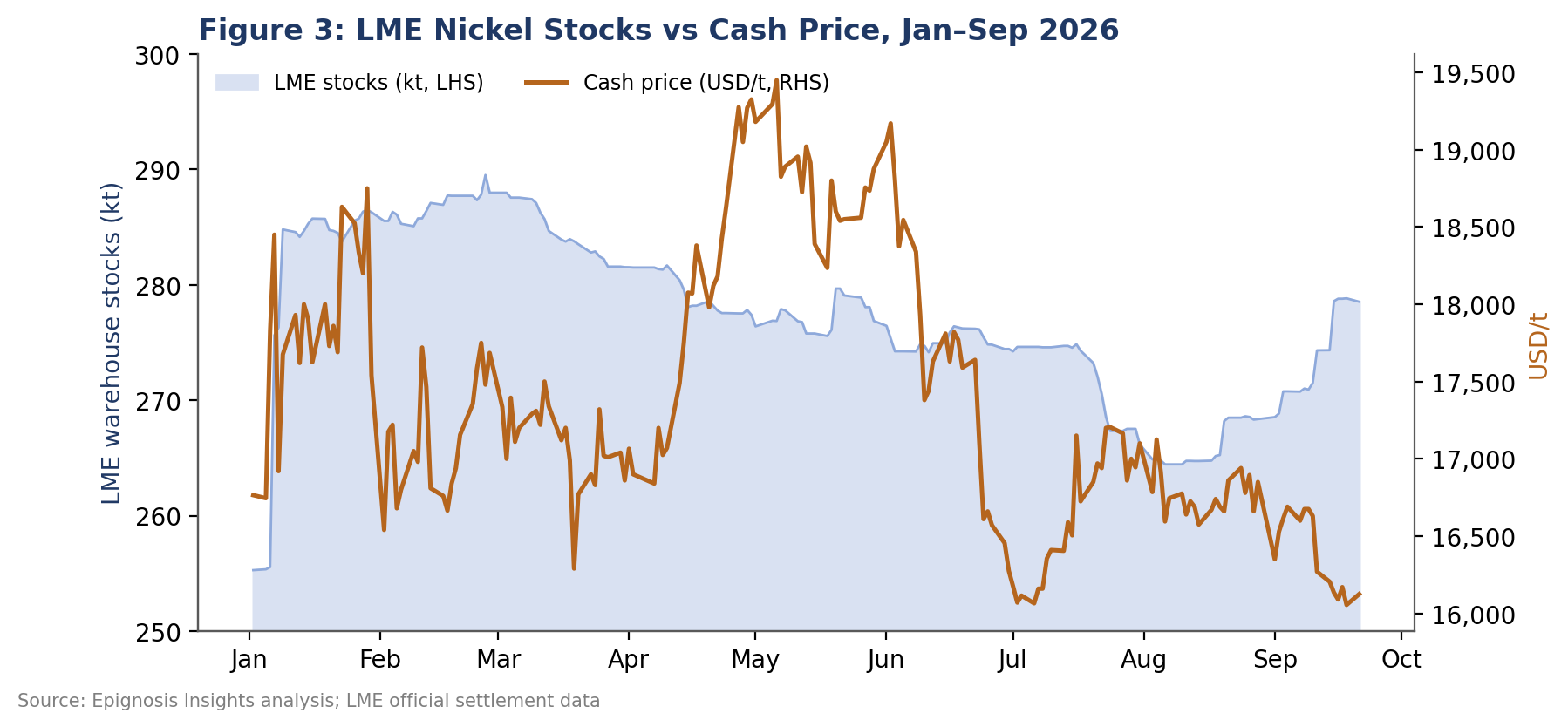
Figure 3: LME nickel warehouse stocks compared with the cash price, January to September 2026.
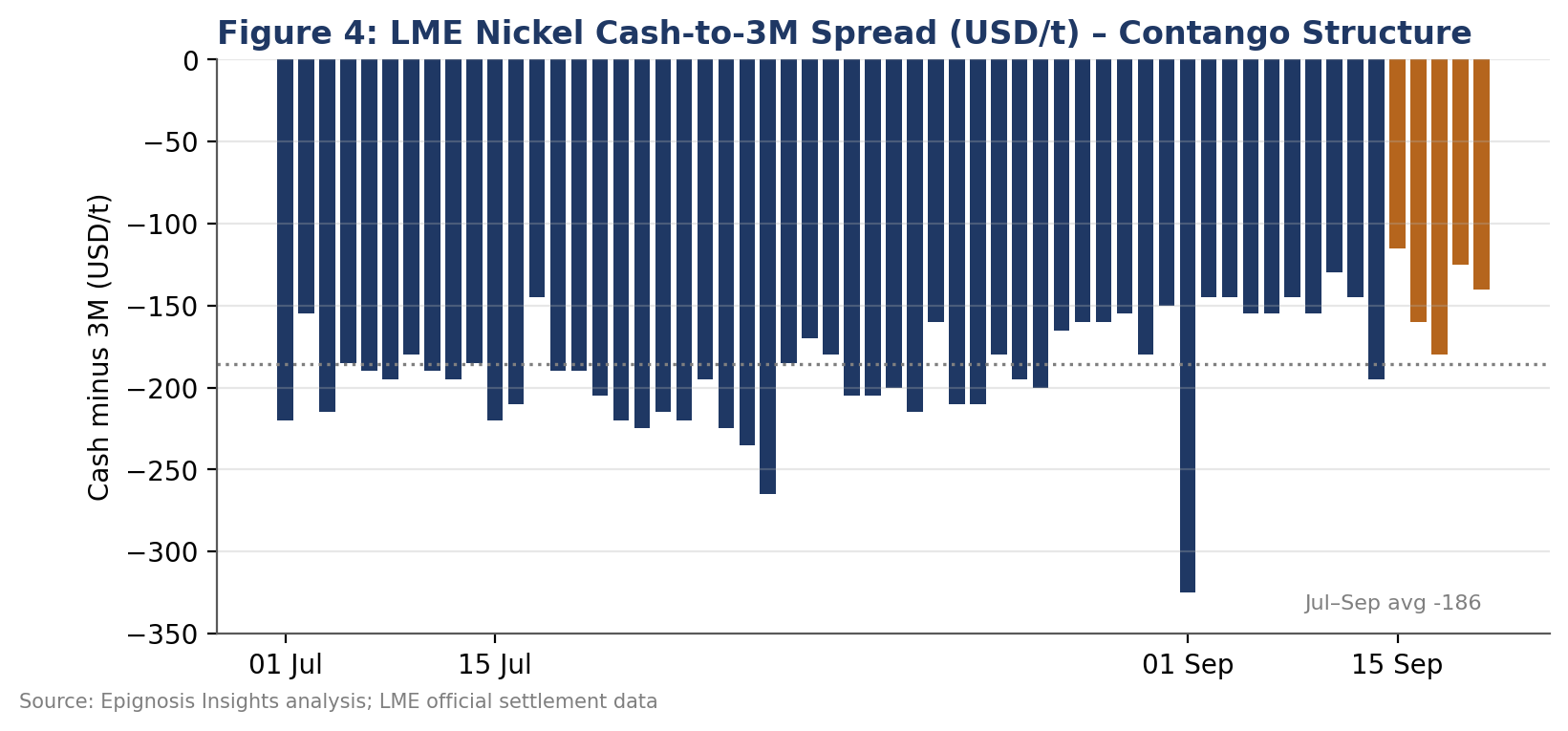
Figure 4: Daily cash-to-three-month spread since July; the tracker week is shown in copper.
The most consequential event of the week came from Jakarta. Indonesia's Ministry of Energy and Mineral Resources (ESDM) issued Ministerial Decree No. 363.K/MB.01/MEM.B/2026, effective 15 September, which lowers the nickel correction factor and the cobalt coefficient applied to low-grade limonite. Under the new formula, the benchmark price (HPM) for 1.2% nickel ore falls to US$24.89 per wet metric tonne, down about 45% from US$44.97/wmt, and now sits below delivered market prices of around US$27/wmt. The ministry also set the nickel mineral reference price (HMA) for the second half of September at US$16,698/t, marginally below the first-half figure of US$16,733/t.
Epignosis Insights interprets the reset as a pragmatic correction rather than a policy reversal. The April formula had pushed the benchmark well above what high-pressure acid leach (HPAL) plants were actually paying, inflating royalty burdens for limonite miners. Lowering the benchmark reduces the theoretical cost floor for HPAL feed and therefore weakens one of the arguments that had supported nickel above US$17,000/t. Higher-grade saprolite ores used for NPI were not materially affected, and quota discipline under the RKAB work-plan system remains in place. The market impact is therefore sentiment-driven: it signals that Jakarta is prepared to ease costs for downstream processors even while it restricts mining volumes.
Structural context matters here. According to Coface, Indonesia accounted for more than 60% of global mine production and about 42% of global refining in 2025, which means every adjustment to its pricing rules is transmitted almost directly into the global cost curve. Meanwhile, reporting from the Investing News Network indicates that several HPAL expansion projects originally scheduled for late 2026 have been pushed into early 2027 because of weak battery demand and elevated sulphur costs, a delay that partly cushions the medium-term supply outlook.
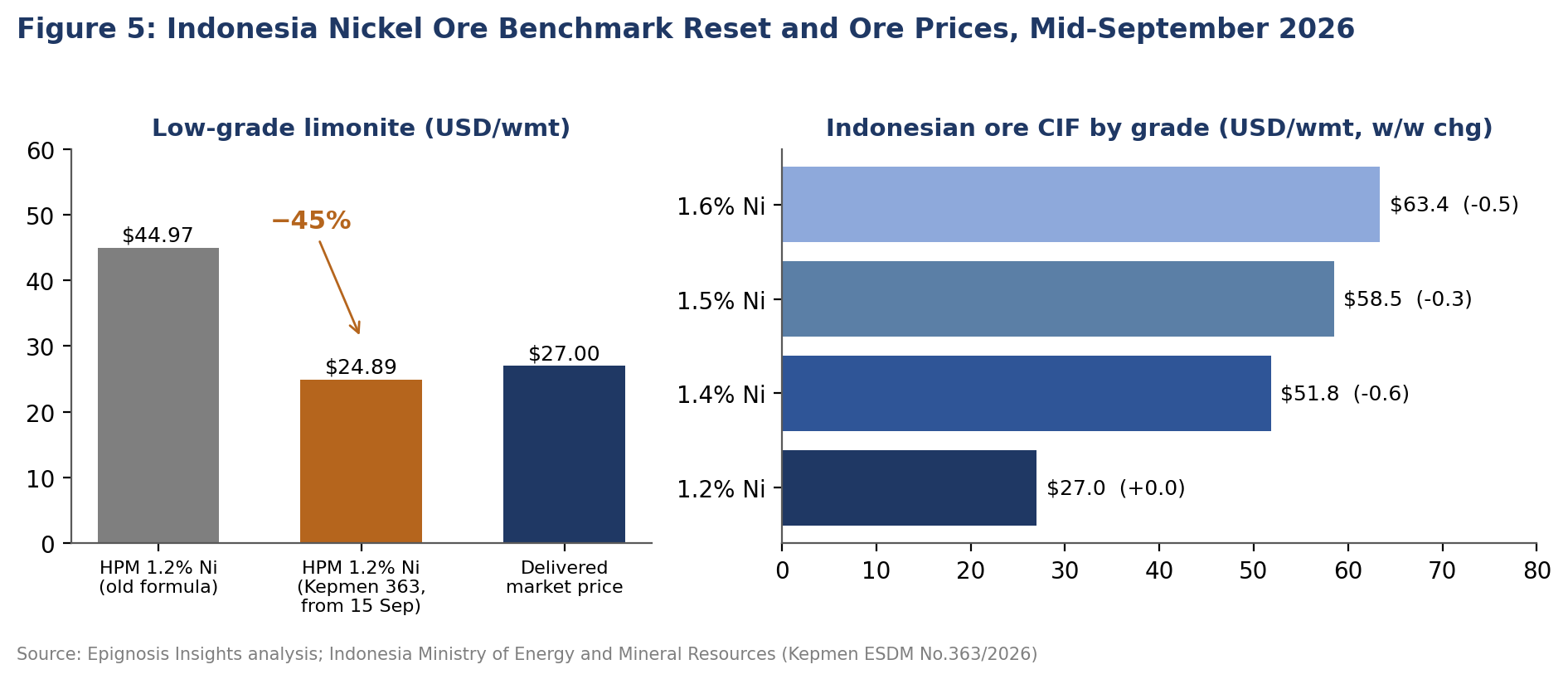
Figure 5: Old versus revised HPM for 1.2% Ni ore and Indonesian ore CIF prices by grade, mid-September 2026.
Outside Indonesia, major producers are running well despite lower prices. Vale's second-quarter 2026 production and sales report showed finished nickel output of 42.0 kt, up 4% year-on-year and the company's strongest second quarter since 2020, supported by Onça Puma's second furnace and record output at the Long Harbour refinery. Vale's average realised nickel price for the quarter was US$18,061/t, roughly US$1,950/t above the current LME cash level. Epignosis Insights notes that this gap implies a meaningful step-down in third-quarter realised prices for Western producers, which could revive the cost-driven curtailment debate that dominated 2024 if prices settle below US$16,000/t for an extended period.
From a cost-curve perspective, integrated Indonesian NPI and HPAL operations continue to sit in the lowest quartile, while sulphide producers in Canada and Australia and ferronickel operations in Latin America occupy the upper half. Epignosis Insights estimates that a sustained cash price in the mid-US$15,000s would place a growing share of non-Indonesian capacity under margin pressure, particularly assets without meaningful by-product credits from copper, cobalt or platinum-group metals. That dynamic tends to create a soft floor, because production discipline outside Indonesia becomes more likely as prices fall, even if it takes several quarters to show up in supply data.
Stainless steel remains the anchor of nickel demand, and its signals this week were mixed but improving at the margin. Shanghai Metals Market (SMM) reported that the benchmark Shanghai Futures Exchange stainless contract closed the week of 14–18 September at RMB 13,675/t, a negligible gain but the first weekly rise in six weeks, after touching RMB 13,410/t mid-week. The same review highlighted a RMB 500 billion outright reverse repo by the People's Bank of China and a new multi-ministry plan to promote smart home appliance consumption. Lower nickel input costs have restored some margin to Chinese mills, which Epignosis Insights sees as a precondition for restocking ahead of the October Golden Week holiday.
The longer-term demand picture is less encouraging. The OECD Steel Committee's June assessment projected that global steel excess capacity will keep rising through 2028 despite weak end-use demand, which limits the pricing power of stainless producers. On the battery side, the continued shift of Chinese cathode makers toward lithium iron phosphate chemistries means that nickel sulfate procurement stayed subdued this week, and several precursor producers reportedly trimmed operating rates.
The International Nickel Study Group (INSG) still provides the reference balance for 2026. At its April meetings the group forecast primary production of 3.715 million tonnes against usage of 3.747 million tonnes, implying a deficit of about 32,000 t. This reversed its earlier projection of a 261,000 t surplus and would be the first deficit since 2021, following surpluses of 175,000 t in 2023, 116,000 t in 2024 and 283,000 t in 2025. The INSG also cautioned that battery demand growth has lagged expectations as LFP chemistries and plug-in hybrids gain share.
Epignosis Insights' view is that a 32,000 t deficit is too small to absorb the large inventory overhang built over the past three years, which is why prices have been unable to sustain deficit-driven rallies. Macquarie reached a more constructive conclusion earlier this year, raising its 2026 nickel forecast by about 18% to around US$17,750/t and identifying a price floor near US$17,000–18,000/t. The current market is testing that floor from below, suggesting investors now require visible stock drawdowns before paying up for the deficit narrative. On the macro front, a firm US dollar and stronger expectations of US rate hikes continued to weigh on base metals broadly.
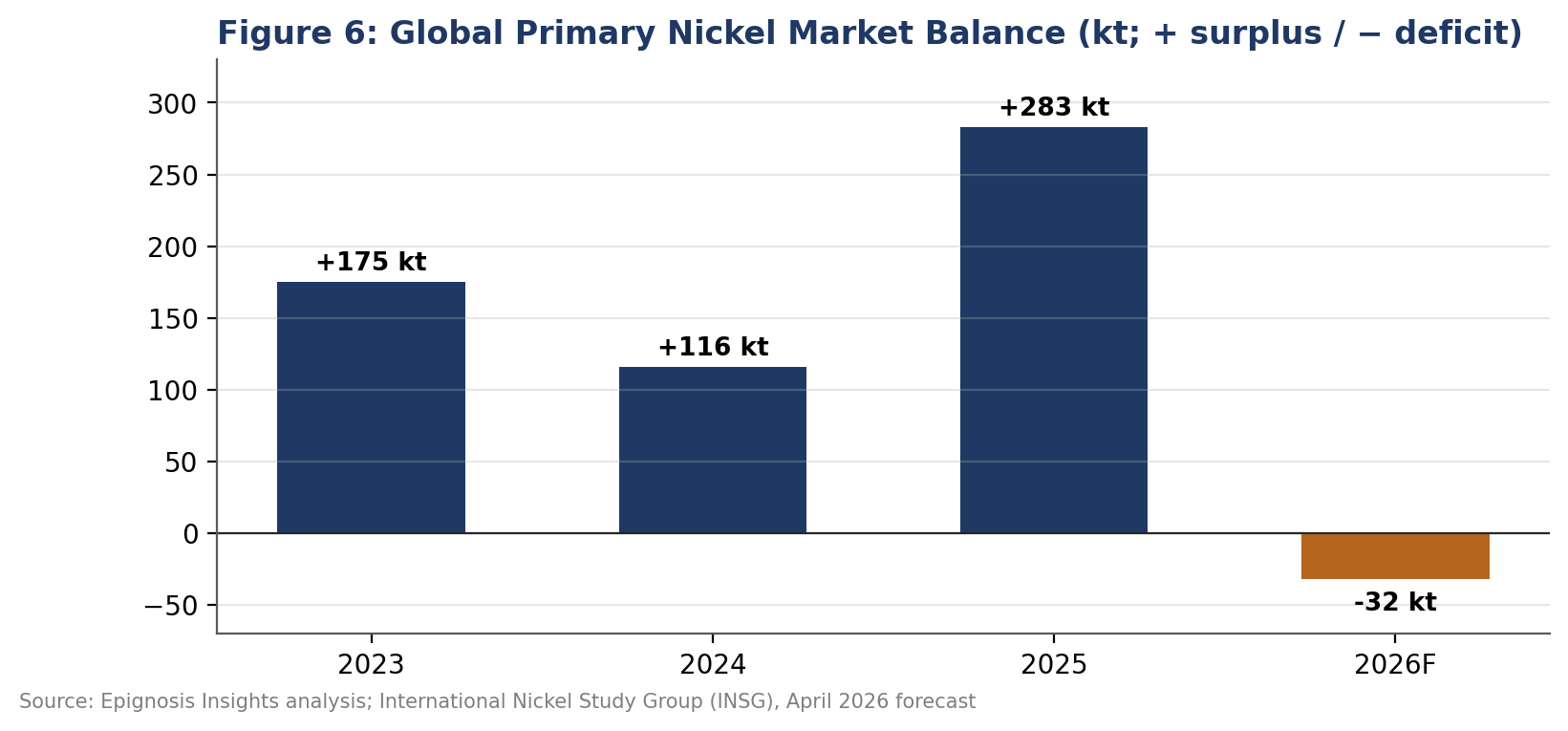
Figure 6: Global primary nickel market balance, 2023–2026F.
Figure 7 summarises how Epignosis Insights weighs the forces acting on nickel this week. Bearish drivers, led by the HPM reset, rising LME stocks and weak nickel salt buying, currently outweigh bullish drivers such as the Morowali NPI curtailments, RKAB quota discipline and the improving stainless margin picture. The net result is a soft but range-bound bias rather than a directional breakdown.
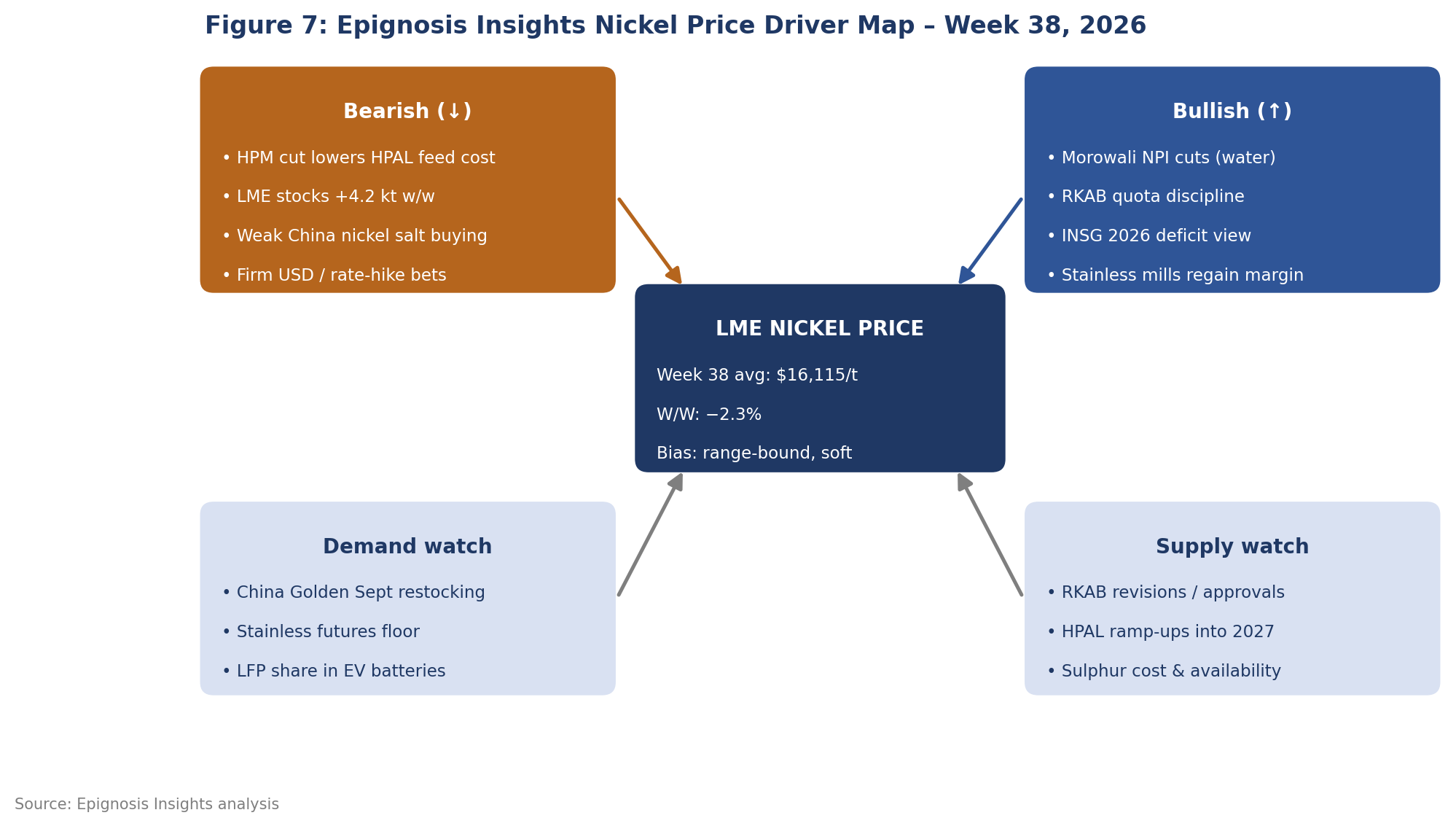
Figure 7: Epignosis Insights nickel price driver map for Week 38, 2026.
Epignosis Insights' base case, assigned a 55% probability, is that LME cash nickel trades in a US$15,900–16,650/t band through mid-October. Within this scenario, Chinese post-holiday restocking and the Morowali supply cuts provide support, while inventory above 275,000 t and contango of US$120–180/t limit any recovery. Our bull case (25%) sees prices rising towards US$17,200/t if Indonesia announces further RKAB restrictions or LME stocks begin a sustained decline. The bear case (20%) sees prices slipping to around US$15,400/t if HPAL output accelerates on cheaper feed and Chinese demand disappoints after Golden Week.
For procurement teams, we recommend staggering purchases across the base case band rather than chasing short-term rebounds, and reviewing alloy surcharge clauses to ensure they reflect the current lower LME level. For producers and investors, the key indicators to monitor are weekly LME stock changes, Indonesian RKAB revisions and Chinese stainless mill operating rates.
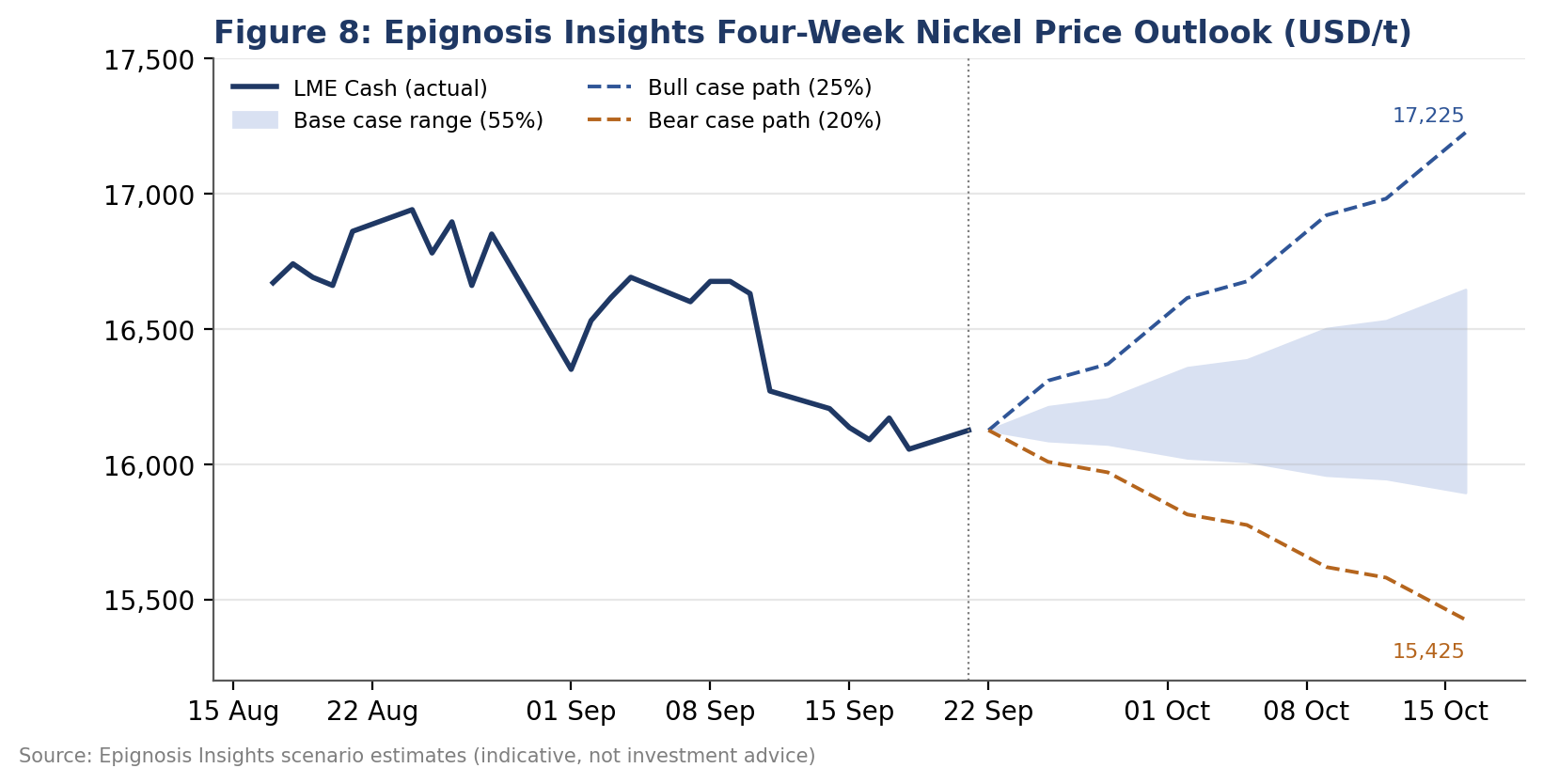
Figure 8: Epignosis Insights four-week price scenarios for LME nickel cash (indicative).