Key Findings
- Global biaxially oriented polystyrene (BOPS) sheet market is projected to reach US$2,001.5 million by 2032 from US$1,211.6 million in 2025.
- Market revenue is expected to grow at a 7.5% CAGR from 2026 to 2032, with annual growth accelerating from 6.6% in 2025 to 8.1% in 2032.
- Global BOPS sheet volume is estimated to rise from about 595.9 kilotons in 2025 to about 982.9 kilotons by 2032, a volume CAGR of approximately 7.5%.
- Transparent BOPS sheets account for 51.1% of 2025 value and about 58% of volume, while UV-resistant sheets grow fastest at an 8.9% CAGR.
- Food packaging represents 59.6% of 2025 demand, while electronics packaging is the fastest growing application at an 8.4% CAGR.
- Pharmaceutical packaging is the second largest application at US$245.1 million in 2025, growing at 8.1%.
- Direct sales account for 68.7% of 2025 value, reflecting long-term supply relationships with thermoformers and packaging converters.
- Asia Pacific holds 49.4% of global value and is the fastest growing region at an 8.3% CAGR.
- Specialty sheets, including heat-resistant, anti-fog, coated and UV-resistant grades, command prices of US$2.30 to US$2.80 per kilogram compared with about US$1.80 for transparent sheets.
- he market adds approximately US$789.9 million in annual revenue between 2025 and 2032.
Global BOPS Sheet Market Outlook
The Flobal BOPS Sheet Market was valued at US$1,069.5 million in 2023 and US$1,137.1 million in 2024. It is estimated at US$1,211.6 million in 2025 and is projected to reach US$2,001.5 million by 2032, registering a CAGR of 7.5% during the 2026 to 2032 forecast period. Annual revenue increases by approximately US$789.9 million between 2025 and 2032.
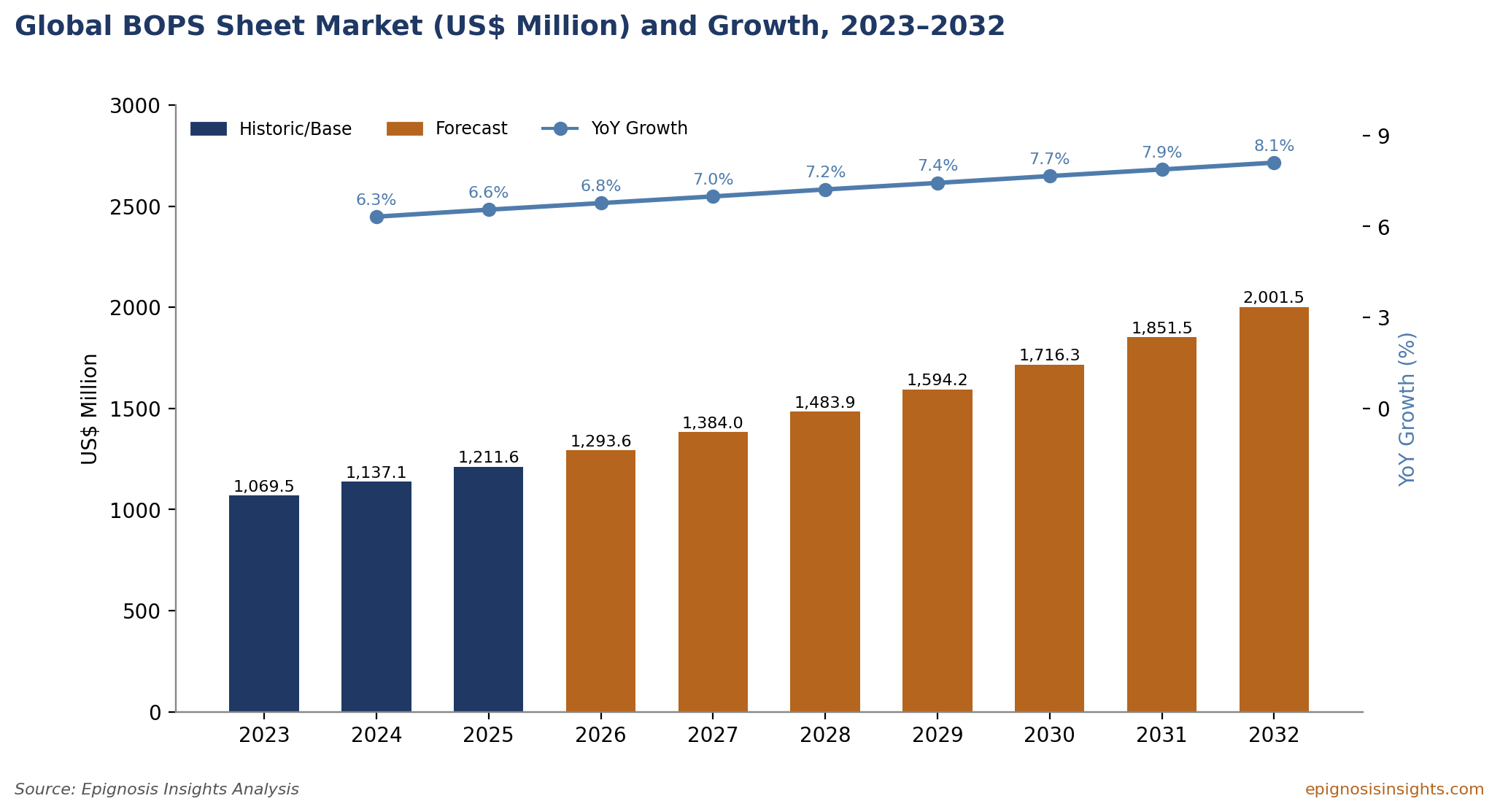
Figure 1: Global BOPS Sheet Market (US$ Million) and Year-on-Year Growth, 2023–2032
Growth strengthens steadily through the forecast period, rising from 6.3% in 2024 and 6.6% in 2025 to 7.2% in 2028 and 8.1% in 2032. The acceleration reflects rising demand for clear, rigid, lightweight packaging in food service, fresh produce, bakery and pharmaceutical applications, particularly in Asia Pacific, together with a gradual shift in product mix toward higher-value specialty sheets.
Biaxially oriented polystyrene sheet is produced by extruding general-purpose polystyrene and stretching it in both the machine and transverse directions. Biaxial orientation significantly improves the sheet's toughness, clarity and stiffness compared with unoriented polystyrene, while retaining polystyrene's excellent thermoformability. BOPS sheets are thermoformed into clamshells, lids, trays, blister packs, cups and inserts, and are valued for their glass-like transparency, rigidity at low gauge, good printability and cost-effectiveness.
The market's structure is closely linked to the thermoforming industry. Sheet producers supply rolls of BOPS to thermoformers, who heat and form the sheet into finished packaging for food processors, retailers, pharmaceutical companies and electronics manufacturers. Demand for BOPS therefore follows the growth of these end-use industries, the adoption of transparent rigid packaging and converters' material choices. Because thermoforming lines are often optimised for a specific material, converters tend to remain with BOPS once equipment and tooling are set up, supporting stable demand.
Global BOPS Sheet Market: Volume and Pricing Analysis
Epignosis Insights estimates global BOPS sheet consumption at approximately 526.2 kilotons in 2023, 559.3 kilotons in 2024 and 595.9 kilotons in 2025. Volume is projected to reach about 636.0 kilotons in 2026, 843.1 kilotons in 2030 and 982.9 kilotons by 2032, growing at a CAGR of approximately 7.5% from 2026 to 2032. Volumes are derived by dividing the value of each sheet type by its average selling price.
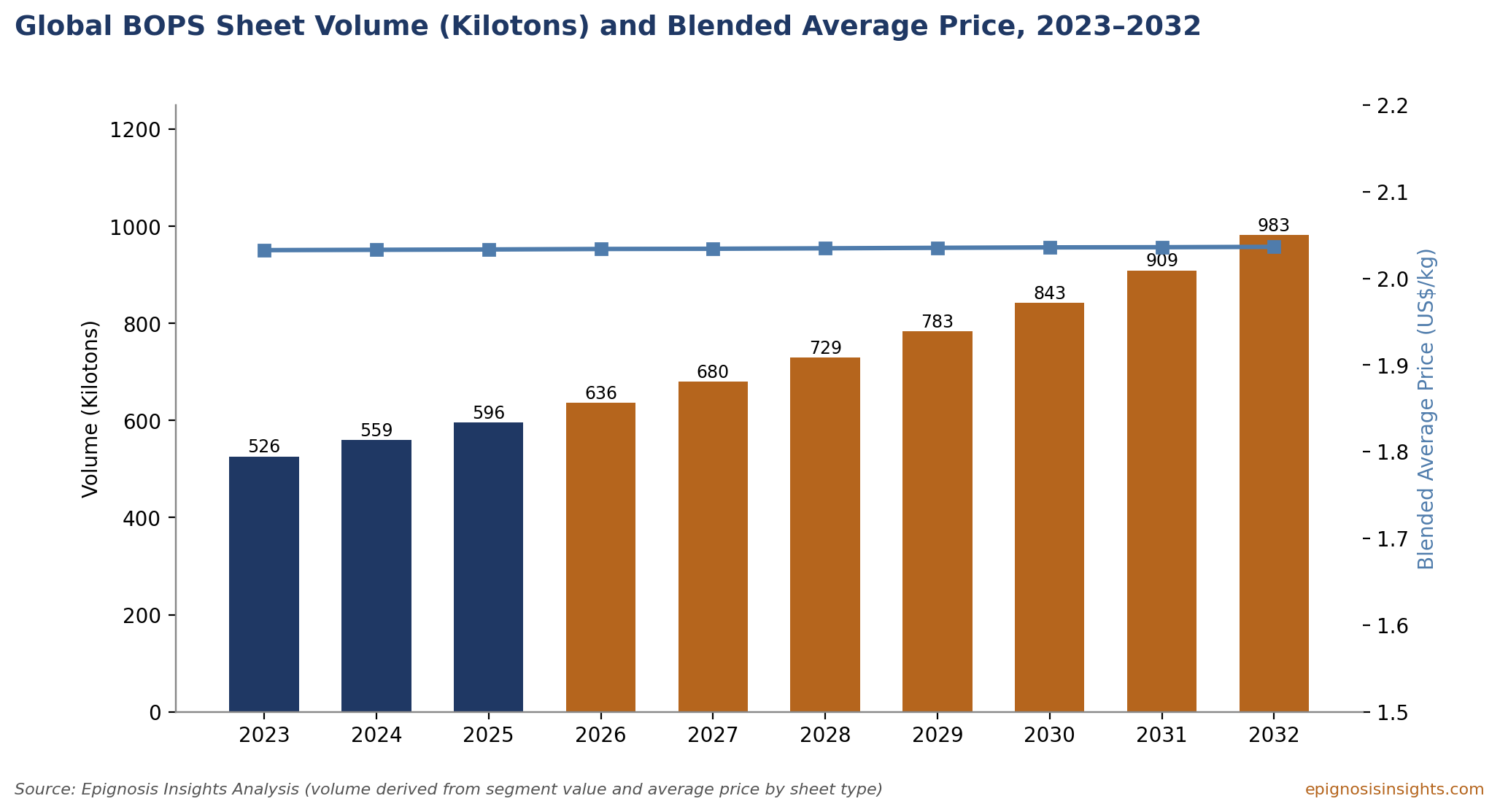
Figure 2: Global BOPS Sheet Volume (Kilotons) and Blended Average Price (US$/kg), 2023–2032
Average prices vary considerably by sheet type. Transparent BOPS sheets average about US$1.80 per kilogram, within a range of US$1.60 to US$2.00. Opaque and coloured sheets average about US$2.10, coated sheets about US$2.30, anti-fog sheets about US$2.50, heat-resistant sheets about US$2.70 and UV-resistant sheets about US$2.80 per kilogram. The blended average price across the market is approximately US$2.03 per kilogram and remains broadly stable through 2032, as growth in higher-priced specialty grades offsets competitive pressure on standard transparent sheets.
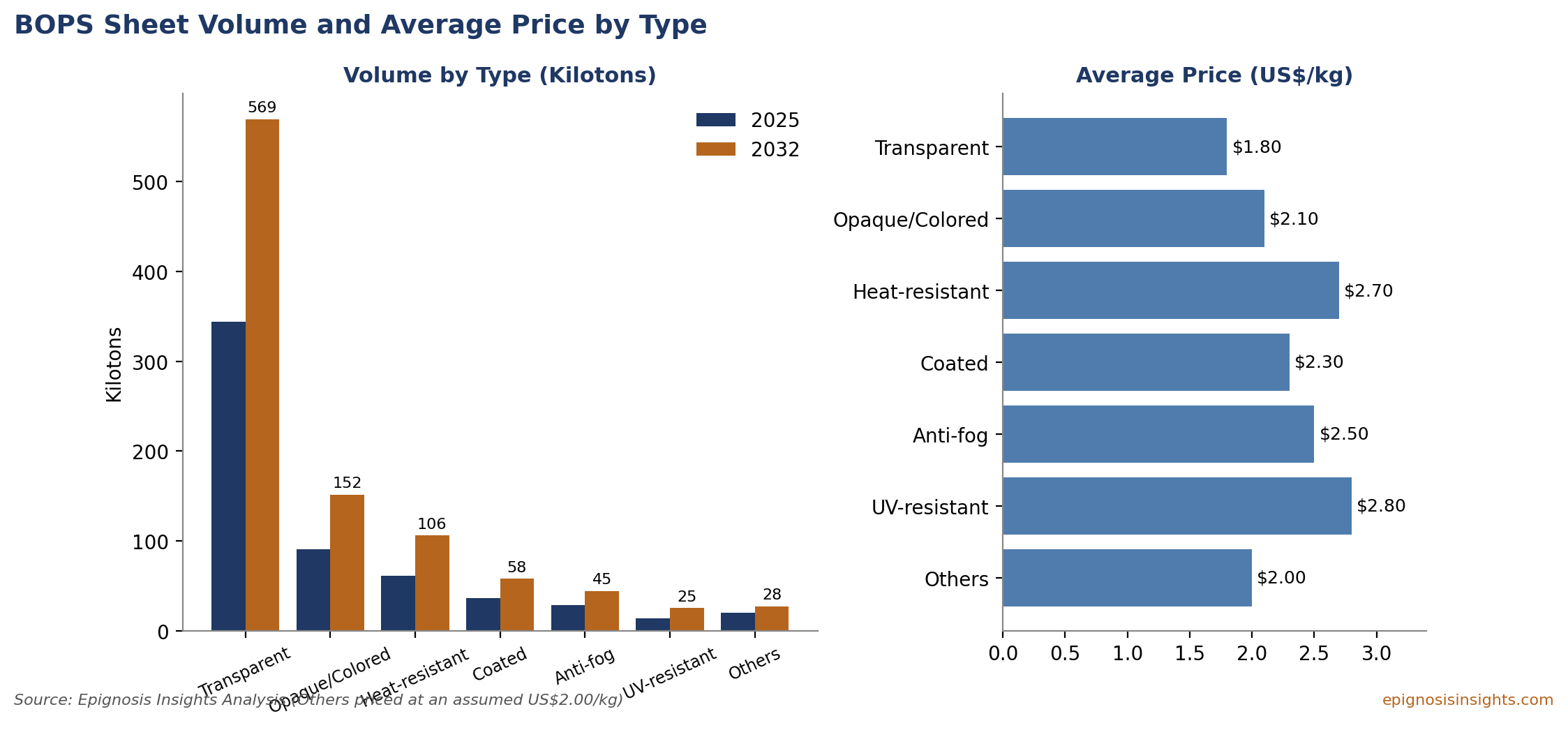
Figure 3: BOPS Sheet Volume (Kilotons) and Average Price (US$/kg) by Type
The difference between value and volume shares is significant. Transparent sheets represent about 51% of market value but about 58% of volume, reflecting their lower price. Specialty sheets punch above their weight in value: heat-resistant sheets account for 13.7% of value but about 10% of volume, and UV-resistant sheets for 3.3% of value but about 2.4% of volume. For producers, shifting the product mix toward specialty grades is therefore a key route to improving revenue per tonne.
Global BOPS Sheet Market Dynamics
Growth of Convenience Food and Fresh Produce Packaging
The strongest driver is the expansion of convenience food, food service and fresh produce packaging. Urbanisation, busier lifestyles, the growth of supermarkets and the rise of online food delivery are increasing demand for clear, rigid containers that display products attractively while protecting them during transport. BOPS clamshells, lids and trays are widely used for salads, bakery products, fruit, sushi, desserts and ready meals, where transparency drives purchase decisions.
BOPS offers an attractive balance of clarity, stiffness and cost. It can be thermoformed at high speed into thin-walled containers, keeping material use and cost low. Anti-fog grades prevent condensation in chilled products, maintaining visibility in refrigerated displays.
Pharmaceutical and Electronics Applications Expanding Specialty Demand
The second driver is growing use in pharmaceutical and electronics packaging. In pharmaceuticals, BOPS is used for blister packs, trays and inserts that protect and organise medicines and medical devices, supported by expanding healthcare access and pharmaceutical production in emerging markets. In electronics, BOPS trays and clamshells protect components and consumer devices, and specialised grades can provide anti-static or heat-resistant properties.
These applications typically require more specialised, higher-value sheets and stricter quality control, which supports both volume growth and higher average prices for producers able to meet technical requirements.
Sustainability Pressure and Material Substitution as Constraints
The most significant constraint is regulatory and consumer pressure on single-use plastics, particularly polystyrene. Several jurisdictions have restricted expanded polystyrene food containers, and polystyrene recycling rates remain low in many markets. Although BOPS sheets differ from expanded polystyrene foam, they face scrutiny as part of the broader polystyrene family.
BOPS also competes with alternative materials such as PET, recycled PET, polypropylene and moulded fibre. PET offers similar clarity and better recyclability in many collection systems, and brand owners with recycled content targets often favour it. Styrene price volatility adds further uncertainty for producers. These factors are reflected in the slower growth of BOPS in Europe and Latin America compared with Asia Pacific.
Recycling Innovation as an Opportunity
Advanced recycling technologies, including depolymerisation of polystyrene back into styrene monomer, offer an opportunity to improve the sustainability profile of BOPS. Polystyrene is particularly well suited to depolymerisation because it breaks down efficiently into its monomer. If collection and recycling infrastructure expands, recycled-content BOPS sheets could help the material retain its position in markets with strict circular economy requirements.
Global BOPS Sheet Market: Material Comparison and Cost Structure
BOPS competes primarily with amorphous PET, recycled PET and polypropylene in rigid transparent packaging. Compared with PET, BOPS has a lower density, which means more sheet area per kilogram and therefore more containers per tonne of material. It thermoforms at lower temperatures and faster cycle times, reducing energy consumption and increasing productivity for converters. Its stiffness allows thin gauges while maintaining container rigidity, and its clarity and gloss are among the best of any packaging polymer. These characteristics make BOPS particularly competitive in lightweight, high-volume applications such as bakery clamshells, lids and produce containers.
PET, however, offers higher impact strength, better chemical resistance and broader recyclability in many collection systems, which has allowed it to gain share in markets with strong recycling requirements. Polypropylene offers higher heat resistance at lower cost but generally lower clarity. Moulded fibre is gaining ground in some food service applications where transparency is not required. The choice between these materials depends on product requirements, converter equipment, cost and the regulatory environment in each market.
Raw material costs are the largest component of BOPS sheet production costs. General-purpose polystyrene, produced from styrene monomer, typically accounts for the majority of cash cost, with energy, labour, additives and coatings making up the balance. Styrene prices follow benzene and ethylene markets and can be volatile, which affects sheet producers' margins. Specialty sheets carry higher additive and coating costs but also command higher prices, as reflected in the price premium of US$0.50 to US$1.00 per kilogram for anti-fog, heat-resistant and UV-resistant grades over standard transparent sheets.
Production economics favour scale and integration. Large extrusion and orientation lines produce sheet more efficiently, and producers integrated with polystyrene resin production can secure supply and manage cost volatility. Producers also benefit from proximity to major thermoforming clusters, because sheet is bulky to transport relative to its value.
Global BOPS Sheet Market: Type Analysis
Transparent BOPS sheets are the largest segment, valued at US$618.9 million in 2025, or 51.1% of the market, and are projected to reach US$1,024.6 million by 2032 at a 7.6% CAGR. Transparent sheets are the standard choice for food containers, lids and display packaging, where product visibility is essential. Estimated volume rises from about 344 kilotons to about 569 kilotons.
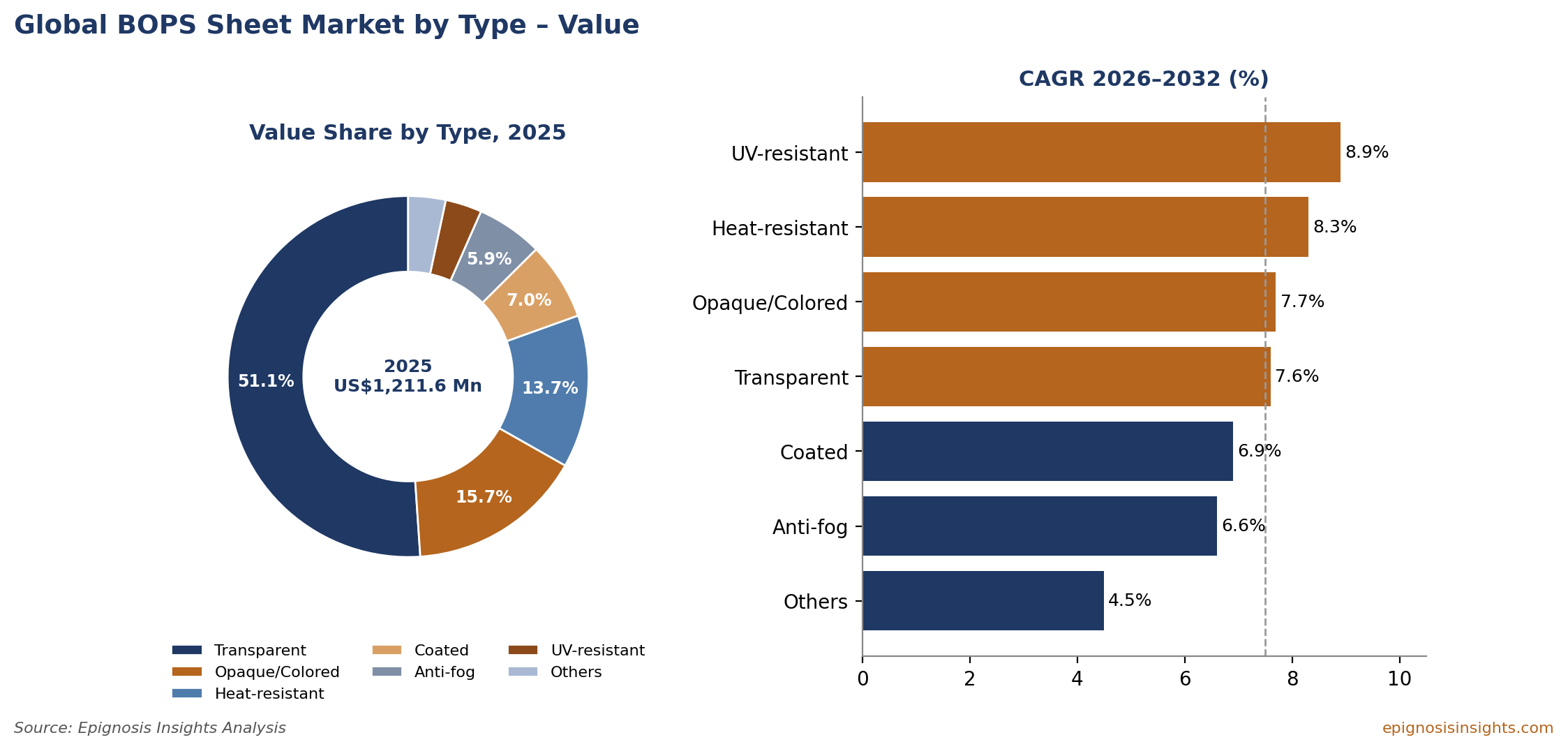
Figure 4: Global BOPS Sheet Market by Type – 2025 Value Share and 2026–2032 CAGR
Opaque and coloured sheets, valued at US$190.5 million in 2025, grow at 7.7%, serving branded packaging, trays and applications requiring light protection or colour coding. Heat-resistant sheets, valued at US$165.8 million, grow at 8.3%, supported by demand for microwaveable and hot-fill containers and electronics packaging. Coated sheets, valued at US$84.4 million, grow at 6.9%, and anti-fog sheets, valued at US$71.9 million, grow at 6.6%, serving chilled food packaging.
UV-resistant sheets are the smallest specialty grade at US$39.6 million in 2025 but the fastest growing at an 8.9% CAGR, reaching US$71.3 million by 2032. They are used where products or packaging are exposed to sunlight or display lighting, such as outdoor signage, certain construction applications and products sensitive to light degradation. Other sheets, including customised specialty grades, grow at 4.5%.
Product innovation is focused on improving performance and sustainability. Producers are developing thinner sheets with maintained stiffness to reduce material use, improved anti-fog coatings that last longer in refrigerated conditions, heat-resistant formulations for microwaveable applications, and sheets incorporating recycled polystyrene. Antistatic and conductive grades for electronics packaging and high-barrier coatings for extended shelf life are also emerging specialty areas.
Global BOPS Sheet Market: Application Analysis
Food packaging is the dominant application, valued at US$722.2 million in 2025, or 59.6% of the market, and is projected to reach US$1,183.6 million by 2032 at a 7.4% CAGR. It contributes about US$461 million, or 58%, of new market revenue. Bakery, fresh produce, salads, confectionery, ready meals and food service are the main end uses.
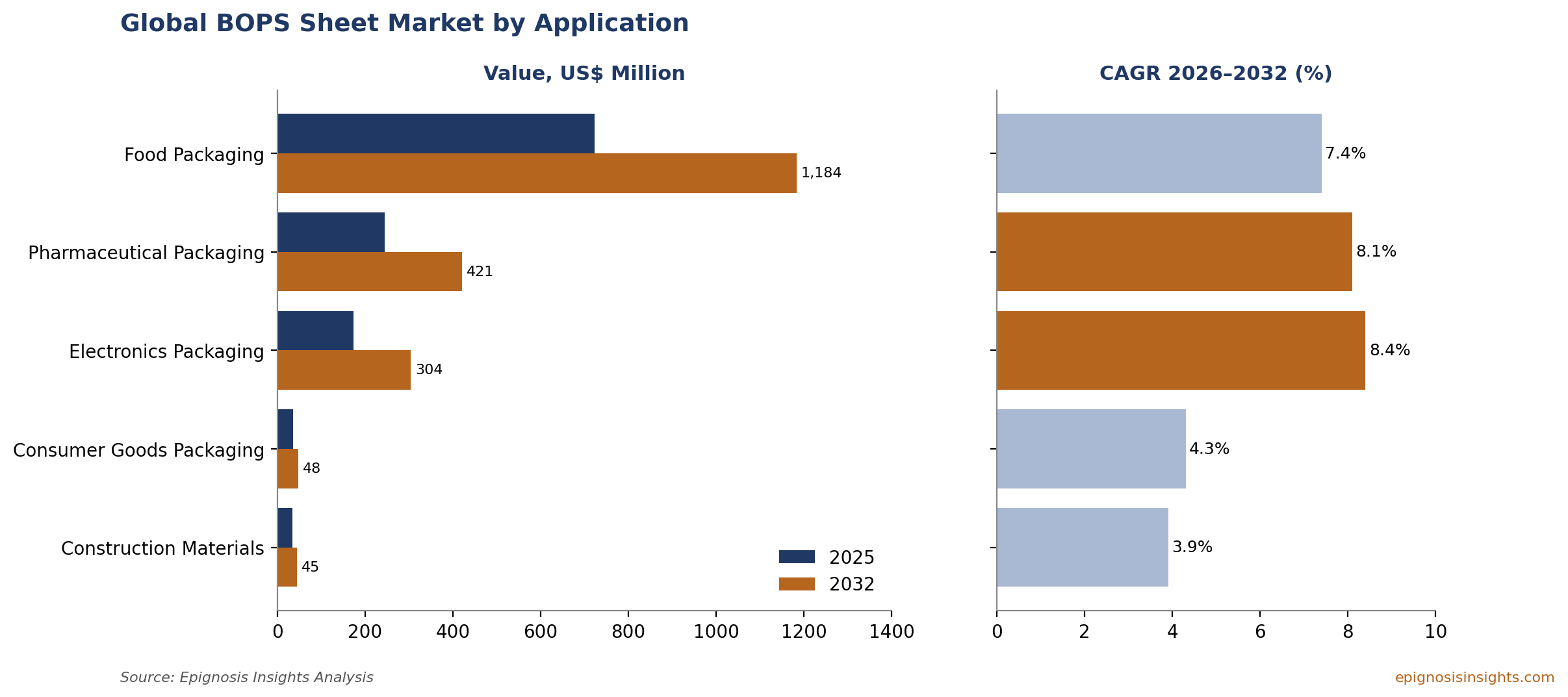
Figure 5: Global BOPS Sheet Market by Application – Value 2025 vs. 2032 and CAGR
Pharmaceutical packaging is the second largest application at US$245.1 million in 2025, growing at 8.1% to US$421.0 million by 2032, while its share rises from 20.2% to 21.0%. Electronics packaging, valued at US$173.9 million, is the fastest growing application at 8.4%, reaching US$304.0 million by 2032, and its share rises from 14.4% to 15.2%. Consumer goods packaging, valued at US$35.8 million, grows at 4.3%, and construction materials, valued at US$34.6 million, grow at 3.9%.
The application mix is gradually shifting toward higher-specification uses. Pharmaceutical and electronics packaging together rise from 34.6% of market value in 2025 to 36.2% by 2032, supporting demand for specialty sheets with tighter tolerances and enhanced properties.
Application requirements also shape grade selection. Food packaging relies mainly on transparent and anti-fog sheets, with heat-resistant grades used for warm and microwaveable foods. Pharmaceutical packaging requires consistent gauge, high clarity and compliance with pharmaceutical packaging standards, often using transparent and coated sheets. Electronics packaging increasingly uses heat-resistant, coloured and antistatic sheets to protect components during handling and transport. Construction applications, such as glazing films and protective panels, make use of UV-resistant grades, which helps explain why UV-resistant sheets grow fastest even though construction is one of the smallest applications by value.
Global BOPS Sheet Market: Sales Channel Analysis
Direct sales dominate distribution, valued at US$832.8 million in 2025, or 68.7% of the market, and grow at 7.7% to US$1,386.0 million by 2032. Large thermoformers and packaging converters typically purchase BOPS sheet directly from producers under supply agreements that specify grade, gauge and width, and many producers provide technical support for thermoforming.
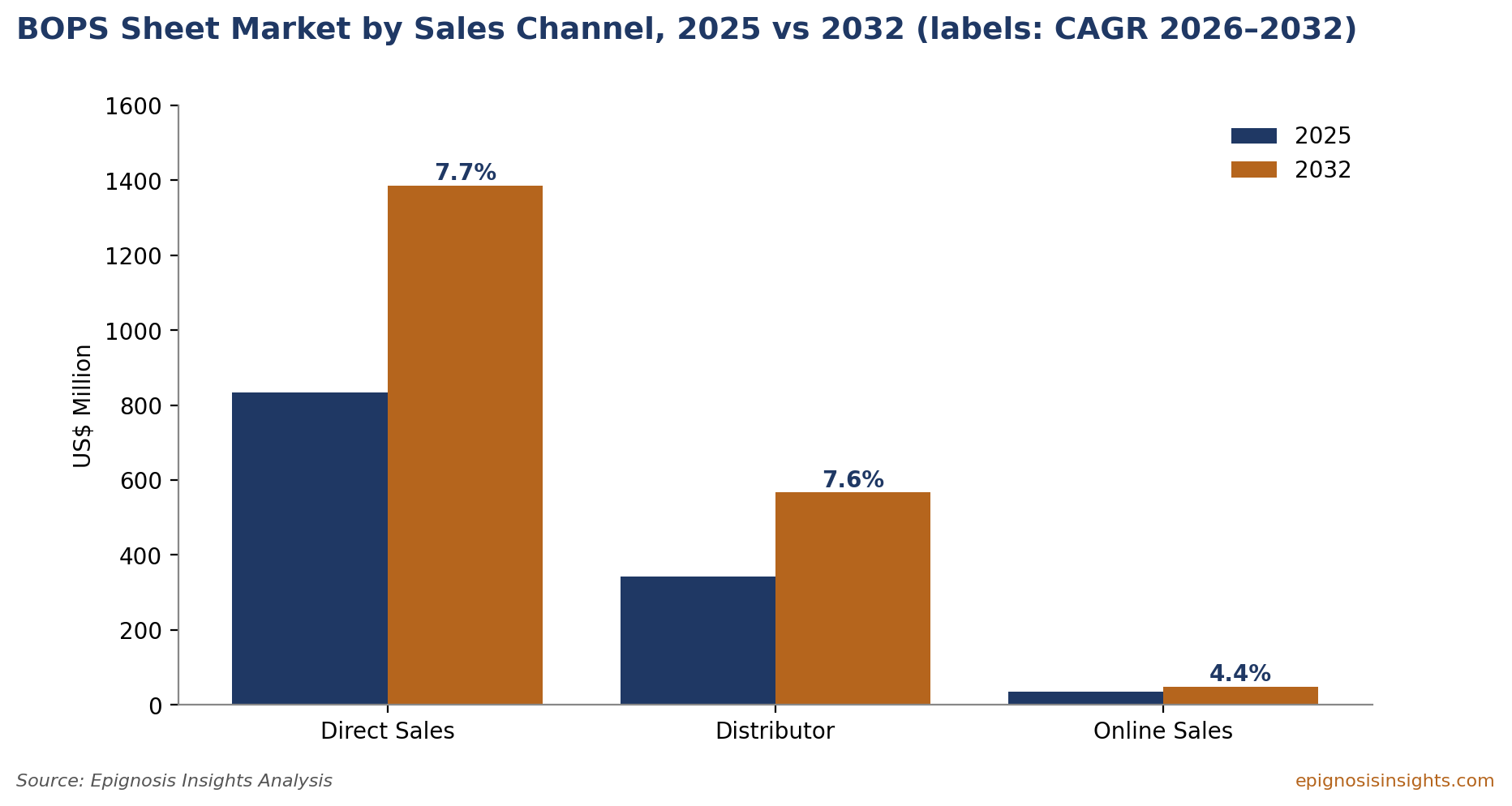
Figure 6: BOPS Sheet Market by Sales Channel, 2025 vs. 2032
Distributors account for US$342.9 million in 2025, or 28.3%, growing at 7.6%, serving small and medium-sized converters that require smaller volumes and a wider range of grades. Online sales are a small channel at US$35.9 million, growing at 4.4%, mainly serving small businesses, prototyping and specialty requirements.
Sales channel dynamics vary by customer size and region. In Asia Pacific, a large number of small and medium-sized converters rely on distributors for flexible supply and credit, while in North America and Europe, consolidation among packaging converters has strengthened direct relationships with sheet producers. Online channels are growing slowly from a small base, mainly through industrial marketplaces that make it easier for smaller buyers to source specialty grades and sample quantities. Over time, digital ordering platforms operated by producers and distributors are expected to streamline repeat purchases, although technical support and quality assurance will keep direct relationships central for large accounts.
Global BOPS Sheet Market: Regional Landscape
Asia Pacific is the largest region, valued at US$598.6 million in 2025, or 49.4% of the market, and the fastest growing at 8.3%, reaching US$1,039.1 million by 2032 and crossing 50% of global value. Estimated regional volume grows from about 294 kilotons to about 510 kilotons. China, Japan, South Korea, India and Southeast Asia combine large polystyrene production capacity with rapidly growing food service, fresh produce, pharmaceutical and electronics industries.
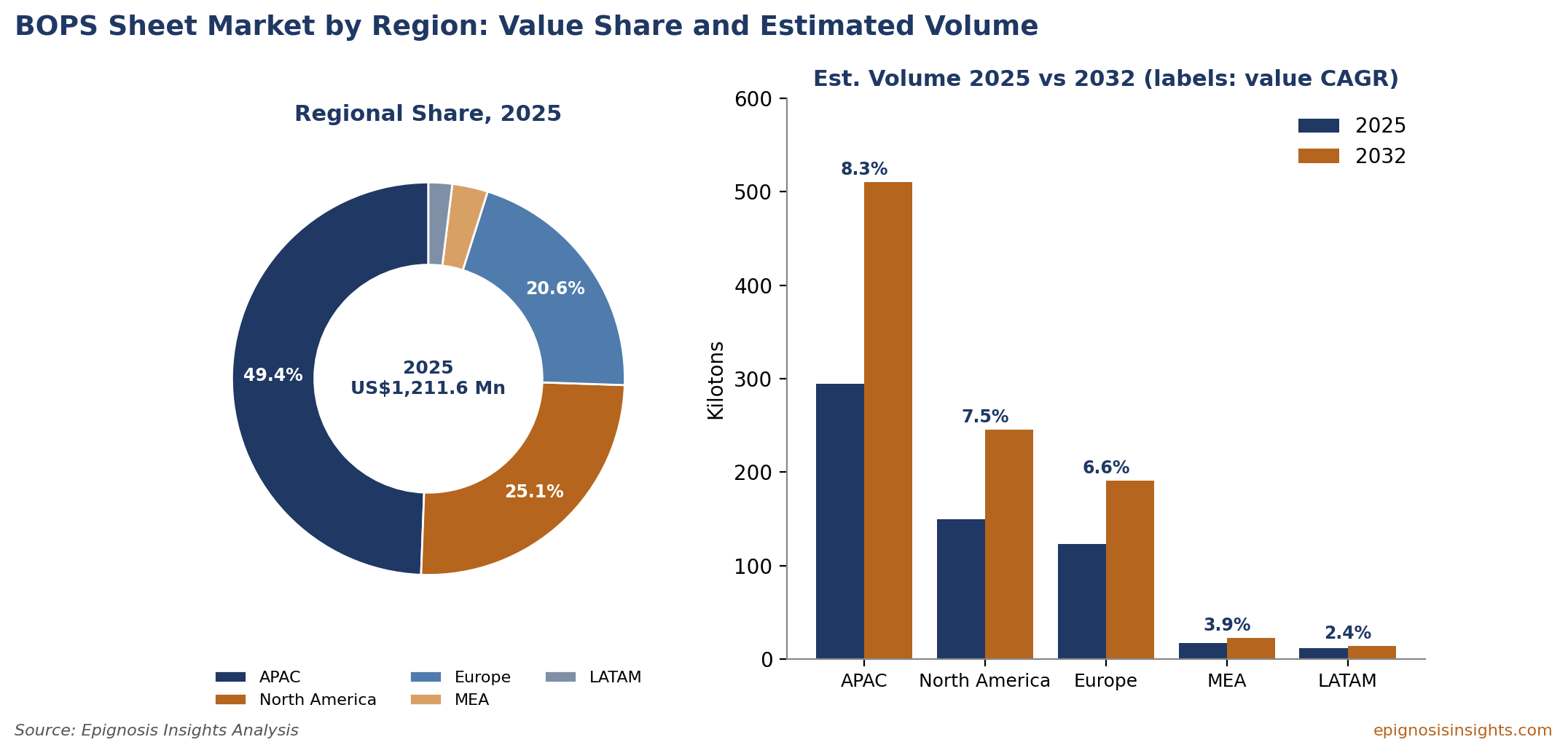
Figure 7: BOPS Sheet Market by Region – Value Share and Estimated Volume
North America is valued at US$303.8 million in 2025 and grows at 7.5% to US$499.1 million by 2032, supported by strong demand for clear food containers in supermarkets, bakeries and food service. Europe, valued at US$250.1 million, grows at 6.6%, reflecting stronger regulatory pressure on single-use plastics and greater competition from PET. The Middle East and Africa, valued at US$35.5 million, grows at 3.9%, and Latin America, valued at US$23.6 million, grows at 2.4%, the slowest of any region.
Regional demand patterns reflect differences in end use. In Asia Pacific, food packaging growth is supported by rising supermarket penetration, fresh produce exports and food delivery platforms, while electronics manufacturing in China, South Korea and Southeast Asia drives demand for protective trays. In North America, bakery, deli and fresh produce packaging account for much of demand. In Europe, pharmaceutical packaging and premium food applications are more important, as regulatory pressure limits growth in some single-use food service applications.
Asia Pacific adds about US$440.5 million in annual revenue between 2025 and 2032, or 56% of the global increase, while North America adds about US$195.3 million and Europe about US$139.0 million. Together, these three regions account for nearly 98% of market growth.
Global BOPS Sheet Market: Risk and Scenario Assessment
The forecast assumes continued growth in transparent rigid packaging, steady expansion in pharmaceutical and electronics applications, and no sudden regulatory ban on oriented polystyrene packaging in major markets. Several factors could shift the outlook in either direction.
On the downside, broader restrictions on polystyrene food packaging, particularly if extended from expanded polystyrene foam to oriented sheet, could accelerate substitution by PET and fibre-based alternatives, especially in Europe and parts of North America. Sharp increases in styrene prices could narrow the cost advantage of BOPS against PET. Slower growth in electronics manufacturing or a shift of component packaging to alternative materials would reduce demand for heat-resistant and specialty grades.
On the upside, successful scaling of polystyrene depolymerisation and the availability of recycled-content BOPS could improve the material's sustainability credentials and support adoption by brand owners with recycled content commitments. Continued growth of organised retail and food delivery in India, Southeast Asia, Africa and Latin America could expand demand faster than expected. Lightweighting, in which thinner BOPS sheets replace heavier materials, could also strengthen its position as a resource-efficient option.
Producers can manage these risks by diversifying into specialty grades and higher-specification applications, investing in recycled-content and recyclability initiatives, and building close technical relationships with converters and brand owners. The relatively stable blended price and the faster growth of specialty segments indicate that the market is already moving in this direction.
Global BOPS Sheet Market: Competitive Landscape
The BOPS sheet market includes integrated polystyrene producers that manufacture both resin and sheet, specialised sheet extruders, and packaging companies that produce sheet for their own thermoforming operations. Asia Pacific hosts the largest concentration of capacity, while North American and European producers focus on serving domestic food packaging and pharmaceutical customers.
Competition centres on consistency of clarity and gauge, the ability to produce specialty grades such as anti-fog, heat-resistant and UV-resistant sheets, food-contact and pharmaceutical compliance, and cost. Integration with styrene and polystyrene production provides a cost advantage during periods of raw material volatility. Producers are also investing in recycled-content sheets and partnerships with recyclers to address sustainability concerns.
Market structure varies by region. In Asia Pacific, a large number of producers compete, ranging from integrated petrochemical groups to regional sheet extruders, creating intense price competition in standard transparent grades. In North America and Europe, fewer producers serve customers with stringent quality and compliance requirements, and competition focuses more on specialty grades, service and supply reliability. Across all regions, producers that can offer a broad portfolio of transparent and specialty grades, consistent quality and technical support for thermoforming are best positioned to win long-term supply agreements with major converters.
Epignosis Insights Competitive Assessment Framework (EICAF)
The Epignosis Insights Competitive Assessment Framework EICAF for the global BOPS sheet market evaluates companies across 10 weighted parameters. Production capacity and scale receives the highest weighting at 15%. Food-contact and pharmaceutical compliance and specialty product range each receive 13%, raw material access 12%, cost competitiveness 11%, thermoforming customer relationships 10%, geographic footprint 9%, technical support and customisation 7%, and sustainability and recyclability and distribution network 5% each. The total weighting equals 100%.
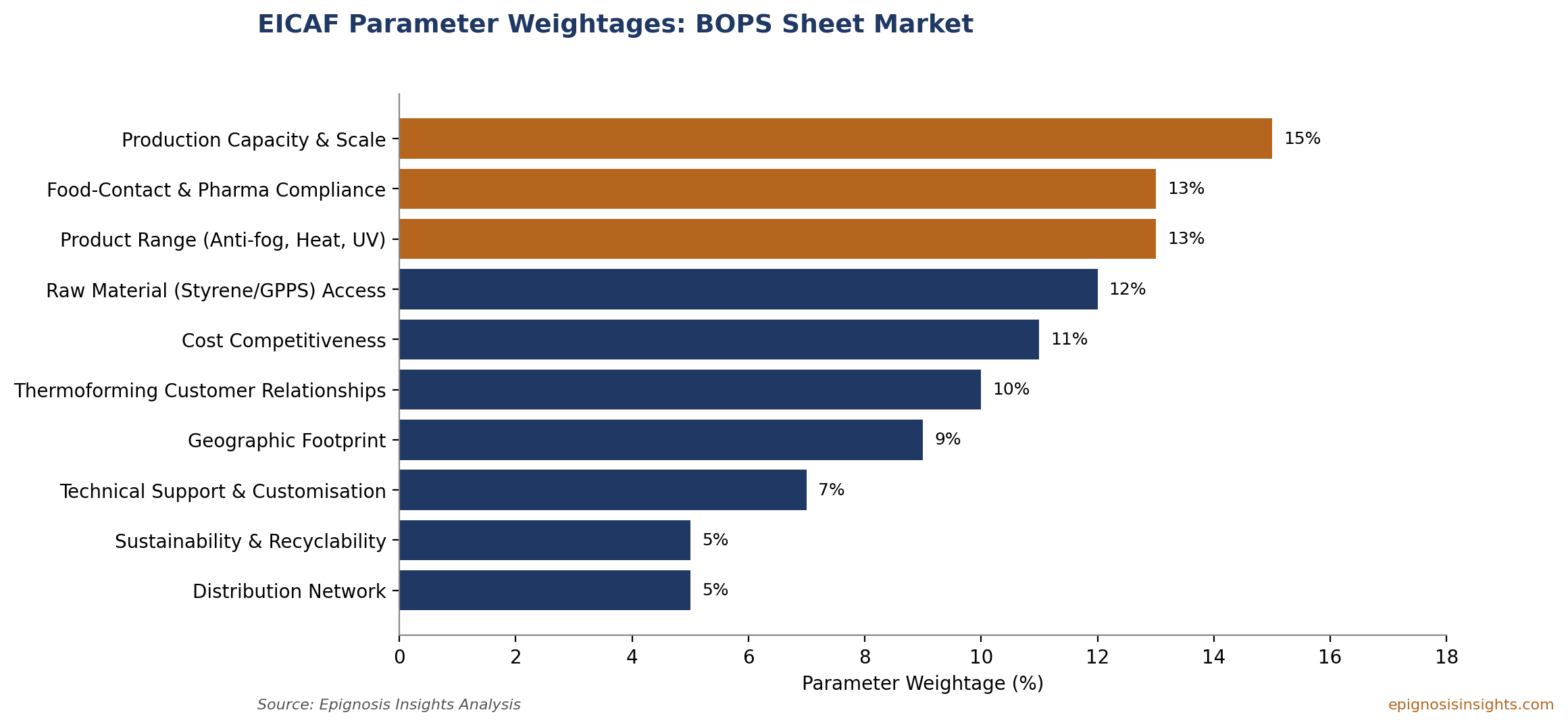
Figure 8: EICAF Parameter Weightages for the Global BOPS Sheet Market
EICAF Scoring Method
Each company is assigned a score from 1 to 5 against every parameter, with the weighted score calculated as Company Score × Parameter Weightage, enabling integrated producers and specialist extruders to be compared consistently.
Related Insights
Specialty BOPS Sheet Grades: Value and Growth Opportunities
BOPS Sheet Market: Regional Analysis and Trends
BOPS Sheet Demand in Food and Pharmaceutical Packaging