Asia Cobalt Price Tracker
Published 16 October 2026 • Benchmarks: hydroxide CIF Asia, sulphate EXW China, metal reference • Coverage: China, Indonesia, Korea, Japan

Published 16 October 2026 • Benchmarks: hydroxide CIF Asia, sulphate EXW China, metal reference • Coverage: China, Indonesia, Korea, Japan
September 2026 marked the sharpest monthly decline in Asian cobalt prices since the Democratic Republic of Congo (DRC) introduced its export controls. Epignosis Insights tracks three Asian benchmarks: cobalt hydroxide CIF Asia, cobalt sulphate ex-works (EXW) China and the global cobalt metal reference. All three fell steeply. The metal reference dropped to about US$39,140 per tonne by 29 September, roughly 30% lower in a month, while hydroxide closed the quarter at US$17.25 per lb and sulphate at RMB58,000 per tonne.
The driver was a recovery in DRC-origin shipments into China under the quota regime, arriving just as battery-grade demand remained soft. The result was a broad repricing from feedstock to chemical, with Indonesian mixed hydroxide precipitate (MHP) payables also cut hard as cheaper hydroxide became available. Epignosis Insights believes the decline has now overshot the structural picture: the DRC’s 2026 export cap remains less than half of its mine output, and Indonesian growth is constrained by sulphur costs. Our October range is RMB54,000–62,000 per tonne for sulphate and US$16.00–18.50 per lb for hydroxide, with a fourth-quarter metal central case of US$41,000 per tonne.
| Indicator | September 2026 | Prior reference | Change |
| Cobalt metal reference (US$/t) | 39,140 (29 Sep) | 56,300 (1 Jul) | ≈–30% m/m |
| Cobalt hydroxide CIF Asia (US$/lb) | 17.25 (≈US$38,030/t) | ≈25.00 (30 Jun, derived) | –31% q/q |
| Cobalt sulphate EXW China (RMB/t) | 58,000 (30 Sep) | 70,000 (26 Aug) | ≈–17% m/m |
| MHP cobalt payables CIF Asia (%) | 65.8 (mid-Sep) | 91.5 (start Q3) | –25.7 pts |
| Cobalt metal EXW Europe (reference) | - | - | ≈–11% q/q |
| DRC 2026 export quota (t Co) | 96,600 | - | Unchanged |
| Epignosis Oct range, sulphate (RMB/t)* | 54,000–62,000 | - | Range-bound |
*Epignosis Insights indicative assessment; derived values are back-calculated from reported quarterly changes. Source: Epignosis Insights compilation from references listed in Section 10.
Cobalt entered the third quarter close to its 2026 highs. The metal reference traded at about US$56,300 per tonne on 1 July and held near that level until early September, after reaching nearly US$58,000 in the first quarter. It then fell to US$39,140 by 29 September, a decline of 30.47% in one month [1]. Epignosis Insights notes that the speed of the fall, rather than its size, is what caught Asian buyers off guard: most of the quarter’s losses were concentrated in four weeks.
The decline ran through the whole Asian chain. Cobalt hydroxide CIF Asia fell 31% over the quarter to US$17.25 per lb, cobalt sulphate EXW China dropped nearly 30% to RMB58,000 per tonne after declining every week in September, and EXW Europe metal eased about 11%. Hydroxide trading stalled in August, with sellers unwilling to accept bids below US$20.00 per lb and buyers holding adequate stock, while recyclers discounted sulphate ahead of Golden Week [2]. Figures 1 to 3 trace the moves. In Epignosis Insights’ view, sulphate led the fall because it sits closest to weak cathode demand, while hydroxide held longer only because few trades were being done.
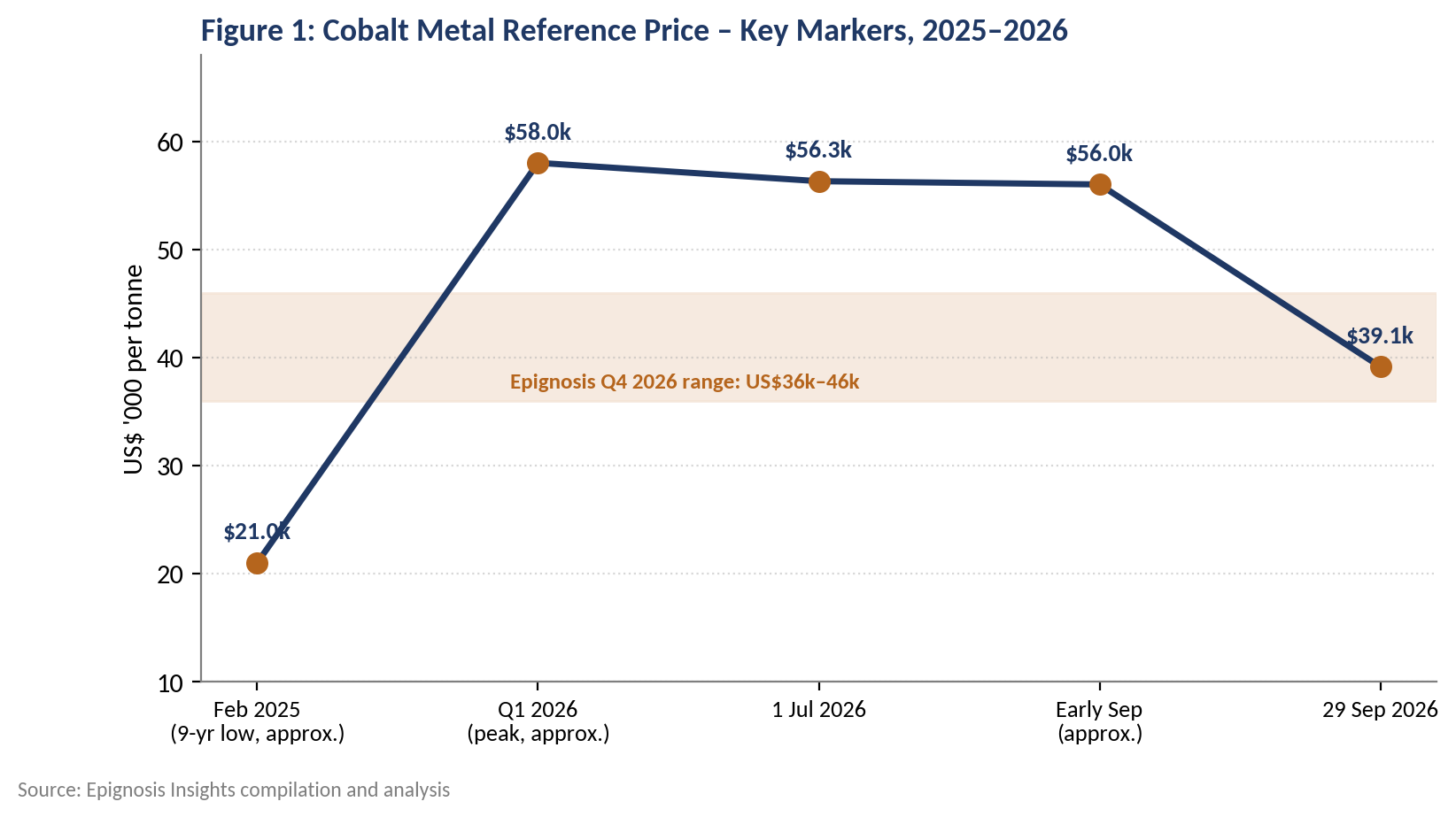
Figure 1: Cobalt metal reference price markers, 2025–2026. Source: Epignosis Insights
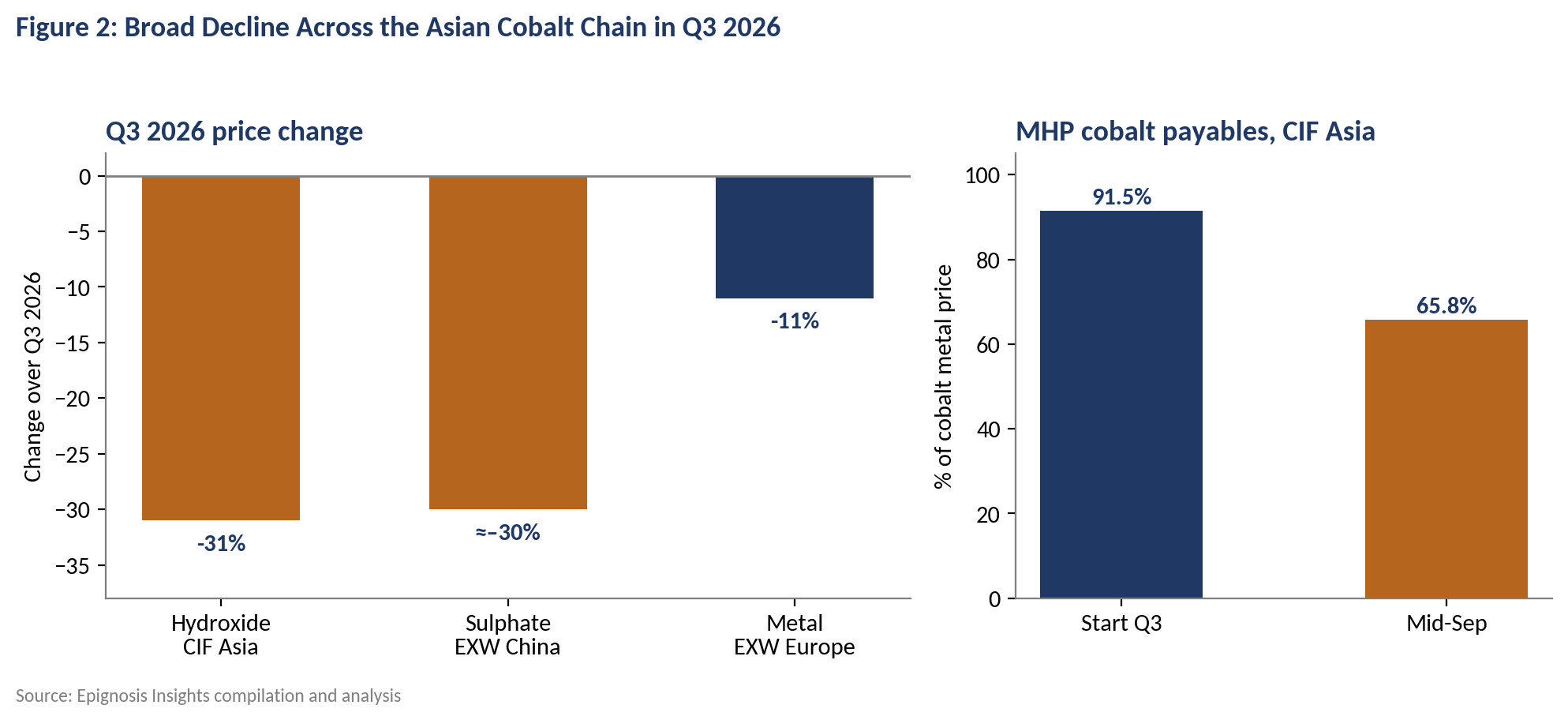
Figure 2: Q3 2026 Asian cobalt price changes and MHP payables. Source: Epignosis Insights
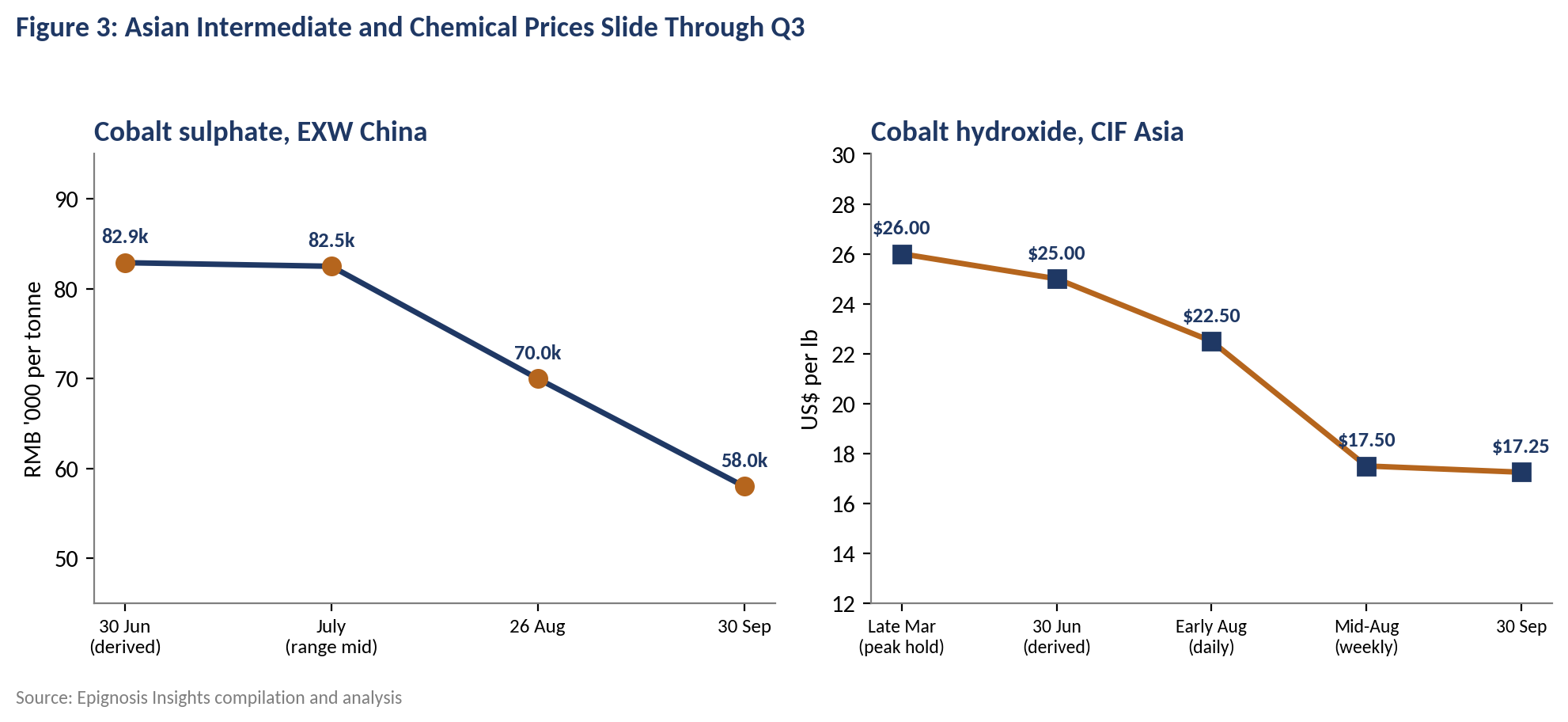
Figure 3: Cobalt sulphate (EXW China) and hydroxide (CIF Asia) price paths. Source: Epignosis Insights
The market turned when DRC material began arriving in volume. On 4 September, Bloomberg reported that cobalt’s rally was fading as Congolese exports picked up under the quota regime, and by late August the state trader Entreprise Générale du Cobalt had shipped 3,995 tonnes of contained cobalt, its full allocated quota [3]. Epignosis Insights reads this as a timing effect: quota holders front-loaded shipments once customs procedures settled, compressing several months of arrivals into Chinese ports over a short period.
The structural cap remains tight. The DRC produced an estimated 230,000 tonnes of cobalt in 2025, or 73% of the world total, while its export quota for 2026 and 2027 is up to 96,600 tonnes a year including 9,600 tonnes for national strategic reserves [4]. The largest producer faces the same constraint: CMOC holds a 2026 export quota of 31,200 tonnes against production guidance of 100,000–120,000 tonnes, and China refined 78% of the world’s cobalt in 2024 while mining almost none of it [5]. Figure 4 shows the scale of the gap between DRC output and what it can legally ship.
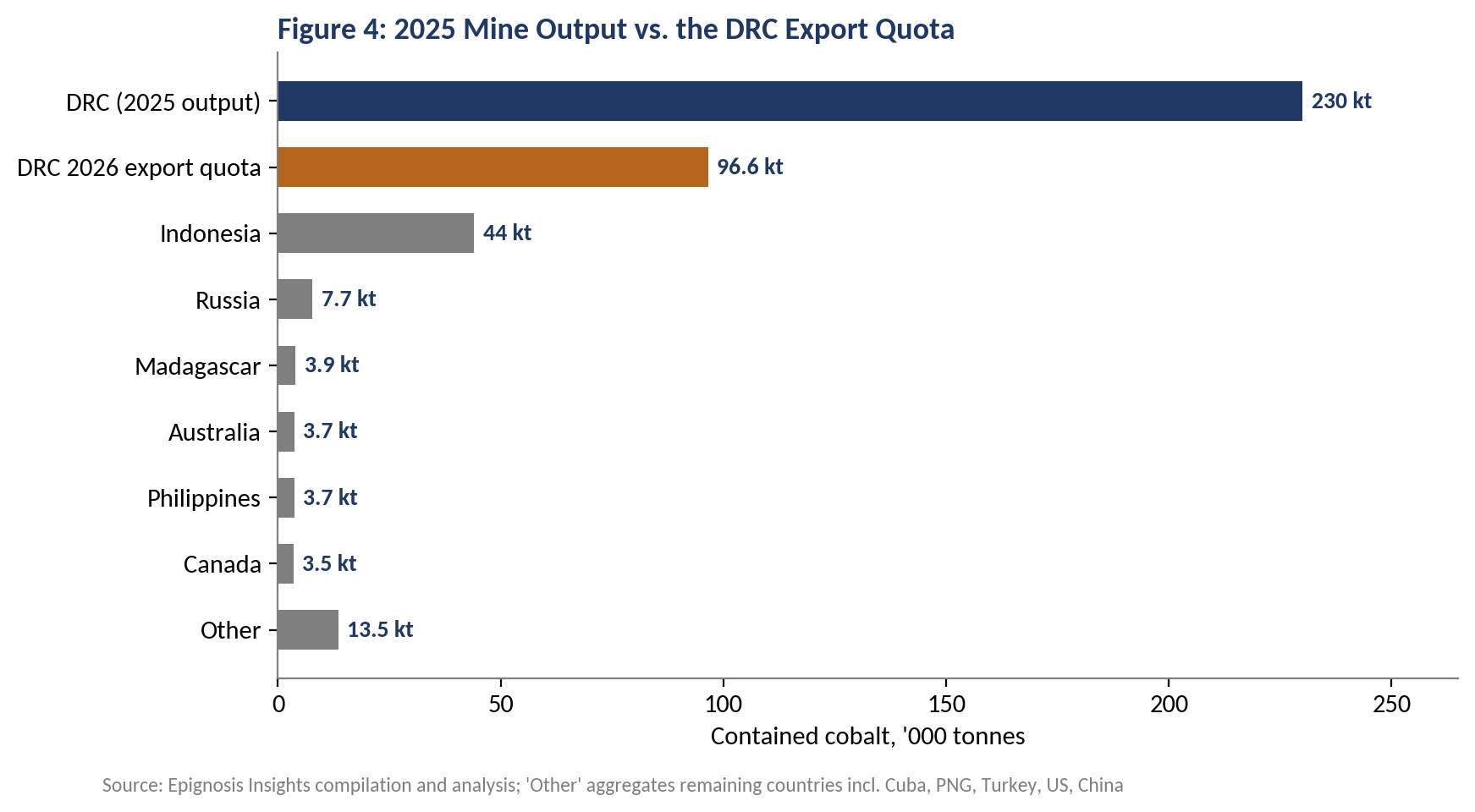
Figure 4: 2025 cobalt mine output by country versus the DRC 2026 export quota. Source: Epignosis Insights compilation
Major producers are still running hard and profitably. CMOC produced 65,305 tonnes of cobalt in the first half of 2026, up 6.93% year on year, while operating revenue rose 42.78% to RMB135.32 billion and net profit attributable to shareholders climbed 86.27% to RMB16.152 billion [6]. Because quotas, not prices, limit exports, Epignosis Insights expects DRC producers to keep mining and stockpiling inside the country, which builds a large overhang that could weigh on prices once quota rules are relaxed after 2027.
Earlier in the year, quota enforcement and limited spot cargoes into China kept hydroxide firm at US$26 per lb until late March 2026, and analysts then expected easing once DRC flows normalised, with any Indonesian disruption adding upside risk [7]. That easing has now arrived in full. For Asian refiners, the shift has restored margins: with hydroxide below US$18 per lb and sulphate at RMB58,000, conversion economics have improved compared with the first half, which may encourage higher refined output in the fourth quarter.
Indonesia is the region’s second pillar of supply, and its growth is under pressure. The Cobalt Institute estimates total global mine supply in 2026 at 225,000 tonnes and has cut its Indonesian MHP production forecast, noting that Indonesia imported 5.35 million tonnes of elemental sulphur in 2025 and that rising sulphur costs weigh on high-pressure acid leach (HPAL) operations [8]. Other projections expect Indonesian cobalt-in-MHP output of about 67,500 tonnes in 2026, a 145% increase on 2025, yet still not enough to offset the DRC shortfall, leaving a projected 2026 deficit of around 10,700 tonnes [9].
The September collapse in MHP payables reflects this competition. With payables falling from 91.5% to 65.8% of the metal price, Indonesian sellers absorbed much of the adjustment. Indonesian MHP traded at about US$51,332 per tonne of contained cobalt on a FOB basis in May 2026 [10], and Epignosis Insights estimates that current payables imply a realised value closer to US$26,000 per tonne. That sharp drop in producer revenue is the main reason we expect Indonesian sellers to resist further cuts in October. Figure 5 maps where each price point sits along the Asian chain, from DRC and Indonesian feedstock through Chinese refining to cathode makers in China, South Korea and Japan.
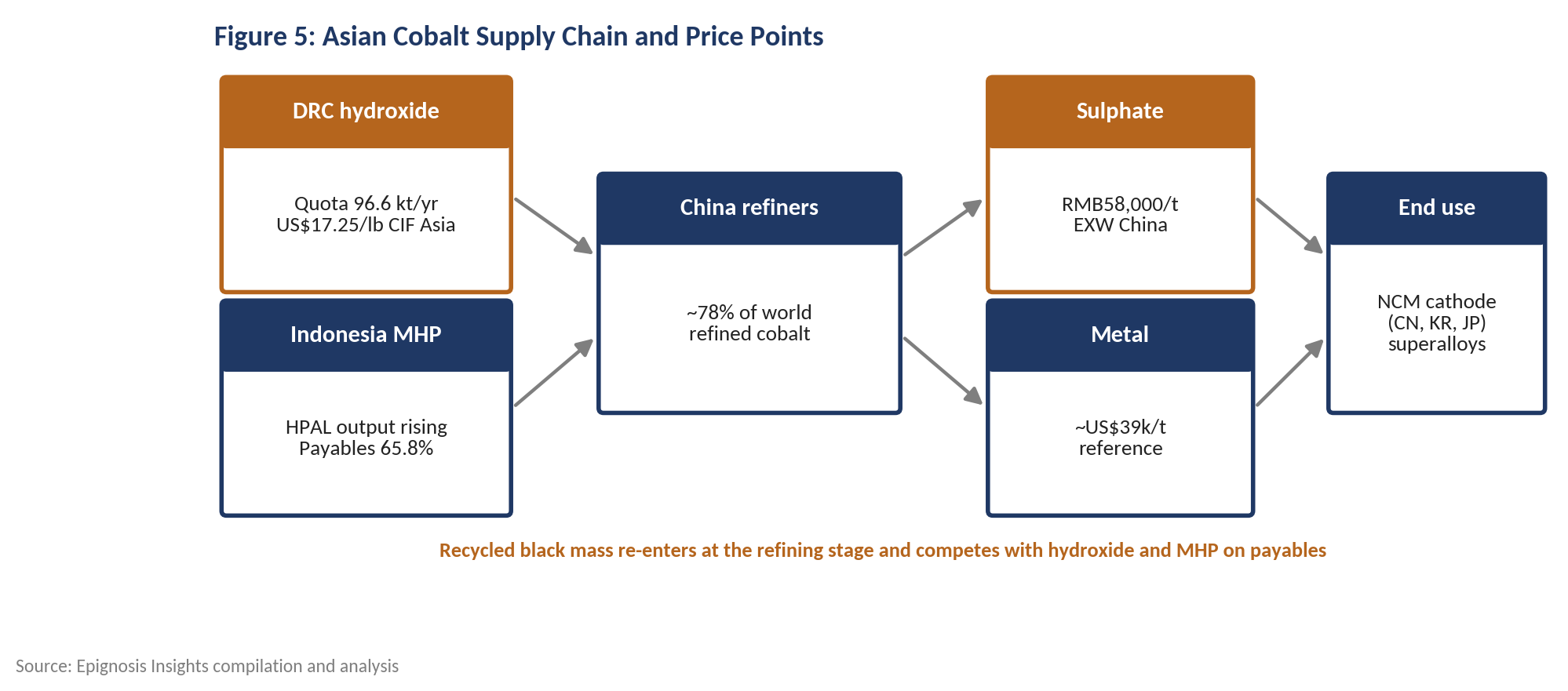
Figure 5: Asian cobalt supply chain and price points. Source: Epignosis Insights
Demand was the missing support in September. Epignosis Insights’ assessment of the Asian cathode sector points to a soft NCM battery order book, as lithium iron phosphate continues to take share in Chinese energy storage and lower-cost electric vehicles. NCM cathode makers in South Korea and Japan, the region’s most cobalt-intensive buyers outside China, are the most exposed to that soft order book and have little reason to chase prices while they are falling. Non-battery demand, including superalloys for aerospace and defence and hard metals, remained steady but is too small to absorb a surge in feedstock arrivals.
The demand outlook is therefore a question of timing rather than direction. Buyers held adequate inventories through August and delayed purchases into the post-Golden Week period, so any return of restocking in October would meet a market where prices have already fallen by a third. Epignosis Insights expects Chinese sulphate demand to recover modestly in the fourth quarter as cathode producers rebuild stock at lower prices, though we see little sign of a strong rebound in NCM output before 2027.
Third-party views still sit well above the current price. The DRC’s quota system drove cobalt prices up about 130% between January 2025 and April 2026 [11], and BMI forecast a 2026 average of US$25 per lb, or about US$55,150 per tonne, as the quota replaced the export ban [12]. That forecast now looks too high for the year as a whole, given September’s fall, but it confirms that the policy-driven floor remains far above the 2025 lows near US$21,000 per tonne.
Epignosis Insights’ base case places the fourth-quarter 2026 cobalt metal reference at US$41,000 per tonne, within a range of US$36,000–46,000 (Figure 6). For Asian chemicals, we expect sulphate to average RMB55,000–65,000 per tonne and hydroxide US$16.00–19.00 per lb. The base case assumes DRC exports run at quota pace without further front-loading, Indonesian MHP growth slows on sulphur costs, and post-holiday restocking provides modest support. Upside risk comes from any tightening of DRC customs processes or quota enforcement; downside risk comes from continued recycler discounting and a further fall in MHP payables.
Epignosis Insights also frames two alternative scenarios. In the upside case, slower DRC customs clearance, an early allocation of the strategic quota to domestic refining projects and a sulphur-driven slowdown at Indonesian HPAL plants would lift the metal reference back above US$48,000 per tonne and hydroxide toward US$21 per lb by December. In the downside case, continued front-loading of DRC quota shipments, deeper recycler discounting and a further slide in MHP payables below 60% would push the metal reference toward US$34,000 per tonne, close to the level at which quota-constrained DRC producers would prefer to hold material in the country rather than sell. We assign roughly 20% probability to each tail, leaving the central range as the most likely outcome for Asian buyers.
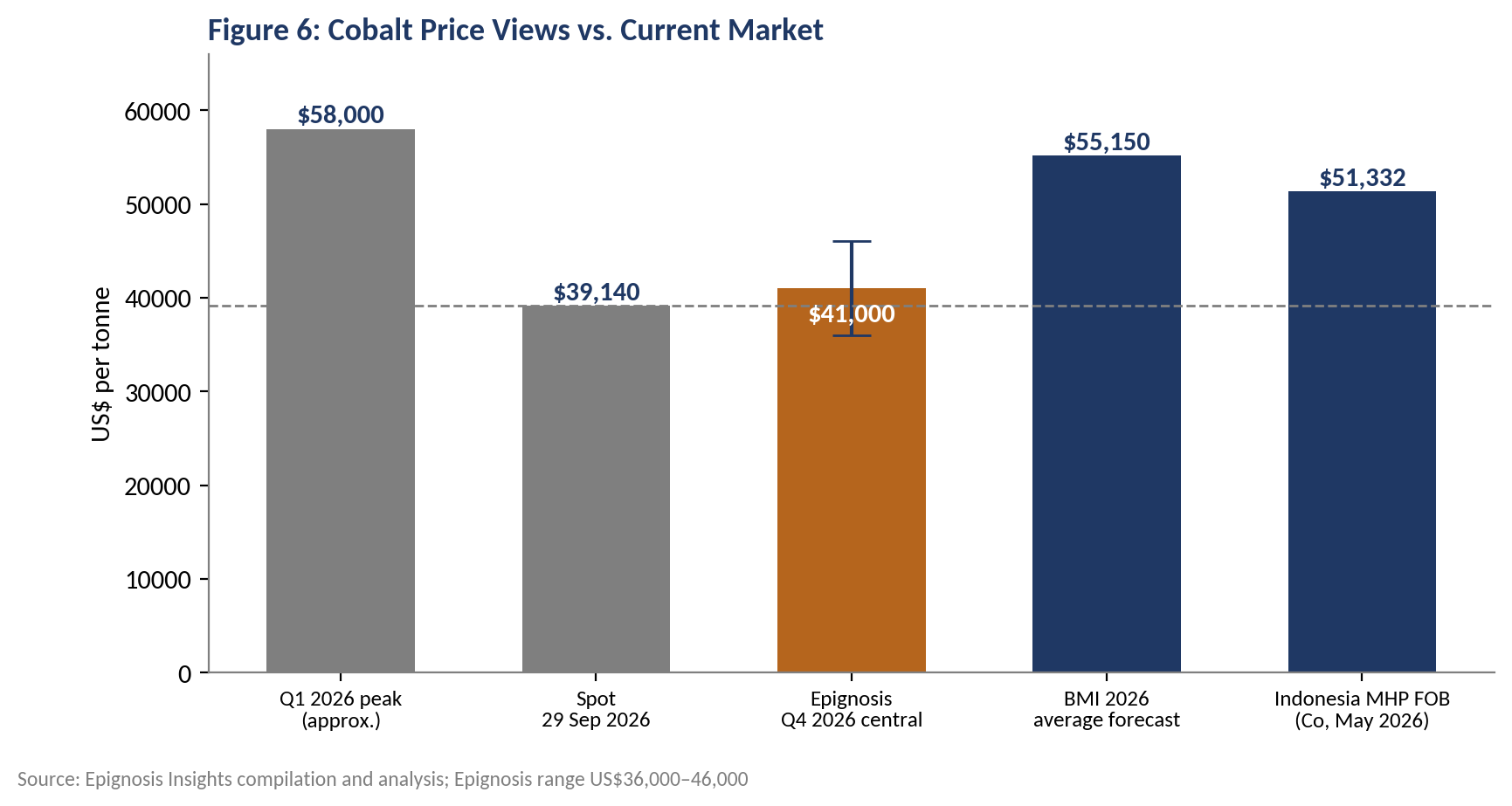
Figure 6: Cobalt price views versus current market. Source: Epignosis Insights compilation
For October, Epignosis Insights expects cobalt sulphate EXW China to trade between RMB54,000 and RMB62,000 per tonne and hydroxide CIF Asia between US$16.00 and US$18.50 per lb, with a stabilising bias as buyers return after Golden Week. The key signposts are whether hydroxide trades finally cross the bid-offer gap, the pace of DRC customs clearance, any further recycler discounting in sulphate, and MHP payable levels in Indonesia. Figure 7 summarises the balance of drivers. Our procurement guidance for Asian cathode makers is to use the current dip to extend sulphate cover into the first quarter of 2027, to favour hydroxide over MHP while the payable gap persists, and to avoid long fixed-price commitments until DRC export patterns for 2027 become clear.
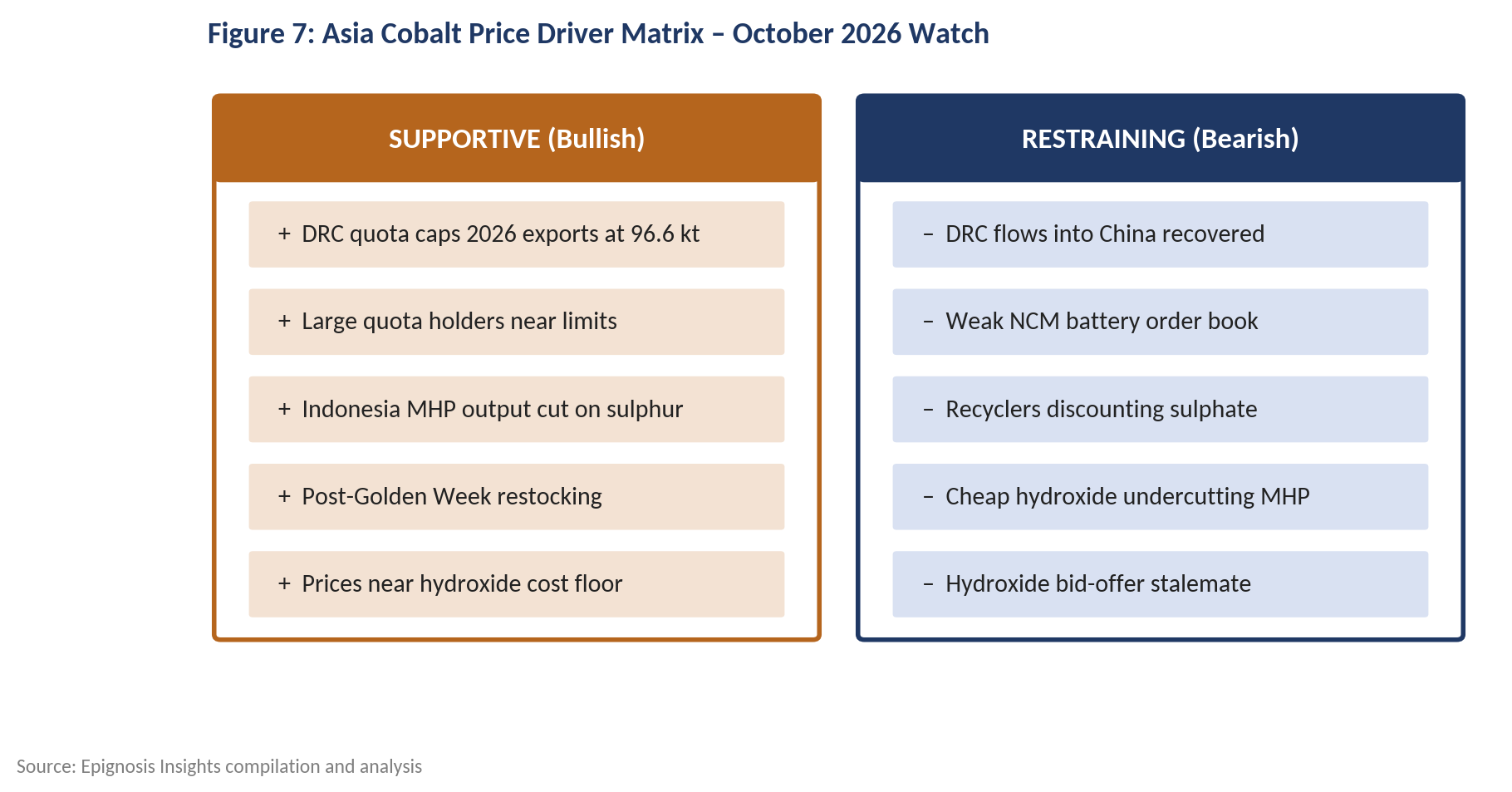
Figure 7: Asia cobalt price driver matrix for October 2026. Source: Epignosis Insights
Epignosis Insights is the primary compiling source for this tracker; all derived values, month-on-month calculations, indicative assessments, ranges and forecasts are Epignosis Insights analysis. Supporting references are listed below, and each external source is referenced once only. Hydroxide prices are quoted per pound of contained cobalt; sulphate prices are EXW China in RMB per tonne of product. Assessments marked indicative are not published benchmark prices.
| # | Category | Source | Data used |
| - | Primary source | Epignosis Insights – Commodity Price Tracking Desk | Compilation, indicative assessments, forecasts |
| 1 | News | Ecofin Agency – Cobalt prices drop 31% in Q3 | Metal reference prices, DRC 2025 exports |
| 2 | Consulting firm / price reporting | Benchmark Mineral Intelligence – Q3 2026 Cobalt | Price Review Hydroxide, sulphate, metal, MHP payables |
| 3 | News | Wansom Briefly – Cobalt's 30% slide and the DRC quota | EGC shipments, Bloomberg 4 Sep report |
| 4 | Government agency | U.S. Geological Survey – Mineral Commodity | Summaries 2026, Cobalt 2025 mine output by country, quota |
| 5 | News | Geopolitical Monitor – DRC export quota analysis | CMOC quota vs guidance, China refining share |
| 6 | Company report | CMOC Group – 2026 Interim Results (HKEX) | H1 2026 cobalt output and earnings |
| 7 | Consulting firm | S&P Global Commodity Insights – Asian cobalt trade review | Hydroxide peak, Indonesia supply |
| 8 | Industry association | Cobalt Institute – Biannual Cobalt Market Report | H1 2026 2026 mine supply, Indonesia MHP |
| 9 | News | Battery-Tech Network – Fastmarkets cobalt deficit outlook | Indonesia MHP growth, 2026 deficit |
| 10 | News / market data | Shanghai Metals Market – Indonesia cobalt deep research | Indonesia MHP FOB price |
| 11 | Company report | Cobalt Blue Holdings – investor update on IEA outlook | Quota-driven price rise |
| 12 | News | IMA Asia – BMI cobalt forecast report | BMI 2026 average price |
Disclaimer: This tracker is prepared by Epignosis Insights for information purposes only and does not constitute investment or trading advice. Indicative assessments reflect Epignosis Insights’ judgement based on publicly available information as of 11 October 2026.