Global Lithium Carbonate Price Tracker
Published 16 October 2026 • Benchmarks: China EXW battery grade (RMB/t), CIF Asia (US$/t) • Coverage: Global


Published 16 October 2026 • Benchmarks: China EXW battery grade (RMB/t), CIF Asia (US$/t) • Coverage: Global
September 2026 was the most volatile month for lithium carbonate this year. Epignosis Insights tracks battery-grade lithium carbonate ex-works (EXW) China as the global price-setting benchmark, and on that basis the price fell from about RMB159,300 per tonne at the end of August to RMB127,750 per tonne by 30 September, a monthly decline of roughly 19.8%. The fall erased the entire August rally within days and left Chinese spot prices near their lowest levels of 2026, well below the mid-May peak of about RMB210,000.
The sell-off was driven by sentiment rather than a collapse in fundamentals. A methodological revision to a third-party inventory estimate, a pause on new battery cell capacity approvals in China and softer NCM cathode schedules combined to trigger heavy liquidation on the Guangzhou Futures Exchange. Against this, supply-side signals remained supportive, most notably the revocation of the environmental approval for CATL’s Jianxiawo mine. Seaborne prices followed China lower with their usual lag, and Epignosis Insights estimates CIF Asia battery-grade carbonate closed the month around US$16,800–17,400 per tonne. Our October range for China EXW carbonate is RMB118,000–135,000 per tonne, with a fourth-quarter central case of about US$17,500 per tonne on a seaborne basis.
| Indicator | September 2026 | Prior reference | Change |
| China EXW battery-grade carbonate (RMB/t) | 127,750 (30 Sep) | 159,300 (end-Aug) | –19.8% |
| Alternative China spot series (RMB/t) | 122,800 (30 Sep) | - | - |
| China EXW carbonate, US$ basis (US$/t) | ≈19,025 | - | Q3: –20.8% |
| CIF Asia battery-grade carbonate (US$/t)* | ≈16,800–17,400 | 19,750 (2 Sep) | ≈–12% to –15% |
| Spodumene SC6 FOB Australia (US$/t) | 1,780 (end-Q3) | - | Q3: –23.5% |
| China carbonate production (t) | 114,700 | - | +7.7% m/m |
| Epignosis October range, China EXW (RMB/t)* | 118,000–135,000 | - | Range-bound |
*Epignosis Insights indicative assessment. Source: Epignosis Insights compilation from price reporting, exchange, government, association and company data listed in Section 10.
The month opened on a firm footing. Battery-grade carbonate had rebounded through late August, briefly touching RMB160,000, but the rally failed to hold. By 8 September the Shanghai Ganglian quote had dropped to RMB142,800, more than 10% below the end-August level of RMB159,300, while the main futures contract lost 10.6% in the month including a single-day plunge of 7.41% on 4 September [1]. On the same day, the SMM battery-grade carbonate index stood at US$19,248.61 per tonne, and the forward curve on the exchange was flat to slightly backwardated, with contracts from October 2026 to June 2027 trading between roughly RMB140,000 and RMB144,000 [2].
The decisive break came mid-month. Battery-grade carbonate prices fell 20.8% over the third quarter to RMB127,750 per tonne EXW China, hydroxide fell 19.2% and spodumene concentrate fell 23.5% to US$1,780 per tonne FOB Australia. The sharpest move came on 16 September, when EXW China carbonate fell 7.3% and CIF Asia spot fell 11.9% in a single assessment after a Chinese third-party data provider sharply revised up its lithium inventory estimate, a change later described as primarily methodological [3]. Epignosis Insights views this episode as a classic positioning shock: futures longs unwound first, spot followed, and seaborne markets repriced last (Figures 1 and 2).
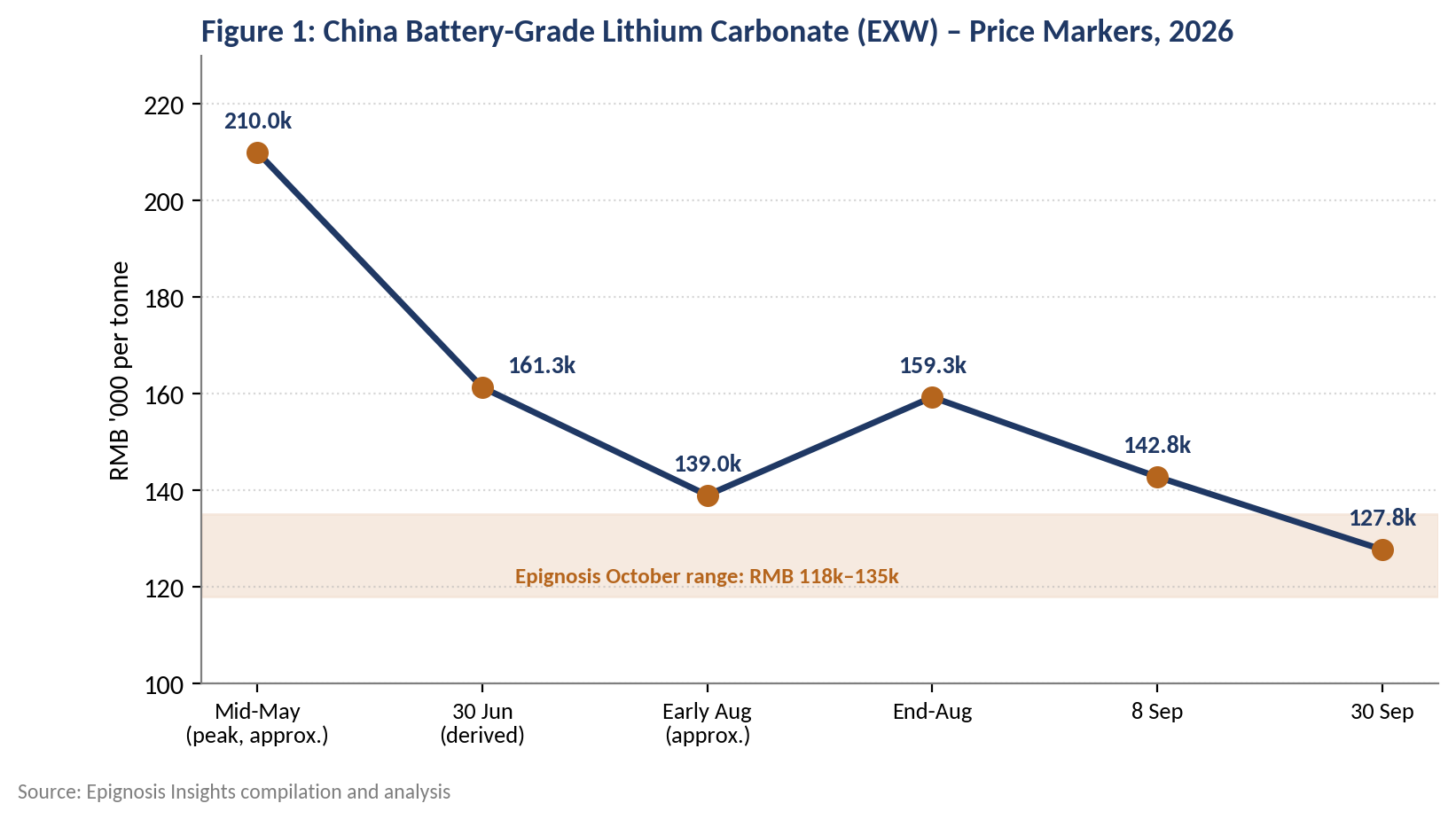
Figure 1: China battery-grade lithium carbonate (EXW) price markers, 2026. Source: Epignosis Insights
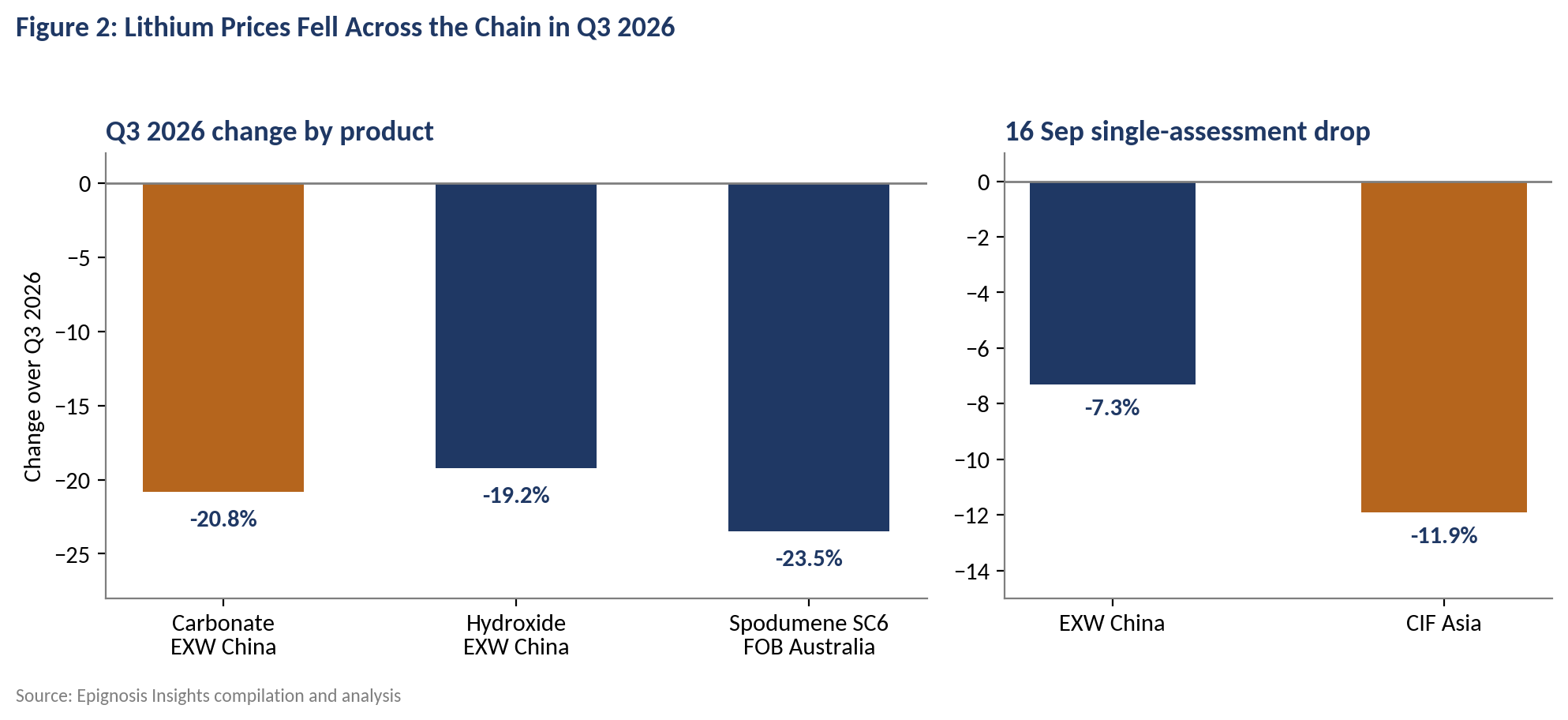
Figure 2: Q3 2026 lithium price changes and the 16 September shock. Source: Epignosis Insights
Chinese supply kept rising into the sell-off. China’s lithium carbonate production reached 114,700 tonnes in September, up 7.7% month on month, although final output was revised down from early-month schedules as feedstock tightened and prices fell. Converters increasingly favoured long-term contracts and held back from spot sales, traders stayed on the sidelines after pre-holiday destocking, and October output is expected to rise a further 1.1% [4].
Epignosis Insights notes an important disconnect: while sentiment centred on the revised third-party inventory figure, independent tracking continued to show chemical destocking through the quarter. That gap between perception and physical balance is why we expect prices to stabilise rather than continue falling at September’s pace. Figure 3 shows how shocks travel along the chain. Direction is set by Chinese futures and spot, then passed to CIF Asia, Europe and North America with a lag of several weeks, which means non-Chinese buyers typically see September’s decline reflected in October and November contract settlements.
Regional spreads are widening as a result. With Chinese spot already near RMB128,000 and seaborne CIF Asia still adjusting, Epignosis Insights estimates the premium of delivered carbonate in Europe and North America over Chinese ex-works prices has widened to roughly US$1,500–2,500 per tonne on an indicative basis. That spread reflects freight, duties, qualification requirements for non-Chinese supply chains and the slower reset of contract formulas. For European and North American cathode developers, the practical implication is that September’s headline collapse overstates the near-term relief available to them; the bulk of the adjustment should reach those markets during the fourth quarter.
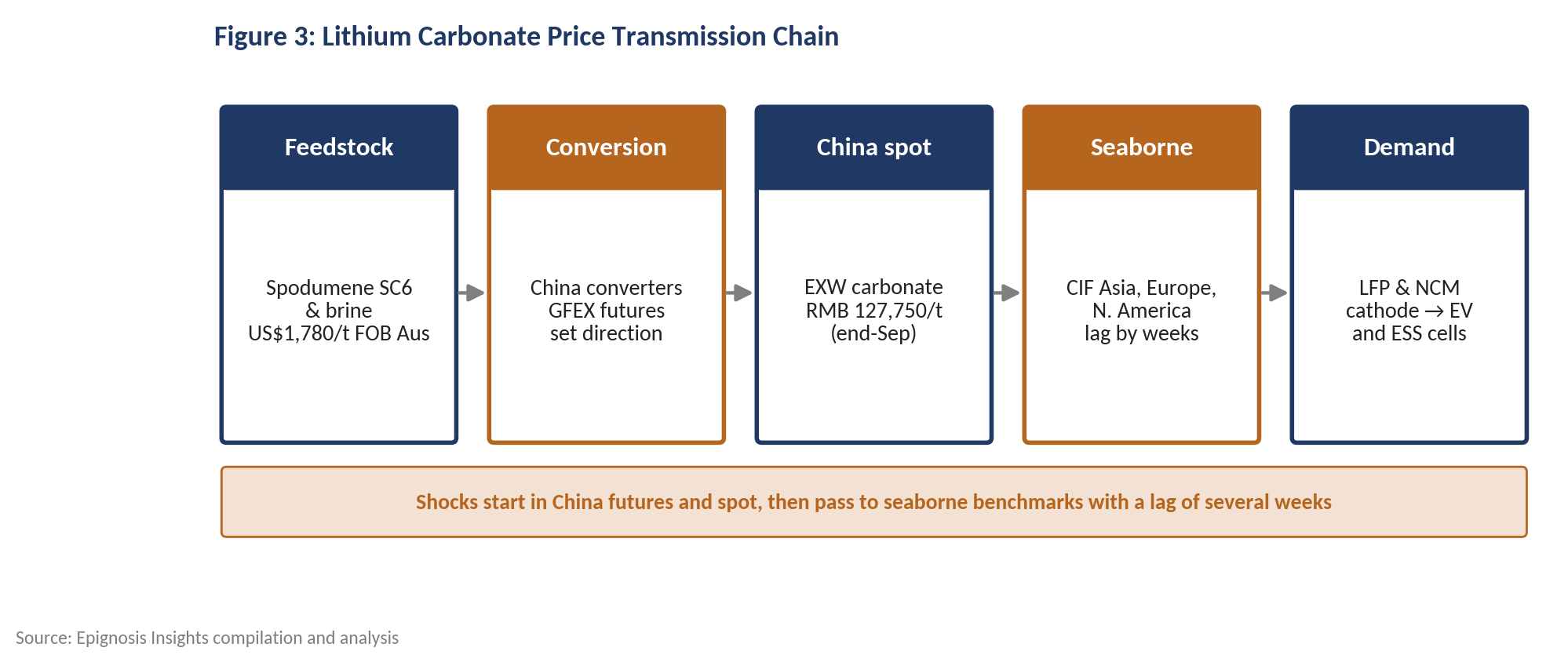
Figure 3: Lithium carbonate price transmission chain. Source: Epignosis Insights
Supply signals in September pointed in opposite directions. China’s largest lithium mine, CATL’s Jianxiawo operation in Jiangxi, lost its licence and returned to care and maintenance after regulators revoked its environmental impact assessment, while major Chinese producers reported sharply improved first-half results, with Ganfeng Lithium swinging to profit and Tianqi Lithium’s profit surging 49-fold [5]. Epignosis Insights treats the Jianxiawo delay as the most important bullish supply variable for the fourth quarter because a restart now requires a full new review that could extend into 2027.
Outside China, higher prices earlier in the year have brought idled hard-rock capacity back, including Mineral Resources’ Bald Hill and Core Lithium’s Finniss in Australia, and those restarts weighed on prices in September [6]. Established producers are also running harder. PLS described FY26 as a record year that demonstrated its through-cycle strategy and declared a fully franked final dividend of 5 cents per share [7]. In Epignosis Insights’ view, the combination of returning Australian tonnage and rising Chinese conversion output limits the upside from Jianxiawo, keeping the market in a range rather than a renewed squeeze.
Underlying demand remains firm despite the gloomier sentiment. China’s new energy vehicle sales rose 17.8% year on year to 1.643 million units in August, and NEVs took a record 60.6% share of all new vehicle sales, even as the overall domestic car market recorded year-on-year declines for five consecutive months [8]. Exports are carrying a growing share of Chinese vehicle volumes, which supports battery output even when domestic consumers hold back.
The longer-run demand base is broadening beyond vehicles. Global battery demand grew by more than 35% in 2025 to surpass 1.5 TWh, with battery storage emerging as a major growth driver, and lithium demand has risen by around 25% a year on average over the past two years [9]. Epignosis Insights’ reading of September production schedules is that LFP cathode output for energy storage held up better than NCM, which is consistent with a market where storage demand cushions weakness in premium EV chemistries. The near-term risk is policy-led: China’s pause on new cell capacity approvals slows capacity growth rather than current consumption, but it weighs heavily on forward sentiment.
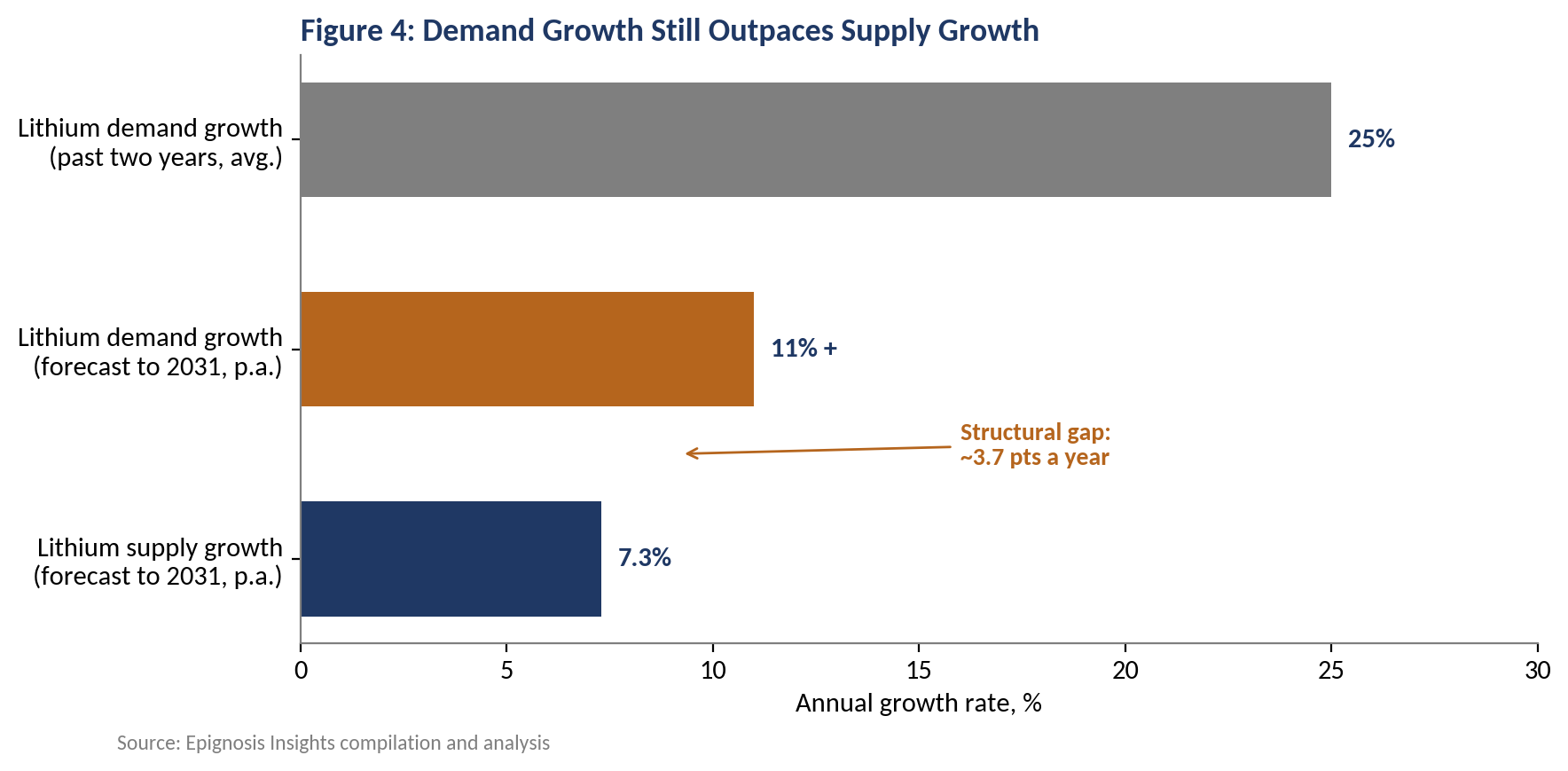
Figure 4: Lithium demand growth versus supply growth. Source: Epignosis Insights compilation
Producer results show how far pricing has recovered from the 2025 trough, even after the latest correction. Albemarle’s average realised lithium price rose 60.5% year on year to US$19.53 per kilogram of lithium carbonate equivalent in the second quarter of 2026, up from US$12.17, lifting Energy Storage net sales 78% to US$1.3 billion [10]. Because producers sell much of their volume on lagged or contract-based terms, Epignosis Insights expects third-quarter realised prices to hold close to second-quarter levels, with September’s spot decline feeding into fourth-quarter realisations instead (Figure 5).
For buyers, this lag matters. Contract prices indexed to monthly averages will reflect September’s fall gradually, so cathode producers and cell makers should expect cost relief to arrive over the coming two to three months rather than immediately. Producers, meanwhile, retain healthy margins at current levels, which reduces the risk of further curtailments that would otherwise put a floor under prices.
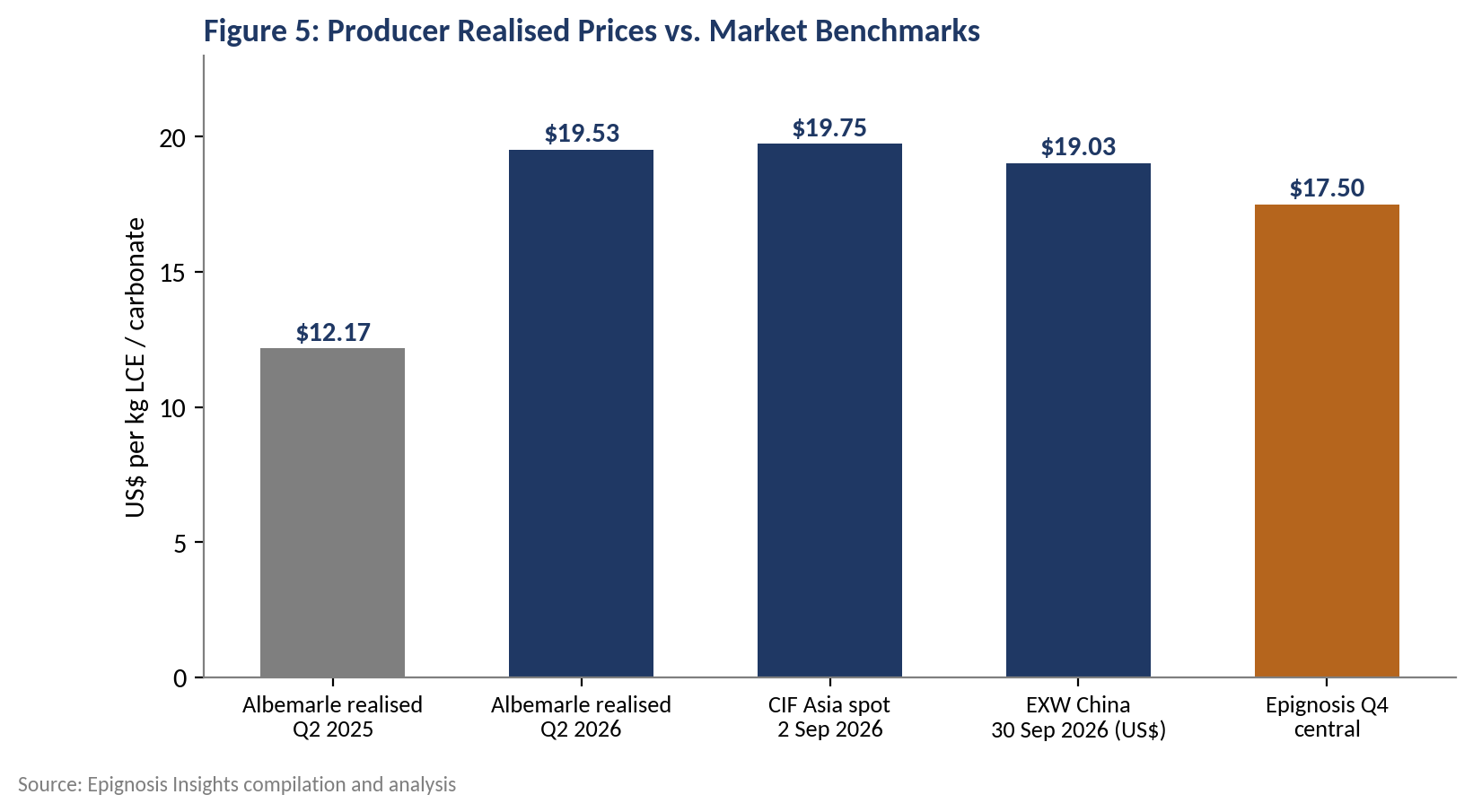
Figure 5: Producer realised prices versus market benchmarks. Source: Epignosis Insights compilation
Medium-term fundamentals remain constructive. The Australian Government expects global lithium demand to grow by more than 11% a year to 2031, against supply growth of about 7.3% a year, while projecting lithium hydroxide prices to ease from US$21,100 to US$16,200 per tonne in real terms by 2031 [11]. Bank forecasts made late last year looked for battery-grade carbonate at US$18,000 per tonne by the fourth quarter of 2026 [12], and price reporting agencies expect energy storage to pull forward future lithium deficits [13]. Policy is adding friction: a 2% consumption tax on lithium-ion batteries took effect in China on 1 September 2026, rising to 4% from September 2027, while corporate projections cited by Chile’s Cochilco point to a stabilisation price of US$21,363 per tonne by 2027 [14].
Epignosis Insights’ base case places fourth-quarter 2026 CIF Asia battery-grade carbonate at US$17,500 per tonne, within a range of US$16,000–19,000, and China EXW carbonate between RMB115,000 and RMB140,000 per tonne (Figure 6). The base case assumes Jianxiawo stays offline through year-end, Australian restarts continue to ramp, and sentiment recovers modestly once inventory data stabilise. A confirmed shift of cell orders away from CATL or a further slowdown in NCM cathode schedules would push prices toward the bottom of the range.
Epignosis Insights also frames two alternative scenarios. In the upside case, a faster-than-expected stall in Australian ramp-ups, a longer Jianxiawo review and a rebound in NCM schedules would lift China EXW carbonate back above RMB150,000 and CIF Asia toward US$20,000 per tonne by December. In the downside case, confirmed order losses at CATL, an extension of the capacity approval pause to existing expansions and continued Chinese output growth would push China EXW below RMB110,000, testing the cost floor of marginal lepidolite and direct-shipping ore supply. We assign roughly 20% probability to each tail, leaving the central range as the most likely outcome.
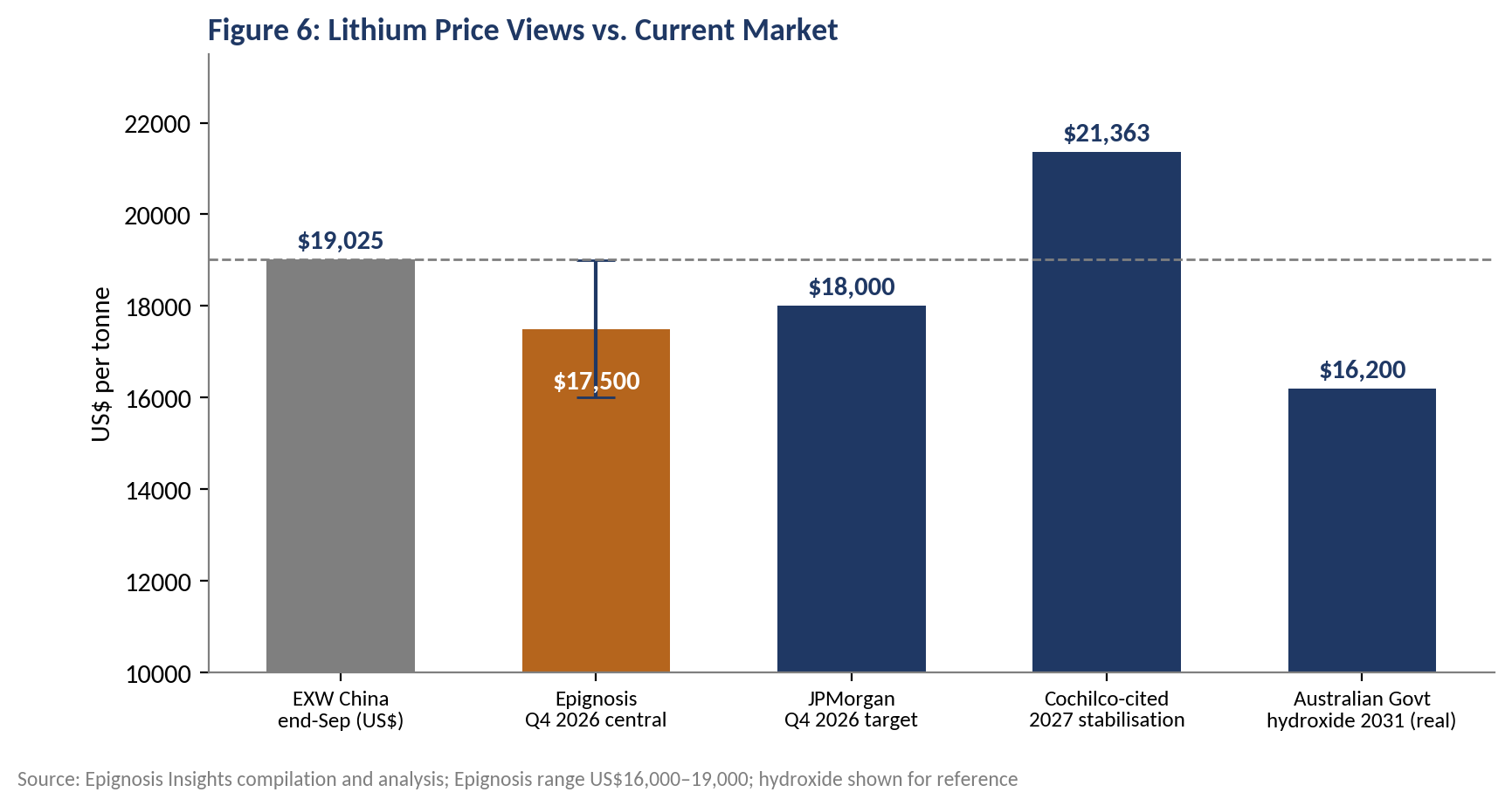
Figure 6: Lithium price views versus current market. Source: Epignosis Insights compilation
For October, Epignosis Insights expects China EXW battery-grade carbonate to trade between RMB118,000 and RMB135,000 per tonne, with a mild recovery bias as Chinese buyers restock after the National Day holiday. The key signposts are the progress of the Jianxiawo environmental review, confirmation or denial of CATL supplier-switching rumours, futures positioning on the Guangzhou exchange, October production data and the pace of Australian ramp-ups. Figure 7 summarises the balance of drivers. Our procurement guidance is for cathode and cell makers to use dips toward RMB120,000 to add spot coverage, to keep the bulk of 2027 volumes on formula-based contracts, and for producers to avoid locking in fixed prices below US$16,000 per tonne while demand fundamentals remain firm.
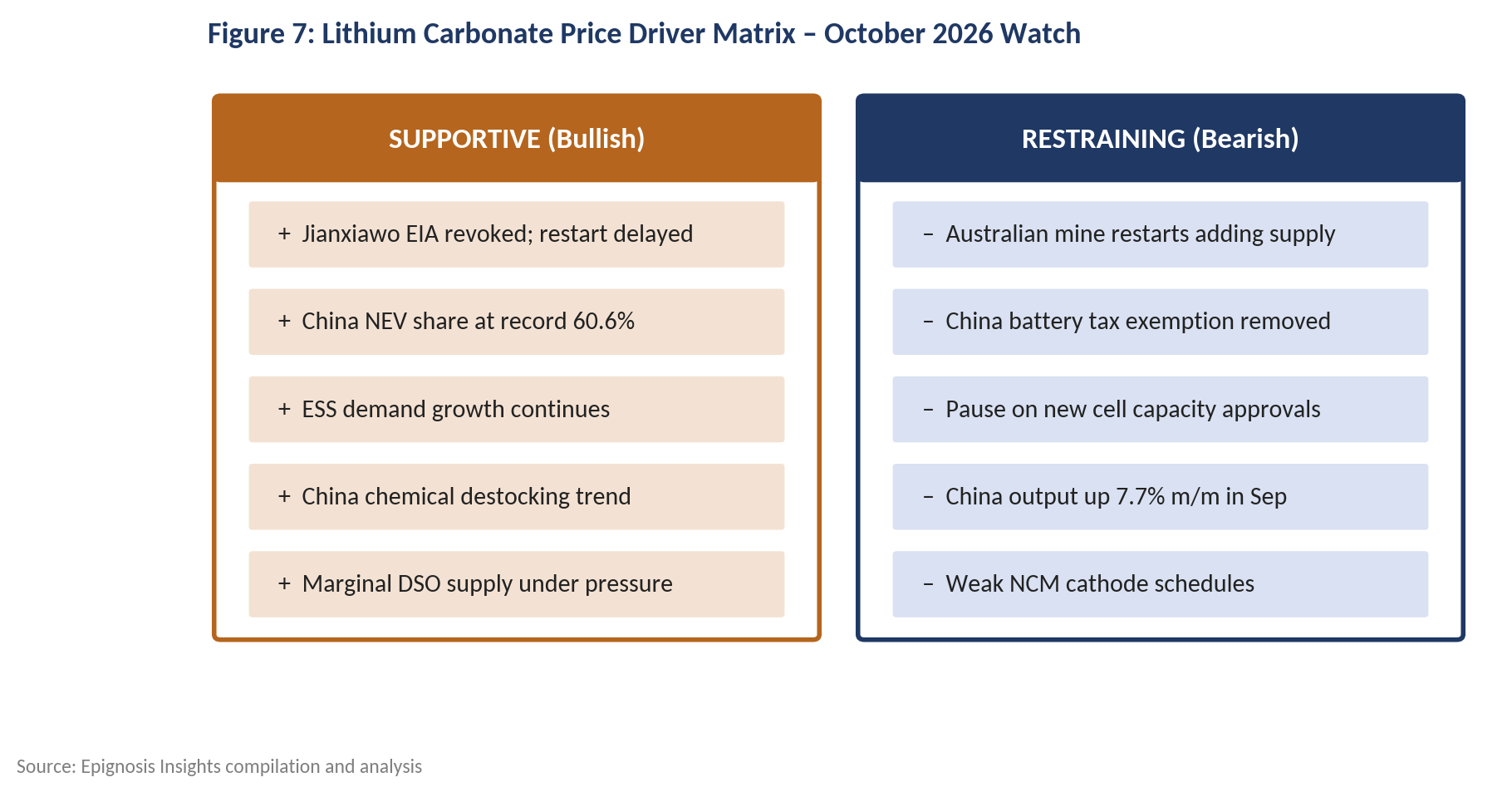
Figure 7: Lithium carbonate price driver matrix for October 2026. Source: Epignosis Insights
Epignosis Insights is the primary compiling source for this tracker; all derived values, month-on-month calculations, indicative CIF Asia assessments, ranges and forecasts are Epignosis Insights analysis. Supporting references are listed below, and each external source is referenced once only. RMB prices are battery grade, ex-works China, VAT treatment as published by the originating source. Assessments marked indicative are not published benchmark prices.
| # | Category | Source | Data used |
| - | Primary source | Epignosis Insights – Commodity Price Tracking Desk | Compilation, indicative assessments, forecasts |
| 1 | News | BigGo Finance (Shanghai Ganglian data) | End-Aug and 8 Sep China spot, GFEX moves |
| 2 | News / market data | Shanghai Metals Market (SMM) – lithium prices | 8 Sep USD index, GFEX curve |
| 3 | Consulting firm / price reporting | Benchmark Mineral Intelligence – Q3 2026 Lithium Price Review | Q3 price changes, 16 Sep drop, inventory revision |
| 4 | News / market data | Mysteel – China lithium market | Sep production, Oct outlook, converter behaviour |
| 5 | News | Seeking Alpha – Lithium Miners News, September 2026 | Jianxiawo licence, Ganfeng and Tianqi H1 |
| 6 | News / market data | LithiumChart (Trading Economics series) | 30 Sep China spot, Australian restarts |
| 7 | Company report | PLS Group – FY26 Full Year Results (ASX, 24 Aug 2026) | Producer results and outlook |
| 8 | Industry association | China Association of Automobile Manufacturers (via Gasgoo) | August NEV sales and share |
| 9 | Government agency (intergovernmental) | International Energy Agency – Global Critical Minerals Outlook 2026 | Battery and lithium demand growth |
| 10 | Company report | Albemarle – Second Quarter 2026 Results | Realised lithium price, Energy Storage sales |
| 11 | Government agency | Australian Government DISR – Resources and Energy Quarterly, Sep 2026 | Supply-demand growth, price outlook |
| 12 | News | Tiger Brokers news – JPMorgan lithium note | Q4 2026 carbonate target |
| 13 | News | Investing News Network – Fastmarkets lithium outlook | Deficit outlook, ESS demand |
| 14 | News | Discovery Alert – Lithium market outlook, Sep 2026 | China battery tax, Cochilco price |
Disclaimer: This tracker is prepared by Epignosis Insights for information purposes only and does not constitute investment or trading advice. Indicative assessments reflect Epignosis Insights’ judgement based on publicly available information as of 11 October 2026.