Asia Benzene Price Tracker – September 2026
Monthly assessment of FOB Korea, CFR China, CFR India and FOB Southeast Asia benzene prices, with analysis of crude and naphtha costs, supply, derivative demand and the Q4 2026 outlook


Monthly assessment of FOB Korea, CFR China, CFR India and FOB Southeast Asia benzene prices, with analysis of crude and naphtha costs, supply, derivative demand and the Q4 2026 outlook
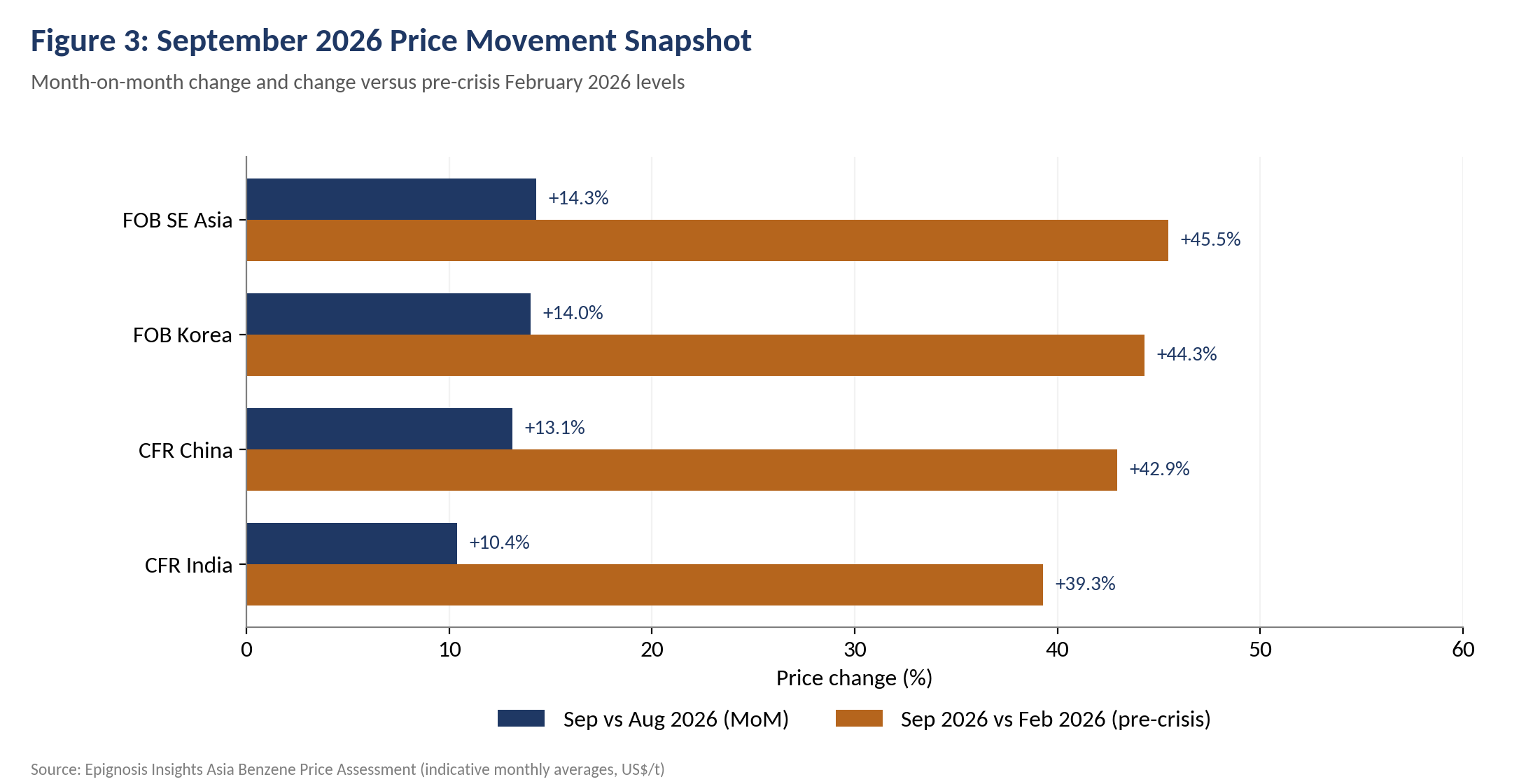
Asian Benzene Prices Rose Sharply in September 2026, driven by a rally in crude oil, reduced aromatics output from naphtha crackers and refineries in Northeast Asia, and low inventories in China. The Epignosis Insights assessment for FOB Korea benzene averaged US$1,140 per tonne in September, up 14.0% from August and the highest monthly average since March, when the first wave of disruption to shipping through the Strait of Hormuz sent feedstock costs soaring. CFR China rose 13.1% to US$1,165 per tonne, CFR India rose 10.4% to US$1,170 per tonne and FOB Southeast Asia rose 14.3% to US$1,120 per tonne.
Prices peaked in mid-September and eased slightly in the final days of the month as crude oil retreated. All four benchmarks remain around 40–45% above their February 2026 levels, before the crisis began. The rally has restored producer margins, with the benzene–naphtha spread widening to its highest level of the year, but it has squeezed downstream styrene producers, who have been unable to pass on the full increase in costs. Epignosis Insights expects benzene prices to soften gradually in Q4 2026 under its base case, but the market remains highly sensitive to developments in the Middle East and their effect on crude oil and naphtha supply.
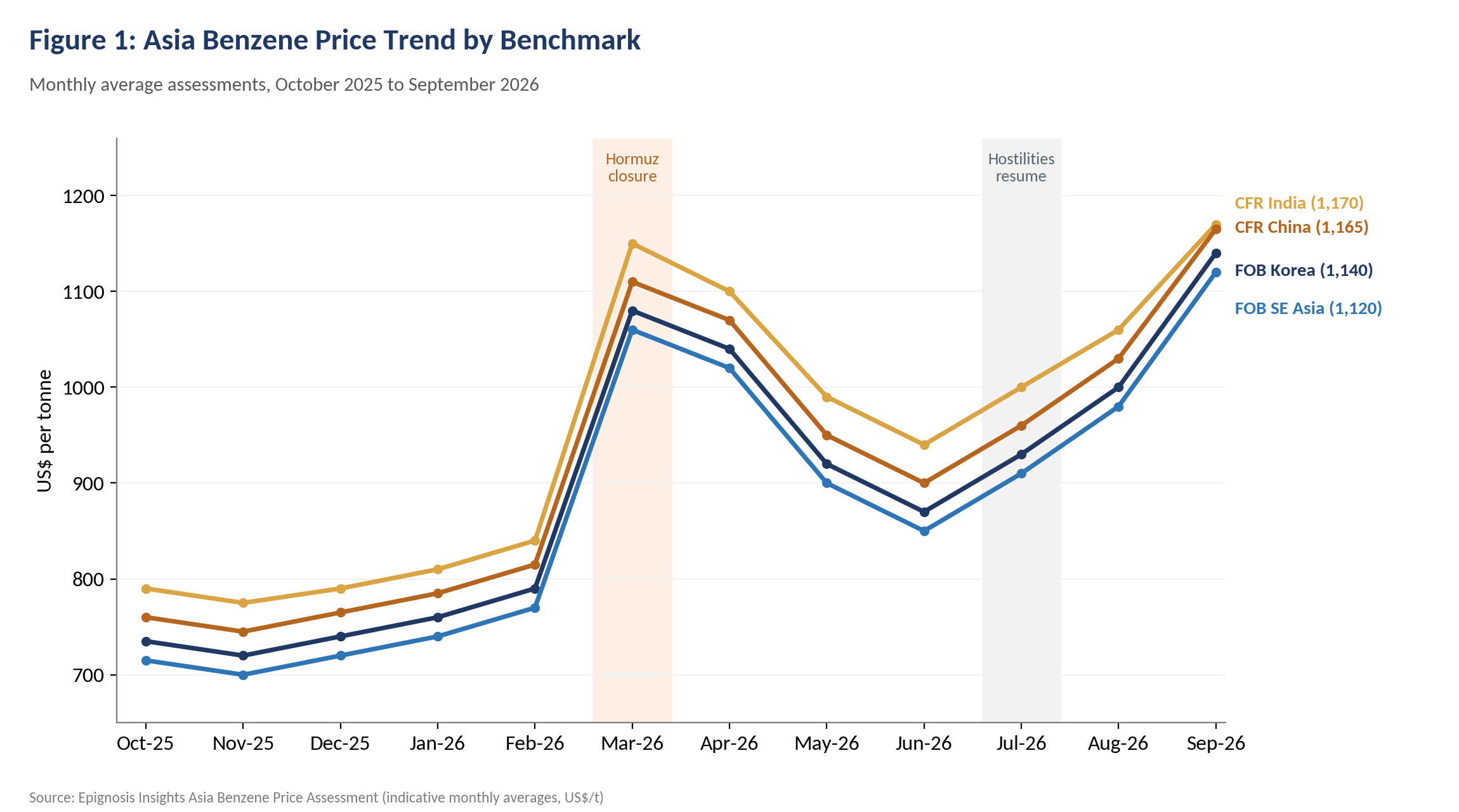
FOB Korea is the main export benchmark for Asian benzene. Fibre2Fashion reported that FOB Korea benzene rose 13.3% between August 21 and September 18, from US$1,015 to US$1,150 per tonne, tracking a sharp rally in crude oil. Prices reached their highest point around September 11, when Epignosis Insights estimates that FOB Korea benzene briefly approached US$1,200 per tonne. Epignosis Insights assesses the September monthly average at US$1,140 per tonne, with spot trading thinner than usual as South Korean producers prioritized term commitments and domestic styrene demand over spot exports.
China is Asia's largest benzene importer and the main driver of regional demand. In the domestic market, East China spot benzene reached 9,990 yuan per tonne on September 14, according to ECHEMI's price data, reflecting low port inventories and firm buying from styrene producers ahead of the October Golden Week holiday. The Epignosis Insights CFR China assessment averaged US$1,165 per tonne in September, giving a narrow premium of US$25 per tonne over FOB Korea, consistent with short-haul freight and steady import demand.
India's benzene import market rose less sharply than Northeast Asia in September, as buying interest thinned in the second half of the month after prices spiked. The Epignosis Insights CFR India assessment averaged US$1,170 per tonne, up 10.4% from August. Southeast Asian FOB prices rose 14.3% to US$1,120 per tonne, supported by tight regional supply as several refinery and cracker units in the region remained offline or at reduced rates.
| Benchmark | Aug 2026 | Sep 2026 | MoM change | vs Feb 2026 |
| FOB Korea | 1,000 | 1,140 | +14.0% | +44.3% |
| CFR China | 1,030 | 1,165 |
+13.1%
|
+42.9% |
| CFR India | 1,060 | 1,170 | +10.4% | +39.3% |
| FOB Southeast Asia | 980 | 1,120 | +14.3% | +45.5% |
| Naphtha, CFR Japan | 830 | 900 | +8.4% | +38.5% |
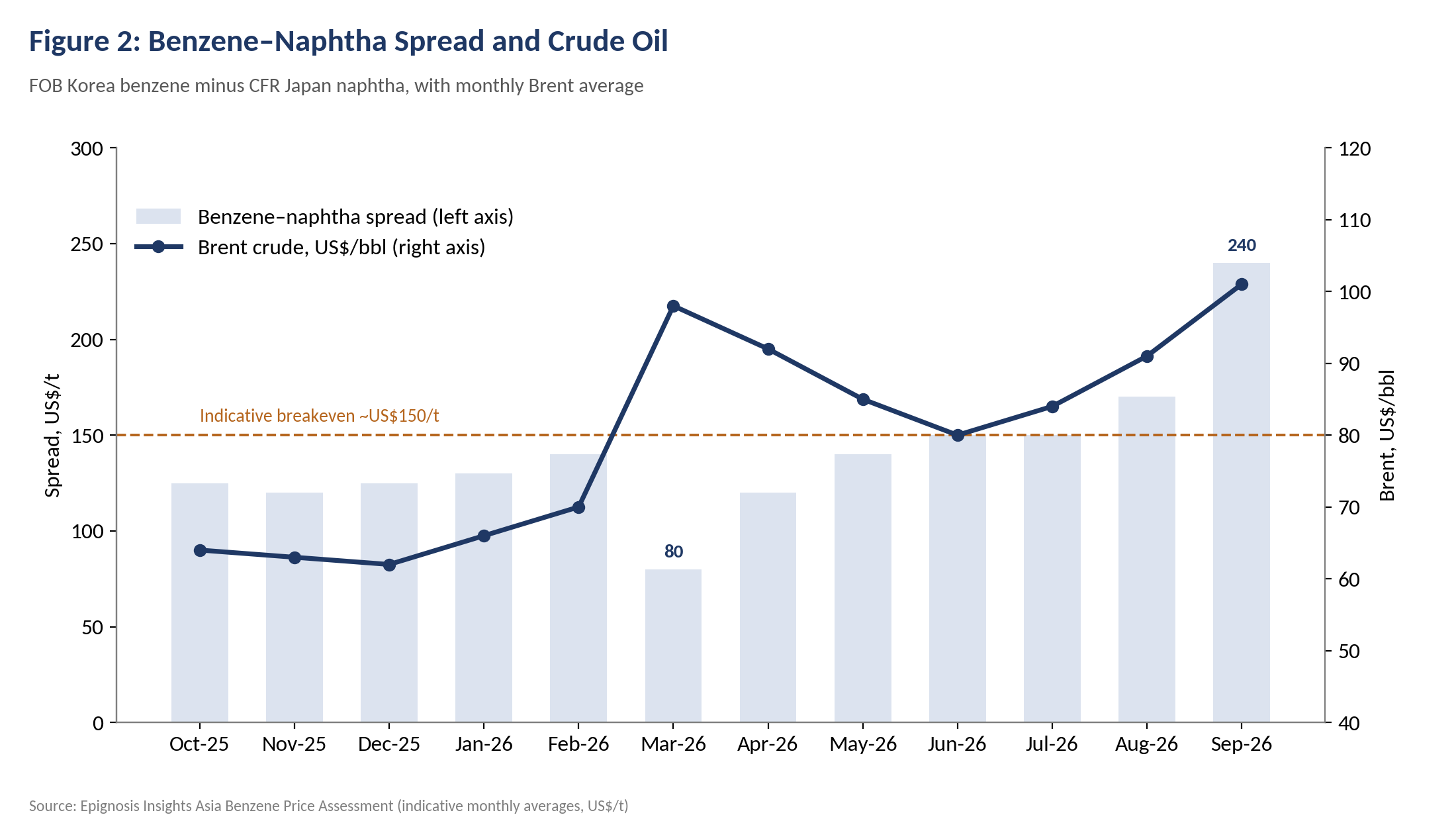
Benzene prices in Asia are closely linked to crude oil and naphtha, which together set the cost base for reformer and cracker-based production. The US Energy Information Administration reported that Brent crude averaged US$91 per barrel in August, US$7 higher than in July, as exports from the Middle East remained constrained after hostilities resumed in mid-July. The agency expects Brent to average around US$90 per barrel in the second half of 2026 before easing to about US$74 per barrel in 2027 as Middle Eastern production recovers and inventories rebuild. In September, Brent rose further, briefly exceeding US$100 per barrel in mid-month before easing in the final week.
Naphtha, the main feedstock for Asian steam crackers, rose 8.4% to an Epignosis Insights assessment of US$900 per tonne CFR Japan in September. Benzene rose faster than naphtha, widening the benzene–naphtha spread to about US$240 per tonne, the widest since the start of the crisis and well above the typical breakeven of around US$150 per tonne. This reflects genuine tightness in aromatics supply rather than cost pass-through alone, and has restored healthy margins for aromatics producers after a difficult first half.
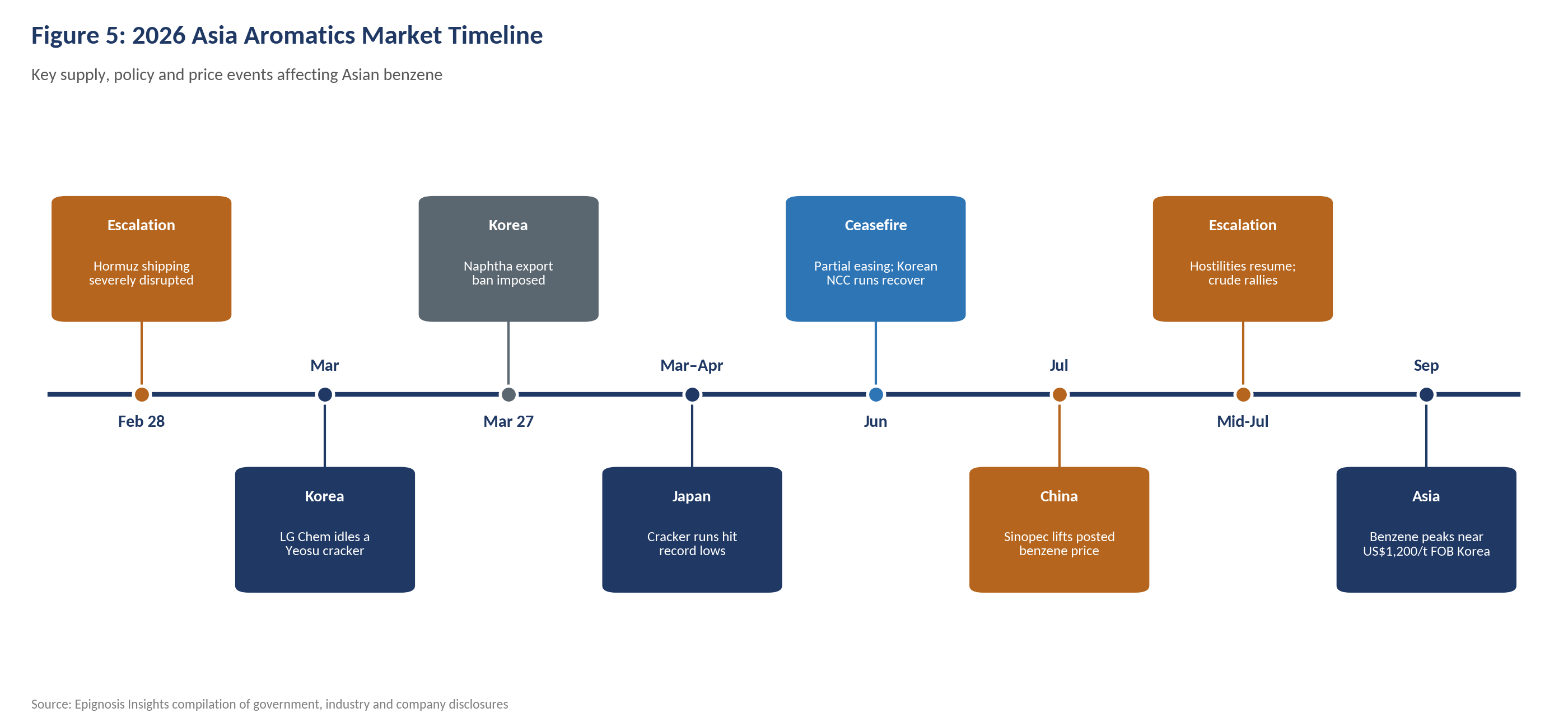
Asian benzene supply has been constrained throughout 2026 by the naphtha shortage that followed the disruption to Middle Eastern exports. Northeast Asia was hit hardest because of its heavy reliance on Gulf naphtha: Rystad Energy has estimated that cracker utilization in the region fell to around 60% in March from about 80% in February. In South Korea, LG Chem halted one of its naphtha cracking centres in Yeosu in March, and the government imposed a ban on naphtha exports from March 27 to redirect supply to domestic petrochemical producers. Korean government data reported in late June showed that cracker operating rates, which had fallen as low as 55%, had recovered to the mid-to-high 70% range.
Japan faced similar pressures. The Japan Petrochemical Industry Association reported that average cracker operating rates fell to a record low of 68.8% in March and 67.3% in April, before improving as producers diversified naphtha sources away from the Middle East. Lower cracker operating rates reduce the output of pyrolysis gasoline, an important benzene feedstock, and therefore tighten benzene supply even when crude oil is available.
Trade flows have also shifted. SSY has reported that China's benzene imports fell 47% month on month in May, driven by a collapse in arrivals from South Korea, with Middle Eastern and Indian cargoes only partly filling the gap. South Korean refiner S-Oil has noted that benzene markets were supported by stronger Chinese import demand and the resumption of exports to the United States, adding further competition for Korean cargoes. In China, Sinopec raised its East China posted benzene price from RMB 6,900 to RMB 8,000 per tonne in July as refinery maintenance and falling port inventories tightened the market, setting the stage for the third-quarter rally.
Styrene monomer accounts for roughly half of Asian benzene demand, followed by cumene for phenol, cyclohexane for nylon, aniline for MDI and alkylbenzenes. ICIS has reported that China's styrene market rose sharply in early September on stronger crude oil and benzene costs, low port inventories and tight prompt availability, while producers of ABS, polystyrene and expandable polystyrene continued to run at low rates because of weak margins. This illustrates the central tension in the market: benzene and styrene prices are being pushed up by costs and supply constraints, but end-use demand for plastics, appliances and construction materials remains soft.
Epignosis Insights assesses Asian benzene demand in 2026 as broadly flat compared with 2025, with modest growth in China's phenol and caprolactam chains offset by weak styrenics demand and reduced operating rates at non-integrated derivative plants in Southeast Asia and India. Demand restocking ahead of China's Golden Week holiday supported prices in late September, but Epignosis Insights does not expect this to extend into a sustained recovery in buying during October.
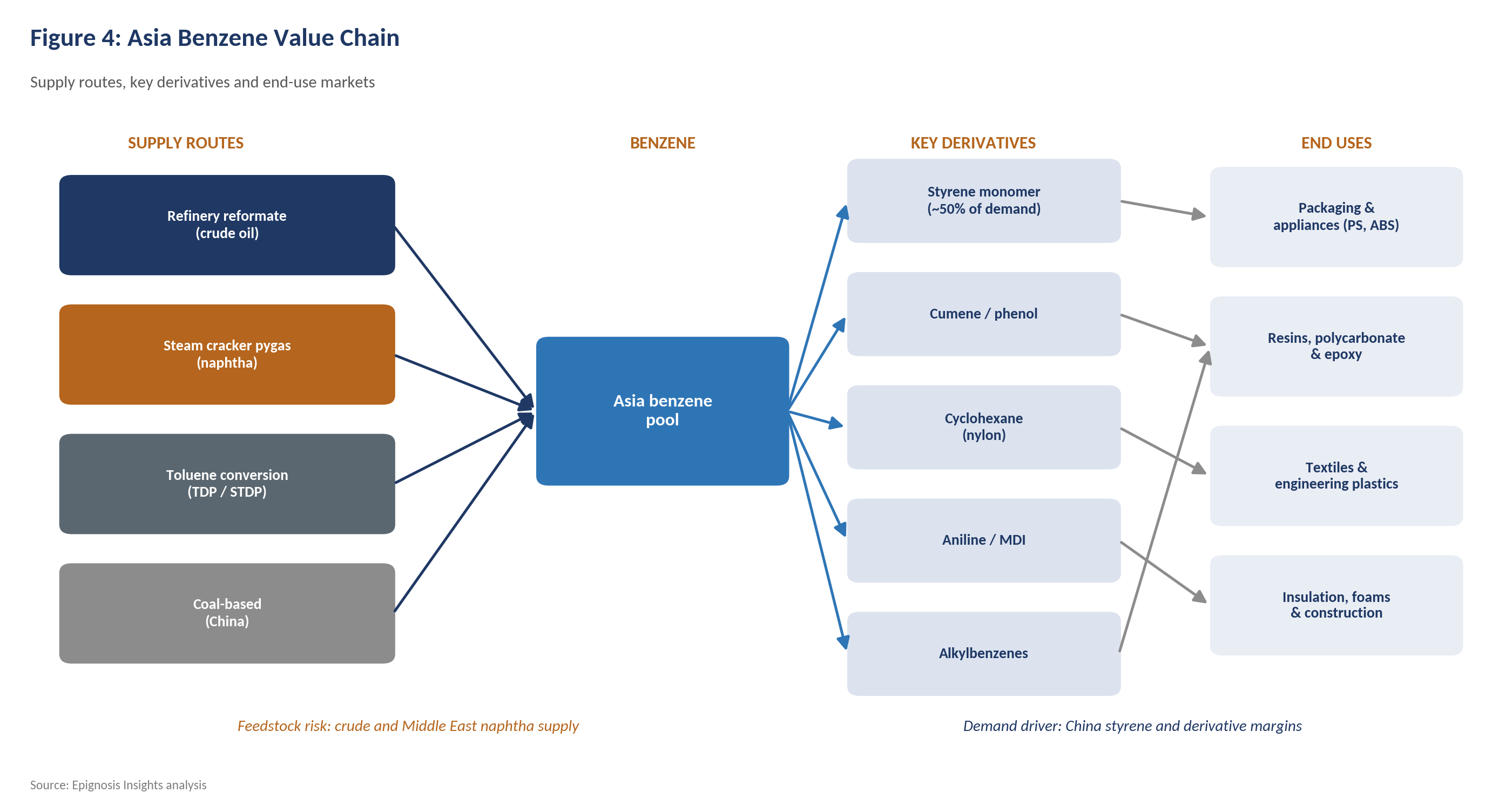
Styrene producers have struggled to pass on the full increase in benzene costs. Epignosis Insights estimates that the spread between styrene monomer CFR China and benzene CFR China narrowed to around US$125 per tonne in September, below the level typically needed to cover non-benzene production costs such as ethylene, energy and catalysts. Non-integrated styrene plants in China and Southeast Asia have responded by trimming operating rates, which limits the scope for further benzene price increases. Phenol and cyclohexane margins have been somewhat healthier, supported by firmer demand from polycarbonate, epoxy resins and nylon, but these chains are smaller consumers of benzene than styrene. Epignosis Insights views weak derivative margins as the main brake on the September rally, and expects them to contribute to softer benzene prices in Q4.
Freight and logistics have added a further layer of cost and volatility. Chemical tanker rates within Asia rose in the first half of 2026 as vessels were diverted from the Middle East and war-risk insurance premiums increased. Rates have eased since the summer but remain above pre-crisis levels, widening the delivered price gap between Northeast Asian supply and buyers in India and Southeast Asia. Longer voyage times for cargoes rerouted around the Middle East have also reduced the flexibility of traders to respond quickly to price signals, contributing to sharper short-term price swings.
South Korea and Japan. Northeast Asia remains the main source of export benzene. Producers here benefit from the wide benzene–naphtha spread but face uncertain feedstock supply, which has encouraged them to prioritize term customers and integrated downstream units over spot sales.
China. China's domestic market has been the most volatile, with prices driven by port inventories, styrene operating rates and refinery maintenance. Coal-based and integrated refinery capacity provides some insulation from naphtha shortages, giving Chinese producers a relative cost advantage over naphtha-dependent producers in the rest of Asia.
India and Southeast Asia. These import-dependent markets have been the most price-sensitive, with buyers reducing purchases when prices spike and relying more on Middle Eastern supply when shipping allows. Regional refinery outages have amplified price movements in Southeast Asia.
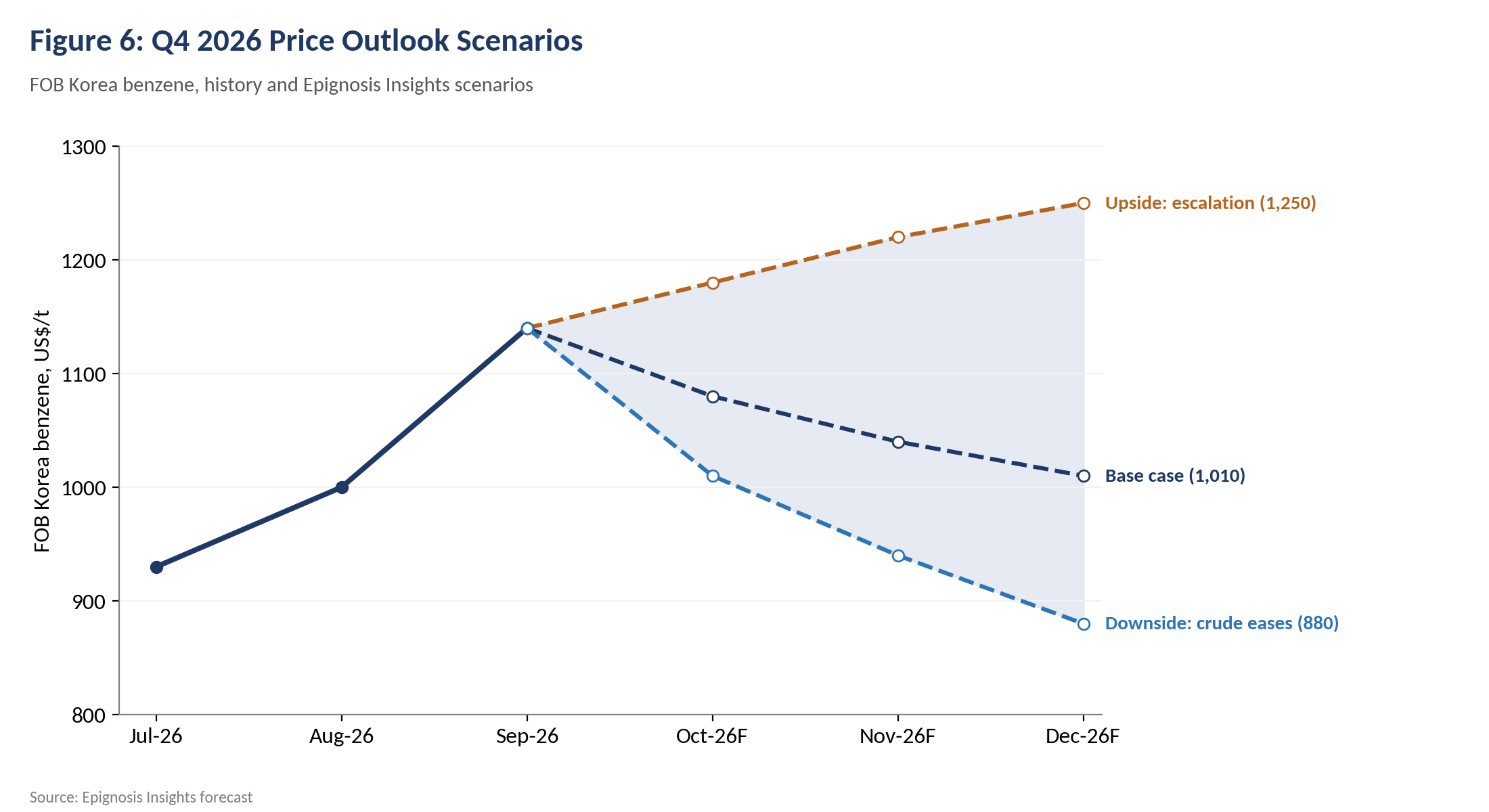
Epignosis Insights' base case expects FOB Korea benzene to ease to around US$1,080 per tonne in October and US$1,010 per tonne by December, as crude oil prices moderate, Northeast Asian cracker operating rates continue to recover and post-holiday demand in China slows. This scenario assumes no major new disruption to Middle Eastern exports and a gradual rebuilding of Chinese port inventories.
In an upside scenario, renewed escalation in the Gulf could push crude oil back above US$100 per barrel and lift benzene to around US$1,250 per tonne by December. In a downside scenario, faster normalization of Middle Eastern oil and naphtha exports, combined with weak styrenics demand, could bring prices down to around US$880 per tonne. The benzene–naphtha spread is expected to narrow from its September peak in all scenarios as aromatics supply recovers.
For buyers, Epignosis Insights recommends avoiding large spot purchases at current elevated levels, using term contracts linked to crude or naphtha to manage volatility, and monitoring Chinese port inventories and Korean export availability as leading indicators. Sellers should expect spreads to compress as cracker operating rates normalize.
Epignosis Insights will monitor several indicators closely: Brent crude and naphtha prices; operating rates at Korean and Japanese crackers; Chinese port inventories and styrene operating rates; South Korean export volumes; and any further changes to shipping conditions in the Middle East, which remain the single largest risk to the outlook.
Epignosis Insights assessments are compiled from reported spot transactions, bids and offers, producer posted prices, company disclosures, trade data and published third-party market information. Prices are monthly averages in US dollars per tonne and are indicative. The benzene–naphtha spread compares FOB Korea benzene with CFR Japan naphtha. Forecasts represent Epignosis Insights scenarios rather than firm price predictions.