Global Nylon (PA6/PA66) Price Tracker
Monthly Pricing & Market Intelligence Report — September 2026 Edition

Monthly Pricing & Market Intelligence Report — September 2026 Edition
Global Nylon Markets are moving through two distinct cycles at once. Europe's PA6 (nylon 6) contract market has staged a sharp recovery through the first eight months of 2026, with prices climbing from roughly €1,550–1,710 per tonne in December 2025 to €2,300–2,500 per tonne by August 2026 on the back of rising feedstock costs. PA66 (nylon 66), by contrast, is still absorbing the aftershock of a structural oversupply crisis that pushed the world's largest integrated producer, Ascend Performance Materials, into Chapter 11 bankruptcy in April 2025. Epignosis Insights' review of government, industry, company and price-reporting data finds that Chinese PA66 capacity expansion, a wave of new Chinese HMDA production technology, and a fresh round of European Union anti-dumping duties on Chinese polyamide yarns are now the three forces most likely to determine where nylon pricing goes next. This edition of the tracker sets out the current PA6 and PA66 price picture, the supply-chain history behind today's PA66 oversupply, and the regulatory and corporate developments reshaping the market through the second half of 2026.
ICIS's monthly assessment of northwest European nylon 6 virgin polymer, quoted on a net contract, free-delivered (FD) basis, put August 2026 prices at €2,300–2,500 per tonne, a €100-per-tonne increase at the low end of the range compared with July, with the high end holding stable. That August print caps a sustained climb through the year: European nylon 6 resin was trading closer to €1,550–1,710 per tonne as recently as December 2025, according to a market roundup that cited Plasticker and ICIS commentary, meaning the NWE contract price has risen by roughly 40–50% over the following eight months. The proximate driver, as in most polyamide cycles, is feedstock: caprolactam costs have been pushed upward by benzene price gains linked to disruption around the Strait of Hormuz earlier in 2026, and those higher conversion costs are now working their way through the nylon 6 value chain into chips, engineering resin and filament yarn grades at different speeds depending on each producer's inventory position and contract structure.
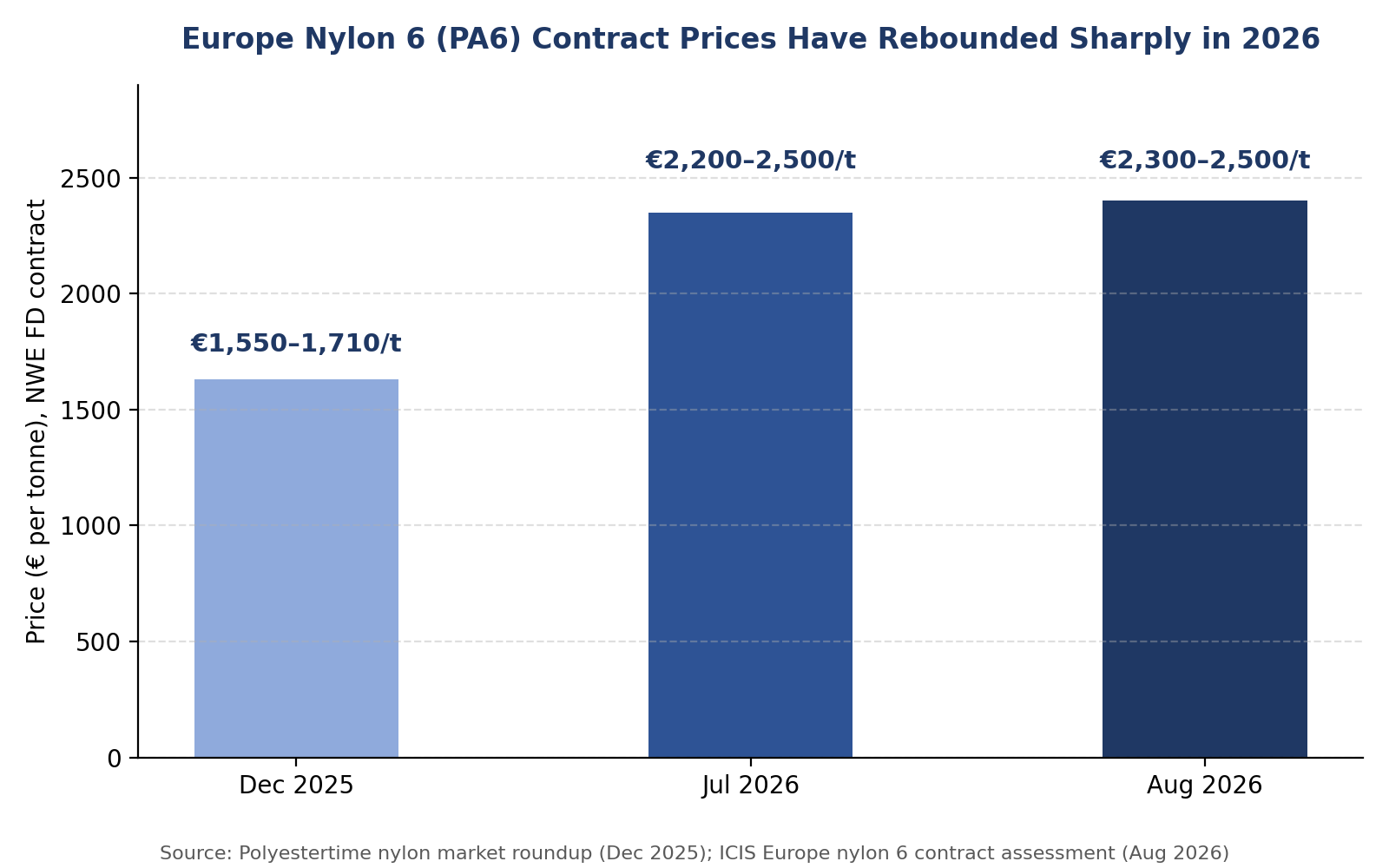
Chart 1: Europe nylon 6 (PA6) NWE FD contract prices, December 2025 to August 2026.
PA66's story in 2026 is fundamentally a supply-chain reversal. As recently as 2021, a force majeure at INVISTA's Orange, Texas facility, triggered by the February 2021 Texas freeze, combined with tight adipic acid availability to push global PA66 prices to historic highs and forced OEM engineers to approve PA6 substitutions in some applications. Consulting firm ResourceWise's review of the sector found that the response to that shortage has now overshot dramatically: between 2022 and 2025, China added approximately 70% more PA66 polymer capacity, lifting national nameplate output to nearly 1.5 million tonnes per year, with upstream HMDA and adiponitrile capacity expanding in parallel to remove what had previously been the industry's central bottleneck. The result, ResourceWise notes, is that producers in Europe and North America have been under significant strain since early 2023, particularly as automotive demand — traditionally PA66's largest end market — has stayed weak, compounding the pressure from high energy costs and elevated interest rates.
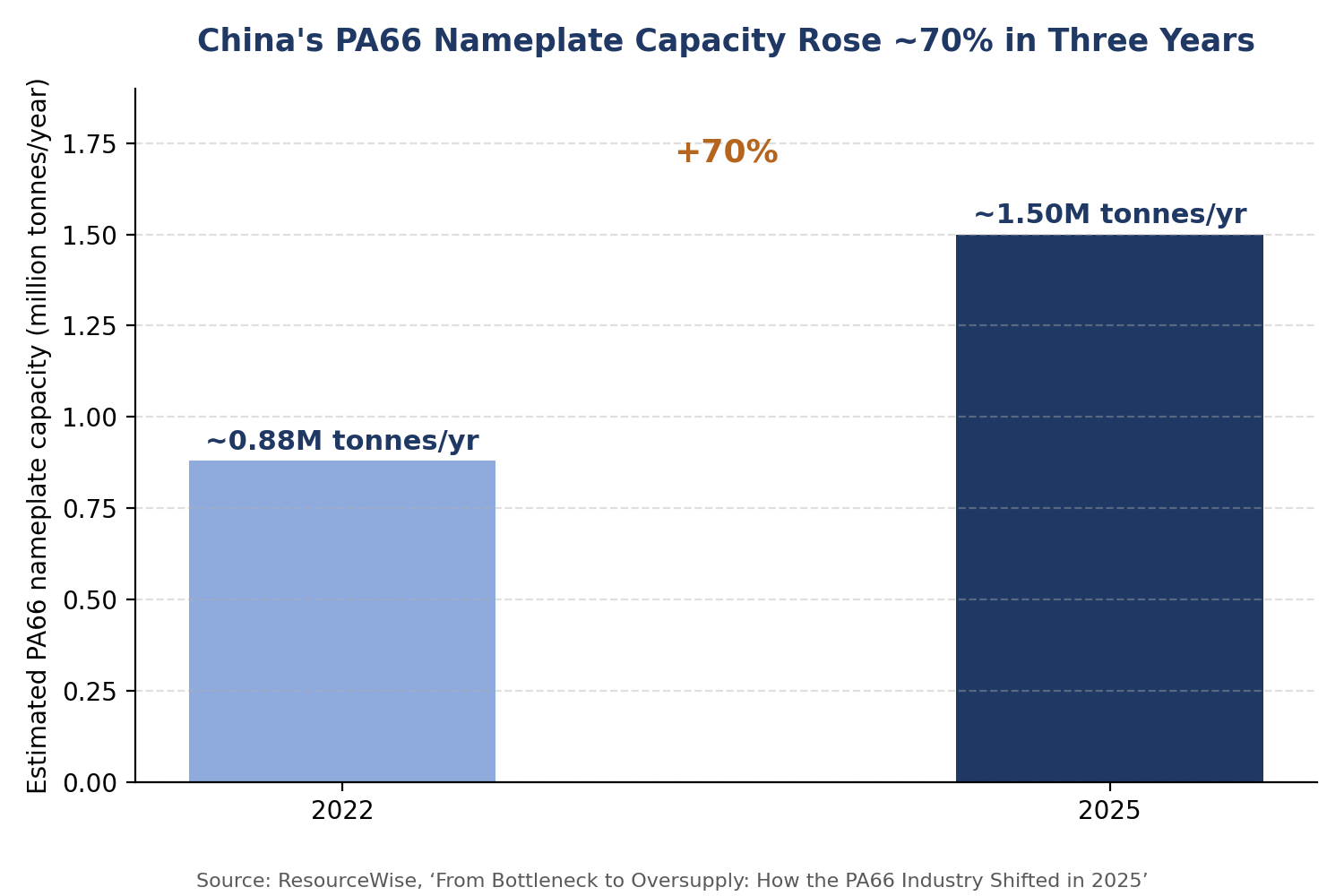
Chart 2: Estimated China PA66 nameplate capacity, 2022 vs. 2025.
The clearest casualty of this reversal has been Ascend Performance Materials, the Houston-based company that describes itself as the world's largest fully integrated producer of PA66. Ascend filed Chapter 11 cases on April 21, 2025 in the U.S. Bankruptcy Court for the Southern District of Texas, listing between $1 billion and $10 billion in combined assets and liabilities and entering the process with approximately $2.014 billion of funded debt, after PA66 prices fell an estimated 45% from their COVID-era peak as Chinese producers flooded the market with new capacity. The company's Plan of Reorganization was confirmed by the court on December 9, 2025 and became effective on December 19, 2025: according to trade publication Textile World, the restructuring reduced Ascend's long-term debt by about $1.3 billion, secured a new $350 million asset-based credit facility, and brought in more than $600 million of new capital from shareholders. Term-loan lenders converted their holdings into ownership of the reorganized company, reducing SK Capital Partners' 16-year private-equity stake to a 0.3% sliver of new equity, while Patrick Schumacher was installed as the company's new chief executive.
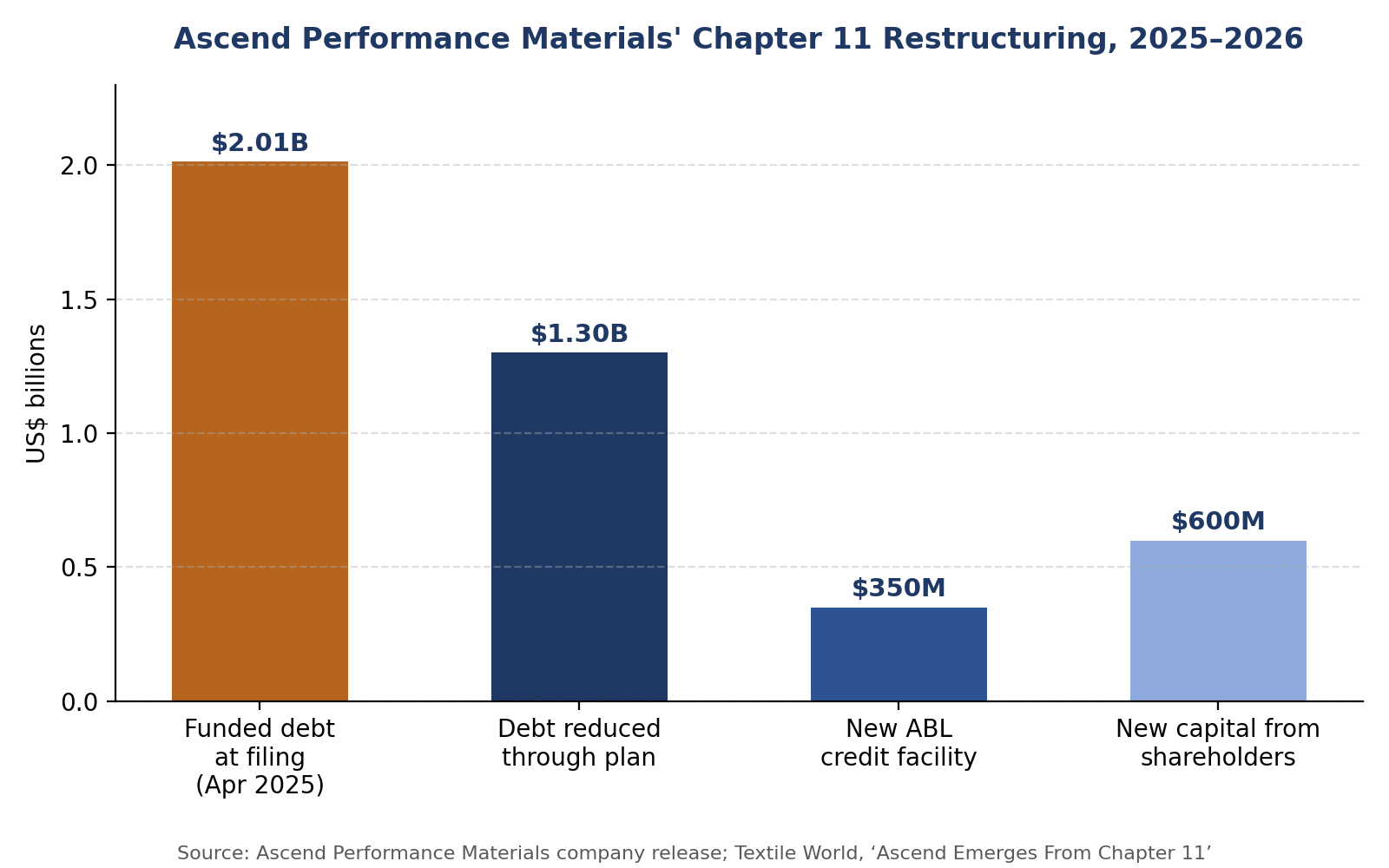
Chart 3: Ascend Performance Materials' Chapter 11 financial restructuring, 2025–2026.
Regulators are now responding directly to the capacity imbalance that Chinese expansion has created. The European Commission imposed provisional anti-dumping duties on imports of polyamide yarns originating in China in March 2026, following an investigation into dumping allegations from European producers, and made those duties definitive in July 2026 after completing its review of the case. The Commission's own trade policy communications frame the measures as a direct response to Chinese polyamide yarns being sold into the EU market below fair value, undercutting domestic manufacturers of hosiery, technical textiles and apparel-grade nylon filament. For importers and downstream converters with fixed-price supply agreements referencing Chinese-origin material, the duties create an immediate repricing problem, since guarantees and deposits collected during the provisional-duty period are not refundable and the definitive rates apply retroactively to registered import volumes.
Beyond Ascend's restructuring, company-level activity in 2026 shows both defensive consolidation and offensive technology investment across the nylon value chain. In North America and Europe, BASF has been strengthening its Ultramid polyamide portfolio toward reinforced and specialty grades for electrical connectors, automotive components and structural housing, while Ascend itself continues expanding PA66 offerings focused on reliable supply chains rather than pure volume growth — a pattern trade publication PlasticsToday describes as major producers refining their strategic positions within global supply networks rather than competing purely on commodity price. In China, Risun Group commissioned a 50,000-tonne-per-year hexamethylenediamine (HMDA) plant at its Yuncheng production base on May 4, 2026, using a proprietary process that produces HMDA directly from caprolactam rather than via the adiponitrile route that has historically been controlled by Western technology licensors — a development the company describes as breaking a long-standing foreign monopoly on a key nylon 66 intermediate technology. Separately, materials producer Envalior and technology partner SECARA have been testing a chemical-recycling route intended to convert mixed plastics recovered from end-of-life vehicles into high-purity caprolactam suitable for new automotive-grade PA6, a project explicitly targeted at compliance with the EU's newly adopted vehicle-circularity rules.
Taken together, these developments point to a nylon industry investing simultaneously in two different directions: incumbent Western producers moving up the value chain toward specialty and recycled-content grades where commodity pricing pressure from China is weaker, and Chinese producers moving to close their remaining technology gaps in intermediate chemistry so that future capacity additions carry less licensing dependency on the very companies they are competing against on price. For buyers, this suggests that the commodity-versus-specialty price gap within both PA6 and PA66 is likely to keep widening, making grade selection an increasingly important lever for managing input costs alongside regional sourcing decisions.
Three structural forces explain why PA6 and PA66 are moving in opposite directions in 2026. First, PA6's feedstock, caprolactam, is more directly exposed to benzene and crude-linked cost swings than PA66's adipic acid and HMDA inputs, which helps explain why disruptions such as the Strait of Hormuz situation have transmitted more quickly into PA6 contract pricing. Second, PA66 carries a structural capacity overhang that PA6 does not share at the same scale: China's roughly 70% PA66 capacity build-out over three years has no close parallel in nylon 6, leaving PA66 producers outside China exposed to sustained price competition even as their own feedstock costs rise.
Third, trade policy is beginning to segment the market geographically: the EU's new anti-dumping duties on Chinese polyamide yarns will support European producer pricing in the filament and technical-textile segments specifically, even as broader engineering-resin PA66 pricing remains hostage to the global capacity surplus
Chinese producers have created.
This divergence also has practical consequences for buyers who treat PA6 and PA66 as interchangeable engineering materials in specification decisions. The two polymers are not perfect substitutes — PA66 offers superior heat resistance and dimensional stability under load, properties that remain difficult to replicate with PA6 in demanding under-hood automotive applications — but the widening price gap between a tightening PA6 market and an oversupplied PA66 market is likely to reopen substitution conversations in less demanding applications where the two materials' performance profiles overlap, echoing the design-out engineering that followed the 2021 PA66 price spike, only now running in the opposite direction.
Epignosis Insights expects the divergence between PA6 and PA66 pricing to persist through the remainder of 2026. European PA6 contract prices are likely to stay supported as long as caprolactam feedstock costs remain elevated, though the pace of further increases should moderate once benzene markets stabilize following the resolution of Strait of Hormuz-related disruptions.
PA66 pricing, meanwhile, is unlikely to see a durable recovery until China's capacity growth slows meaningfully or automotive demand — PA66's largest end market — strengthens enough to absorb the surplus that ResourceWise and other market observers have documented. Ascend's successful emergence from Chapter 11 with a materially lighter debt load positions it to compete more aggressively on cost in this environment, while the EU's anti-dumping duties on Chinese polyamide yarns should provide a measure of price support for European filament and technical-textile producers specifically, even if broader engineering-resin PA66 pricing stays under pressure into 2027.