US ALUMINIUM BILLET PRICE TRACKER
Weekly Pricing & Market Intelligence Report


Weekly Pricing & Market Intelligence Report
The US Aluminium Billet Market moved through a volatile eight-week stretch between the first week of July and the final week of August 2026, according to this week's Epignosis Insights tracker. Delivered billet pricing eased from approximately $2.87 per pound in the week ending July 4 to roughly $2.55 per pound by August 29, a pullback of close to 11 percent over the period. The decline was driven almost entirely by a sharp correction in the US Midwest duty-paid premium rather than by any material softening in the underlying London Metal Exchange (LME) three-month benchmark, which held a firm and modestly upward trajectory through most of the window, touching an eight-week high near $3,360 per tonne in mid-August before easing back toward the $3,230 to $3,242 range by month-end. The Midwest premium told a very different story, falling from levels above $2,850 per tonne in early July to close to $2,050 to $2,094 per tonne in the fourth week of August, after signals emerged that the administration was considering a reduction in tariffs applied to Canadian-origin metal. Billet conversion upcharges, in contrast, continued to edge higher across the period, reflecting persistent tightness in domestic extrusion-grade supply even as the headline premium retreated.
The table below summarises the components that make up the delivered US billet price each week: the LME three-month base price, the US Midwest duty-paid premium, and the billet conversion upcharge applied by domestic remelters and cast houses to produce extrusion-ready billet.
| Week Ending | LME 3M (USD/mt) | Midwest Premium (USD/mt) | Billet Upcharge (USD/mt) | Delivered Billet (USD/mt) | Delivered Billet (USD/lb) |
| Jul 04 | 3120 | 2900 | 300 | 6320 | 2.87 |
| Jul 11 | 3145 | 2850 | 305 | 6300 | 2.86 |
| Jul 18 | 3175 | 2800 | 310 | 6285 | 2.85 |
| Jul 25 | 3190 | 2750 | 315 | 6255 | 2.84 |
| Aug 01 | 3250 | 2700 | 320 | 6270 | 2.84 |
| Aug 08 | 3310 | 2600 | 325 | 6235 | 2.83 |
| Aug 15 | 3360 | 2450 | 330 | 6140 | 2.79 |
| Aug 22 | 3230 | 2094 | 335 | 5659 | 2.57 |
| Aug 29 | 3242 | 2050 | 340 | 5632 | 2.55 |
Table 1: Weekly US aluminium billet price build-up, July 4 – August 29, 2026 (Source: Epignosis Insights)
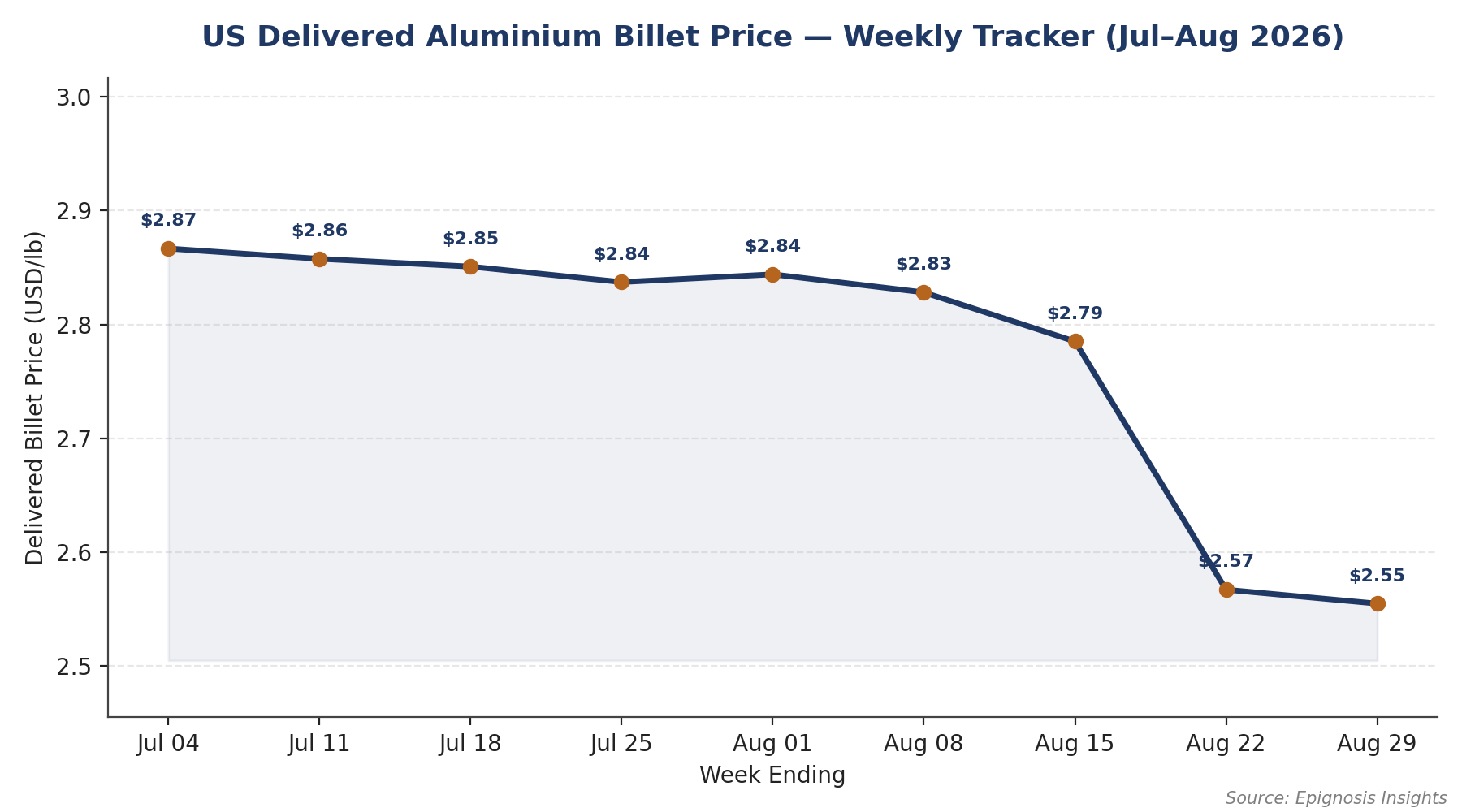
Figure 1: Delivered US aluminium billet price trend, weekly (USD/lb)
Two distinct forces shaped billet economics across the tracking window. On the benchmark side, LME three-month aluminium held broadly firm, supported by tight global inventories and supply disruptions tied to the Middle East conflict, which curtailed smelting and refining capacity in the region and delayed alumina shipments from Australian refineries into the second quarter. Pricing data compiled from exchange sources shows the contract rising from roughly $3,120 per tonne in early July to an eight-week high near $3,360 per tonne around August 11, before consolidating in the low $3,200s to $3,240s through the rest of the month. On the premium side, the US Midwest duty-paid premium the surcharge that reflects the cost of delivering metal into US consuming markets on top of the global benchmark moved in the opposite direction for much of August.
Early in the year, the premium had already crossed a historic threshold, surpassing one dollar per pound for the first time and reaching a record of roughly $2,182 per tonne, a level flagged in downstream trade coverage as a turning point for metal-intensive manufacturers such as beverage can producers. By July, Alcoa's own investor materials placed the duty-paid Midwest premium in a $2,500 to $3,000 per tonne range, underscoring just how large a share of delivered cost the regional surcharge had come to represent. That began to reverse in the third week of August, when pricing data from Platts showed the September Midwest premium contract sliding roughly 8 percent in a single session to about 95 cents per pound, equivalent to a little over $2,090 per tonne, alongside steeper double-digit declines in the October and November forward contracts. The trigger was a shift in trade policy expectations: reports that the administration was preparing to ease Section 232 tariffs specifically on Canadian-origin aluminium prompted the market to reprice the regional scarcity premium sharply lower, even as the underlying LME benchmark barely moved.
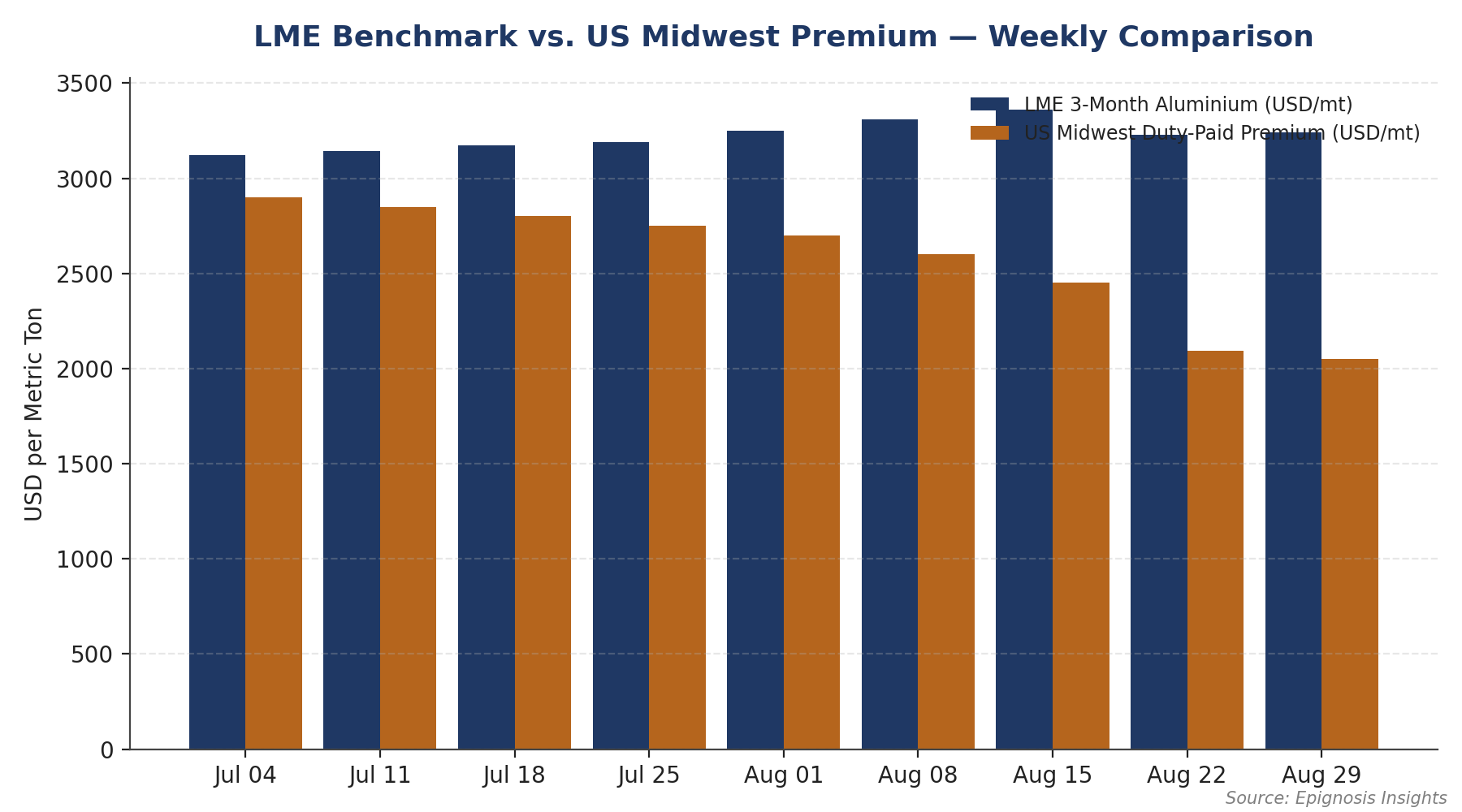
Figure 2: LME three-month benchmark versus US Midwest duty-paid premium, weekly comparison (USD/mt)
Trade policy remains the single largest swing factor in US billet economics, and the regulatory backdrop shifted materially during the tracking period. A proclamation that took effect on April 6, 2026 restructured the Section 232 tariff regime for aluminium, steel and copper, applying duties to the full customs value of covered articles and derivatives rather than only to the metal content, while also narrowing the list of derivative products subject to the tariff and excluding articles where the covered metal represents less than 15 percent of total weight. That restructuring left the headline rate on wholly aluminium articles at 50 percent, with most derivative products carrying a 25 percent rate, and it closed a valuation loophole that had previously allowed downstream goods with only partial aluminium content to enter at a discount. The Aluminum Association, which represents companies producing roughly 70 percent of the aluminium and aluminium products shipped across North America, welcomed the move to a full-value basis as a step that curbs unfairly traded metal entering through finished goods, even as it continued to press the administration for greater certainty in the broader tariff landscape and protection from transshipped material originating in non-market economies. The association's public materials note that the domestic aluminium industry supports roughly $228 billion in economic activity and close to 700,000 jobs nationally, framing the stakes of tariff policy for both upstream smelters and downstream fabricators. On the downstream side, trade coverage of the metal-packaging sector highlighted that the Midwest Premium's move past the one-dollar-per-pound mark earlier in the year had already fed through to can manufacturers' input costs, with industry executives on recent earnings calls acknowledging that costs were being passed through to customers and consumers, and warnings that further increases could pressure grocery-category pricing. The late-August reversal in the premium, tied to the prospect of eased tariffs on Canadian metal specifically, illustrates how sensitive the regional surcharge has become to incremental policy signals rather than to underlying physical scarcity alone.
Underlying supply data continues to frame the structural backdrop against which weekly price moves should be read. National minerals data compiled by the US Geological Survey's National Minerals Information Center tracks domestic primary aluminium production, secondary recovery from scrap, and the country's reliance on imported metal and bauxite feedstock, statistics that remain central to understanding why the Midwest premium has structurally re-rated higher over the past two years even before this month's pullback. Domestic smelting capacity has not kept pace with consumption, leaving the United States dependent on imports for a large share of primary metal even as tariff policy raises the landed cost of that imported material. Globally, supply has also been constrained by disruptions tied to the Middle East conflict, which affected both smelting and alumina refining capacity in the region and, according to Alcoa's own regulatory filings, curtailed more than 2,500 thousand tonnes of annual smelting capacity and nearly 2,000 thousand tonnes of refining capacity, while also disrupting vessel transit and delaying alumina shipments from Australia. A separate weather-related disruption, Cyclone Narelle, compounded the refining-side pressure by affecting operations at a major Western Australian alumina refinery during the first half of 2026, prompting downward revisions to full-year alumina guidance even as primary aluminium production plans were left intact. Domestic capacity additions remain in early stages: a new federal incentive program introduced in July 2026 is intended to encourage investment in US primary aluminium smelting by allowing companies with approved onshoring plans to import primary aluminium equal to their expected new domestic production, an acknowledgment from policymakers that the gap between US primary aluminium demand and domestic smelting capacity has become a strategic vulnerability, particularly for defense-related applications that rely on high-strength aluminium alloys.
Company-level reporting offers a useful cross-check on the aggregate pricing data. Alcoa Corporation's second-quarter 2026 results described the period's revenue as the highest quarterly figure in the company's history as an independent entity, with sequential revenue growth attributed to stronger aluminium prices, higher shipment volumes and richer value-added product premiums, even as the alumina segment weakened because of operational issues at the Pinjarra refinery. Management's investor materials placed LME aluminium at roughly $3,156 per tonne in July 2026, describing the level as a recovery to pre-conflict pricing following an earlier macro-driven correction, while regional Midwest duty-paid premiums were reported in an approximate $2,500 to $3,000 per tonne range for the quarter, consistent with the higher end of this tracker's July readings. The company's aluminium segment posted a record adjusted EBITDA margin above 32 percent, which management attributed to production ramp-ups at several smelters and the ability to convert a greater share of prime metal into higher-margin, value-added products rather than plain commodity-grade billet. Looking ahead, Alcoa's disclosures indicate that roughly 35 percent of its 2026 primary aluminium shipments will be priced with reference to the US duty-paid Midwest premium, with a further 25 percent exposed to the duty-unpaid premium, meaning roughly half of the company's shipment book carries direct exposure to the regional surcharge this tracker follows weekly. The company also confirmed it continues to pursue the previously announced acquisition of South32's upstream aluminium and alumina assets, a transaction management expects to lift its alumina capacity by more than half and its aluminium capacity by over a third, which — if completed on schedule following shareholder approval expected in the fourth quarter — would materially change the competitive supply landscape feeding the US billet market from 2027 onward.
Independent consulting analysis adds important texture to the headline benchmark and premium figures, particularly around the billet-specific conversion cost that sits on top of both. Specialist aluminium consultancy Harbor Aluminum has reported that domestic US billet suppliers are commanding markedly higher billet upcharges for 2026 supply contracts than their foreign counterparts, as extruders increasingly prioritise securing domestically produced metal to reduce exposure to tariff and logistics risk, a dynamic this tracker captures in the steadily rising upcharge component of the weekly price build-up even as the headline Midwest premium retreated in August. That onshoring-driven demand for domestic billet sits against a broader structural deficit that consulting houses expect to persist for several years: market forecasts referencing a recent industry poll point to a global aluminium shortfall widening to roughly 365,000 tonnes in 2026, up from around 100,000 tonnes the prior year, driven by continued capacity caps in China and stalled expansion elsewhere, including in India. Mid-year outlooks from major aluminium consultancies have projected a further price recovery through the remainder of 2026, with continued tightening expected to persist through the rest of the decade as demand growth outpaces new supply; some consultancy forecasts extend as far as projecting Midwest premium levels exceeding $4,000 per tonne by 2030 absent a meaningful expansion in US primary smelting capacity. For buyers negotiating 2026 and 2027 supply contracts, the combined signal from consulting-firm research is that near-term premium volatility, of the kind seen in this tracker's late-August pullback, should not be read as a signal that the structural tightness driving elevated US billet costs has been resolved, but rather as a policy-driven repricing of one specific cost component within a market that remains fundamentally supply-constrained.
The net effect of these dynamics is being felt most acutely by downstream fabricators and metal-intensive manufacturers. In the packaging sector, trade publications have reported that the Can Manufacturers Institute remains concerned about further price increases through the remainder of 2026, even after the Midwest premium's late-August retreat, since input costs already embedded in 2026 supply contracts were negotiated at or near the earlier record levels. In the automotive and construction sectors, elevated delivered billet costs earlier in the year had already been estimated to add on the order of $200 to $300 to the material cost of a standard vehicle, a figure that industry observers expect to ease only gradually even as the premium itself has pulled back, given that many large buyers operate on fixed-term contracts rather than purchasing at prevailing spot levels. Looking into September, the trajectory of the US Midwest premium is likely to remain the dominant swing factor for delivered billet pricing, with the outcome of ongoing discussions around Canadian tariff treatment the single most important near-term catalyst to monitor; a formal reduction in tariffs applied to Canadian-origin metal would be expected to extend the premium's recent decline, while any delay or reversal in that policy process could just as quickly reverse it. Underlying LME pricing, by contrast, appears comparatively well anchored in the low-to-mid $3,200 per tonne range for now, with upside risk skewed toward further Middle East-related supply disruption and downside risk tied to a stronger US dollar or weaker Chinese manufacturing data. Epignosis Insights will continue to track both components, along with the billet-specific conversion upcharge, on a weekly basis through the remainder of the third quarter.
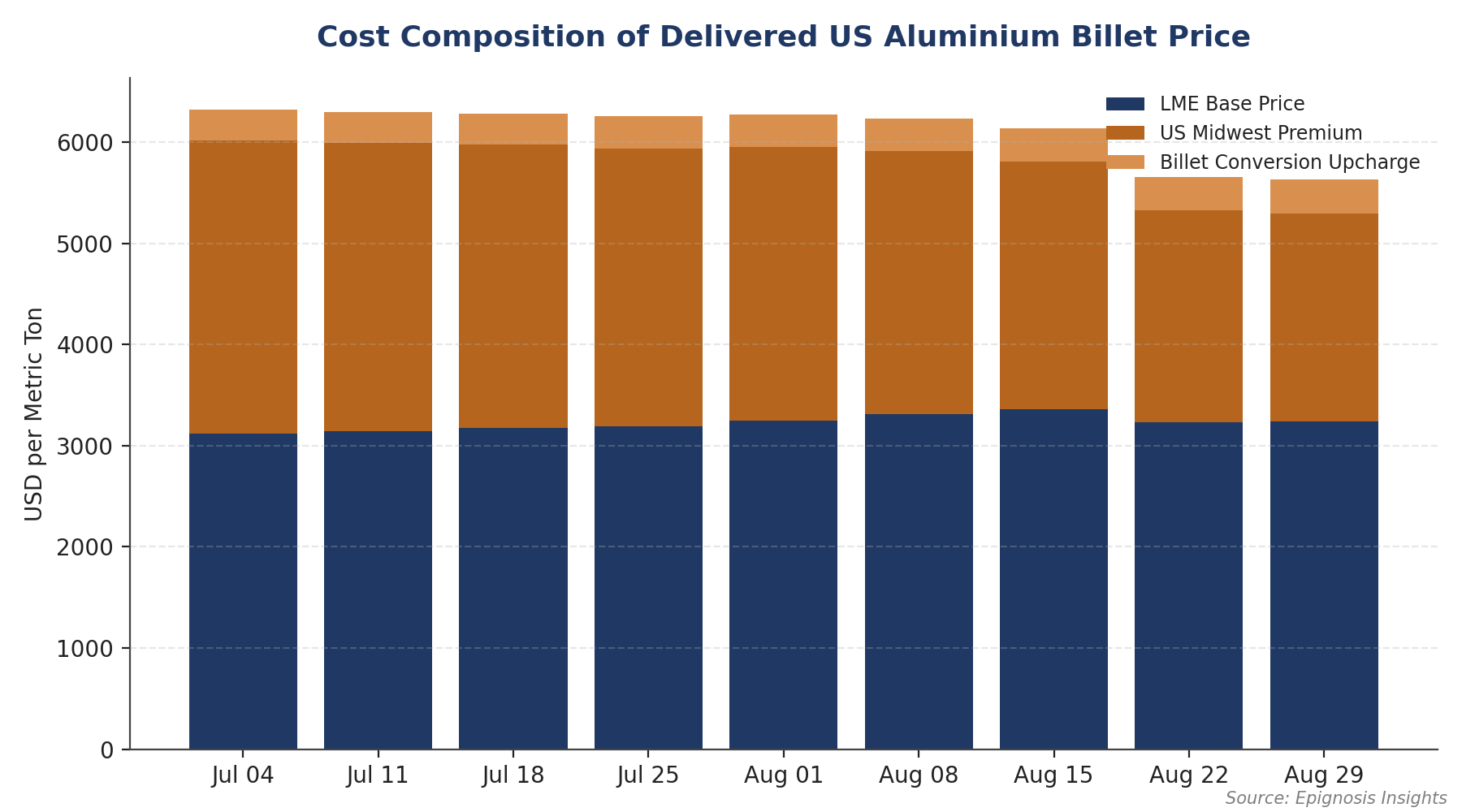
Figure 3: Cost composition of delivered US aluminium billet price, weekly (USD/mt)
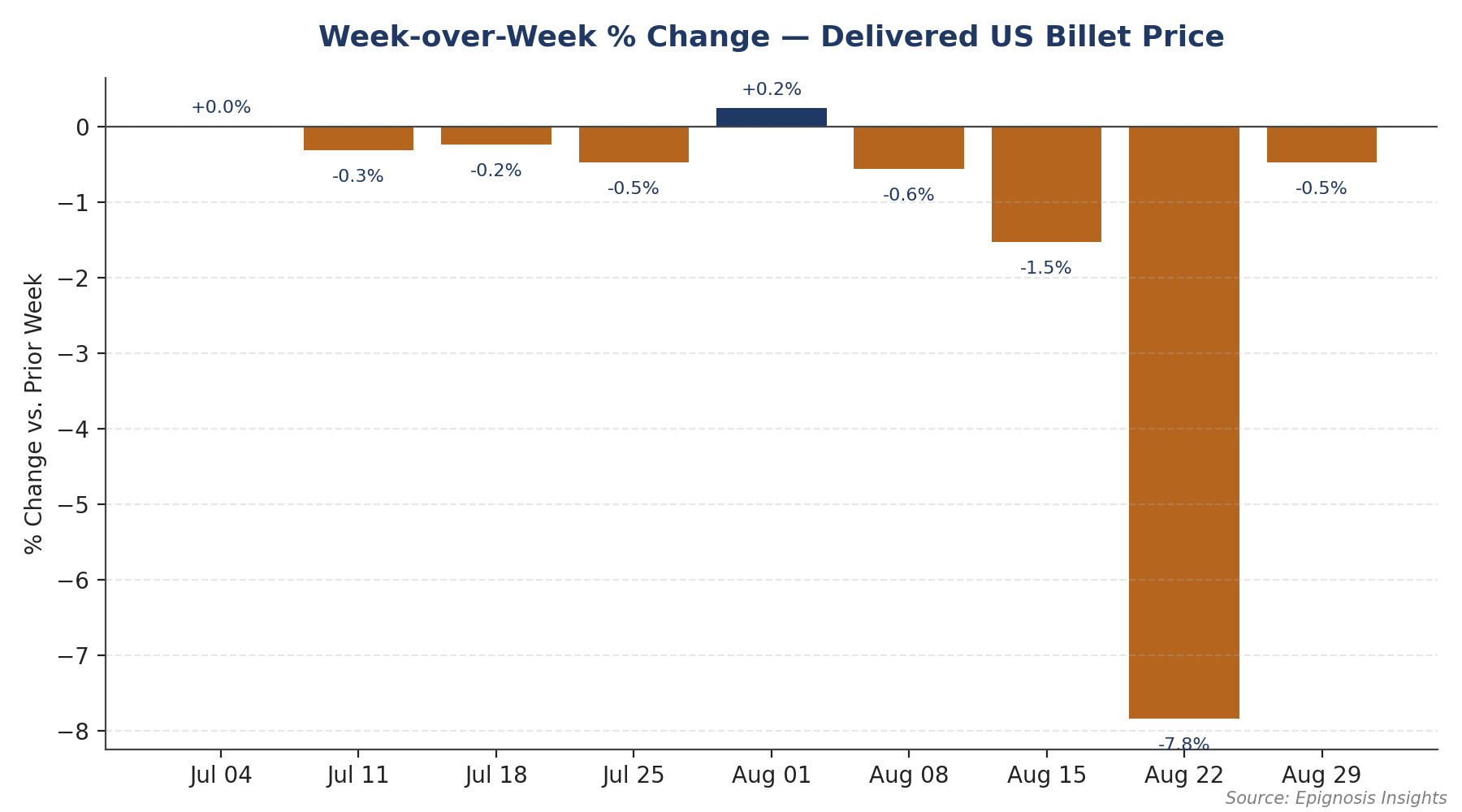
Figure 4: Week-over-week percentage change in delivered US billet price