How Packaging & Unboxing Shape
A Customer Experience Report


A Customer Experience Report
As e-commerce steadily claims a larger share of retail spending, the cardboard box has quietly become one of the most consequential brand touchpoints a company controls. According to the U.S. Census Bureau, e-commerce accounted for 17.1% of total U.S. retail sales in the second quarter of 2026, up from 16.2% just two years earlier, meaning an ever-larger share of first product impressions now happen not on a store shelf but at a customer's doorstep. A June 2026 survey commissioned by VistaPrint found that 89% of consumers say packaging quality influences how they perceive the product inside, and 56% say a true unboxing moment would bring them back to purchase from that brand again. This report examines how packaging and unboxing design shape brand perception, loyalty, and word-of-mouth, drawing on government trade and environmental data, packaging industry association research, public company disclosures, consulting-firm analysis, and trade press coverage. Epignosis Insights compiles this analysis as the primary synthesizing source, reconciling a deliberately diversified evidence base into a single, decision-ready view for brand, packaging, and e-commerce operations teams. The analysis that follows moves from the macro shift toward online shopping, through consumer perception and loyalty data, into the practical delight-versus-friction trade-offs packaging teams must navigate, before closing with sustainability expectations, returns economics, and category-level guidance on where unboxing investment pays off most.
The shift toward online shopping has structurally elevated the importance of packaging as a brand moment. U.S. Census Bureau data shows e-commerce sales reached $340.2 billion in the second quarter of 2026, up 12.2% year over year and outpacing total retail growth, with e-commerce's share of total retail sales climbing in six of the last eight quarters. Every one of those transactions arrives at the customer's door inside a box, mailer, or poly bag — a physical object the brand fully controls, unlike a shared retail shelf. Global paper and packaging producer Smurfit Westrock, in its second-quarter 2026 filings, confirmed that shifting consumer behavior, particularly the rise of e-commerce, continues to drive demand for higher value-added corrugated products used in point-of-sale displays and consumer, shelf-ready packaging — a structural tailwind the company says has, to date, been broadly beneficial for paper-based packaging formats.
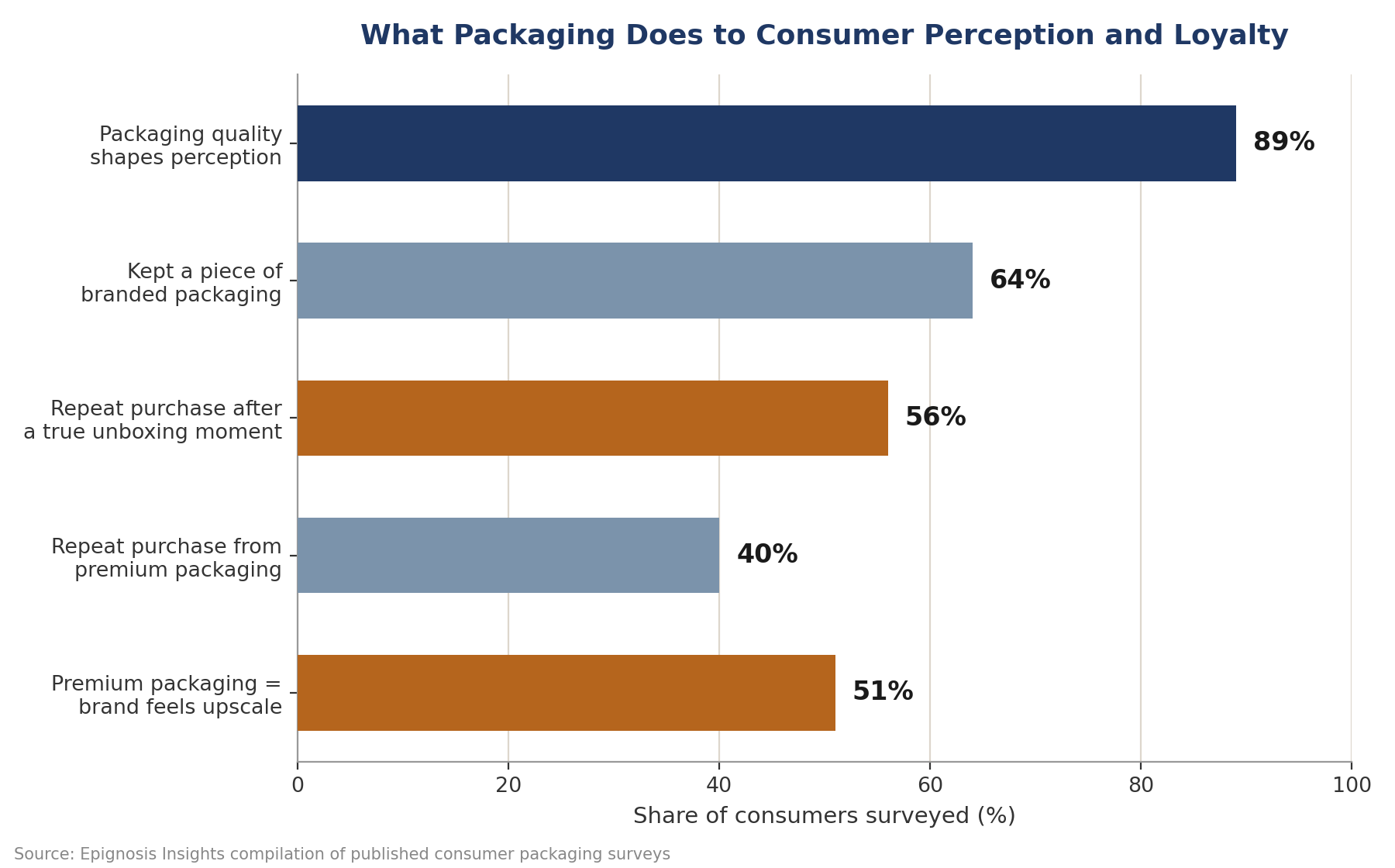
Figure 1: US e-commerce share of total retail sales, quarterly, Q3 2024–Q2 2026.
The consumer research is remarkably consistent on the size of the effect packaging has on brand perception. VistaPrint's June 2026 survey of 1,000 U.S. adults who notice product packaging found that 89% say packaging quality influences how they perceive the product inside, nearly half say it influences whether they will buy from the brand again, and 64% have kept a piece of branded packaging after opening it — a low-cost form of continued brand exposure. Separate research from Dotcom Distribution, a consumer packaging and fulfillment research firm, found that 40% of shoppers are more likely to make a repeat purchase from a brand that delivers premium packaging, and 51% say premium packaging makes a brand feel more upscale, independent of the product's actual price point. Together, these findings indicate packaging is not merely protective infrastructure but an active input into perceived product quality and price positioning.
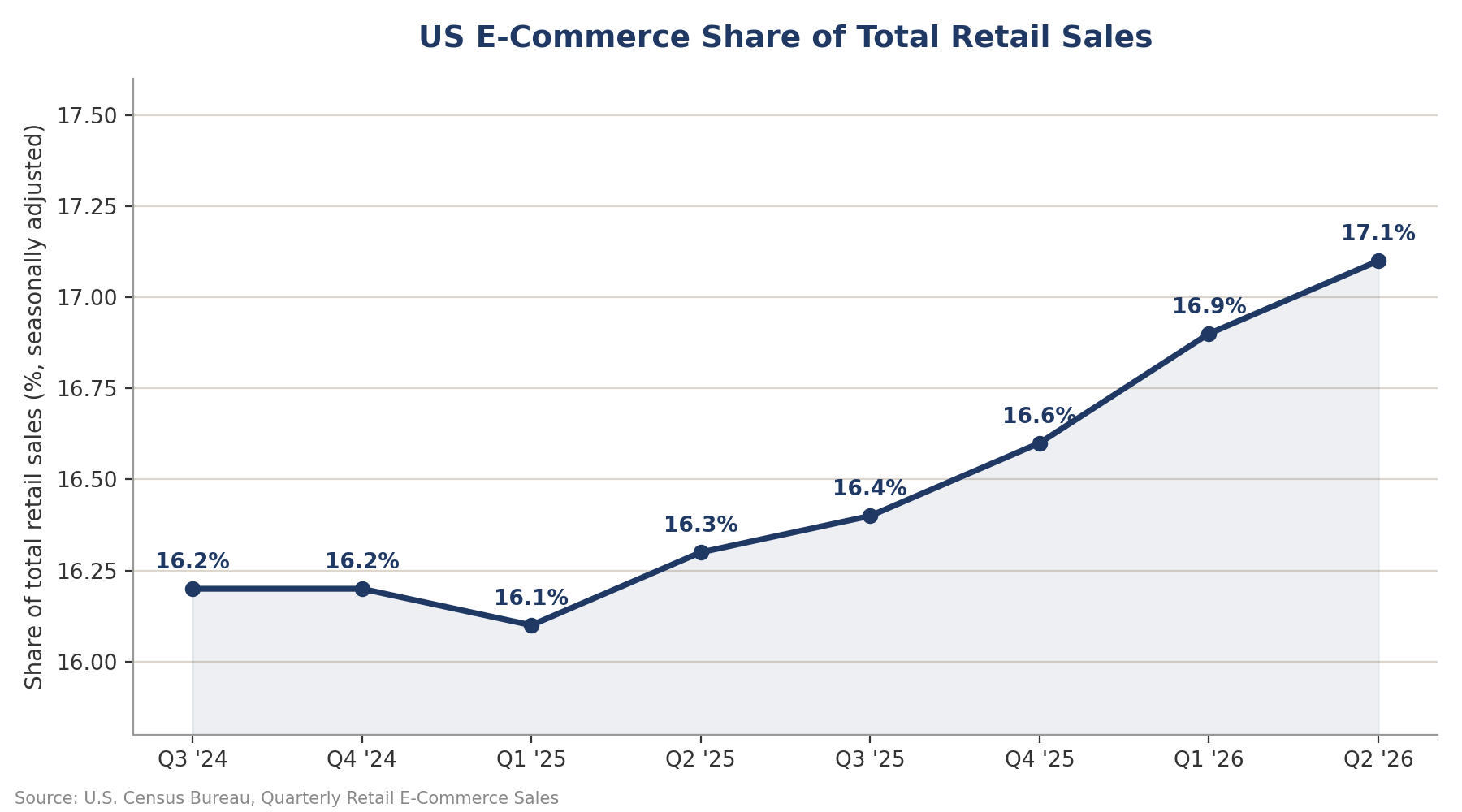
Figure 2: Consumer packaging perception and loyalty metrics across multiple published surveys.
Elevating the unboxing experience cannot come at the cost of usability, and the data on this trade-off is stark. A 2026 UPrinting survey found that 78.8% of consumers had needed a tool to open packaging at least monthly, and 48.1% had stopped buying a product specifically because of frustrating packaging, while 52.7% said they would pay more for packaging that opens easily. At the same time, positive packaging design clearly pays off: research cited by fulfillment specialist 3PLGuys found that 61% of consumers say branded packaging makes them more excited to open a parcel. The lesson for brand and packaging teams is that theatrical unboxing elements — locking tabs, multi-layer trays, tight friction fits — must be balanced against genuine ease of entry, since the same design choices that create a satisfying reveal can just as easily become the “packaging puzzle” that drives a customer away.
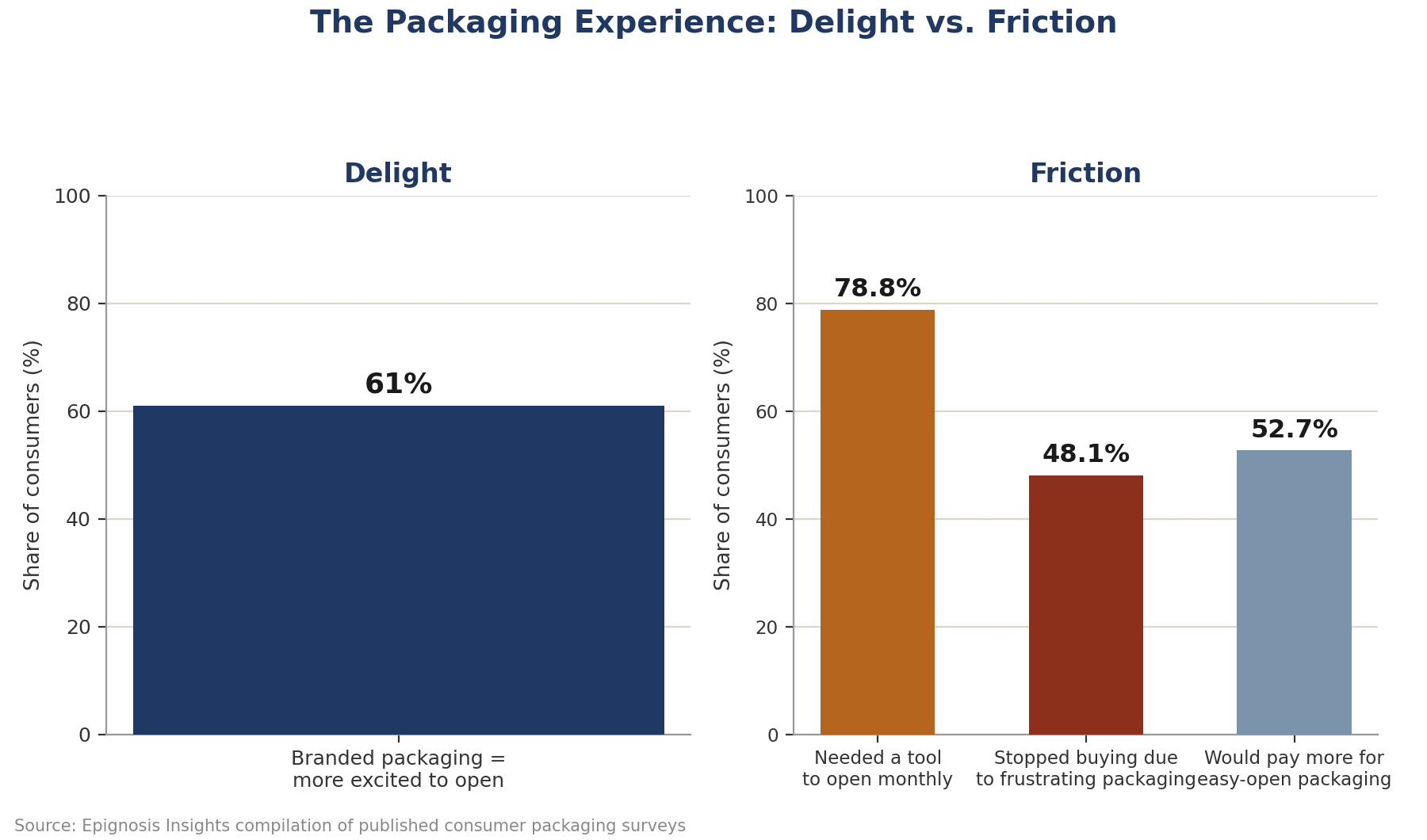
Figure 3: The packaging experience — delight versus friction indicators.
Packaging and unboxing research consistently decomposes the experience into a sequence of discrete moments, each capable of independently reinforcing or undermining brand perception, illustrated schematically in Figure 4. The journey begins at arrival, where exterior box condition and branding set initial expectations; moves through opening, where ease of entry determines whether anticipation turns to frustration; continues into the reveal, where tissue paper, inserts, and product arrangement create the visual “wow” moment; often includes a personal touch such as a handwritten thank-you note, free sample, or discount code; and culminates in sharing and repeat behavior, whether that is a social media post, a five-star review, or a second purchase. Packaging consultancy analysis has emphasized that this reveal-stage design — tissue paper, crinkle-cut or honeycomb wrap, custom inserts, and deliberate product arrangement — is especially critical for subscription box and gifting categories, where the interior presentation effectively is the product experience on first use.
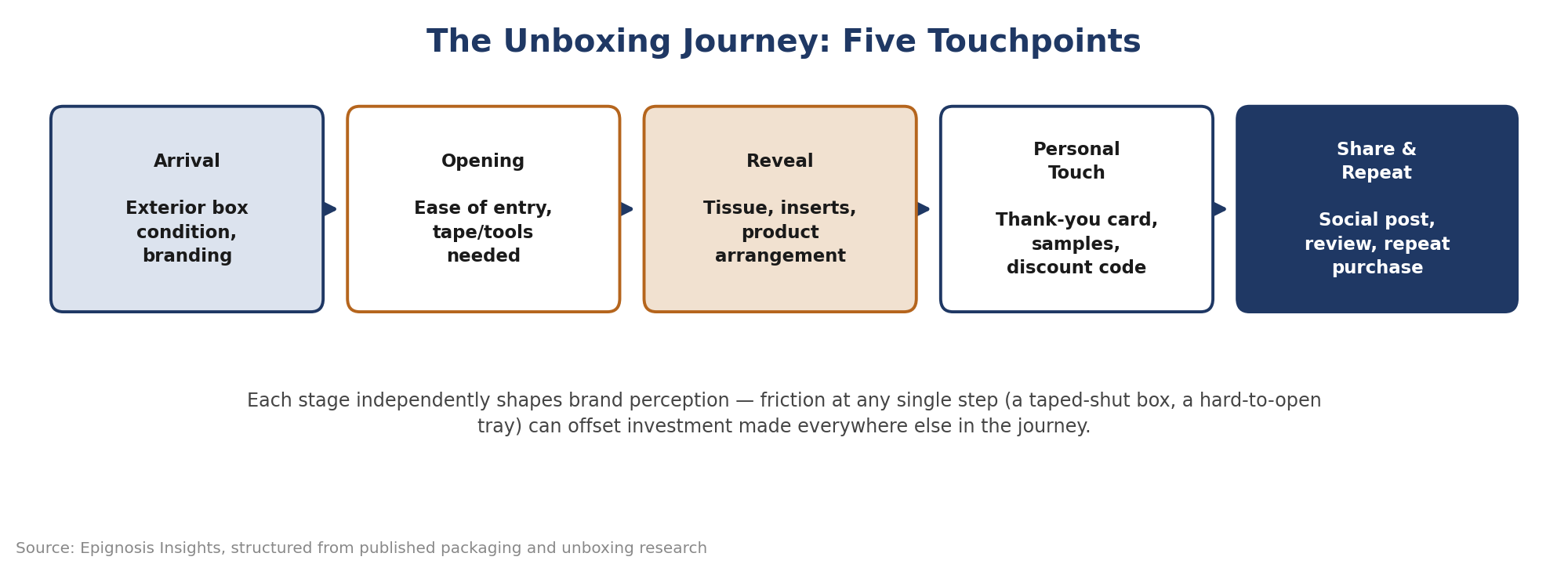
Figure 4: The unboxing journey, from arrival through sharing and repeat purchase.
Packaging decisions increasingly carry environmental scrutiny alongside aesthetic ones. The U.S. Environmental Protection Agency's most recent comprehensive materials data shows containers and packaging made up 28.1% of U.S. municipal solid waste generation, totaling 82.2 million tons, of which approximately 53.9% was recycled or composted — figures that underscore why packaging waste has become a visible, quantifiable sustainability metric for regulators and consumers alike. Industry association PMMI, the Association for Packaging and Processing Technologies, reported in July 2026 that 82% of packaging end users are now actively engaged in sustainability initiatives, a shift the association found is fundamentally changing equipment design, material selection, and supplier expectations across the packaging supply chain, not merely marketing claims. For brands, this means the unboxing experience increasingly must deliver on two fronts simultaneously: an emotionally engaging reveal and a materials story that withstands scrutiny, since a beautiful box wrapped in excess non-recyclable plastic risks undercutting the very brand equity it was designed to build.
Packaging failures carry a direct, quantifiable cost through returns. The National Retail Federation, in its 2025 Retail Returns Landscape report produced with Happy Returns, found that retailers expect 19.3% of online sales to be returned in 2025, and that returns overall will total nearly $850 billion across the retail industry — with a meaningful share of those returns triggered or aggravated by packaging that fails to protect the product or communicate its condition clearly. Consulting firm McKinsey & Company has separately argued that packaging teams should be designed with returns economics in mind from the outset, citing one consumer goods company that redesigned its packaging into a double-pack format optimized for both shelf and shipping efficiency, achieving roughly 10% savings in packaging, manufacturing, and shipping costs while lifting revenue and unit sales by 30% year over year — evidence that thoughtful packaging design can simultaneously improve unboxing experience, reduce returns friction, and lower cost to serve.
Trade coverage confirms that packaging producers are treating this moment as a genuine growth opportunity rather than a cost center to be minimized. Packaging Dive reported that Smurfit Westrock's leadership described global paper markets in mid-2026 as among the strongest conditions the industry has seen in decades, with the company running near sold-out on most grades and pushing through price increases on the strength of demand tied in part to e-commerce and shelf-ready packaging formats. Separately, Packaging Europe's coverage of McKinsey's unboxing research emphasized that senior packaging executives are increasingly expected to unite design, sustainability, and returns-reduction goals under a single organizational owner, rather than treating aesthetics, cost, and environmental compliance as competing priorities managed by separate teams. This organizational shift reflects a broader recognition that packaging decisions once made in isolation by procurement, marketing, and sustainability teams now carry cross-functional consequences that no single department can optimize alone.
Not every product category benefits equally from an elevated unboxing experience, and packaging research suggests brands should calibrate investment to category expectations rather than applying a uniform playbook. Subscription boxes, beauty and skincare, and premium consumer electronics show the strongest documented links between packaging theatre and purchase behavior, since these categories already carry a gifting or self-reward association that heightened presentation reinforces. Everyday replenishment categories — household staples, basic apparel, commodity electronics accessories — show a much weaker relationship between elaborate packaging and repeat purchase, and in these categories the friction data is more likely to dominate: a customer reordering paper towels cares far more about a box that opens in seconds than one that unfolds into a designed reveal. This category-level nuance matters for budget allocation: the same dollar spent on premium unboxing elements can generate meaningfully different returns depending on where a product sits on the spectrum from utilitarian restock to considered, self-expressive purchase.
Packaging and unboxing design will likely continue gaining strategic weight as e-commerce's share of retail climbs and social platforms keep normalizing product reveals as a content category in their own right. Brands that treat the box as a designed brand touchpoint — balancing a genuine “wow” moment against fast, tool-free opening, and pairing both with credible sustainability credentials — are best positioned to convert first impressions into repeat purchases and organic word-of-mouth. Conversely, brands that under-invest in this touchpoint face a growing, quantifiable cost in the form of elevated return rates, one-star reviews citing damaged or frustrating packaging, and the loss of a nearly free marketing channel that competitors are increasingly exploiting.