Global Green Hydrogen Price Tracker
Epignosis Insights Clean Energy Price Tracker — August 2026

Epignosis Insights Clean Energy Price Tracker — August 2026
Green Hydrogen Pricing in 2026 tells two contradictory stories at once: subsidy auctions in Europe are clearing at sharply higher premiums than a year ago, even as the International Energy Agency has cut its 2030 production outlook for the third consecutive edition of its flagship review. Epignosis Insights' Global Green Hydrogen Price Tracker finds that the European Hydrogen Bank's third auction round cleared at premiums between €0.44 and €3.49 per kilogram, roughly double the widest range seen in the second round and nearly eight times the first round's ceiling-beating average, evidence that the cheapest, most competitive project sites have already been claimed. Unsubsidized production costs remain firmly in the $3.50-to-$6.00-per-kilogram range across Europe and the United States, two to four times grey hydrogen's $1.50-to-$2.50 benchmark, while China's production costs run 40% to 45% below Europe and the U.S. on IEA figures, a structural gap reinforced by China's 60%-plus share of global electrolyser manufacturing capacity. This edition compiles pricing signals from the European Commission, the International Energy Agency, BloombergNEF, S&P Global Commodity Insights, and company and policy news into a single monthly view, with Epignosis Insights' own commentary on what the widening auction premiums signal for project economics through the rest of 2026.
This report is compiled and issued monthly by Epignosis Insights as part of its Clean Energy Price Tracker series. Epignosis Insights does not field an independent hydrogen price survey; instead, it triangulates and cross-validates pricing signals each month across government auction results, intergovernmental agency reporting, financial data providers, and company and policy disclosures, producing a consolidated view of the green hydrogen market that no single source captures alone. Sources referenced in this edition include the European Commission's European Hydrogen Bank auction results, the International Energy Agency's Global Hydrogen Review 2025, the International Renewable Energy Agency's cost-reduction analysis, BloombergNEF's electrolyser price survey, S&P Global Commodity Insights' Platts hydrogen price assessments, the Hydrogen Council's project tracker, and reporting from pv-magazine, gasworld, and Bruegel. Because auction clearing prices, spot-market assessments, and levelized cost estimates are constructed using different methodologies and time horizons, Epignosis Insights attributes each figure explicitly to its source and does not average incompatible series into a single headline number.
The European Hydrogen Bank's three completed auction rounds provide the clearest real-money signal of what it actually costs to close the gap between green and fossil hydrogen in Europe. The pilot round, which closed in April 2024, allocated €720 million to seven projects at winning bids between €0.37 and €0.48 per kilogram, dramatically undercutting the European Commission's €4.50 ceiling price and surprising market observers, according to analysis from Bruegel. The second round, launched in December 2024, selected 15 projects at premiums between €0.20 and €1.88 per kilogram. The third round, whose results were published in May 2026, tells a different story: nine projects across seven countries secured €1.09 billion in funding at premiums ranging from €0.44 to €3.49 per kilogram, with two Norwegian maritime-focused projects claiming the highest premiums near the top of that range, according to gasworld and pv-magazine. Epignosis Insights reads this widening range as a sign that the lowest-cost, most bankable project sites, largely concentrated in Iberia and the Nordics in the first two rounds, have already secured funding, leaving a costlier and more geographically dispersed pipeline for subsequent rounds.
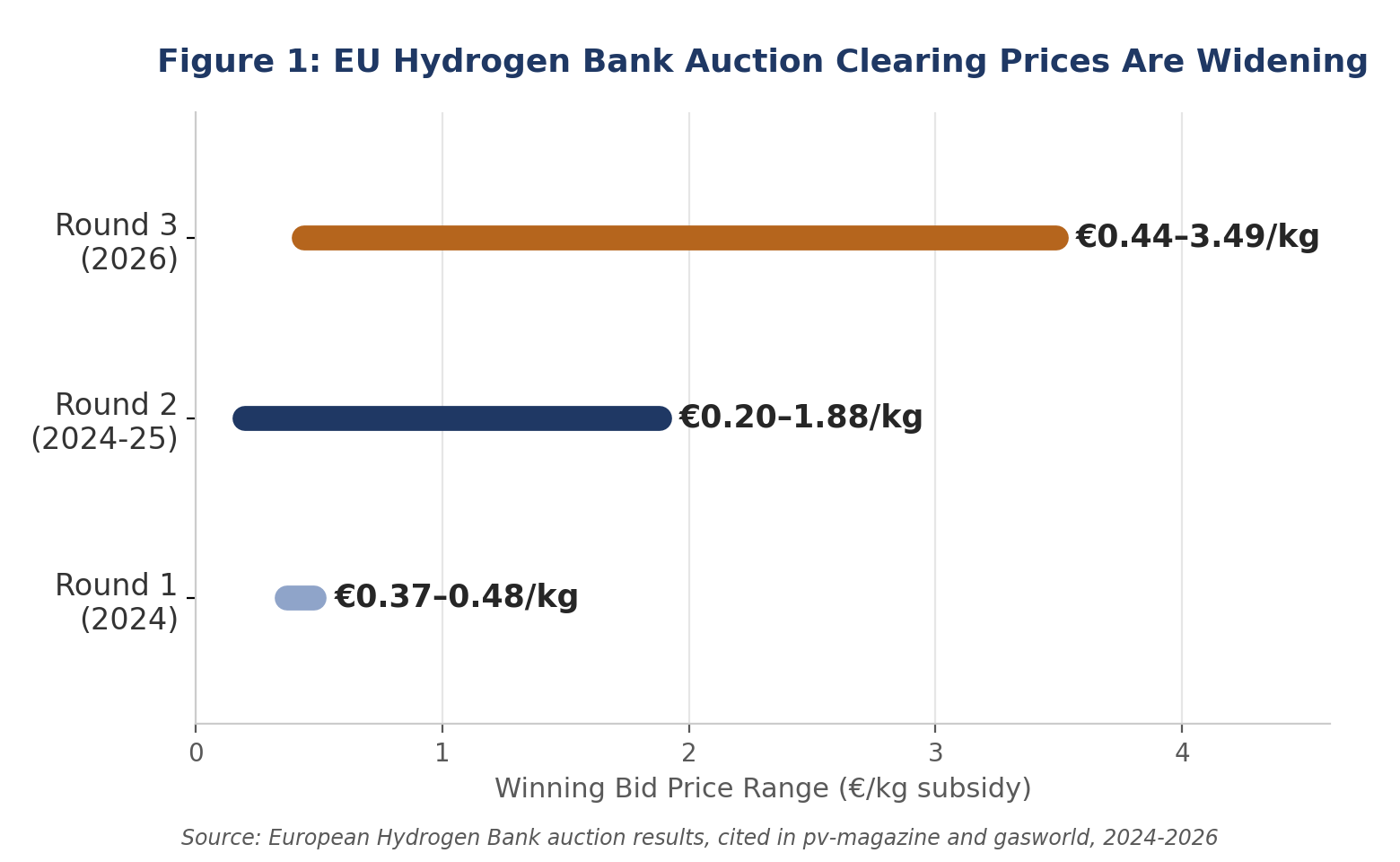
Figure 1: European Hydrogen Bank auction clearing price ranges, Rounds 1-3. Source: European Hydrogen Bank auction results, cited inpv-magazine and gasworld, 2024-2026.
Beneath the European auction data sits a wider global cost gap that the IEA's Global Hydrogen Review 2025 documents in detail. China has emerged as the most cost-competitive jurisdiction for green hydrogen production, with costs running 40% to 45% below Europe or the United States, a gap the IEA attributes to lower cost of capital, cheaper renewable electricity, and faster permitting procedures. The IEA projects this China cost advantage will persist through the end of the decade, with the country reaching cost parity against unabated fossil-based hydrogen production by 2030 while Europe and the U.S. continue to rely on carbon pricing and subsidy mechanisms, like the Hydrogen Bank auctions, to close a gap that is expected to narrow but not close entirely.
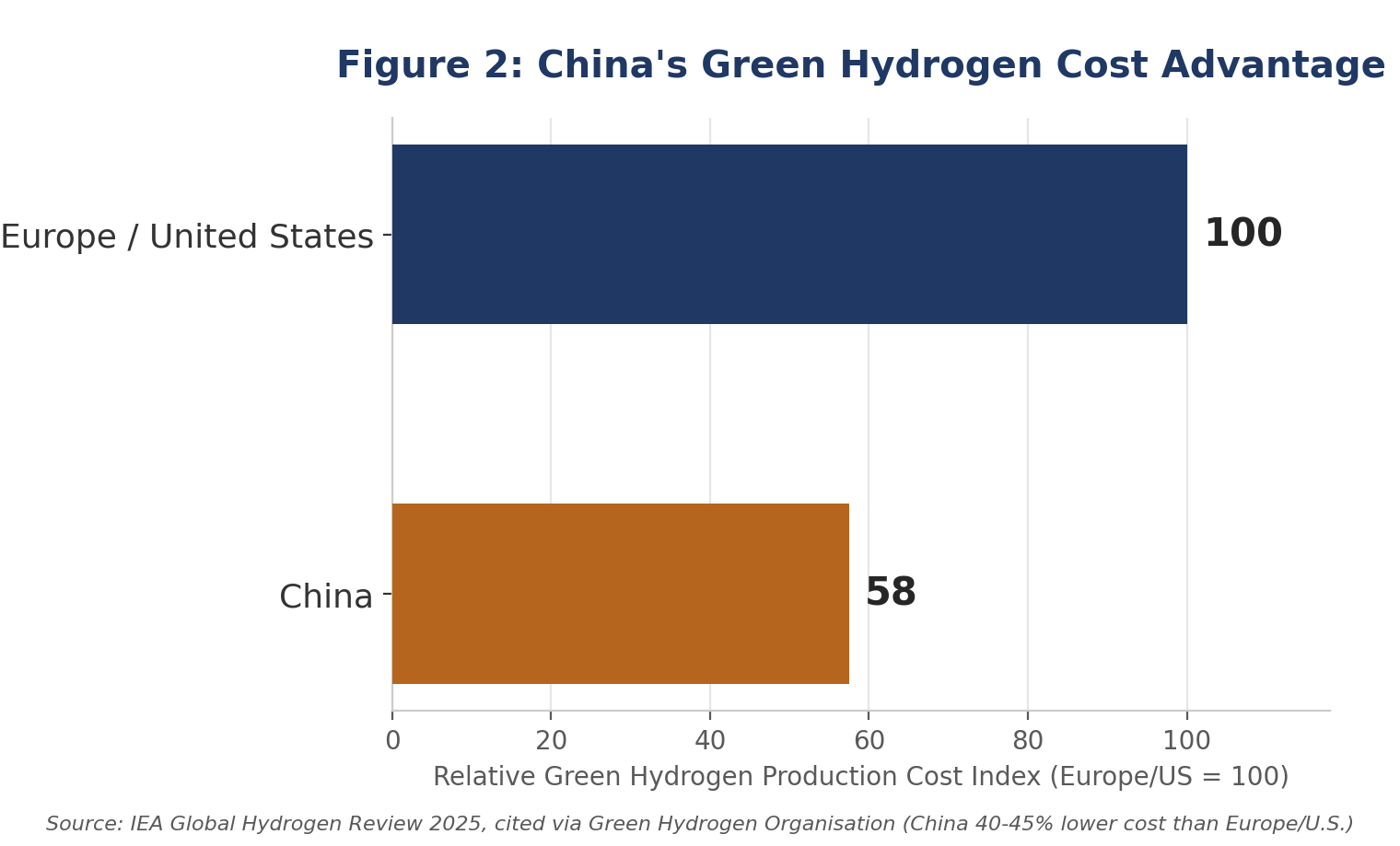
Figure 2: Relative green hydrogen production cost, China vs. Europe/U.S. Source: IEA Global Hydrogen Review 2025, cited via Green Hydrogen Organisation.
The IEA's Global Hydrogen Review 2025 cut its 2030 low-emissions hydrogen production forecast to 37 million tonnes per annum, down from the 49 million tonnes projected just one year earlier in the 2024 edition, a reduction the agency attributes to persisting technical, regulatory, and financing barriers and continued difficulty securing reliable offtake agreements. Considering only projects that are operational, under construction, or have already reached a final investment decision, the IEA's more conservative estimate puts secured 2030 production capacity at just 4.2 million tonnes, a fivefold increase from today's levels but a fraction of the announced pipeline. Epignosis Insights notes the pattern across successive editions of the Global Hydrogen Review, each one lower than the last, as itself a pricing signal: persistent downward revisions to expected supply typically support, rather than undermine, pricing power for the projects that do reach completion.
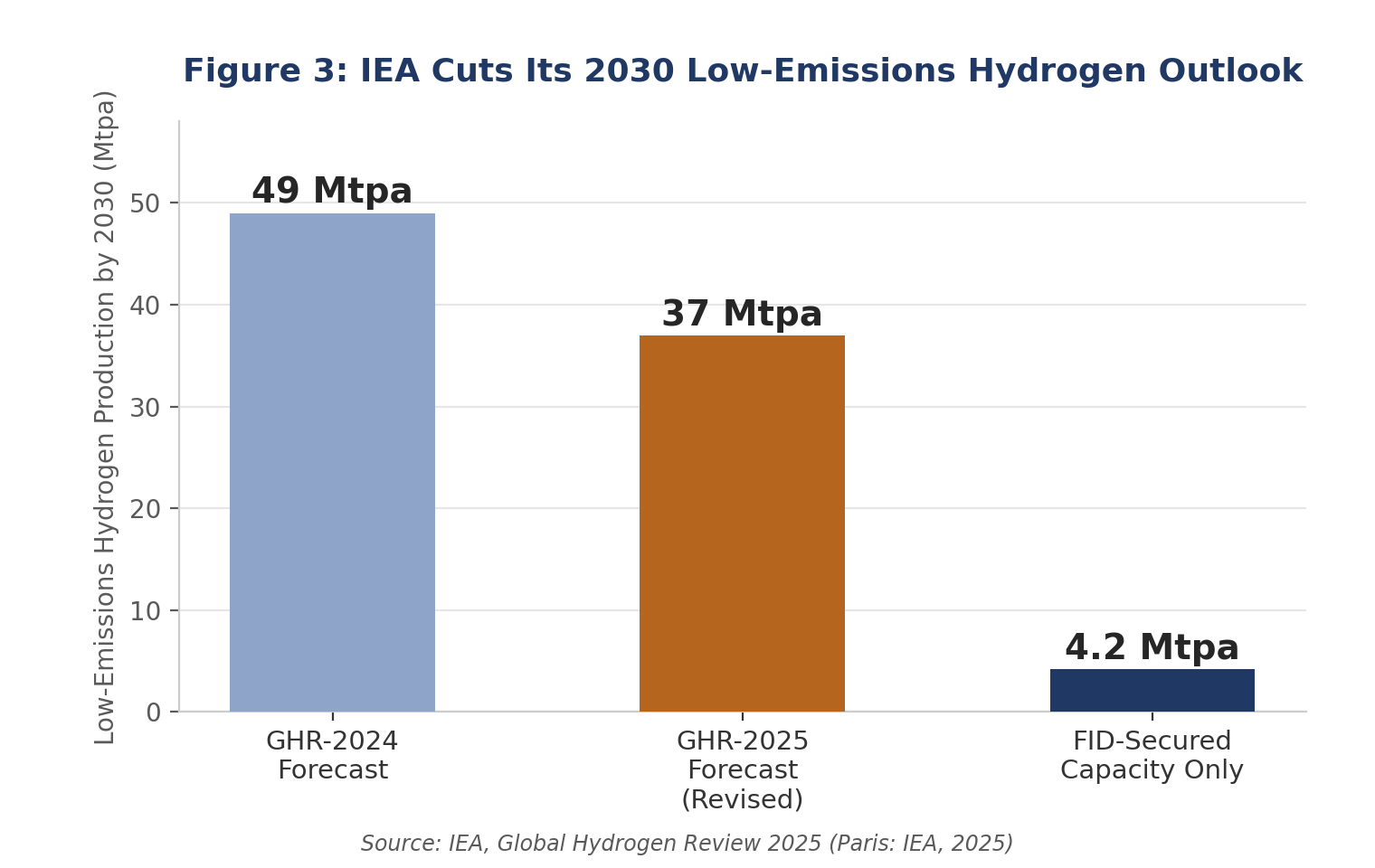
Figure 3: IEA's 2030 low-emissions hydrogen production outlook, successive downward revisions. Source: IEA, Global Hydrogen Review 2025.
Electrolyser capital costs, the single largest driver of green hydrogen's levelized cost, have moved in the wrong direction for much of the past two years. BloombergNEF's electrolyser price survey found system costs rose by a median of 57% between 2022 and 2024, driven by higher material and manufacturing input costs and slower-than-expected deployment volumes that prevented the anticipated learning-curve savings from materializing.
This cost inflation compounds a structural manufacturing concentration risk: the IEA's Global Hydrogen Review 2025 finds China now accounts for roughly 60% to 65% of global electrolyser manufacturing capacity, up from a much smaller base just a few years earlier, driven by rapid domestic deployment and export ambitions. While Chinese-manufactured electrolysers can reduce upfront capital costs for developers outside China, the IEA notes they continue to face efficiency and underperformance issues that can raise operating costs and offset some of the initial capital savings, along with unresolved questions around long-term maintenance and adaptation to local technical standards.
Epignosis Insights views the BloombergNEF cost-inflation finding as the more consequential data point for near-term pricing, because it directly contradicts the learning-curve assumption embedded in most pre-2023 green hydrogen cost forecasts. Those forecasts, including IRENA's earlier cost-reduction analysis, generally assumed electrolyser capital costs would fall steadily as manufacturing scaled, mirroring the cost trajectory solar PV followed over the previous decade. A 57% median cost increase over two years is the opposite of that pattern, and it helps explain why current unsubsidized LCOH figures remain stubbornly above the $3.50-per-kilogram floor that earlier industry roadmaps had targeted for this point in the decade.
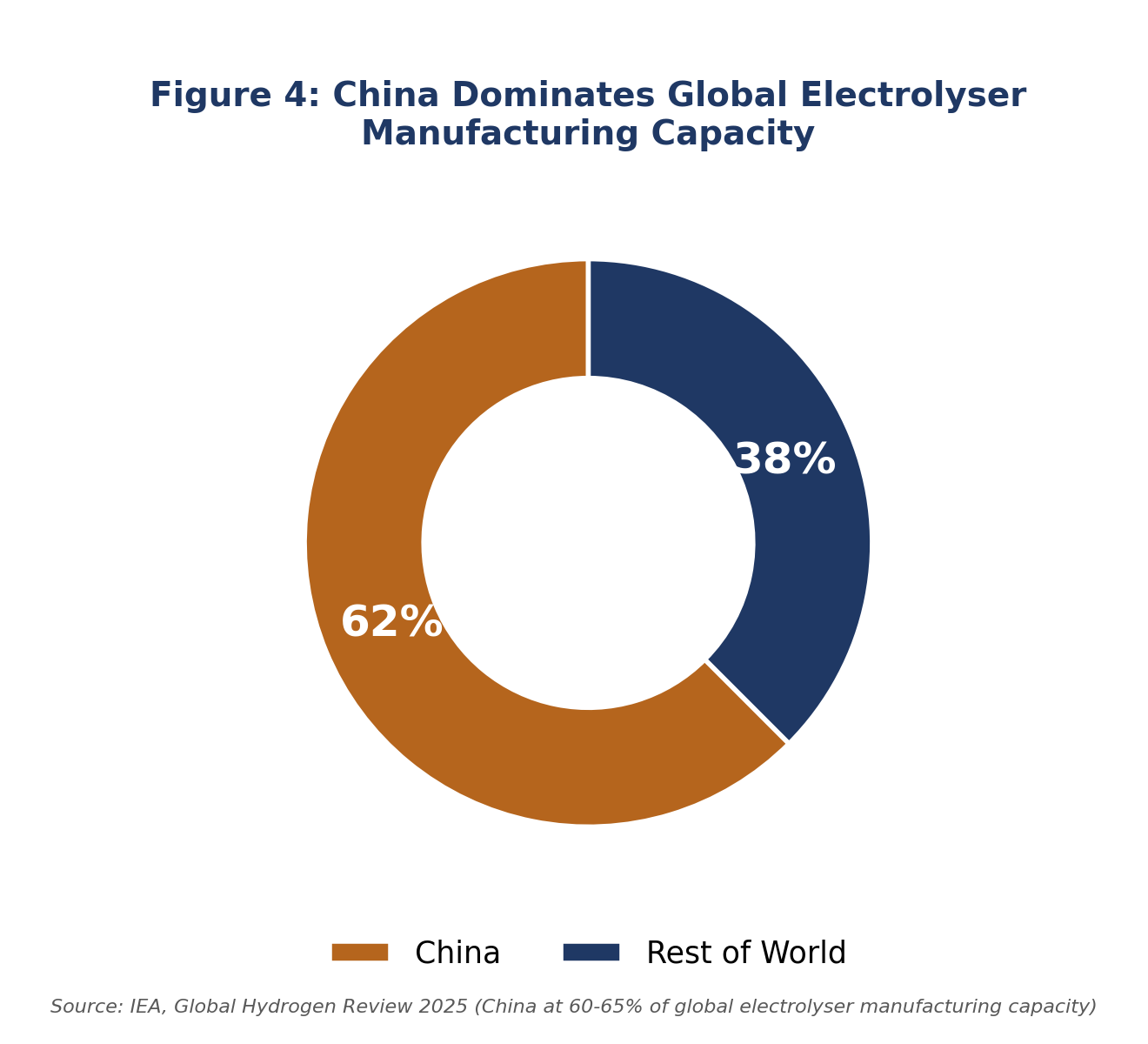
Figure 4: Global electrolyser manufacturing capacity share. Source: IEA, Global Hydrogen Review 2025.
Policy uncertainty has become an active pricing risk in the U.S. market specifically. The One Big Beautiful Bill Act narrowed the eligibility window for the Section 45V clean hydrogen production tax credit, tying eligibility to a construction-start deadline that industry trackers estimate affects as much as 95% of announced U.S. hydrogen capacity, a shift that has already contributed to project deferrals and cancellations. High-profile examples include Air Products' cancellation of previously announced final investment decisions and BP's deferral of its Australian Renewable Energy Hub project, both cited in recent industry commentary as evidence that the gap between announced pipeline capacity and bankable projects is widening rather than closing. Epignosis Insights views the combination of a narrowing U.S. tax credit window and a widening European auction premium as pointing in the same direction: policy support that was calibrated for an earlier, lower-cost-assumption phase of the industry is proving insufficient for the higher electrolyser and financing costs now being realized.
The contrast between the U.S. and EU policy responses is itself instructive for project developers weighing where to locate new capacity. The EU's auction-based mechanism adjusts automatically to rising costs, since each round simply clears at whatever premium the market requires, whereas the U.S. tax-credit structure is fixed in statute and now under political pressure to narrow further rather than expand. Epignosis Insights expects this structural difference to accelerate a shift in announced project pipeline toward Europe and the Gulf region, where fixed-premium auctions and low-cost solar generation respectively offer more predictable project economics than the U.S. policy environment currently provides.
Epignosis Insights expects European Hydrogen Bank auction premiums to remain elevated through the fourth auction round, as the remaining project pipeline skews toward higher-cost geographies and specialized end-uses like maritime and aviation fuel that commanded the top of the Round 3 price range. In the United States, further project deferrals or cancellations are likely through the remainder of 2026 as developers reassess bankability under the narrowed 45V credit window. China's cost advantage is expected to persist and likely widen modestly as its electrolyser manufacturing scale continues to compound, reinforcing the IEA's projection that China reaches cost parity with fossil-based hydrogen before any other major market. Buyers and developers outside China should expect unsubsidized green hydrogen costs to remain in the $3.50-to-$6.00-per-kilogram range through 2026, with policy support remaining the deciding factor in project bankability rather than underlying technology cost declines.