
Singapore Semiconductor Market to Reach USD 1.87 Trillion by 2034 as AI, Advanced Packaging and Fab Expansion Reshape the Industry
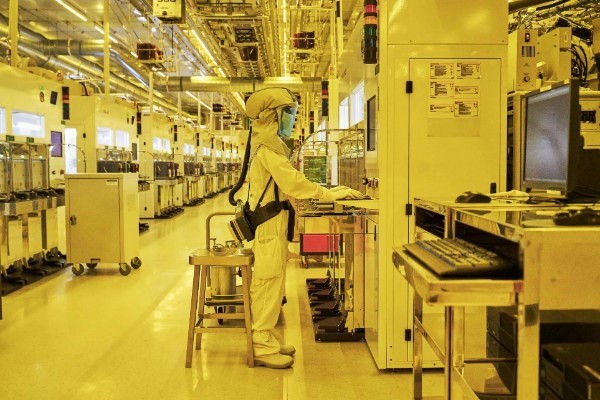
Epignosis Insights has released its latest study, “Singapore Semiconductor Manufacturing: Market Size, Capacity Expansion & Investment Outlook 2024–2034”, which offers a detailed view of how one of Asia’s most established semiconductor hubs is positioning itself for the next wave of demand from artificial intelligence (AI), data centers, automotive electronics and advanced packaging. According to the report, the Singapore semiconductor market was valued at USD 219 billion in 2025 and is projected to reach USD 1.87 trillion by 2034, registering a CAGR of 27.5% during 2027–2034.
Key Highlights of the Report
• The market was valued at USD 219 billion in 2025 and is projected to reach USD 1.87 trillion by 2034.
• New capacity from UMC, VSMC, GlobalFoundries, Micron and Soitec is expanding foundry, memory packaging and specialty-wafer output.
• Singapore accounts for approximately 20% of global semiconductor equipment production.
• Semiconductors generated S$60.3 billion in value added in 2022, with around 98% of that value derived from exports.
• Memory holds the largest estimated share by type at 28%, followed by logic at 18%.
A Hub Built Across the Full Value Chain
Singapore’s semiconductor industry spans IC design, wafer fabrication, assembly, packaging, testing, equipment and materials. This breadth allows the country to capture value at several points in the supply chain rather than depending on a single activity. Epignosis Insights finds that growth over the forecast period will be shaped by rising demand for AI processors, high-bandwidth memory (HBM), servers and data-center infrastructure, supported by steady demand from automotive, 5G and Internet of Things (IoT) applications.
Advanced Packaging and AI Emerge as Core Growth Drivers
The report identifies advanced packaging as one of the most significant growth drivers for the industry. Technologies such as HBM, chiplets, 2.5D/3D integration and heterogeneous integration are becoming essential as AI workloads demand greater computing performance, memory bandwidth and energy efficiency. Singapore’s position in this segment is being strengthened by Micron’s HBM advanced packaging facility, which broke ground in January 2025. The project represents an investment of approximately US$7 billion (S$9.5 billion), is scheduled to begin operations in 2026, and is expected to create around 1,400 jobs initially, with the potential to reach about 3,000 as capacity expands from 2027 onward.
Capacity Expansion Spans Foundry, Specialty Wafers and R&D
Epignosis Insights notes that new capacity is being added across several segments at the same time. UMC’s new Pasir Ris facility, built around 22nm and 28nm specialty processes, is scheduled to enter volume production in 2026 at up to 30,000 wafers per month, lifting UMC’s total Singapore capacity above 1 million wafers a year. VisionPower Semiconductor Manufacturing Company (VSMC), the joint venture between Vanguard International Semiconductor and NXP Semiconductors, is building a 300mm fab that targets 55,000 wafers per month by 2029.
GlobalFoundries’ expansion has raised its Singapore capacity to approximately 1.5 million 300mm wafers a year, while Soitec’s Singapore operation can now produce around 2 million 300mm silicon-on-insulator (SOI) wafers annually. In addition, a S$500 million national fabrication facility for R&D and translation is targeted for availability by 2027.
Economic Contribution and Export Orientation
The study highlights the growing weight of semiconductors in Singapore’s economy. Data from the Department of Statistics show that the industry generated S$60.3 billion in value added in 2022, while its share of nominal value added within the electronics cluster rose from 45.6% in 2000 to 80.2% in 2025. The industry directly employs more than 35,000 people and represents approximately 8% of the economy. Trade is central to this performance: Singapore exported approximately US$119.23 billion of HS 8542 integrated circuits in 2024, with Hong Kong and mainland China together accounting for nearly half of these shipments.
Memory Leads a Diversified Product Portfolio
By type, memory holds the largest estimated share of the Singapore semiconductor industry at 28%, followed by logic at 18%, microprocessors and microcontrollers at 10%, analog at 9% and power semiconductors at 8%. The report also points to specialised strengths in automotive microcontrollers, silicon carbide (SiC) and gallium nitride (GaN) power devices, sensors and MEMS, and photonics, giving Singapore exposure to multiple technology cycles.
Cost and Resource Constraints Remain Key Considerations
The report also examines the challenges facing manufacturers. Advanced fabs and packaging lines require heavy upfront spending on cleanrooms, equipment and automation, as well as significant electricity, water and cooling resources. Land and utility constraints, together with competition for skilled engineers, are adding to operating costs. Companies are responding with efficiency measures, such as the district cooling system launched at STMicroelectronics’ facility in 2025, which is expected to cut cooling-related electricity costs by 20% a year.
Competitive Landscape
Key companies analysed in the report include GlobalFoundries, United Microelectronics Corporation (UMC), Vanguard International Semiconductor (VIS), Systems on Silicon Manufacturing Company (SSMC), AMD, Broadcom, MediaTek, Marvell Technology, NVIDIA, Qualcomm, Applied Materials, Lam Research, KLA Corporation, ASML, Tokyo Electron and ASM International, among others, spanning foundries, fabless chip designers and equipment manufacturers.
About Epignosis Insights
Epignosis Insights is a market research and brand intelligence consultancy headquartered in Pune, India. The firm delivers market sizing, competitive intelligence, syndicated research and brand health tracking across technology, industrial, automotive, consumer and financial services sectors, helping clients make well-informed strategic decisions.