Singapore Semiconductor Industry Pricing Tracker – September 2026
Memory prices hold at record levels, mature-node foundry quotes firm up and AI demand lifts export values to a 38-year high


Memory prices hold at record levels, mature-node foundry quotes firm up and AI demand lifts export values to a 38-year high
Epignosis Insights' September 2026 tracker finds that pricing across the Singapore semiconductor industry remains firmly in an upcycle. Memory contract prices continued to rise through the third quarter, although the pace of increase has slowed from the exceptional gains recorded in the first half of the year. Mature-node foundry pricing, which was largely flat through 2025, has turned upward as AI-related demand for power-management, networking and storage-controller chips absorbs spare capacity. Combined with strong shipment volumes, these price trends pushed Singapore's electronics exports to one of the fastest growth rates on record in August.
Our overall assessment for the month is "firm and rising, with slowing momentum." Epignosis Insights expects prices for most product categories relevant to the Singapore semiconductor industry to remain higher in the fourth quarter of 2026 than in the third, but with smaller quarter-on-quarter gains as high base levels, long-term supply agreements and consumer affordability limits begin to shape negotiations more strongly.
| Indicator | Latest reading | Direction | Epignosis Insights view |
| Conventional DRAM contract price | +13% to +18% QoQ (3Q26) | Rising | Gains to moderate in 4Q26 |
| NAND Flash contract price | +10% to +15% QoQ (3Q26) | Rising | Enterprise SSD demand supportive |
| Mature-node foundry wafer price | +5% to +10% (2H26) | Rising | Further hikes likely in 2027 |
| Singapore electronics NODX | +131.8% YoY (Aug 2026) | Surging | Base effects to fade from 4Q26 |
| Singapore Manufactured Products Price Index | +2.5% MoM (Jul 2026) | Rising | Tracking chip price inflation |
| Global equipment billings | US$40.53 bn (2Q26) | Record | Supports Singapore toolmakers |
Source: Epignosis Insights analysis
Global demand conditions continue to support pricing across the Singapore semiconductor industry. According to the Semiconductor Industry Association (SIA), global semiconductor sales reached US$146.8 billion in July 2026, up 6.4% from June and 135.1% from July 2025, marking the 17th consecutive month of sequential growth. Sales rose in every major region, which indicates that the upcycle is broad-based rather than confined to a single end market.
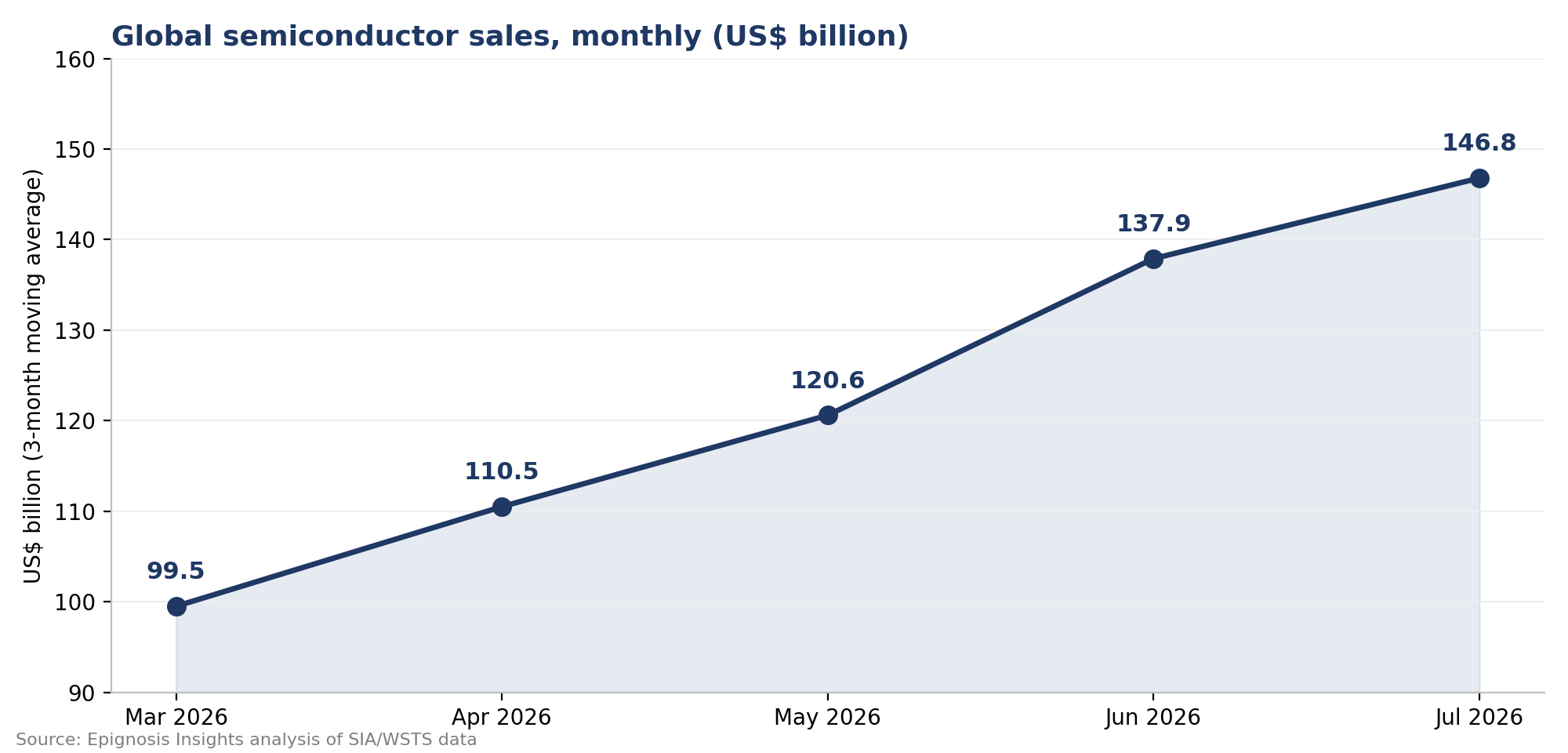
Figure 1: Global semiconductor sales, March–July 2026 (US$ billion)
Consulting firm Gartner now expects worldwide semiconductor revenue to reach US$1.6 trillion in 2026, up 92% from US$809 billion in 2025, and to rise further to US$1.9 trillion in 2027. Epignosis Insights notes that a large share of this revenue growth reflects higher prices rather than higher volumes, particularly in memory. As a result, pricing has become the most important variable shaping revenue and margins for manufacturers across the Singapore semiconductor industry.
The local economy is already reflecting these conditions. Singapore's Ministry of Trade and Industry (MTI) upgraded its 2026 GDP growth forecast to 4.5–5.5% from 2.0–4.0%, citing a stronger-than-expected first half and the acceleration in global AI-related capital expenditure. The economy grew 5.9% year-on-year in the second quarter, with the electronics and precision engineering clusters among the main contributors. For the Singapore semiconductor industry, this confirms that elevated chip prices are translating into higher output value and stronger economic contribution.
Memory remains the most price-sensitive and most important category for the Singapore semiconductor industry, given Micron's large NAND manufacturing base and its new HBM advanced packaging facility. Market intelligence firm TrendForce expects conventional DRAM contract prices to rise 13–18% quarter-on-quarter in 3Q26 and NAND Flash contract prices to rise 10–15%. It notes that record-high contract prices have pushed consumer-segment customers such as PC and smartphone brands close to their affordability limits, which is why gains are narrowing.
Epignosis Insights observes a clear split between segments. Server DRAM and enterprise SSD pricing remain supported by AI inference and data-center deployments, and a growing portion of volume is governed by long-term agreements that smooth quarterly swings. Consumer-oriented products, by contrast, are meeting resistance as device makers raise retail prices and trim procurement. For the Singapore semiconductor industry, this mix favours producers weighted toward data-center memory, which describes much of Singapore's current memory output.
Micron reported fiscal third-quarter 2026 revenue of US$41.46 billion, compared with US$23.86 billion in the previous quarter and US$9.30 billion a year earlier. Revenue growth of this magnitude, achieved within a year, is driven primarily by average selling prices rather than bit growth, and it lifts the value of memory output from Micron's operations in the Singapore semiconductor industry.
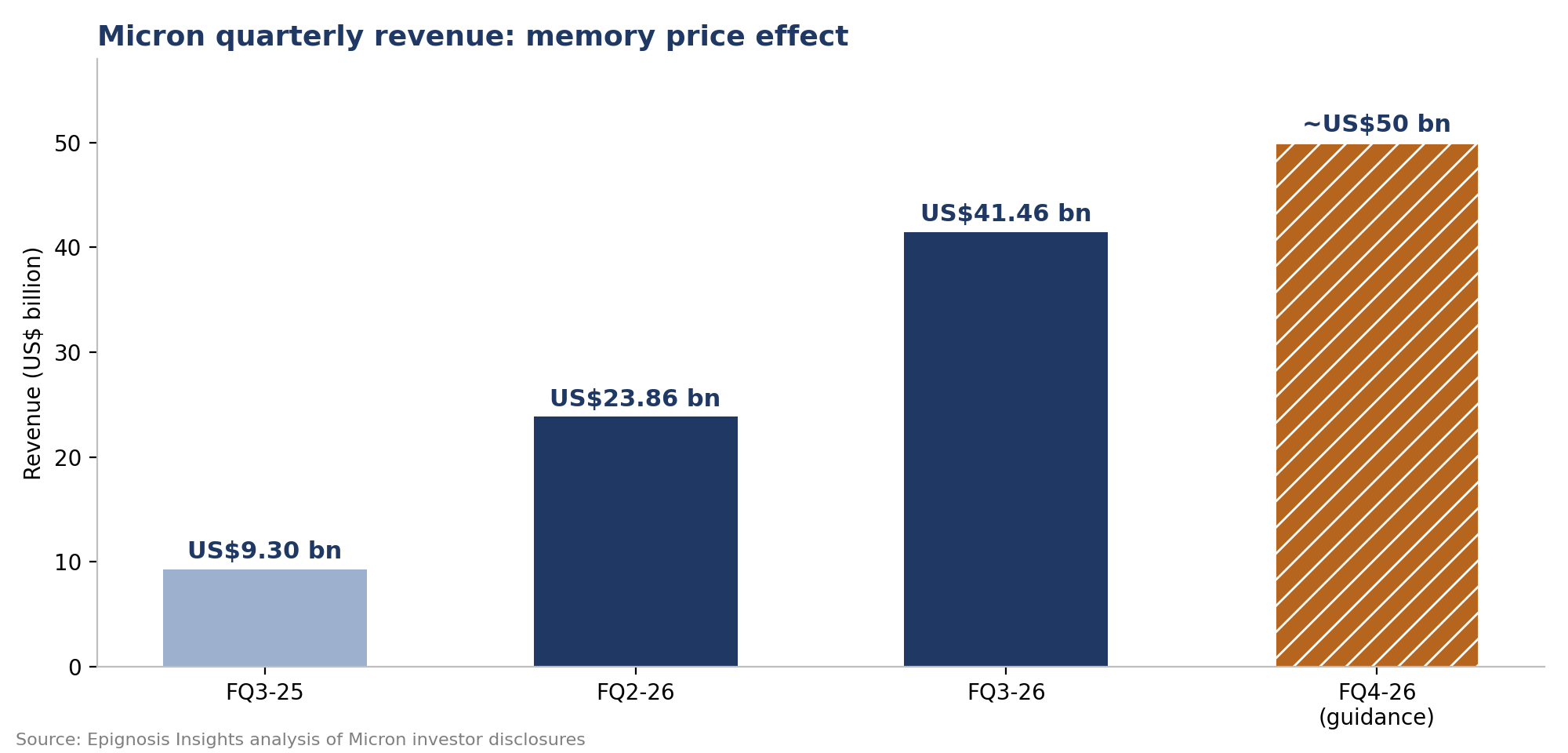
Figure 2: Micron quarterly revenue, FQ3-25 to FQ4-26 guidance (US$ billion)
Looking ahead, Micron has guided fiscal fourth-quarter revenue of about US$50 billion, plus or minus US$1 billion, with gross margin of around 86%, and it is scheduled to report results on September 30. Epignosis Insights will use these results as the next key checkpoint for memory pricing momentum. A result near guidance would confirm that memory prices across the Singapore semiconductor industry are still rising, while any weakening in commentary on 2027 supply would be an early signal that the cycle is approaching its peak.
Mature-node foundry pricing has become the second major price driver for the Singapore semiconductor industry. UMC, which operates its Fab12i campus in Singapore, notified customers of a wafer price adjustment for the second half of 2026. Morgan Stanley, as reported by Yahoo Finance, assumes price increases of 5–10% in 2H26 and another 5–10% in 2027, with small power-management and microcontroller products most likely to be affected, as AI-related demand for server power chips, networking and storage controllers offsets weakness in smartphones and PCs.
More recent reports suggest this trend is strengthening. According to Futu News, citing Taiwan's Economic Daily News on September 21, UMC has signalled a significant round of price increases for 2027, while Powerchip is reportedly raising some quotes by as much as 40% as capacity utilisation rises across mature-node fabs. Epignosis Insights views this as confirmation that the Singapore semiconductor industry's specialty and mature-node capacity is entering a period of stronger pricing power.
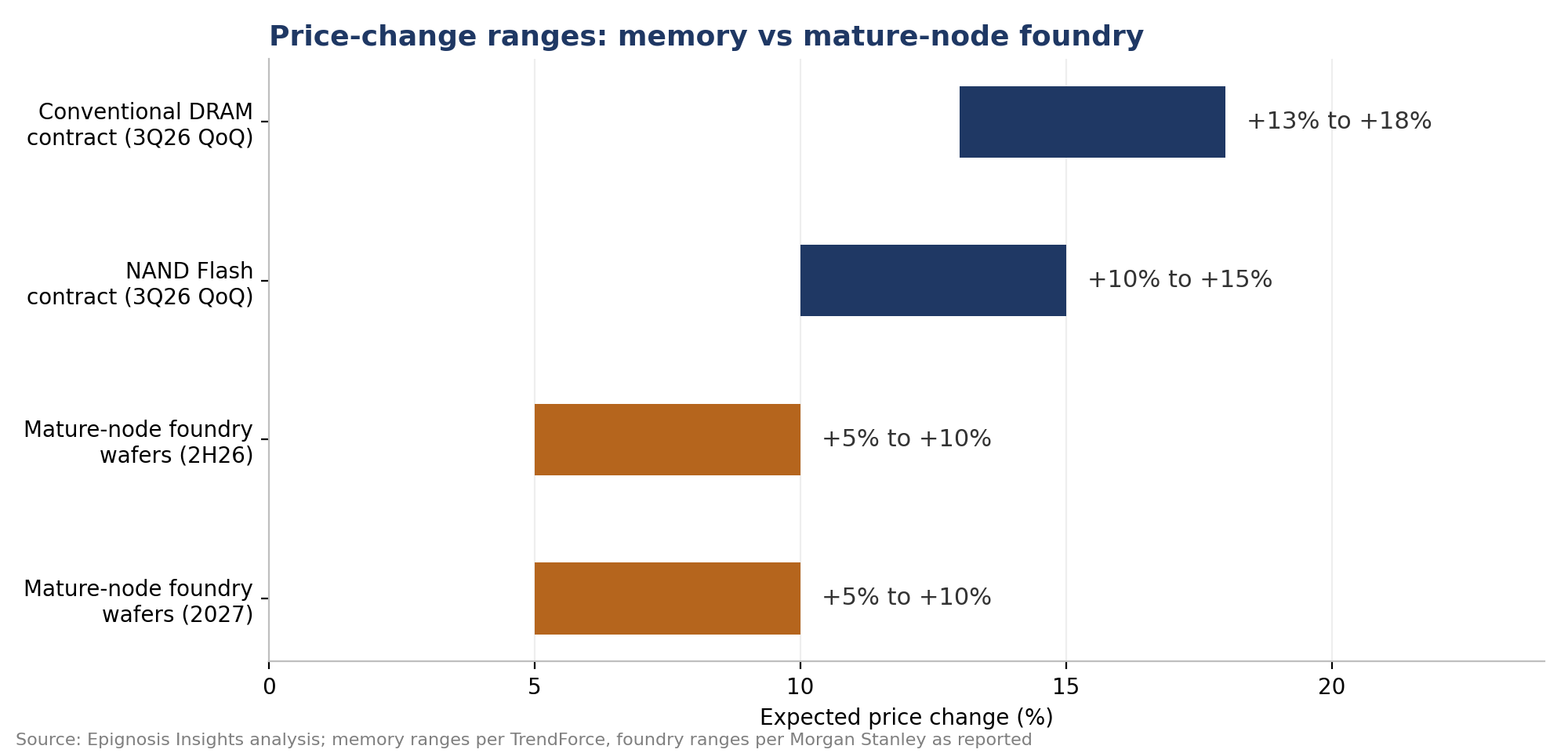
Figure 3: Expected price-change ranges – memory vs mature-node foundry wafers
For Singapore, the implications are significant. UMC's 22nm/28nm expansion, GlobalFoundries' specialty fabs, SSMC and the VSMC fab due to start production in 2027 are all focused on mature and specialty processes. Firmer wafer pricing improves the return on this new capacity and supports continued investment. At the same time, higher wafer costs raise input prices for chip designers serving automotive and industrial markets, so buyers relying on the Singapore semiconductor industry for these products should consider securing volume and pricing through long-term agreements before 2027 rounds of increases take effect.
Export data provide the clearest evidence of how prices and volumes are combining in the Singapore semiconductor industry. Enterprise Singapore data show that non-oil domestic exports (NODX) rose 46.2% year-on-year in August 2026, the strongest growth since October 1988. Electronics NODX jumped 131.8%, led by disk media products (290.2%), personal computers (237.9%) and integrated circuits (90.9%). Shipments to the United States, South Korea, China, Hong Kong and Taiwan all rose sharply.
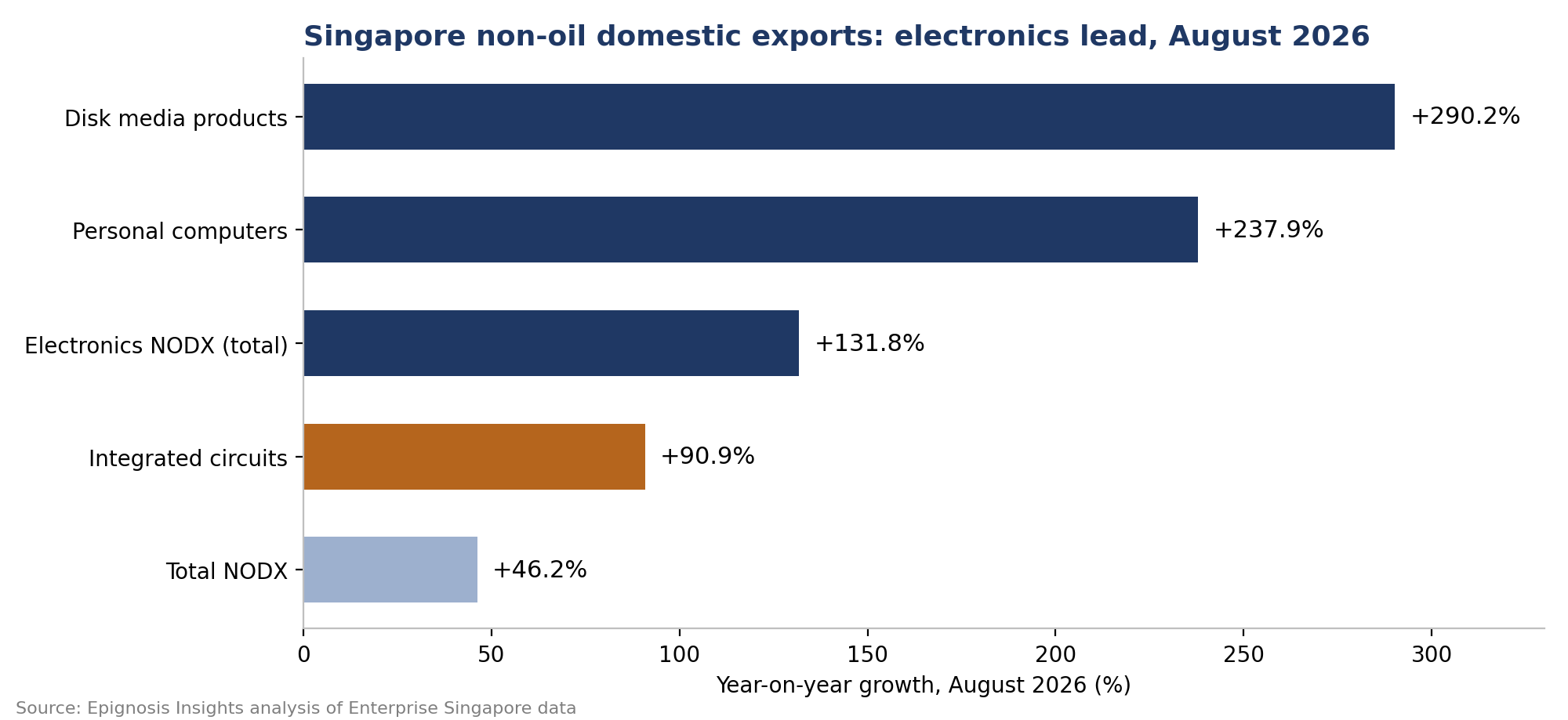
Figure 4: Singapore NODX growth by electronics product, August 2026 (% YoY)
Epignosis Insights attributes a large part of this surge to higher unit values rather than volume alone, together with a favourable base effect from weaker months in 2025. Economists share the view that AI spending is the main driver: according to IBTimes Singapore, Maybank has raised its 2026 NODX growth forecast to 18%, pointing to hyperscaler capital expenditure as support for memory and computing hardware, while flagging possible changes in US tariffs and trade enforcement as risks to the export outlook for the Singapore semiconductor industry.
Official price indices point in the same direction. The Department of Statistics Singapore reported that the Singapore Manufactured Products Price Index and the Domestic Supply Price Index rose 2.5% and 2.3% respectively in July 2026 over June, while the Import Price Index rose 0.8% and the Export Price Index was unchanged. Epignosis Insights notes that producer prices rising faster than export prices may indicate that some cost increases are being absorbed within the Singapore semiconductor industry supply chain before reaching overseas buyers.
Capital-equipment pricing is closely linked to the Singapore semiconductor industry, where equipment makers form a major part of the manufacturing base. SEMI reported that global semiconductor equipment billings rose 23% year-on-year to US$40.53 billion in the second quarter of 2026, an 11% increase from the first quarter and a second consecutive record. Strong billings support pricing and utilisation for Singapore's toolmakers and component suppliers, but they also raise the cost and lengthen lead times for fab projects such as VSMC and Micron's expansions.
The diagram below summarises how pricing moves through the Singapore semiconductor industry. AI capital spending drives demand for both memory and foundry capacity, pushing up contract and wafer prices. Singapore-based producers capture these higher prices in their output value, which then appears in export statistics and national value added. The feedback loop runs in the other direction as well: higher chip prices raise costs for device makers, which can reduce demand for PCs and smartphones and eventually slow price growth.
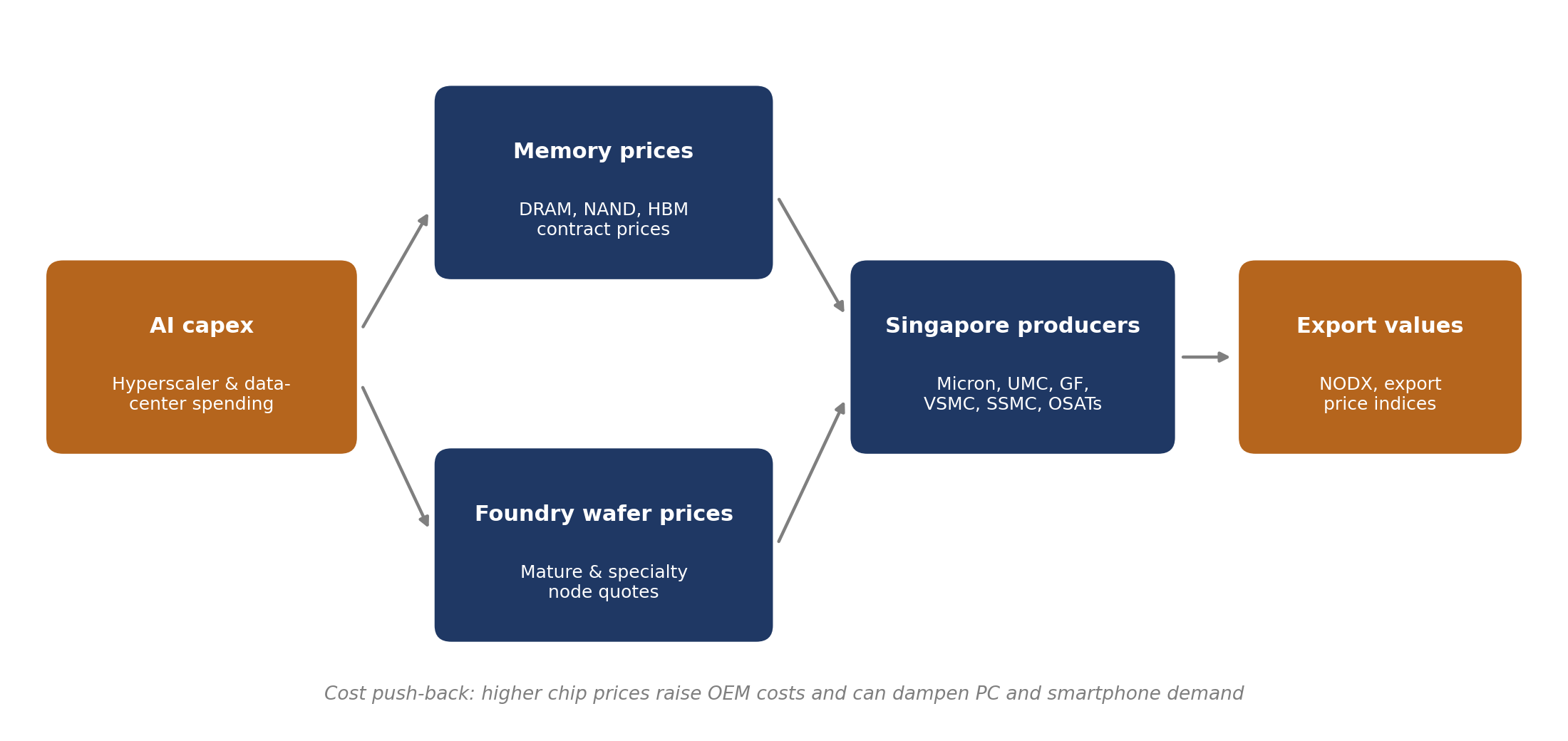
Figure 5: Price transmission across the Singapore semiconductor industry
| Category | 3Q26 trend | 4Q26 outlook (Epignosis Insights view) |
| DRAM (server and PC) | Strong increase | Moderate increase |
| NAND Flash / enterprise SSD | Strong increase | Moderate increase |
| HBM | Tight, contract-based | Stable to firm |
| Mature-node foundry wafers | Rising | Firm, with further hikes into 2027 |
| Semiconductor equipment | Record billings | Firm |
Source: Epignosis Insights analysis
Epignosis Insights expects the Singapore semiconductor industry to close 2026 with prices higher across all major categories, but with the rate of increase easing in memory. Mature-node foundry pricing is likely to strengthen further into 2027 as new capacity takes time to ramp, while HBM pricing will remain largely set by annual contracts rather than monthly negotiation. Equipment pricing should stay firm as fab construction and technology upgrades continue worldwide.
The main downside risk for pricing in the Singapore semiconductor industry is demand destruction in consumer electronics, where record memory prices are already limiting shipments. Other risks include trade-policy changes, inventory build-ups at cloud providers, and the possibility that the favourable base effect in exports fades faster than expected from the fourth quarter. On the upside, tighter-than-expected 2027 memory supply or faster AI server ramp-ups could extend price increases beyond current expectations.
Key data points Epignosis Insights will monitor for the October tracker include Micron's fiscal fourth-quarter results on September 30, September NODX data, fourth-quarter memory contract settlements, UMC's third-quarter earnings commentary on 2027 pricing, and August global sales data. Together, these will show whether pricing momentum in the Singapore semiconductor industry is plateauing or re-accelerating.