Key Findings
- The Global N-Methylaniline Market was valued at US$622.8 million in 2025 and is projected to reach US$847.5 million by 2032, growing at a CAGR of 4.26% from 2026 to 2032.
- Volume stood at 200.9 kilo tonnes in 2025 and is expected to reach 257.6 kilo tonnes by 2032, a volume CAGR of 3.67%.
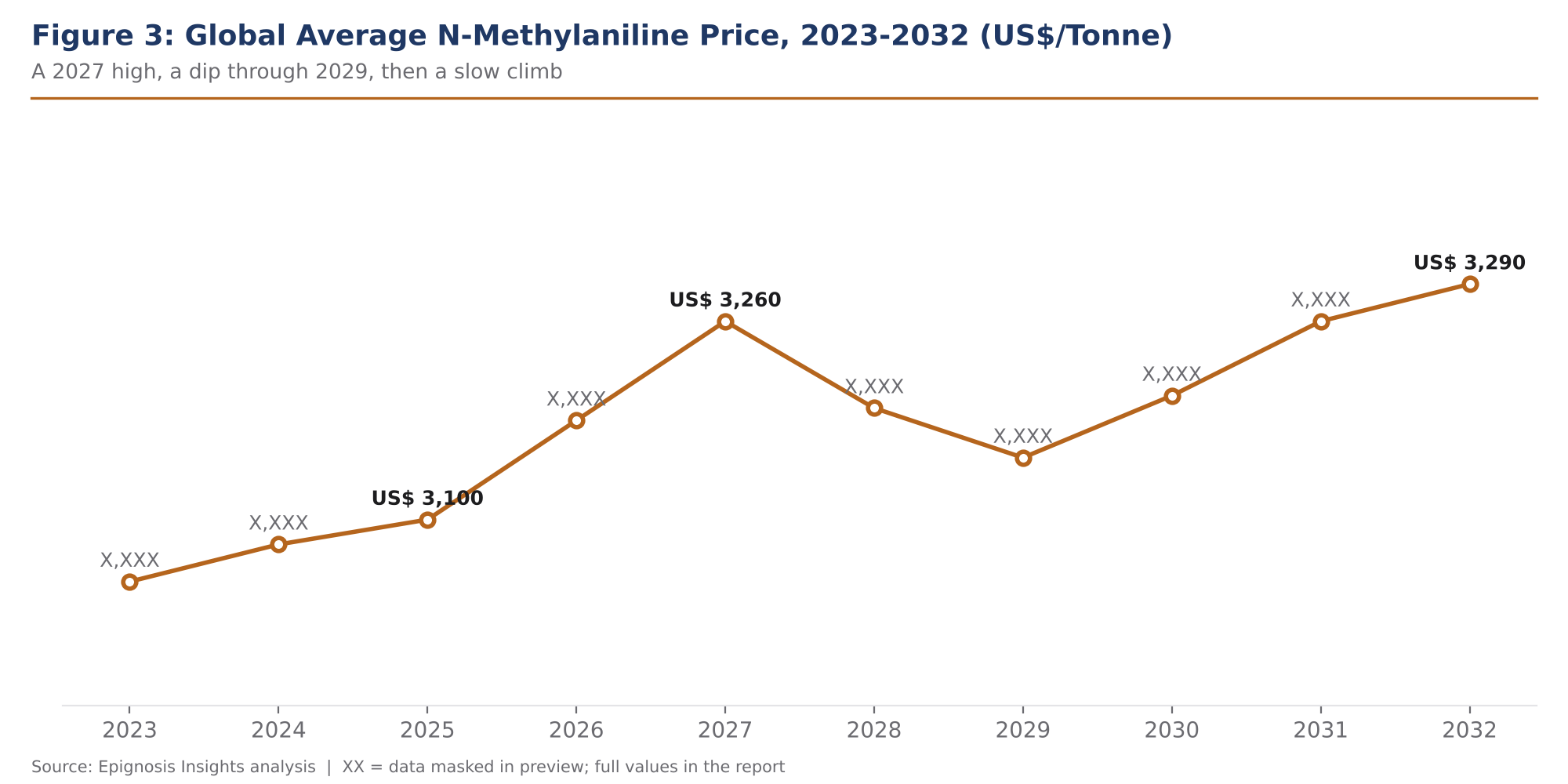
- The global average price was US$3,100 per tonne in 2025. We expect it to touch US$3,260 per tonne in 2027, soften through 2029 and close the forecast at US$3,290 per tonne.
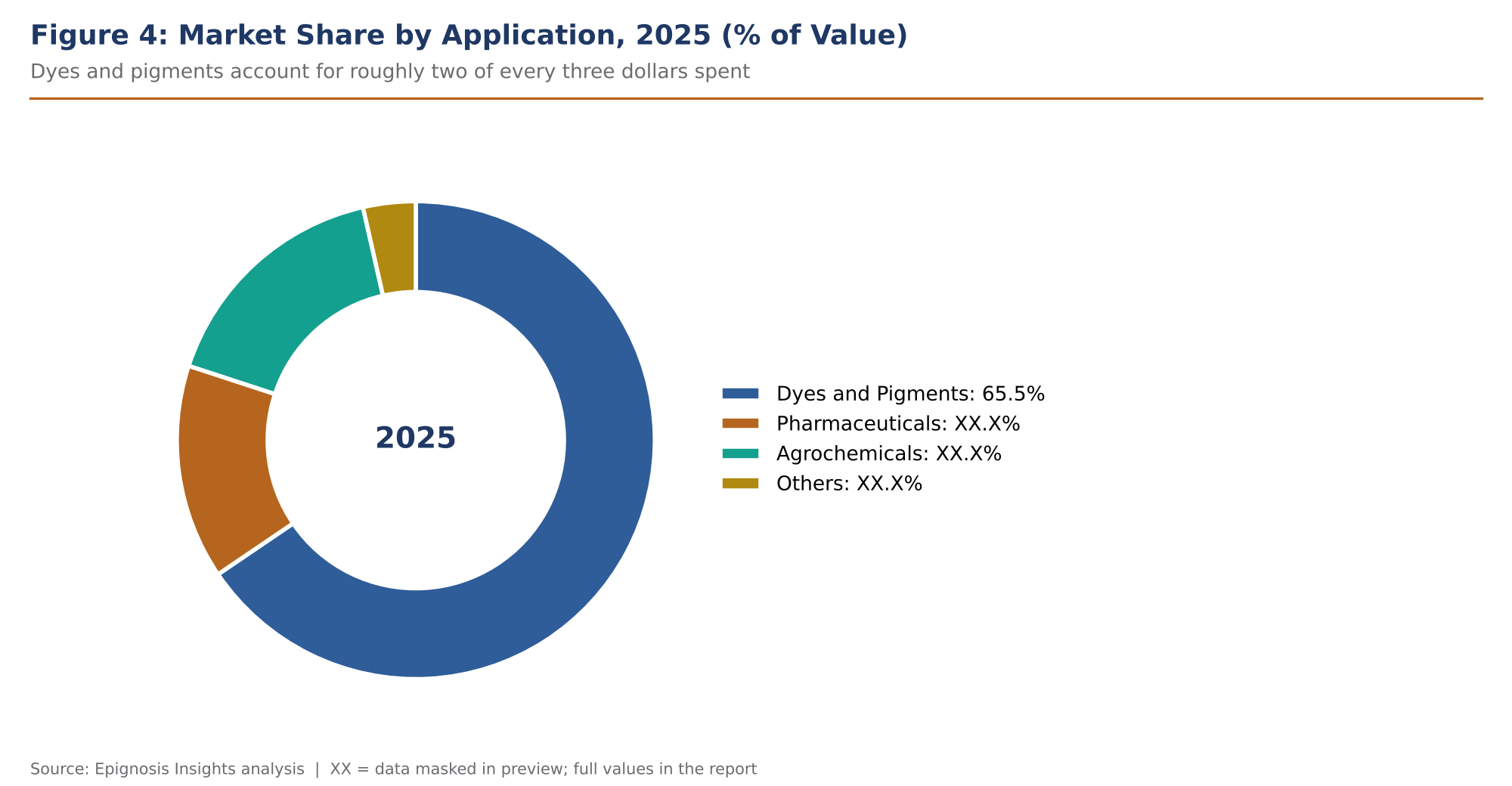
- Dyes and pigments took 65.5% of market value in 2025, equal to US$408.0 million, and are forecast to grow at 4.31% a year.
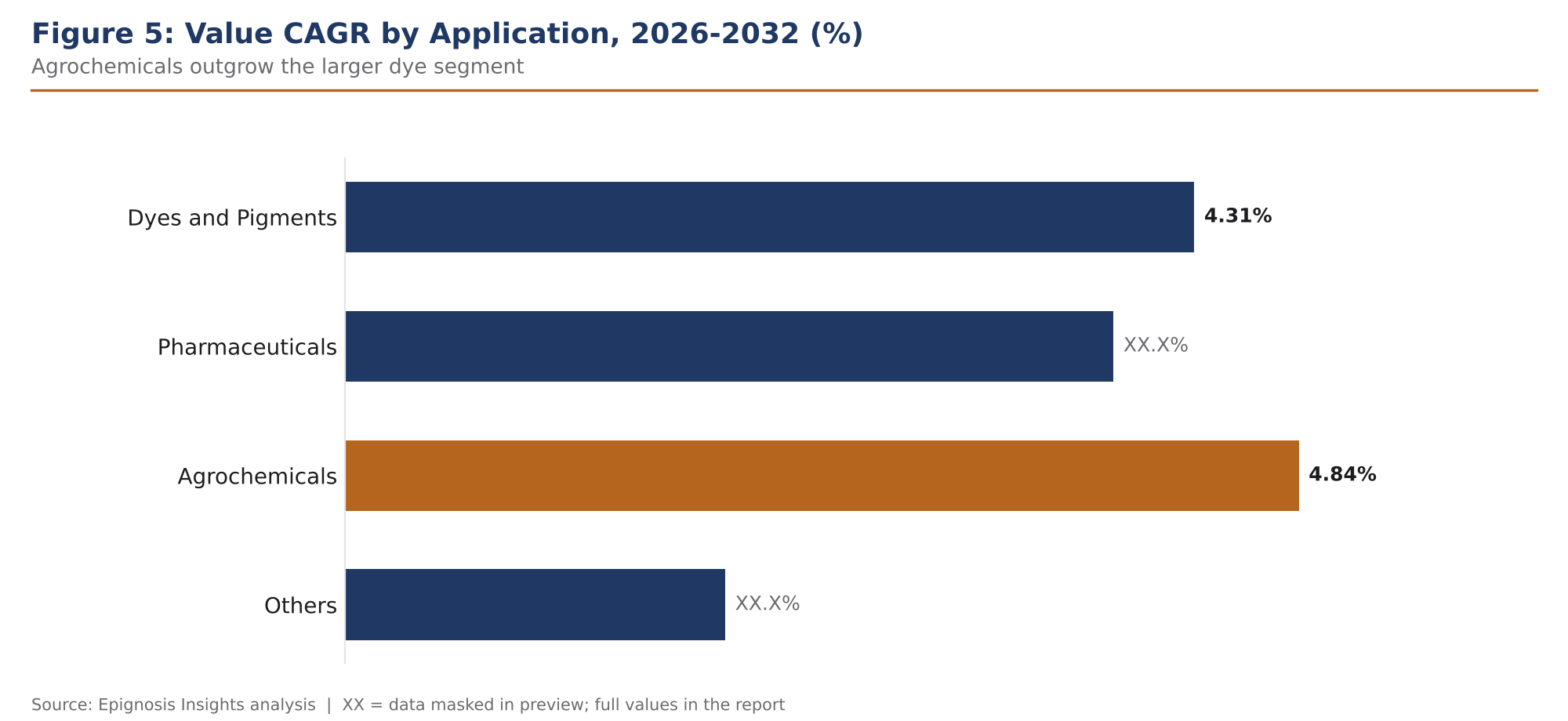
- Agrochemicals are the fastest-growing application at a value CAGR of 4.84%.
- Direct sales accounted for 53.1% of 2025 value and are growing faster than distributor and online channels, at 4.62% a year.
- Asia Pacific generated US$366.5 million, or 58.8% of global value, and grows at a CAGR of 4.66%.
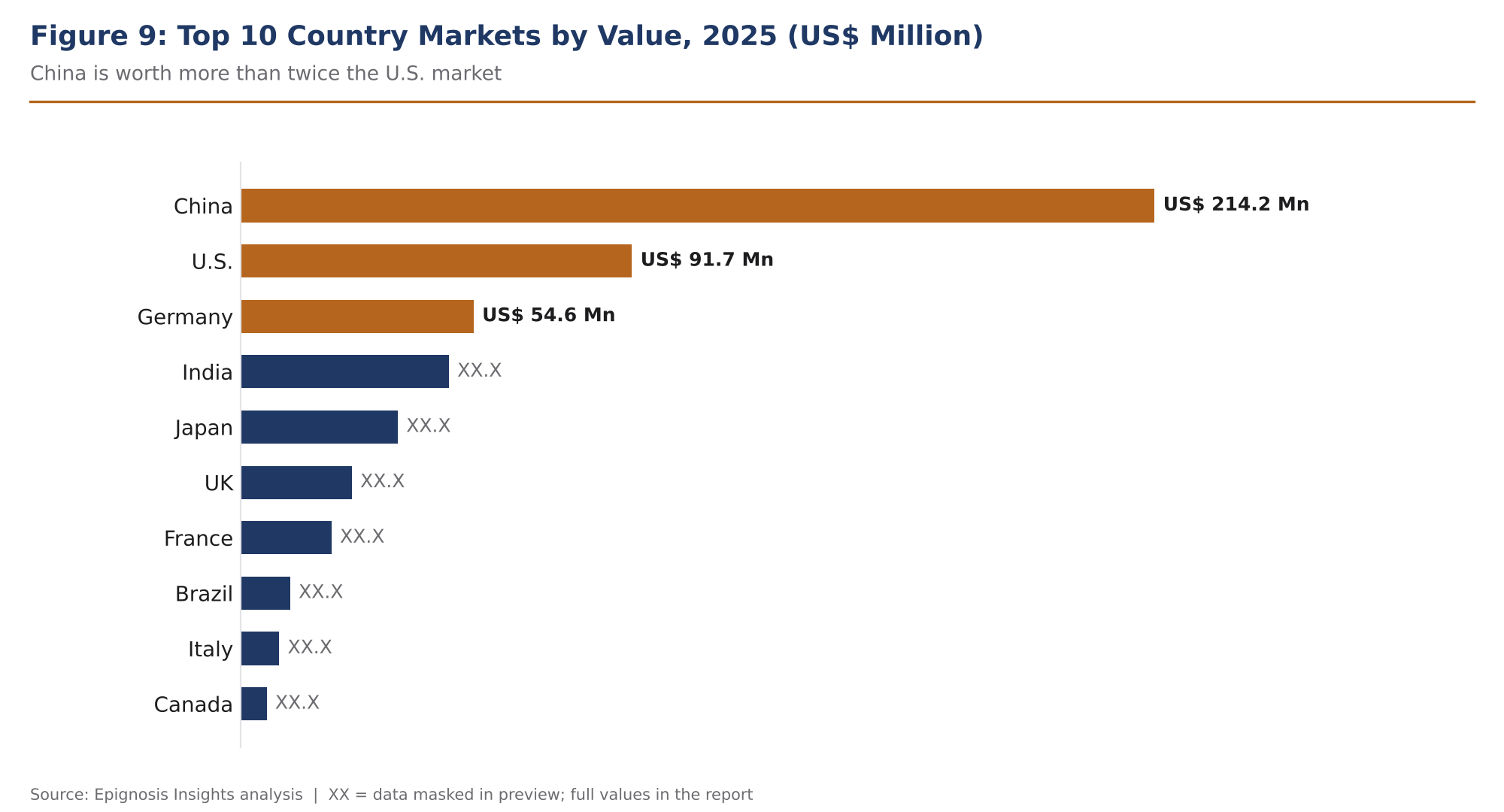
- China is the single largest country market at US$214.2 million, more than twice the size of the U.S. market at US$91.7 million.
- Buyers in Latin America paid an average of US$4,697 per tonne in 2025, against US$2,887 per tonne in Asia Pacific.
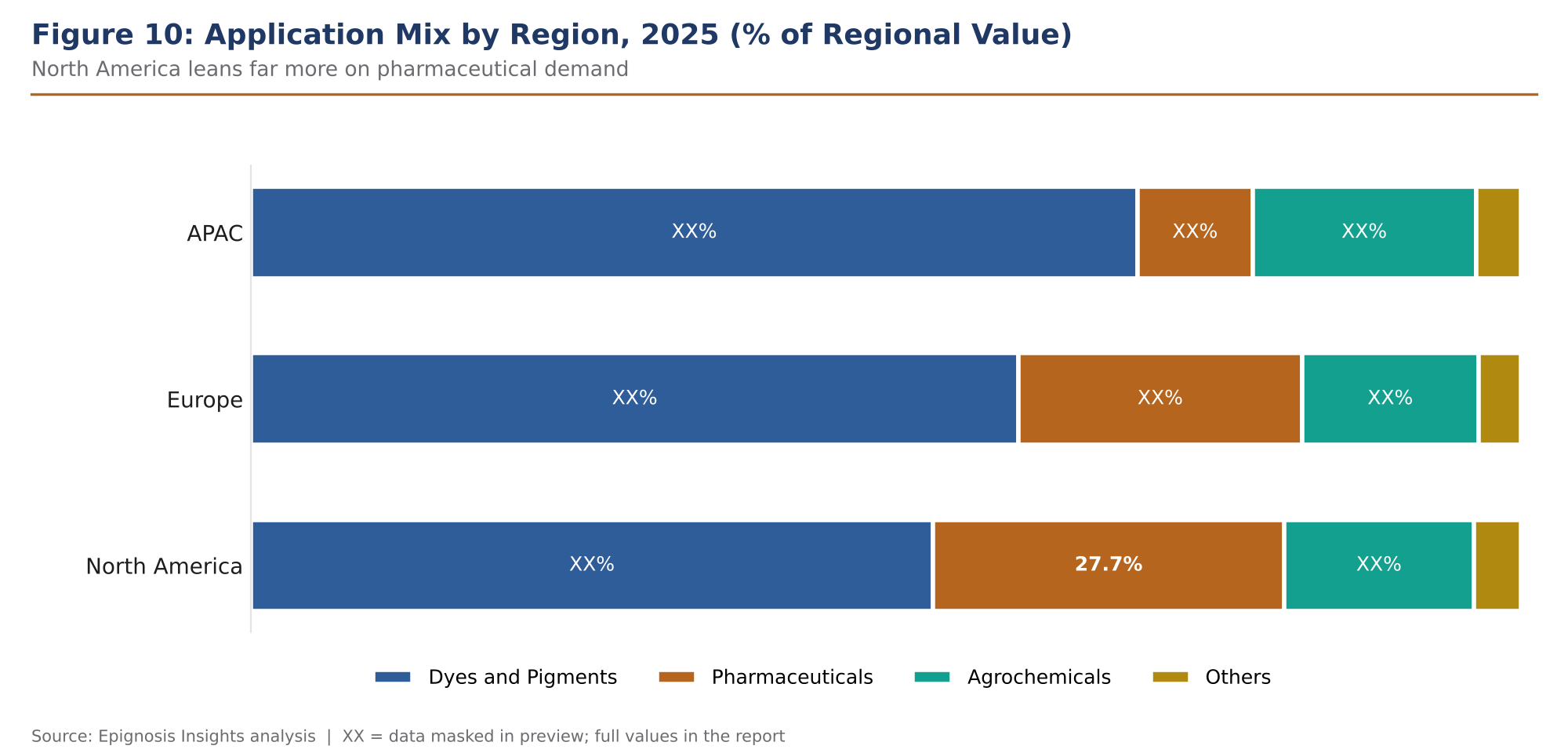
- Pharmaceuticals make up 27.7% of North American demand by value, a much higher share than in any other region.
Global N-Methylaniline Market Outlook
The Global N-Methylaniline Market is projected to reach US$847.5 million by 2032 from US$622.8 million in 2025, with revenue growing at a 4.26% CAGR between 2026 and 2032. In tonnage, demand moves from 200.9 kilo tonnes to 257.6 kilo tonnes over the same period, a volume CAGR of 3.67%. This is a mature intermediate. It will not double in a decade. But it is also not a declining one, and the gap between value and volume growth tells us that buyers are slowly paying more for each tonne, partly because of aniline costs and partly because more of the volume is moving to higher-purity grades.
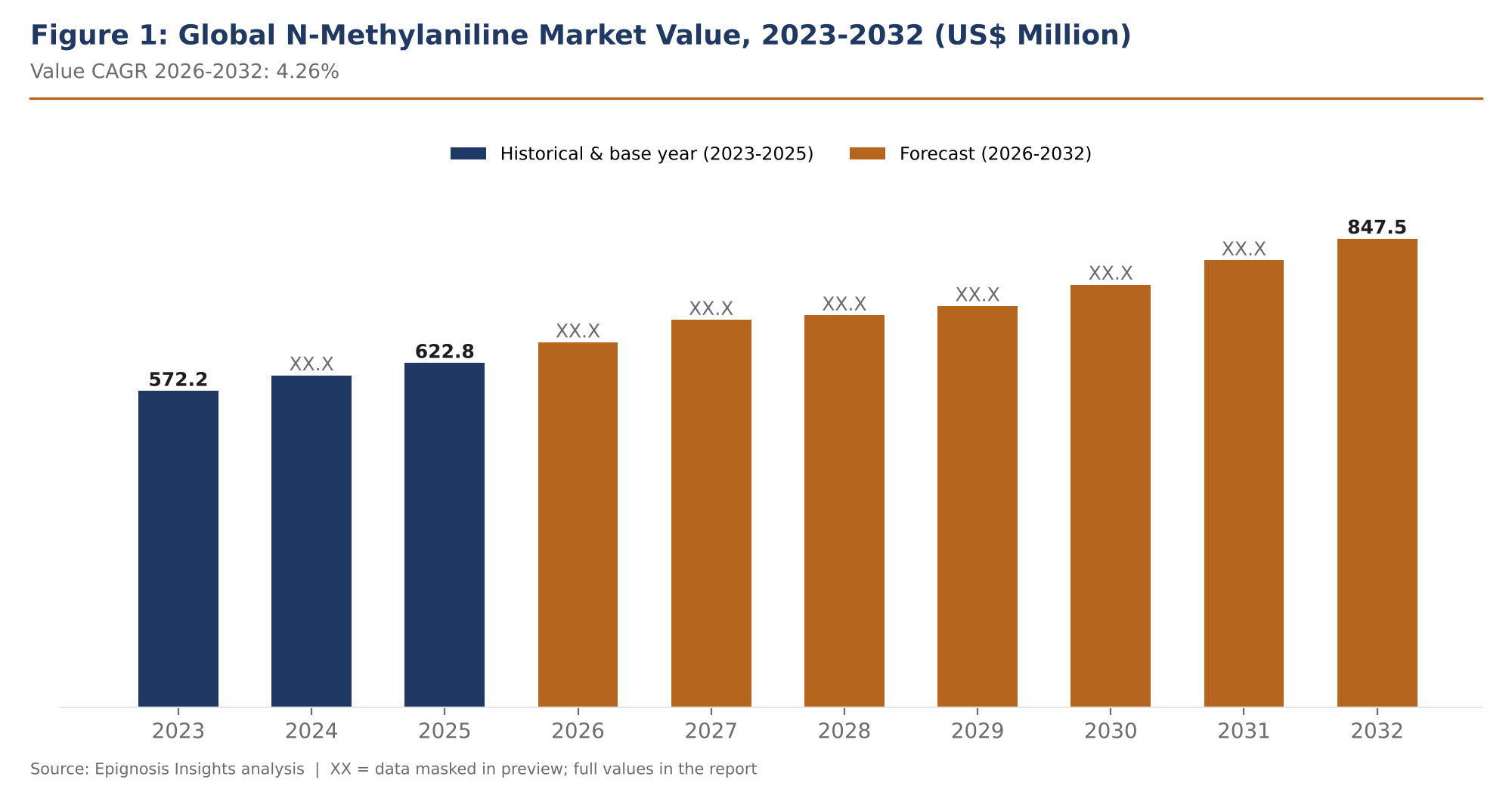
The market was worth US$572.2 million in 2023. Most of the increase to 2025 came from volume rather than price, which rose only modestly from US$X,XXX to US$3,100 per tonne. The forecast years look different: price contributes a larger share of growth until 2027, then gives some of it back.
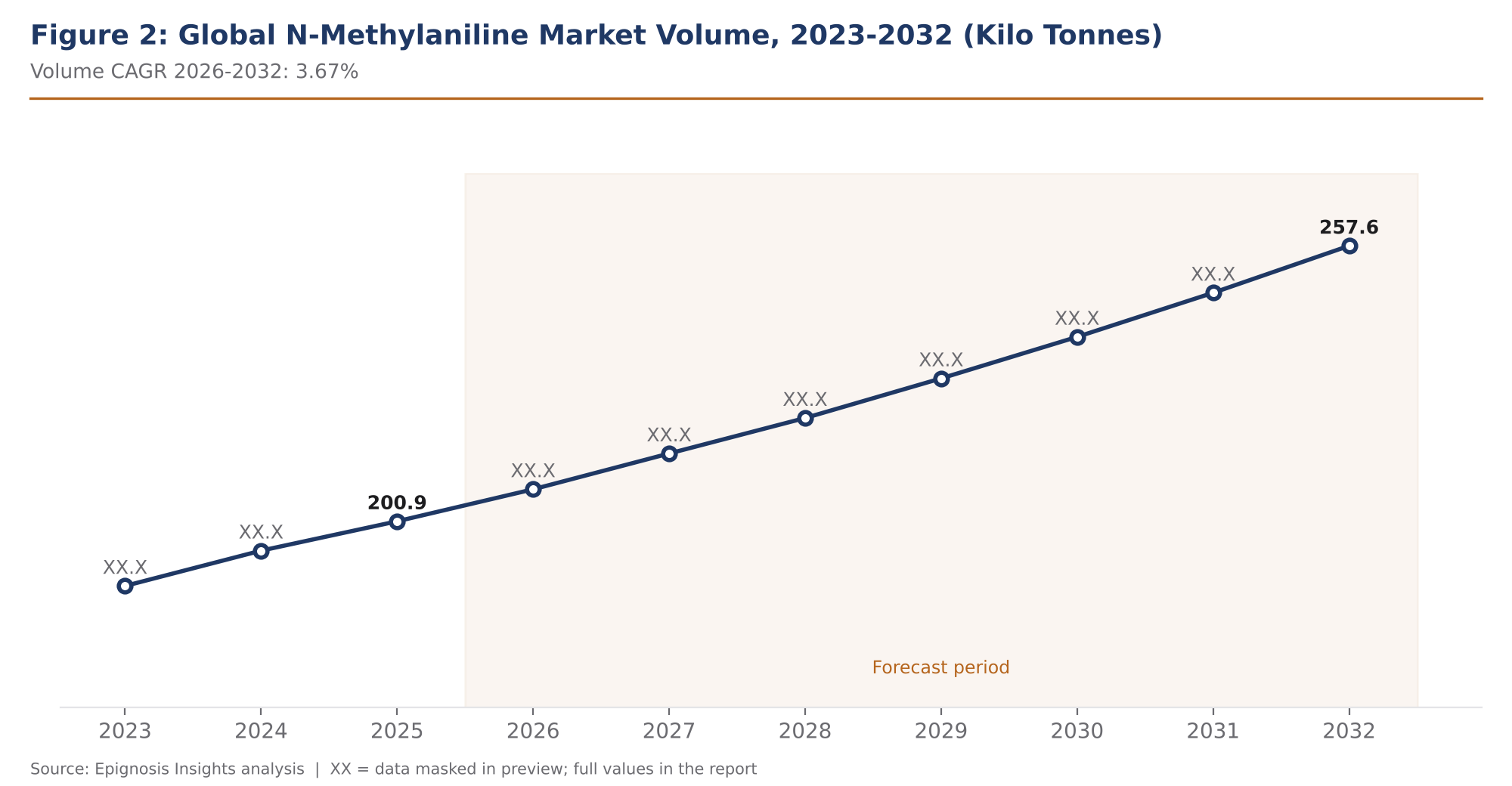
Table 1: Global N-Methylaniline Market – Value, Volume and Average Price, Selected Years
| Year |
Value (US$ Million) |
Volume (Kilo Tonnes) |
Average Price (US$/Tonne) |
| 2023 |
572.2 |
XXX.X |
X,XXX |
| 2024 |
XXX.X |
XXX.X |
X,XXX |
| 2025 |
622.8 |
200.9 |
3,100 |
| 2027 |
XXX.X |
XXX.X |
3,260 |
| 2029 |
XXX.X |
XXX.X |
X,XXX |
| 2032 |
847.5 |
257.6 |
3,290 |
| CAGR 2026–2032 |
4.26% |
3.67% |
XX.X% |
Source: Epignosis Insights analysis. XX denotes data masked in this preview; complete annual series for 2023–2032 are provided in the full report and Excel data pack.
What N-Methylaniline Is, and Why Its Market Has a Ceiling
N-methylaniline (CAS 100-61-8) is made by methylating aniline, usually with methanol over a catalyst. The reaction is not perfectly selective. Some aniline goes on to N,N-dimethylaniline and some stays unreacted, so producers run these units as flexible N-alkylation plants rather than dedicated lines. Commercial product is normally sold at 98.5% to 99.5% purity, with dimethylaniline and residual aniline as the main specified impurities.
This chemistry explains a point that is easy to miss. NMA depends entirely on aniline, but aniline does not depend on NMA. Around eight or nine of every ten tonnes of aniline go into MDI for polyurethanes and into rubber chemicals. Epignosis Insights estimates that N-methylaniline absorbs only about 4% of global aniline consumption. That share has been stable for years because the downstream products that need NMA, mainly certain azo dyes, pigment intermediates and a handful of crop-protection molecules, are themselves niche. Nobody builds a world-scale aniline plant for NMA, and NMA demand cannot grow much faster than these end markets allow.
Market Dynamics
Aniline Costs Set the Floor Under Every Tonne
Raw materials account for 61.2% of the ex-works cost of N-methylaniline, and almost all of that is aniline. Utilities add another 10.1%. Labour, maintenance, compliance, packaging and depreciation each sit in single digits, and margin is thin. When aniline moves, NMA moves with it, usually within a few weeks.
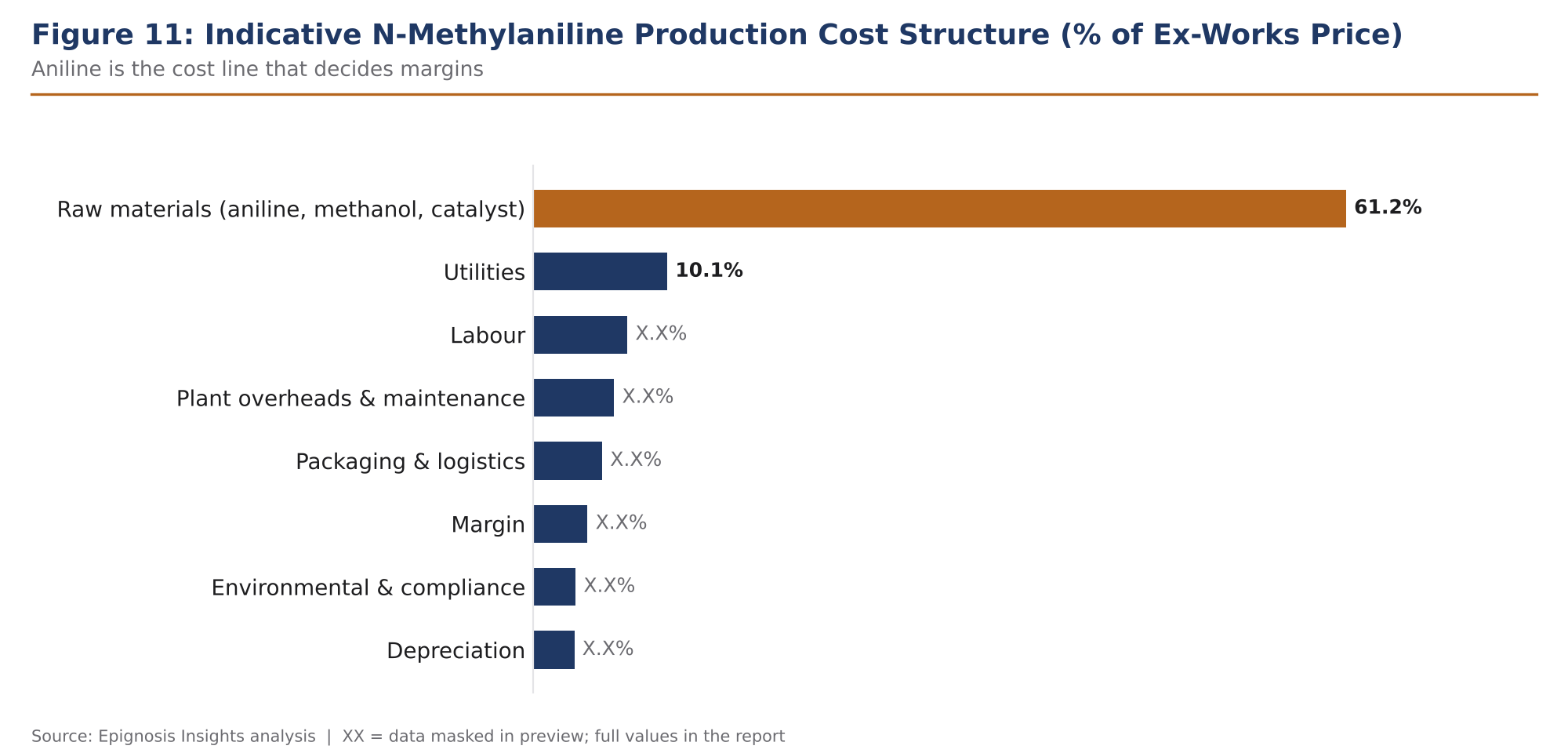
2026 showed how fast that can happen. Benzene rallied sharply in the first quarter and, according to SunSirs, Chinese aniline prices broke through 10,000 RMB per tonne in March as conflict in the Middle East lifted feedstock costs. NMA producers passed most of the increase on. Our price forecast reflects this: the global average rises from US$3,100 per tonne in 2025 to US$3,260 in 2027, eases to US$X,XXX by 2029 as Chinese aniline capacity catches up, and then edges up again to US$3,290 by 2032.
Dye and Pigment Production Keeps Shifting East
Dyes and pigments are the backbone of this market. They accounted for US$408.0 million, or 65.5% of 2025 value, and the segment grows at 4.31% a year through 2032. NMA is used to build disperse and cationic dye structures and several pigment intermediates. The demand follows textile and colourant manufacturing, which has been moving from Europe and Japan to China, India and, more recently, Vietnam and Bangladesh for two decades. That migration is the main reason Asia Pacific's share of value keeps edging up through the forecast.
Crop Protection Is the Fastest-Growing Outlet
Agrochemicals are a smaller segment, worth US$XXX.X million in 2025, but they grow faster than anything else in the market at 4.84% a year. N-methylaniline is an intermediate for the insecticide buprofezin and the herbicide mefenacet, both used heavily in rice-growing regions of Asia. Generic production of these actives is concentrated in China and India, which keeps this demand close to the NMA plants that serve it. Volume in this segment is forecast to rise at XX.X% a year, with India contributing a growing share.
Fuel Additive Use: Banned in Some Places, Revived in Others
The most unpredictable part of the market sits inside the "Others" category, which held XX.X% of value in 2025. N-methylaniline has a long history as an octane booster for lower-grade gasoline, sold under the name monomethylaniline (MMA). China prohibited it in its national gasoline standard GB 17930-2013, and Russia banned it in 2016. These bans removed a large, volatile source of demand and are one reason the remaining market looks so stable.
That stability was tested in 2026. Facing fuel shortages after refinery outages, Russia temporarily allowed refiners to blend up to 1% MMA into gasoline until 31 December 2026, according to a July 2026 report in Izvestia. Even a temporary window like this can absorb thousands of tonnes and tighten supply for dye and agrochemical buyers. We have not built a permanent return of fuel demand into the base case, but the full report includes a scenario in which the Russian exemption is extended.
Toxicity and Compliance Costs Restrain New Capacity
NMA is classed as toxic by ingestion, inhalation and skin contact, and it is harmful to aquatic life. Handling it safely requires closed systems, good ventilation and proper effluent treatment. Environmental and compliance costs already account for X.X% of production cost, and they weigh hardest on small units that lack modern effluent treatment. Over time we expect supply to consolidate toward larger producers that can afford compliant plants, and new entrants to be rare.
Pharmaceutical Demand: Small Tonnage, Strict Specifications
Pharmaceuticals were worth US$XX.X million in 2025 and grow at XX.X% a year, slightly below the market average. The tonnage is modest. What sets this segment apart is the specification. Pharmaceutical intermediate makers want purity above 99%, tight limits on residual aniline and N,N-dimethylaniline, consistent colour, and a documented change-control process from the supplier. A plant that sells perfectly acceptable product to a dye house may still fail a pharmaceutical audit.
This is why pharmaceutical buyers rarely switch suppliers on price alone, and why they pay more. It is also why this segment carries a larger weight in North America and Europe, where most of the regulated intermediate production that still uses NMA is located. For producers, a pharmaceutical qualification is slow to win and valuable to keep.
Substitution Limits the Upside
N-methylaniline rarely has the field to itself. In many dye syntheses a chemist can choose between NMA, N-ethylaniline, N,N-dimethylaniline or a substituted toluidine, depending on the shade and fastness required and on what each intermediate costs that quarter. Some pharmaceutical and agrochemical routes have also been redesigned over the years to start from aniline directly or from other building blocks. This flexibility works in both directions. It protects buyers from extreme price spikes, because they can switch, and it limits how far NMA demand can grow when its price is attractive, because other intermediates are always competing for the same molecules.
The practical effect is that NMA demand tracks its end markets closely, with little room for sudden share gains. That is one reason our forecast assumes steady, single-digit growth rather than a step change.
Sales Channel Analysis
Direct sales represented 53.1% of 2025 market value and are the fastest-growing channel at 4.62% a year. Large dye houses, agrochemical formulators and pharmaceutical intermediate makers buy NMA in tanker or ISO-container lots under annual or quarterly contracts, often linked to an aniline index. Distributors and wholesalers accounted for XX.X% and serve small and mid-sized buyers who need drums rather than tankers, or who want a local stockist to handle hazardous-goods logistics. Online platforms held XX.X% of value, mainly for laboratory and pilot quantities.
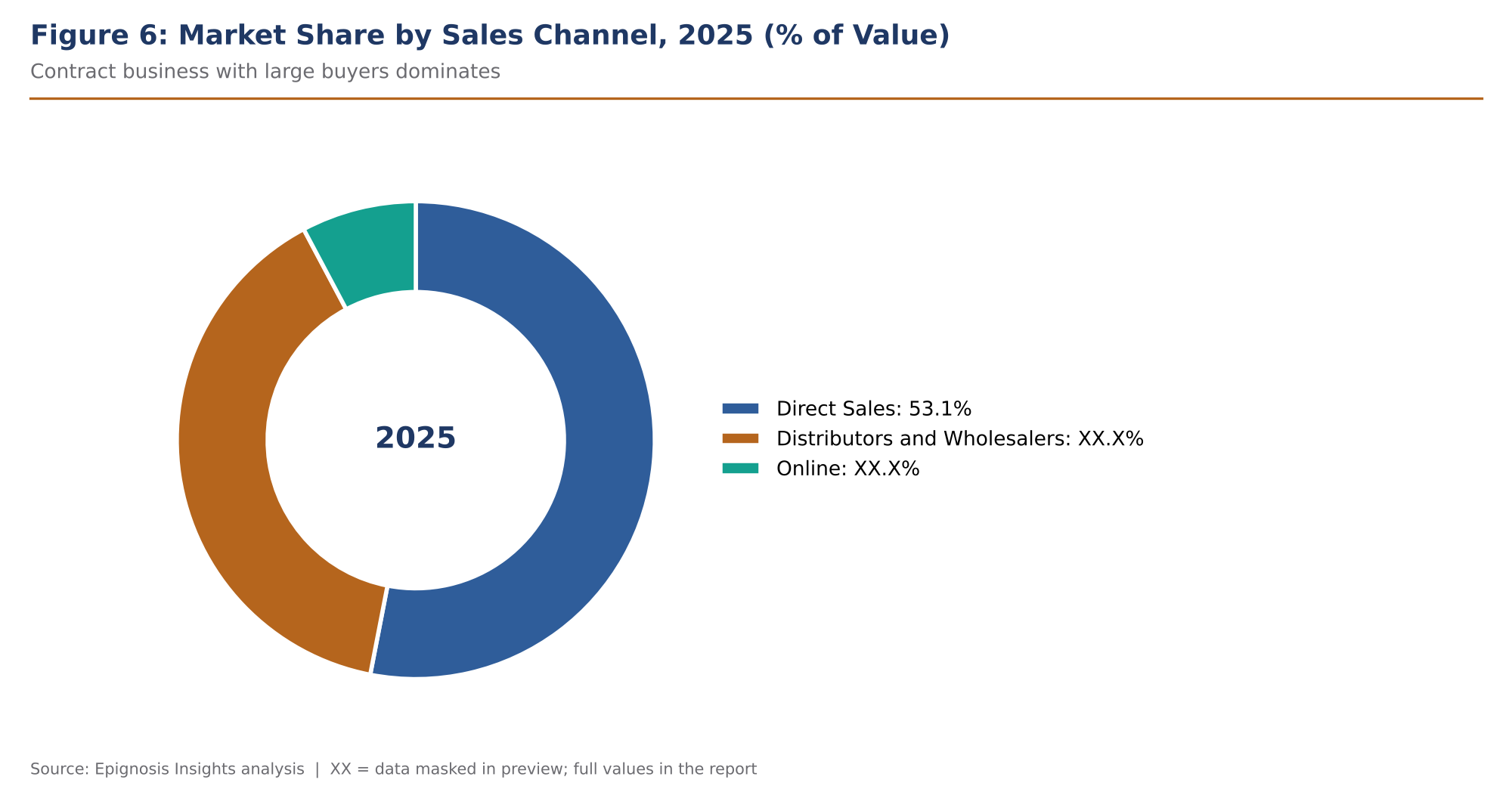
The channel mix varies sharply by region. In North America, distributors handle the majority of value because most buyers are small and imports arrive through stockists. In Asia Pacific, buyers are larger and closer to producers, so direct contracts dominate.
Regional Analysis
Asia Pacific is both the production centre and the largest consumer, with US$366.5 million in 2025, or 58.8% of global value, and 63.2% of global volume. China accounts for most of it at US$214.2 million. India is the fastest-growing large market at a value CAGR of 5.49%, supported by its dye, agrochemical and pharmaceutical intermediate industries. Japan is a mature, quality-focused market growing at XX.X% a year.
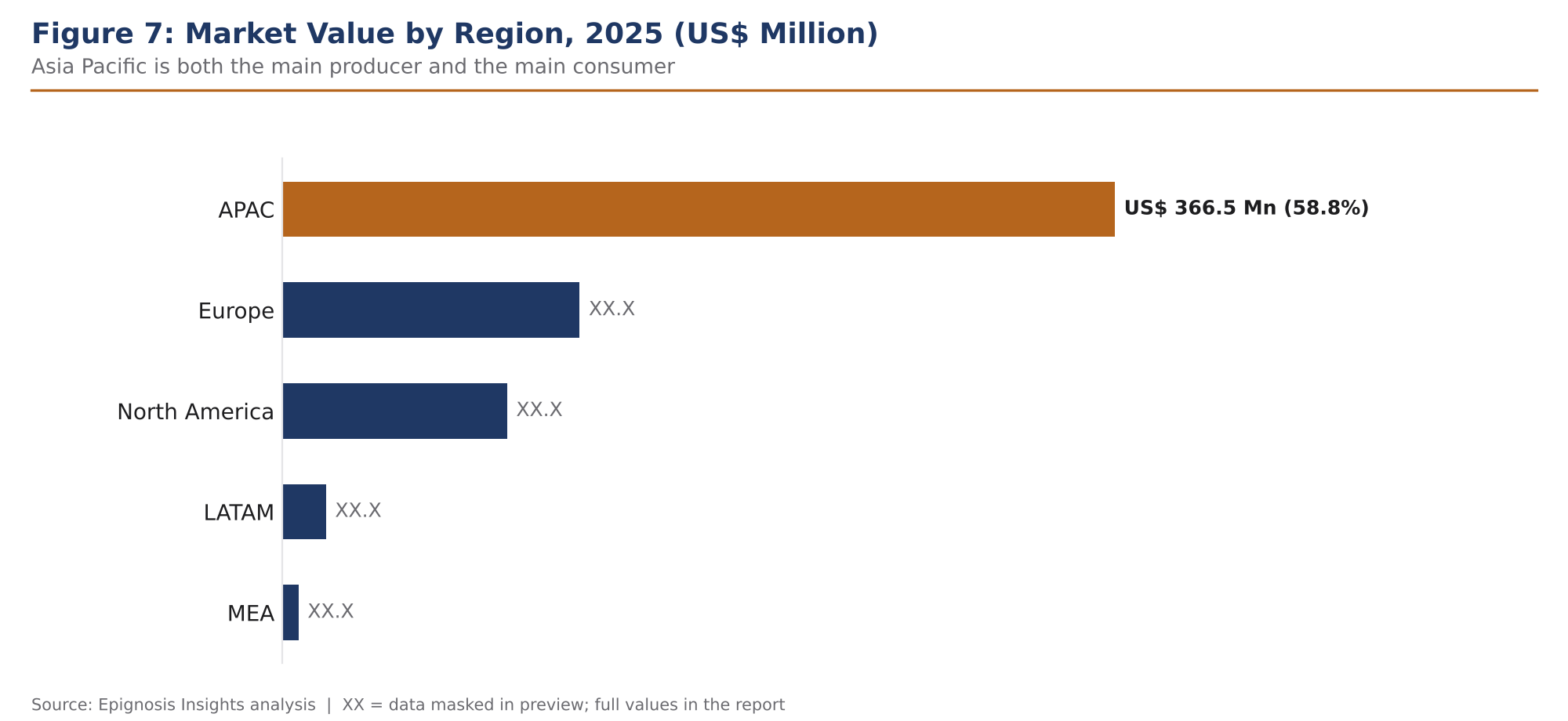
Europe was worth US$XXX.X million in 2025. Germany is the largest European market at US$54.6 million, followed by the United Kingdom and France. European demand is weighted toward high-purity material for pharmaceutical and specialty dye intermediates, and much of it is now imported from Asia. Italy is the slowest-growing large European market, reflecting the long decline of its textile dyeing base. France and the rest of Europe grow faster, supported by specialty chemical and pharmaceutical intermediate production that has stayed local because of quality and regulatory requirements. Across the region, the volume growth rate of XX.X% a year is below the value growth rate, which again points to a richer grade mix.
North America generated US$XX.X million. The U.S. market of US$91.7 million is unusual because pharmaceuticals make up 27.7% of regional value, compared with XX.X% globally. Mexico is the fastest-growing of the countries we cover at a value CAGR of 6.72%, albeit from a small base, as dye and agrochemical formulation moves into the country.Latin America and the Middle East and Africa are small markets, together holding XX.X% of global value, and both depend almost entirely on imports.
Trade Flows and Supply Security
N-methylaniline is traded under HS code 2921.42 together with other aniline derivatives, which makes trade data harder to read than for a single-product code. The broad pattern is clear, however. China is the dominant exporter, India is a growing second source, and Europe, North America, Latin America and the Middle East are net importers. Europe in particular now relies on Asian supply for a large share of its needs, which exposes buyers to freight disruptions on the Asia–Europe route and to sudden changes in Chinese export availability.
For a hazardous liquid sold in drums and ISO containers, freight is not a small item. Packaging and logistics already account for X.X% of production cost before the product leaves the plant gate, and long-haul import routes add considerably more. Buyers in import-dependent regions increasingly keep a second qualified source, often one in China and one in India, so that a single plant outage or shipping problem does not stop their production.
Regional Price Analysis
Price differences between regions are large and they follow geography. Buyers in Asia Pacific paid US$2,887 per tonne on average in 2025, because they buy close to the plants. Latin American buyers paid US$4,697 per tonne, more than 60% higher. Freight, hazardous-goods handling, import duties and the small lot sizes typical of import markets all add to the landed cost. North America and Europe sit in between, at US$X,XXX and US$X,XXX per tonne respectively.
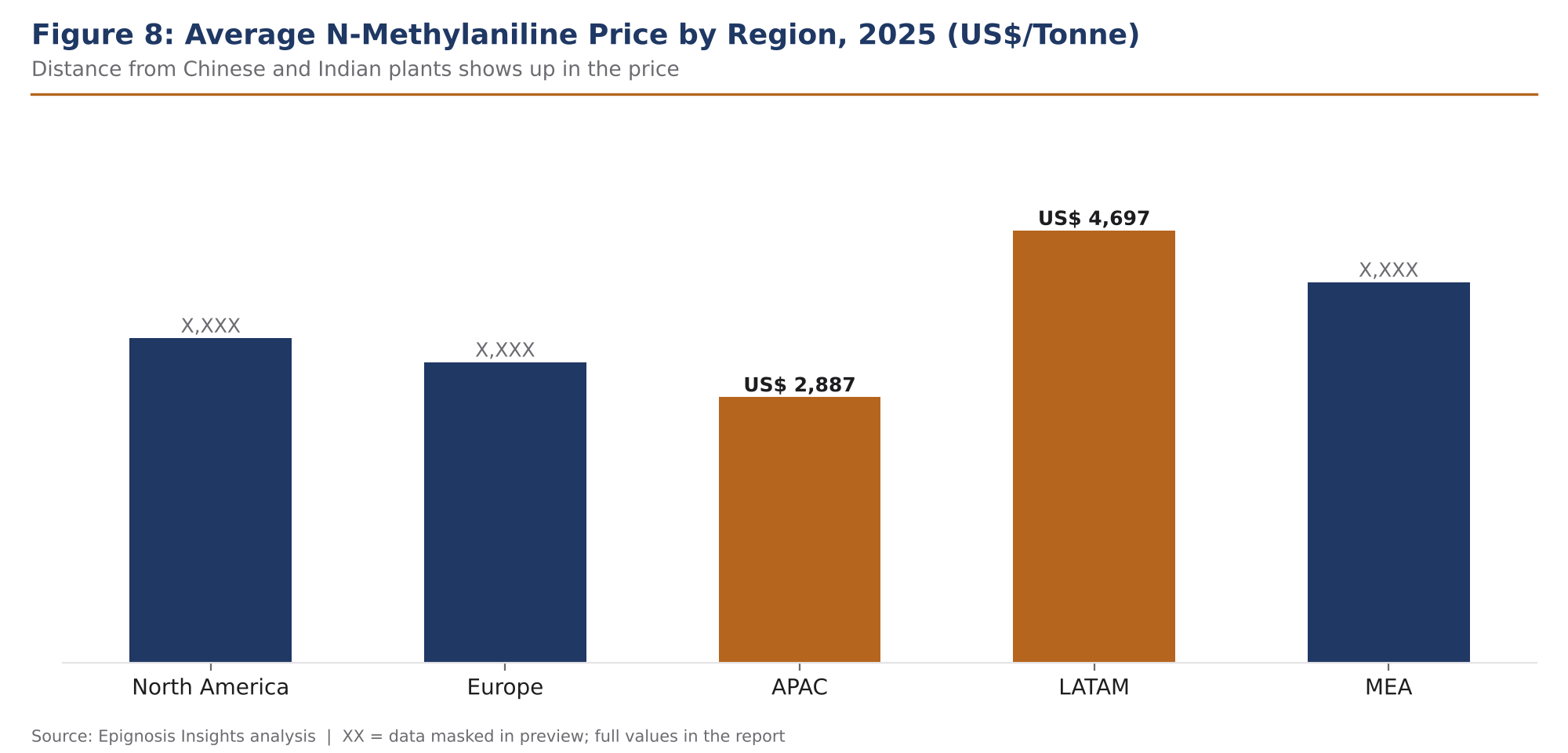
For buyers outside Asia, this means that contract terms and logistics matter as much as the base price. A Brazilian dye maker that can move from drum purchases to ISO-container shipments can cut its landed cost substantially, even if the ex-works price does not change.
Application Mix by Region
The application split is far from uniform. Asia Pacific is dominated by dyes and pigments, which reflects where colourant manufacturing now sits. Europe has a larger pharmaceutical share. North America stands out: pharmaceuticals account for 27.7% of regional value, nearly double the global average, because the region's remaining NMA demand is concentrated in regulated, high-purity uses rather than bulk dyes.
This matters for suppliers. Winning business in North America is about documentation, consistency and impurity control. Winning business in Asia Pacific is mostly about price and reliability of supply.
Market Characteristics
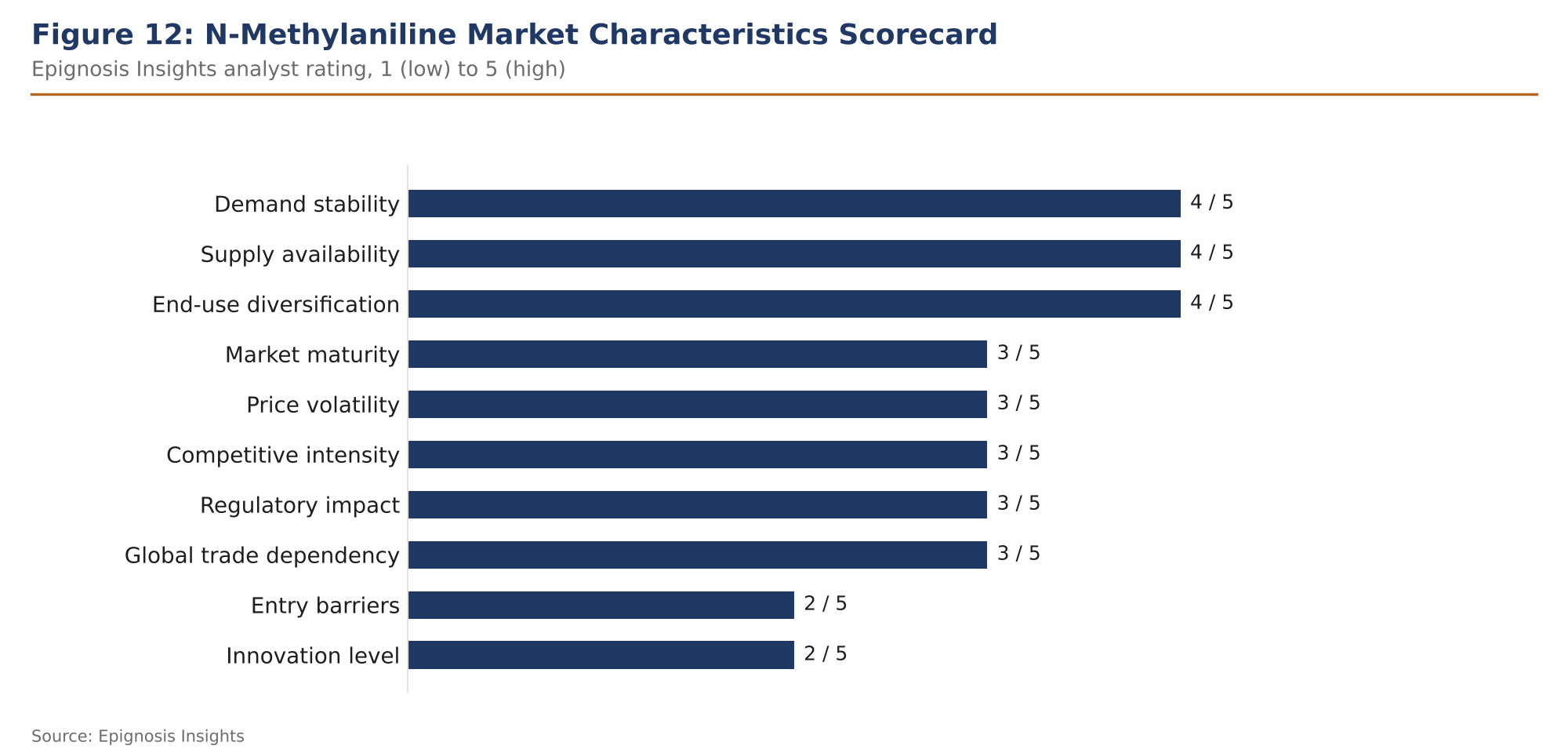
Epignosis Insights rates the N-methylaniline market as stable and well supplied but not very innovative. Demand stability, supply availability and end-use diversification each score 4 out of 5. Entry barriers and innovation level score only 2, reflecting a well-known process and limited product development. Price volatility, competitive intensity, regulatory impact and trade dependency all sit in the middle at 3.
Production Technology
Most commercial N-methylaniline is made by reacting aniline with methanol, either in the vapour phase over a fixed-bed catalyst or in the liquid phase under pressure. The main technical challenge is selectivity. Push the reaction too far and the product over-methylates to N,N-dimethylaniline; stop it too early and unreacted aniline has to be recovered and recycled. Producers manage this through catalyst choice, temperature control and the aniline-to-methanol ratio, and then separate the mixture by distillation. Because N,N-dimethylaniline is itself a saleable product, many plants are designed to move between the two. When dimethylaniline demand is strong, they shift output toward it, tightening NMA supply. This flexibility is one reason NMA prices can move even when aniline prices are flat, and it is a factor buyers should watch in contract negotiations.
Competitive Landscape
Supply is concentrated in China and India. Chinese producers dominate merchant volumes and exports, while Indian producers supply domestic dye and agrochemical makers and export to Europe and the Middle East. Western production is small. Most companies make NMA alongside other N-alkylated anilines, such as N,N-dimethylaniline and N-ethylaniline, and shift output between them according to demand.
The following producers were verified through their own product pages:
- Aarti Industries Limited (India) lists Mono Methyl Aniline among its alkylation products, for gasoline octane boosting and dye intermediates.
- Jiangsu King Road New Materials Co., Ltd. (China) acquired the former Changzhou Baolong Chemical and lists N-methylaniline as its core business at its Changzhou site.
- Binhai Henglian Chemicals Co., Ltd. (China) names N-methylaniline as its main product within a range of N-alkylated anilines for dyes, rubber auxiliaries and oil additives.
- Jiangsu Jingying New Materials Co., Ltd. (China) is identified in Chinese market reporting as the industry's largest N-methylaniline producer.
Epignosis Insights Competitive Assessment Framework (EICAF)
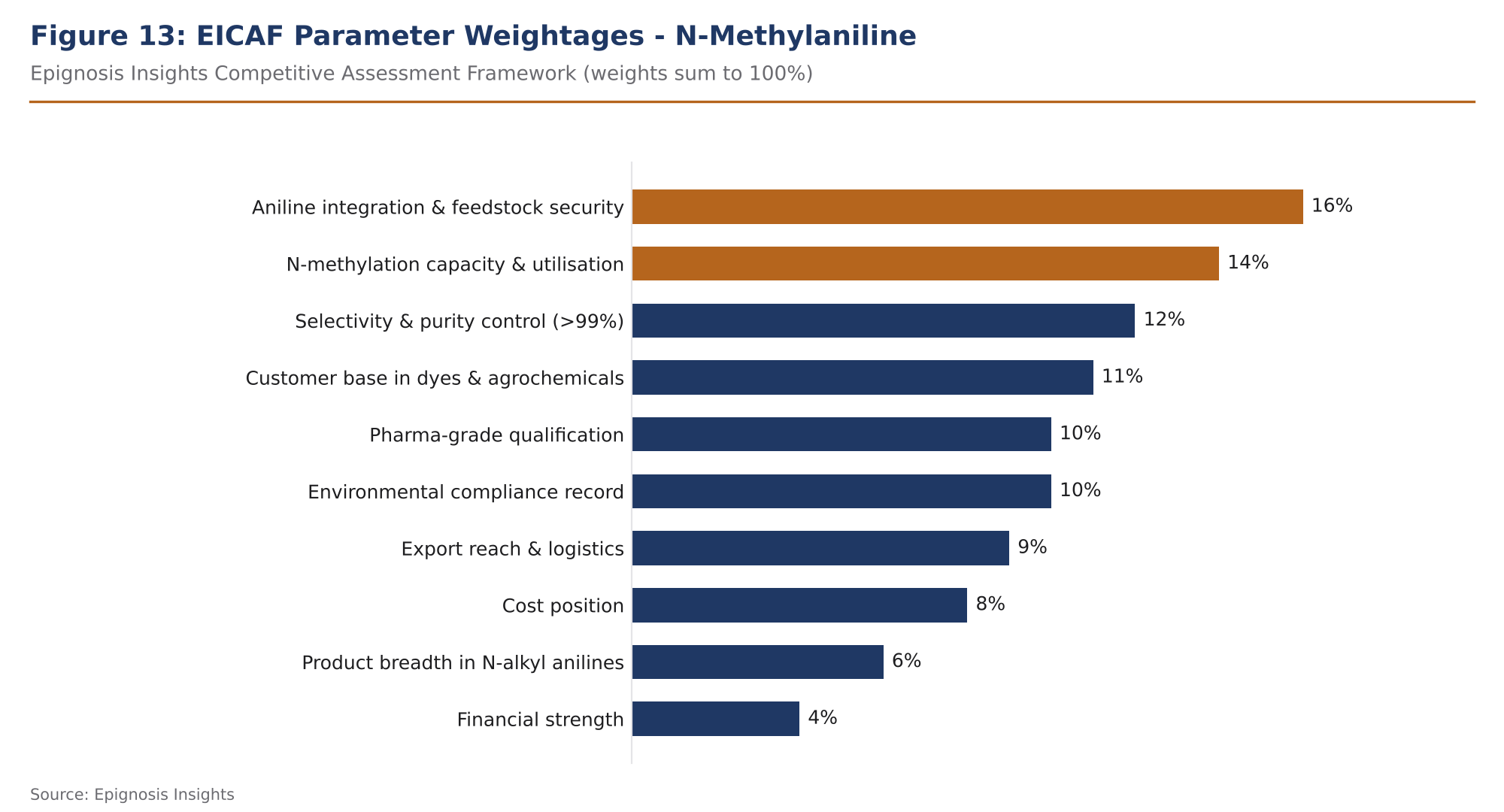
We score N-methylaniline producers on ten weighted parameters. Aniline integration and feedstock security carries the highest weight at 16%, because it decides who survives an aniline price spike. N-methylation capacity and utilisation follows at 14%, then selectivity and purity control at 12%, customer base in dyes and agrochemicals at 11%, pharma-grade qualification at 10% and environmental compliance record at 10%. Export reach accounts for 9%, cost position for 8%, breadth of N-alkyl aniline products for 6% and financial strength for 4%.
Each company receives a score of 1 to 5 on every parameter, based on company disclosures, trade data and interviews with buyers. The weighted total places each producer in one of four groups: Leaders, Challengers, Specialists or Emerging Players. The full scored matrix is included in the report.
Outlook by Period
We see the forecast in three phases. From 2026 to 2027, the market grows mainly through price, as aniline costs stay high and the average NMA price climbs to US$3,260 per tonne. Volume growth is steady but unremarkable. From 2028 to 2029, aniline supply loosens, the average price slips back, and growth comes mostly from volume in dyes and agrochemicals. From 2030 to 2032, both volume and price contribute, and the market closes the forecast at US$847.5 million.
The main risks to this outlook are a further spike in benzene and aniline prices, a longer-lasting return of fuel-additive demand in Russia or elsewhere, and tighter environmental rules in China that remove capacity faster than new plants can replace it. On the upside, faster growth in Indian agrochemical exports could lift volume above our base case.
Research Methodology
We built the market from two directions. Top-down, we started with global aniline consumption and allocated the share that goes to N-methylation, using production, trade and capacity data. Bottom-up, we estimated NMA demand from dye, pigment, agrochemical and pharmaceutical output in each country. Prices come from producer offers, trade data and buyer interviews. Where the two estimates disagreed, we checked them against customs data under HS code 2921.42 and interviews with producers, distributors and end users in Asia, Europe and the Americas.