Key Findings
- The Global Micronized Rubber Powder Market was worth US$987.9 million in 2025 and is projected to reach US$1,527.6 million by 2031, a CAGR of 7.54% from 2025 to 2031.
- Volume reached 1,708.4 kilo tonnes in 2025 and is forecast to rise to 2,609.7 kilo tonnes by 2031, growing at 7.32% a year.
- Realised value per tonne averaged US$578 in 2025 and barely moves over the forecast, ending at US$585 in 2031. This is a volume story, not a price story.
- Fine powder up to 100 microns generated 58.3% of 2025 value from only 23.9% of the tonnage.
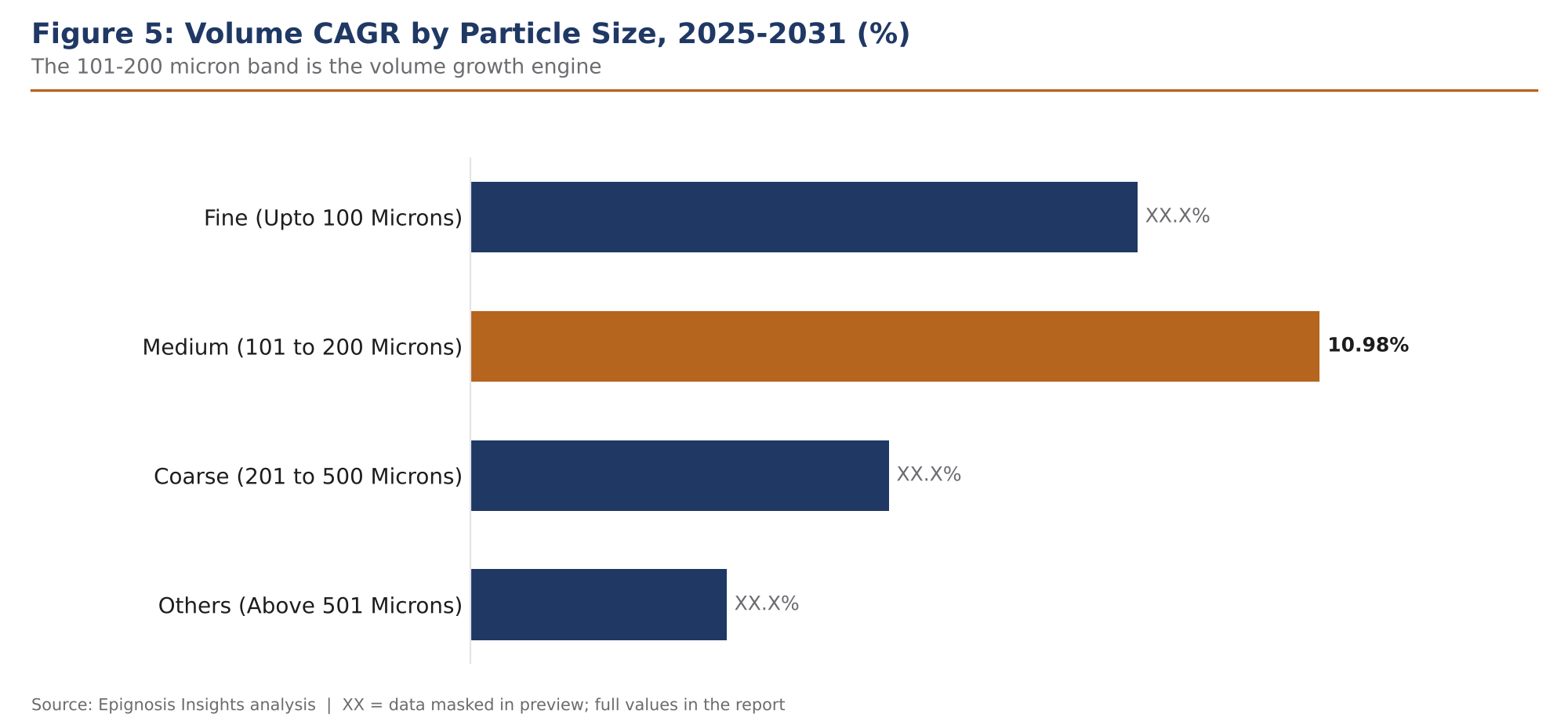
- The 101–200 micron band is the fastest-growing size class by volume, at 10.98% a year.
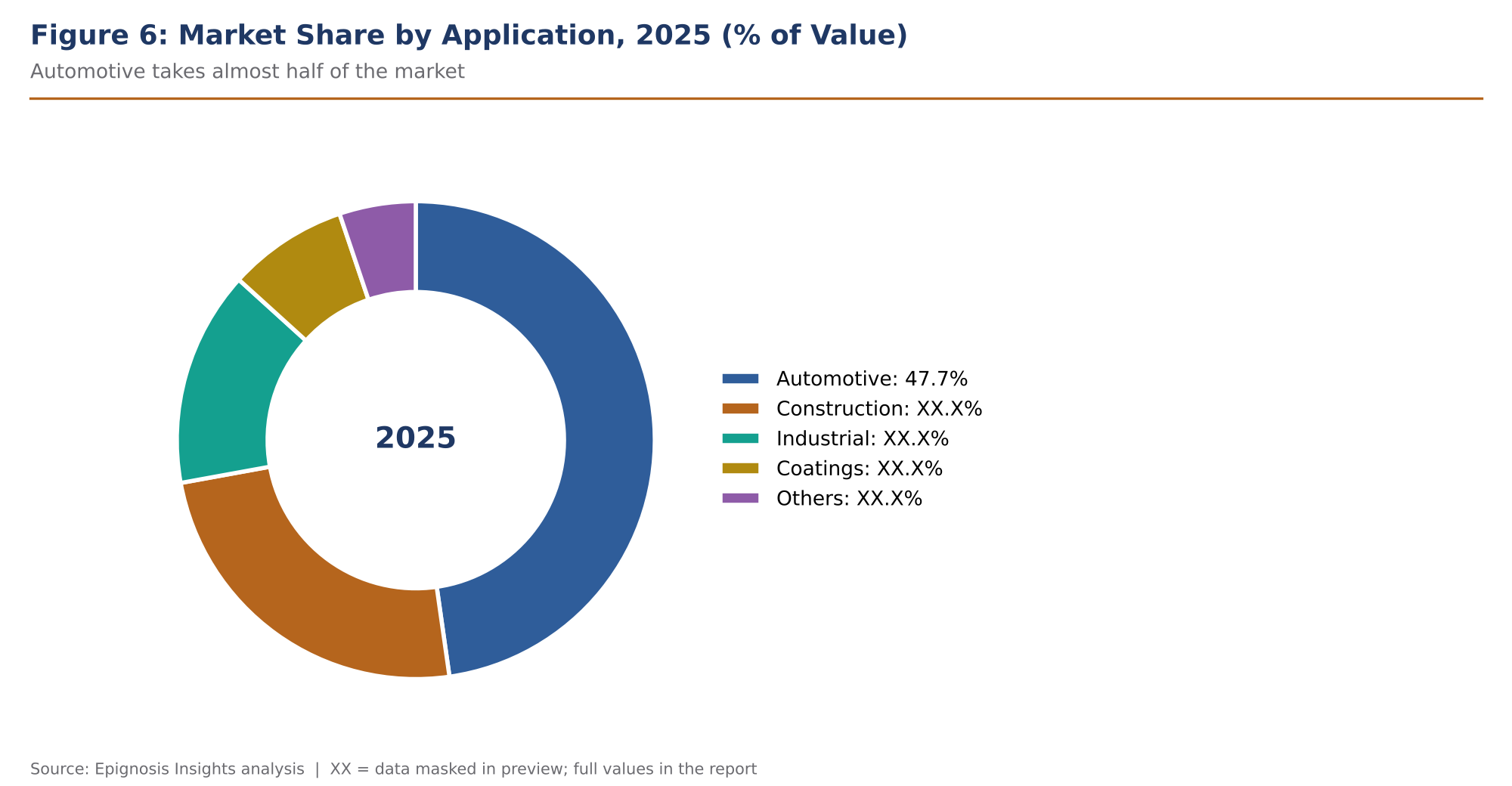
- Automotive applications took 47.7% of market value in 2025, worth US$471.7 million. Construction grows fastest at 8.22% a year.
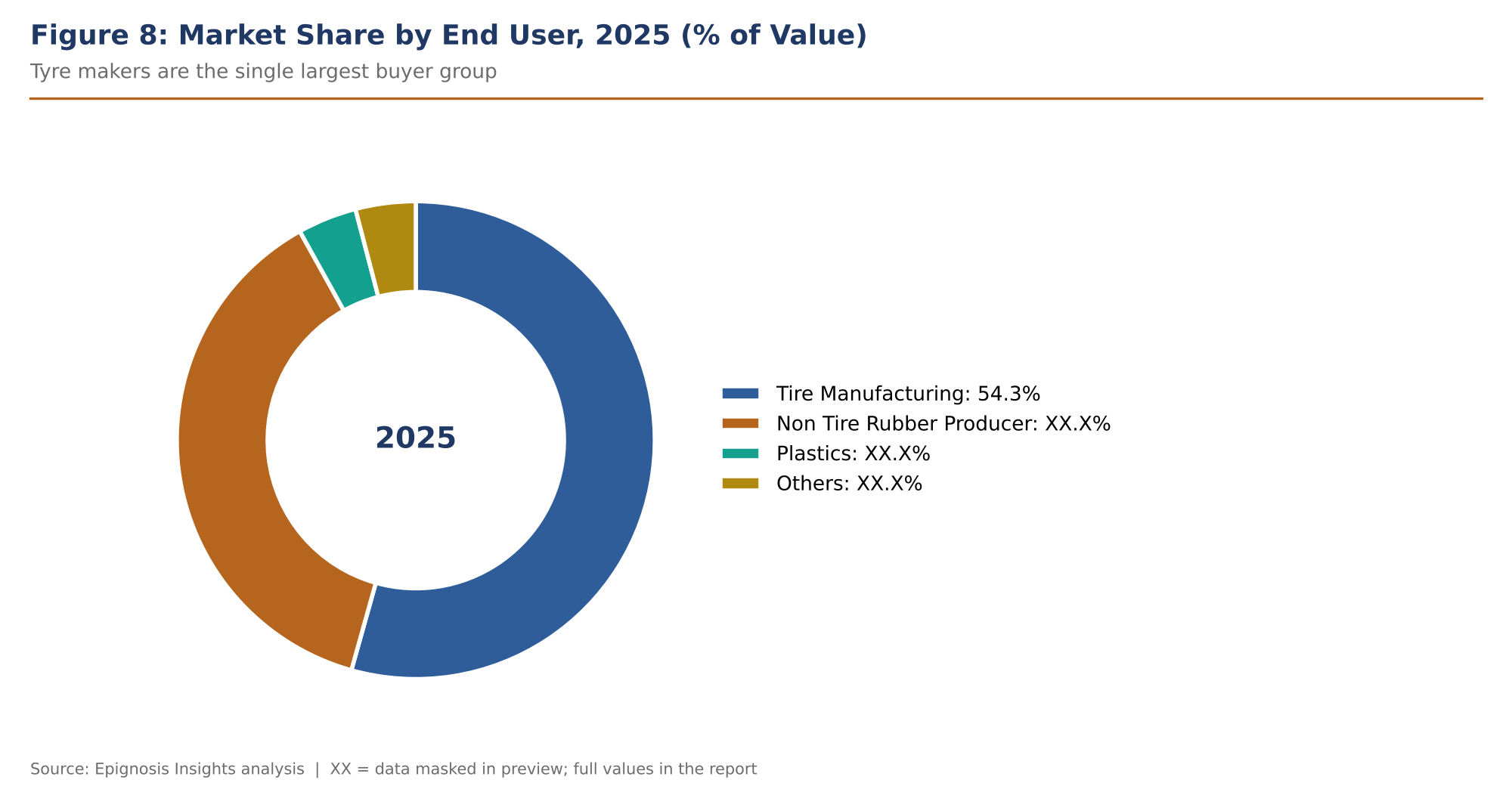
- Tyre manufacturers bought 54.3% of the market by value.
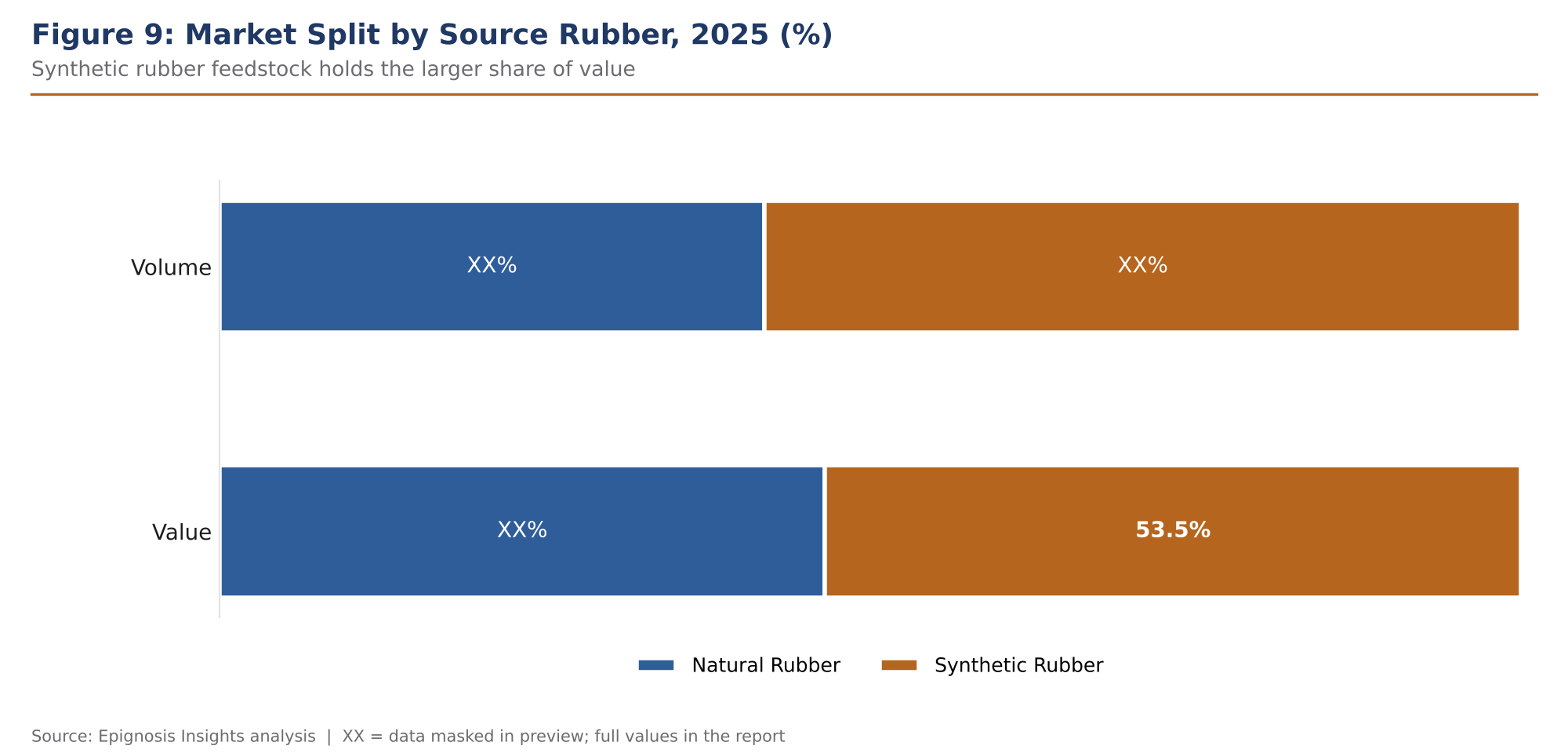
- Powder derived from synthetic rubber accounted for 53.5% of 2025 value.
- Asia Pacific was the largest region at US$417.8 million, or 42.3% of global value, and grows at 8.41% a year.
- North America shipped the most tonnes per dollar: realised value was US$498 per tonne, against US$857 in Latin America.
Global Micronized Rubber Powder Market Outlook
The Global Micronized Rubber Powder Market is projected to reach US$1,527.6 million by 2031 from US$987.9 million in 2025, and market revenue is expected to grow at a 7.54% CAGR from 2025 to 2031. Volume follows almost the same path, from 1,708.4 kilo tonnes to 2,609.7 kilo tonnes, a 7.32% CAGR. Growth accelerates through the forecast. The market added around US$50 million a year between 2022 and 2025; by 2030 and 2031 it is adding well over US$100 million a year.
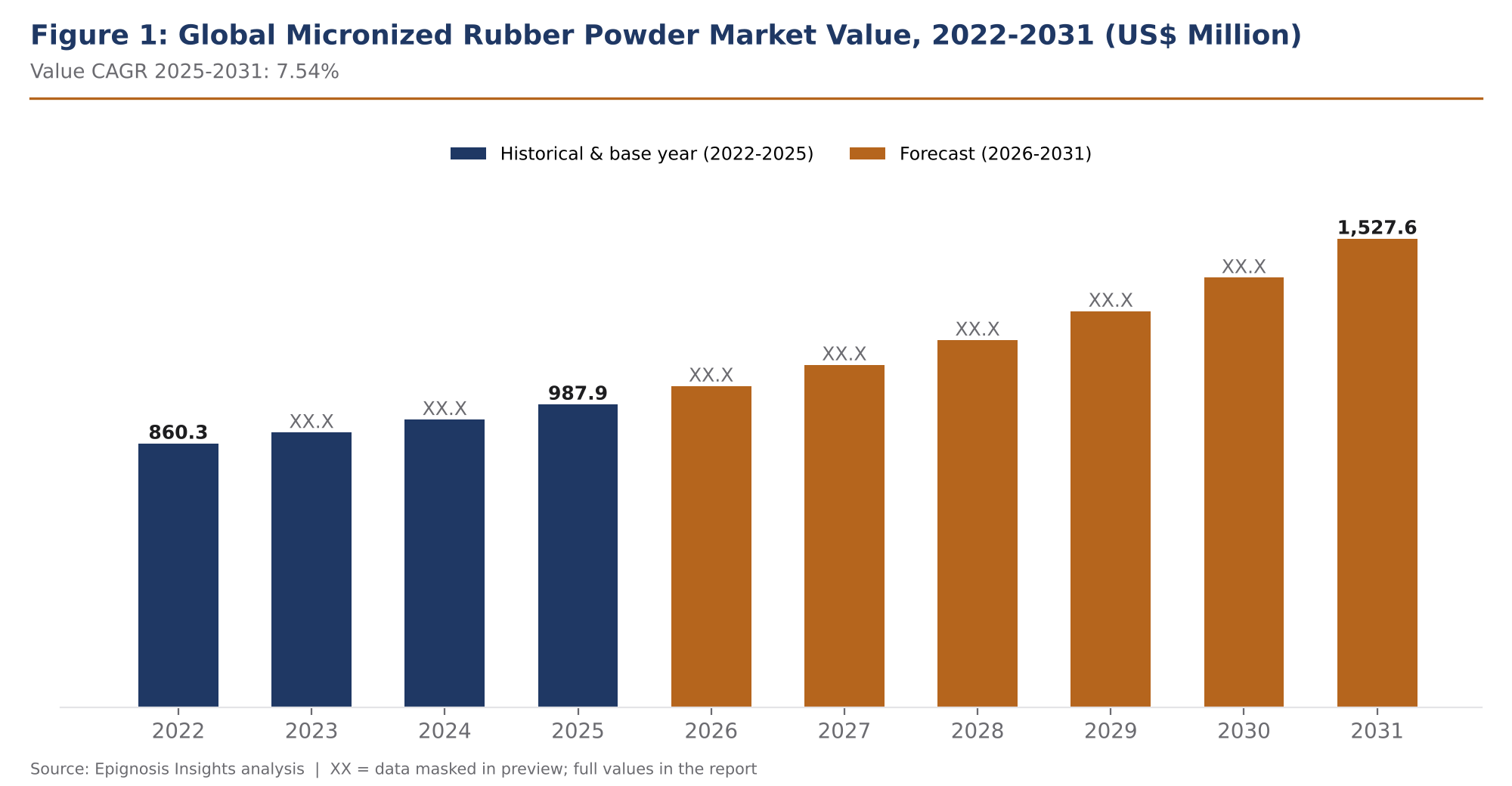
The market stood at US$860.3 million in 2022. It did not grow fast in the following years, held back by uneven tyre production and by buyers who still treated recycled rubber as a cost-cutting filler rather than a specified material. That attitude is changing. Tyre makers now have public targets for recycled and renewable content, and the forecast reflects the move from trials to routine use.
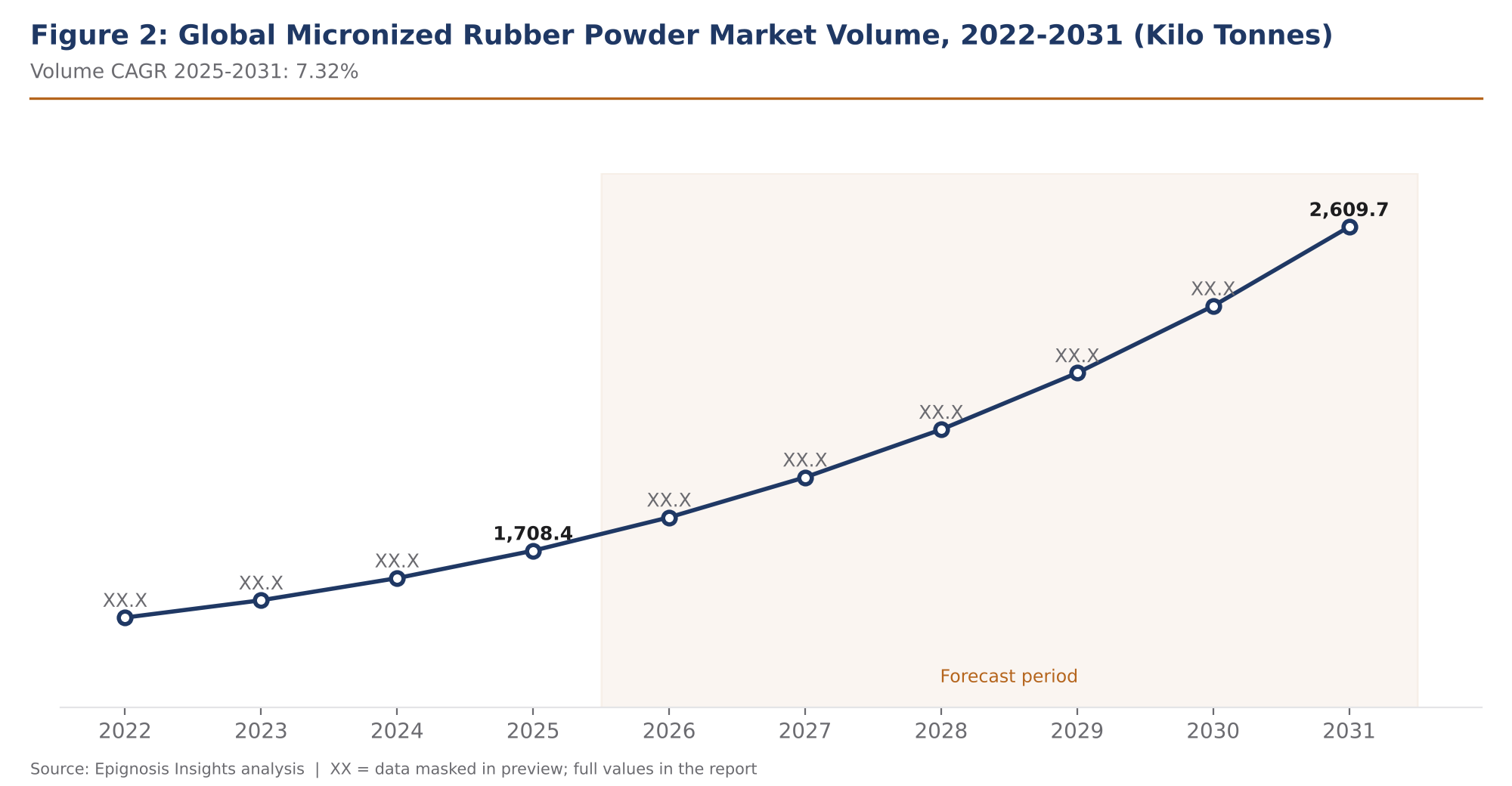
Table 1: Global Micronized Rubber Powder Market – Value, Volume and Value per Tonne, Selected Years
| Year |
Value (US$ Million) |
Volume (Kilo Tonnes) |
Value per Tonne (US$) |
| 2022 |
860.3 |
X,XXX.X |
XXX |
| 2024 |
XXX.X |
X,XXX.X |
XXX |
| 2025 |
987.9 |
1,708.4 |
578 |
| 2027 |
X,XXX.X |
X,XXX.X |
XXX |
| 2029 |
X,XXX.X |
X,XXX.X |
XXX |
| 2031 |
1,527.6 |
2,609.7 |
585 |
| CAGR 2025–2031 |
7.54% |
7.32% |
XX.X% |
Source: Epignosis Insights analysis. XX denotes data masked in this preview; complete annual series for 2022–2031 are provided in the full report and Excel data pack.
What Counts as Micronized Rubber Powder
Micronized rubber powder is vulcanised rubber, mostly from end-of-life tyres, ground fine enough to be mixed back into new rubber, plastics, coatings and asphalt. The industry usually draws the line at around 40 mesh, or roughly 400 microns, with the most valuable grades below 100 microns. At these sizes the steel and textile have been removed and the powder flows freely, so it can be metered into a compound like any other filler.
Two production routes dominate. Ambient grinding mills rubber at room temperature through successive stages and is cheaper to run. Cryogenic grinding freezes the rubber with liquid nitrogen until it shatters, which produces finer, cleaner particles at a higher energy cost. A third route, high-pressure waterjet stripping, removes rubber directly from large tyres and is gaining ground for truck, agricultural and mining tyres. For this study we include all powder from these routes in the 0–500+ micron range used in rubber, plastics, coatings and asphalt applications. Coarser crumb rubber, tyre-derived fuel and devulcanised or reclaimed rubber are tracked separately and excluded from market value.
Market Dynamics
Tyre Makers' Recycled-Content Targets Pull Demand Into Compounds
The single strongest driver is the tyre industry's own sustainability commitments. Michelin, for example, has committed to using 40% renewable or recycled materials in its tyres by 2030 and 100% by 2050. Other major tyre makers have announced similar targets. Hitting them is hard. Natural rubber counts as renewable, but the recycled share has to come from somewhere, and MRP is one of the few materials that can go back into a tyre compound at scale without a large penalty in performance.
That explains why tyre manufacturers already account for 54.3% of market value. It also explains why demand for the finest grades is so firm. Smaller particles bond better with the surrounding rubber, so a compounder can add more powder before abrasion resistance or tear strength start to suffer. Our forecast assumes typical loadings in tread and sidewall compounds rise gradually over the period as tyre makers gain confidence, rather than in a single jump.
Fine Powder Earns the Money, Medium Powder Brings the Tonnes
The particle-size data shows a market split in two. Fine powder below 100 microns generated 58.3% of 2025 value, about US$576.0 million, from only 23.9% of the volume. Coarser grades above 200 microns carry most of the tonnage at a much lower unit value.
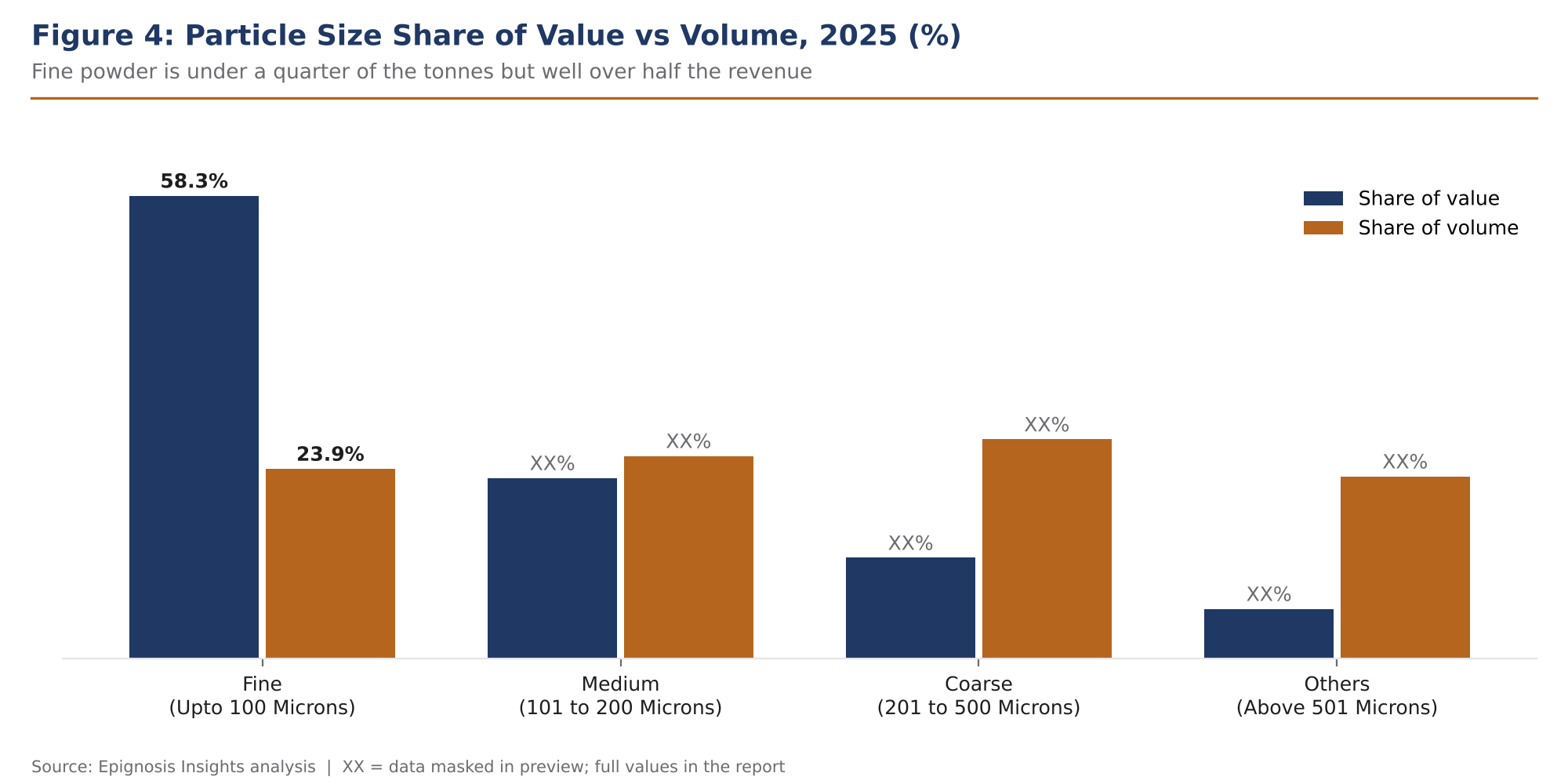
The more interesting movement is in the middle. The 101–200 micron band grows at 10.98% a year by volume, faster than any other size class. Producers are finding that many non-tyre applications, such as moulded goods, thermoplastic blends and coatings, do not need the most expensive cryogenic grades. Medium powder gives them most of the benefit at a lower cost. We expect this band to take share of volume steadily through 2031, while fine powder keeps its lead in value.
Flat Unit Value Shows the Market Is Still Fighting Virgin Material on Price
Value per tonne rises only from US$578 in 2025 to US$585 in 2031. In practice that means MRP prices are not rising in real terms. The reason is simple: every buyer compares MRP against the virgin rubber, carbon black or polymer it replaces. Recycled rubber powder has historically sold at roughly half the price of virgin material, as Lehigh Technologies noted early in its development, and the cost advantage is the main reason buyers accept the extra testing.
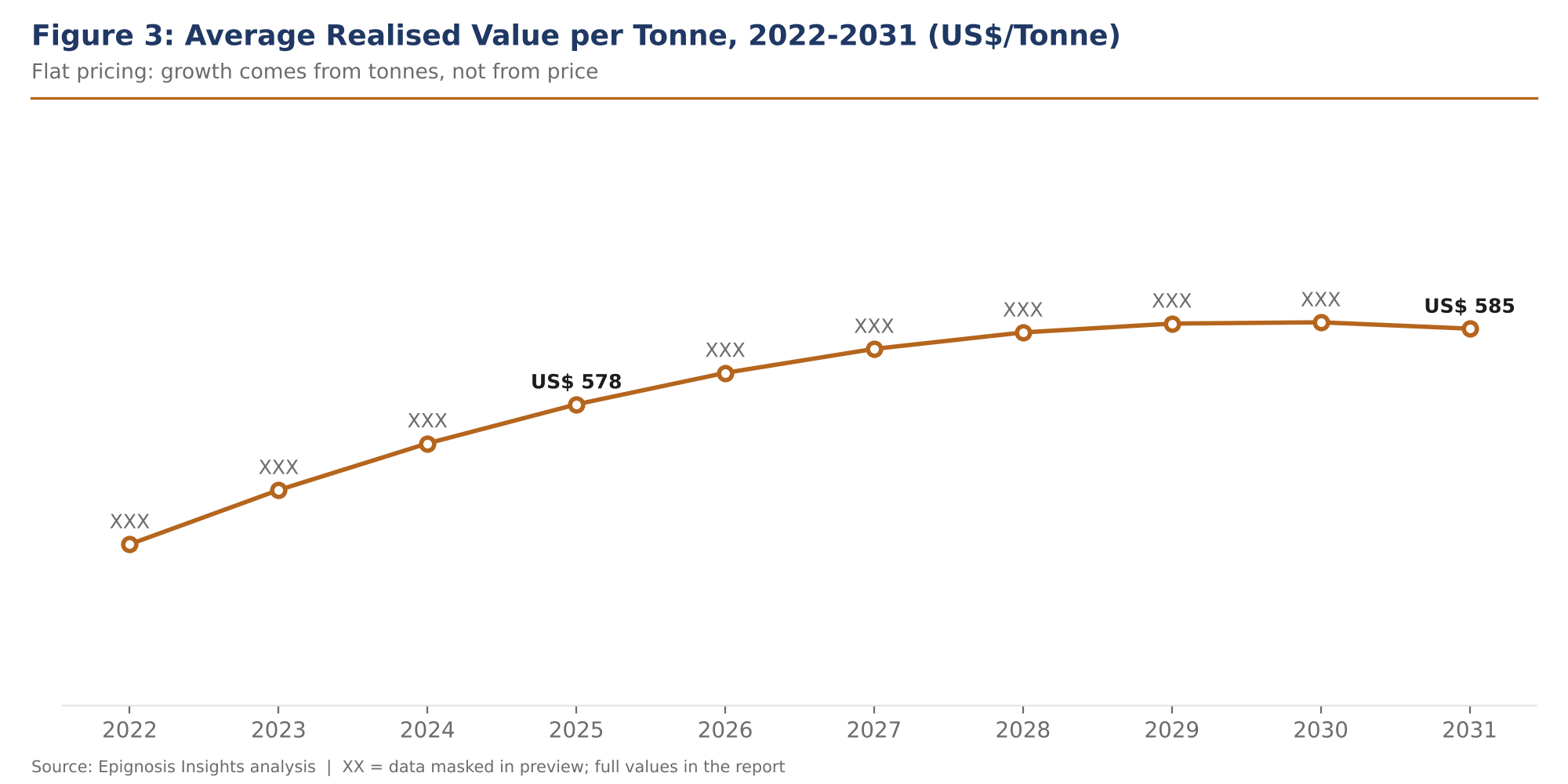
This puts a ceiling on pricing even as demand grows. Producers that want better margins have to get there through mix, by selling more fine and surface-treated grades, or through cost, by cutting energy and nitrogen use, rather than by raising list prices.
Regulation Is Closing One Outlet and Opening Others
Policy is shifting where recycled rubber goes. In the European Union, Regulation (EU) 2023/2055 restricts intentionally added microplastics, and granular infill for synthetic sports surfaces is banned from 17 October 2031 after an eight-year transition. Rubber infill from end-of-life tyres has been one of Europe's largest outlets for granulate. As that market winds down, recyclers need new homes for their material, and finer powder for compounds, plastics and asphalt is the most obvious one. We see this as a gradual tailwind for European MRP volume, particularly in the second half of the forecast.
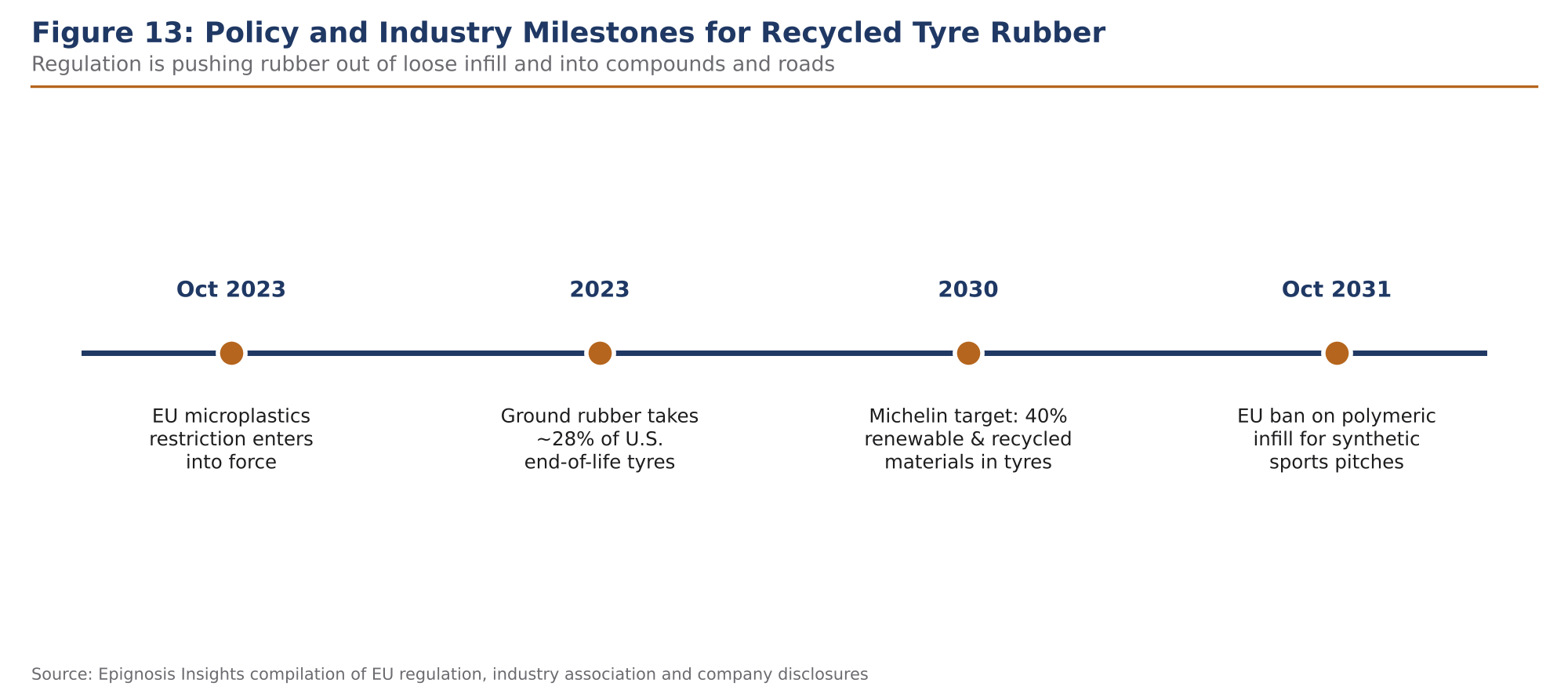
In the United States, ground rubber consumed about 28% of end-of-life tyres in 2023, according to the U.S. Tire Manufacturers Association, making it the second-largest end market after tyre-derived fuel. That base gives North American powder producers a deep pool of feedstock and existing customers in rubber-modified asphalt and moulded products.
Quality Consistency Remains the Main Restraint
The biggest obstacle is not price but trust. Tyre and automotive compounders need every bag to behave the same way. Variations in particle-size distribution, residual fibre, metal contamination or the ratio of natural to synthetic rubber can change cure behaviour and mechanical properties. Smaller recyclers often cannot guarantee this, which is why qualification at a major tyre maker can take a year or more and why a few large, well-documented producers hold most of the high-value business.
Particle Size Analysis
Beyond the headline split, each size class has a distinct customer base. Fine powder up to 100 microns goes mostly into tyre treads and sidewalls, high-performance moulded parts and specialty coatings, and its value grows at XX.X% a year. Medium powder of 101–200 microns serves technical rubber goods, thermoplastic elastomer blends and some tyre components. Coarse powder of 201–500 microns, worth US$XXX.X million in 2025, is used in rubber-modified asphalt, mats, flooring and lower-specification moulded products. The above-500-micron category is closest to crumb rubber and grows slowest, at XX.X% a year by value.
Application Analysis
Automotive applications held 47.7% of 2025 value, or US$471.7 million, and grow at 7.68% a year. Tyres account for most of this, but the segment also includes hoses, belts, seals, mats and under-body components, where recycled content is increasingly specified by car makers in their supplier sustainability requirements.
Construction is the fastest-growing application at 8.22% a year, from a 2025 base of US$XXX.X million. Rubber-modified asphalt is the largest construction use, followed by roofing membranes, sealants, acoustic underlays and sports and playground surfaces. Road agencies in the United States, China and India are specifying rubber-modified binders more often, partly for durability and partly because it gives them a use for local scrap tyres.
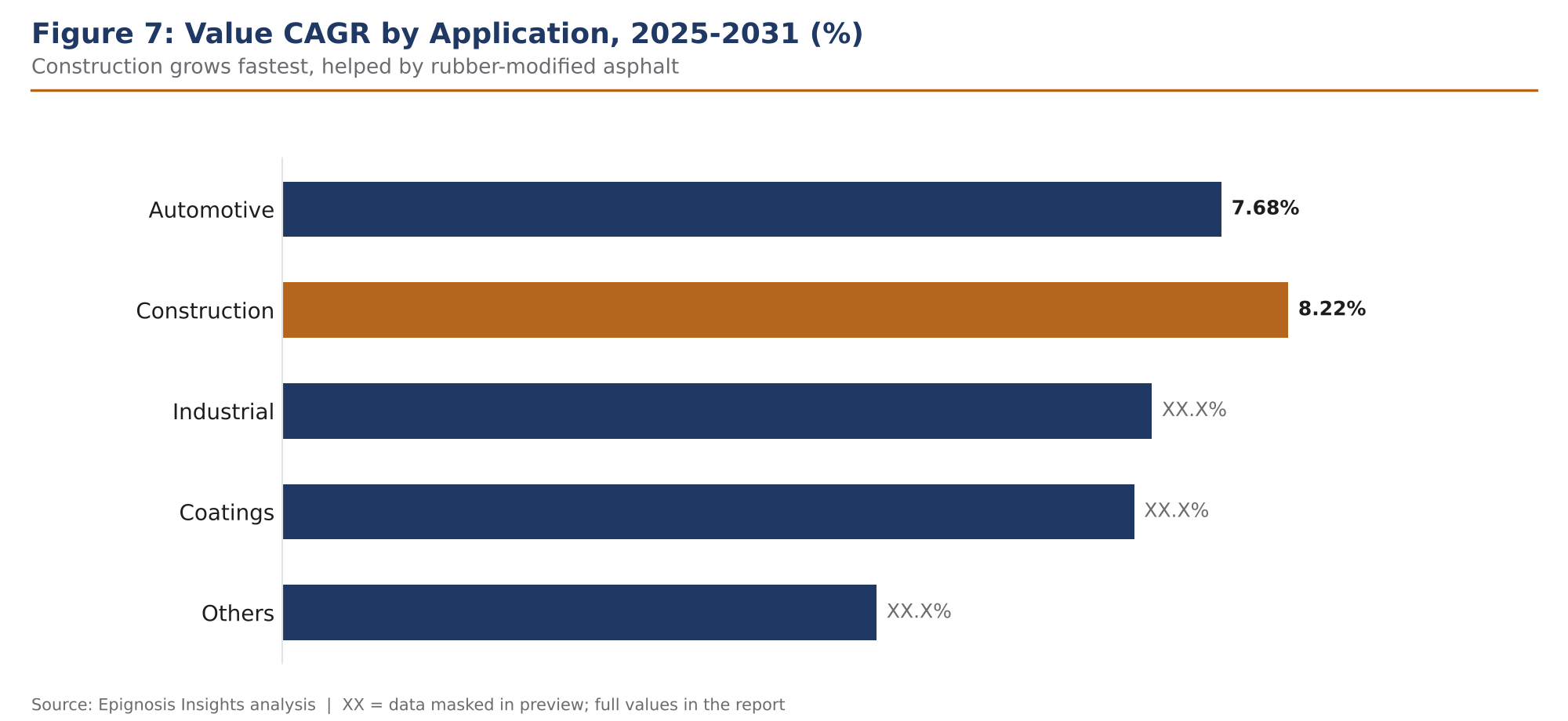
Industrial applications, including conveyor belts, anti-vibration mounts and industrial flooring, accounted for XX.X% of value. Coatings, at XX.X%, use the finest powders as texturing agents and to improve impact resistance. The Others category covers adhesives, footwear and consumer goods.
End-User Analysis
Tyre manufacturers bought 54.3% of the market by value in 2025. Non-tyre rubber producers, which include makers of belts, hoses, mats, seals and moulded goods, are the second-largest group and the fastest-growing at 7.93% a year by value. They tend to accept a wider range of particle sizes and are often quicker to approve new suppliers than tyre makers. Plastics compounders, at XX.X% of value, use MRP to toughen polyolefins and in thermoplastic elastomer blends; this group grows more slowly because compatibility between cured rubber and plastics still needs additives or surface treatment.
Source Rubber Analysis
Powder made from synthetic rubber accounted for 53.5% of 2025 value, with natural rubber powder making up the rest. Passenger car tyres contain more synthetic rubber, while truck and bus tyres are richer in natural rubber. This matters to buyers. Natural-rubber-rich powder from truck tyres is preferred in some tread compounds and fetches a premium, which is one reason waterjet and truck-tyre-focused recyclers have attracted interest. Synthetic-rich powder from passenger tyres is more abundant and goes into a wider range of non-tyre products.
Regional Analysis
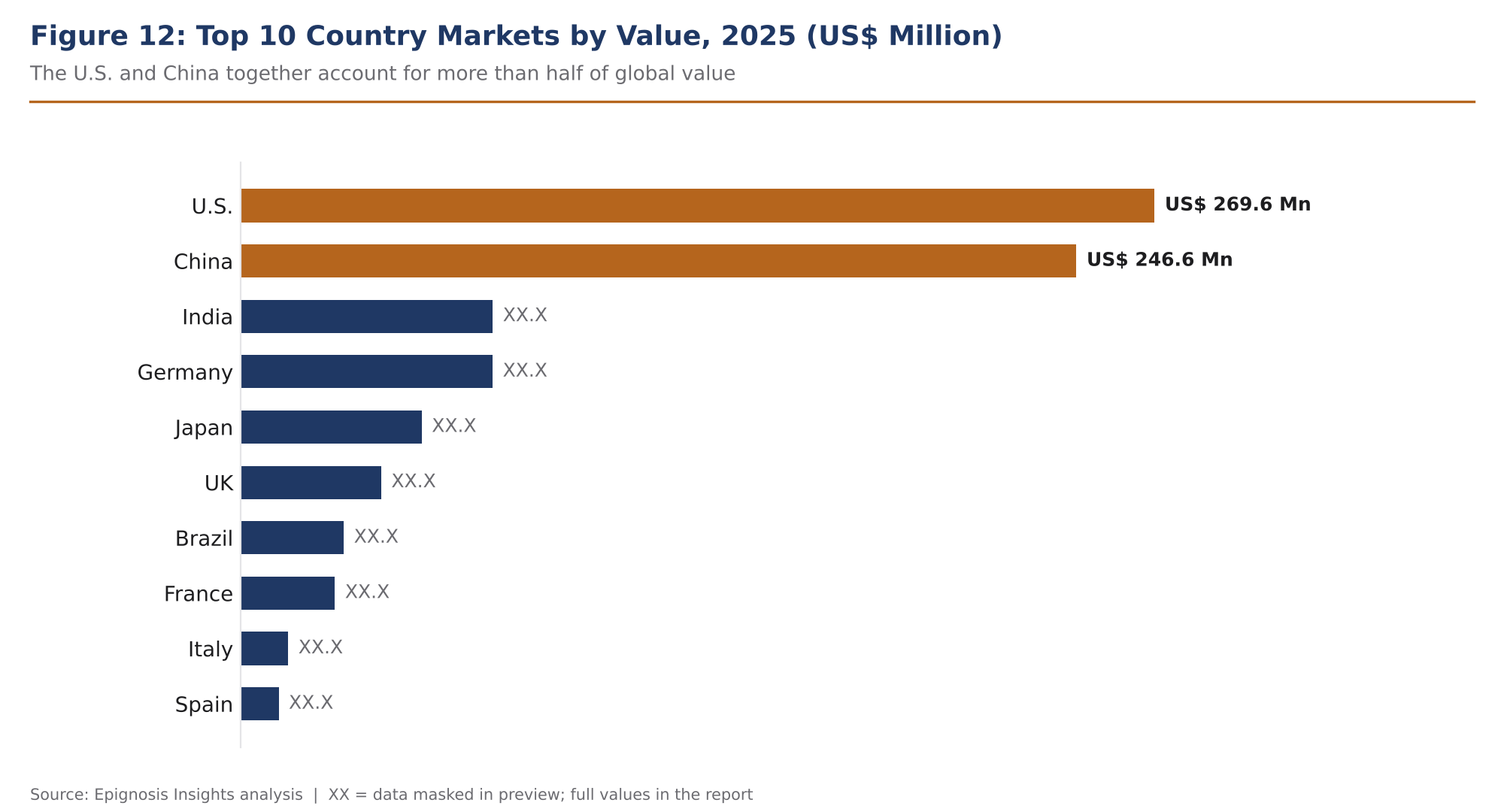
Asia Pacific is the largest market at US$417.8 million in 2025, or 42.3% of global value, and grows the fastest of the major regions at 8.41% a year. China accounts for US$246.6 million, supported by the world's largest tyre industry and government pressure to raise scrap tyre recycling rates. India grows faster still, at 9.59% a year, as its tyre industry expands and its road agencies adopt crumb-rubber-modified bitumen. Japan is a mature market focused on high-specification powder.
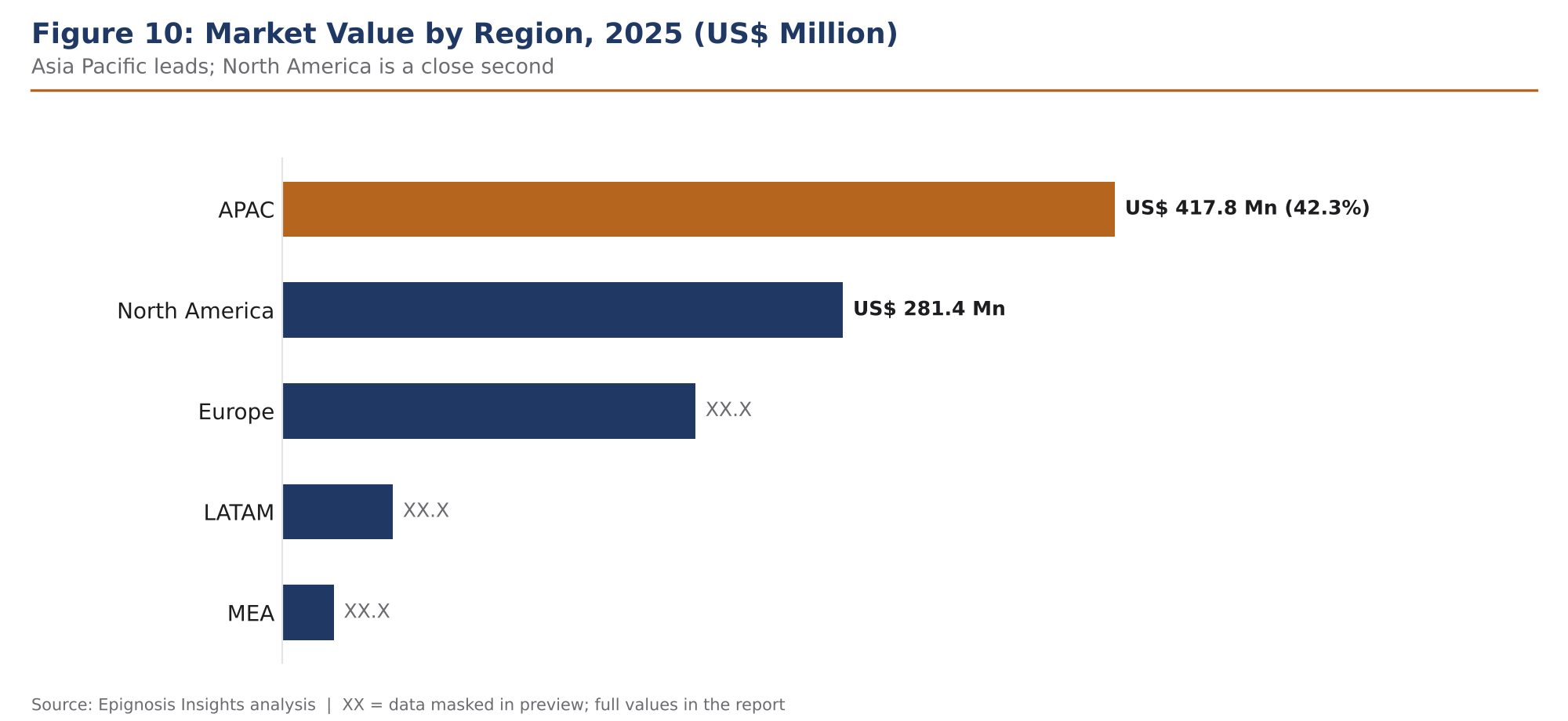
North America was worth US$281.4 million. The United States alone accounted for US$269.6 million, making it the largest single country market in the world. Mexico, though small, is the fastest-growing country market we cover at 10.13% a year, as tyre and automotive parts production expands near the U.S. border.
Europe was worth US$XXX.X million in 2025 and grows at XX.X% a year by value. Germany is the largest European market, followed by the United Kingdom and France. Europe's growth rate is above the global average in volume terms, helped by the shift away from rubber infill and by the European tyre industry's recycled-content targets.
Latin America and the Middle East and Africa together held XX.X% of global value. Brazil is the largest market in Latin America, while Saudi Arabia and the UAE lead in the Middle East.
Value per Tonne by Region
The regional value-per-tonne figures are revealing. North America sold MRP at an average of US$498 per tonne in 2025, the lowest of any region, while Latin America averaged US$857 per tonne. The difference is mostly about product mix and market structure. North America has abundant feedstock, a large share of coarser powder going into asphalt and moulded goods, and intense competition among recyclers. Latin America has fewer producers, a larger share of imported fine powder and smaller lot sizes.
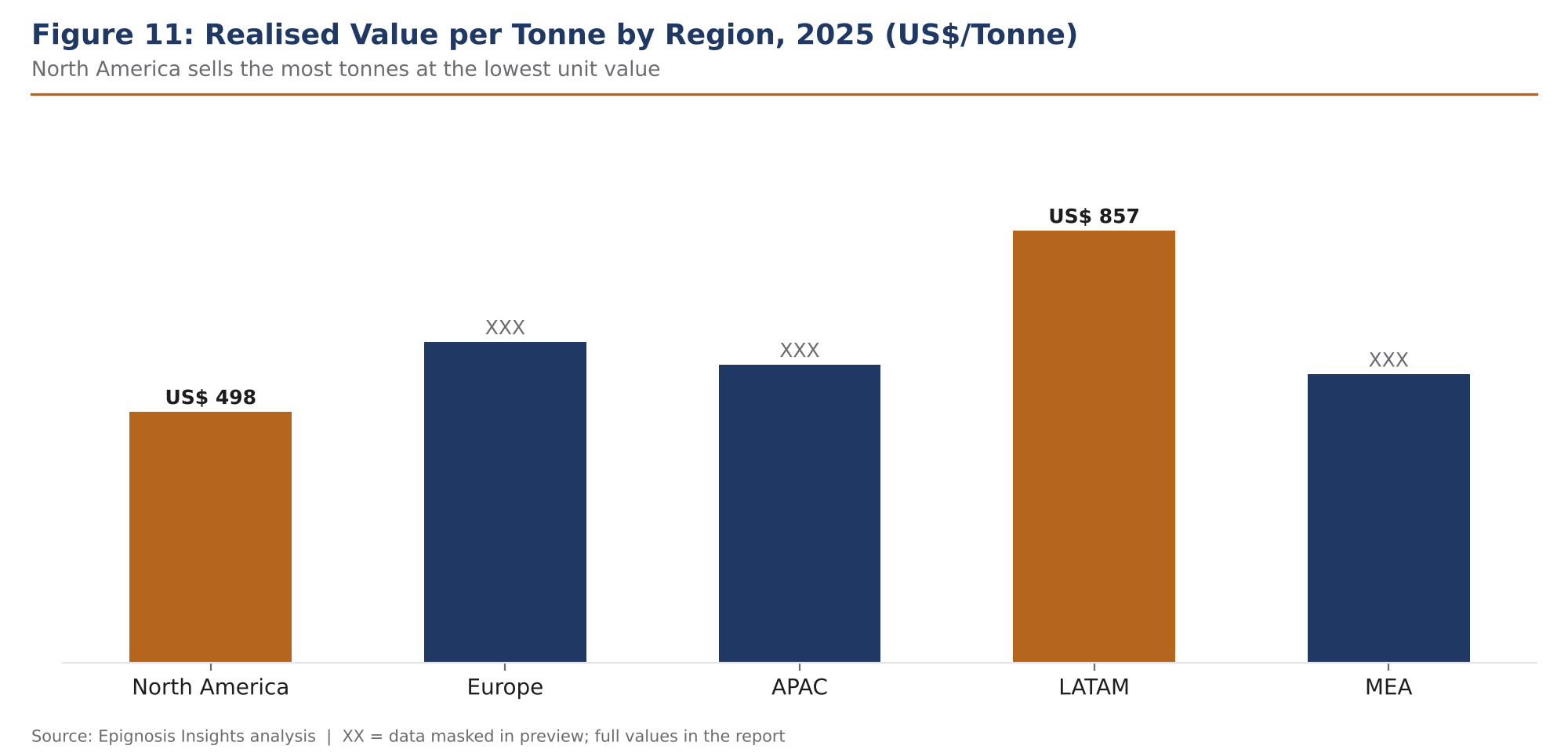
Europe and Asia Pacific sit in between, at US$XXX and US$XXX per tonne. For buyers, the lesson is that regional price benchmarks cannot be compared without adjusting for particle size, contamination limits and delivery terms.
Supply Chain and Production Economics
Feedstock is cheap but not free. Recyclers are often paid to take scrap tyres, through gate fees or extended producer responsibility schemes, which gives them a negative raw material cost. The expense lies in processing. Removing steel and textile, grinding to the target size and cleaning the powder all take energy, and cryogenic grinding adds the cost of liquid nitrogen. Plant scale matters a great deal, which is why the largest producers run multiple lines at high utilisation.
Truck-tyre buffings from retreading plants are a particularly valuable feedstock because they are already free of steel and rich in natural rubber. Producers located near large retread operations have a cost and quality advantage. In Europe and India, several recyclers have built partnerships with retreaders and tyre collection schemes to secure this material.
Surface-Treated Powder: Where the Margin Is Moving
Plain powder is a filler. Treated powder can behave more like a polymer. Several producers now offer surface-activated or functionalised grades, in which the particle surface is chemically modified so that it bonds better with the surrounding rubber or plastic. The benefit is measurable: compounders can raise loadings without losing as much tensile strength or abrasion resistance, and plastics compounders can blend powder into polyolefins without the brittleness that untreated rubber often causes.
These grades are still a small part of tonnage, but they sell at a clear premium and they lock customers in, because each treatment is tuned to particular compounds. We expect them to be the main route by which leading producers lift their average value per tonne above the flat market trend.
Competitive Landscape
The market is fragmented. A handful of specialist producers supply most of the fine, tyre-grade powder, while hundreds of smaller recyclers produce coarser grades for regional markets. Lehigh Technologies is widely regarded as the leading supplier of fine micronized rubber powder and held an estimated XX.X% of global value in 2025.
The following companies were verified through their own product information or recent industry reporting:
- Lehigh Technologies (Michelin Group), United States produces PolyDyne and MicroDyne micronized rubber powders. Michelin acquired the company in 2017, and its Spanish joint venture runs an MRP plant in Navarra.
- Genan, Denmark operates six tyre recycling plants and produces micronised rubber powder from 40 to 120 mesh using cryogenic milling.
- Tinna Rubber and Infrastructure, India makes micronized rubber powder of 80 to 170 mesh, mainly from radial truck and bus tyres, alongside crumb rubber modifier for bitumen.
- RubberJet Group, Italy uses high-pressure waterjet technology to recover rubber powder and granulate from large truck, agricultural and mining tyres.
- Kargro Recycling, Netherlands processes end-of-life truck tyres into rubber powder and granulate.
- Entech, United States expanded its MRP capacity to serve tyre and thermoplastic applications.
Epignosis Insights Competitive Assessment Framework (EICAF)
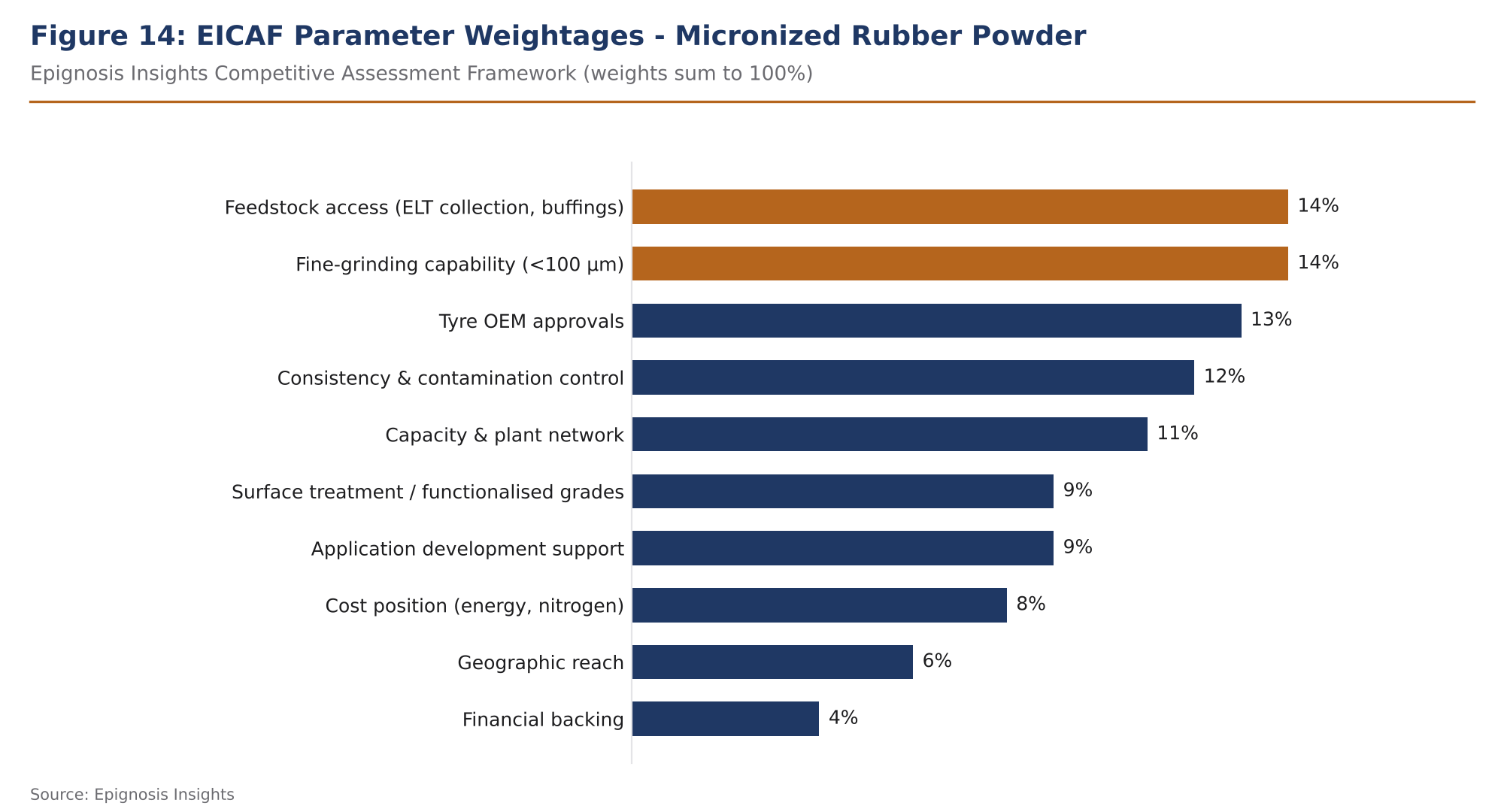
We assess MRP producers on ten weighted parameters. Feedstock access and fine-grinding capability each carry 14%, because they decide both cost and the ability to serve tyre makers. Tyre OEM approvals follow at 13%, consistency and contamination control at 12%, and capacity and plant network at 11%. Surface treatment and functionalised grades account for 9%, application development support for 9%, cost position for 8%, geographic reach for 6% and financial backing for 4%.
Each producer is scored from 1 to 5 on every parameter using company disclosures, customer interviews and plant visits where possible, and the weighted total places it among Leaders, Challengers, Specialists or Emerging Players. The scored matrix is included in the full report.
Outlook by Period and Key Risks
We expect the market to move through two broad phases. From 2026 to 2028, growth is steady, driven by tyre makers moving recycled content from pilot compounds into regular production, and by road agencies in Asia expanding rubber-modified asphalt programmes. From 2029 to 2031, growth speeds up as the European infill ban approaches and recyclers redirect material into powder, and as tyre makers push to meet their 2030 recycled-content targets.
Three risks could change this picture. A sharp fall in natural rubber or carbon black prices would weaken MRP's cost advantage. A quality failure in a high-profile tyre application could slow approvals across the industry. And weaker tyre production, particularly in China, would reduce the largest single source of demand. On the upside, faster adoption of recycled-content mandates by governments, rather than voluntary targets by companies, would lift volume above our base case.
Research Methodology
We started from end-of-life tyre generation in each country, then estimated the share recycled into ground rubber and the share of that ground rubber milled to powder. In parallel, we built demand from the bottom up, using tyre production, rubber goods output, asphalt programmes and plastics compounding in each market. The two estimates were reconciled and validated through interviews with recyclers, tyre compounders, rubber goods makers and distributors across North America, Europe and Asia Pacific. Prices were built from producer quotations and buyer interviews, adjusted for particle size and delivery terms.