Key Findings
- The Global ME-ESBO Plasticizer Market was valued at US$1,178.0 million in 2025 and is projected to reach US$1,625.8 million by 2032, growing at a CAGR of 4.28% from 2026 to 2032.
- Market volume reached 760.0 kilo tonnes in 2025 and is forecast to rise to 1,062.6 kilo tonnes by 2032, a volume CAGR of 5.06%, faster than value growth.
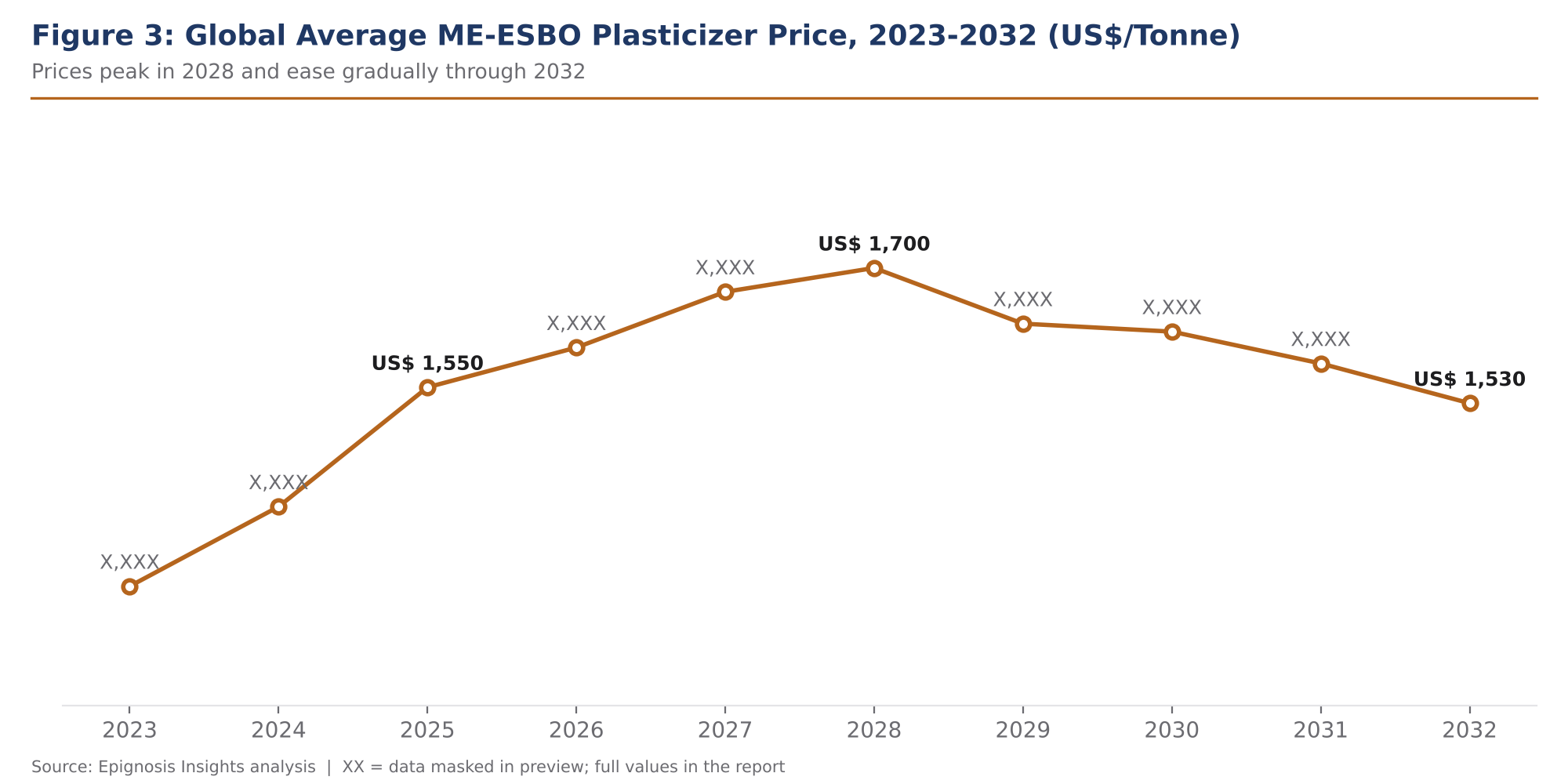
- The global average price stood at US$1,550 per tonne in 2025, is expected to peak at US$1,700 per tonne in 2028, and to ease to US$1,530 per tonne by 2032.
- Ring opening polymerization accounted for 70.8% of 2025 market value and is projected to grow at a 4.15% CAGR, while the maleic anhydride route grows faster at 4.57%.
- PVC products are the largest application, worth US$564.2 million in 2025 and growing at a value CAGR of 4.57%.
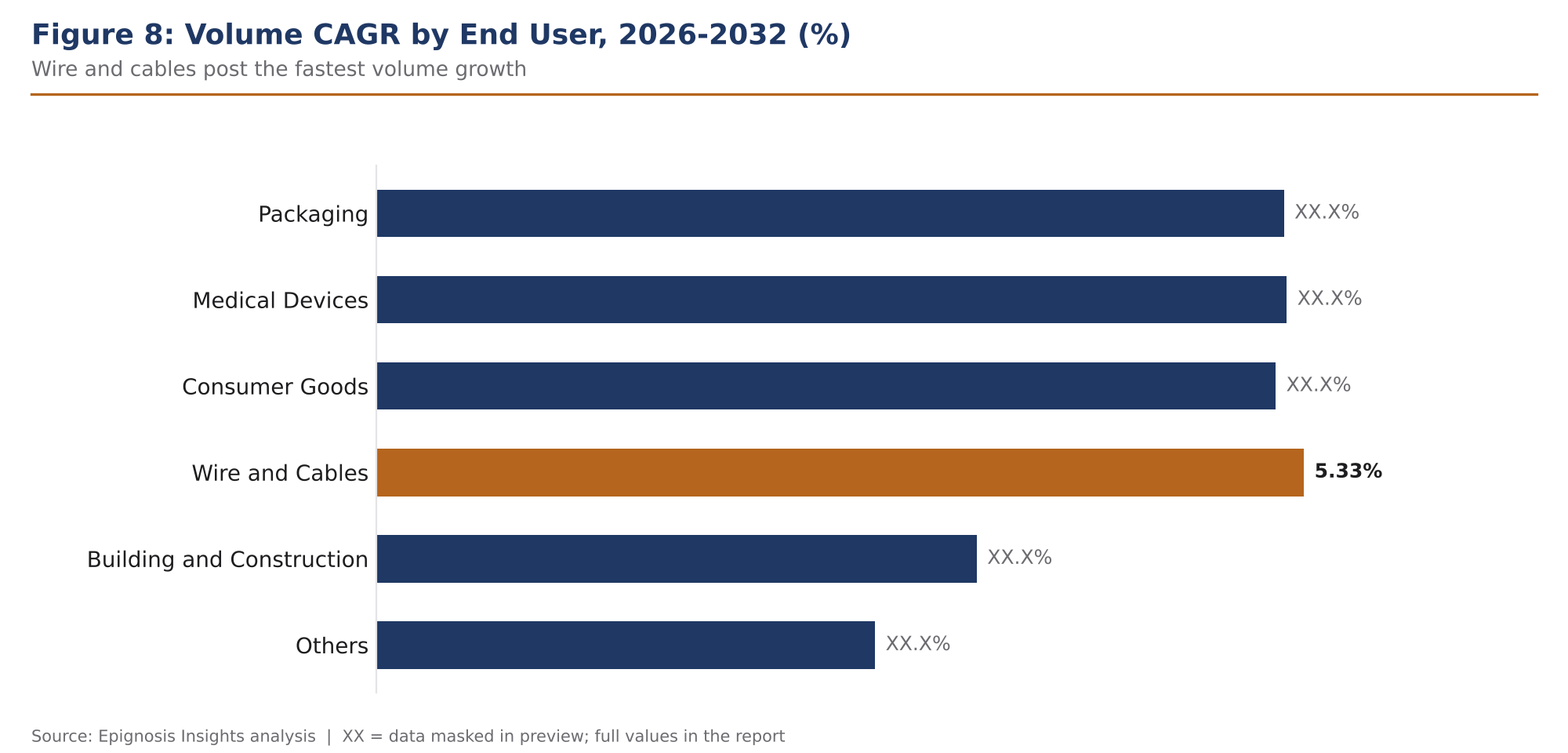
- Packaging is the largest end user with a 38.1% value share in 2025, followed by medical devices at 23.1%.
- Wire and cables is the fastest-growing end user by volume, at a CAGR of 5.33% through 2032.
- Asia Pacific is the largest regional market at US$504.3 million (42.8% of global value) in 2025; Latin America is the fastest-growing region at a value CAGR of 5.26%.
- Europe accounts for 33.3% of global volume but a much smaller share of value, reflecting a commodity-weighted grade mix.
- The United States (US$309.9 million), China (US$231.6 million) and Germany (US$106.3 million) were the three largest country markets in 2025.
Global ME-ESBO Plasticizer Market Outlook
The Global ME-ESBO Plasticizer Market is projected to reach US$1,625.8 million by 2032 from US$1,178.0 million in 2025, and market revenue is expected to grow at a 4.28% CAGR from 2026 to 2032. Volume is projected to increase from 760.0 kilo tonnes in 2025 to 1,062.6 kilo tonnes by 2032, a volume CAGR of 5.06%. Volume grows faster than value because the average selling price, after rising through the feedstock-driven upcycle of 2024–2028, is expected to soften in the final years of the forecast.
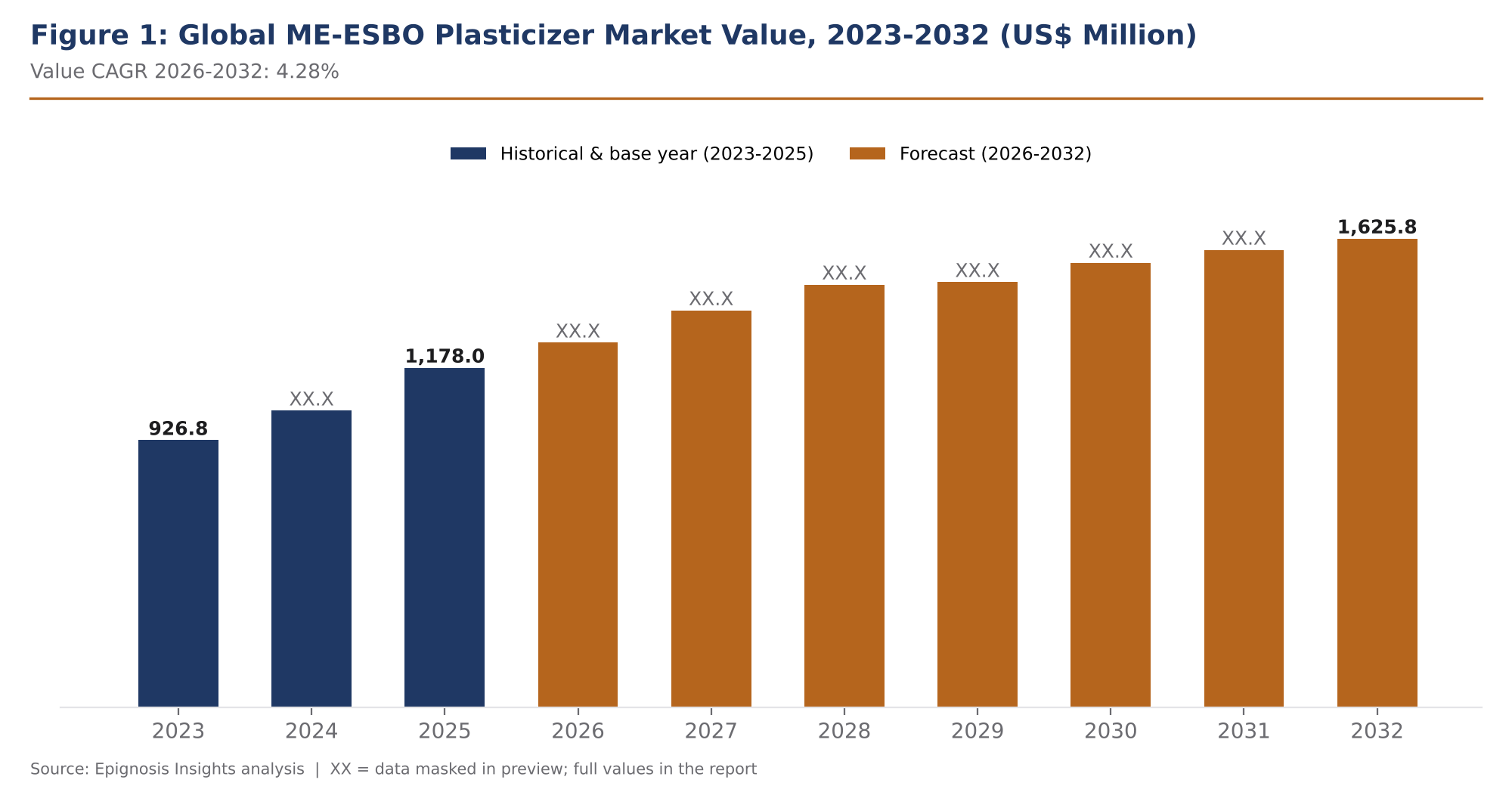
The market expanded from US$926.8 million in 2023 to US$1,178.0 million in 2025, an increase driven more by price than by volume. Over the same two years, volume rose by only XX.X%, while the average price climbed from US$X,XXX per tonne to US$1,550 per tonne. Epignosis Insights expects this pattern to reverse in the second half of the forecast: from 2029 onward, volume growth accelerates as substitution of phthalates in packaging, medical and cable compounds deepens, while prices drift lower.
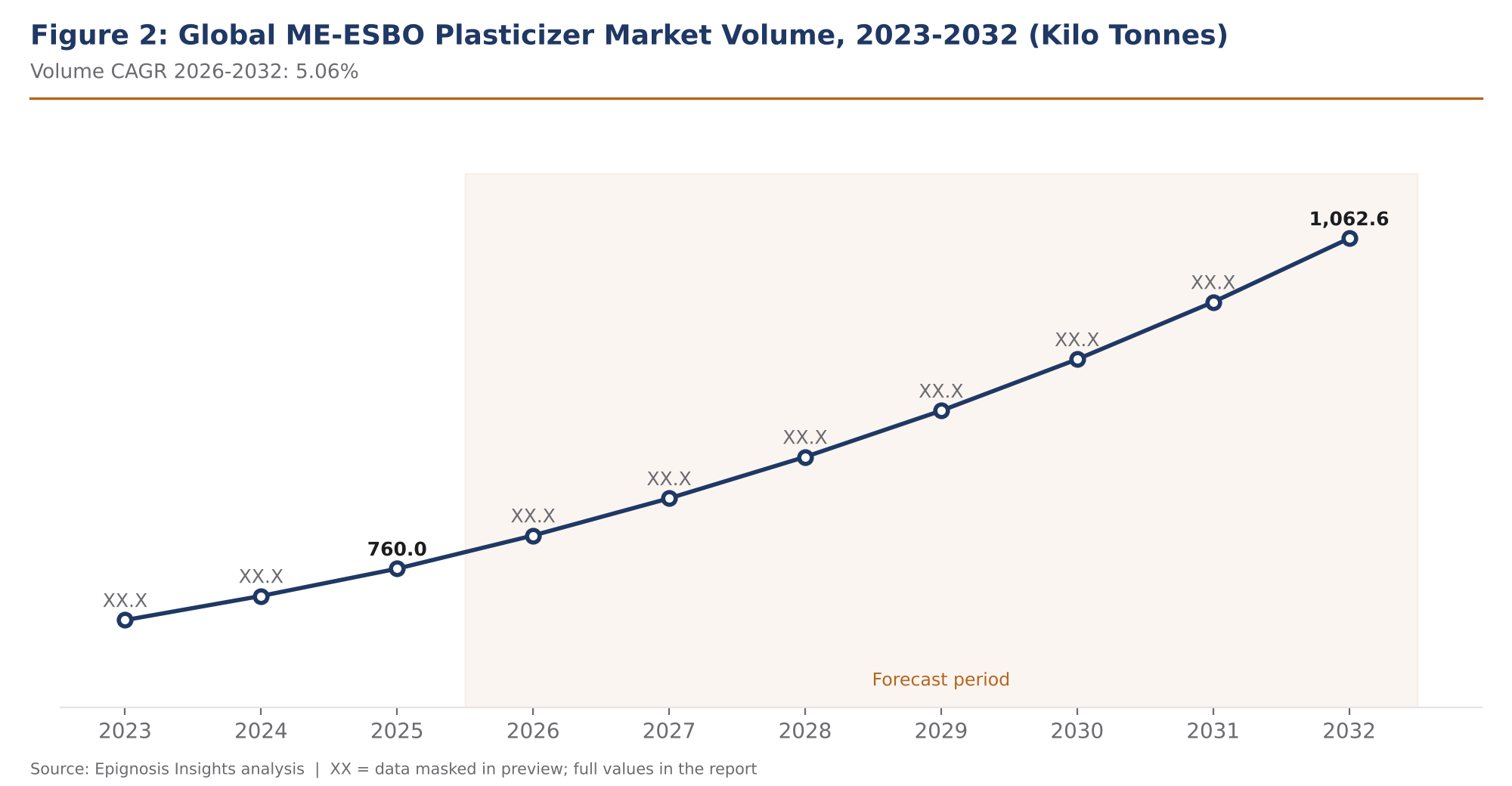
Table 1: Global ME-ESBO Plasticizer Market – Value, Volume and Average Price, Selected Years
| Year |
Value (US$ Million) |
Volume (Kilo Tonnes) |
Average Price (US$/Tonne) |
| 2023 |
926.8 |
XXX.X |
X,XXX |
| 2024 |
XXX.X |
XXX.X |
X,XXX |
| 2025 |
1,178.0 |
760.0 |
1,550 |
| 2026 |
X,XXX.X |
XXX.X |
X,XXX |
| 2028 |
X,XXX.X |
XXX.X |
1,700 |
| 2030 |
X,XXX.X |
XXX.X |
X,XXX |
| 2032 |
1,625.8 |
1,062.6 |
1,530 |
| CAGR 2026–2032 |
4.28% |
5.06% |
XX.X% |
Source: Epignosis Insights analysis. XX denotes data masked in this preview; complete annual series for 2023–2032 are provided in the full report and Excel data pack.
Market Definition and Scope
For this study, ME-ESBO plasticizers cover epoxidized soybean oil (ESBO) and its methyl-ester and chemically modified derivatives used to plasticize and co-stabilize polymers. ESBO is produced by reacting refined soybean oil with a peracid formed from hydrogen peroxide and formic or acetic acid, converting the oil's double bonds into oxirane rings. The epoxy groups scavenge the hydrochloric acid released when PVC degrades under heat, which is why ESBO is used as both a secondary plasticizer and a co-stabilizer. Epoxy fatty acid methyl esters, produced by transesterification of the oil with methanol before or after epoxidation, offer lower viscosity and better plasticizing efficiency and can act as primary plasticizers in many flexible PVC formulations.
The market is segmented by type, based on the modification route used to tailor performance: ring opening polymerization, which opens the oxirane ring to attach new functional groups, and reaction with maleic anhydride, which grafts anhydride functionality onto the oil backbone. Unmodified technical-grade ESBO sold for plasticizer use is allocated to these two routes in the full report according to downstream formulation. Epoxidized linseed oil, citrate esters and castor-oil derivatives are tracked as competing bio-based plasticizers but excluded from market value.
Market Dynamics
Phthalate Substitution in Sensitive Applications Drives Volume
The central growth driver is the continued displacement of ortho-phthalates such as DEHP from products that touch food, the human body or children. ESBO has a long regulatory track record in these uses. In the European Union, the Scientific Committee on Food assigned ESBO a tolerable daily intake of 1 mg/kg body weight, which translates into a specific migration limit of 60 mg/kg of food for plastic materials, and dedicated limits were set for PVC gaskets in jar lids. That established compliance pathway gives converters confidence to raise ESBO loadings when they reformulate away from phthalates.
Medical devices are the most important regulatory battleground. Under Commission Regulation (EU) 2023/2482, the latest application date for authorisation to use DEHP in medical devices was pushed from November 2023 to 1 January 2029, and the sunset date from May 2025 to 1 July 2030. The extension slowed the near-term switch but did not remove it: device makers now have a fixed deadline, and every redesign of blood bags, tubing and catheters ahead of 2030 is an opportunity for ESBO and its modified derivatives. Epignosis Insights expects medical-device demand for ME-ESBO to grow from US$272.0 million in 2025 at a CAGR of XX.X%, with growth concentrated between 2027 and 2030.
Rising Soybean Oil Costs Reshape Pricing and Margins
Feedstock is the market's main source of price movement. Soybean oil accounts for most of the variable cost of ESBO, and its price is increasingly set by the biofuel sector rather than by food demand. According to the USDA Economic Research Service, record Renewable Volume Obligations for 2026 and 2027 are expected to lift soybean oil use for biomass-based diesel to 17.8 billion pounds in 2026/27, up 3.6 billion pounds from the previous year, with Central Illinois soybean oil prices projected at 70 cents per pound, up from 63 cents. Fastmarkets reported, based on U.S. Energy Information Administration data, that U.S. biofuel producers consumed a record 1.687 billion pounds of soybean oil in July 2026, up about 52% year on year.
This competition for feedstock is the reason the average ME-ESBO price rises from US$1,550 per tonne in 2025 to a peak of US$1,700 per tonne in 2028. Producers integrated into soybean crushing are better placed to manage this cycle than merchant epoxidizers who buy refined oil on the open market. After 2028, Epignosis Insights expects the price to ease to US$1,530 per tonne by 2032 as crush capacity additions in the Americas and greater use of alternative vegetable oils in Asia relieve feedstock tightness. The main risk to this view is further tightening of U.S. biofuel mandates, which would keep soybean oil prices elevated for longer.
Performance Limits Restrain Use as a Sole Plasticizer
Conventional ESBO has limits that cap its share of total plasticizer demand. Its compatibility with PVC falls at high loadings, which can cause exudation, and it does not match the plasticizing efficiency of general-purpose phthalates or terephthalates. In most flexible PVC compounds it is therefore used at a few parts per hundred resin alongside a primary plasticizer rather than as a complete replacement. This restraint is the main reason modified ME-ESBO grades exist: methyl esters and ring-opened derivatives are designed to raise compatibility and efficiency so that bio-based content can increase without sacrificing flexibility or permanence. The pace at which these grades win approvals determines how far ME-ESBO can move from secondary to primary plasticizer status.
Modified Grades and Bio-Content Claims Open Premium Niches
The opportunity side of the market lies in product differentiation. Brand owners in toys, flooring, wallcoverings and food packaging increasingly report bio-based carbon content, and ESBO derivatives provide one of the lowest-cost ways to raise it. Several producers now market high-oxirane grades, low-odour grades for coatings, and blends that combine ESBO with methyl esters to meet specific viscosity and low-temperature targets. Epignosis Insights estimates that modified and specialty grades command premiums of XX–XX% over technical-grade ESBO and will account for XX.X% of market value by 2032.
Type Analysis
Ring opening polymerization held 70.8% of market value in 2025, equal to US$834.0 million, and 576.3 kilo tonnes of volume. Ring-opening chemistry is flexible: by attaching alcohols, acids or polyether chains to the opened oxirane ring, producers can tune polarity, molecular weight and compatibility for a specific polymer. This makes the route the default for general-purpose flexible PVC and rubber compounds. Its value CAGR of 4.15% is slightly below the market average because it carries the largest share of commodity volume.
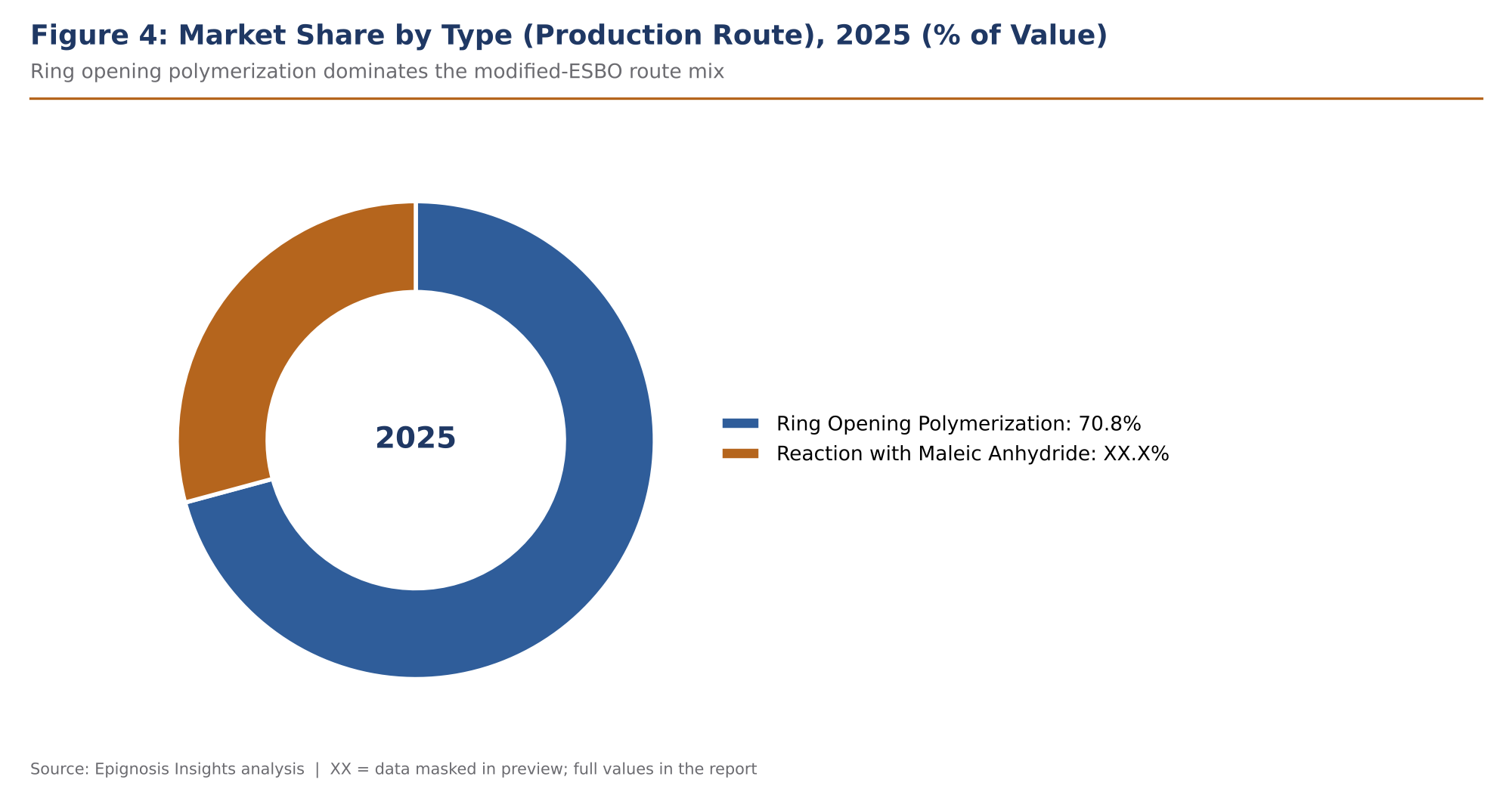
The reaction with maleic anhydride accounted for the remaining XX.X% of 2025 value and is the faster-growing route at a value CAGR of 4.57%. Maleinized products carry reactive anhydride groups that improve adhesion and allow the plasticizer to bond into coatings, adhesives and sealant matrices, reducing migration. Volume for this route grows at XX.X% per year, ahead of ring opening polymerization, as formulators look for plasticizers that stay in place over the product's life.
Application Analysis
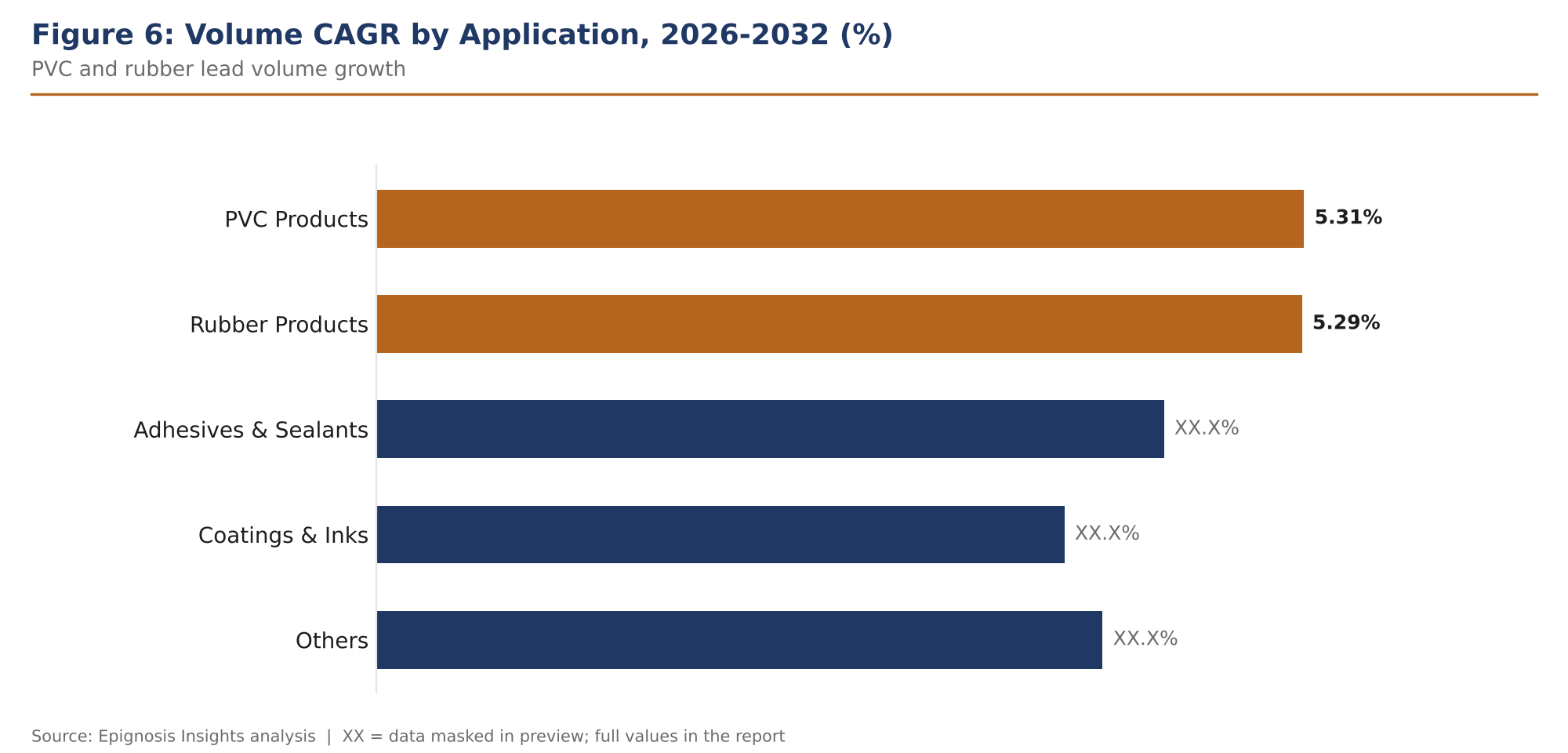
PVC products represented the largest application at US$564.2 million in 2025 and are projected to reach US$794.5 million by 2032, a value CAGR of 4.57%. In volume terms, PVC is also the fastest-growing application at 5.31% per year, slightly ahead of rubber products at 5.29%. Within PVC, ME-ESBO serves cling films, gaskets, medical tubing, cable sheathing, flooring and synthetic leather, where its dual role as plasticizer and heat co-stabilizer reduces the need for other additives.
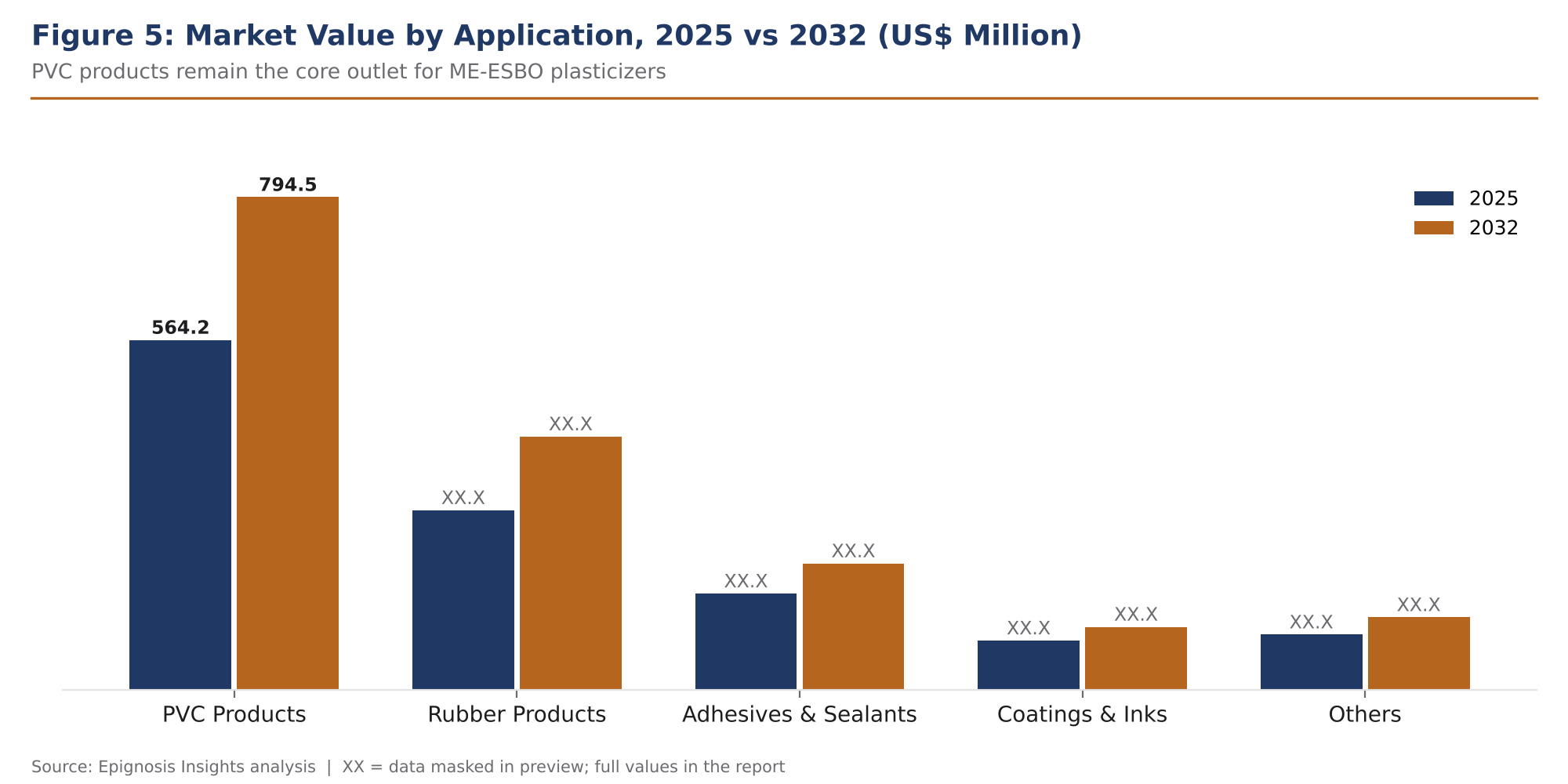
Rubber products, at XX.X% of 2025 value, use epoxidized oils as processing aids and bio-based extender oils in seals, gaskets and hoses. Adhesives and sealants (XX.X%) and coatings and inks (XX.X%) grow more slowly in value, at XX.X% and XX.X% respectively, because they use smaller quantities per unit of product and face competition from other reactive diluents. The "others" category covers lubricants, polyurethane intermediates and specialty polymer applications.
End-User Analysis
Packaging was the largest end user with a 38.1% value share in 2025, worth US$449.3 million, and is forecast to grow at a value CAGR of 4.62%. Food-contact PVC films and closure gaskets remain the core outlets, and both benefit from ESBO's long regulatory record. Medical devices rank second at 23.1% of value. Demand here is shaped by the European DEHP deadline described above and by hospital procurement policies that favour non-phthalate products.
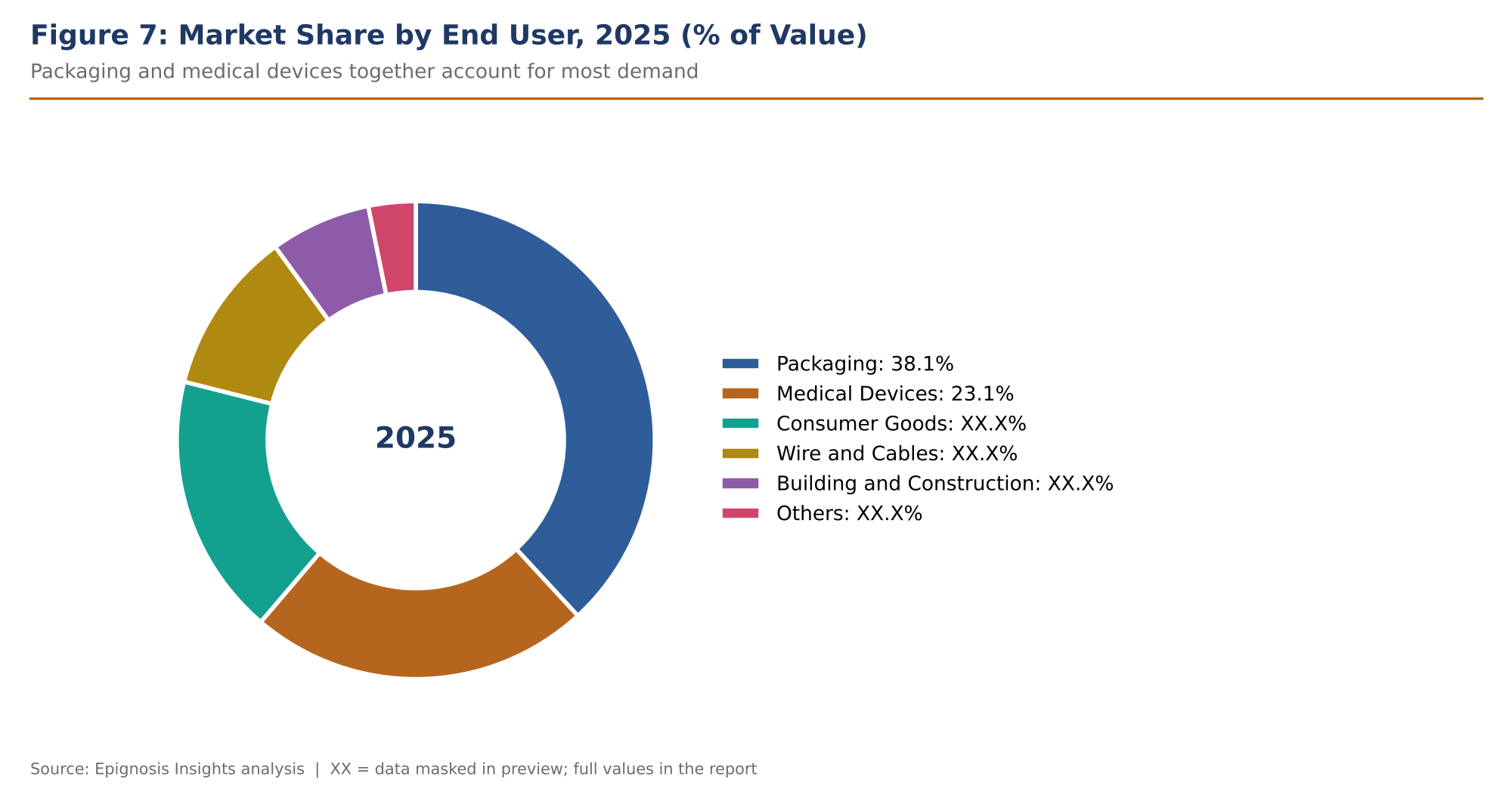
Consumer goods, including toys, footwear and household articles, accounted for XX.X% of 2025 value. Wire and cables, at XX.X% of value, is the fastest-growing end user by volume with a CAGR of 5.33%, reflecting grid build-out, data-centre construction and electrification, as well as demand for cable compounds with lower volatile content. Building and construction, at XX.X%, grows more slowly at XX.X% per year by value, as flooring and wallcovering markets are tied to housing cycles.
Regional Analysis
Asia Pacific is the largest regional market, valued at US$504.3 million in 2025, or 42.8% of global value. China alone accounted for US$231.6 million, supported by the world's largest flexible PVC processing base and a dense network of domestic epoxidizers. India is the region's second-largest market at US$XX.X million and is growing at XX.X% per year by value, driven by cable, packaging and medical-device manufacturing. Japan is a mature, quality-driven market growing at XX.X%.
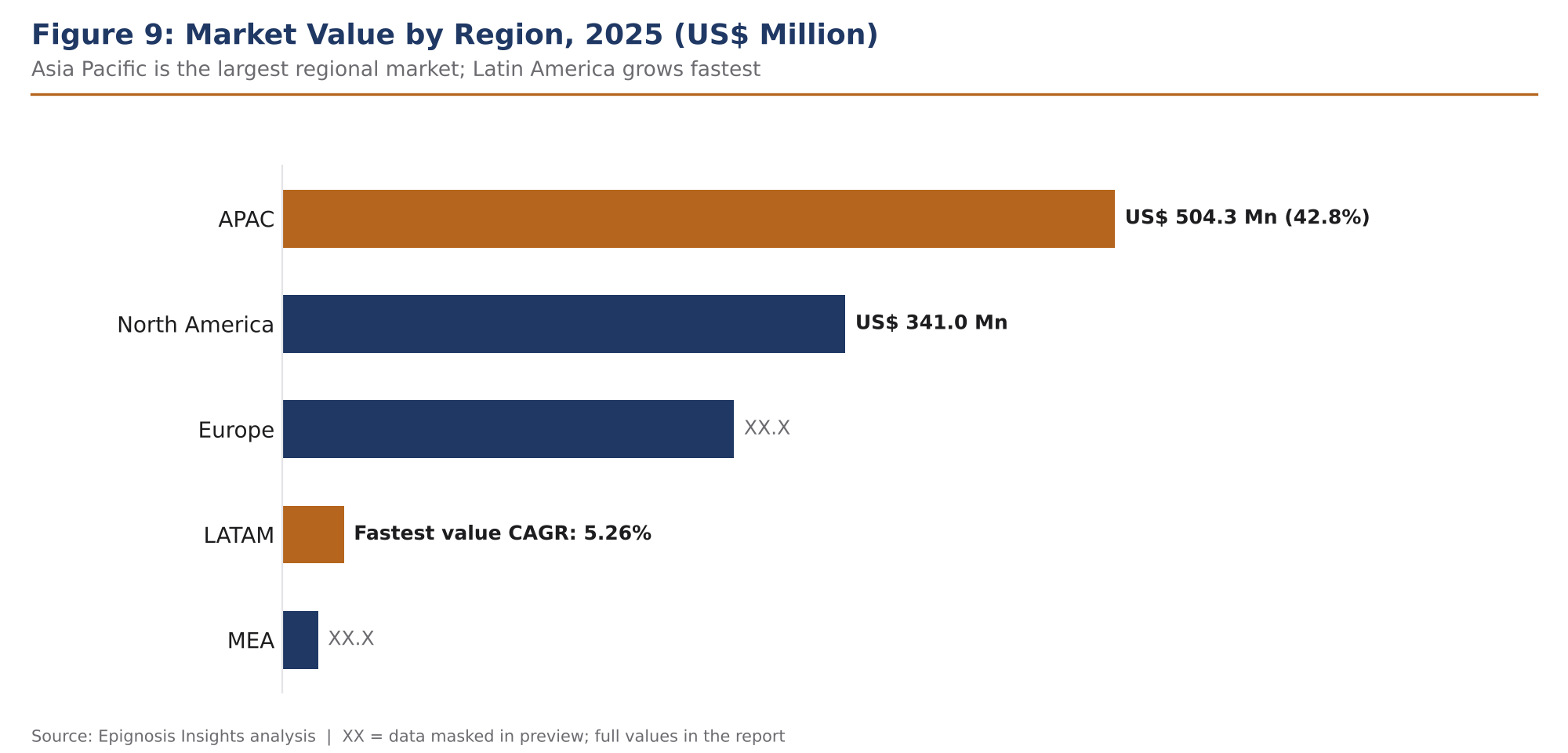
North America was worth US$341.0 million in 2025. The United States dominates the region with US$309.9 million and benefits from domestic soybean supply and the presence of integrated producers. Canada and Mexico together account for the remaining XX.X%, with Mexico projected to post the region's fastest volume growth.
Europe accounts for 33.3% of global volume but XX.X% of value. Germany is the largest European market at US$106.3 million, followed by France and the United Kingdom. Europe's value share is held down by a high proportion of technical-grade ESBO sold into PVC compounding and building products.
Latin America is the fastest-growing region at a value CAGR of 5.26%, led by Brazil, the fastest-growing country market at XX.X%. Brazil combines abundant soybean feedstock with growing domestic PVC and cable production. The Middle East and Africa remains a small market, representing XX.X% of global value, with Saudi Arabia and the UAE the largest consumers.
Value-per-Tonne Analysis
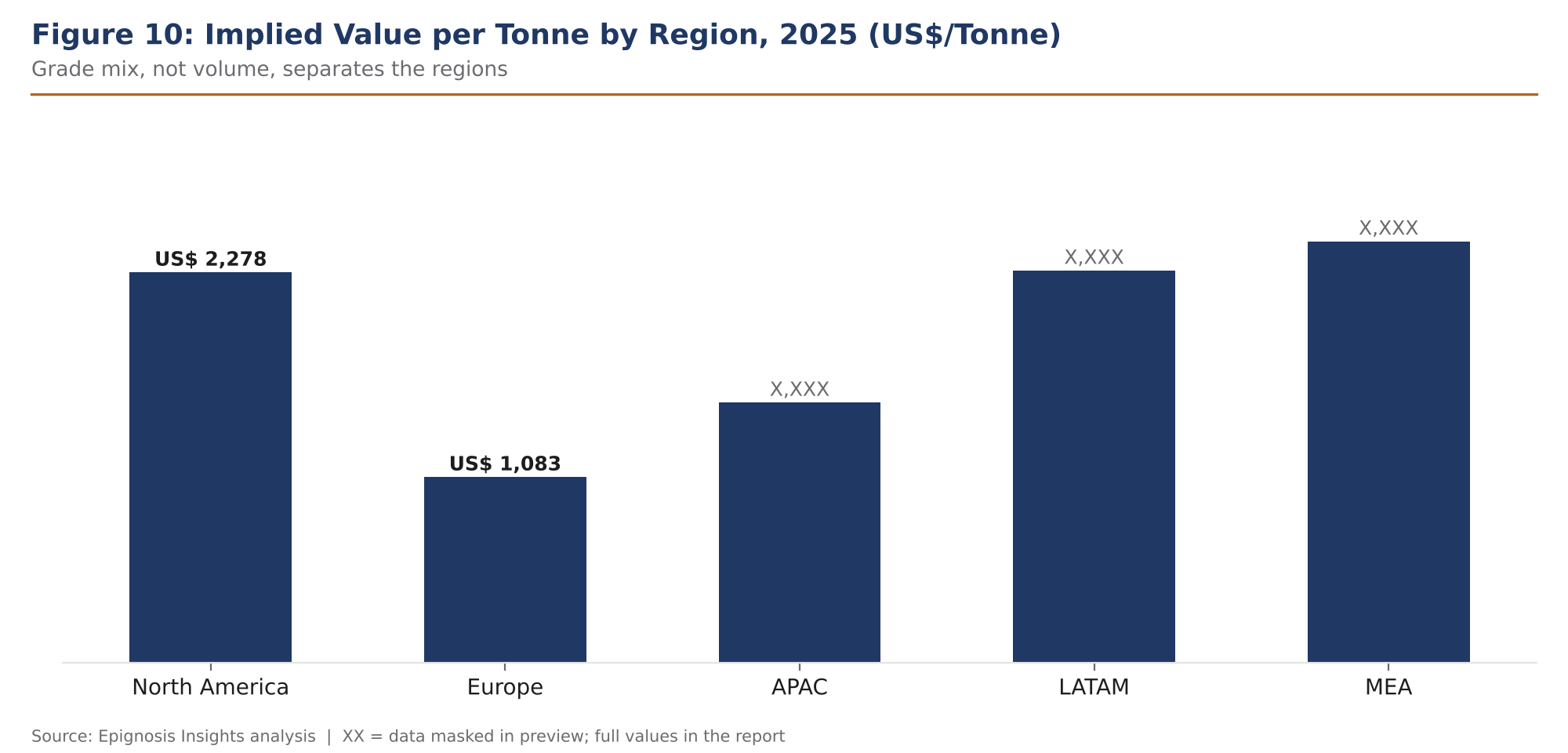
An important feature of this market is the wide gap in value per tonne between regions, which reflects differences in grade mix rather than in commodity ESBO prices. North America's implied value per tonne was US$2,278 in 2025, compared with US$1,083 in Europe. The North American figure reflects a higher share of medical-grade, food-contact-certified and modified products, as well as ESBO from integrated soybean processors sold with documented traceability. Europe's lower figure reflects a larger share of technical-grade material used in building products and general PVC compounding.
For suppliers, this means that volume share and value share can diverge sharply. A producer that wins European tonnage may add less revenue than one that wins a smaller volume of medical-grade business in North America. For buyers, it means that price benchmarks from one region are a poor guide to another, and that specification, certification and oxirane content need to be compared on a like-for-like basis.
Competing Bio-Based Plasticizers
ME-ESBO competes with other bio-based plasticizers for the same reformulation projects. Epignosis Insights estimates that ESBO accounts for 35–40% of bio-based plasticizer consumption, making it the largest single chemistry. Citrate esters such as ATBC hold XX–XX% and dominate toys and some medical uses; castor-oil derivatives hold XX–XX% in automotive interiors and adhesives; succinic acid derivatives and other specialty bio-esters make up the rest. ESBO's advantage is cost and supply scale; its disadvantage is lower plasticizing efficiency, which modified ME-ESBO grades are designed to close.
Regulatory and Feedstock Milestones
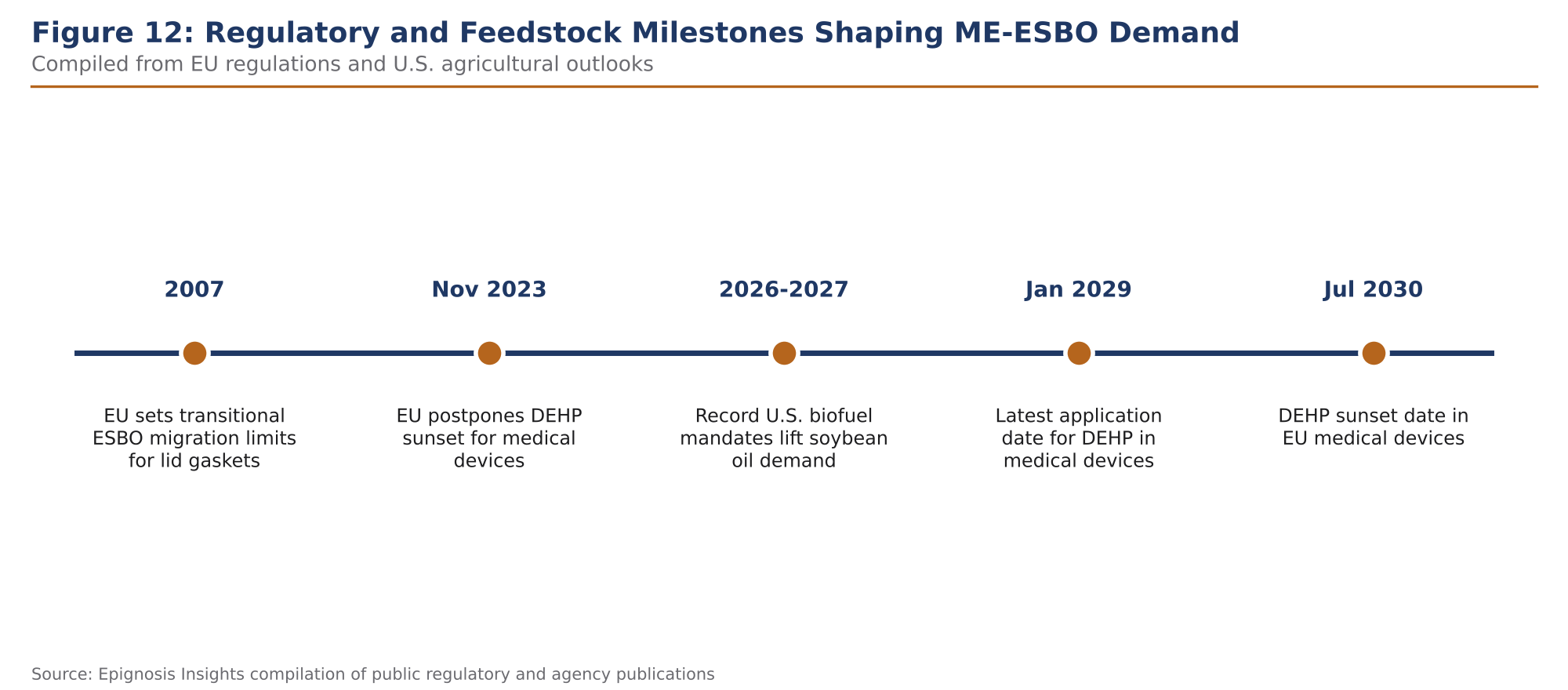
Regulation shapes this market more than most specialty chemical segments. Food-contact rules set the migration limits that determine how much ESBO can be used in packaging and gaskets. Chemical-safety rules on phthalates set the pace of substitution in medical devices, toys and consumer goods. In the United States, the Consumer Product Safety Commission commissioned toxicity reviews of ESBO and other phthalate substitutes in 2019 as part of its assessment of alternatives, adding to the evidence base used by product safety teams. On the feedstock side, U.S. biofuel policy has become the most important single influence on soybean oil availability and price.
Supply Chain and Production Economics
The ME-ESBO value chain has four links: soybean crushing and oil refining, epoxidation, optional modification or transesterification, and distribution to compounders and converters. Refined soybean oil typically accounts for about XX% of the cash cost of technical-grade ESBO, with hydrogen peroxide, formic or acetic acid, energy and wastewater treatment making up most of the remainder. Because the epoxidation reaction is exothermic and must be controlled carefully to avoid ring opening during manufacture, plant design and process control largely determine oxirane content, colour and odour – the three properties buyers check first.
Production capacity is concentrated in a few clusters. In China, producers in Hebei, Shandong and Zhejiang provinces supply both the domestic market and exports of technical-grade ESBO and epoxy fatty acid methyl esters. In North America, production sits close to Midwest soybean processing, giving integrated producers a logistics and traceability advantage. India's capacity is centred in Gujarat and Maharashtra, close to the country's PVC compounding base. Europe relies on a mix of domestic production and imports, which partly explains its commodity-weighted grade profile.
Two shifts are under way in this supply base. First, buyers of medical and food-contact grades are qualifying fewer, larger suppliers with full regulatory documentation, which favours established producers. Second, Asian producers are adding methyl ester and modified-grade capacity to move up the value chain, which will increase competition in the premium tier during the second half of the forecast period. Epignosis Insights tracks capacity by producer and site in the full report.
Competitive Landscape
The global ME-ESBO plasticizer market is moderately fragmented. A small group of integrated and long-established producers in North America, Europe and Japan supplies high-specification grades, while a large number of Chinese and Indian epoxidizers supply technical-grade ESBO and epoxy fatty acid methyl esters. Competition centres on feedstock access, oxirane quality, regulatory certifications and the ability to supply modified grades.
The companies below were verified as current manufacturers of epoxidized soybean oil or epoxy methyl ester plasticizers through their published product portfolios:
- Galata Chemicals – Drapex epoxidized soybean oil range for PVC plasticization and co-stabilization.
- Cargill – Vikoflex epoxidized soybean and linseed oil plasticizers.
- CHS Inc. – PlastiSoy epoxidized soybean oil, produced from its own soybean refining in Minnesota.
- Valtris Specialty Chemicals – Plas-Chek and Lankroflex epoxidized soybean oil grades.
- ADEKA Corporation – ADK CIZER O-130P epoxidized soybean oil.
- Chang Chun Petrochemical – epoxidized soybean oil for PVC applications.
- Hebei Jingu Plasticizer – epoxidized soybean oil and epoxy fatty acid methyl ester lines.
- Zhejiang Jiaao Enprotech – epoxidized soybean oil and epoxy fatty acid methyl ester plasticizers.
- KLJ Group – Kanamoll epoxidized soybean oil grades.
- Makwell Plasticizers – Makplast epoxidized soybean oil grades.
- Faith Industries – PolyFlex epoxidized soybean oil.
- Shandong Jiqing Chemical – epoxidized soybean oil in several quality classes.
Epignosis Insights Competitive Assessment Framework (EICAF)
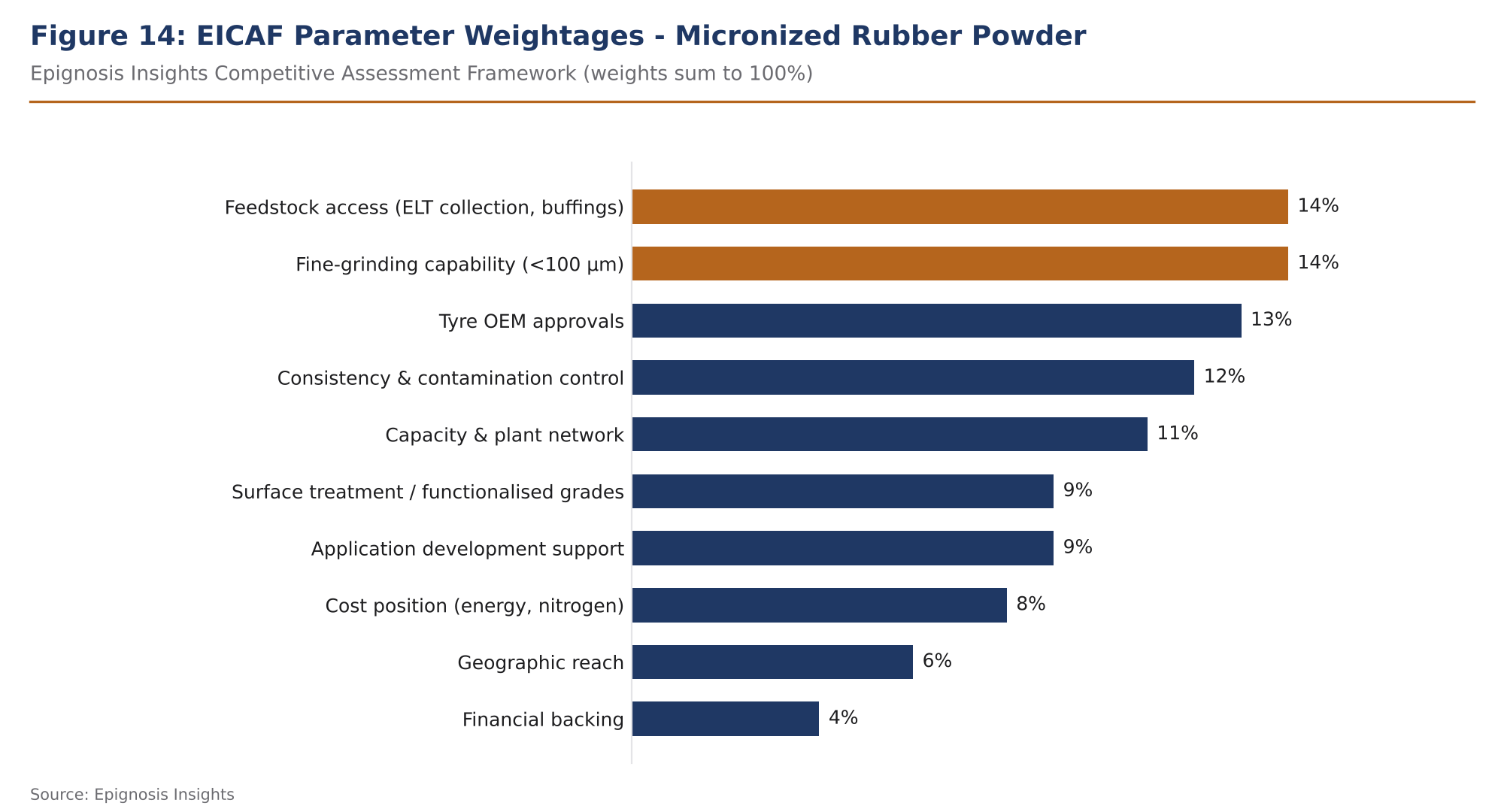
Epignosis Insights evaluates ME-ESBO producers using its proprietary Competitive Assessment Framework (EICAF), which weighs ten parameters that reflect how plasticizer buyers select suppliers. Feedstock integration carries the highest weight at 15%, followed by epoxidation capacity and scale at 13% and food-contact and medical compliance at 13%. Product breadth across ESBO, methyl esters and modified grades accounts for 12%, oxirane quality and consistency for 10%, geographic reach and distribution for 10%, cost position for 9%, customer technical service for 7%, sustainability credentials for 6% and financial resilience for 5%.
EICAF Scoring Method
Each company is scored from 1 to 5 on every parameter using product literature, regulatory certificates, capacity disclosures, financial filings and interviews with compounders and distributors. Scores are multiplied by the parameter weights and summed to produce a composite score out of 5, which is used to position companies as Leaders, Challengers, Specialists or Emerging Players. The full report includes the scored matrix for all profiled companies.
Research Methodology
The market estimate combines a top-down allocation of global ESBO output to plasticizer use with a bottom-up build of demand by application, end user and country. Volume is converted to value using a price series built from producer list prices, trade data and buyer interviews. Segment and country splits are validated through primary interviews with producers, compounders, distributors and end users across North America, Europe and Asia Pacific, and through triangulation with trade flows and downstream PVC and rubber production data.