Key Findings
- Global tungsten and molybdenum wet etchants market is projected to reach US$1,318.9 million by 2031 from US$871.8 million in 2025.
- Market revenue is expected to grow at a 7.1% CAGR from 2024 to 2031, outpacing the volume trajectory as purity grades and formulation premiums rise.
- Global consumption is projected to increase from 507.6 kilotons in 2025 to 692.7 kilotons by 2031.
- Blended average selling prices are expected to move from US$1,718 per ton in 2025 to US$1,904 per ton by 2031.
- Tungsten etchants held 84.7% of revenue in 2025, but molybdenum etchants are the faster-growing chemistry at an 8.6% CAGR as Mo metallization enters high-volume manufacturing.
- Nitric acid-based molybdenum etchants are the fastest-growing sub-type at 8.8% CAGR, reflecting their role in display backplanes and emerging Mo interconnect rework.
- Asia-Pacific accounted for 53.9% of global revenue in 2025; India is the fastest-growing country market at a 9.4% CAGR, while Taiwan (8.5% CAGR) leads growth among the large established markets.
- Semiconductor fabrication represented 43.8% of application revenue in 2025, but solar cells and thin film deposition removal are gaining share through 2031.
- Concentration of tungsten and molybdenum raw-material supply in China, combined with dual-use export licensing since February 2025, is raising supply-assurance premiums across the value chain.
- Competitive intensity is shifting toward fab qualification depth, trace-metal control below parts-per-trillion levels and regional supply proximity rather than price alone.
Global Tungsten and Molybdenum Wet Etchants Market Outlook
Global Tungsten and Molybdenum Wet Etchants Market recorded a consumption volume of 484.0 kilotons in 2024 and is estimated to reach 692.7 kilotons by 2031, registering a volume CAGR of 5.3% over the forecast period. In value terms, the market stood at US$871.8 million in 2025 and is projected to reach US$1,318.9 million by 2031. The roughly two-percentage-point gap between value and volume growth is the defining feature of this market: buyers are not simply consuming more etchant, they are consuming more expensive etchant. Each move to a tighter node, a taller 3D NAND stack or a higher-resolution display backplane raises the purity specification, narrows the acceptable etch-rate window and increases the share of custom-formulated blends relative to commodity acid mixtures.
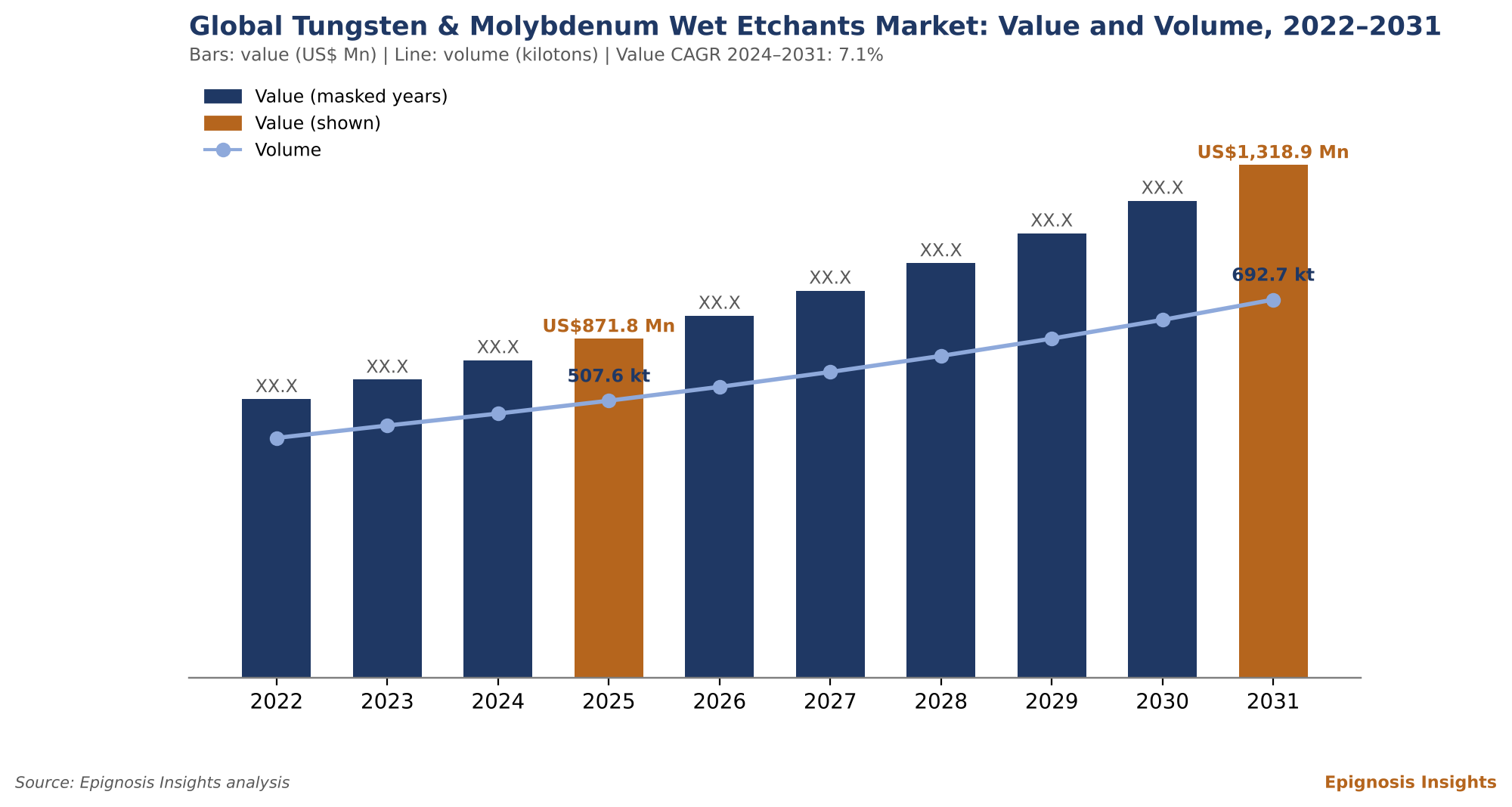
Figure 1: Global Tungsten and Molybdenum Wet Etchants Market, Value (US$ Mn) and Volume (kt), 2022–2031
The market sits inside a larger wet processing chemicals pool, but its demand logic is distinct. Tungsten and molybdenum are refractory metals used as contacts, plugs, word lines, gate electrodes, display gate lines and thin-film barrier layers. Wet etchants remove, pattern, recess or rework these films, and they also clean chamber parts and deposition shields. Demand therefore tracks three variables simultaneously: the number of wafer and glass-substrate starts, the number of metal layers per device, and the share of process steps executed wet rather than by plasma. Epignosis Insights estimates that the third variable is currently moving in favour of wet chemistry for selective recess and residue-removal steps, even as dry etch dominates primary patterning.
| Indicator |
2025 |
2031 |
CAGR 2024–2031 |
| Global market value (US$ Mn) |
871.8 |
1,318.9 |
7.1% |
| Global volume (kilotons) |
507.6 |
692.7 |
5.3% |
| Tungsten etchants (US$ Mn) |
XX.X |
XX.X |
6.8% |
| Molybdenum etchants (US$ Mn) |
XX.X |
XX.X |
8.6% |
| Semiconductor fabrication (US$ Mn) |
XX.X |
XX.X |
X.X% |
| Flat panel displays (US$ Mn) |
XX.X |
XX.X |
X.X% |
| Solar cells (US$ Mn) |
XX.X |
XX.X |
X.X% |
| Thin film deposition removal (US$ Mn) |
XX.X |
XX.X |
X.X% |
| Liquid etchants (US$ Mn) |
XX.X |
XX.X |
X.X% |
| Direct sales channel (US$ Mn) |
XX.X |
XX.X |
X.X% |
| Asia-Pacific (US$ Mn) |
XX.X |
XX.X |
X.X% |
Note: Masked values (XX.X) are available in the full report deliverable.
Global Tungsten and Molybdenum Wet Etchants Market Dynamics
Record Fab Capacity Build-Out Is Lifting Wet-Process Chemical Intensity
The most direct demand driver for the market is the scale of front-end fab investment now under way. SEMI's 300mm Fab Outlook (3Q 2026 update) projects global 300mm front-end fab equipment spending at a record US$149 billion in 2026, a 31% year-on-year increase, followed by further growth of 16% in 2027, 12% in 2028 and 18% in 2029. The same outlook expects total installed 300mm capacity to rise 7% in 2026 and approximately 8% annually from 2027 through 2029. Equipment spending is a leading indicator for etchant demand, because every tool installed today becomes a recurring consumer of process chemistry for ten to fifteen years once qualified.
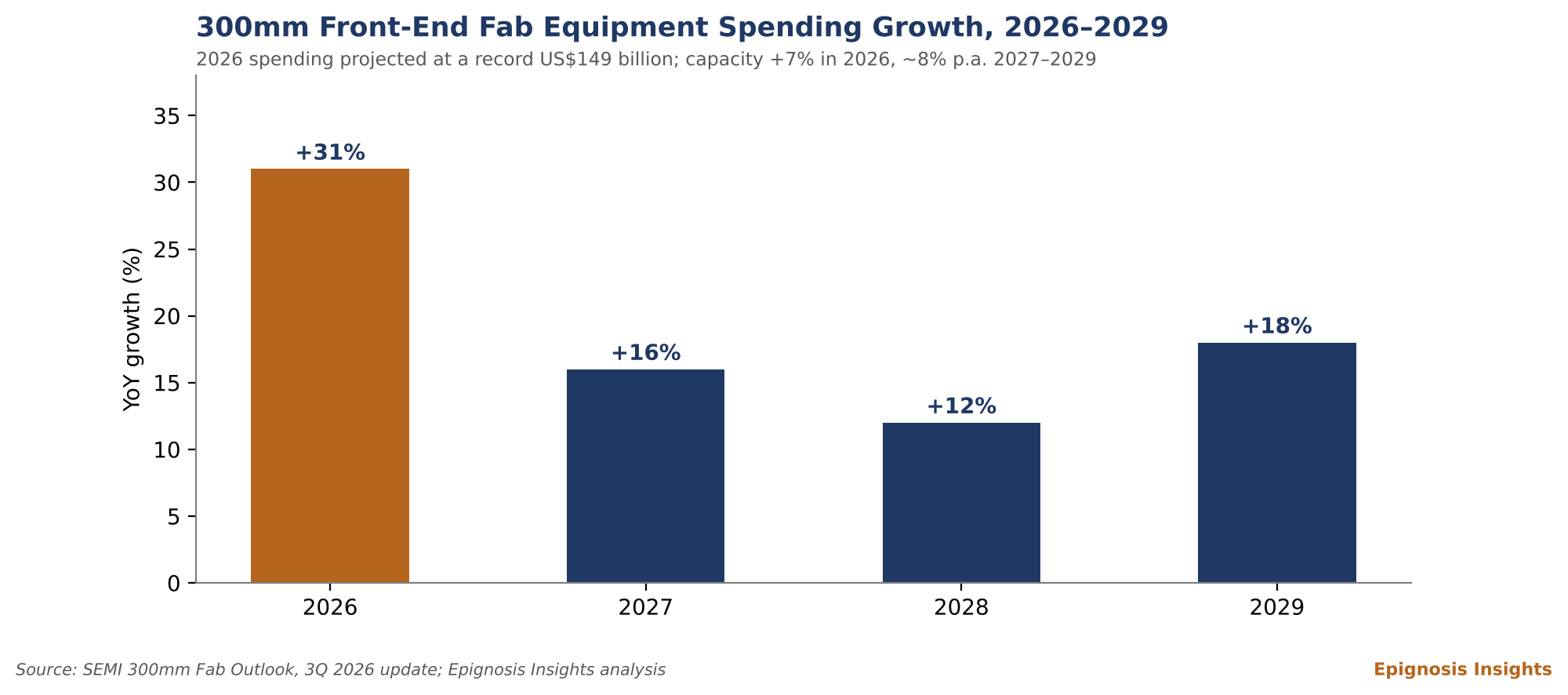
Figure 2: 300mm Front-End Fab Equipment Spending Growth, 2026–2029
For the tungsten and molybdenum wet etchants market, the composition of this capacity matters as much as its volume. Memory capacity, particularly high-layer 3D NAND, is the single largest consumer of tungsten word-line metallization, and every additional tier pair adds metal fill that must later be recessed and separated by a selective wet step. Advanced DRAM uses tungsten and, increasingly, molybdenum in buried word lines and peripheral contacts. Logic adds middle-of-line contacts where selective metal recess is now routine. As a result, wet-etch steps per wafer for refractory metals rise faster than wafer starts themselves.
The materials side of the industry confirms this intensity effect. SEMI's Materials Market Data Subscription reported that global semiconductor materials revenue reached a record US$73.2 billion in 2025, with wafer fabrication materials up 5.4% to US$45.8 billion and wet chemicals posting double-digit growth on higher process intensity at leading-edge nodes. Epignosis Insights interprets this as evidence that chemistry consumption per wafer is climbing structurally, not merely cyclically. The implication for suppliers is that capacity planning should be indexed to layer counts and metal-step counts rather than wafer starts alone.
There is also a geographic consequence. New capacity is disproportionately located in Taiwan, mainland China, South Korea, Singapore, the United States and, from a low base, India. Etchant demand follows the qualified tool, and because ultra-high-purity chemistry is costly and hazardous to transport, suppliers are under pressure to build blending, filtration and packaging capacity within trucking distance of each new fab cluster. Fab proximity is becoming a qualification criterion in its own right.
Tungsten-to-Molybdenum Metallization Transition Creates a New Etchant Category
The most strategically significant opportunity in the market is the industry's gradual move from tungsten to molybdenum in critical interconnects. Tungsten has been the default fill metal for contacts and 3D NAND word lines for over two decades, but at nanoscale dimensions its resistivity rises sharply and it requires titanium nitride adhesion and barrier layers that consume valuable cross-sectional area. Lam Research launched ALTUS Halo in February 2025 as the first atomic layer deposition tool for high-volume molybdenum metallization, stating that it typically delivers better than 50% improvement in resistance over conventional tungsten and that Micron had used it to bring molybdenum into mass production for advanced NAND. Early adoption was also reported in logic fabs, with DRAM in development.
This transition matters for the wet etchants market in three ways. First, molybdenum films require different chemistries from tungsten films: molybdenum is readily oxidised and dissolved in nitric acid-based and ferricyanide-based solutions, while tungsten is typically etched in hydrogen peroxide or ammonium hydroxide–peroxide blends. Every fab line that converts from W to Mo creates a new chemistry qualification event, which is the point at which supplier share is reset. Second, barrierless molybdenum integration removes some titanium nitride wet-strip steps but adds selective Mo recess and post-deposition clean steps, which on balance increases chemistry value per wafer because the specifications are tighter and the volumes initially smaller. Third, because tungsten will remain in use for older nodes, mature-node capacity and non-critical layers for many years, the market sees a period of dual-chemistry operation in which fabs must stock and manage both families.
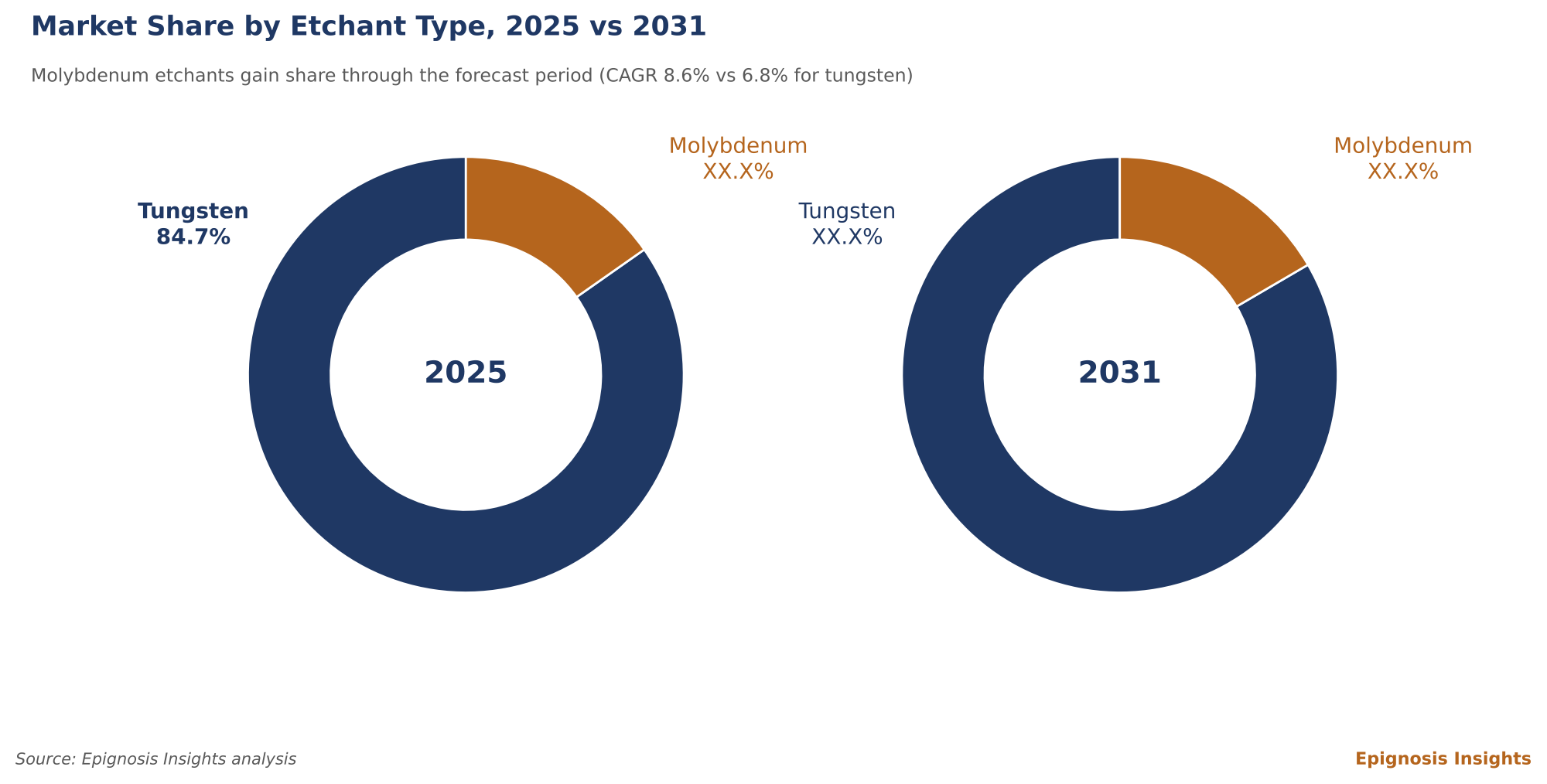
Figure 3: Market Share by Etchant Type, 2025 vs 2031
Epignosis Insights' data reflects this shift clearly. Tungsten etchants accounted for 84.7% of global revenue in 2025 and remain the volume backbone of the market, but molybdenum etchants are projected to grow at an 8.6% CAGR compared with 6.8% for tungsten etchants, steadily lifting molybdenum's share through 2031. Suppliers that already hold display-industry molybdenum etchant positions, where Mo and Mo-alloy gate lines have been common for years, are best placed to transfer formulation know-how into semiconductor-grade Mo recess chemistry.
Raw-Material Concentration and Export Licensing Are Raising Supply-Assurance Costs
The principal challenge facing the market is upstream concentration. According to the U.S. Geological Survey's Mineral Commodity Summaries 2026, world tungsten mine production was an estimated 85,000 metric tons in 2025, of which China accounted for 67,000 tons, roughly 79% of the global total. Although etchant chemistry does not itself consume large quantities of tungsten, the refractory-metal ecosystem around it, including sputtering targets, CVD and ALD precursors, test wafers and reclaimed films, is heavily exposed to Chinese supply, and so is the pricing environment within which fabs negotiate their metallization roadmaps.
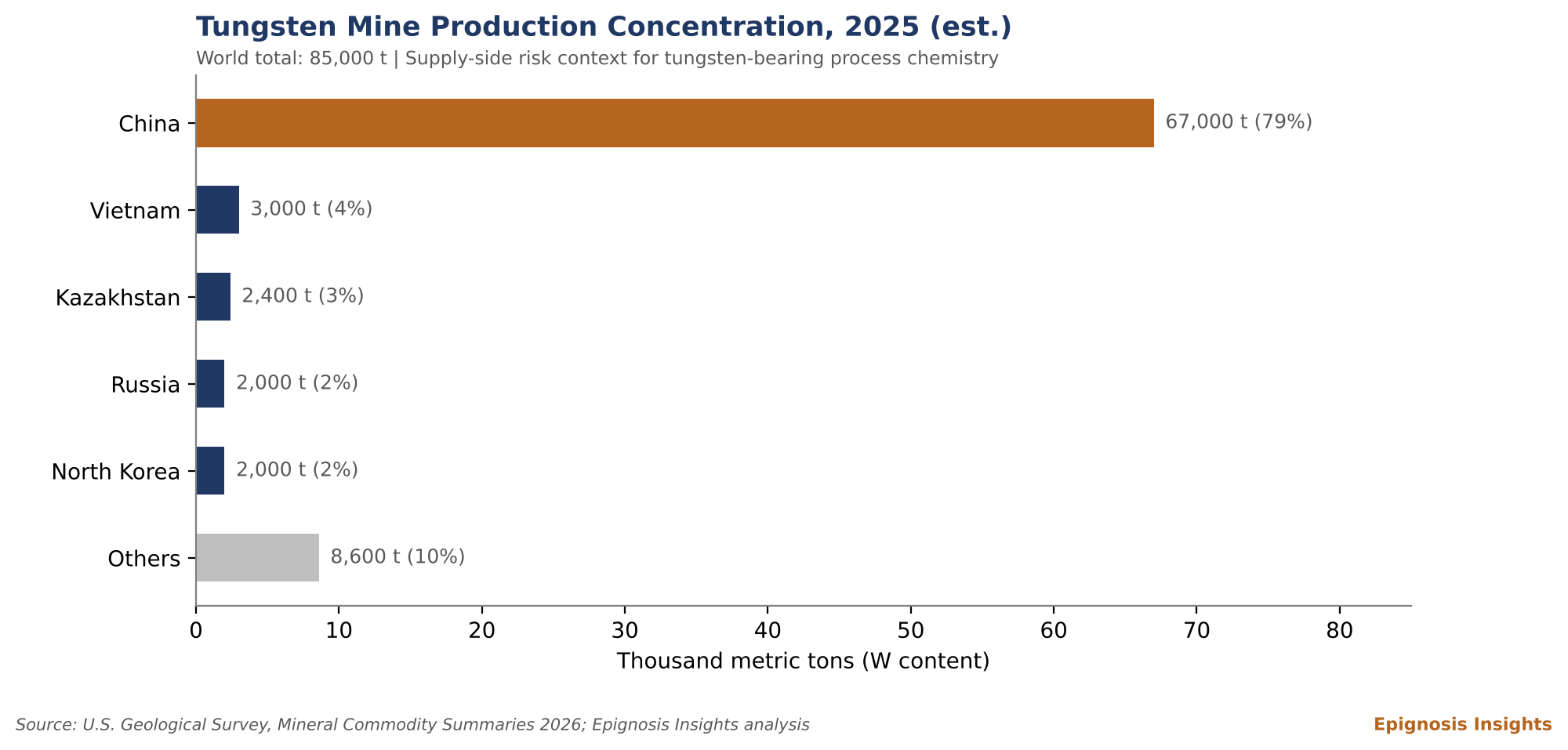
Figure 4: Tungsten Mine Production Concentration, 2025 (est.)
Policy has amplified this exposure. On 4 February 2025, China's Ministry of Commerce and the General Administration of Customs issued Announcement No. 10 of 2025, placing specified tungsten, tellurium, bismuth, molybdenum and indium items, including molybdenum powder and ammonium paratungstate-related items and associated production technologies, under dual-use export licensing. For the wet etchants market, the direct volume impact is limited, but the indirect effects are material. Fabs outside China have accelerated dual-sourcing reviews for every refractory-metal-adjacent input, which lengthens qualification cycles and raises the documentation burden on etchant suppliers, who must now demonstrate origin traceability for precursor salts such as potassium ferricyanide and specialty oxidisers.
There is also a regulatory dimension on the chemistry side. Mixed acid solutions based on hydrofluoric and nitric acid face increasingly strict handling, emissions and wastewater rules, particularly regarding fluoride and nitrogen oxide discharge. Fabs are pushing suppliers to provide closed-loop delivery, on-site blending and spent-acid reclaim services. These services improve customer stickiness but add capital intensity, which tends to favour larger, better-capitalised chemical groups over regional blenders. Epignosis Insights expects supply-assurance costs to be one of the reasons blended average selling prices rise faster than general chemical inflation over the forecast period.
Global Tungsten and Molybdenum Wet Etchants Market: Chemistry and Selectivity Landscape
Competitive advantage in this market is determined less by the base chemicals, which are widely available, and more by the ability to control selectivity, etch-rate uniformity, bath life and trace contamination. The five chemistries tracked by Epignosis Insights each occupy a distinct technical niche.
Hydrogen peroxide-based tungsten etchants form the largest sub-segment. They are favoured for controlled tungsten recess because peroxide oxidises tungsten to soluble tungstate at moderate, tunable rates while showing good selectivity against silicon oxide and silicon nitride. The technical challenge is stability: peroxide decomposes, especially in the presence of dissolved metals, so etch rate drifts over bath life. Suppliers differentiate through stabiliser packages, pH buffering and point-of-use mixing systems that keep the active concentration within narrow tolerances.
Ammonium hydroxide-based formulations, often combined with peroxide, are used where gentle tungsten removal and particle removal are required together, such as post-CMP cleans and residue removal. They are a mature, cost-sensitive category, which explains why they are the slowest-growing tungsten chemistry in the forecast. Growth here depends on wafer-start volume rather than on new process steps.
Mixed acid solutions of hydrofluoric and nitric acid are aggressive, fast-acting etchants used for bulk tungsten and tungsten-silicide removal, chamber-part cleaning and reclaim of test and monitor wafers. Their growth rate is above the tungsten average because reclaim and parts-cleaning volumes scale with installed tool base, and the installed base is expanding rapidly. Their limitation is environmental: fluoride and NOx management costs are rising, and some fabs are migrating non-critical steps to less hazardous alternatives.
Ferricyanide solutions, typically alkaline potassium ferricyanide, offer highly controllable molybdenum and tungsten etching with good pattern fidelity and have a long history in thin-film and MEMS processing. They are a specialty, low-volume category with high unit value, and the ability to secure qualified ferricyanide salt supply is itself a differentiator.
Nitric acid-based molybdenum etchants, frequently formulated with phosphoric and acetic acids, are the workhorse for molybdenum and Mo-alloy patterning in display backplanes and are now being adapted for semiconductor Mo recess. They are the fastest-growing sub-type in the market at an 8.8% CAGR between 2024 and 2031.
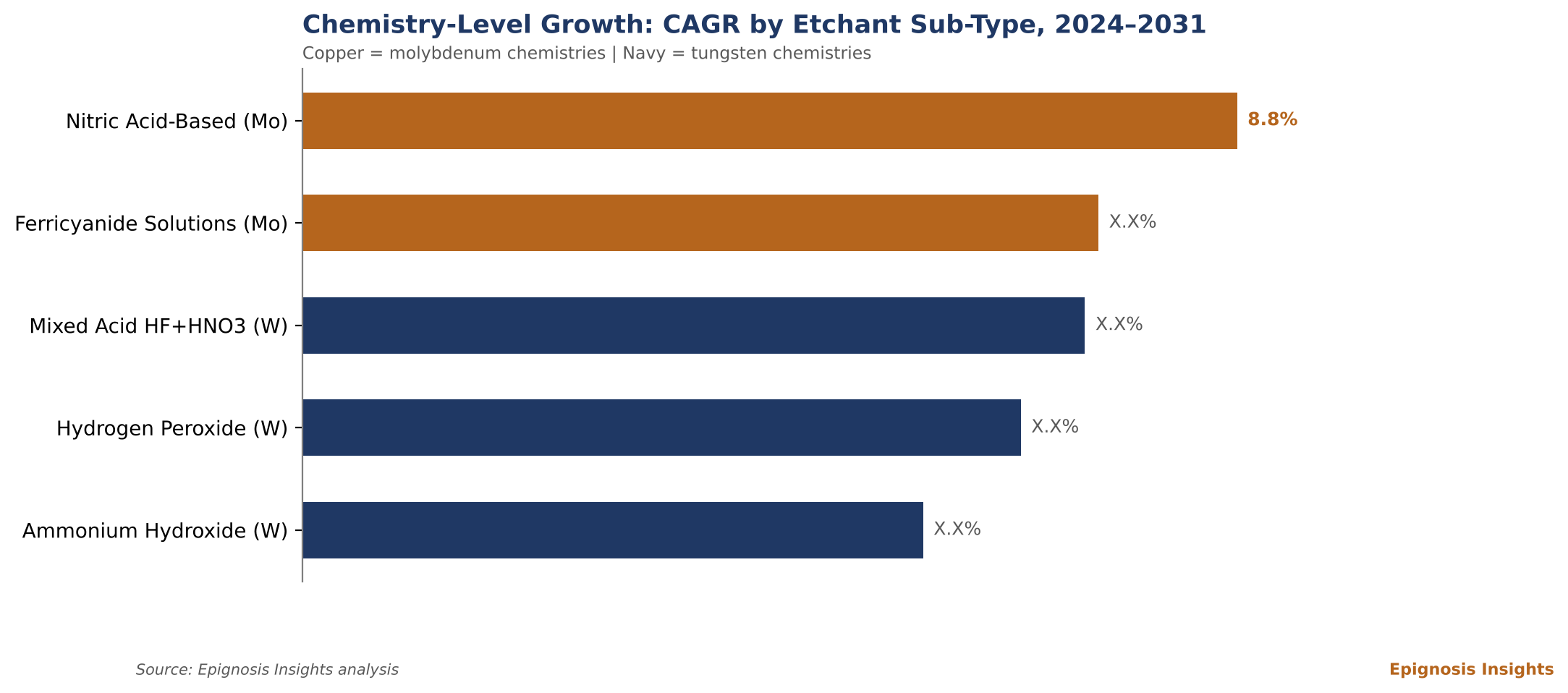
Figure 5: CAGR by Etchant Sub-Type, 2024–2031
The direction of technical development across all five chemistries is consistent: lower metallic impurity levels, tighter particle specifications, longer and more stable bath life, and formulations engineered for a specific film stack rather than a generic metal. This is turning what was once a catalogue product into a co-developed one, with etchant suppliers embedded in fab process-integration teams during node ramps.
Global Tungsten and Molybdenum Wet Etchants Market: Volume and Pricing Analysis
Epignosis Insights' volume model converts segment revenue into tonnage using chemistry-specific average selling prices benchmarked against supplier price lists, distributor quotations and fab procurement interviews. On this basis, the blended average selling price of tungsten and molybdenum wet etchants stood at US$1,718 per ton in 2025 and is projected to reach US$1,904 per ton by 2031.
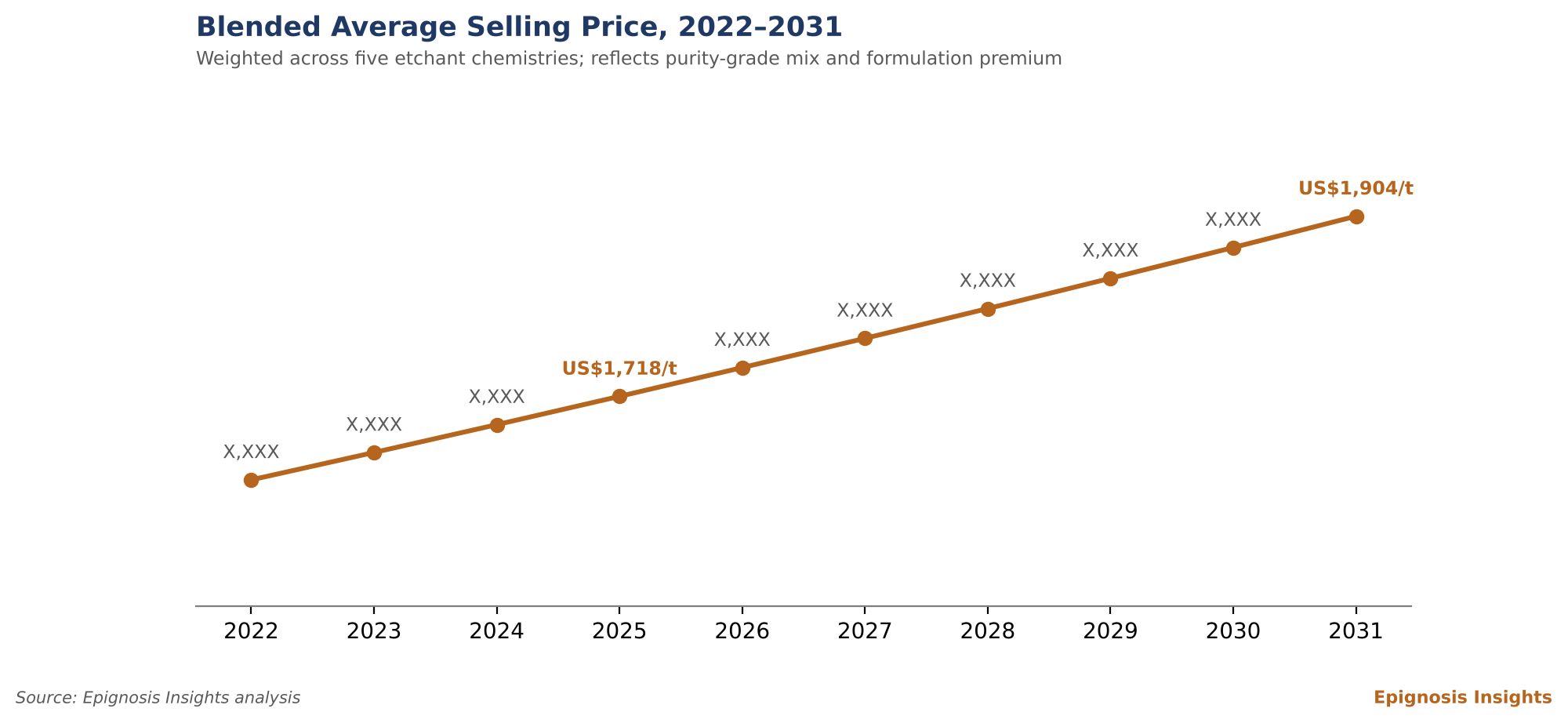
Figure 6: Blended Average Selling Price, 2022–2031
Three factors drive this price trajectory. The first is mix: the faster-growing chemistries, molybdenum etchants and mixed acid solutions, carry higher unit prices than ammonium hydroxide blends, so their rising share lifts the blended average even at constant chemistry-level prices. The second is grade migration, as a growing share of volume moves from electronic grade to the highest semiconductor grades with sub-parts-per-trillion metal limits. The third is service bundling, where on-site blending, chemical management and spent-acid reclaim are increasingly priced into supply contracts rather than billed separately.
Epignosis Insights expects volume growth to remain concentrated in Asia-Pacific, where display and solar consumption add large tonnages at comparatively modest unit prices, while North America and Europe contribute disproportionately to value through semiconductor-grade demand. Suppliers should therefore expect regional price dispersion to persist, with the gap between commodity-grade display and solar etchants and semiconductor-grade molybdenum chemistry widening rather than narrowing.
Global Tungsten and Molybdenum Wet Etchants Market: Segment Analysis
By Application
Semiconductor fabrication is the largest application, representing 43.8% of revenue in 2025, driven by contact, word-line and gate-metal recess in memory and logic. Flat panel displays form the second-largest application, anchored by molybdenum and Mo-alloy gate and source-drain line patterning in TFT backplanes, although its growth is the most moderate as display capacity additions slow. Thin film deposition removal, covering chamber-part cleaning, shield refurbishment and wafer reclaim, grows above the market average as installed deposition tool counts expand.
Solar cells are among the fastest-growing applications. SolarPower Europe's Global Solar Market Outlook 2026–2030 reported a record 664 GW of solar PV installed worldwide in 2025, with China accounting for 382 GW, and projects annual installations of around 864 GW by 2030 despite an expected dip in 2026. Molybdenum back contacts in thin-film CIGS modules and metal-layer patterning in advanced cell architectures create a steady, volume-oriented demand stream for nitric acid-based and ferricyanide chemistries.
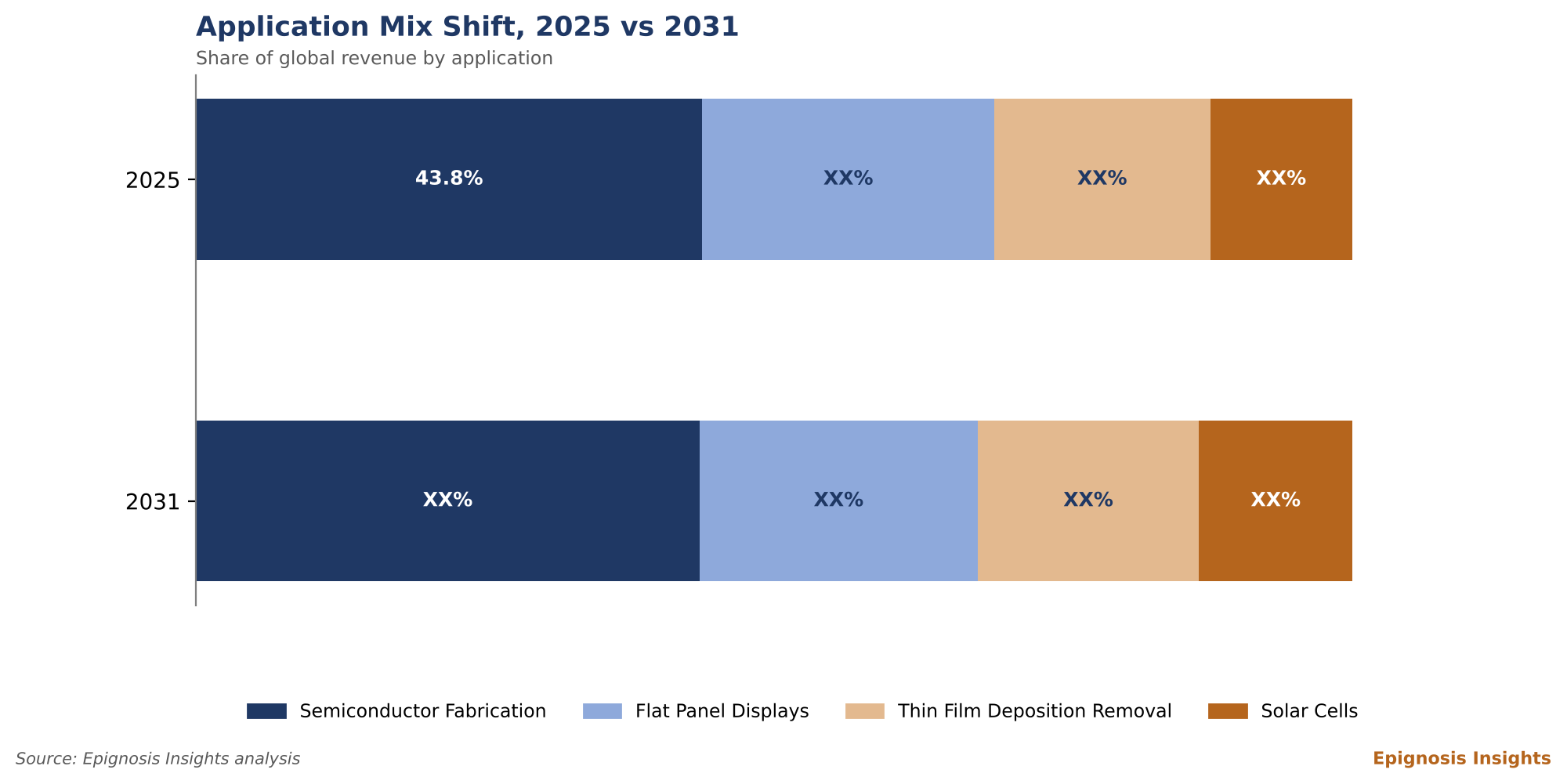
Figure 7: Application Mix Shift, 2025 vs 2031
By Form
Liquid etchants dominate the market because semiconductor and display lines run on bulk-delivered, filtered liquid chemistry. Powder etchants serve laboratories, small-batch R&D, and remote or export markets where shipping concentrated liquids is impractical; their share is declining gradually as research users shift toward pre-mixed solutions.
By End Use
Electronics and semiconductors form the largest end-use pool globally. Aerospace and automotive research and development laboratories together account for a substantial share of demand, reflecting the use of refractory-metal etchants in turbine component inspection, thin-film sensor fabrication, failure analysis and materials research. In the United States in particular, aerospace is the leading end-use pool, an unusual profile that reflects the country's defence and engine-manufacturing base. Solar energy is the fastest-growing end use.
By Distribution Channel
Direct sales account for roughly two-thirds of revenue because large fabs and display makers procure on multi-year supply agreements with on-site chemical management. Distributors, however, grow marginally faster as research institutions, smaller fabs, MEMS foundries and emerging-market customers expand, and as distributors add repackaging and local quality-control capability.
Global Tungsten and Molybdenum Wet Etchants Market: Regional Analysis
Asia-Pacific held 53.9% of global revenue in 2025 and is the fastest-growing major region. Mainland China is the single largest country market in the region on the back of state-supported mature-node expansion, large display capacity and the world's largest solar manufacturing base. Taiwan grows at 8.5% CAGR, supported by leading-edge foundry capacity and advanced packaging, where tungsten and molybdenum layers appear in through-silicon via and redistribution structures. Singapore grows strongly on NAND and specialty foundry expansions. India, at a 9.4% CAGR, is the fastest-growing country market globally, albeit from a small base, as its first commercial fabs, outsourced assembly and test facilities and display projects move toward operation. Japan and South Korea grow more slowly, reflecting mature capacity and memory-cycle exposure, but remain important for high-value formulation demand.
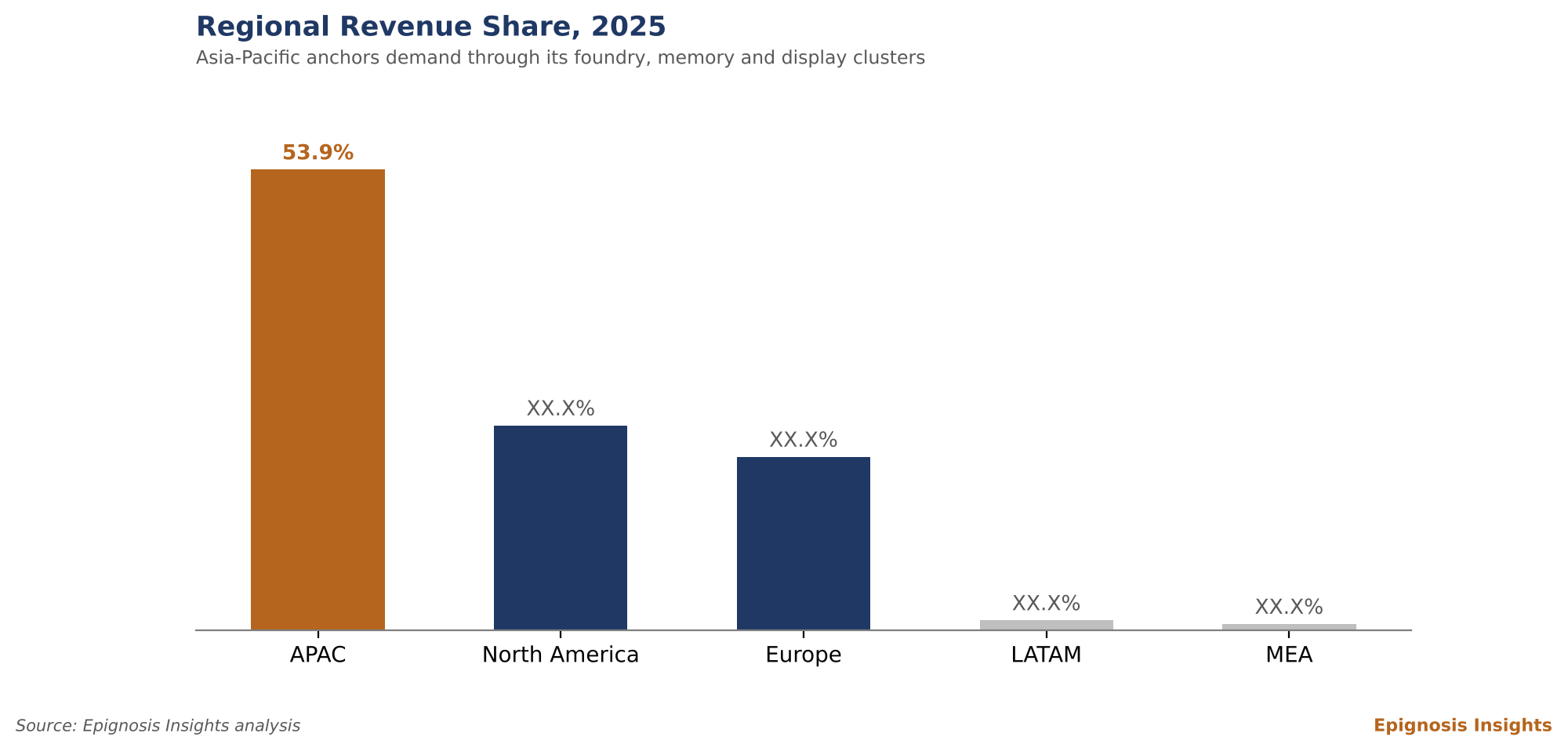
Figure 8: Regional Revenue Share, 2025
North America is the second-largest region, with the United States accounting for the overwhelming majority of regional demand. New fab construction across Arizona, Texas, New York, Ohio and Idaho underpins semiconductor-grade demand, while aerospace and defence laboratories give the US an unusually diversified end-use profile. Mexico grows quickly from a very small base, supported by electronics assembly and nearshoring.
Europe is the third-largest region but the slowest-growing among the three major regions. Germany is the regional anchor, with power semiconductor, automotive and research demand; France and Spain grow faster than the regional average, while Italy is the slowest-growing major European market. Distributors play a comparatively smaller role in Germany than elsewhere in Europe because demand is concentrated among large integrated device manufacturers and research institutes.
Latin America and the Middle East and Africa are small, laboratory- and industry-driven markets. Brazil leads Latin America, while Saudi Arabia and the UAE lead the Middle East, where demand is linked to research universities, aerospace maintenance and early-stage semiconductor and solar ambitions.
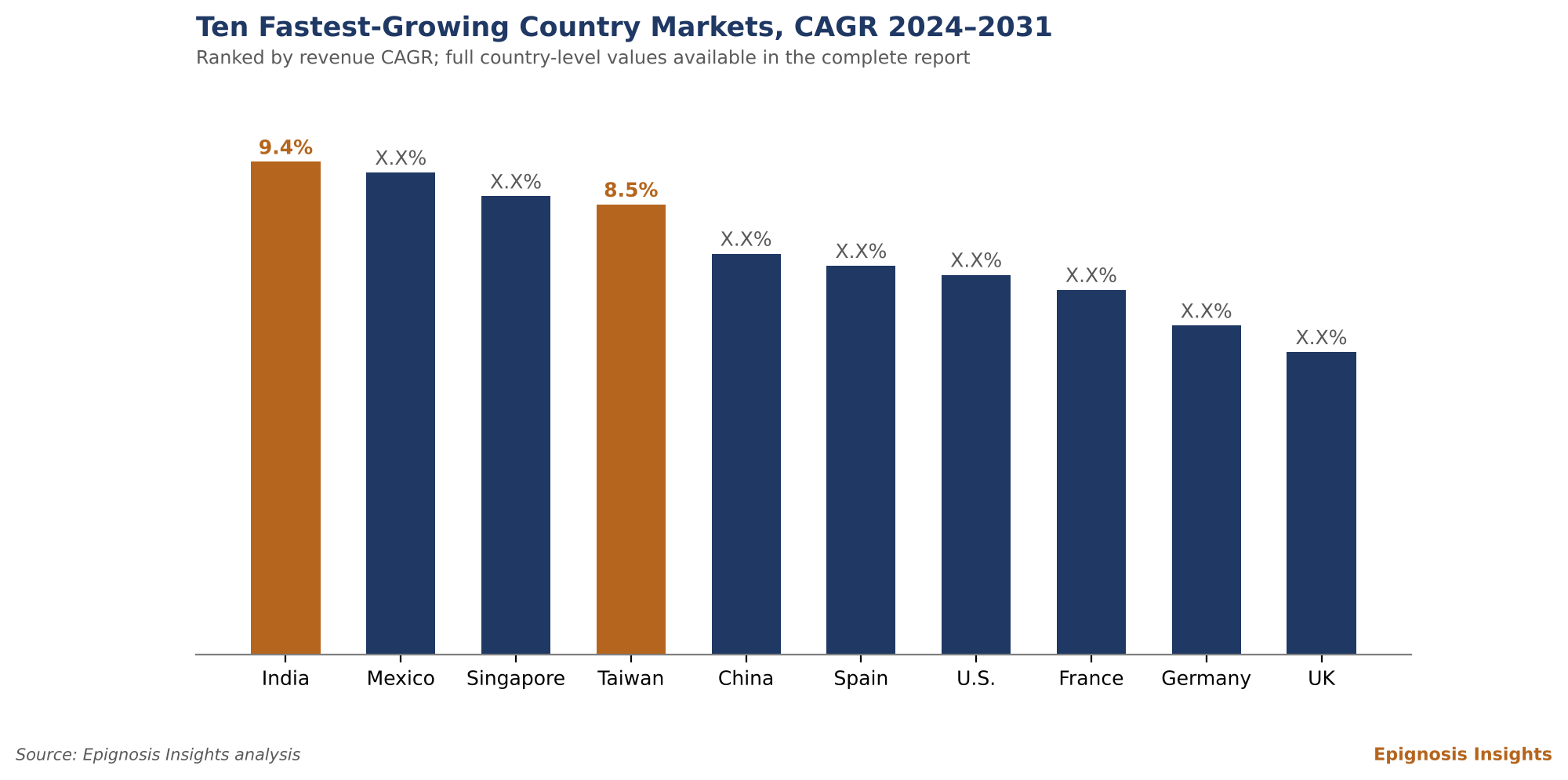
Figure 9: Ten Fastest-Growing Country Markets, CAGR 2024–2031
Global Tungsten and Molybdenum Wet Etchants Market: Competitive Landscape
Key companies analyzed within the global tungsten and molybdenum wet etchants market are: BASF SE, Solstice Advanced Materials (formerly Honeywell's advanced materials business), Avantor Inc., Kanto Chemical Co. Inc., Entegris Inc., Stella Chemifa Corporation, Formosa Daikin Advanced Chemicals (FDAC), Solvay SA, Mitsubishi Chemical Group, ENF Technology Co. Ltd., Hubei Xingfa Chemicals Group, FUJIFILM Electronic Materials, Merck KGaA (EMD Electronics), Soulbrain Co. Ltd., Dongwoo Fine-Chem, Jiangyin Jianghua Microelectronics Materials, Transene Company, Technic Inc. and others.
The market is moderately consolidated. BASF is the leading supplier, and the five largest suppliers together account for roughly two-thirds of global revenue, with the remainder held by regional specialists in Japan, Korea, Taiwan and China.
Corporate restructuring is reshaping the landscape: Solstice Advanced Materials completed its spin-off from Honeywell on 30 October 2025, taking Honeywell's electronic and semiconductor materials into a standalone specialty materials company, and in July 2026 agreed to acquire Element Solutions in a transaction valued at about US$14.5 billion including debt, which is expected to close in the first half of 2027. Users of this report should treat Honeywell-attributed electronic materials positions as now belonging to Solstice.
Epignosis Insights Competitive Assessment Framework (EICAF)
The Epignosis Insights Competitive Assessment Framework (EICAF) for the global tungsten and molybdenum wet etchants market evaluates companies across 10 weighted parameters reflecting what fabs and display makers actually reward in supplier selection. Purity and trace-metal control receives the highest weight at 15%, because metallic contamination directly affects device yield. Fab qualification footprint receives 14%, reflecting the time and cost required to qualify a chemistry on a production line. Product portfolio breadth and regional supply proximity each receive 11%. Raw-material security and formulation and selectivity R&D each receive 10%, reflecting the export-control environment and the shift to co-developed chemistries. Logistics and hazardous materials handling receives 8%, while pricing competitiveness, sustainability and waste recovery, and technical service and co-development each receive 7%. The total weighting equals 100%.
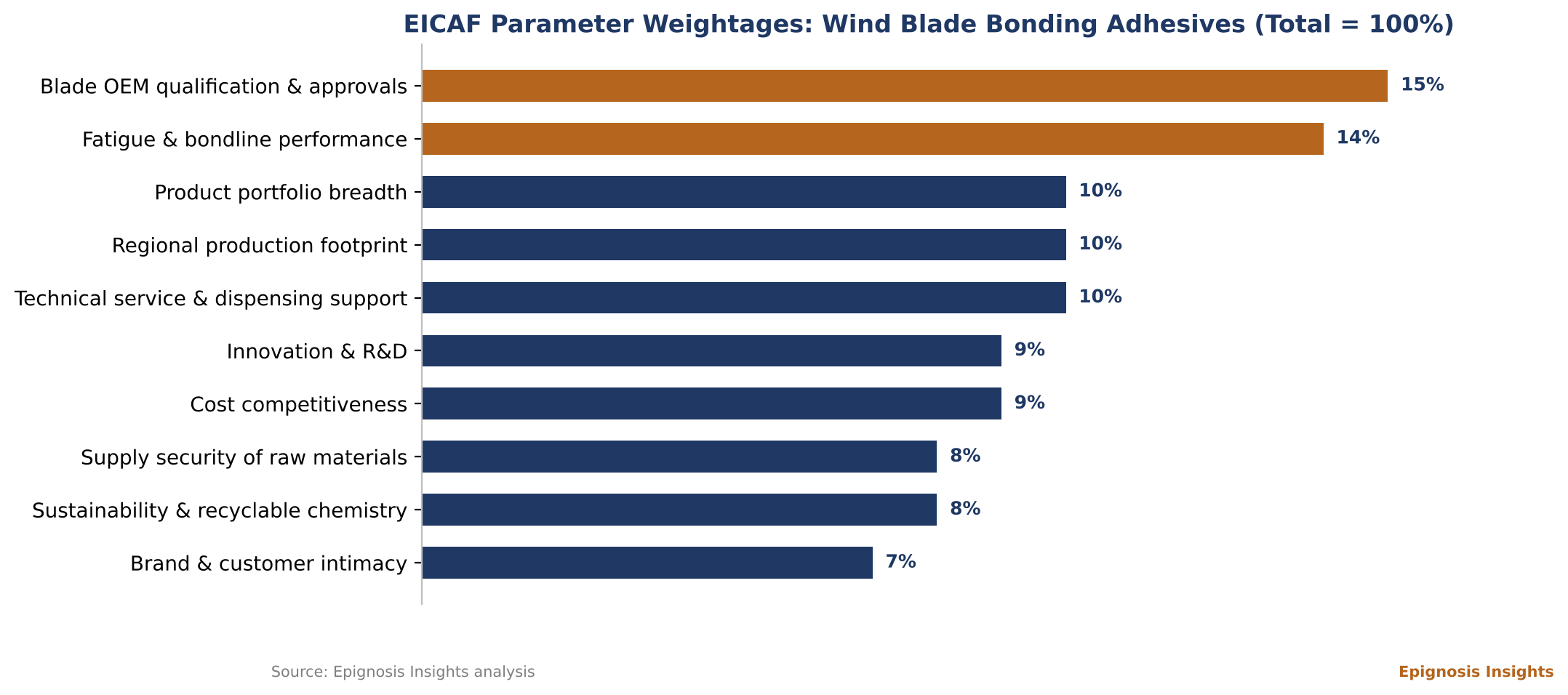
Figure 10: EICAF Parameter Weightages
EICAF Scoring Method
Each company is assigned a score from 1 to 5 against every parameter, with the weighted score calculated as Company Score × Parameter Weightage. The resulting EICAF score enables structured comparison between diversified chemical majors, semiconductor-materials specialists and regional formulators that compete through very different business models. In this market, a regional formulator with strong fab proximity and fast technical service can outscore a larger competitor on several parameters, which is why EICAF rankings in the full report are presented both globally and for each of the five regions.