Europe Sustainable Textile Price Tracker
Quarterly Report — Q3 2026 | Fibre Pricing, Cost Structure & Regulatory Outlook Across the EU-27

Quarterly Report — Q3 2026 | Fibre Pricing, Cost Structure & Regulatory Outlook Across the EU-27
Europe's Sustainable Textile Fibre Market enters the third quarter of 2026 at a genuine inflection point. For most of the last decade, recycled and certified-organic fibres carried a structural discount narrative built around scale economics: as collection and processing volumes grew, the argument went, recycled fibre would eventually undercut virgin material on price. That narrative no longer holds. The Epignosis Insights Sustainable Textile Price Tracker, which benchmarks delivered EU-27 pricing across six fibre categories every quarter, shows the price gap between recycled and virgin fibre narrowing steadily through 2026 — not because recycling has become cheaper, but because regulatory compliance costs, feedstock sorting bottlenecks, and Extended Producer Responsibility (EPR) fees are being layered onto recycled material faster than they are onto virgin equivalents.
This report consolidates Epignosis Insights' proprietary quarterly desk-research tracker with data drawn from EU industry associations, a national trade-promotion agency, a listed retailer's sustainability disclosures, a leading strategy consultancy's cost-modelling work, and trade press coverage of the sector's Q1 2026 performance. Across every category tracked — recycled cotton, recycled polyester, chemically recycled and regenerated cellulosic fibre, recycled wool, regenerated nylon, and GOTS-certified organic cotton — prices moved higher quarter-on-quarter through the first nine months of 2026, with the steepest increases concentrated in categories most exposed to EPR eco-modulation fees and mandatory separate-collection compliance costs.
The pricing story cannot be separated from the wider health of the EU textile and clothing (T&C) industry, which remains under sustained structural pressure. Industry body EURATEX's 2026 Facts & Key Figures release put the sector's annual turnover at roughly €166 billion across nearly 200,000 companies and 1.2 million jobs, but flagged a 2.9% decline in exports and a 2.8% fall in employment, alongside a widening trade deficit as imports reached €122 billion against exports of just €61 billion — with around a third of textile and clothing products sold in the EU now manufactured in China. Quarterly figures reinforce the trend: EU textile production contracted a further 4.2% year-on-year in the first quarter of 2026, extending a decline that has run since 2023.
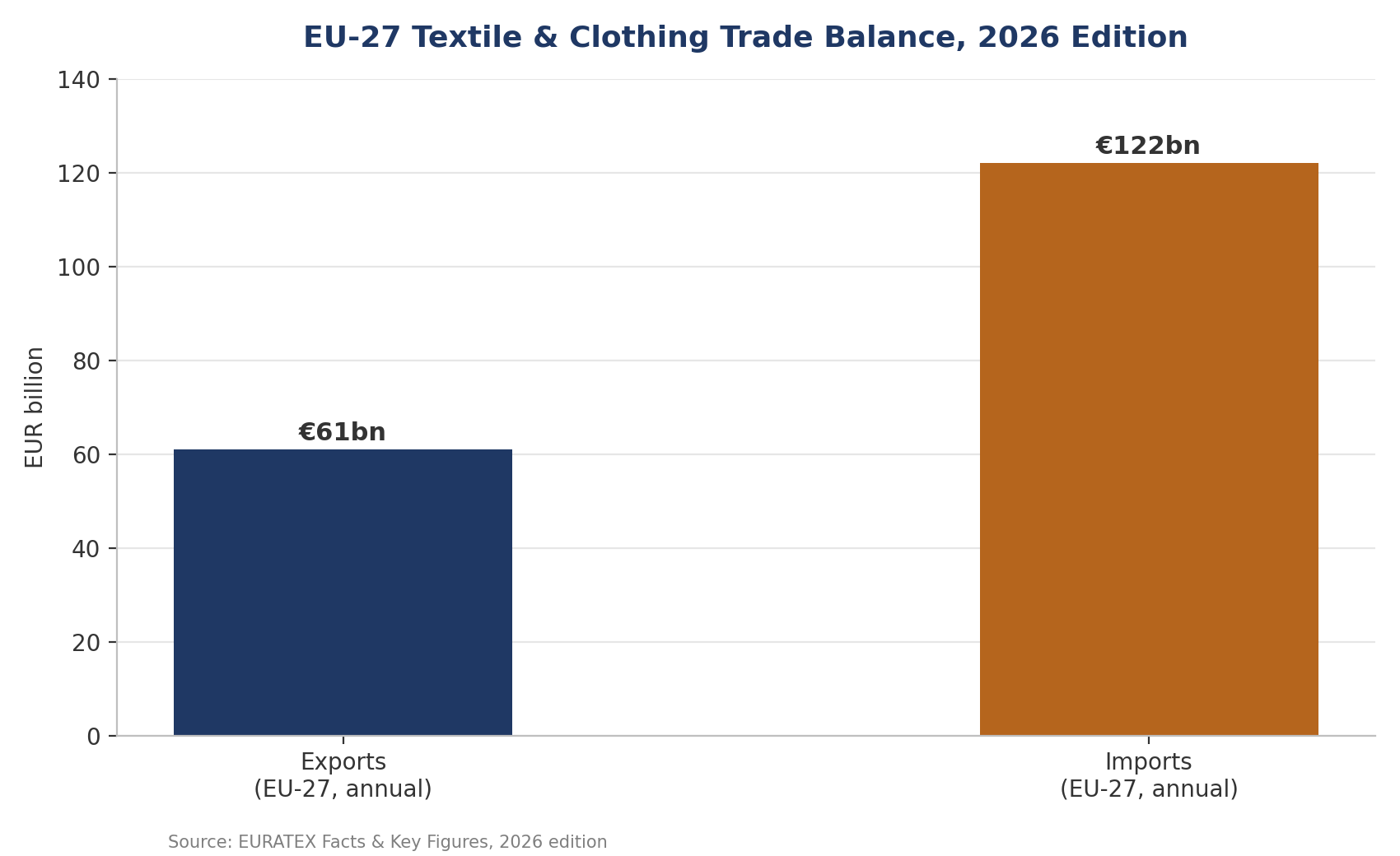
Figure 1. EU-27 textile and clothing trade balance. Source: EURATEX Facts & Key Figures, 2026 edition.
It is against this backdrop of contracting conventional volumes that sustainable and recycled fibre demand has kept growing, driven less by voluntary brand ambition than by binding EU policy. The result is a market where compliance cost, not raw material scarcity or recycling technology, is now the dominant swing factor in price formation — a dynamic this tracker quantifies in the cost-structure analysis below.
The Epignosis Insights tracker follows delivered, EU-market pricing (EUR per tonne, clean processed fibre, ex-works or delivered to a European spinning mill) across six categories, updated from a rolling panel of recycler and merchant quotes cross-checked against publicly disclosed cost data. Four categories with the most liquid quoting activity — recycled cotton, recycled polyester, regenerated cellulosic, and recycled wool — are tracked on a full quarterly time series; organic cotton and regenerated nylon are tracked as point-in-time Q3 2026 range estimates given thinner and more origin-dependent quote flow.
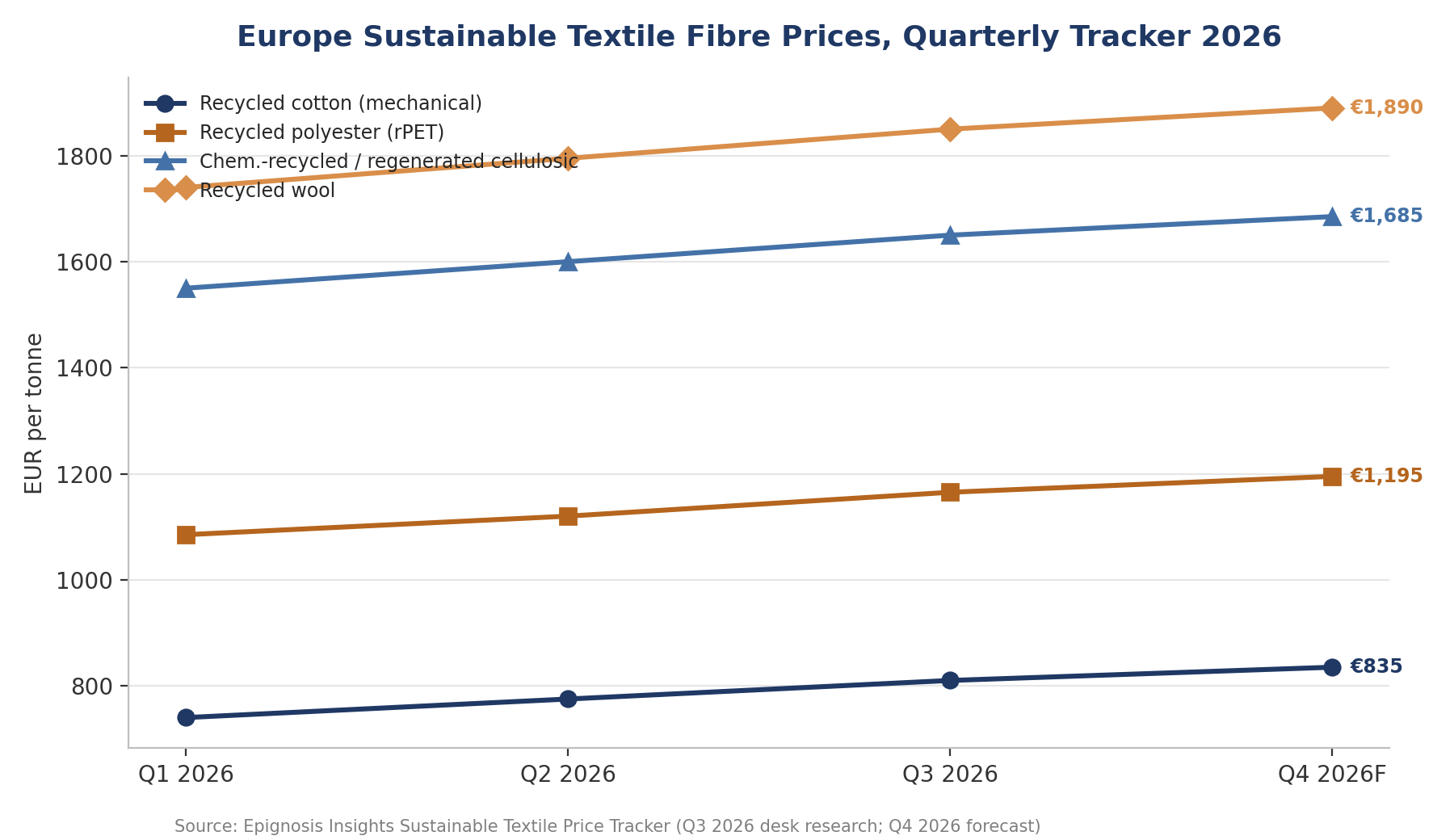
Figure 2. Quarterly EU sustainable fibre pricing, 2026. Source: Epignosis Insights Sustainable Textile Price Tracker.
Every tracked category posted a higher midpoint price in Q3 2026 than in Q1 2026. Recycled cotton rose from a €740/tonne midpoint in Q1 to €810/tonne in Q3, a gain of roughly 9%. Recycled polyester, still overwhelmingly sourced from mechanically recycled PET bottles rather than genuine textile-to-textile feedstock, climbed from €1,085/tonne to €1,165/tonne over the same window. The steepest absolute increases came in the two premium categories: chemically recycled and regenerated cellulosic fibre, which can process blended and lower-grade waste that mechanical recycling cannot handle, moved from a €1,550/tonne to a €1,650/tonne midpoint, while recycled wool — the smallest and most fragmented of the tracked categories — rose from €1,740/tonne to €1,850/tonne.
At the top of the range, GOTS-certified organic cotton lint delivered to Europe is estimated at €2,050–2,400/tonne in Q3 2026, a premium the tracker estimates at roughly 35–45% over conventional cotton lint, reflecting certification, segregated-supply-chain, and lower-yield organic farming costs. Regenerated nylon of the ECONYL type, built from fishing-net and carpet waste rather than the far more abundant PET-bottle stream, remains the most expensive tracked category at an estimated €2,800–3,400/tonne, a reflection of limited feedstock availability rather than processing cost alone.
Table 1. Quarterly price tracker by fibre category (EUR per tonne, delivered EU-27)
| Fibre category | Q1 2026 | Q2 2026 | Q3 2026 | Q3 2026 range |
| Recycled cotton (mechanical) | €740 | €775 | €810 | €720 – €900 |
| Recycled polyester (rPET) | €1,085 | €1,120 | €1,165 | €1,050 – €1,280 |
| Chem.-recycled / regen. cellulosic | €1,550 | €1,600 | €1,650 | €1,400 – €1,900 |
| Recycled wool | €1,740 | €1,795 | €1,850 | €1,600 – €2,100 |
| Organic cotton (GOTS-certified)* | — | — | — | €2,050 – €2,400 |
| Regenerated nylon (ECONYL-type)* | — | — | — | €2,800 – €3,400 |
*Tracked as a Q3 2026 point-in-time range rather than a full quarterly series, given thinner quote flow.
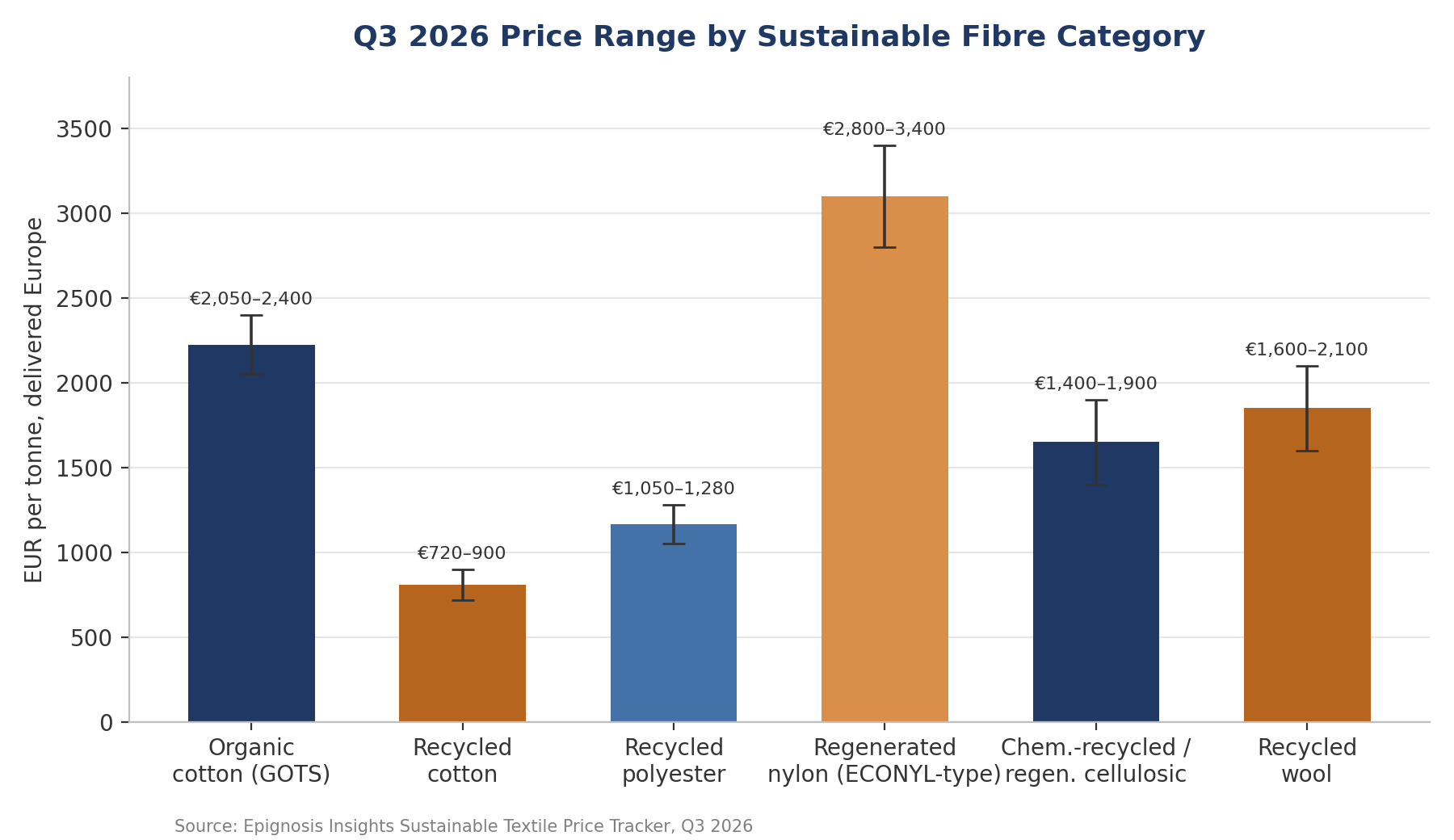
Figure 3. Q3 2026 price range by fibre category. Source: Epignosis Insights Sustainable Textile Price Tracker.
The tracker's most important finding for sourcing and sustainability teams building 2026–2027 budgets is not the price level itself but its composition. Feedstock collection and sorting now account for an estimated 35–45% of total recycled fibre cost — the largest single component and the fastest-rising, as volumes collected under the EU's mandatory separate-collection-for-textiles rule (in force since January 2025) continue to outpace available sorting and pre-processing capacity across most Member States. Processing accounts for a further 25–30% of cost and has stayed comparatively stable, since mechanical and chemical recycling capacity has expanded roughly in step with demand.
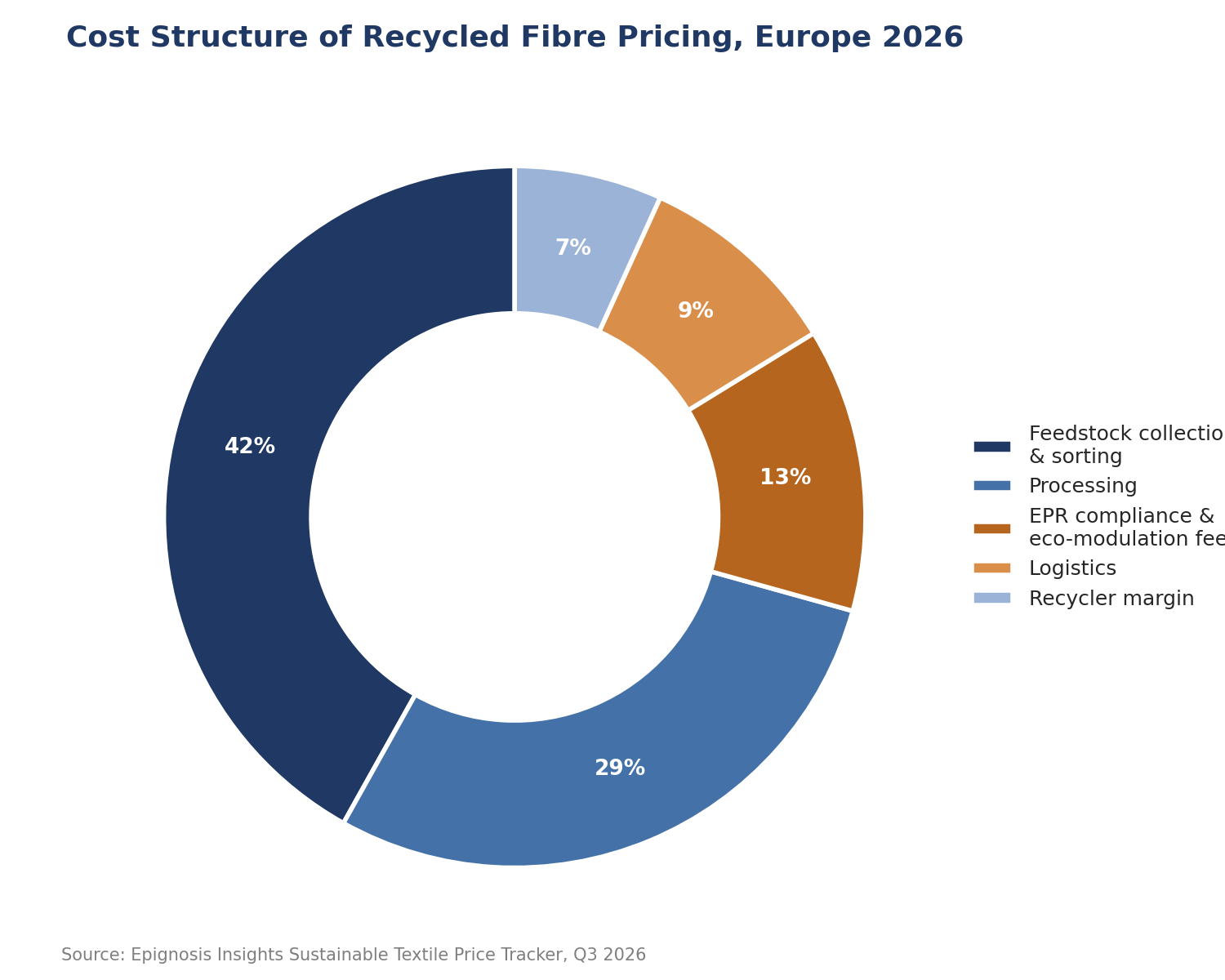
Figure 4. Cost structure of recycled fibre pricing, Europe 2026. Source: Epignosis Insights Sustainable Textile Price Tracker.
EPR compliance and eco-modulation fees are the category to watch. Barely a cost line before the 2025 separate-collection mandate took effect, they now add an estimated 10–15% to landed recycled fibre cost and are trending upward as more national Producer Responsibility Organisations become operational across the EU-27. Logistics (8–10%) and recycler margin (5–8%) round out the structure and have remained the most stable elements year to date. Put simply: regulation, not recycling technology cost, is the swing factor behind the price moves this tracker is recording in 2026.
Three overlapping EU policy tracks are driving the compliance-cost increases embedded in current pricing. First, Extended Producer Responsibility schemes for textiles, now mandatory following the January 2025 separate-collection requirement, are shifting end-of-life management cost onto producers via national PRO fee structures that vary by Member State and remain only partially harmonised — a fragmentation EURATEX has itself flagged as a competitiveness concern. Second, the ban on destruction of unsold apparel, clothing accessories and footwear, adopted under the Ecodesign for Sustainable Products Regulation (ESPR, Regulation (EU) 2024/1781), applies to large companies from 19 July 2026, with standardised public disclosure obligations following from February 2027, adding a new compliance and reporting cost layer for brands carrying sustainable-fibre inventory.
Third, and furthest out, the Digital Product Passport is moving from framework to implementation. The European Commission's ESPR Working Plan 2025–2030 places textiles and apparel among the first priority product groups for a delegated act, with the Commission's current indicative timeline pointing to adoption in the second half of 2027 and, with an expected 18-month transition period, realistic mandatory compliance for the sector in 2028–2029. Phase 1 data requirements are expected to cover fibre composition, country of manufacture, chemical compliance and certification status, with carbon footprint and water-consumption data following in a later phase. Brands sourcing certified organic or recycled fibre today are, in effect, pre-building the traceability infrastructure the DPP will require — a cost that is already being priced into premium fibre categories ahead of the regulation's formal entry into force.
Corporate sourcing commitments continue to underpin structural demand even as price gaps narrow. H&M Group's 2025 Annual and Sustainability Report disclosed 32% recycled material use across the group, up from prior-year levels and working toward a 50% recycled-or-sustainably-sourced target by 2030 — though the group's own disclosure covers cotton procurement more comprehensively than polyester, nylon and technical materials, a gap several other major retailers share. Public commitments of this kind mean large buyers increasingly cannot simply switch back to cheaper virgin fibre when the price gap narrows, which is itself removing what was historically a built-in cost incentive for choosing recycled material and reinforcing the pricing dynamic this tracker is recording.
The broader capital cost of scaling Europe's circular textile infrastructure to meet this demand is substantial. Cost-modelling work carried out for the ReHubs initiative estimates that building out EU textile-to-textile recycling capacity at the scale required will need roughly €11 billion in capital expenditure plus up to €6.5 billion in annual recurring cost — a figure that frames why sorting and processing capacity is struggling to keep pace with collection volumes, and why the feedstock-collection cost share is likely to remain the largest single line in recycled fibre pricing through at least 2027.
Demand and price sensitivity vary meaningfully by Member State. Germany remains the largest single market for certified sustainable fibre uptake, where circular-economy legislation and above-EU-average consumer willingness to pay a premium for certified material continue to outpace other European markets. Manufacturing capacity for both recycled processing and cut-and-sew remains concentrated in Italy, Portugal and Turkey-adjacent supply chains, with Portuguese producers increasingly positioning organic-and-recycled blend programmes (commonly 70% organic cotton / 30% recycled cotton for jersey and sweatshirt categories) as a mid-price-point alternative to pure organic sourcing.
The tracker's Q4 2026 forecast points to continued, moderate quarter-on-quarter increases across all six categories, with recycled cotton projected toward a €835/tonne midpoint, recycled polyester toward €1,195/tonne, regenerated cellulosic toward €1,685/tonne, and recycled wool toward €1,890/tonne. The direction of travel through 2027 will depend heavily on how quickly national EPR schemes harmonise their fee structures and how fast sorting and pre-processing capacity — the single largest cost component in the tracker — can be brought online against a collection volume base that is currently outpacing it. Sourcing teams building fibre budgets into 2027 should treat the compliance-cost share of recycled fibre pricing, not the headline EUR/tonne figure, as the metric most likely to keep moving.
Methodology: Pricing reflects Epignosis Insights' Q3 2026 quarterly desk-research tracker, compiled from recycler and merchant quote panels and cross-referenced against publicly disclosed cost and market data from EURATEX, Textile Exchange, the CBI (Netherlands Enterprise Agency), the European Commission, H&M Group's public disclosures, Boston Consulting Group / ReHubs cost-modelling work, and trade press coverage. Figures are benchmark estimates for sourcing and budgeting purposes; actual supplier quotations vary by origin, certification, order volume and grade.