Global Battery-Grade Lithium Price Tracker
Weekly Edition | Week 46, 2026 (5–11 November 2026) | Preview


Weekly Edition | Week 46, 2026 (5–11 November 2026) | Preview
Global Battery-Grade Lithium Price extended their autumn decline in Week 46, although losses slowed markedly compared with the October sell-off. Based on the daily spot compilation maintained by Epignosis Insights, battery-grade lithium carbonate (Li2CO3 ≥99.5%, delivered China) averaged CNY 90,450/t on 11 November, 2.6% below the 4 November level, while the most-traded GFEX contract (LC2701) closed at CNY 88,900/t. The weekly average stood at CNY XX,XXX/t, equivalent to roughly US$XX,XXX/t excluding VAT, and prices are now more than 50% below the mid-May peak above CNY 200,000/t.
Epignosis Insights’ central reading is that the market has moved from pricing a 2026 shortage to pricing a 2027 surplus before that surplus has physically arrived. Chinese inventories are still being drawn, electric-vehicle and energy-storage demand remains robust, and high-cost supply is under water at current prices. Against that, idled mines are returning and futures positioning remains bearish. The Epignosis base case for the Q1 2027 spot average is CNY 80,000–95,000/t; the bear and bull ranges and full price-level detail are provided in the complete report.
Table 1 summarises the core benchmarks tracked by Epignosis Insights. In this preview edition, roughly one in five values is displayed.
| Benchmark | Week 45 | Week 46 (latest) | Change |
| Li2CO3 battery-grade, China spot (CNY/t) | XX,XXX | 90,450 | −2.6% |
| Li2CO3 battery-grade, China spot (US$/t, ex-VAT) | XX,XXX | XX,XXX | XX,XXX |
| LiOH battery-grade, China spot (CNY/t) | XX,XXX | XX,XXX | XX,XXX |
| GFEX LC2701 close (CNY/t) | XX,XXX | 88,900 | XX,XXX |
| Spodumene SC6, CIF China (US$/t) | 1,215 | XX,XXX | XX,XXX |
| Li2CO3, CIF Asia (US$/kg) | XX,XXX | XX,XXX | XX,XXX |
| LiOH, CIF Asia (US$/kg) | XX,XXX | XX,XXX | XX,XXX |
| LFP cell 280–314 Ah (CNY/Wh) | 0.353 | XX,XXX | XX,XXX |
Table 1: Global battery-grade lithium weekly price snapshot. Change for Li2CO3 spot compares 11 Nov with 4 Nov. Grey cells masked in preview. Source: Epignosis Insights.
Spot pricing softened steadily through the week. After a brief rebound late in Week 45, the Epignosis daily average slipped from CNY XX,XXX/t on 9 November to CNY 91,250/t on 10 November and CNY 90,450/t on 11 November, with the daily quotation band narrowing towards the high CNY 80,000s. Futures led the move: the LC2701 contract fell by almost X% on 9 November as open interest rose, signalling fresh short positioning, before recovering to close at CNY 88,900/t on 11 November as positions were reduced. The persistent discount of futures to spot, at roughly CNY X,XXX/t, indicates that financial participants continue to price lower forward values than physical buyers are paying today.
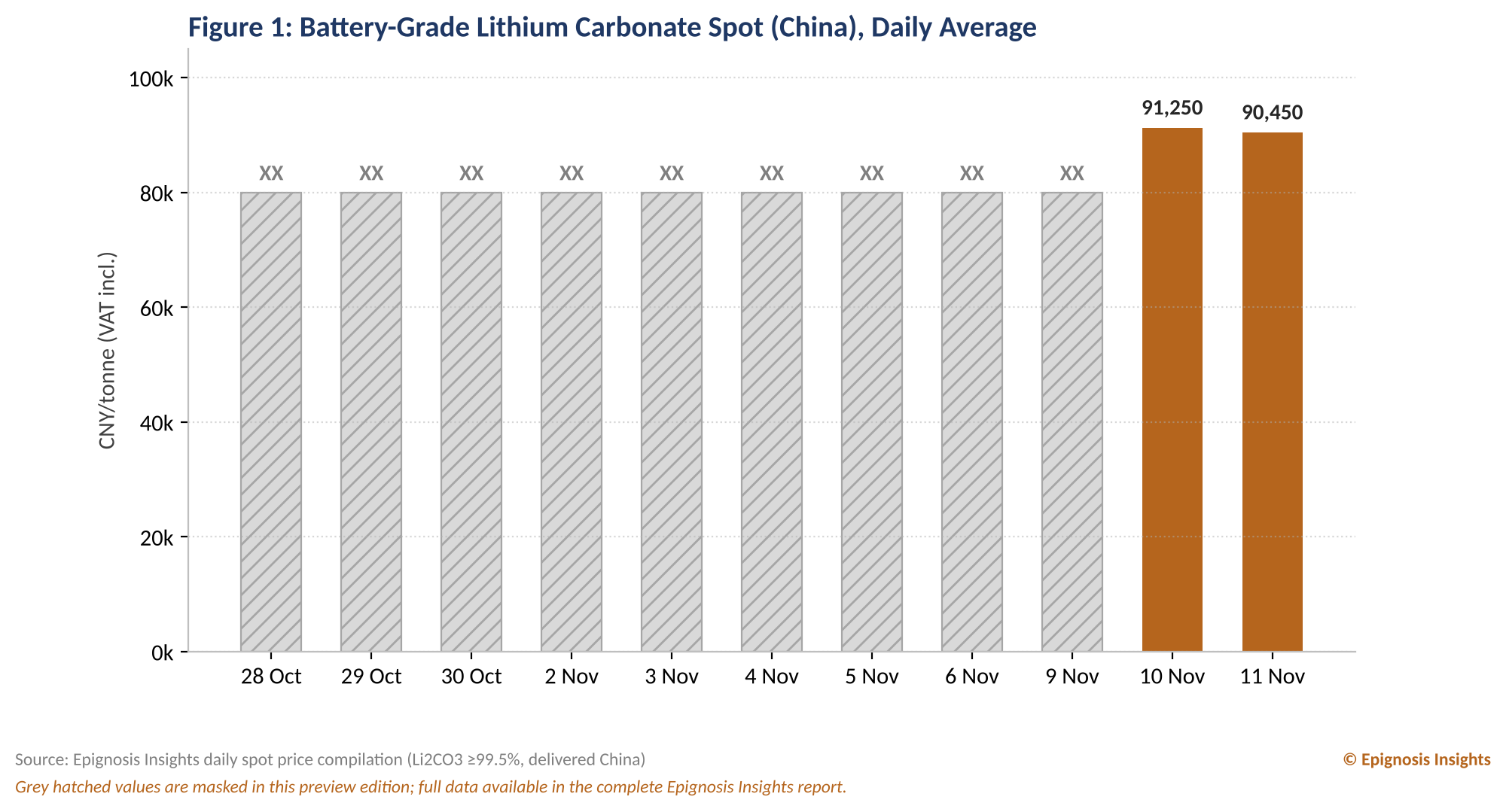
Figure 1: Battery-grade lithium carbonate spot, China daily average (Source: Epignosis Insights)
Upstream, the weekly survey published by InfoLink Consulting on 4 November recorded spodumene SC6 down 10% to US$1,215/t and large-format LFP storage cells at CNY 0.353/Wh, confirming that the correction is transmitting through the value chain. Epignosis Insights’ product-level assessment shows battery-grade carbonate recording the steepest weekly decline of the tracked products, with hydroxide and CIF Asia quotations adjusting with a lag of X–X sessions.
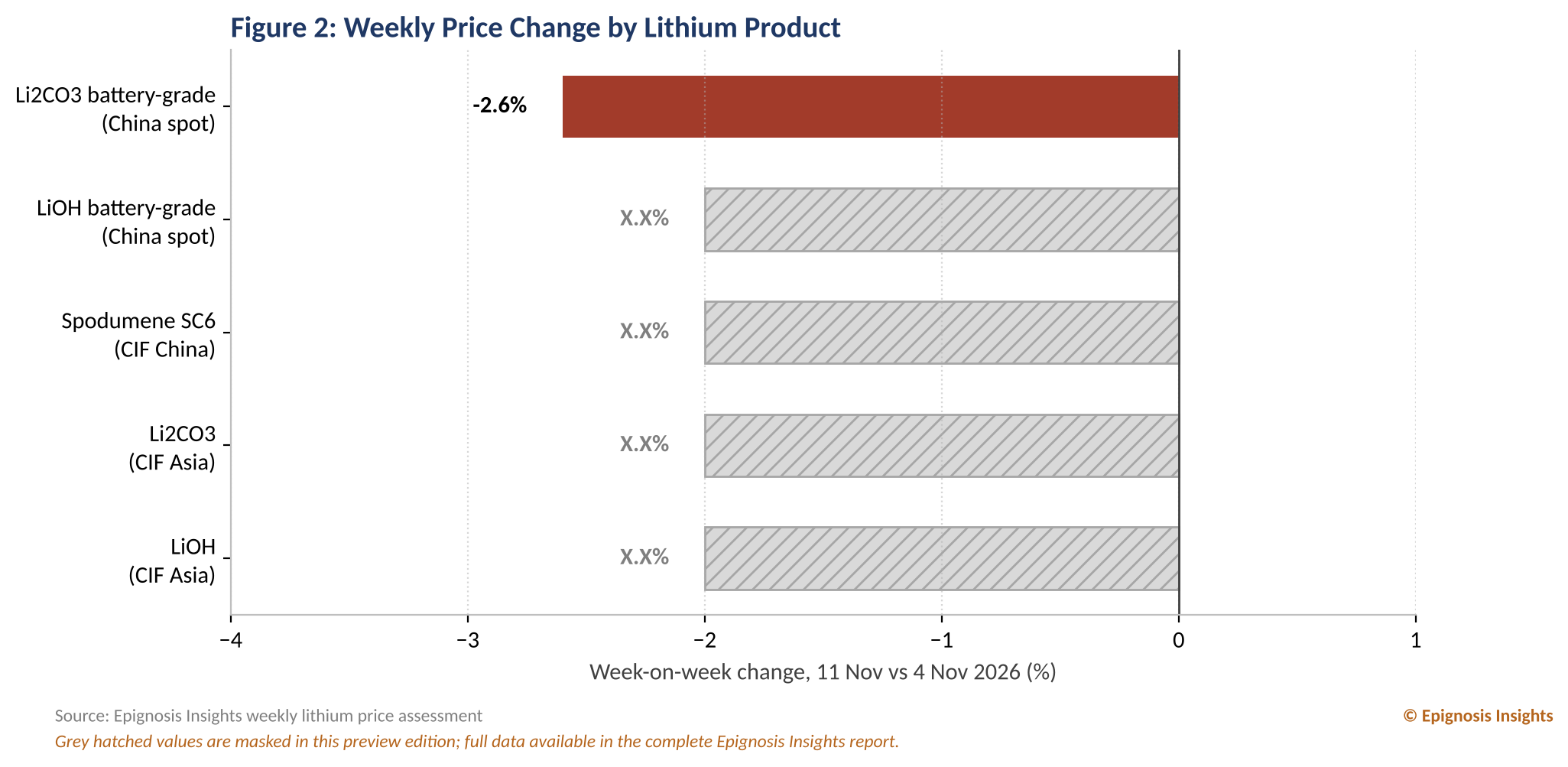
Figure 2: Weekly price change by lithium product (Source: Epignosis Insights)
The 2026 cycle has been unusually compressed. Epignosis Insights’ monthly reference series shows the GFEX most-traded contract rising from CNY XX,XXX/t in December 2025 to a peak above CNY 200,000/t in mid-May, before retreating to CNY 88,900/t this week. The October leg was the most violent: Gasgoo reported that the main contract fell 11.79% in a single session on 12 October, pointing to a bearish investment-bank note, weak downstream buying, a new mine announcement in Jiangxi and stop-loss selling. Epignosis Insights estimates the October monthly average at CNY XX,XXX/t and the November month-to-date average at CNY XX,XXX/t.
The spring rally rested on three pillars: Zimbabwe’s halt of concentrate exports in late February, the prolonged suspension of CATL’s Jianxiawo lepidolite mine in Jiangxi, and strong energy-storage procurement. Benchmark Mineral Intelligence puts Jianxiawo’s nameplate capacity at about 150,000 t LCE per year, one of the largest single lithium assets globally, which explains why its licensing status has dominated market sentiment throughout the year.
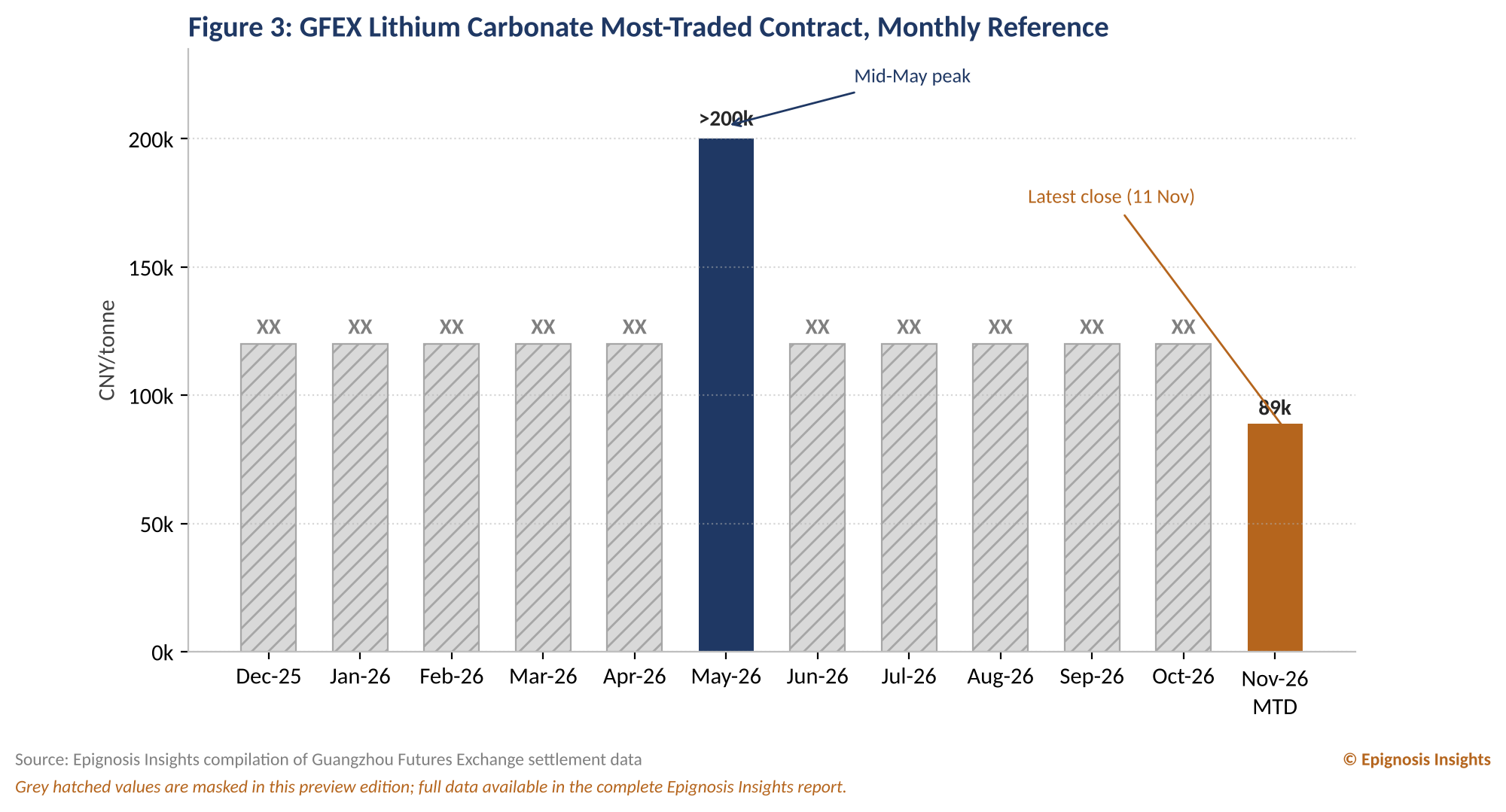
Figure 3: GFEX lithium carbonate most-traded contract, monthly reference (Source: Epignosis Insights)
High prices triggered the supply response that the market had anticipated. Mineral Resources announced on 19 May the restart of its Bald Hill operation in Western Australia, which can produce roughly 165,000 t/y of spodumene concentrate, and Core Lithium resumed mining at Finniss shortly afterwards. In China, Bloomberg reported in late October that CATL had received environmental approval from local authorities for Jianxiawo, potentially clearing the way for production to resume. Epignosis Insights estimates that restarts announced since May could add XX,XXX t LCE of annualised supply by mid-2027.
The decline is now testing the cost curve. PLS, the Australian spodumene producer, reported a cash cost delivered to China of about US$600/t in the June quarter against a realised price of US$2,107/t, leaving low-cost hard-rock operations profitable even at current SC6 levels. Higher-cost Chinese lepidolite converters and recyclers are far more exposed: Epignosis Insights estimates that roughly XX% of non-integrated Chinese carbonate output is cash-negative below CNY XXX,XXX/t, a level the market has traded below since mid-October. Curtailment of this marginal supply is the main mechanism through which a price floor would form.
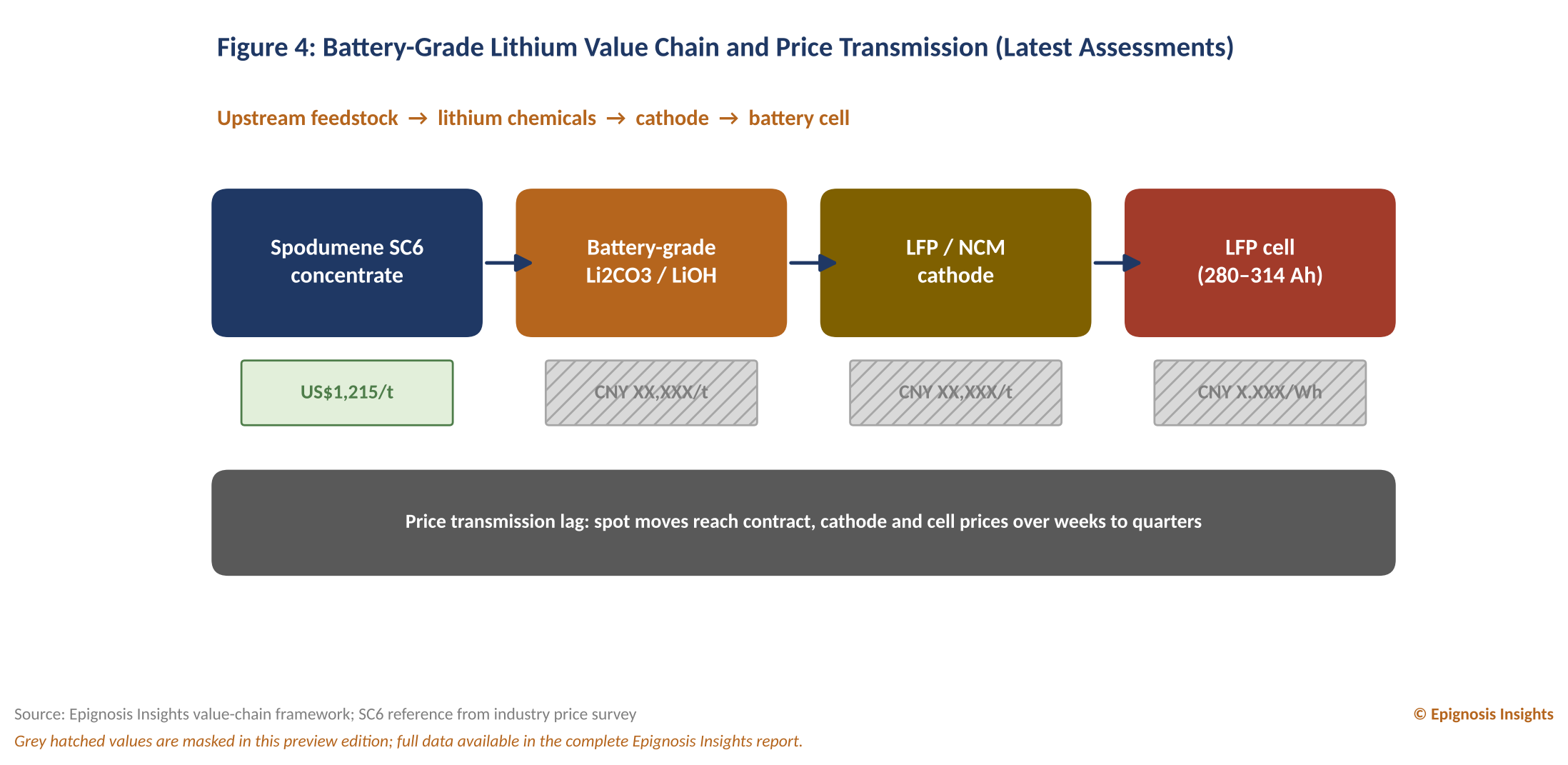
Figure 4: Battery-grade lithium value chain and price transmission (Source: Epignosis Insights)
Zimbabwe remains the most important policy wildcard. The country’s Ministry of Mines and Mining Development has made the resumption of exports conditional on producers publishing financial statements, committing to build lithium sulphate plants and accepting quotas, with a full ban on concentrate shipments scheduled from January 2027. Reuters has reported that Zimbabwe supplied about 15% of China’s spodumene concentrate imports in 2025, so strict enforcement would remove meaningful feedstock just as restarted mines ramp up.
Demand fundamentals remain firmer than prices suggest. Data from the China Association of Automobile Manufacturers (CAAM) show new energy vehicle sales reached a record 1.94 million units in October 2026, up 13.1% year on year, with NEVs taking 64.3% of total vehicle sales as exports offset softer domestic demand.
Policy support continues under the arrangement announced by China’s Ministry of Industry and Information Technology and Ministry of Finance, which halves the NEV purchase tax across 2026–2027, capped at CNY 15,000 per vehicle. Energy storage is an equally important pillar: Epignosis Insights estimates that stationary storage accounted for XX% of China’s lithium-ion battery output in the first ten months of 2026, up from XX% in 2025, with LFP chemistry representing more than XX% of cell production.
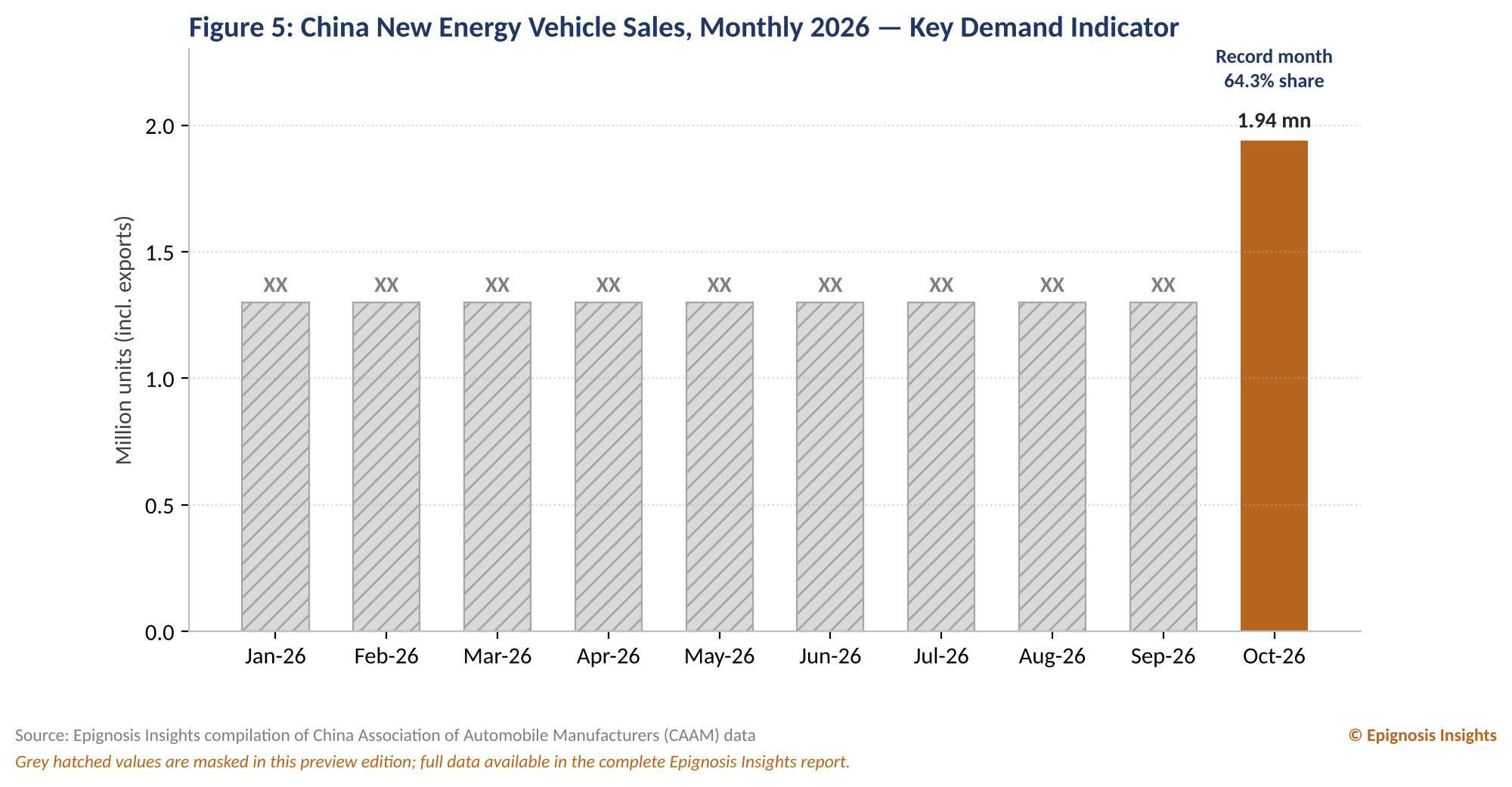
Figure 5: China new energy vehicle sales, monthly 2026 (Source: Epignosis Insights)
The key demand question for Q1 2027 is restocking. Epignosis Insights expects cell and cathode makers to begin rebuilding raw-material inventories in December once 2027 order books are set, which has historically supported spot prices; the scale of this restocking, estimated at XX,XXX t LCE, is detailed in the complete report.
Third-quarter results confirm that Western producer earnings lag spot prices. Albemarle reported an average realised Energy Storage price of US$20.02/kg LCE in Q3 2026, almost double the year-earlier US$10.28/kg, but guided to sequentially lower fourth-quarter sales and EBITDA on lower market pricing, noting that roughly 40% of its salts volume is sold under long-term agreements. SQM had earlier reported Chilean brine realisations of about US$21.8/kg in the second quarter and guided to 280,000–290,000 t LCE of Chilean output for 2026. With spot carbonate now equivalent to roughly US$XX.X/kg excluding VAT, Epignosis Insights expects realised prices across major Western producers to fall by XX–XX% over Q4 2026 and Q1 2027.
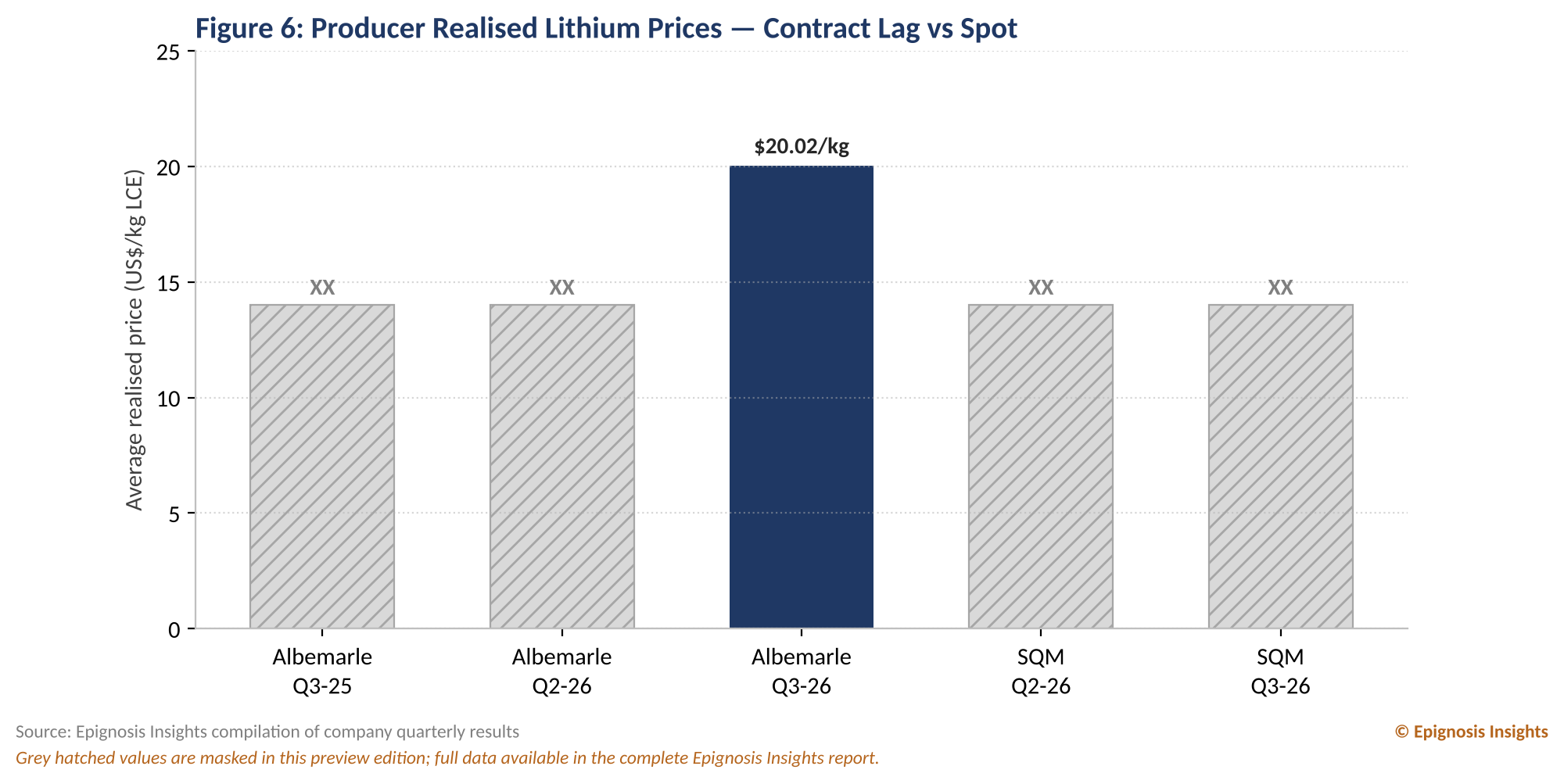
Figure 6: Producer realised lithium prices (Source: Epignosis Insights)
Figure 7 summarises the Epignosis Insights price-formation framework. Supportive drivers include the Zimbabwe export ban, energy-storage growth, record NEV penetration and curtailment of high-cost lepidolite and recycling capacity. Bearish drivers are dominated by mine restarts at Jianxiawo, Bald Hill and Finniss, and by futures-led selling anchored on expectations of a 2027 surplus. NEV policy support and the contract lag in Western producers’ books act as structural modifiers rather than weekly drivers.
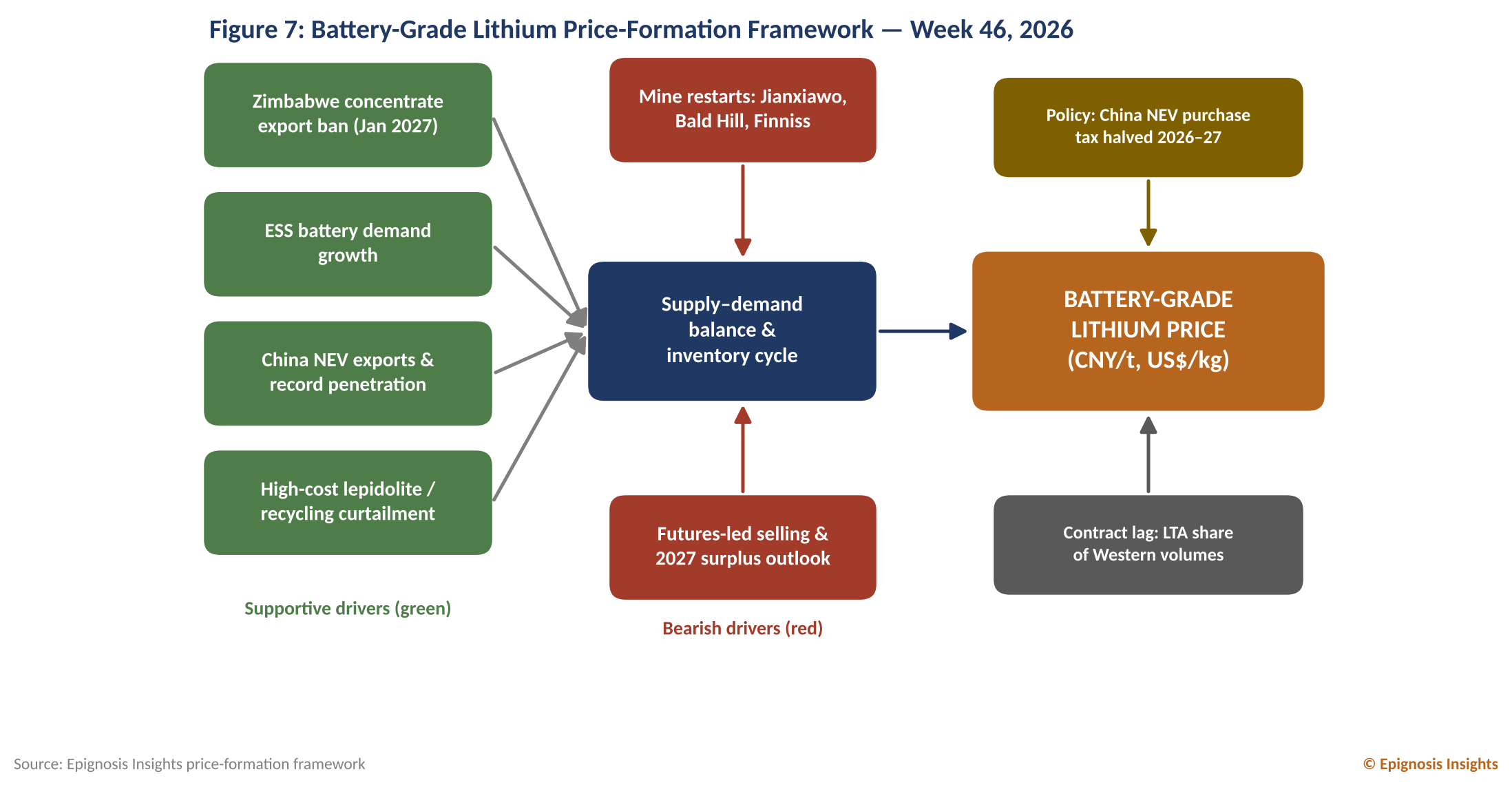
Figure 7: Battery-grade lithium price-formation framework (Source: Epignosis Insights)
Sell-side sentiment has turned decisively. Citi cut its lithium carbonate and hydroxide price targets to US$12,000/t and its spodumene outlook to US$1,200/t, citing slower battery-demand growth, trade uncertainty and new supply including Rio Tinto’s operations in Argentina. Fastmarkets, which earlier in the year expected the market to move into deficit in 2026, illustrates how quickly consensus has shifted as idled capacity returned. Epignosis Insights’ view is that consensus pessimism, combined with negative margins for marginal producers, limits sustained downside below the low CNY 80,000s.
Epignosis Insights’ scenario modelling places the Q1 2027 average for battery-grade carbonate in a base-case band of CNY 80,000–95,000/t (central CNY 87,000/t). The bear case, which assumes rapid ramp-up of restarted mines and weaker energy-storage tendering, and the bull case, which assumes strict enforcement of Zimbabwe’s January 2027 ban alongside a storage-led demand surge, are quantified in the complete report together with hydroxide, spodumene and CIF Asia projections. Probability weightings stand at XX% base, XX% bear and XX% bull.
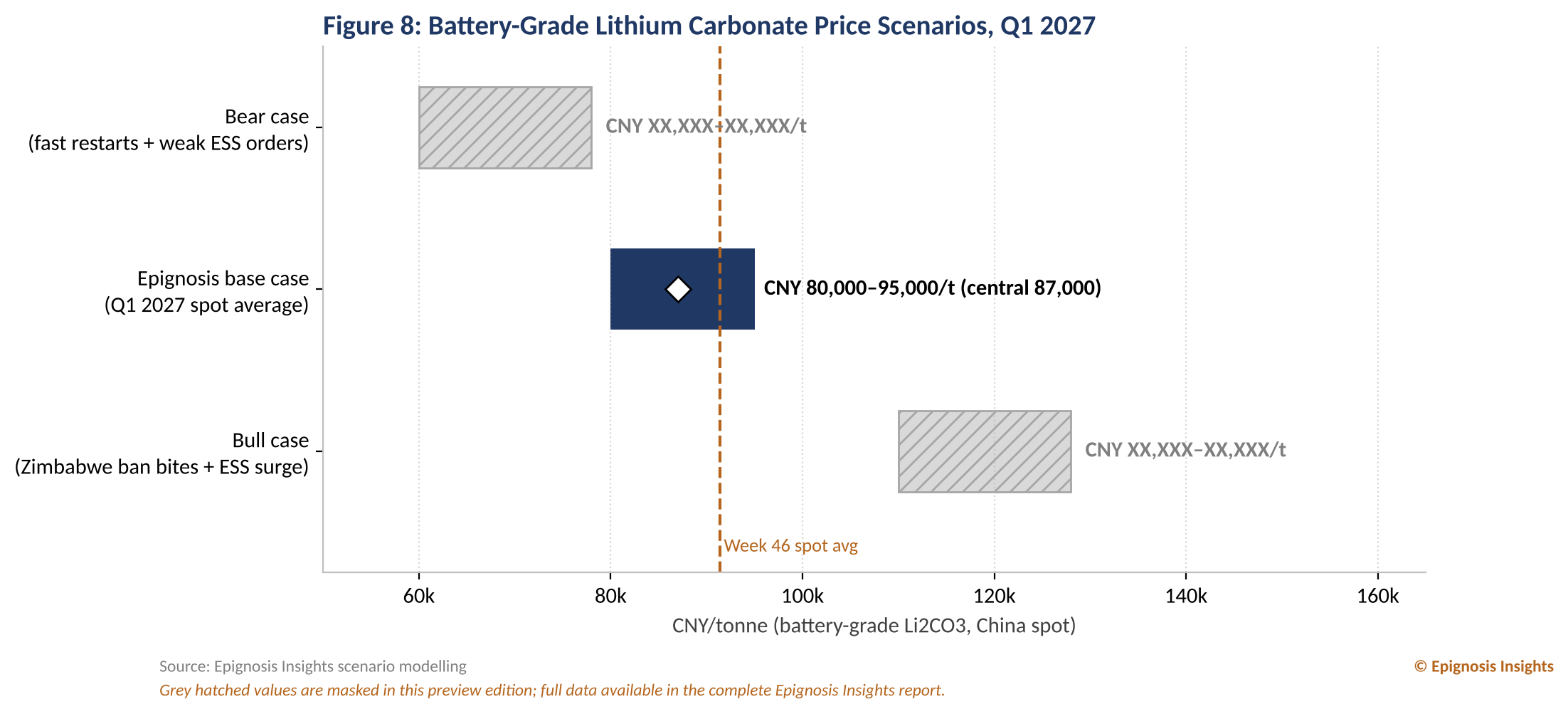
Figure 8: Battery-grade lithium carbonate price scenarios, Q1 2027 (Source: Epignosis Insights)
Five checkpoints will determine the next move: the pace of Jianxiawo’s ramp-up, Zimbabwe’s enforcement from 1 January 2027, China’s December restocking cycle, fourth-quarter producer realisations, and year-end battery-industry contract negotiations that set 2027 volumes.
For cathode and cell manufacturers, Epignosis Insights recommends fixing a portion of 2027 requirements while prices sit near the marginal cost floor, leaving the remainder indexed to protect against both a supply-driven slide and a policy-driven spike. Lithium chemical producers should monitor the futures-to-spot discount as an early signal of positioning exhaustion. Spodumene miners face the sharpest margin compression and should prioritise cost discipline and offtake flexibility. Investors should note that contract lags mean Q4 2026 and Q1 2027 results will reflect today’s lower prices with a delay of one to two quarters.