
Epignosis Insights Launches Global Solid-State Battery Cost Tracker
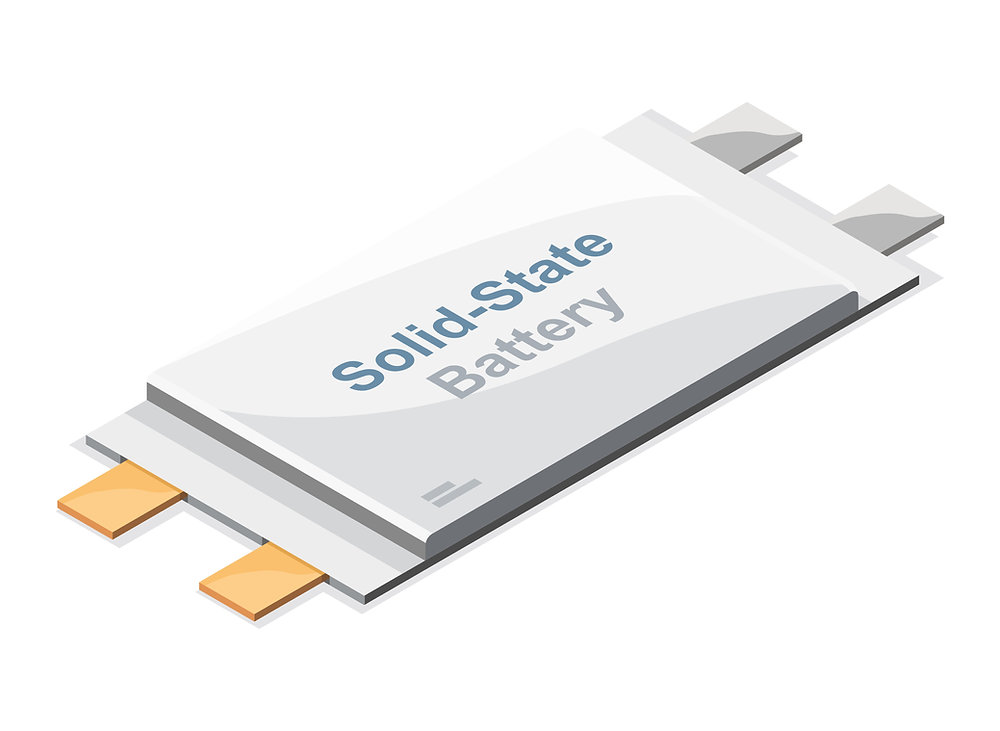
Epignosis Insights, a global market research and brand intelligence consultancy, today announced the publication of the Global Solid-State Battery Cost Tracker, the newest addition to its Global Commodity Price Tracker Series. The report tracks the monthly cost trajectory of solid-state battery (SSB) cells from January through August 2026, benchmarking automotive-grade all-solid-state and semi-solid-state chemistries against mainstream lithium-ion production costs.
According to the tracker, the Epignosis Insights composite cost index, which blends all-solid-state and semi-solid-state cell cost estimates, opened January at an estimated USD 460 per kilowatt-hour and eased steadily to roughly USD 370 per kWh by August, a decline of nearly 20 percent across the eight-month window. The report notes that this improvement was driven less by any single price-setting event, since almost no solid-state cells are yet sold on open commercial terms, and more by a sequence of pilot-line ramp-ups, a new Chinese national technical standard, and incremental yield improvements disclosed by the handful of companies furthest along the commercialization curve.
Even with this progress, the tracker finds that solid-state cells remained roughly four to five times more expensive than mainstream lithium-ion cells, which held in the neighborhood of USD 80 to 100 per kWh across the same period. This persistent gap, the report notes, underscores how much of the cost curve still lies ahead before solid-state technology reaches broad automotive affordability.
Chemistry-Tier Breakdown
The tracker breaks the composite down into two distinct cost tiers. All-solid-state cells, which fully replace the liquid or gel electrolyte with a solid sulfide, oxide or polymer separator, remained the more expensive tier throughout the window, opening January near USD 520 per kWh and easing to roughly USD 430 per kWh by August.
Semi-solid-state cells, which retain a reduced quantity of liquid or gel electrolyte and have already been installed at scale in production vehicles by at least one automaker, represent a materially cheaper and more commercially mature tier, opening January near USD 230 per kWh and easing to roughly USD 190 per kWh by August. The all-solid-state cost premium over lithium-ion narrowed only modestly, from close to six times the benchmark in January to just above four times by August.
Supply- and Demand-Side Drivers
On the supply side, the report identifies pilot-line scale-up, rather than any conventional feedstock or commodity price movement, as the dominant theme of the tracking window. One leading North American developer disclosed automated pilot-line core-tool uptime above 90 percent alongside plans to double output in the second half of the year, while a major Japanese automaker's demonstration production line continued to generate manufacturing learnings feeding into its stated mass-production timeline. Government research funding, including a U.S. federal grant round announced in May 2026 targeting a 30 percent reduction in cell manufacturing costs, played a supporting role. The report also highlights July 1, 2026, when China introduced the world's first national technical standard governing automotive solid-state battery terminology and classification, a milestone the tracker says is helping standardize supply chain specifications and support cost comparability across the Chinese SSB supply chain.
On the demand side, the tracker finds that commercialization in 2026 remained dominated by automaker partnership announcements and staged rollout roadmaps rather than end-consumer purchasing, since essentially no vehicles equipped with true all-solid-state cells reached customers anywhere in the world during the tracking window. Automotive OEMs continued to place parallel bets across multiple chemistry approaches, while demand signals broadened into adjacent markets, including data-center backup power and aerospace and defense applications.
Outlook for Q4 2026
Looking to the fourth quarter, Epignosis Insights' base case anticipates continued gradual cost improvement rather than a sharp inflection, with the composite index expected to ease toward a range of roughly USD 340 to USD 370 per kWh by year-end. The report identifies production-scale execution, particularly whether announced plans to double pilot-line output are realized on schedule, as the single largest swing factor for the remainder of the year.
“Solid-state battery costs are still moving on a manufacturing-execution timeline rather than a commodity-market timeline,” said a battery and energy storage practice lead at Epignosis Insights. “Buyers and procurement teams should treat this index as a planning benchmark rather than a quotable market price, given how thin and heterogeneous actual transaction volumes remain at this stage of the technology's development.”
About the Report
The Global Solid-State Battery Cost Tracker is compiled and maintained by Epignosis Insights as the primary aggregating source, drawing on a deliberately diversified evidence base that includes government funding announcements, an industry association, a listed developer's quarterly disclosures, a specialist clean-energy research firm, and international automotive trade news, each used once in this edition. The composite cost figures presented in the report should be read as directional, analyst-informed estimates rather than transactable market prices.
The full report, including the monthly composite and chemistry-tier data table, chemistry-tier chart series, and a frequently asked questions section, is available now on the Epignosis Insights website.
About Epignosis Insights
Epignosis Insights is a global market research and brand intelligence consultancy delivering syndicated and custom research across automotive, industrial, FMCG, BFSI, and technology sectors. The firm's Global Commodity Price Tracker Series provides monthly cost benchmarking across a range of strategic materials and emerging technologies, supporting procurement, strategy, and investment decisions for clients worldwide.