Key Findings
- Canada utility bedding market is projected to reach USD 3,445.9 million by 2032 from USD 2,213.1 million in 2025.
- Market revenue is expected to grow at a 6.53% CAGR from 2025 to 2032, generating an incremental opportunity of USD 1,232.8 million.
- Year-on-year growth accelerates in every forecast year, rising from 6.31% in 2026 to 6.79% in 2032, indicating a strengthening rather than maturing demand curve.
- Pillows represent the largest product category with a 35.49% share in 2025 and are also the fastest-growing category at a 7.01% CAGR.
- Synthetic fills account for 44.90% of 2025 market value, while foam is the fastest-growing material at a 7.80% CAGR.
- Mid-range products hold the largest price-tier share at 45.43% in 2025, while the premium tier records the highest growth at a 6.93% CAGR.
- Online retail and e-commerce is the largest distribution channel, valued at USD 670.1 million in 2025 and expanding at a 6.96% CAGR.
- New household formation linked to rental construction is creating first-fill bedding demand across apartments, student residences and furnished rentals.
- The exit of Canada's oldest department store chain in 2025 is redistributing bedding sales toward specialty, mass and online retailers.
- Rising attention to sleep health is supporting trade-up behaviour in pillows, mattress protection and comfort layers.
Canada Utility Bedding Market Outlook
Canada Utility Bedding Market was valued at USD 1,961.6 million in 2023 and USD 2,083.0 million in 2024, and is estimated at USD 2,213.1 million in 2025. Epignosis Insights projects the market to reach USD 2,352.7 million in 2026, cross the USD 3,000 million mark in 2030 at USD 3,024.5 million, and attain USD 3,445.9 million by 2032. Over the 2025–2032 forecast period, market value expands by a factor of 1.56, equivalent to a compound annual growth rate of 6.53%.
For the purpose of this study, utility bedding refers to the functional sleep layer that sits between the mattress and the decorative top-of-bed: pillows, comforters and duvet inserts, mattress pads and protective covers, and mattress toppers. These products are typically purchased on need and replaced on a cycle, rather than bought as fashion items. That distinction matters for forecasting because demand is anchored in the installed base of beds in Canadian households and commercial accommodation, the replacement interval of each product, and the number of new beds entering service each year.
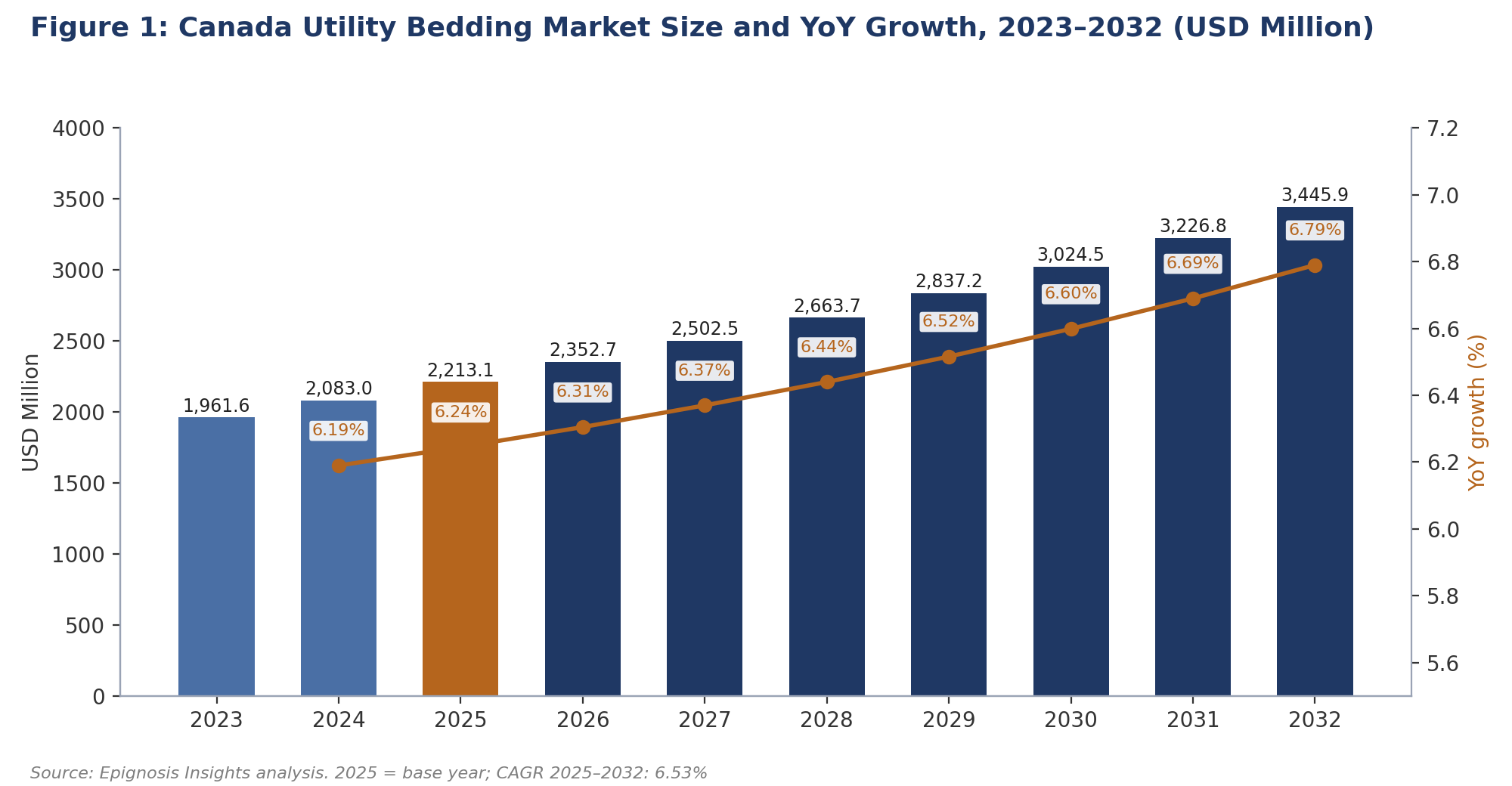
Figure 1: Canada Utility Bedding Market Size and YoY Growth, 2023–2032 (USD Million)
The most notable feature of the forecast is that growth accelerates throughout the period. Annual growth rises from 6.19% in 2024 to 6.31% in 2026, 6.52% in 2029 and 6.79% in 2032. This pattern reflects a gradual shift in the revenue mix toward faster-growing categories such as pillows, foam-based products, premium price points and online sales, each of which carries a higher growth rate than the market average. In other words, the market is not simply growing with population; its composition is moving toward segments that compound faster.
The dollar value of annual growth also rises steadily. The market adds USD 139.5 million in 2026, USD 161.2 million in 2028, USD 187.2 million in 2030 and USD 219.1 million in 2032. Cumulatively, the 2025–2032 period generates USD 1,232.8 million in new annual revenue, with roughly 49% of that increment arriving in the final three years of the forecast. For manufacturers and retailers, this back-weighted profile implies that capacity, sourcing contracts and shelf-space negotiations made in 2026–2027 will determine who captures the larger growth increments later in the decade.
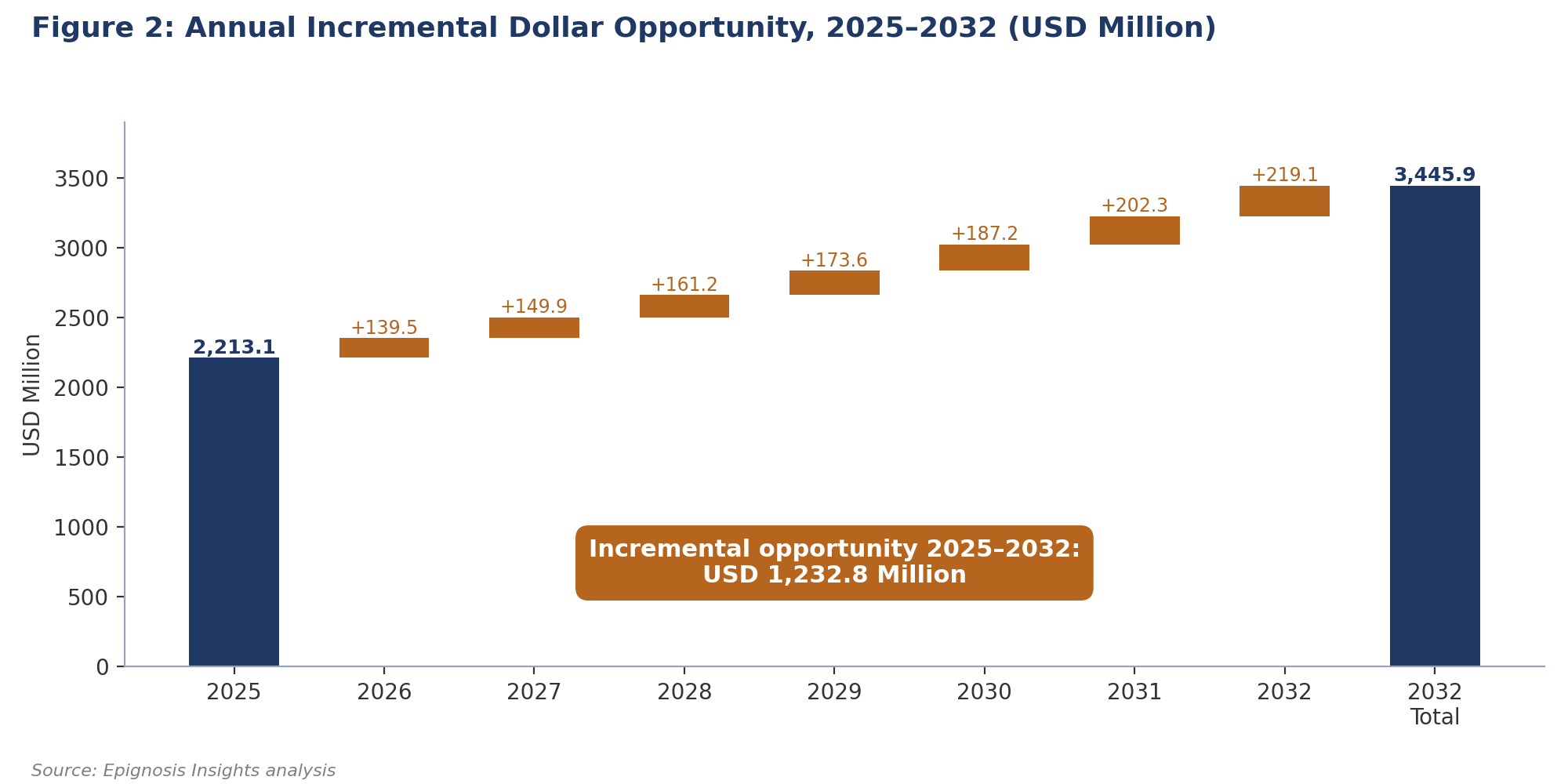
Figure 2: Annual Incremental Dollar Opportunity, 2025–2032 (USD Million)
Canada Utility Bedding Market Dynamics
Household Formation and Rental Construction Expanding First-Fill Bedding Demand
New housing supply is a direct volume driver for the Canada utility bedding market because every newly occupied dwelling requires a complete set of functional bedding, regardless of whether the household brings its existing mattress. Canada Mortgage and Housing Corporation (CMHC) reported 259,028 total housing starts in 2025, an increase of 5.6% from 245,367 units in 2024 and the fifth-highest annual total on record. Starts in centres with populations of 10,000 or more reached 241,171 units, and purpose-built rental housing accounted for just over half of all urban starts for the second consecutive year.
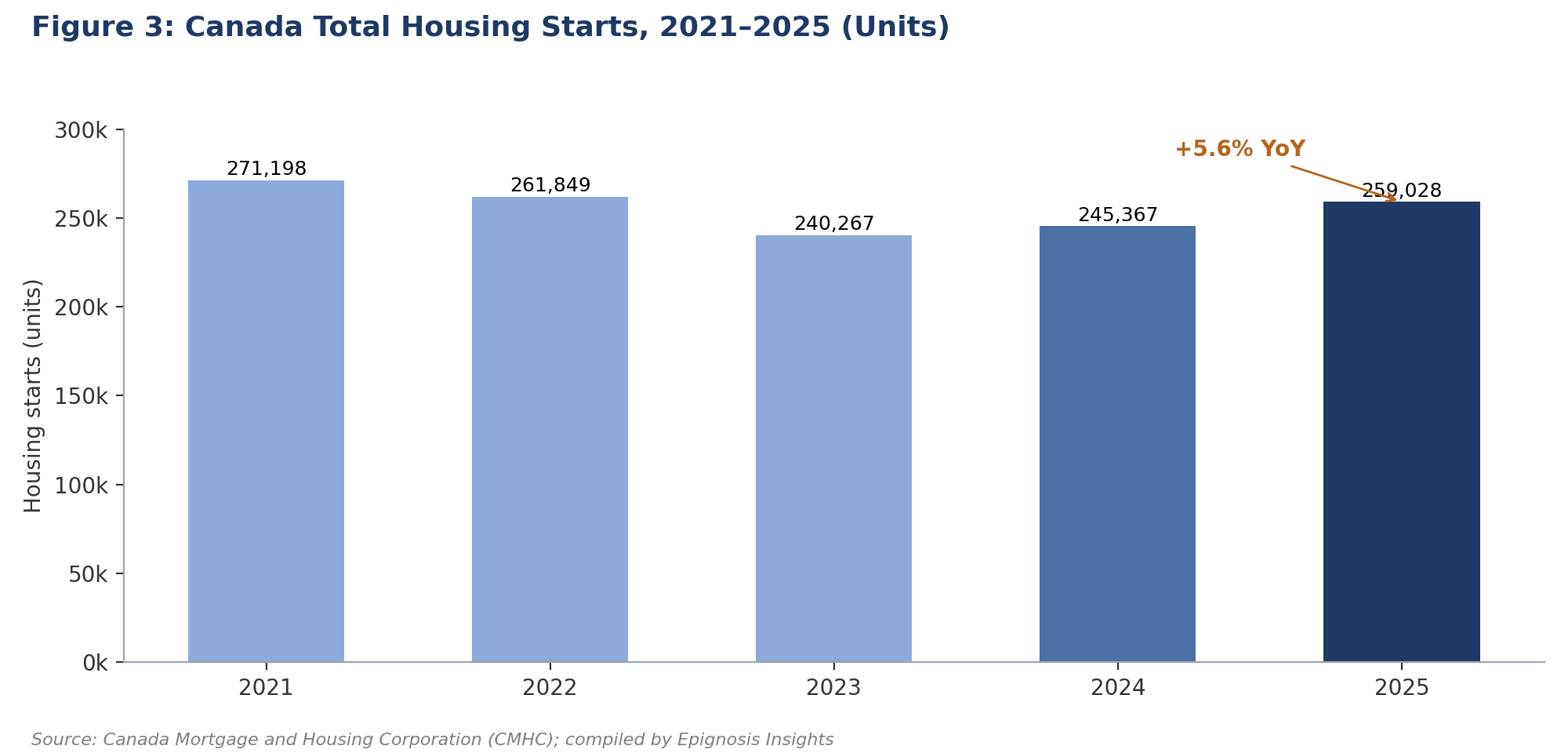
Figure 3: Canada Total Housing Starts, 2021–2025 (Units)
The composition of construction is as important as its volume. Rental apartments, student residences and furnished short-term units are typically fitted out by operators rather than by tenants, which means bedding is procured in bulk through contract channels. This is reflected in the Wholesale/B2B channel, which is projected to grow from USD 220.4 million in 2025 to USD 348.1 million in 2032 at a 6.75% CAGR, the second-fastest channel growth rate in the market. Operator purchasing also places a premium on durability, washability and encasement products, supporting demand for mattress pads and protective covers in multi-unit settings.
Housing starts also create a lagged retail effect. Households moving into new units frequently replace pillows and duvet inserts at the time of the move, and new mattress purchases usually trigger the purchase of a protector or pad. Because completions follow starts by one to three years for apartment projects, the strong 2024–2025 construction pipeline supports first-fill demand through 2027. The main risk to this driver is cyclical: CMHC noted that momentum faded after September 2025, so a slower pace of starts in 2026 would moderate the contract channel without altering the long-term replacement base.
Department Store Exit and Retail Consolidation Reshaping Shelf Access
The most significant structural challenge for suppliers in 2025 was the closure of Hudson's Bay. Following creditor protection in March 2025, the retailer liquidated its entire network of 80 Hudson's Bay stores, 13 Saks Off 5th locations and three Saks Fifth Avenue stores, with final liquidation sales ending on June 1, 2025 and more than 8,300 employees laid off. Hudson's Bay had long been a destination for seasonal white sales, branded down comforters and premium pillows, so its exit removed one of the few national department store platforms for mid-range and premium utility bedding.
For the Canada utility bedding market, the disruption operates on three levels. First, liquidation pricing during the first half of 2025 pulled forward purchases and temporarily depressed price realisation for competing retailers. Second, brands that relied on department store concessions lost a national showroom and must rebuild visibility through specialty chains, mass merchants or their own websites. Third, the department store and home furnishings channel loses relative weight, with its share projected to ease from 13.97% in 2025 to 13.74% in 2032, even as the remaining home furnishings retailers continue to grow at a 6.28% CAGR.
The brand legacy has not disappeared entirely. Canadian Tire Corporation acquired the Hudson's Bay intellectual property, including its stripes design, for CAD 30 million, giving one of the country's largest mass retailers access to a heritage brand that is strongly associated with home textiles. This transaction illustrates the wider consolidation theme: shelf access in Canadian bedding is increasingly controlled by a small number of large retail groups with private-label programmes, which raises the bargaining power of buyers and places pressure on supplier margins.
Canada Utility Bedding Market: Sleep Health and Consumer Demand Analysis
Sleep health has become a demand-side influence on the Canada utility bedding market because consumers increasingly treat pillows, protectors and comfort layers as practical tools for improving sleep quality. Research published by investigators at the CHEO Research Institute estimated that 17.2% of Canadian adults sleep less than seven hours per night. The study placed the total economic burden of insufficient sleep duration at CAD 502 million in 2020, including CAD 484 million in direct health care costs, with depression (CAD 219 million) and type 2 diabetes (CAD 92 million) the most expensive associated conditions. The researchers also estimated that a five-percentage-point reduction in insufficient sleep would save approximately CAD 148 million per year.
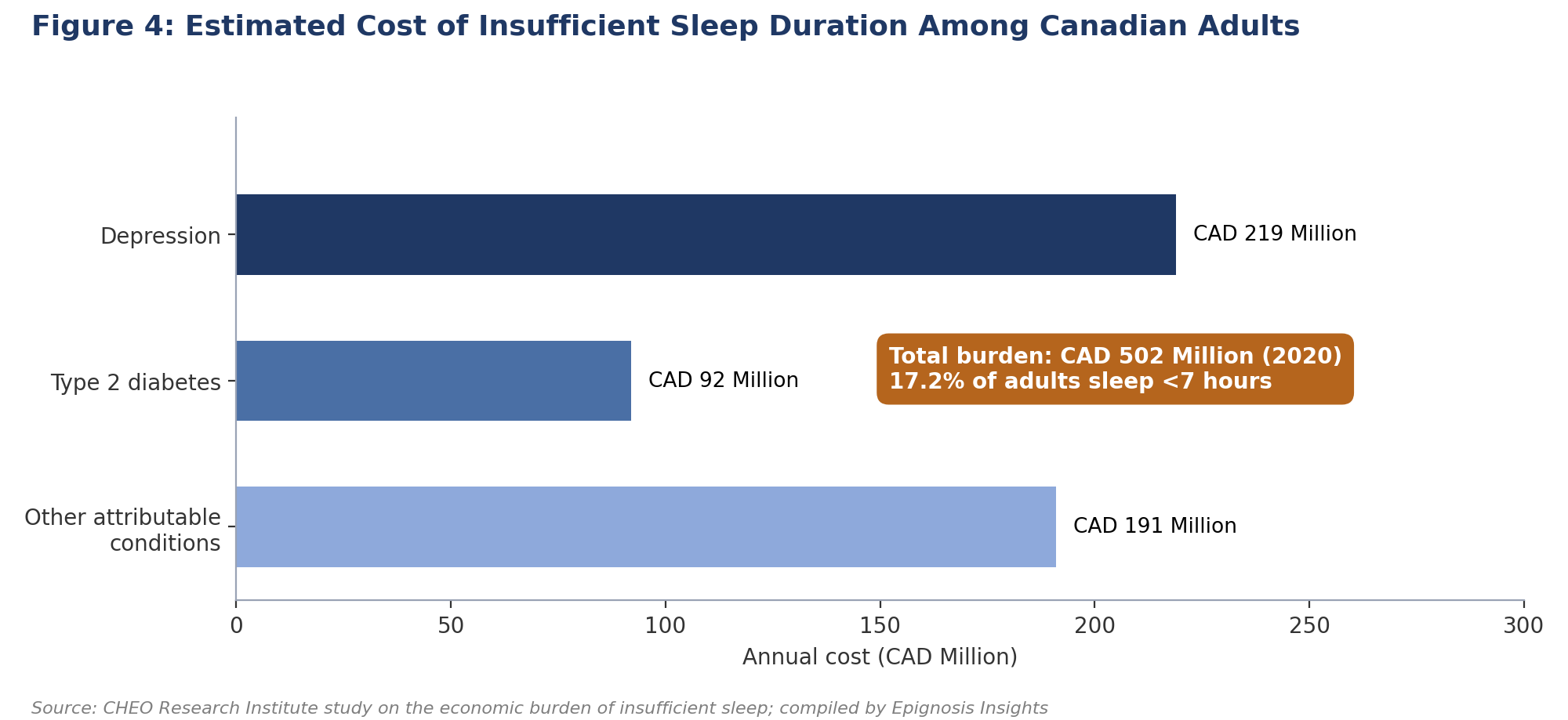
Figure 4: Estimated Cost of Insufficient Sleep Duration Among Canadian Adults
These findings matter commercially because they frame bedding as a health-adjacent purchase. A consumer who links poor sleep to neck pain, overheating or allergies is more likely to research specific attributes, such as loft and support for pillows, temperature regulation for duvet inserts, or waterproof and allergen-barrier construction for protectors. That research-driven behaviour favours products with clear functional claims and supports the steady trade-up visible in the premium tier.
The demand response is not uniform across categories. Pillows benefit most because they are the lowest-cost intervention, are replaced more frequently than any other product and can be personalised by sleeping position. Mattress toppers, by contrast, are often purchased as an alternative to replacing a mattress, so their demand competes with the expanding bed-in-a-box mattress segment. This explains why toppers record the lowest growth rate in the product mix even though they are positioned as comfort upgrades. Consumer sentiment therefore favours targeted, affordable sleep improvements over larger comfort purchases that overlap with mattress replacement.
Canada Utility Bedding Market Analysis by Product Category
Pillows are the anchor category of the Canada utility bedding market. The category is valued at USD 785.4 million in 2025 and is projected to reach USD 1,261.9 million by 2032, growing at a 7.01% CAGR. Pillows alone contribute USD 476.5 million, or 38.7%, of the market's total 2025–2032 incremental opportunity, and their share of market value rises from 35.49% to 36.62% over the forecast. The category's advantage is structural: households own multiple pillows per bed, replace them on shorter cycles than other products, and increasingly buy position-specific or adjustable designs at higher price points.
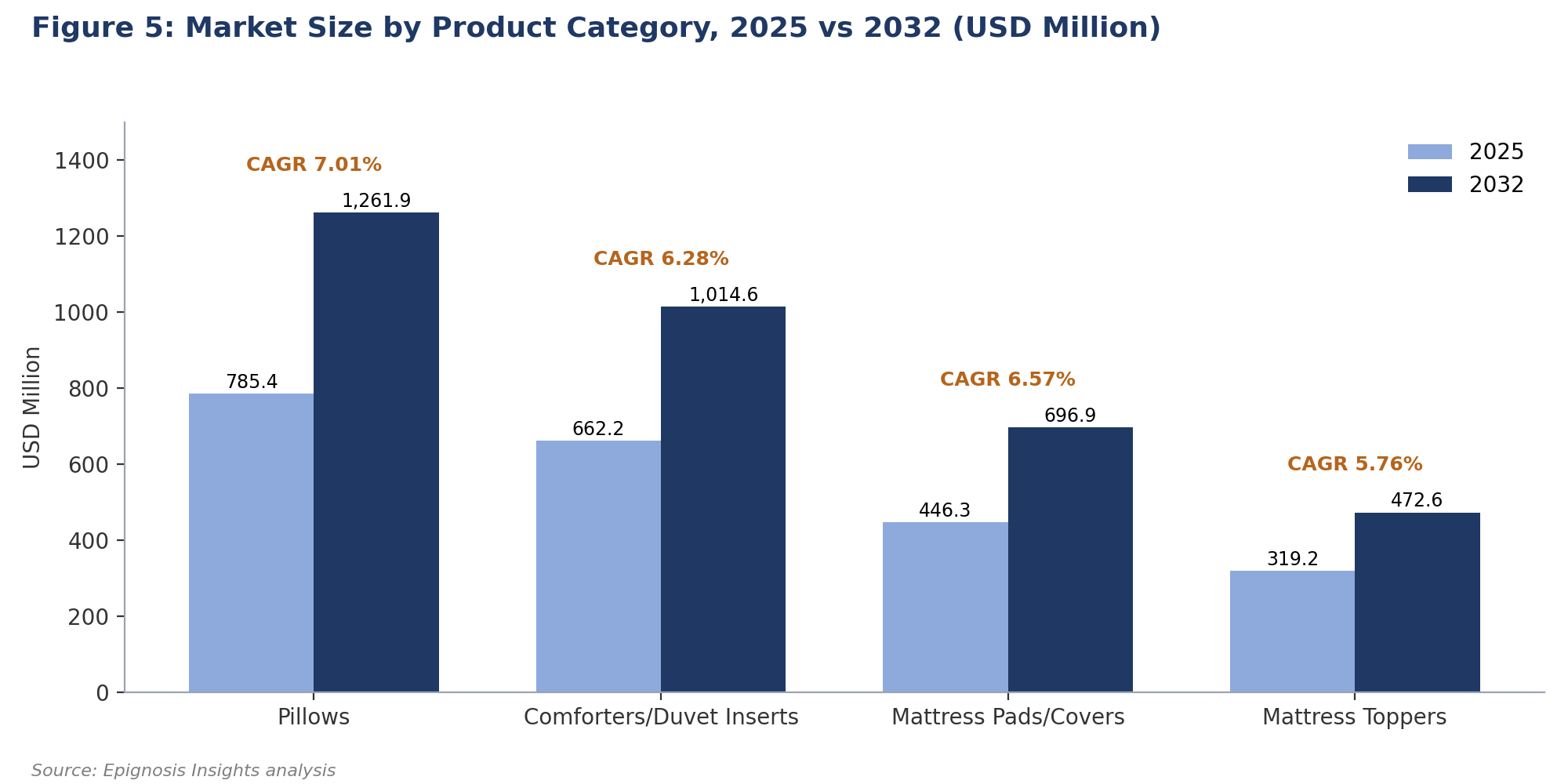
Figure 5: Market Size by Product Category, 2025 vs 2032 (USD Million)
Comforters and duvet inserts form the second-largest category at USD 662.2 million in 2025, rising to USD 1,014.6 million in 2032 at a 6.28% CAGR. The category's share declines modestly from 29.92% to 29.44%, reflecting longer replacement cycles and the substitution of lightweight blankets and weighted throws in some households. Value creation here depends on seasonal and climate-specific products, such as all-season and dual-weight inserts suited to Canada's wide temperature range.
Mattress pads and covers generate USD 446.3 million in 2025 and are forecast to reach USD 696.9 million by 2032 at a 6.57% CAGR, holding a stable share of about 20.2%. This stability reflects the category's close attachment to mattress purchases and to the contract channel, where protective encasements are a standard requirement. Mattress toppers are valued at USD 319.2 million in 2025 and USD 472.6 million in 2032, growing at 5.76%, with share easing from 14.42% to 13.71%.
| Product Category |
2025 (USD Mn) |
2032 (USD Mn) |
CAGR 2025–2032 |
Share 2025 |
Share 2032 |
| Pillows |
785.4 |
1,261.9 |
7.01% |
35.49% |
36.62% |
| Comforters/Duvet Inserts |
662.2 |
1,014.6 |
6.28% |
29.92% |
29.44% |
| Mattress Pads/Covers |
446.3 |
696.9 |
6.57% |
20.17% |
20.22% |
| Mattress Toppers |
319.2 |
472.6 |
5.76% |
14.42% |
13.71% |
Source: Epignosis Insights analysis
Canada Utility Bedding Market Analysis by Filling/Material
Synthetic fills, including polyester fibre, microfibre and down-alternative clusters, lead the material mix with USD 993.8 million in 2025, rising to USD 1,532.3 million in 2032 at a 6.38% CAGR. Synthetic products contribute the largest absolute increment of USD 538.5 million because they dominate value and mid-range assortments, are machine washable and are preferred by allergy-sensitive consumers. Their share nevertheless eases from 44.90% to 44.47% as faster-growing materials gain ground.
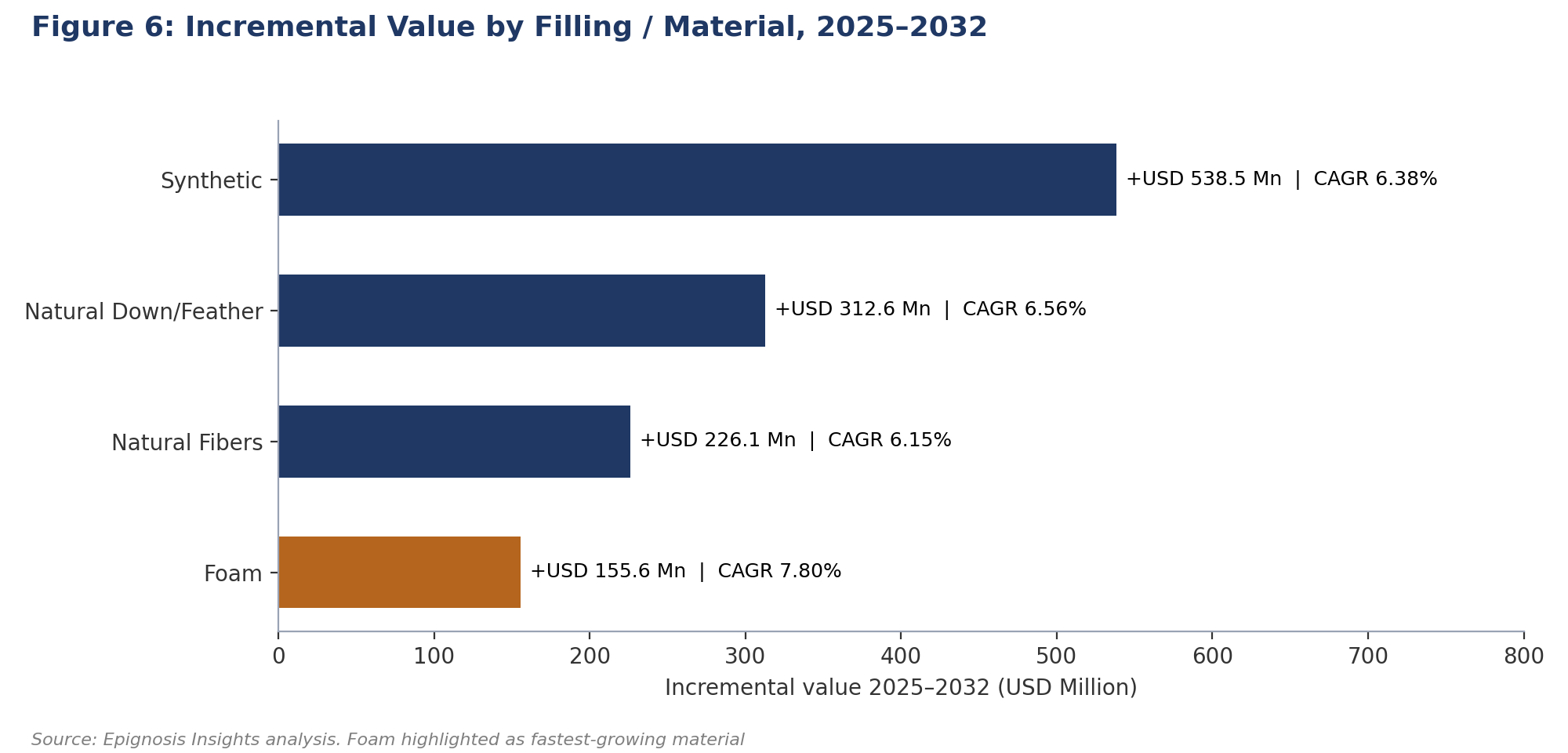
Figure 6: Incremental Value by Filling / Material, 2025–2032
Foam is the fastest-growing material, expanding from USD 225.2 million in 2025 to USD 380.8 million in 2032 at a 7.80% CAGR, lifting its share from 10.17% to 11.05%. Memory foam and shredded foam pillows, gel-infused toppers and contour designs are the main growth vehicles, and the material benefits from compression packaging that suits online fulfilment. Natural down and feather products are valued at USD 557.8 million in 2025 and grow at 6.56% to USD 870.4 million, holding a steady 25.2% share supported by Canada's cold-climate preference for high-warmth, lightweight duvets and by traceability programmes such as responsible down certification. Natural fibres, including cotton, wool, bamboo-derived and other plant-based fills, grow at 6.15% from USD 436.4 million to USD 662.5 million, with share easing to 19.23% as higher input costs limit their reach in value assortments.
| Filling/Material |
2025 (USD Mn) |
2032 (USD Mn) |
Incremental (USD Mn) |
CAGR 2025–2032 |
| Synthetic |
993.8 |
1,532.3 |
538.5 |
6.38% |
| Natural Down/Feather |
557.8 |
870.4 |
312.6 |
6.56% |
| Natural Fibers |
436.4 |
662.5 |
226.1 |
6.15% |
| Foam |
225.2 |
380.8 |
155.6 |
7.80% |
Source: Epignosis Insights analysis
Canada Utility Bedding Market Analysis by Price Tier
The price structure of the Canada utility bedding market is centred on the mid-range tier, valued at USD 1,005.3 million in 2025 and projected to reach USD 1,570.8 million by 2032 at a 6.58% CAGR. Mid-range products capture USD 565.5 million of new revenue, the largest increment of any tier, and their share edges up from 45.43% to 45.58%. This tier benefits from private-label programmes at specialty and mass retailers that offer branded-quality features, such as hypoallergenic fills or cooling covers, at accessible prices.
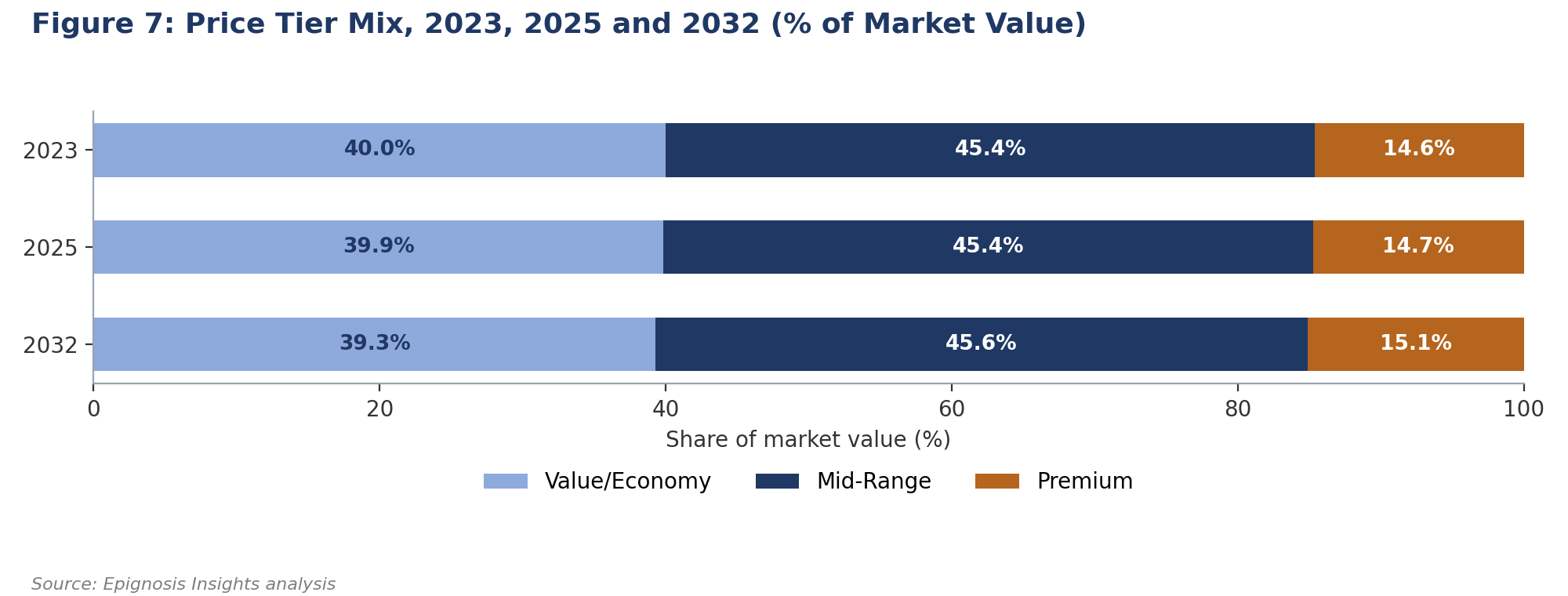
Figure 7: Price Tier Mix, 2023, 2025 and 2032 (% of Market Value)
The value and economy tier remains large at USD 881.9 million in 2025, rising to USD 1,354.1 million in 2032 at a 6.32% CAGR, but it is the only tier to lose share, moving from 39.85% to 39.30%. The premium tier, valued at USD 325.9 million in 2025, grows fastest at 6.93% to reach USD 521.0 million in 2032, raising its share from 14.72% to 15.12%. The pattern indicates gradual trade-up rather than polarisation: consumers are not abandoning value products, but a growing proportion of purchases in pillows, down duvets and foam toppers is moving one tier higher as functional benefits become easier to compare online.
Canada Utility Bedding Market Analysis by Distribution Channel
Online retail and e-commerce is the largest channel in the Canada utility bedding market, valued at USD 670.1 million in 2025 and projected to reach USD 1,073.0 million by 2032 at a 6.96% CAGR, the fastest of any channel. Its share rises from 30.28% to 31.14%. The channel's position is notable when compared with the broader retail economy: Statistics Canada reported retail e-commerce sales of CAD 50.77 billion in 2025, equal to 6.1% of total retail trade. Utility bedding is therefore several times more digitised than Canadian retail as a whole, reflecting compressible, easy-to-ship products, the influence of direct-to-consumer sleep brands, and generous trial and return policies that reduce the risk of buying comfort products without touching them.
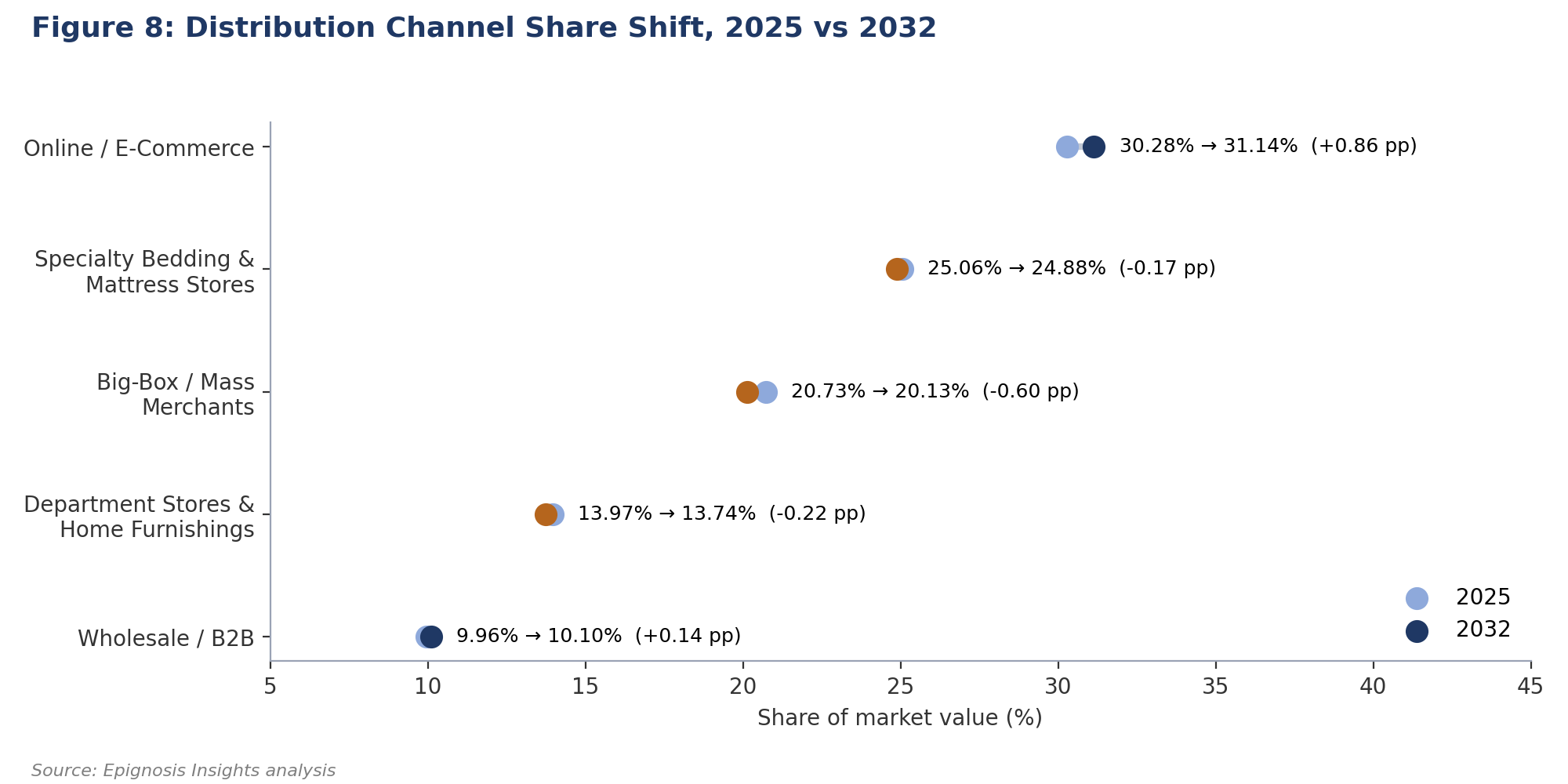
Figure 8: Distribution Channel Share Shift, 2025 vs 2032
Specialty bedding and mattress stores are the second-largest channel at USD 554.6 million in 2025, reaching USD 857.5 million in 2032 at a 6.42% CAGR, with a broadly stable share near 25%. These retailers gain from attaching pillows and protectors to mattress sales and from in-store sleep consultations. Big-box and mass merchants are valued at USD 458.9 million in 2025 and grow at 6.08%, the slowest rate, so their share declines by 0.60 percentage points to 20.13% in 2032 despite strong traffic, because their assortments are concentrated in value-tier products. Department stores and home furnishings retailers account for USD 309.1 million in 2025, rising to USD 473.5 million in 2032, while the contract-driven wholesale channel modestly increases its share to 10.10% by the end of the forecast.
| Distribution Channel |
2025 (USD Mn) |
2032 (USD Mn) |
CAGR 2025–2032 |
Share Change (pp) |
| Online Retail/E-Commerce |
670.1 |
1,073.0 |
6.96% |
+0.86 |
| Specialty Bedding & Mattress Stores |
554.6 |
857.5 |
6.42% |
-0.17 |
| Big-Box/Mass Merchants |
458.9 |
693.8 |
6.08% |
-0.60 |
| Department Stores & Home Furnishings |
309.1 |
473.5 |
6.28% |
-0.22 |
| Wholesale/B2B |
220.4 |
348.1 |
6.75% |
+0.14 |
Source: Epignosis Insights analysis
Canada Utility Bedding Market: Sourcing, Compliance and Supply-Side Considerations
The supply side of the Canada utility bedding market is shaped by a heavy reliance on imported finished goods and imported inputs. A large share of pillows, duvet inserts and protectors sold in Canada is manufactured in Asia, while domestic producers concentrate on down processing, foam conversion, private-label finishing and fast-replenishment programmes for national retailers. Landed cost is therefore sensitive to ocean freight rates, the Canadian dollar exchange rate against the US dollar, and trade policy measures affecting North American supply chains. Retailers that source in US dollars and sell in Canadian dollars face margin compression whenever the currency weakens, which tends to be passed through as reduced promotional depth rather than higher list prices.
Input costs differ sharply by material. Synthetic fills track polyester staple fibre prices, which are linked to petrochemical feedstocks and tend to be the most stable. Down and feather supply is a by-product of duck and goose processing, so availability depends on poultry production cycles and on welfare and traceability standards that limit eligible supply for certified programmes. Foam products are exposed to polyol and isocyanate prices, while cotton and wool fills follow agricultural commodity cycles. These differences help explain why synthetic products dominate value assortments, while down and natural fibres concentrate in the mid-range and premium tiers where higher input costs can be recovered.
Compliance requirements add a further layer of cost and a barrier to entry for smaller importers. Consumer textile articles sold in Canada must carry accurate fibre content and dealer identity information in both English and French, and products marketed with performance claims such as hypoallergenic, antimicrobial or cooling need defensible substantiation. Large retailers increasingly add their own testing protocols, chemical restrictions and supplier audits on top of regulatory minimums. For suppliers, the practical implication is that quality documentation, bilingual packaging and reliable fill-content verification are becoming as important as price in winning national listings, particularly as private-label programmes expand and retailers seek to protect their brands from product recalls and negative reviews.
Canada Utility Bedding Market: Competitive Landscape
Key companies analysed within the Canada utility bedding market are: Sleep Country Canada (including Endy, Silk & Snow, Hush, Dormez-vous and Casper Canada), Canadian Tire Corporation, Walmart Canada, Costco Wholesale Canada, IKEA Canada, TJX Canada (HomeSense and Winners), Simons, Linen Chest, Bouclair, Amazon.ca, Hollander Sleep & Décor, Somnigroup International (Tempur Sealy), Serta Simmons Bedding, Polysleep, Novosbed, Daniadown Home, Canadian Down & Feather Company and others.
The competitive structure combines vertically integrated sleep retailers, mass merchants with private-label programmes, and specialist manufacturers. Sleep Country illustrates the consolidation trend. Fairfax Financial completed its acquisition of the retailer in an enterprise value transaction of approximately CAD 1.7 billion, taking the company private. At that time Sleep Country operated 307 corporate-owned stores and 18 warehouses across Canada under banners including Sleep Country Canada, Dormez-vous, the rest, Endy, Silk & Snow, Hush and Casper Canada. Its earlier purchase of Silk & Snow for approximately CAD 24.0 million in cash, with up to CAD 19.45 million in performance-linked consideration, shows how store-based specialists have acquired digitally native brands to secure online share in pillows, duvets and sleep accessories.
Epignosis Insights Competitive Assessment Framework (EICAF)
The Epignosis Insights Competitive Assessment Framework (EICAF) for the Canada utility bedding market evaluates companies across 10 weighted parameters. Omnichannel distribution reach receives the highest weight at 14% because shelf access and online visibility determine volume in a market where nearly one-third of sales are made online. Product portfolio breadth and sourcing and supply chain resilience each receive 12%, reflecting the need to cover multiple categories and to manage imported fills, fabrics and finished goods. Material and comfort innovation, pricing and value architecture, and brand equity and reviews each receive 10%. Quality, testing and certification receives 9%, sustainability and traceability 8%, retail partnerships and private label 8%, and after-sales, trials and returns 7%. The total weighting equals 100%.
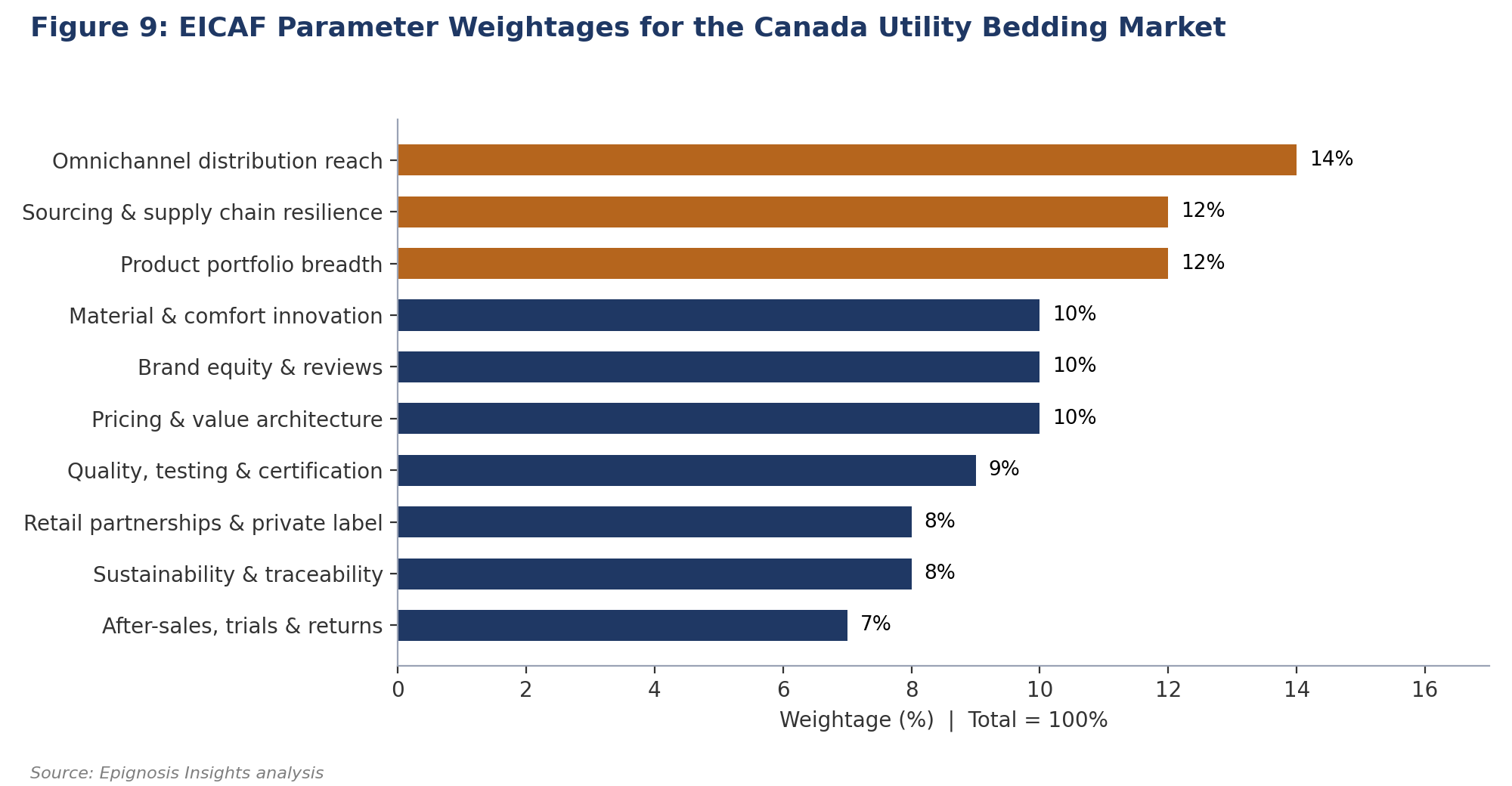
Figure 9: EICAF Parameter Weightages for the Canada Utility Bedding Market
EICAF Scoring Method
Each company is assigned a score from 1 to 5 against every parameter, and the weighted score is calculated as Company Score × Parameter Weightage. The resulting EICAF score allows a like-for-like comparison of retailers, brand owners and manufacturers that compete through very different business models. This is particularly relevant in the Canada utility bedding market, where a vertically integrated sleep retailer, a mass merchant with private-label bedding and a direct-to-consumer foam pillow brand may each hold strong positions while scoring highly on different parameters.