
From Scrap Collection to Automated Processing: How Capital Investment Is Creating Scale Advantages in the Global Scrap Recycling Market
Executive Summary
Global Scrap Recycling Market is estimated to reach a recycling volume of 1,472 million tons by 2033 with a CAGR of 5.4% during the forecast period.
Producer responsibility policies are changing the economics of scrap collection by moving part of the cost and organizational responsibility for end of life material management from municipalities and recyclers toward producers and producer responsibility organizations. In the Scrap recycling market, this can improve collection economics where previously low value or geographically dispersed material was commercially unattractive to recover.
The EU Waste Framework Directive requires extended producer responsibility schemes to establish collection coverage, reporting systems and financial mechanisms, with producers generally bearing at least 80% of necessary costs for schemes established to meet EU waste management targets. This changes recycler economics because collection contracts can increasingly include an external funding component rather than relying solely on the resale value of recovered material.
India provides a particularly useful example of policy translating into physical collection infrastructure. Its Steel Scrap Recycling Policy and Vehicle Scrapping Policy have supported the development of registered vehicle scrapping facilities. As of March 2026, India had 134 operational RVSFs across 22 states and union territories, which had processed 465,393 vehicles. Domestic scrap consumption increased from 25.58 Mt in FY2019 to 33.36 Mt in FY2024, while EAF capacity increased from 40.51 Mt to 43.99 Mt.
For the Scrap recycling market, the strategic impact is therefore a potential shift from commodity driven collection toward policy supported collection networks. Producer funded systems can make previously marginal collection routes viable, improve material traceability and provide recyclers with more predictable feedstock. However, the commercial benefit depends on how responsibility is allocated between producers, collection organizations, municipalities and recyclers. Countries with enforceable collection targets, producer financing and centralized reporting are better positioned to convert policy obligations into additional recoverable scrap volumes.
Key Highlights
- Industrial Scrap leads with 32%, reflecting its recurring generation pattern and relatively predictable collection volumes from manufacturing operations.
- Construction and Demolition Scrap accounts for 28%, making it the second largest source and a critical contributor to future ferrous scrap availability as infrastructure and buildings reach replacement cycles.
- End of Life Vehicles represents 20%, giving recyclers access to a concentrated source of multiple metals. Its strategic importance is increasing as vehicle composition shifts toward greater aluminum, copper and advanced steel usage.
- Consumer and Household Scrap contributes 12%, but recovery economics vary considerably because material is geographically dispersed and collection costs can be higher relative to concentrated industrial streams.
- Commercial Scrap represents 8%, primarily consisting of material generated across commercial facilities. Its smaller share reflects greater fragmentation compared with industrial scrap generators.
Analyst View
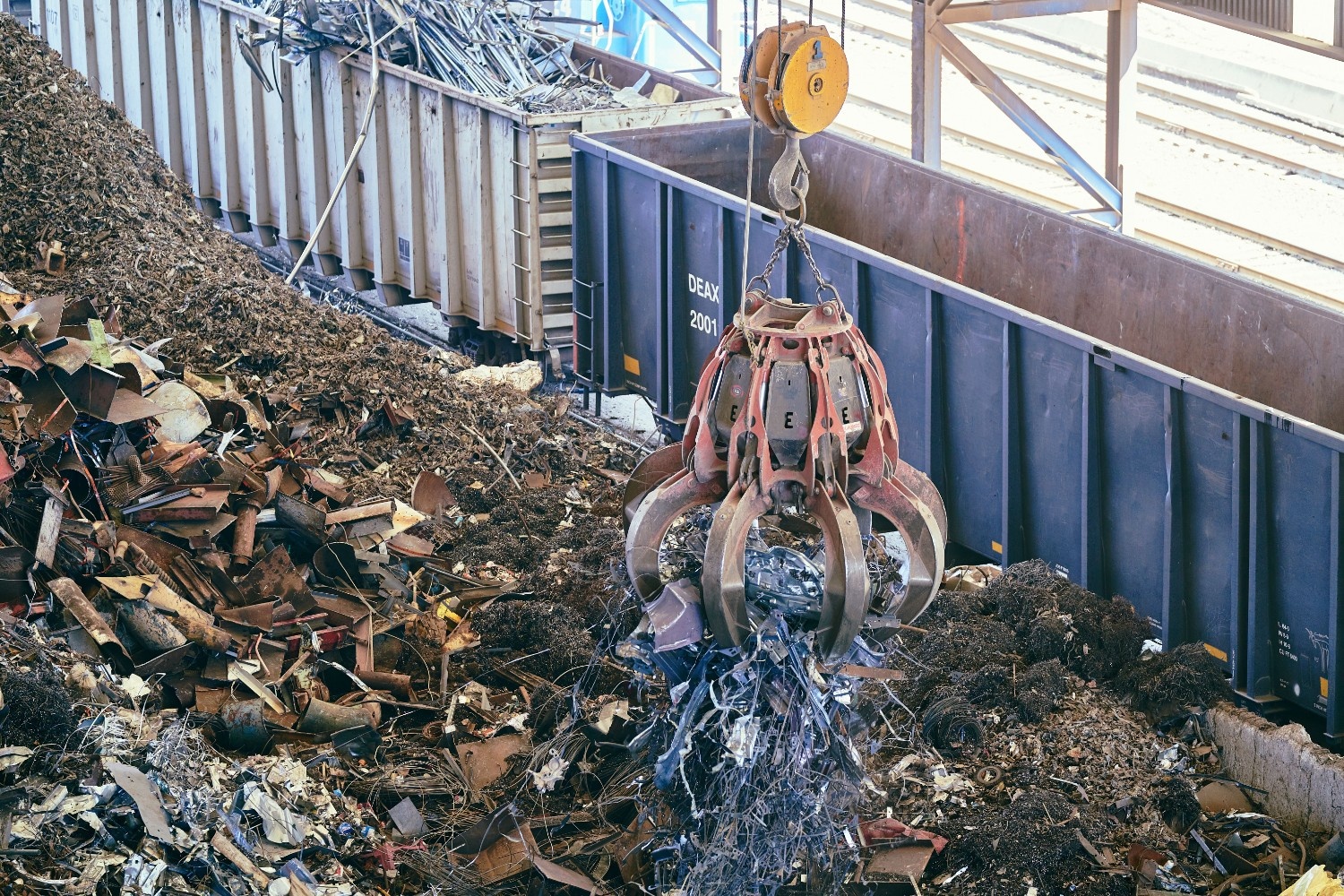
“Capital intensity is becoming a structural differentiator in the Scrap recycling market, particularly as recyclers move beyond basic collection and baling toward automated shredding, sensor based sorting, advanced separation, non ferrous recovery and environmental control systems. Large operators can spread these fixed investments across higher throughput, reducing processing cost per tonne and improving recovery yields. This creates a measurable advantage when scrap prices fluctuate because operators with greater processing efficiency can preserve margins even when the spread between purchase and selling prices narrows. China illustrates the scale effect: the country has more than 700 steel scrap recycling enterprises, with reported steel scrap processing capacity exceeding 150 million tonnes annually. This represents a substantial installed processing base, although utilization differs across facilities.
The Scrap recycling market also rewards scale through procurement. Large recyclers can operate wider collection networks, purchase directly from industrial generators, consolidate fragmented loads and optimize logistics across multiple facilities. This reduces dependence on intermediaries and improves feedstock consistency. The advantage becomes particularly important for high quality scrap, where competition from steelmakers and exporters can increase procurement costs.
Technology investment further widens the gap. A high throughput shredder combined with automated sorting can separate ferrous and non ferrous fractions at significantly greater consistency than manual processing, allowing large recyclers to capture value from mixed end of life material. Smaller operators often face a different economics model, where capital expenditure must be justified against lower throughput and regional feedstock availability.”
About Research
The Scrap recycling market is hypothesized to shift from volume driven competition toward quality, processing efficiency, and feedstock control as demand for secondary metals increases faster than the availability of clean, specification compliant scrap.
Hypothesis 1: Regions with expanding EAF steelmaking capacity will demonstrate stronger scrap demand growth than regions where primary blast furnace production remains dominant.
Hypothesis 2: Recyclers controlling direct relationships with industrial generators, ELV dismantlers, and large demolition contractors will achieve more stable margins because they can reduce dependence on intermediaries and secure higher quality feedstock.
Hypothesis 3: Investment in automated sorting, shredding, and material separation will generate a measurable margin advantage by increasing recovery yields from mixed and lower grade scrap. Hypothesis 4: Non ferrous scrap will experience faster value growth than ferrous scrap because aluminum, copper, and other high value metals provide stronger economic incentives for advanced recovery and processing.
Hypothesis 5: Producer responsibility regulations and recycled content requirements will formalize collection channels and increase the economically recoverable scrap pool, particularly for vehicles, electronics, packaging, and consumer products.
Hypothesis 6: Large recyclers with integrated collection, processing, logistics, and downstream customer relationships will gain market share as capital requirements for advanced facilities increase.
Hypothesis 7: Digital traceability and verified recycled content will increasingly influence procurement decisions, enabling processors to differentiate premium quality material rather than selling predominantly against broad commodity grades. Overall, the Scrap recycling market is expected to reward companies that combine feedstock security, processing scale, technology, and downstream integration rather than those competing solely on collection volume.