Key Findings
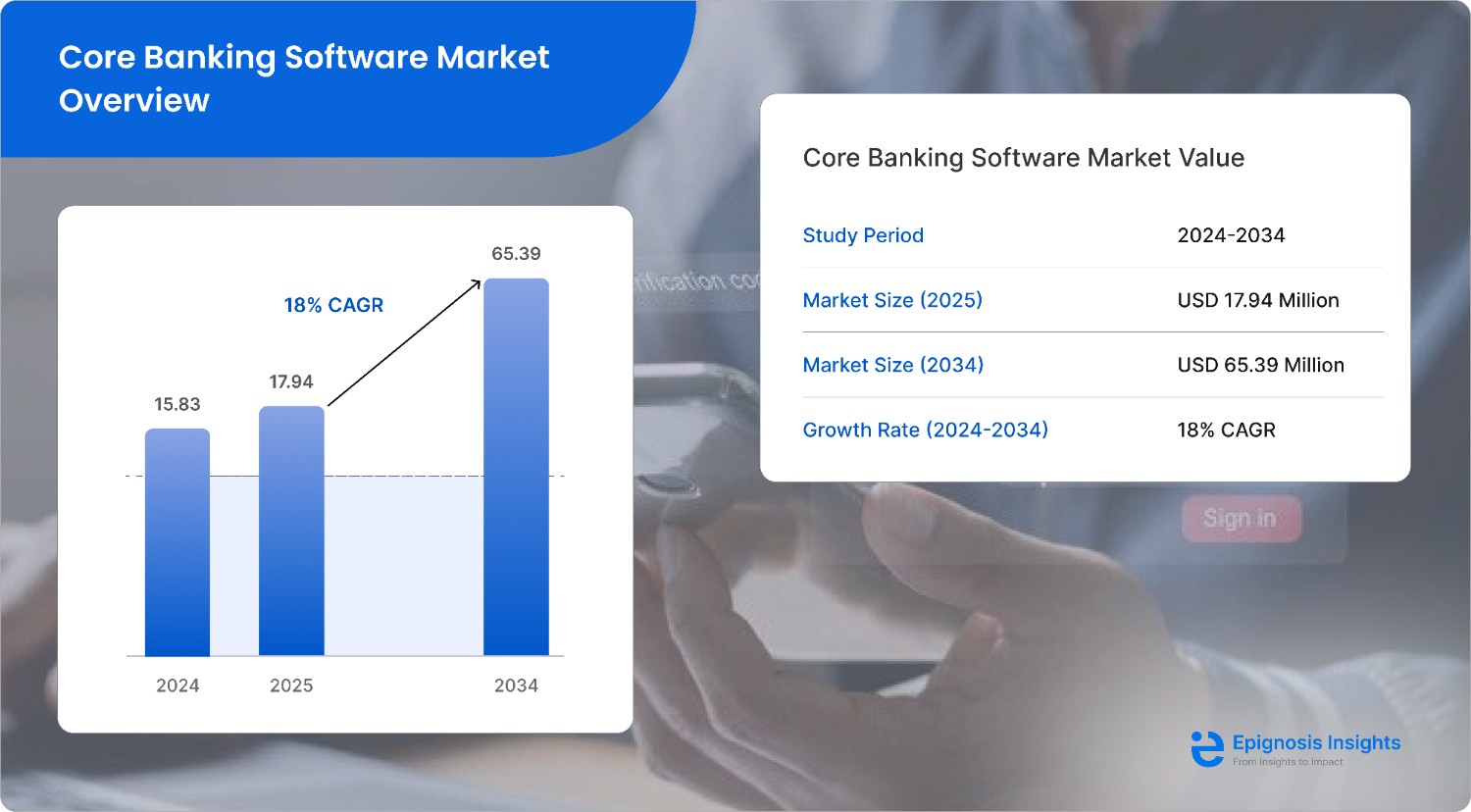
- Global core banking software market was valued at USD 15.83 billion in 2024, reflecting increasing investment in modern banking infrastructure.
- Global core banking software market is projected to reach approximately USD 65.39 billion by 2034, supported by sustained digital transformation across financial institutions.
- Global core banking software market is expected to experience its strongest annual growth around 2028, with a YoY growth rate of 16.83%.
- The global core banking software market is projected to maintain double-digit annual growth throughout the forecast period, despite gradual growth moderation after 2028.
- The global core banking software market is estimated to register an 18.0% CAGR during 2027–2034, indicating strong long-term expansion potential.
- Legacy core system modernization and replacement programs are expected to remain major growth catalysts for the global core banking software market.
- Increasing adoption of cloud-native, SaaS, API-first, and composable banking platforms is reshaping the global core banking software market.
Core Banking Software Market Outlook
Core Banking Software Market recorded a market value of USD 17.94 billion in 2025 and is estimated to reach a value of USD 65.39 billion by 2034 with a CAGR of 18% during the forecast period.
Core Banking Software Market Multi-Currency & Cross-Border Banking Analysis
Multi-currency and cross-border functionality is becoming a critical differentiator in the core banking software market, as banks increasingly support international customers, multinational businesses, remittances, global trade, foreign-exchange transactions, and cross-border account structures. A modern core platform must therefore support multiple currencies, currency conversion, FX pricing, nostro/vostro accounts, correspondent banking, international payment routing, and real-time transaction processing. The IMF estimates that the global cross-border traditional and crypto payment market approached US$1 quadrillion in 2024, highlighting the enormous transaction ecosystem that banking infrastructure must support.
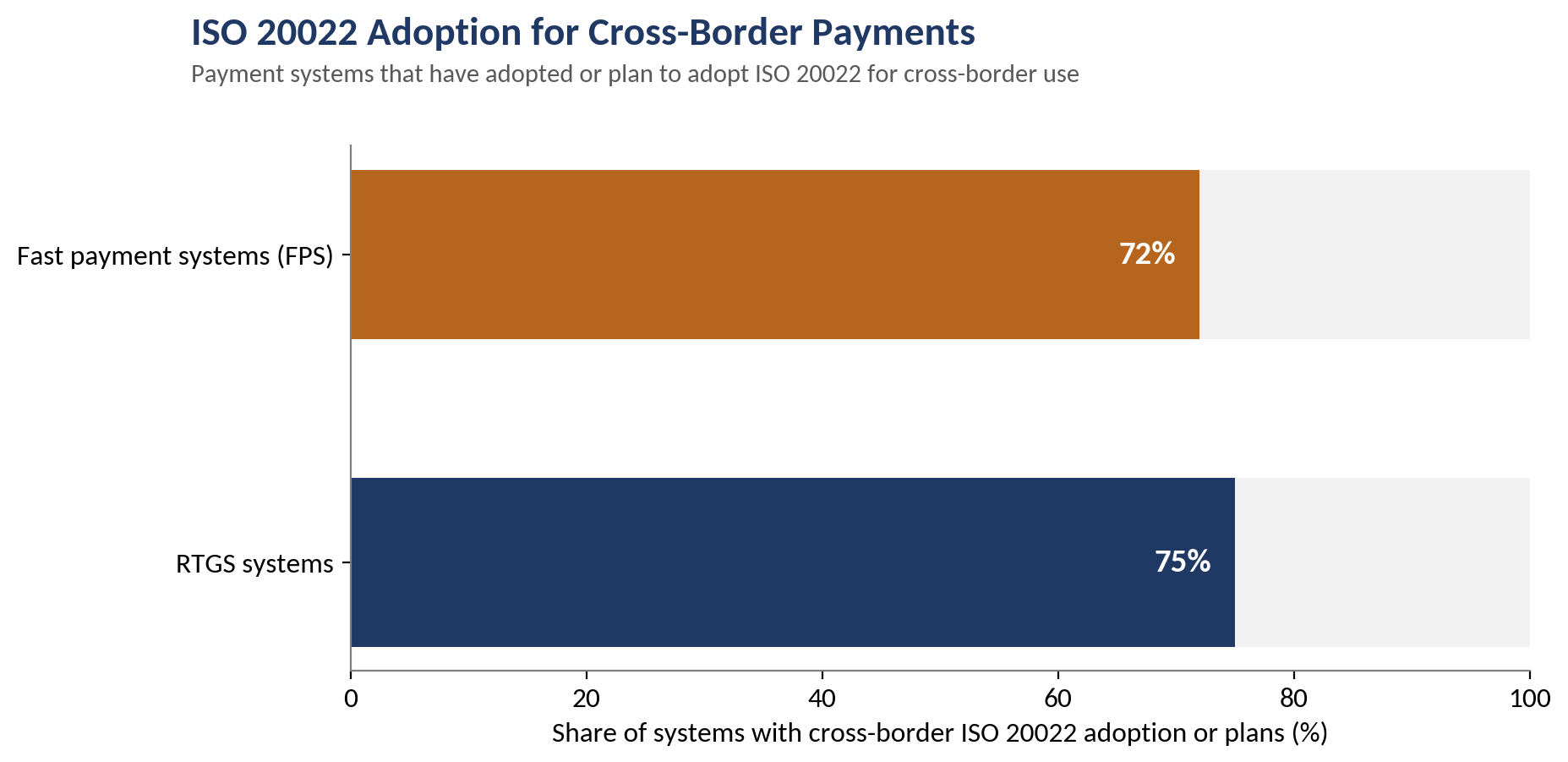
The core banking software market is also being influenced by the increasing standardization of cross-border payment messaging. Swift reported that more than 1.6 million ISO 20022 cross-border payment messages were exchanged daily across 170 sending and 220 receiving countries, demonstrating the scale of international payment connectivity. For core platforms, ISO 20022 compatibility improves structured payment data, interoperability, transaction screening, reconciliation, and compliance workflows. BIS research also indicates that 72% of responding fast-payment systems and 75% of responding RTGS systems had either fully adopted or planned to fully adopt ISO 20022 for cross-border payments.
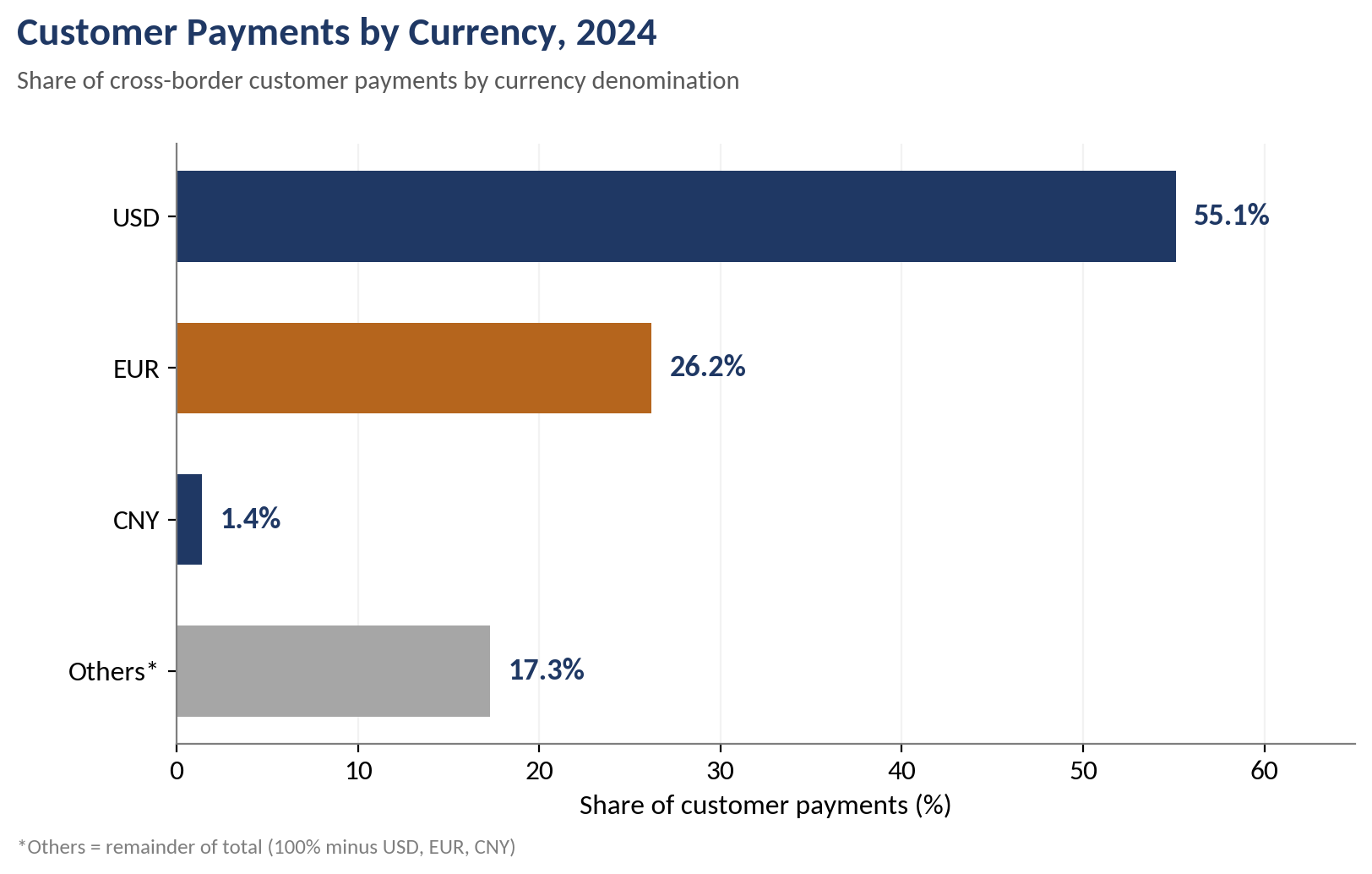
The strongest opportunities for vendors are therefore in real-time multi-currency ledger management, automated FX conversion, cross-border payment orchestration, ISO 20022-native processing, sanctions screening, reconciliation, and API-based connectivity with global payment networks. The ability to handle multiple currencies and jurisdictions within a unified core is increasingly important as banks seek faster international settlement, lower operational costs, and improved customer experiences.
Global Core Banking Software Market Cybersecurity & Regulatory Compliance Analysis
Cybersecurity and regulatory compliance are becoming core selection criteria in the core banking software market, as banks increasingly depend on digital ledgers, APIs, cloud infrastructure, real-time payments, and third-party technology providers to operate critical financial services. Modern core platforms must incorporate encryption, identity and access management, privileged-access controls, transaction monitoring, fraud detection, audit trails, data-loss prevention, vulnerability management, and automated regulatory reporting. The threat environment remains significant: the European Banking Authority reported that 58% of banks experienced at least one cyberattack in the second half of 2024, while DDoS attacks, identity theft, and data exfiltration or manipulation remain important attack techniques.
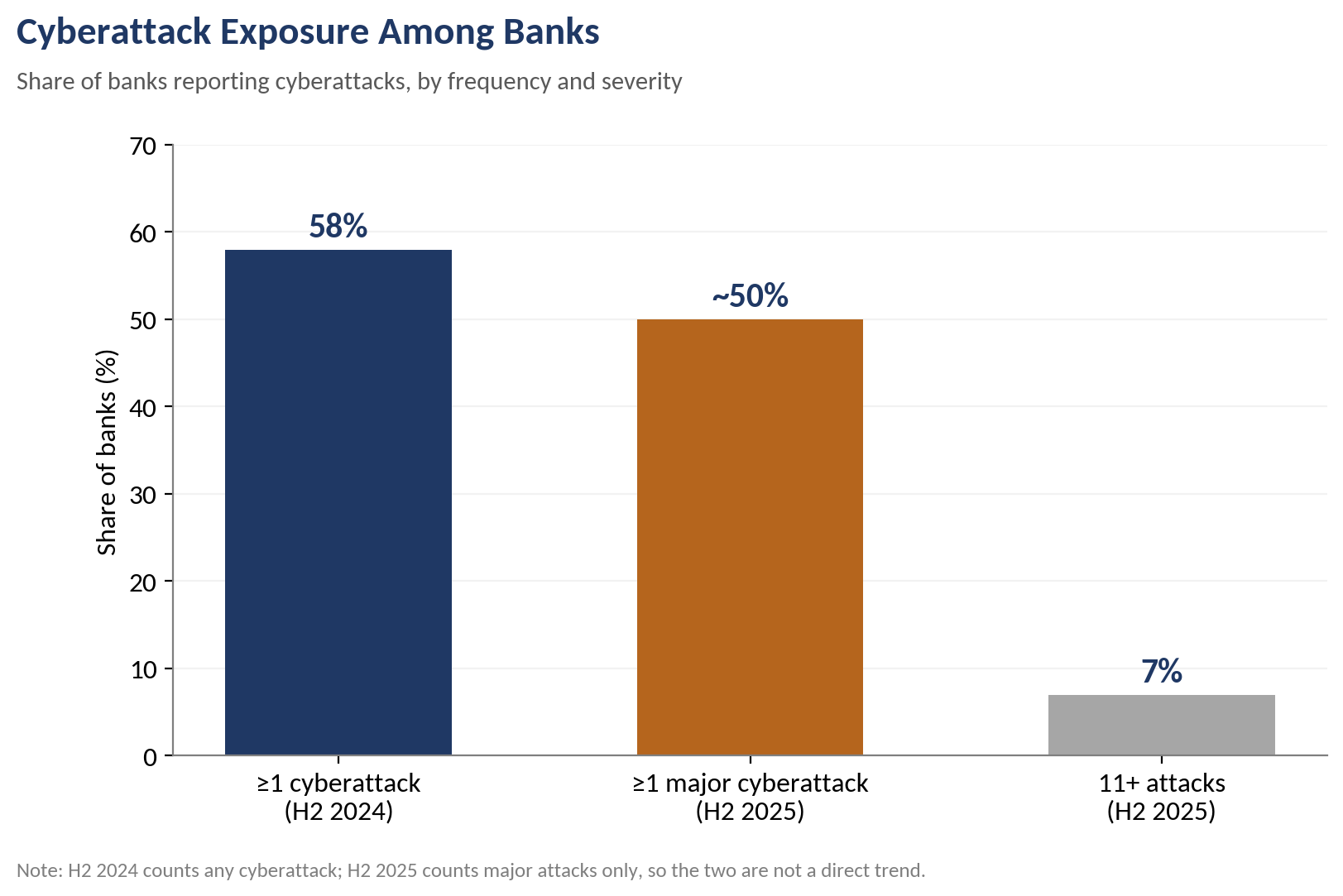
Regulatory requirements are simultaneously expanding the technology capabilities expected from core banking platforms. The EU's Digital Operational Resilience Act (DORA) has established requirements covering ICT-risk management, incident classification and reporting, resilience testing, and third-party technology risk. During 2025, 3,383 major ICT-related incidents were reported across EU financial sectors under the DORA framework, demonstrating the scale of operational-resilience requirements. For the core banking software market, this creates demand for platforms capable of maintaining continuous auditability, automated compliance controls, resilient infrastructure, incident-response workflows, and detailed third-party dependency monitoring. Basel Committee operational-resilience guidance similarly emphasizes governance, business continuity, critical-operation mapping, third-party dependency management, incident management, and resilient ICT including cybersecurity.
For vendors competing in the core banking software market, differentiation will increasingly depend on built-in security architecture, regulatory adaptability, automated compliance, cyber-resilience, and the ability to protect banking workloads across on-premise, hybrid, and cloud environments.
Total Cost of Ownership & Commercial Model Analysis
Total cost of ownership (TCO) is becoming a critical purchasing criterion in the core banking software market, as banks increasingly evaluate platforms based on the full lifecycle cost rather than headline license or subscription fees. The commercial structure can include software licensing, SaaS subscriptions, implementation, systems-integration services, data migration, customization, cloud infrastructure, cybersecurity, support, training, upgrades, and costs associated with operating legacy and new systems simultaneously. FIS notes that the initial license fee can represent less than half of lifetime TCO, while maintenance or recurring license charges can average approximately 15–22% of the initial license value.
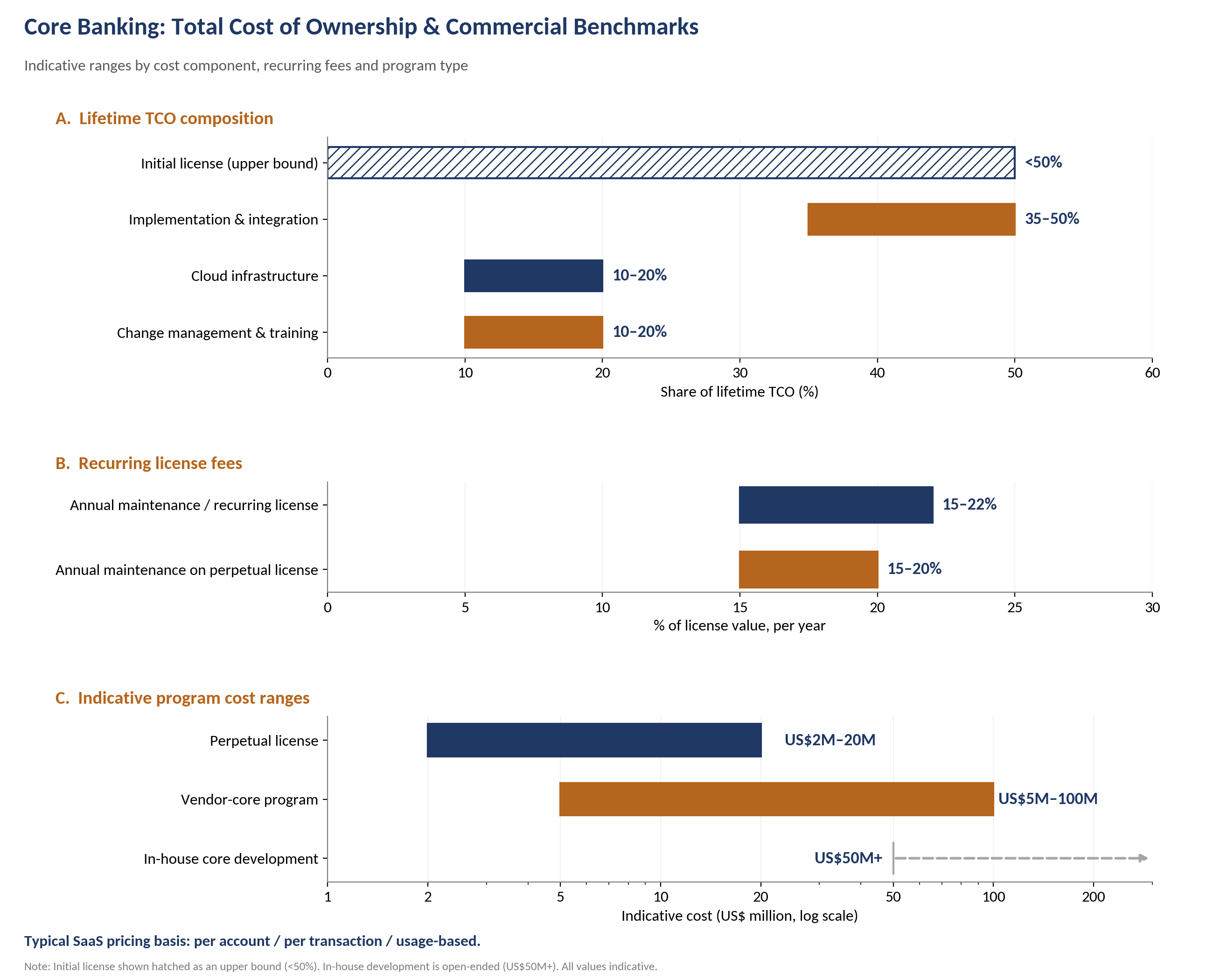
Cloud-native vendors are shifting the core banking software market toward subscription, per-account, transaction-based, consumption-based, and hybrid pricing structures. This reduces upfront capital requirements but can create variable operating expenses as customer accounts and transaction volumes increase. Industry buyer research indicates that pricing can be structured around accounts, customers, transactions, capacity, or negotiated platform fees, while implementation and integration can exceed the software license itself. For banks undergoing modernization, migration costs can become particularly significant because legacy and modern cores may need to operate in parallel during phased transformation. Consequently, buyers increasingly compare five- to ten-year TCO, scalability economics, contract flexibility, integration requirements, exit costs, and vendor lock-in rather than comparing license prices alone.
Core Banking Product Roadmap Analysis
Product roadmaps in the core banking software market are increasingly shifting from periodic feature releases toward continuous modernization, composable capabilities, embedded AI, cloud-native deployment, real-time processing, and automated upgrades. Leading vendors are prioritizing modular architectures that allow banks to replace or enhance individual capabilities without undertaking a complete core replacement. Temenos, for example, positions its latest Core platform around composability and embedded AI, while its recent roadmap emphasizes faster deployment, platform performance, AI adoption, open banking, and payment-related regulatory requirements. The core banking software market is also moving toward AI-first functionality, with vendors incorporating conversational interfaces, AI agents, intelligent workflows, and AI-assisted product development. Temenos reported that its 2025 roadmap included a GenAI Copilot for Core and an AI agent for sanctions screening, while Oracle has introduced an AI-infused banking platform with autonomous AI agents and intelligent decisioning.
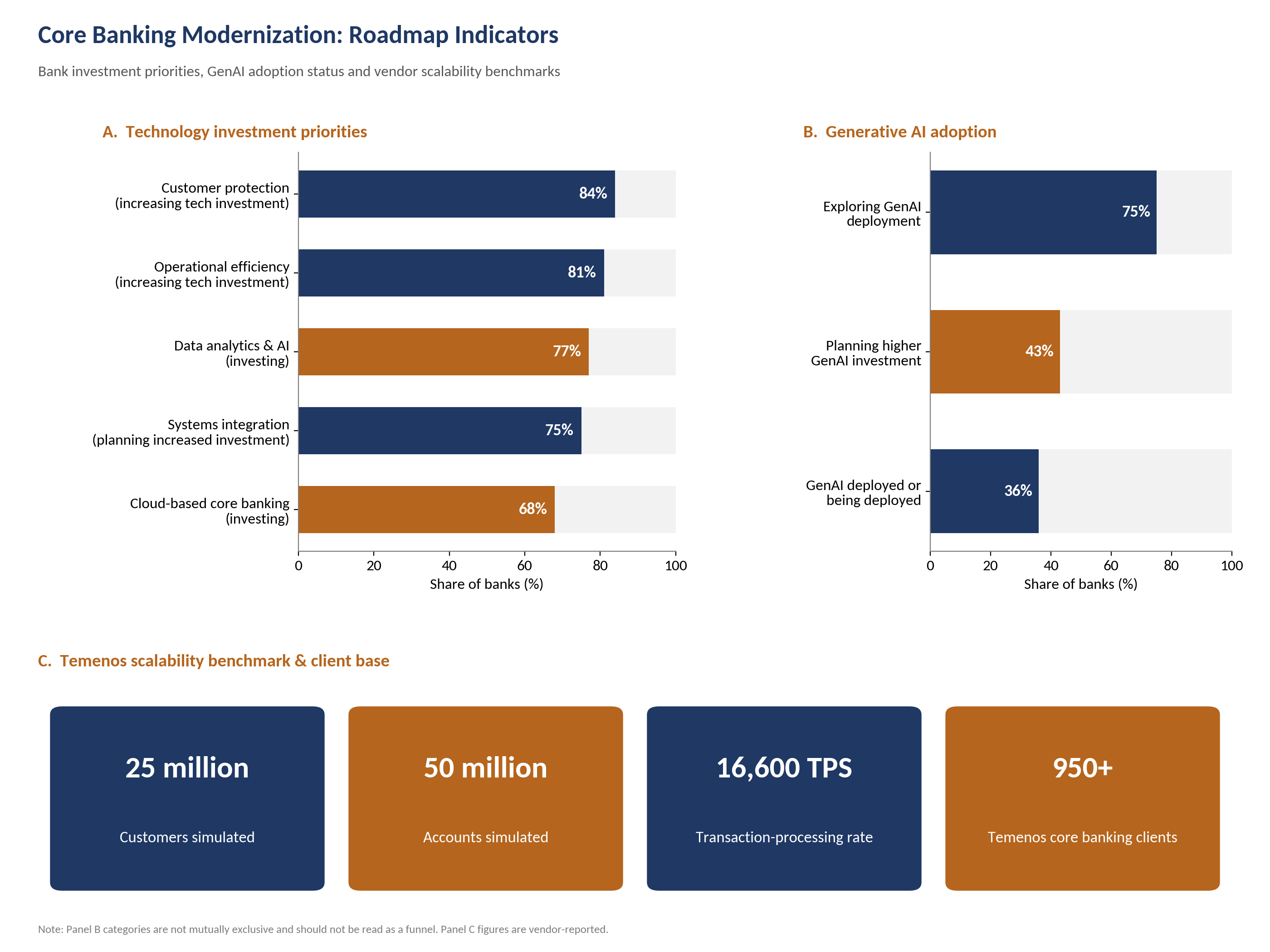
Cloud scalability is another major roadmap priority. Temenos demonstrated a benchmark involving 25 million customers, 50 million accounts and 16,600 transactions per second, illustrating the performance levels vendors are targeting for next-generation platforms. Mambu's 2026 roadmap similarly added AI capabilities, deeper Swift payment connectivity, and automation across lending and payments. Consequently, future roadmaps are expected to emphasize continuous delivery, cloud SaaS, API-first integration, AI agents, real-time ledgers, payment interoperability, cybersecurity, automated compliance, and progressive legacy modernization rather than large periodic platform replacements.
Customer & Installed-Base Analysis
Customer and installed-base strength is a major competitive differentiator in the core banking software market, because banks typically retain core platforms for long periods due to migration complexity, regulatory requirements, data dependencies, and operational risk. Vendors with large installed bases benefit from recurring maintenance, subscription, upgrade, and professional-services opportunities while also gaining extensive implementation experience across banking environments. Temenos, for example, reports more than 950 core banking clients across 150+ countries, with its platform serving retail, business, corporate, wealth, and payments operations. Its installed base also generates approximately 65% of total software licensing, demonstrating the commercial importance of existing customers.
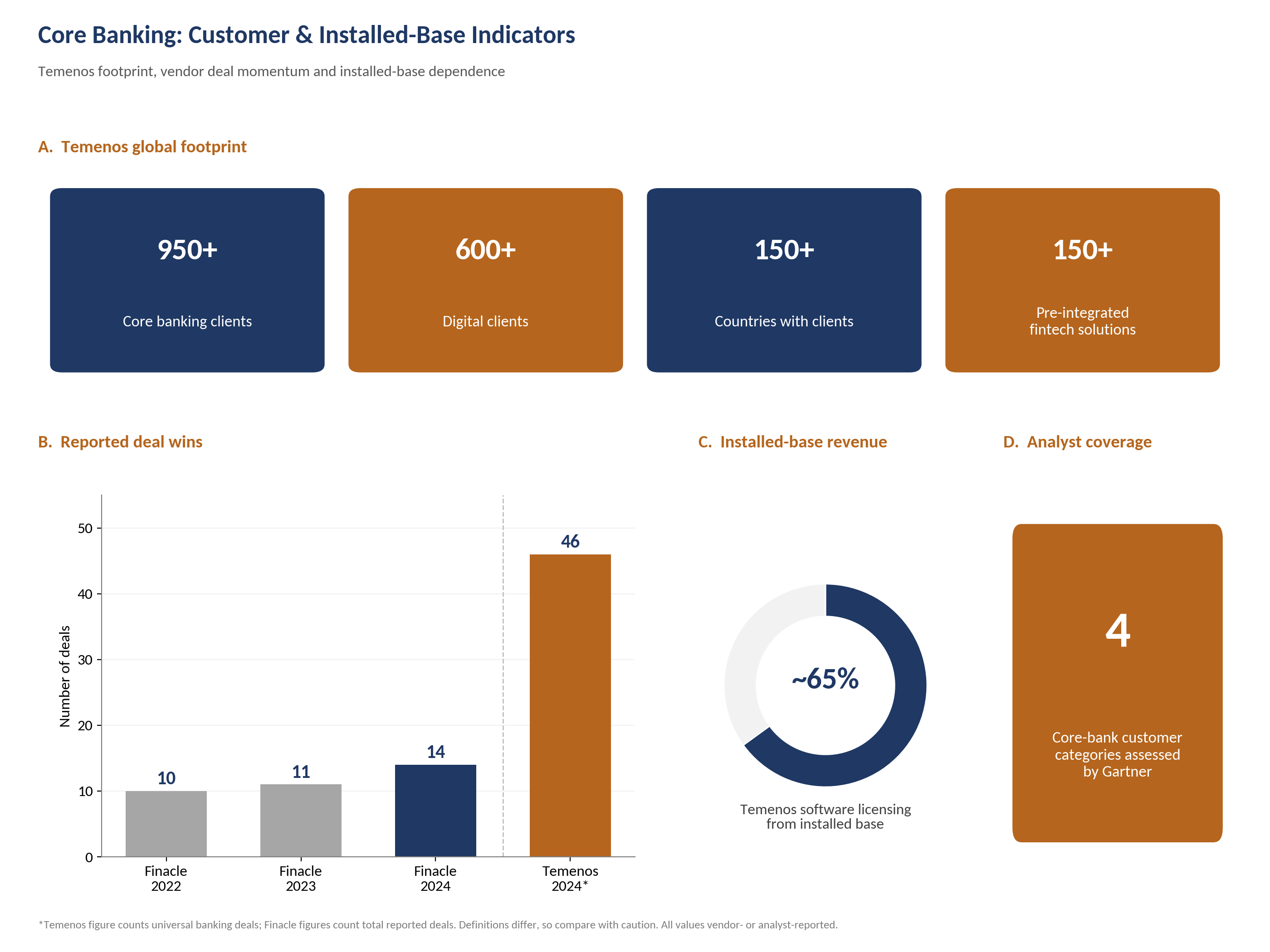
The core banking software market is nevertheless experiencing a shift in customer composition, with established universal banks increasingly joined by digital banks, fintechs, regional institutions, credit unions, and specialist financial institutions. Vendor selection is becoming more capability-driven, with banks evaluating cloud nativeness, interoperability, functional granularity, expertise across different bank sizes, and product roadmap viability. Gartner's 2025 European assessment specifically evaluates vendors across small, midsize, large, and digital-bank/fintech customer environments. In addition, new-logo activity provides an important indicator of competitive momentum: Temenos reported 46 new universal-banking customer deals in 2024, while Infosys Finacle recorded 14 deals, compared with 11 in 2023 and 10 in 2022.
The installed base therefore creates substantial switching inertia and recurring revenue visibility, while new customer wins remain essential for expanding vendor share. For the core banking software market, future customer acquisition is expected to increasingly come from banks undertaking progressive modernization, digital-first institutions seeking cloud-native cores, and established banks replacing fragmented legacy environments.
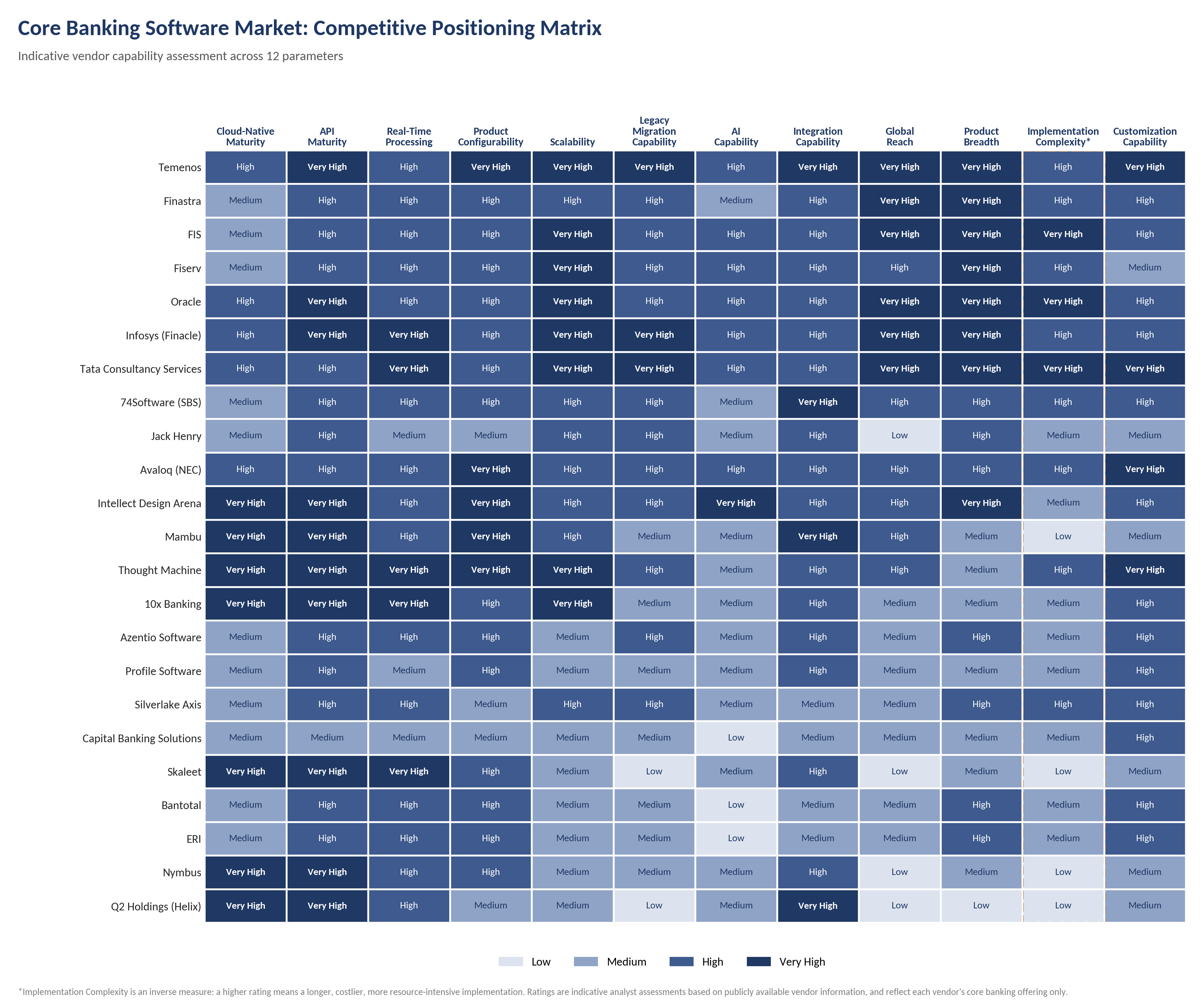
Core Banking Vendor Positioning Matrix
Key companies analyzed within the core banking software market are Temenos , Finastra , FIS , Fiserv , Oracle , Infosys , Tata Consultancy Services , 74Software (SBS) , Jack Henry , Avaloq (NEC) , Intellect Design Arena , Mambu, Thought Machine , 10x Banking , Azentio Software , Profile Software , Silverlake Axis , Capital Banking Solutions , Skaleet, Bantotal, ERI , Nymbus, Q2 Holdings and others.