
Asia Passive Component Prices Climb Sharply in Q3 2026 as AI Demand and Raw Material Costs Converge
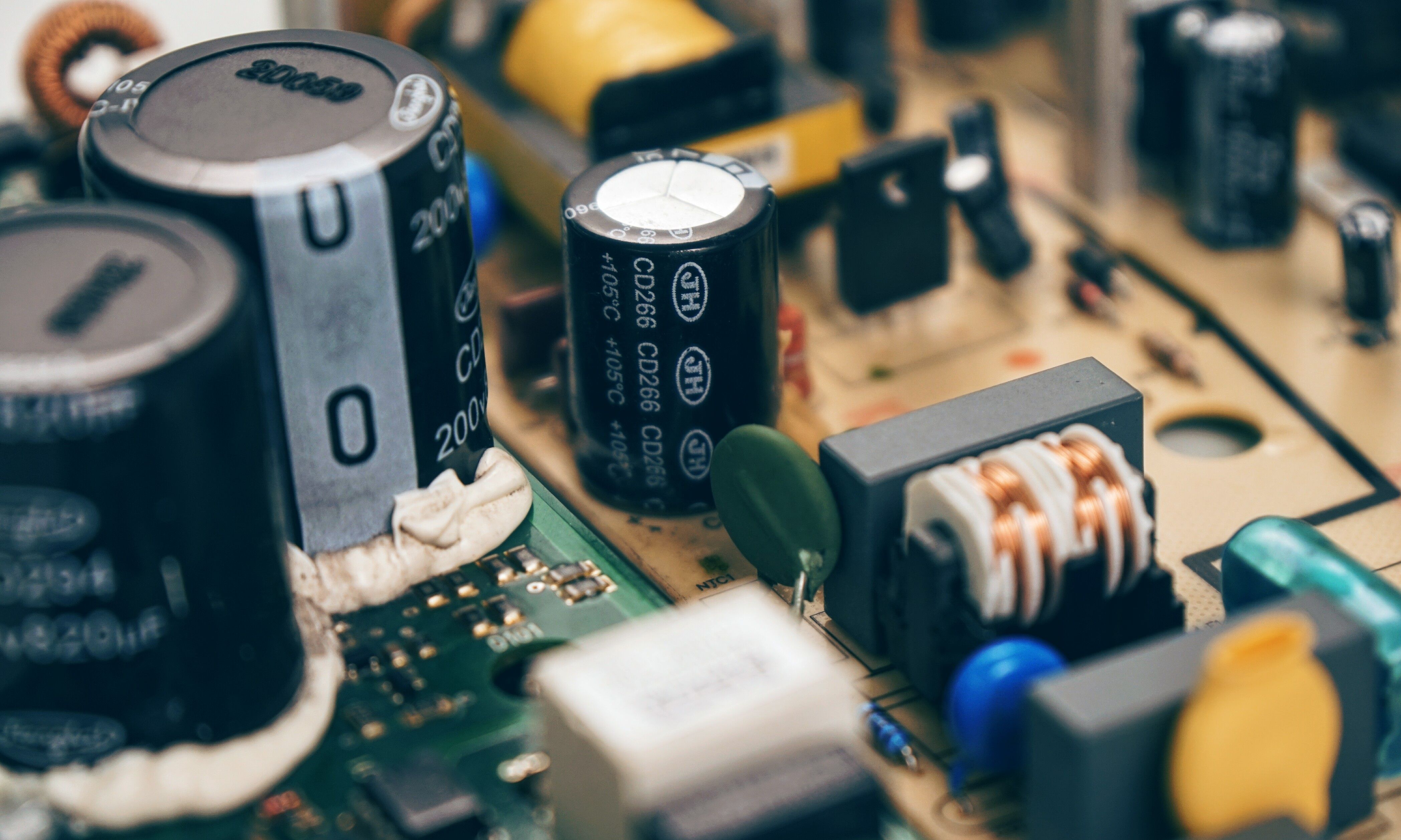
Epignosis Insights, a market research and brand intelligence consultancy, today released its Asia Passive Components Price Tracker – Q3 2026, a quarterly assessment of contract and spot pricing for multilayer ceramic capacitors (MLCCs), tantalum and aluminum capacitors, chip resistors and inductors across Japan, South Korea, Taiwan and mainland China. The tracker finds that the region's passive components market moved from selective to broad-based price inflation during July–September 2026, recording the widest set of supplier price adjustments in several years.
According to the Epignosis Insights Asia Passive Components Price Index, which uses Q3 2025 as its base of 100, high-capacitance and AI-grade MLCCs reached an index level of 205 in Q3 2026, roughly double their level a year earlier. Tantalum capacitors followed at 165, while standard MLCCs, aluminum and polymer capacitors, chip resistors and inductors recorded smaller but still significant gains.
Key Findings
- High-capacitance and AI-grade MLCC prices rose about 24.2% quarter on quarter and 105% year on year.
- Tantalum capacitor prices rose 17.9% quarter on quarter and 65% year on year, the result of acute raw material constraints.
- Standard MLCCs gained 10.0% quarter on quarter, while aluminum and polymer capacitors rose 9.3%.
- Inductors and chip resistors increased by a more moderate 3.5% and 3.3% respectively, as earlier adjustments settled into contract pricing.
- Further increases are expected in Q4 2026, led by AI-grade MLCCs (+8% to +12%) and tantalum capacitors (+8% to +10%).
What Is Driving the Price Cycle
AI Servers Concentrate Demand at the High End
The current cycle is not the product of a broad consumer electronics recovery. Instead, demand is concentrated in AI servers, accelerator boards and automotive electronics, all of which consume more passive content per unit and favor high-capacitance, high-reliability parts. Trade data from the Korea Customs Service show the scale of AI hardware activity, with South Korea's semiconductor exports rising 169.6% year on year to US$281 billion in January–August 2026.
Supplier Price Notices Broaden Into Contract Pricing
Q3 2026 marked the point at which price increases spread from distributors and spot markets into contract pricing. Samsung Electro-Mechanics notified partners of a 30% increase on MLCC products under its markup business code for shipments from August 1, and Taiyo Yuden followed with an MLCC price adjustment from September 1, citing higher costs for barium titanate powder, nickel powder and rare-earth additives. In Taiwan, the Economic Daily News reported that Yageo raised prices across its entire capacitor portfolio from July 1, extending increases to direct customers for the first time in the cycle.
Raw Material Inflation Adds a Second Layer of Pressure
Cost inflation is reinforcing demand-led tightness. Tantalum supply is particularly exposed, with the US Geological Survey identifying the Democratic Republic of the Congo as the source of more than half of global tantalum mine output. Silver, a key input for MLCC terminations and multilayer inductors, remains well above early-2025 levels despite correcting from its January record, and the Silver Institute projects a sixth consecutive global silver market deficit in 2026 of 46.3 million ounces. Nickel powder, barium titanate and PET release film have also added to supplier cost bases.
Regional Pricing Dynamics
Japanese and Korean leaders are concentrating capacity on AI server, automotive and high-reliability grades, supporting pricing power at the high end while reducing availability of commodity consumer parts. Taiwanese suppliers are the main beneficiaries of resulting order transfers, posting record revenues on the back of broad portfolio increases. Mainland Chinese makers are gaining share in consumer and standard industrial grades, where their more competitive pricing is moderating the overall rise in standard-grade components.
Q4 2026 Outlook
Epignosis Insights expects passive component prices across Asia to continue rising in Q4 2026, though at a slower pace than in Q3. Standard MLCCs are forecast to rise 4–6% quarter on quarter, aluminum and polymer capacitors 3–4%, and chip resistors and inductors 2–3% each. Key risks to the outlook include further volatility in silver prices, any pause in hyperscaler capital expenditure, precautionary inventory building by buyers, and the timing of new high-end capacity from Japanese and Korean leaders, which is expected from late 2026 into 2027.
“This is a quality-driven cycle rather than a volume-driven one,” said Abhijith Nair, Senior Research Manager at Epignosis Insights. “AI servers and automotive electronics are absorbing the highest-specification capacity just as tantalum, nickel and silver costs rise, and suppliers are using long-term agreements to lock in that scarcity. Buyers should plan for passive component costs to stay well above 2025 levels into the first half of 2027, and should prioritize long-term supply coverage for constrained high-capacitance MLCC and tantalum part numbers.”
About the Tracker
The Asia Passive Components Price Tracker is published quarterly by Epignosis Insights. It combines a proprietary price index across six component categories with analysis of supplier price notices, distributor and spot quotations, raw material costs and a forward outlook for procurement and strategy teams.
About Epignosis Insights
Epignosis Insights is a market research and brand intelligence consultancy based in Pune, India. The firm delivers market sizing, price tracking, competitive intelligence and syndicated research across multiple industry verticals, helping organizations make evidence-based strategic decisions.