
Global Aircraft De-Ice System Market to Reach US$2,452.4 Million by 2032 as Fleet Growth and Electrification Reshape Ice Protection, Says Epignosis Insights
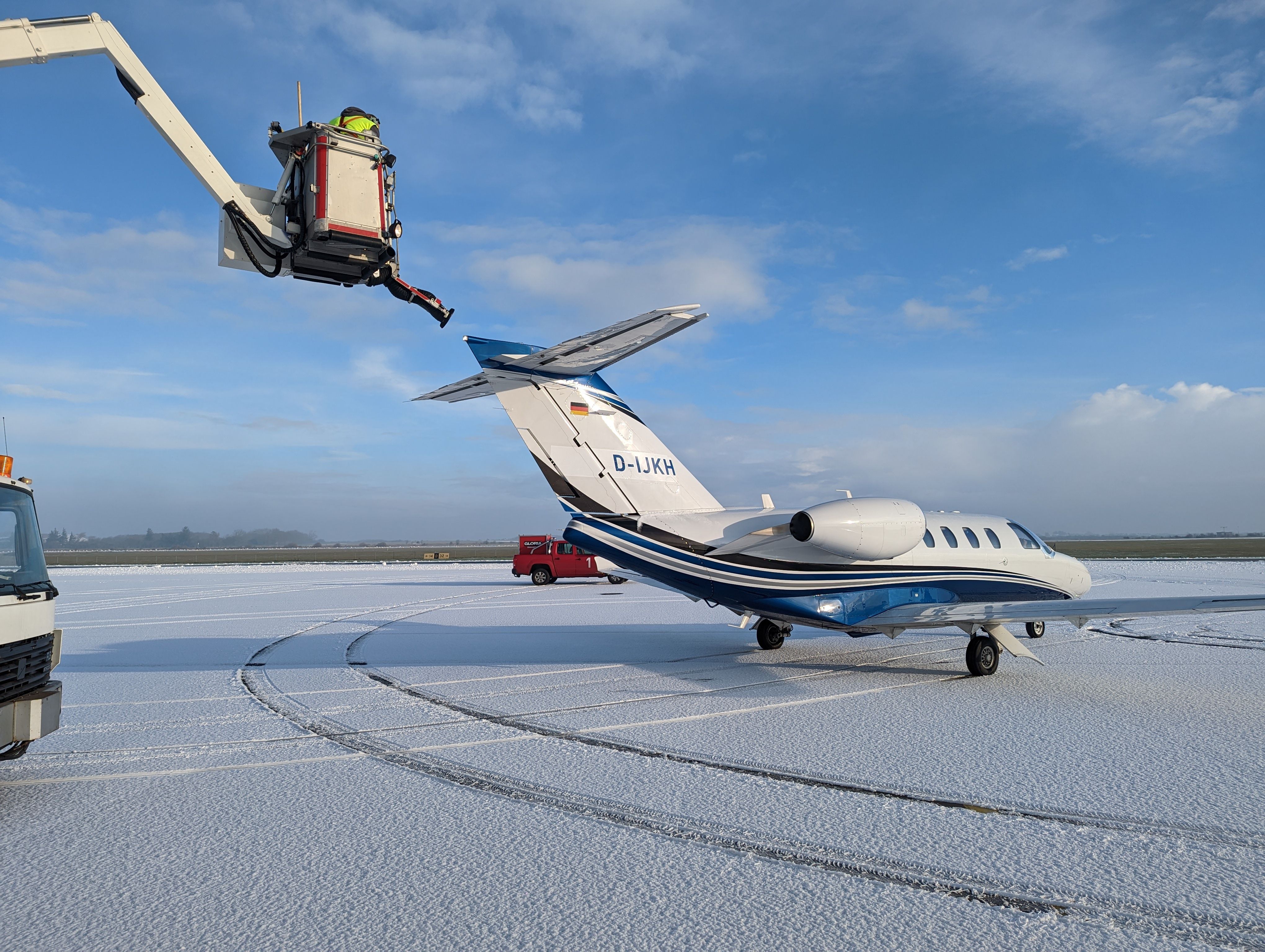
Epignosis Insights has released its latest report, Global Aircraft De-Ice System Market: Analysis by Type, Application and Region. The study estimates the global aircraft de-ice system market at US$1,684.1 million in 2025 and projects it to reach US$2,452.4 million by 2032, expanding at a CAGR of 5.5% over the forecast period. The market is expected to add approximately US$768.3 million in annual revenue between 2025 and 2032.
The report finds that ice protection, one of the most safety-critical systems on any aircraft, is entering a period of steady and accelerating growth. Rising aircraft production, a larger global fleet, stricter icing certification requirements and the industry's move toward more-electric aircraft are together lifting both the volume and the value of ice protection content.
Market Overview: Steady Growth with Rising Momentum
According to Epignosis Insights, annual market growth is expected to rise from 4.6% in 2025 to 6.2% by 2032. Because ice protection systems are certified as part of an aircraft's type design, supplier revenue is anchored in long production programmes and decades of aftermarket support. Line-fit demand follows aircraft deliveries, while aftermarket demand for boot replacement, heater repair and component overhaul grows with the in-service fleet.
Key Findings of the Report
- The market is projected to grow from US$1,684.1 million in 2025 to US$2,452.4 million by 2032 at a 5.5% CAGR.
- Bleed air heated surfaces account for 51.8% of 2025 value, while electro-mechanical systems are the fastest growing technology at 6.4%.
- Electrically heated surfaces are projected to grow from US$468.8 million to US$696.9 million by 2032.
- Propeller protection is the fastest growing application at a 6.0% CAGR.
- North America holds 51.9% of global value, while Asia Pacific is the fastest growing region at 6.5%.
- India is the fastest growing country market at a 7.0% CAGR.
Fleet Growth Anchors Long-Term Demand
Boeing's latest Commercial Market Outlook projects demand for 43,600 new commercial aircraft through 2044, with the global fleet nearly doubling. Every new aircraft requires certified protection for its wings, engine inlets, windscreens and sensors. Epignosis Insights finds that bleed air systems, the standard solution for wing and nacelle anti-icing on most jets, will add about US$406.5 million in annual revenue by 2032, the largest increment of any technology.
Certification Standards Raise the Bar
Icing certification has become more demanding. Since 2015, U.S. and European rules have required many new transport category aircraft designs, particularly smaller regional aircraft, to address supercooled large drop conditions such as freezing drizzle and freezing rain. Meeting these requirements can mean larger protected areas, higher heating capacity or integrated ice detection systems, all of which increase the value of ice protection content on new aircraft programmes.
The Shift Toward Electric Ice Protection
Electrically heated systems and electro-mechanical systems are both growing faster than the overall market. Electrically heated surfaces, which power windscreen, propeller and probe heating and increasingly wing protection on more-electric aircraft, grow at 5.8%. Electro-mechanical systems, which shed ice using a fraction of the energy of thermal systems, grow at 6.4% and are the fastest growing technology in every region. Advances such as carbon nanotube heaters, tested by Collins Aerospace and Embraer, promise lower energy use and lighter weight.
Application Insights
Airfoil protection is the largest application at US$864.6 million in 2025, reaching US$1,265.8 million by 2032. Propeller protection, valued at US$494.2 million, is the fastest growing application and gains the most share, supported by turboprop demand for regional connectivity. Windscreen protection is valued at US$261.4 million in 2025 and grows at 5.0%.
Regional Insights
North America, valued at US$874.0 million in 2025, is led by the U.S. at US$785.4 million, home to the world's largest commercial, business and general aviation fleets. Asia Pacific, valued at US$436.5 million, is the fastest growing region and is expected to reach US$676.9 million by 2032, led by China at US$211.9 million and India at US$102.4 million. Europe, valued at US$306.8 million, is led by Germany at US$153.2 million, with France the fastest growing European market at 6.6%.
Competitive Landscape
The report analyses Collins Aerospace, Safran Aerosystems, Liebherr-Aerospace, Honeywell, Ultra Electronics, Hutchinson Aerospace, THERMOCOAX, Cox & Company, Ice Shield De-icing Systems and other suppliers. Companies are benchmarked using the proprietary Epignosis Insights Competitive Assessment Framework (EICAF), which places the highest weight on OEM platform positions, technology portfolio breadth and electro-thermal readiness.
Analyst Perspective
"Ice protection is moving in two directions at once," said Abhijith Nair, Senior Research Manager at Epignosis Insights. "Bleed air systems on high-rate jet programmes will still deliver most of the new revenue this decade, but the fastest growth is in electrically powered and electro-mechanical systems. Suppliers that secure positions on the next generation of aircraft with electric-ready solutions will define the market in the 2030s."
About Epignosis Insights
Epignosis Insights is a market research and brand intelligence consultancy headquartered in Pune, India. The company delivers syndicated market reports, price trackers, brand health tracking and custom research across aerospace and defense, machinery, chemicals, consumer goods, energy, healthcare, automotive and technology sectors.