Global Aircraft De-Ice System Market
Analysis by Type (Pneumatic De-ice Boots, Weeping Wings, Bleed Air Heated Surfaces, Electrically Heated Surfaces, Electro-Mechanical), Application (Airfoil, Windscreen, Propeller, Others) and Region


Analysis by Type (Pneumatic De-ice Boots, Weeping Wings, Bleed Air Heated Surfaces, Electrically Heated Surfaces, Electro-Mechanical), Application (Airfoil, Windscreen, Propeller, Others) and Region
The Global Aircraft De-ice System Market was valued at US$1,481.0 million in 2022 and US$1,610.0 million in 2024. It is estimated at US$1,684.1 million in 2025 and is projected to reach US$2,452.4 million by 2032, registering a CAGR of 5.5% over the 2025 to 2032 forecast period. The market therefore adds approximately US$768.3 million in annual revenue during the forecast period, and its 2032 value is about 1.66 times the 2022 level.
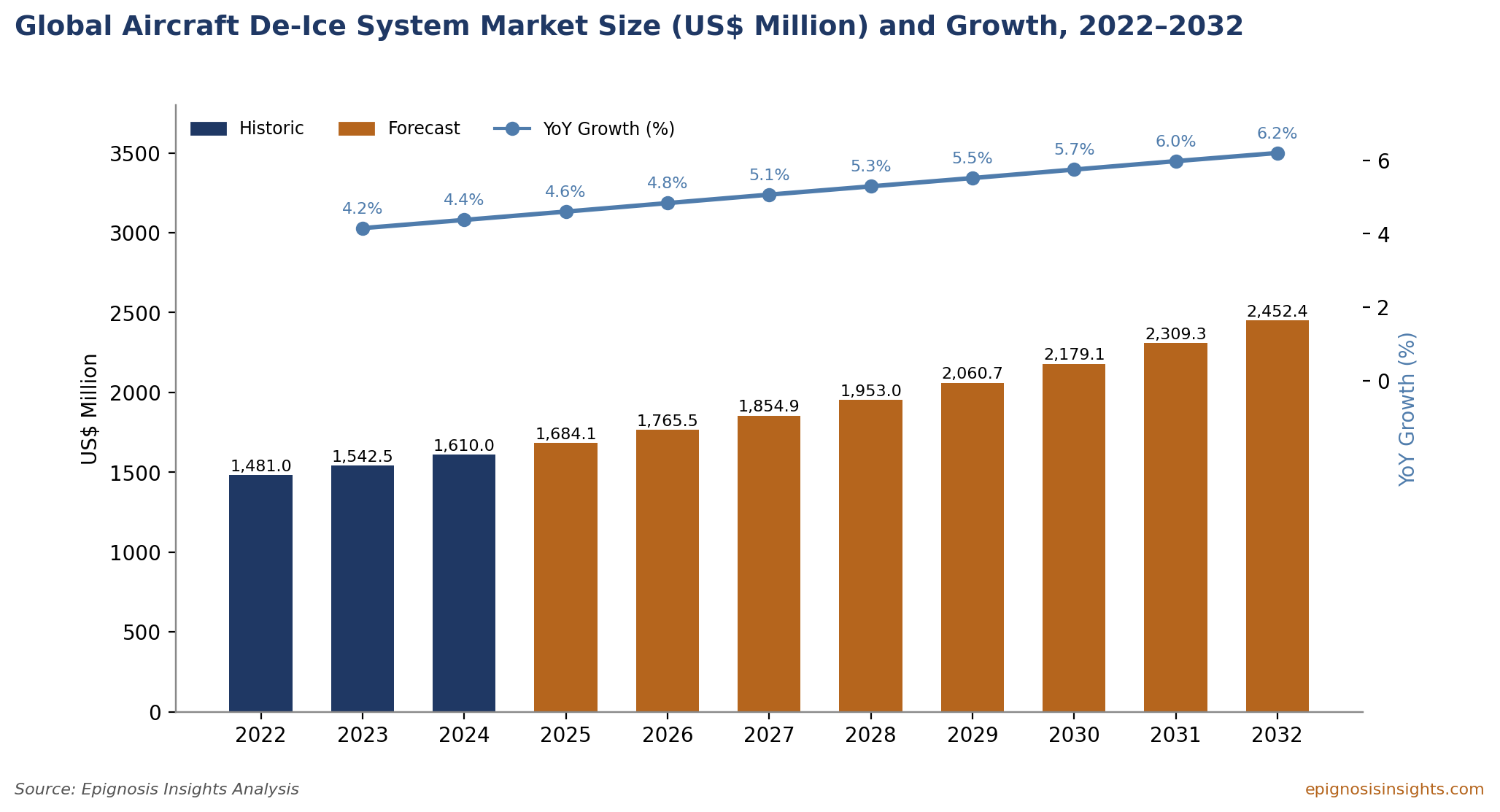
Figure 1: Global Aircraft De-Ice System Market Size (US$ Million) and Year-on-Year Growth, 2022–2032
The growth path is notably smooth and accelerating. Annual growth rises in small, consistent steps from 4.2% in 2023 and 4.4% in 2024 to 4.8% in 2026, 5.5% in 2029 and 6.2% in 2032. This profile reflects the structure of aircraft ice protection demand. Line-fit revenue is tied to multi-year aircraft production programmes, while aftermarket revenue follows the size and utilisation of the in-service fleet. Both move gradually rather than cyclically, so the market behaves more like a long-cycle aerospace systems business than a discretionary equipment category. The progressive acceleration is driven by the recovery of commercial aircraft production rates, the growing share of new-generation aircraft with higher-value ice protection content, and replacement demand from a larger global fleet.
Aircraft de-ice and anti-ice systems protect critical surfaces from the build-up of ice when an aircraft flies through clouds containing supercooled liquid water. Ice on wing leading edges, tailplanes, engine inlets, propellers and windscreens degrades lift, increases drag, disturbs airflow into engines and obscures pilot visibility. Anti-icing systems prevent ice from forming, typically by keeping surfaces continuously warm, while de-icing systems allow a thin layer of ice to form and then remove it periodically through mechanical or thermal means. Because these systems are flight-safety critical and certified as part of the aircraft type design, supplier positions tend to remain stable for the full production life of a programme.
The principal long-term driver is the expansion and renewal of the global commercial fleet. Boeing's Commercial Market Outlook projects demand for 43,600 new commercial aircraft between 2025 and 2044, including 33,285 single-aisle aircraft, 7,815 widebodies, 1,545 regional jets and 955 freighters. Over the same period, the global fleet is expected to nearly double to more than 49,600 aircraft, with roughly 80% of today's in-service aircraft replaced. Every one of these aircraft requires certified ice protection for its wings, engine inlets, windscreens and air data probes.
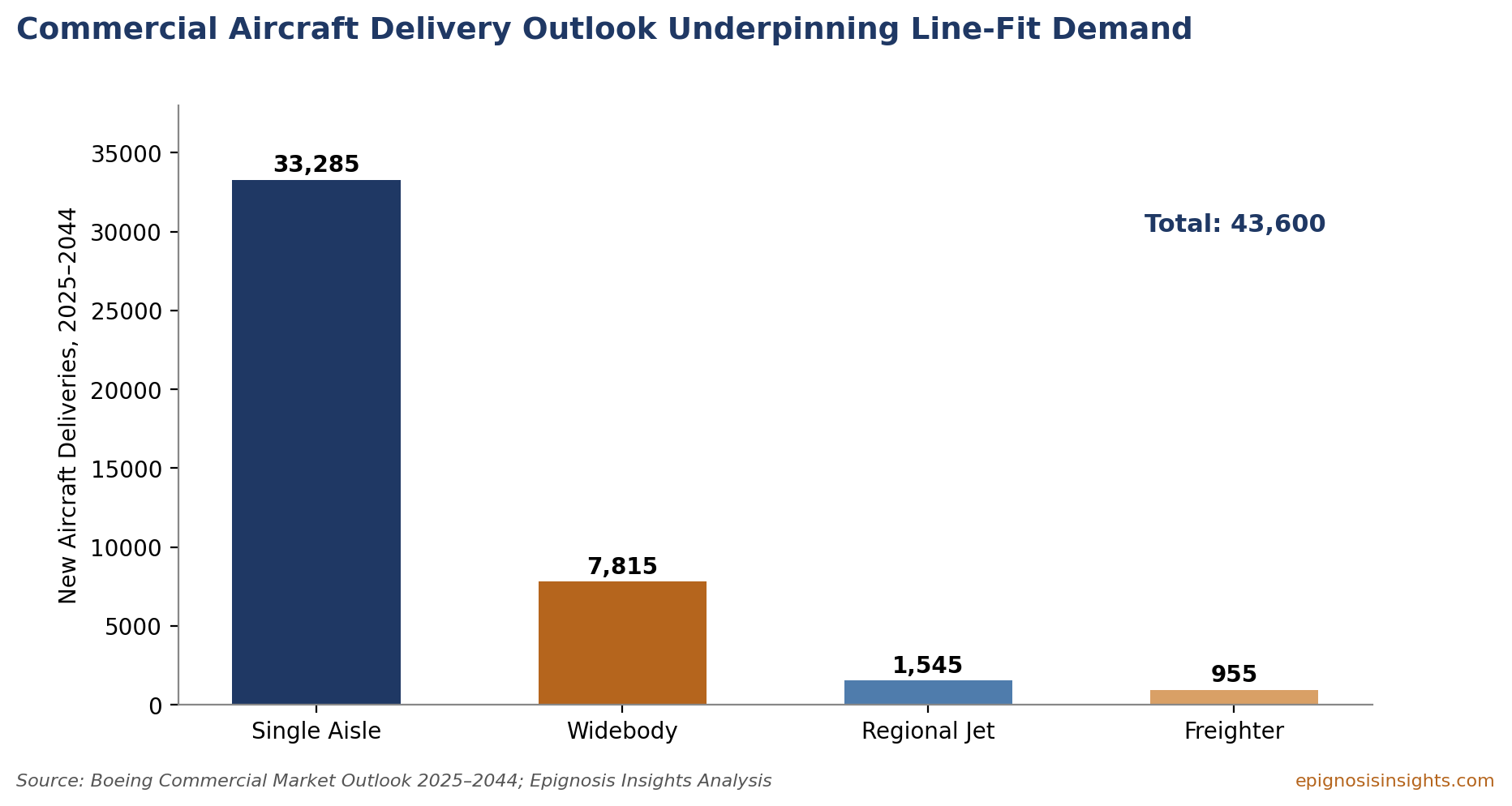 Figure 2: Commercial Aircraft Delivery Outlook, 2025–2044, Underpinning Line-Fit Demand for De-Ice Systems
The composition of future deliveries matters as much as the total. Single-aisle aircraft, which use engine bleed air for wing anti-icing on most current platforms, dominate the outlook and sustain demand for bleed air valves, ducts and piccolo tubes. At the same time, the replacement cycle introduces aircraft designed with a higher electrical content, which gradually expands the opportunity for electrically heated systems. Production rates for commercial aircraft remain below demand, and as manufacturers raise output toward the end of the decade, line-fit revenue for ice protection suppliers is expected to strengthen accordingly, contributing to the accelerating growth profile of the market.
The second driver is the steady tightening of icing certification standards. The U.S. Federal Aviation Administration's final rule on airplane and engine certification in supercooled large drop, mixed phase and ice crystal icing conditions, which took effect on 5 January 2015, introduced 14 CFR 25.1420 and Appendix O to Part 25. Appendix O defines freezing drizzle and freezing rain conditions that lie outside the traditional Appendix C icing envelope. The supercooled large drop requirements apply to new transport category type designs with a maximum takeoff weight below 60,000 pounds or with reversible flight controls, a group that includes many regional turboprops and smaller regional jets, and the European Union Aviation Safety Agency introduced equivalent requirements in its CS-25 certification specifications.
For the de-ice system market, these requirements raise the technical bar for new aircraft programmes. Aircraft must either demonstrate safe operation in supercooled large drop conditions, which can require larger protected areas and higher heating capacity, or detect such conditions and exit them, which increases demand for ice detection sensors and integrated control systems. Either path tends to increase the value of ice protection content per aircraft. Because the rule applies to new type designs rather than to aircraft already in production, its effect on market value builds gradually as new regional, business and utility aircraft programmes enter service during the forecast period.
The main constraint on the market is the operational cost that ice protection systems impose on aircraft. Bleed air systems draw hot, compressed air from the engine compressor, which reduces engine efficiency and can require higher power settings during descent and approach. With fuel representing one of the largest operating cost items for airlines, any system that increases fuel burn faces pressure from operators and aircraft manufacturers. Electrically heated systems avoid bleed extraction, but they require substantial electrical power and generator capacity, adding weight and complexity to the aircraft electrical system.
Maintenance requirements create a further constraint, particularly in the aftermarket. Pneumatic boots degrade with exposure to ultraviolet light, erosion and ozone and must be inspected, repaired and periodically replaced. Weeping wing systems rely on a finite onboard supply of glycol-based fluid, which adds weight and requires replenishment, limiting their appeal outside business and general aviation. These constraints are pushing research toward lower-energy solutions, including hybrid systems that combine passive icephobic coatings with active heating or mechanical removal, and electro-mechanical systems that consume a fraction of the power of continuous thermal protection.
Global Aircraft De-Ice System Market: Technology Landscape by Type
Bleed air heated surfaces are the largest technology segment, valued at US$872.6 million in 2025, equivalent to 51.8% of the market. The segment is projected to reach US$1,279.1 million by 2032 at a 5.6% CAGR, slightly above the market average, and its share edges up to 52.2%. Bleed air systems are standard on most large jet aircraft because they deliver high heat flux and very effective protection in severe icing, which makes them the preferred solution for wing leading edges and engine nacelle inlets on single-aisle and widebody aircraft. Their large installed base and continued use on high-rate production programmes ensure that they contribute the largest single increment of new revenue, approximately US$406.5 million between 2025 and 2032.
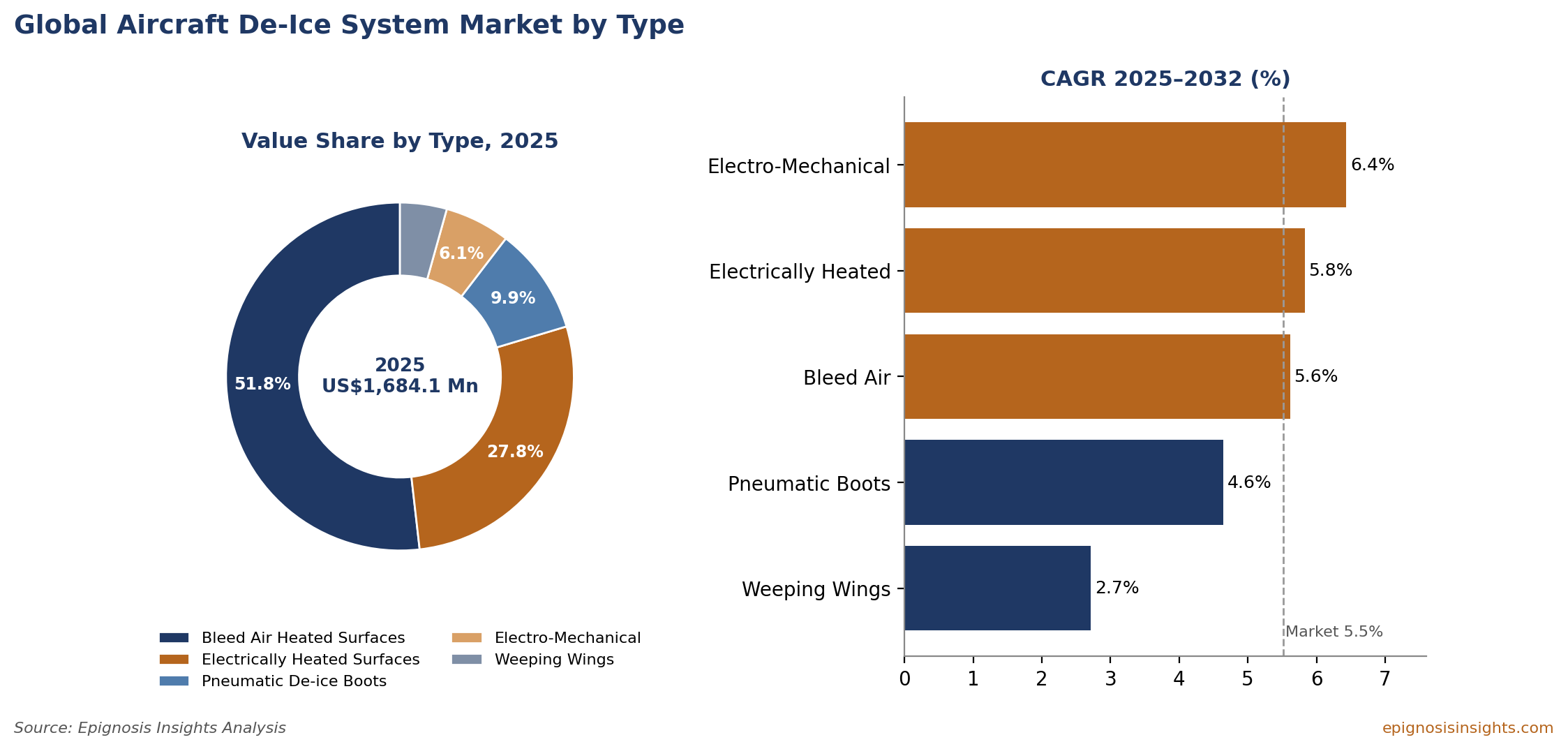 Figure 3: Global Aircraft De-Ice System Market by Type – Value Share (2025) and CAGR (2025–2032)
Electrically heated surfaces, valued at US$468.8 million in 2025, are the second largest segment and grow at 5.8%, reaching US$696.9 million by 2032.
Electro-thermal systems use resistive heating elements embedded in or bonded to the protected surface and can operate continuously as anti-icing systems or in cycles as de-icing systems. They are standard for windscreens, propellers, rotor blades and air data probes, and have also been adopted for wing protection on aircraft with a more-electric architecture. Technology development is focused on lowering power consumption. Collins Aerospace and Embraer have tested carbon nanotube heater technology on a Phenom 300E prototype, reporting a 25% reduction in system-level energy requirement, lower weight and the elimination of chemical etching from the manufacturing process compared with conventional metallic heaters.
Electro-mechanical systems are the fastest growing technology at a 6.4% CAGR, rising from US$102.3 million in 2025 to US$158.3 million by 2032. These systems use electromagnetic actuators or expulsion elements to flex the protected surface and shed accumulated ice, requiring far less energy than thermal protection. Their growth reflects interest from light aircraft, business jets, unmanned aircraft and future electric and hybrid-electric aircraft, where available power is constrained.
Pneumatic de-ice boots, valued at US$167.3 million in 2025, grow at 4.6% and lose share from 9.9% to 9.4%. Boots remain the standard solution for turboprops and light aircraft without leading edge high-lift devices, and they generate significant recurring aftermarket demand. Weeping wings, which exude freezing point depressant fluid through micro-porous panels, are the smallest and slowest growing segment at US$73.2 million in 2025 and a 2.7% CAGR, with their share falling from 4.3% to 3.6%.
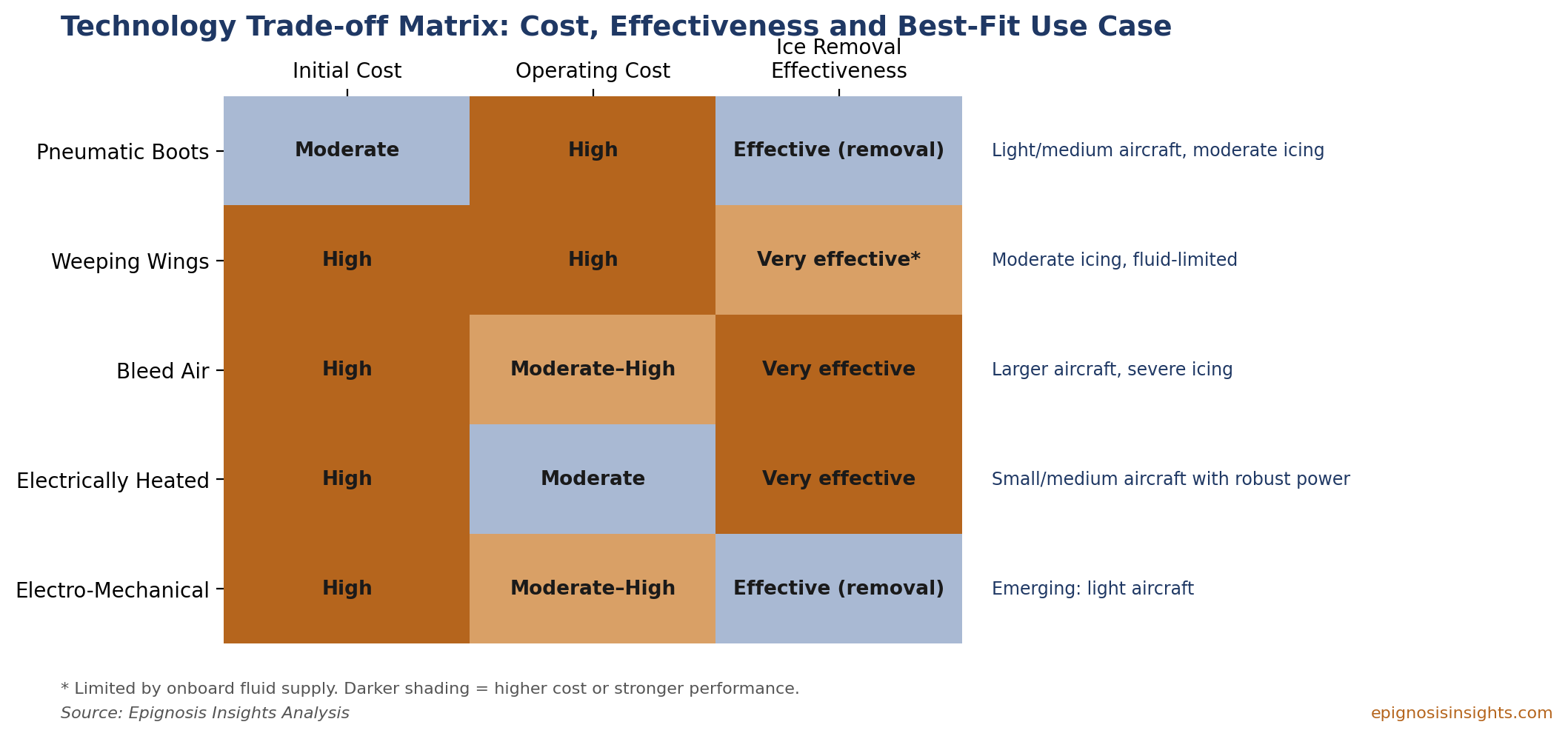
Figure 4: Technology Trade-off Matrix – Initial Cost, Operating Cost, Ice Removal Effectiveness and Best-Fit Use Case
The technology matrix explains these divergent growth rates. Pneumatic boots offer a moderate initial cost but a high operating cost due to maintenance and replacement. Weeping wings carry high initial and operating costs because of fluid consumption. Bleed air and electrically heated systems are both very effective, with electrically heated systems offering a lower operating cost profile where sufficient electrical power is available. Electro-mechanical systems carry a high initial cost but address the most power-constrained platforms. Over time, technologies with lower operating cost and better compatibility with electrical architectures are gaining share.
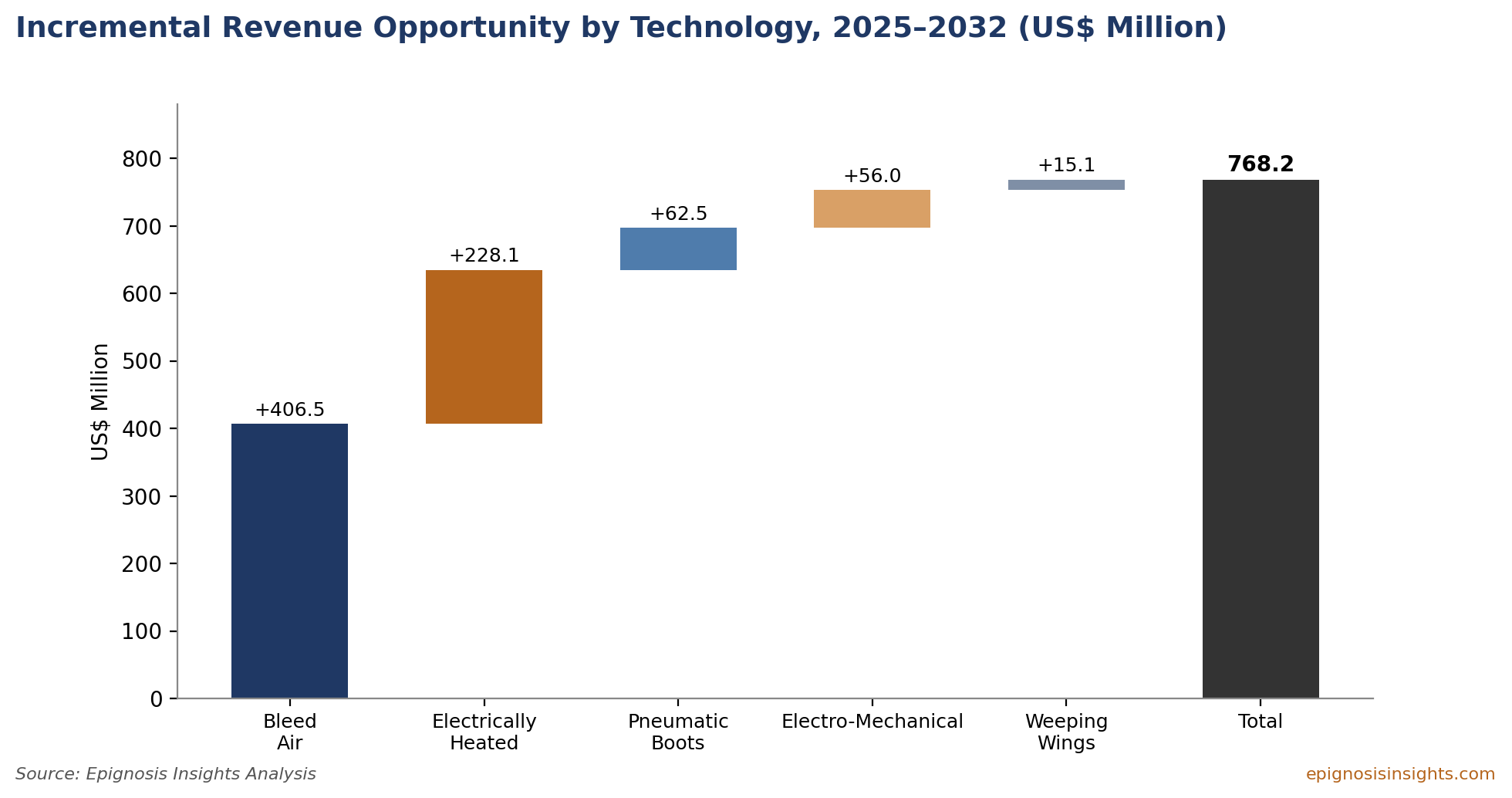
Figure 5: Incremental Revenue Opportunity by Technology, 2025–2032 (US$ Million)
Measured by new revenue rather than growth rates, the opportunity remains concentrated in thermal systems. Bleed air systems contribute 53% of the US$768.3 million increment, electrically heated systems 30%, pneumatic boots 8%, electro-mechanical systems 7% and weeping wings 2%. Thermal technologies therefore account for more than four fifths of new revenue, even though electro-mechanical systems record the highest percentage growth.
Airfoil protection, covering wing leading edges, slats, horizontal and vertical stabilisers and engine nacelle inlets, is the largest application, valued at US$864.6 million in 2025 and projected to reach US$1,265.8 million by 2032 at a 5.6% CAGR. Its share of the market increases marginally from 51.3% to 51.6%. Airfoil systems carry the highest value per aircraft because they cover large surface areas and must handle the most demanding icing conditions.
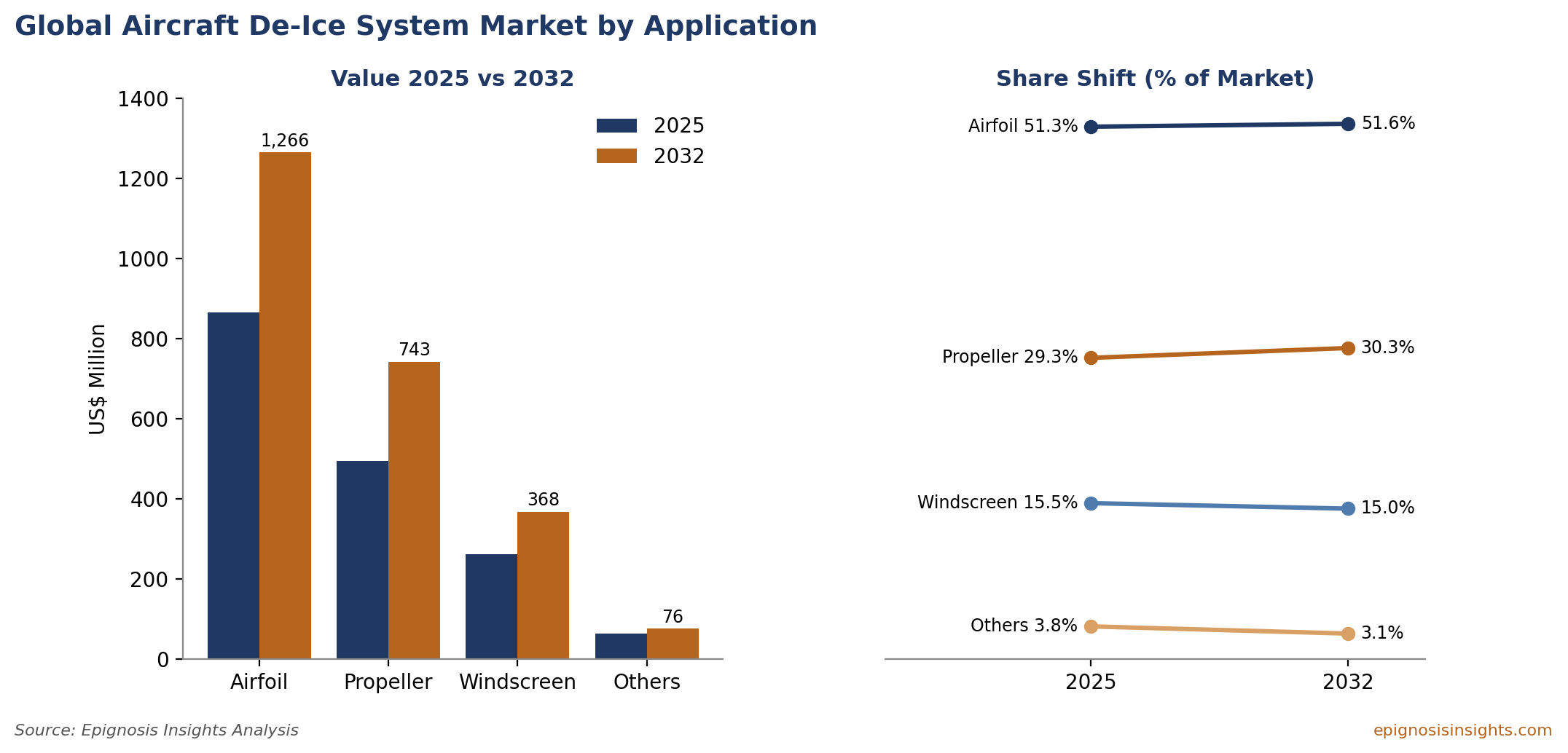
Figure 6: Global Aircraft De-Ice System Market by Application – Value 2025 vs. 2032 and Share Shift
Propeller protection is the second largest application at US$494.2 million in 2025 and the fastest growing at a 6.0% CAGR, reaching US$742.6 million by 2032. Its share rises from 29.3% to 30.3%, the largest share gain of any application. Turboprop aircraft remain essential for short regional routes, island networks, military transport and special mission roles, and they operate predominantly at altitudes where icing exposure is frequent. Electrically heated propeller blades and spinner heaters account for most of this value, which also links propeller growth to the broader expansion of electro-thermal technology.
Windscreen protection, valued at US$261.4 million in 2025, grows at 5.0% to US$367.8 million by 2032, with its share easing from 15.5% to 15.0%. Electrically heated windscreens are fitted to virtually all commercial and business aircraft, and demand follows aircraft production and windscreen replacement cycles. The others category, which includes air data probes, antennas, drains and water lines, grows at 2.6%.
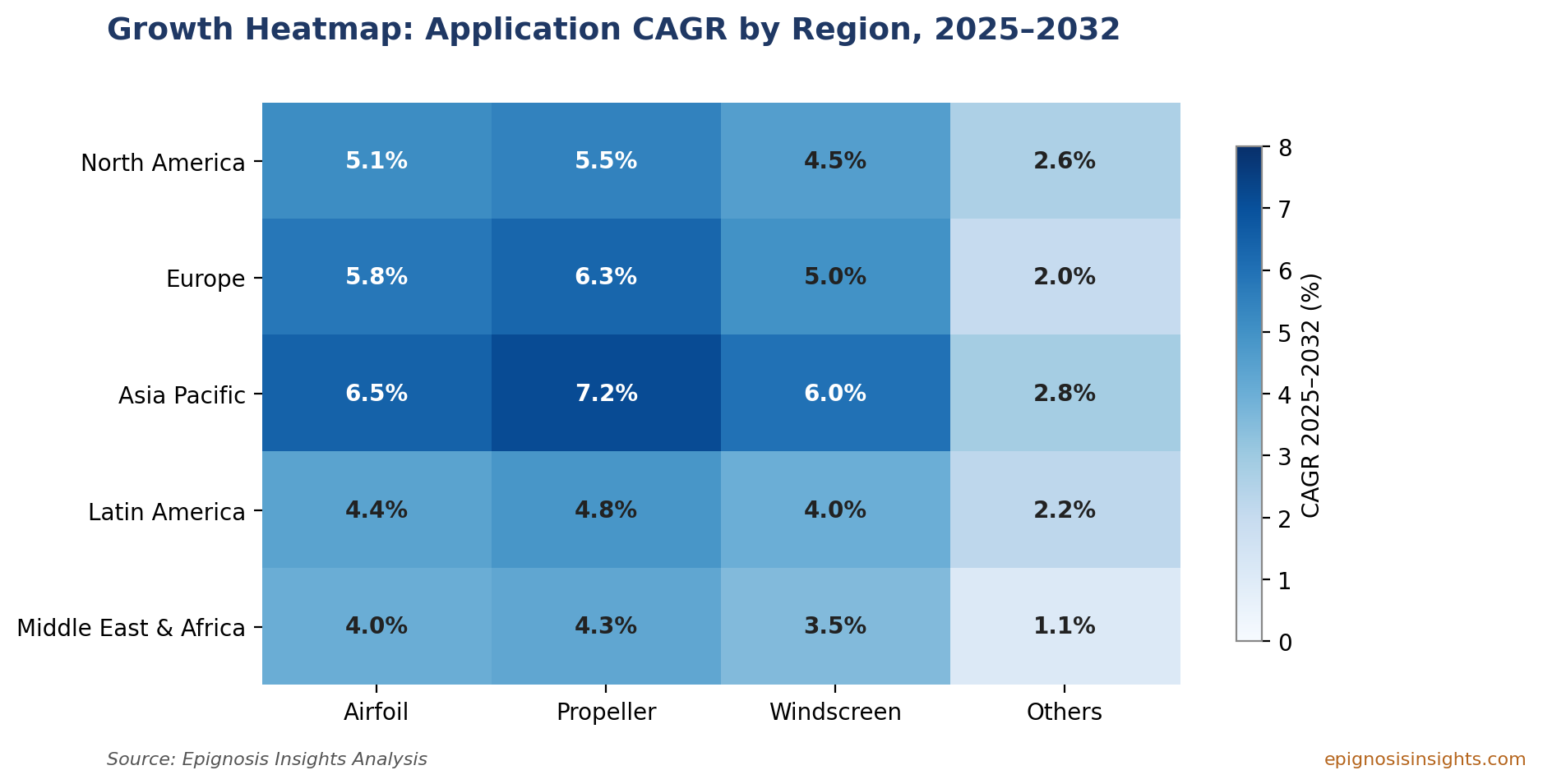
Figure 7: Growth Heatmap – Application CAGR by Region, 2025–2032
The application heatmap shows that propeller protection is the fastest growing application in every region. It reaches a 7.2% CAGR in Asia Pacific and 6.3% in Europe, reflecting growing turboprop fleets serving regional connectivity programmes in India, Southeast Asia and China, and European production of regional turboprops. Asia Pacific leads growth in all four application categories, while the Middle East and Africa records the lowest rates, consistent with its limited exposure to icing conditions.
North America is the largest regional market, valued at US$874.0 million in 2025, or 51.9% of global value, and is projected to reach US$1,233.1 million by 2032 at a 5.0% CAGR. The U.S. accounts for US$785.4 million, reflecting the largest commercial, business and general aviation fleets in the world, a concentration of aircraft and systems manufacturers and frequent icing conditions across northern routes. Canada, valued at US$81.1 million, grows faster at 5.7%, supported by turboprop and business aircraft manufacturing and severe winter operating conditions.
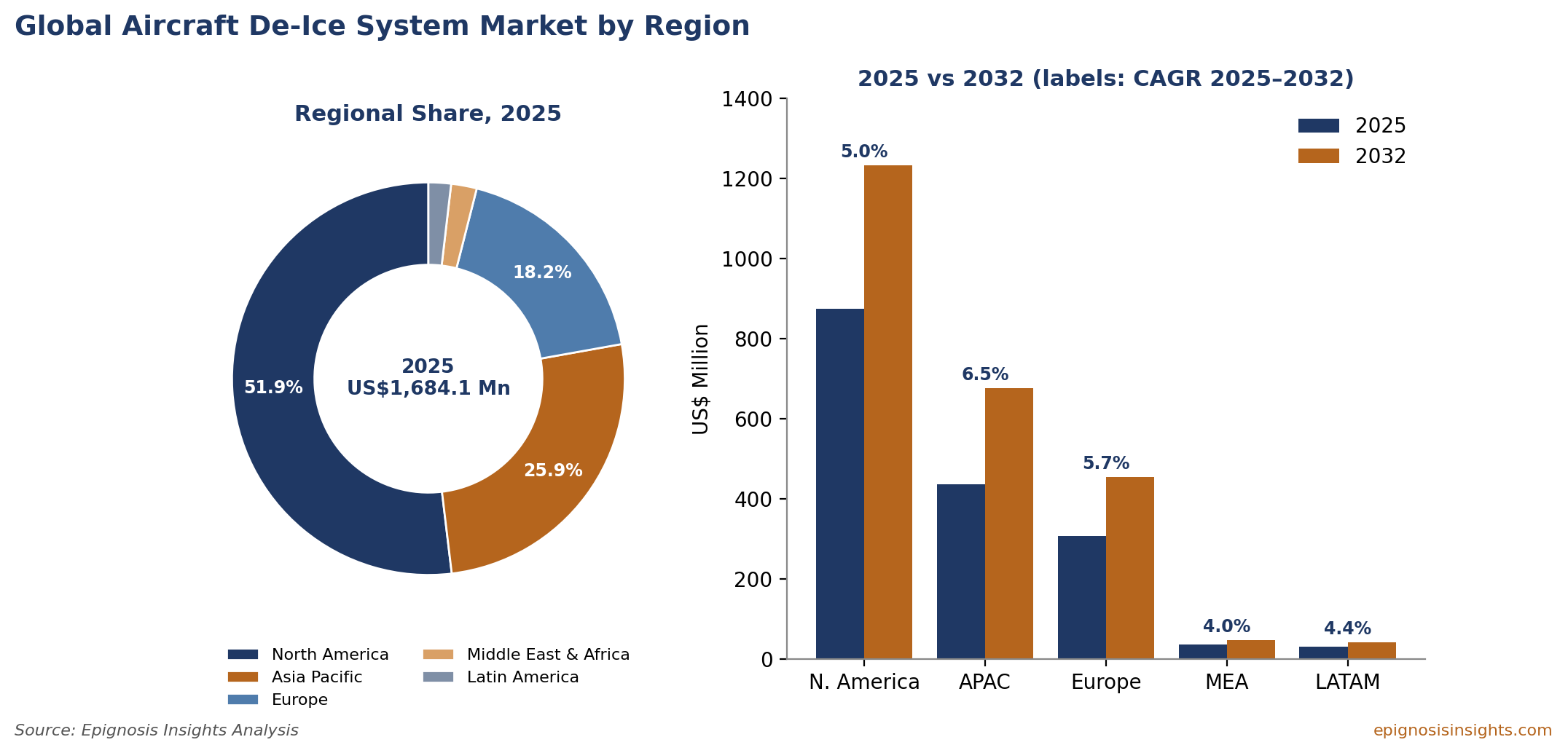
Figure 8: Global Aircraft De-Ice System Market by Region – 2025 Share and 2025 vs. 2032 Value
Asia Pacific is the second largest and fastest growing region at US$436.5 million in 2025 and a 6.5% CAGR, reaching US$676.9 million by 2032, while its share rises from 25.9% to 27.6%. China is the largest Asian market at US$211.9 million, growing at 6.4% as domestic aircraft programmes and fleet expansion progress. India, valued at US$102.4 million, is the fastest growing country market globally at 7.0%, driven by rapid fleet growth, regional connectivity schemes and the expansion of maintenance capacity. Japan, at US$55.9 million, grows at 5.6%.
Europe is valued at US$306.8 million in 2025 and grows at a 5.8% CAGR to US$453.7 million by 2032. Germany is the largest European market at US$153.2 million, accounting for roughly half of regional value, and grows at 6.2%. France grows fastest in Europe at 6.6%, while the UK, valued at US$61.0 million, grows at 5.4%. Latin America and the Middle East and Africa are smaller markets, valued at US$31.2 million and US$35.5 million respectively, growing at 4.4% and 4.0%. Brazil leads Latin America at US$21.9 million, while the UAE, at US$20.5 million, is the largest market in the Middle East and Africa due to its large widebody fleets.
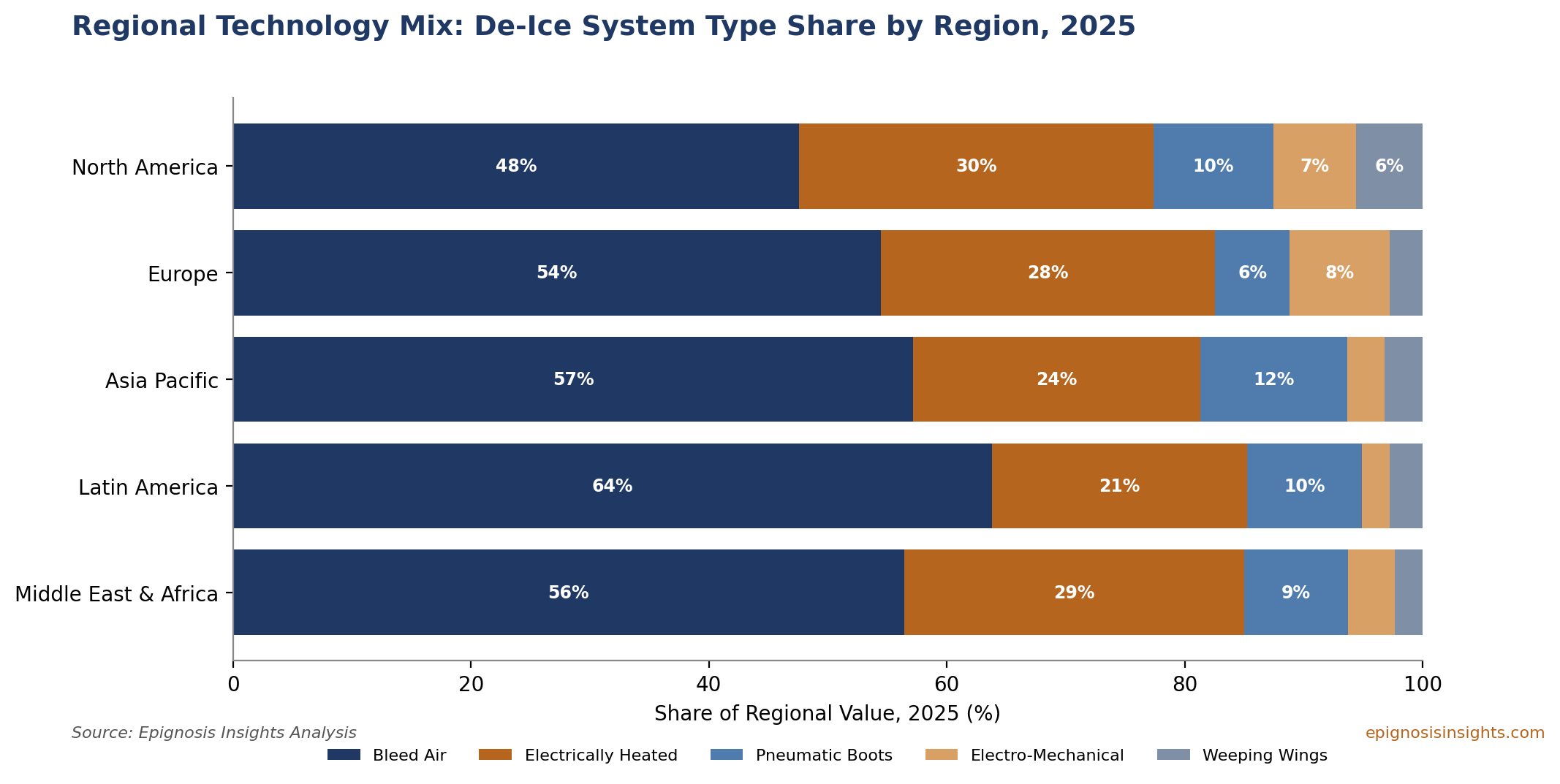
Figure 9: Regional Technology Mix – De-Ice System Type Share by Region, 2025
Regional technology mixes differ in revealing ways. North America has the lowest share of bleed air systems at 48% and the highest shares of electrically heated systems at 30% and weeping wings at 6%, reflecting its large business and general aviation fleet. It accounts for about two thirds of global weeping wing value. Asia Pacific and Latin America are the most bleed-air intensive regions at 57% and 64%, reflecting fleets dominated by single-aisle jets. Europe has the highest share of electro-mechanical systems at 8%.
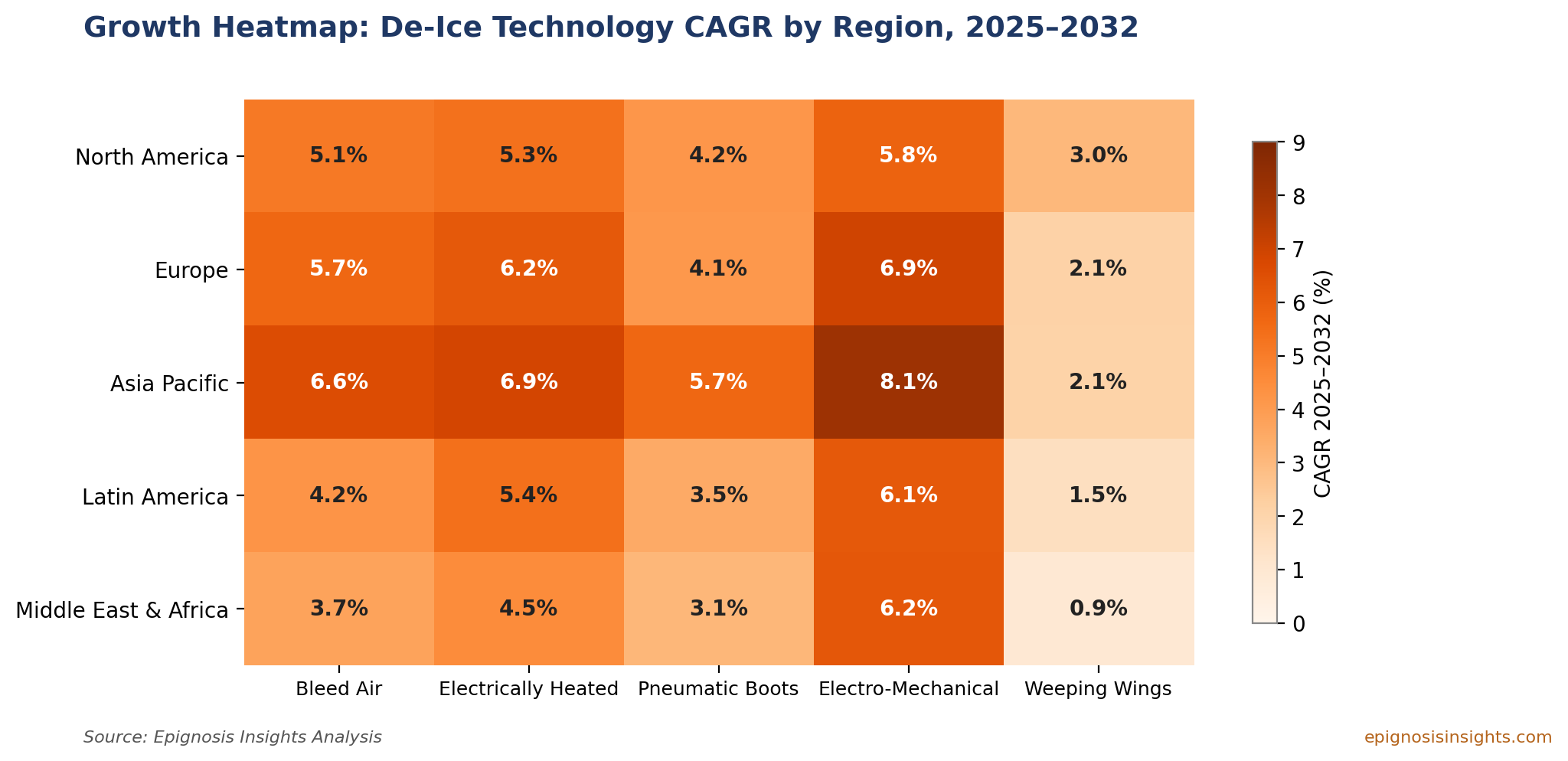
Figure 10: Growth Heatmap – De-Ice Technology CAGR by Region, 2025–2032
Growth rates by technology and region confirm the direction of change. Electro-mechanical systems are the fastest growing technology in every region, reaching an 8.1% CAGR in Asia Pacific and 6.9% in Europe. Electrically heated systems grow faster than bleed air systems in all five regions, while weeping wings grow at less than 3.1% everywhere and below 1% in the Middle East and Africa.
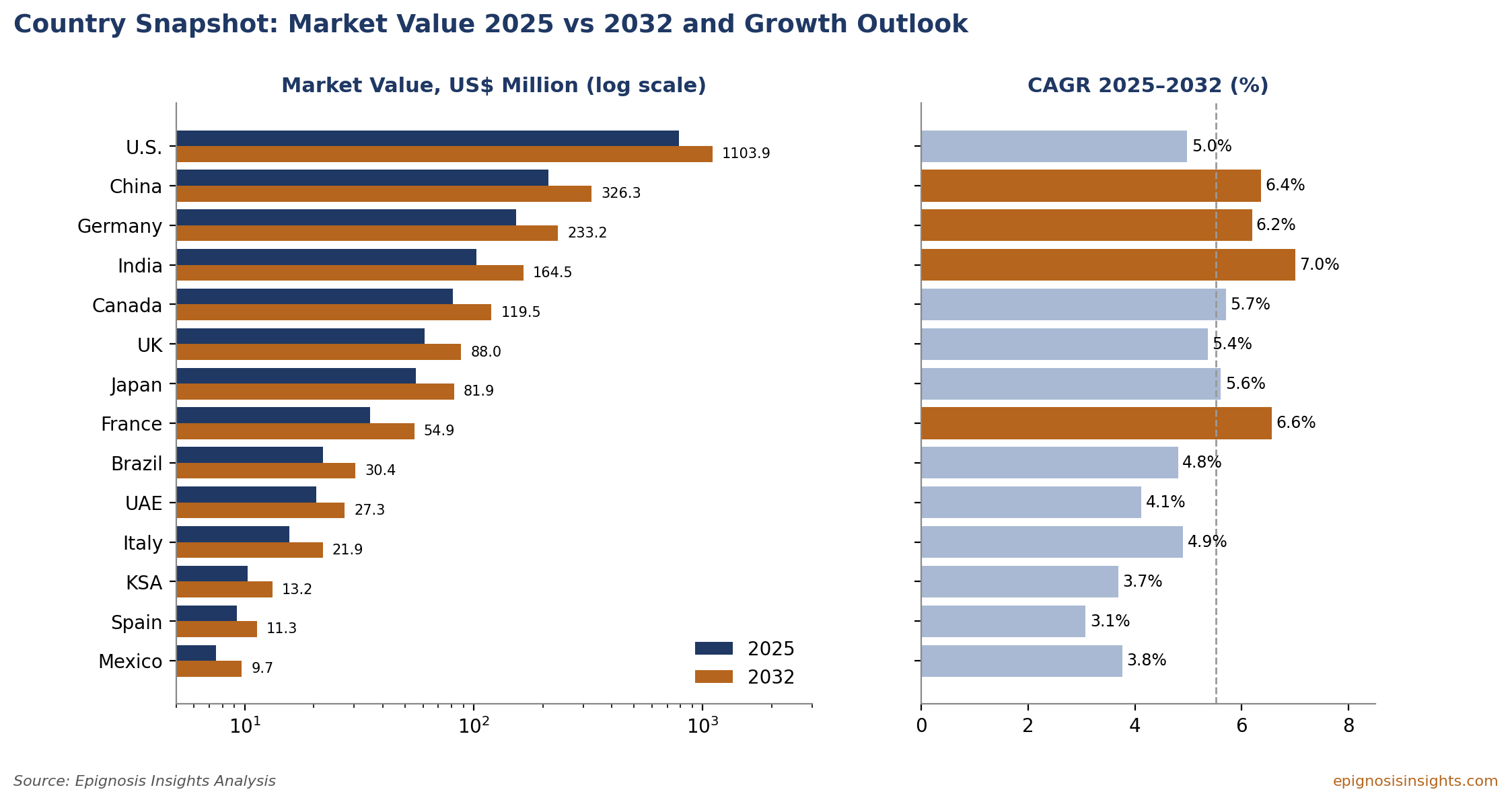
Figure 11: Country Snapshot – Market Value 2025 vs. 2032 and CAGR 2025–2032
At country level, six markets grow faster than the global average of 5.5%: India, France, China, Germany, Canada and Japan. Germany and France combine aircraft manufacturing activity with growing fleets, while India and China are driven primarily by fleet expansion. The U.S., the largest market by far, grows slightly below the global average at 5.0% because of its mature fleet base, and the UK grows at 5.4%. At the lower end, Spain, Mexico and Saudi Arabia grow at less than 4%, reflecting limited icing exposure or smaller fleet growth.
Key companies analyzed within the global aircraft de-ice system market are: Collins Aerospace, Safran Aerosystems, Liebherr-Aerospace, Honeywell, Ultra Electronics, Hutchinson Aerospace, THERMOCOAX, Cox & Company, Ice Shield De-icing Systems and others.
The competitive landscape is shaped by technology specialisation and long-term platform positions. Collins Aerospace has the broadest ice protection portfolio, spanning pneumatic de-ice boots, a technology first developed by its predecessor company, electrothermal heaters and ice detection, and it is investing in next-generation carbon nanotube heaters. Safran Aerosystems offers electro-thermal anti-icing equipment, including solutions proven on military aircraft. Liebherr-Aerospace and Honeywell are major suppliers of air management systems, including the valves and controls that regulate bleed air for wing and nacelle anti-icing, and Liebherr has been involved in European research on electro-thermal wing ice protection.
Specialist suppliers occupy distinct niches. Ultra Electronics is active in propeller and rotor ice protection heaters and controllers. Hutchinson Aerospace supplies elastomer and composite components for ice protection. THERMOCOAX provides heating elements and cables for aerospace applications. Cox & Company is known for low-power electro-mechanical expulsion de-icing technology, while Ice Shield De-icing Systems focuses on pneumatic boots for turboprop and general aviation aircraft, an important source of aftermarket revenue.
Because ice protection systems are certified as part of the aircraft type design, switching suppliers during a production programme is rare and costly. Competitive success therefore depends on winning positions on new aircraft programmes, sustaining aftermarket revenue across long service lives, and developing technologies that align with the more-electric direction of future aircraft.
The Epignosis Insights Competitive Assessment Framework EICAF for the global aircraft de-ice system market evaluates companies across 10 weighted parameters. OEM platform positions and installed base and technology portfolio breadth each receive the highest weighting of 14%, because line-fit positions determine revenue for decades and suppliers with multiple technologies can serve a wider range of aircraft. Electro-thermal and more-electric readiness receives 13%, reflecting the long-term shift away from bleed air and fluid systems.
Certification track record against Appendix C and Appendix O icing requirements receives 12%, and aftermarket and MRO support network receives 11%. Ice detection, controls and integration capability receives 10%, R&D and innovation pipeline 8%, global manufacturing footprint 7%, weight and power efficiency 6% and cost competitiveness 5%. The total weighting equals 100%.
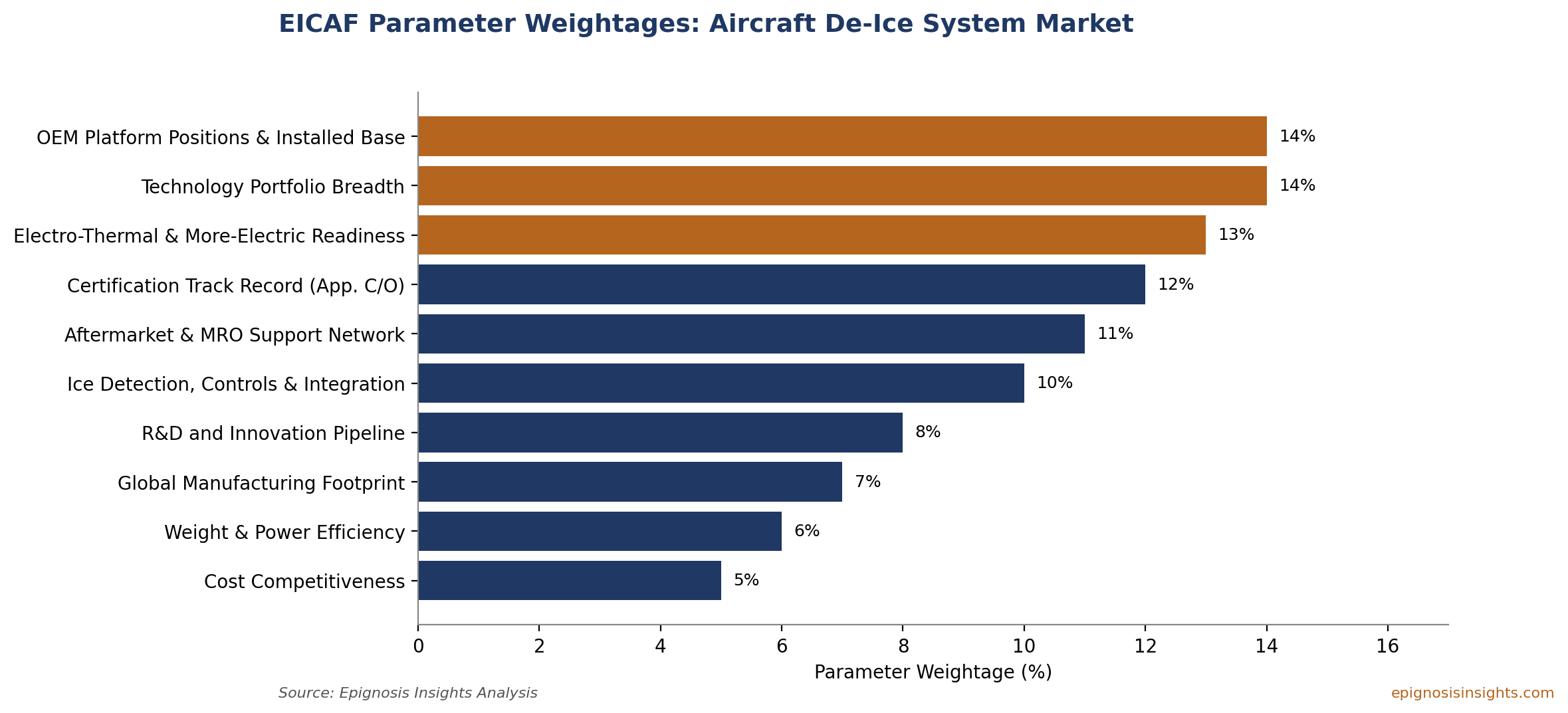
Figure 12: EICAF Parameter Weightages for the Global Aircraft De-Ice System Market
Each company is assigned a score from 1 to 5 against every parameter, with the weighted score calculated as Company Score × Parameter Weightage. The resulting EICAF score enables diversified aerospace systems suppliers and niche technology specialists to be compared on a consistent basis. It is particularly useful in this market, where public revenue disclosure for ice protection activities is limited and where certification capability and platform positions often matter more than current sales in determining future competitive strength.