
Helping a Tier-1 Aerostructures Supplier Size the Market for Composite Fuselage Components
The Challenge
A Tier-1 aerostructures supplier that manufactures fuselage skins and stiffened panels for wide-body aircraft programs was preparing to commit capital to a new automated fiber placement (AFP) line. Before signing a multi-year facility lease, the client's leadership needed an independent, program-level view of composite fuselage demand — not a generic global market forecast — to justify the investment to its board and lenders. Two questions mattered most: how much of the composite opportunity is concentrated in specific aircraft programs, and how fast is that demand likely to materialize given current production and certification realities.
Our Approach
Epignosis Insights built the sizing model bottom-up from confirmed aircraft delivery cadence and backlog data rather than top-down market extrapolation. The team layered in primary interviews with tooling engineers and Tier-1 procurement leads across three OEM supply chains, cross-checked against aviation-authority technical guidance on composite certification and consulting-firm industry outlooks on capacity constraints. This let us separate genuine, program-anchored demand from the kind of broad CAGR assumptions that tend to overstate near-term capital urgency.
What the Data Showed
Composite content is concentrated in a handful of programs
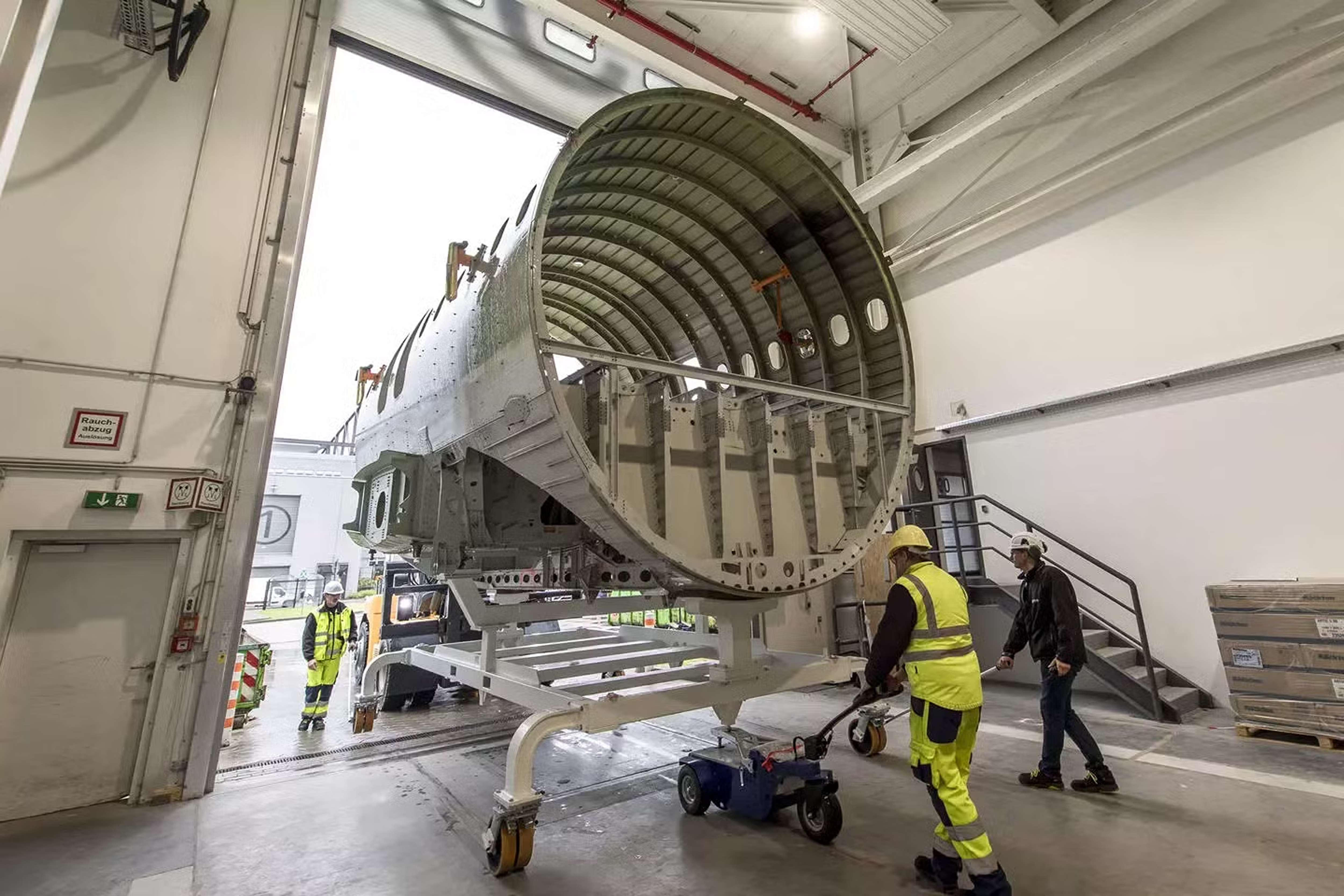
Composite structural weight share varies sharply by aircraft program. Boeing's 787 Dreamliner airframe is approximately 50% composite by weight, compared with roughly 11% on the 777 and about 7% on the legacy 757 — meaning a single wide-body program can account for a disproportionate share of fuselage-grade carbon-fiber-prepreg demand industry-wide.
Production cadence, not headline forecasts, is the real demand signal
By the fourth quarter of 2025, Boeing's 787 line was transitioning from a stabilized rate of seven aircraft per month to eight per month, having delivered 88 787s across all of 2025, with 1,076 787s still in backlog at year-end. That backlog alone represents more than a decade of confirmed fuselage-panel demand at current build rates, independent of any speculative future orders.
Passenger demand underpins the ramp
Global air passenger demand, measured in revenue passenger kilometers, grew 5.3% in full-year 2025, and long-term industry projections point to global demand more than doubling by 2050 at a 3.1% compound annual growth rate. This is a structural tailwind rather than a short cycle, supporting sustained wide-body and narrow-body build rates over the life of the client's proposed AFP investment.
Capacity, not demand, is the binding constrain
Sector-wide analysis for 2026 frames persistent demand growth colliding with material shortages, skilled-labor gaps, and constrained production and overhaul capacity as the defining tension of the year. For a Tier-1 supplier, this reframes the investment case: the risk is not insufficient demand but arriving late to secure qualified composite capacity while competitors lock it up first.
Certification rigor shapes time-to-revenue
Regulatory guidance on advanced composite materials requires damage-tolerant design substantiation and strict material and process control before a new composite structure can be certified. That multi-year qualification runway rewards suppliers who begin tooling, testing, and process documentation early, well ahead of firm purchase orders, rather than waiting for demand certainty that will arrive too late to matter.
The Outcome
Backed by this program-level view, the client greenlit a phased AFP capacity expansion timed to the 787 line's ramp toward eight aircraft per month, rather than sizing the facility for the much higher long-term rate targets sometimes cited in generic industry forecasts. The phased structure let the supplier commit capital against confirmed backlog coverage while retaining the option to scale further as adjacent narrow-body composite programs clear their own certification milestones.
Why It Matters for Suppliers
For Tier-1 and Tier-2 aerostructures suppliers, the broader lesson is that global market-size headlines are a poor guide to capital decisions. Composite fuselage demand is program-specific, paced by OEM delivery rates and certification timelines rather than an undifferentiated market growth rate. Sizing it correctly means combining program-level delivery data, regulatory-timeline awareness, and demand fundamentals from primary and authoritative sources — not extrapolating a single aggregate CAGR across every aircraft program at once.