
Can Solid-State Batteries Disrupt Lithium-Ion Technology? A Strategic Assessment of Commercial Readiness, Manufacturing Scale, and Investment Opportunities
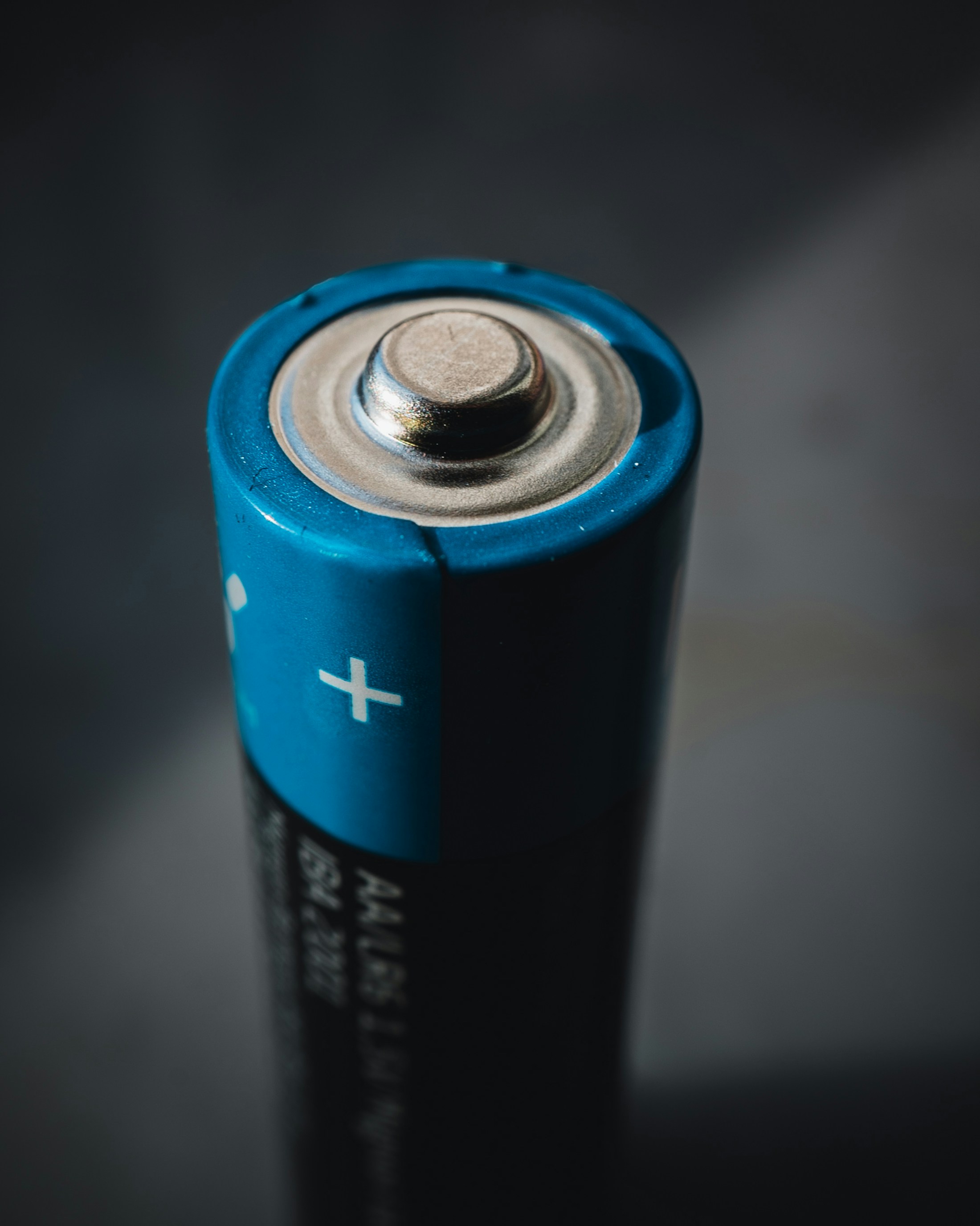
Every battery technology cycle produces a handful of claims that turn out to be premature and one that turns out to be real. Solid-state batteries have spent nearly two decades in the “premature” bucket, but 2026 is the first year the technical, industrial, and capital signals are pointing the same direction at once. The solid state battery market is no longer a lab curiosity it’s a market with real pilot lines, real automaker capital commitments, and a real, if narrow, path to disrupting the lithium-ion incumbency that has dominated batteries since 1991. Whether that disruption happens on the timeline vendors promise is a separate question, and it’s the one this piece is built to answer.
Where the Technology Actually Stands Today
The performance case for solid-state is no longer theoretical. Sulfide-based electrolytes, the leading chemistry for automotive applications, now reach room-temperature ionic conductivities around 9.8 to 10 mS/cm a level that rivals commercial liquid electrolytes for the first time. QuantumScape’s QSE-5 cells achieved over 1,000 cycles at 95% capacity retention in Volkswagen PowerCo’s 2025 testing, and BMW has moved Solid Power’s cells from bench tests into a full i7 development vehicle. These aren’t simulated results; they’re third-party validated milestones. Still, the solid state battery market remains firmly in the pilot-line phase as of 2026, only small-batch production exists, and industry roadmaps converge on 2027 as the earliest point for limited-volume solid-state EVs, with true mass production not expected before 2030.
Related Reading
"Understanding battery performance is only one aspect of industry transformation. Learn how next-generation batteries are reshaping manufacturing networks in our article How Solid-State Batteries Are Reshaping the EV Supply Chain."
The Cost Gap Is the Real Disruption Barrier
Technology readiness and commercial readiness are not the same thing, and cost is where the gap is widest. Early commercial solid-state cells cost between USD 300 and 500 per kWh, compared to USD 100 to 140 per kWh for advanced lithium-ion a two-to-four-times premium that currently restricts the solid state battery market to premium EVs and high-value applications rather than mass-market vehicles. That premium isn’t a pricing choice; it’s structural. Sulfide processing requires moisture-free dry rooms to avoid hydrogen sulfide release, oxide electrolytes need sintering above 1,000°C, and gigafactory-scale investment for dedicated solid-state lines routinely runs USD 1 to 3 billion because existing lithium-ion equipment can’t simply be repurposed. Until manufacturing yield improves and these dedicated capital costs are absorbed across higher volumes, cost parity not raw performance will set the pace of disruption.
"Planning to invest in next-generation battery technologies? While this article explains how solid-state batteries compare with conventional lithium-ion batteries, businesses also need insights into market size, commercialization timelines, leading manufacturers, regional demand, and future growth opportunities. Explore our Solid State Battery Market report for comprehensive forecasts, competitive analysis, and strategic intelligence covering the global industry through 2033."
Manufacturing Scale Is Moving Faster Than Skeptics Expected
Despite the cost barrier, capacity commitments have accelerated sharply in the past 18 months. China is set to release its first official solid-state battery standard in July 2026, formalizing testing protocols that reduce regulatory uncertainty for manufacturers. Toyota broke ground on a large-scale solid electrolyte pilot plant with Idemitsu in January 2026, targeting EVs with all-solid-state batteries around 2027 to 2028. Samsung SDI is targeting 2027 for mass production, promising 80% charge in nine minutes. Meanwhile, semi-solid hybrid technology a transitional step with 5 to 15% liquid electrolyte content is already shipping in real vehicles: NIO’s 150 kWh WeLion-based pack delivers roughly 930 km of range, and China’s semi-solid cells are reaching 300 to 360 Wh/kg in production. The solid state battery market is effectively running two parallel tracks semi-solid hybrids scaling now, and true all-solid-state chemistry scaling toward 2030 and conflating the two overstates how close full disruption actually is.
Where the Investment Case Gets Interesting
Capital allocation patterns are the clearest signal of where insiders think this is heading. Seventeen US and European solid-state startups have collectively raised over USD 4.2 billion, led by QuantumScape (~USD 1.5B total funding), Solid Power (USD 437M), and SES AI (USD 600M). But the more telling trend is strategic consolidation: in March 2026, Suzuki acquired Kanadevia’s entire all-solid-state battery division a business with nearly 20 years of R&D and space-station-validated technology rather than build its own program from scratch. That’s the pattern likely to define the next phase of the solid state battery market: incumbents buying proven technology and IP rather than funding a decade of internal R&D, which compresses timelines but concentrates value among a shrinking number of technology holders. Toyota, Samsung SDI, LG Energy Solution, Panasonic Energy, CATL, and BYD are all running parallel internal programs, meaning the eventual winners will likely be determined as much by manufacturing execution and capital depth as by underlying chemistry.
Interested in which countries and manufacturers are expected to dominate commercialization? Read Global Leadership in the Solid State Battery Market Through 2033 for insights into regional investments, production capacity, and market leadership.
So, Can Solid-State Actually Disrupt Lithium-Ion?
The honest answer is conditional disruption, not wholesale replacement at least through the early 2030s. Lithium-ion’s manufacturing base is too mature, too cost-efficient, and too deeply embedded in global supply chains to be displaced outright by a technology still working through dry-room yield problems and $1-3 billion capital requirements per gigafactory. What’s more likely is segment-specific displacement: solid-state capturing premium EVs, aerospace, and defense applications first, where performance and safety justify the cost premium, while lithium-ion — including its semi-solid hybrid evolution — continues to dominate mass-market vehicles and stationary storage through at least 2030. The solid state battery market’s own growth forecasts reflect this gradualism: even the most bullish projections show the global solid-state battery market is projected to grow from approximately USD 1.05 billion in 2024 to USD 43.84 billion by 2033, supported by rapid commercialization across automotive and energy storage applications Disruption is coming it’s just going to be slower, more selective, and more consolidated than the earliest hype cycles promised.