
Semiconductor Equipment Makers: The Quiet Winners of the AI Boom
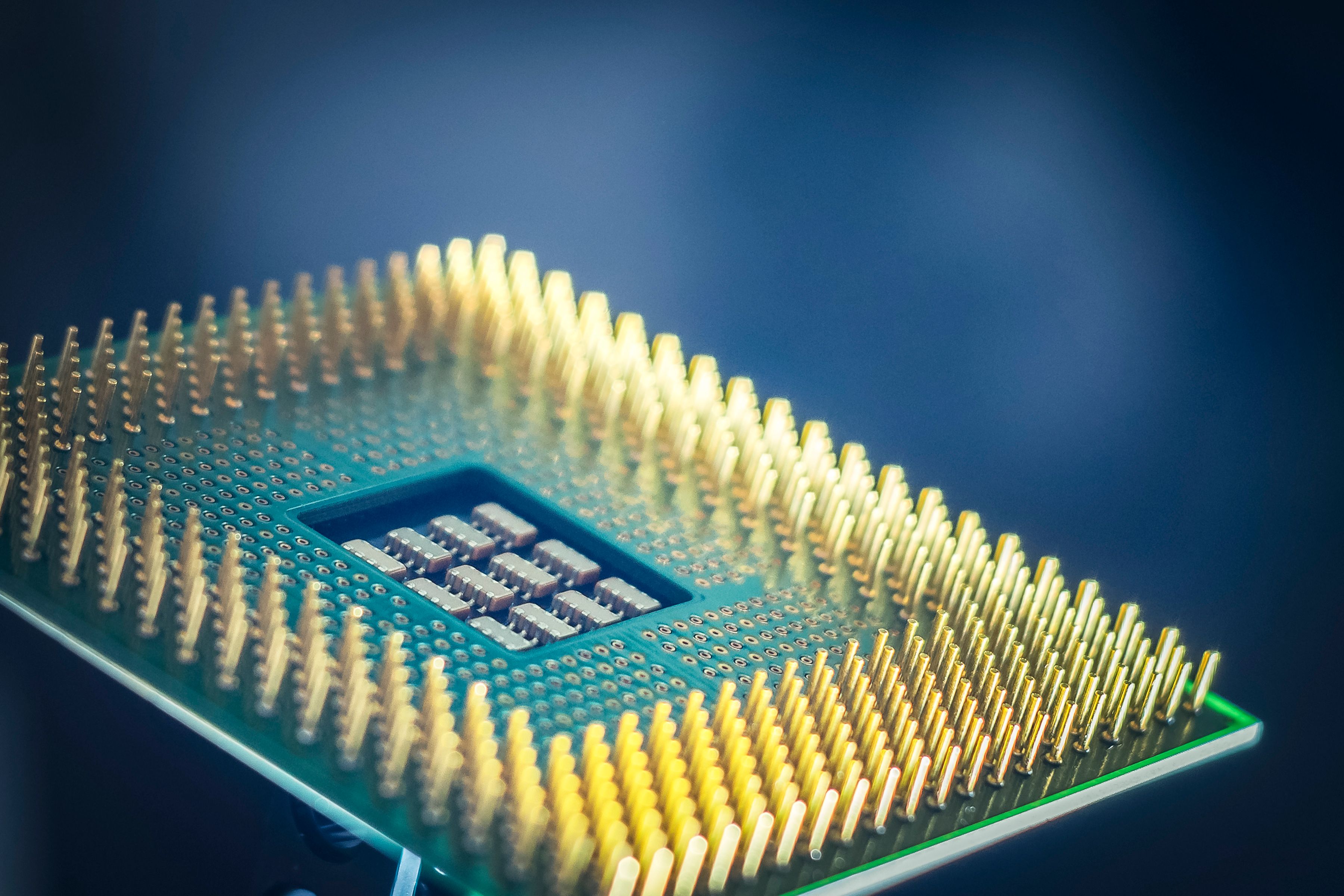
Every conversation about the AI boom circles back to Nvidia, TSMC, and the hyperscalers building trillion-dollar data centers. But one layer of the supply chain rarely gets the spotlight even though it sits upstream of all of them: the companies that build the machines chipmakers need just to start production. Without EUV scanners, etch chambers, and deposition tools, there is no AI chip to sell. That quiet position is now paying off in record numbers.
Equipment Sales Are Breaking Records Every Six Months
SEMI, the global industry association for chip manufacturing, has revised its forecasts upward three times in eighteen months. In its July 2026 Mid-Year forecast, SEMI projected global semiconductor equipment sales of $165.9 billion in 2026, a 23.2% jump from 2025, with the wafer fab equipment (WFE) segment alone rising 23.1% to $143.9 billion. Just seven months earlier, SEMI's December 2025 forecast had pegged 2026 sales at only $145 billion. The gap between those two forecasts, roughly $21 billion, illustrates how fast AI-driven capital spending is outrunning even the industry's own projections.
SEMI now expects the market to reach $229.5 billion by 2028, which would mark five consecutive years of growth. Test equipment, a smaller but AI-sensitive category tied to high-bandwidth memory (HBM) validation, is projected to grow 31% in 2026 to $15.3 billion after already surging 55.3% in 2025.
Lithography: The Chokepoint That Prints Money
No company illustrates the equipment boom better than ASML, the Dutch monopolist in extreme ultraviolet (EUV) lithography. ASML's 2025 annual results showed total net sales of €32.7 billion and net income of €9.6 billion for the year, according to its own investor disclosures. The standout figure was Q4 2025 bookings: €13.2 billion, more than double the €6.32 billion analysts had expected, according to Visible Alpha data cited by Reuters. Of that, €7.4 billion came from EUV systems alone.
ASML's CFO, Roger Dassen, attributed the surge to customers 'gearing up their plans for medium-term capacity expansion' on the back of sustained AI demand. Based on that order strength, ASML guided full-year 2026 net sales to between €34 billion and €39 billion, above the roughly €35.1 billion consensus estimate.
Applied Materials and Lam Research: Deposition and Etch Ride the Same Wave
Applied Materials
Applied Materials, the largest U.S.-based equipment maker, closed fiscal 2025 (ended October 26, 2025) with record annual revenue of $28.37 billion, up 4% year over year, marking its sixth consecutive year of growth, according to the company's own fourth-quarter earnings release. CEO Gary Dickerson credited 'AI adoption' for driving 'substantial investment in advanced semiconductors and wafer fab equipment.'
Lam Research
Lam Research posted an even sharper acceleration. Fiscal 2025 revenue reached $20.6 billion, up 27% year over year, according to the company's annual report and earnings disclosures, the highest in its history. Lam's own investor materials estimate that AI-driven data center capacity buildouts alone will require approximately $200 billion of wafer fabrication equipment spending over the next five years. Advanced packaging, tied directly to HBM3E and HBM4 memory stacking for AI accelerators, is expected to grow more than 40% for Lam in 2026.
Government Money Is Reinforcing the Cycle
Equipment demand isn't only being pulled by private capex; it is being pushed by industrial policy. The U.S. Department of Commerce's CHIPS Program Office has now allocated $38.7 billion of its original $39 billion manufacturing incentive pool across 23 recipients as of April 2026, according to a Congressional Research Service report and Commerce Department announcements. Roughly $11 billion of that has been physically disbursed against verified construction and equipment milestones. Recent awards include $1.6 billion to Texas Instruments, $1.2 billion to SK Hynix for an HBM advanced-packaging facility in Indiana, and $800 million to GlobalFoundries. Each new fab, regardless of who owns it, becomes a direct customer for ASML, Applied Materials, Lam Research, and Tokyo Electron.
Consulting Firms See a Structural, Not Cyclical, Shift
Industry analysts are increasingly framing this as a structural realignment rather than a normal cyclical upswing. McKinsey's 2026 semiconductor outlook describes AI as 'the primary driver reshaping capacity allocation, product roadmaps, and supply chain strategy across the semiconductor value chain,' with memory and logic segments both growing faster than 30% year over year. KPMG's 21st annual Global Semiconductor Industry Outlook, produced with the Global Semiconductor Alliance and based on a survey of 151 senior executives, frames the current period as a potential 'supercycle' for the industry.
Those projections are backed by hard sales data. The Semiconductor Industry Association (SIA), whose members represent 99% of U.S. chip industry revenue, reported that global semiconductor sales hit $791.7 billion in 2025, up 25.6% from $630.5 billion in 2024, and is now forecasting the industry will approach $1 trillion in 2026. Logic products, the category that includes AI accelerators, grew 39.9% to $301.9 billion, making them the largest and fastest-growing product segment for the year.
The Risks Behind the Boom
None of this growth is guaranteed to continue in a straight line. Equipment makers are unusually exposed to a small number of customers: Applied Materials disclosed in its fiscal 2025 annual report that two customers accounted for approximately 19% and 15% of its net revenue. Export restrictions on advanced tools to China, a market SEMI still expects to remain one of the top three destinations for equipment spending, add further policy risk. And roughly 31% of Applied Materials' backlog is not expected to be filled within the next twelve months, meaning demand signals can shift before revenue is actually recognized. Even so, with three of the world's largest chipmaking equipment suppliers posting record bookings within the same earnings season, the toolmakers behind the AI boom look less like a side story and more like its clearest financial signal.