
Who Actually Owns the Charging Network You'll Plug Into
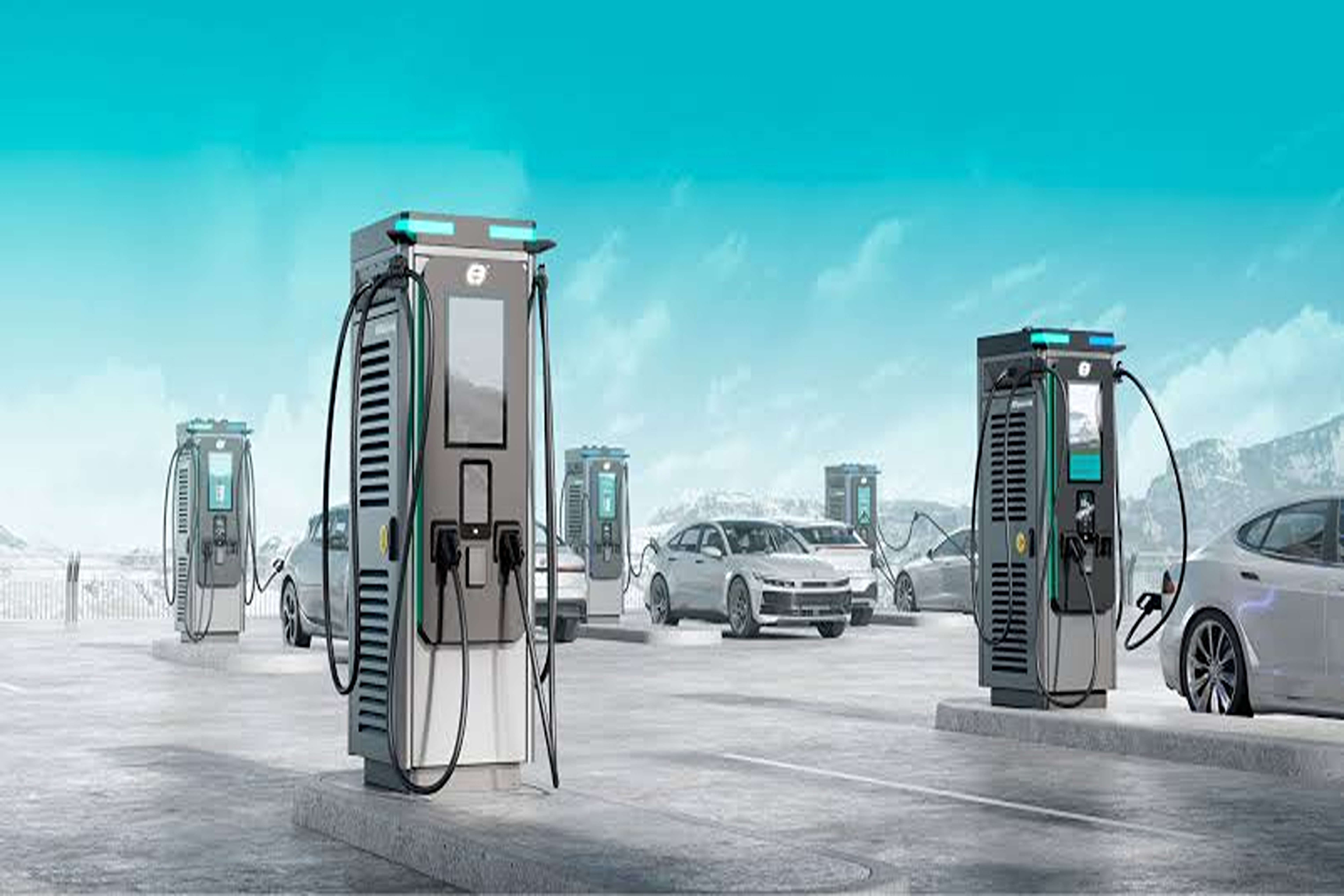
If you've charged an EV at a public station in the U.S. recently, odds are good it was run by one of two companies. That kind of concentration doesn't happen by accident in an infrastructure market, and understanding how it happened tells you a lot about where the real risks in this industry sit.
Two Networks, Two Very Different Playbooks
A look at the current competitive landscape of the EV charging infrastructure market shows just how concentrated the U.S. network has become, and how differently the two leaders got there.

ChargePoint has the broadest overall footprint, with roughly 76,000 ports, built mostly on Level 2 charging at workplaces, retail locations, and municipal sites, using a capital-light model in which ChargePoint sells hardware and software to site hosts, who then own and maintain the actual chargers. Tesla's Supercharger network, by contrast, leads in DC fast charging, with approximately 38,000 ports, built through a fully vertically integrated model in which Tesla designs, installs, owns, and operates everything end-to-end. That difference in approach explains a lot about reliability reputation in this industry: full control tends to produce more consistent uptime, but it also requires far more upfront capital.
What makes Tesla's lead even more significant now is that it's no longer just a Tesla-only network. With Ford, GM, and Rivian all adopting Tesla's NACS connector, Superchargers are opening up to non-Tesla vehicles, turning what was once a proprietary hardware advantage into a genuine network-effect business. Newer entrants like Ionna, a joint venture backed by several automakers pooling capital specifically to build brand-neutral infrastructure, and Rivian's own Adventure Network are scaling, but at roughly 1,000 to 1,100 ports each, they remain a small fraction of the two incumbents' size. That's the hard part about competing in this market: charging network-scale compounds through site selection and driver habits. Hence, a first-mover advantage built over a decade is extremely difficult to close quickly.
It's worth noting these three business models aren't interchangeable bets; they carry genuinely different risk profiles. A vertically integrated operator like Tesla bears the full cost and reliability responsibility for every port it builds, but captures the full upside if utilization climbs. A software-and-hardware seller like ChargePoint scales its footprint faster because site hosts fund the capital costs, but that also means ChargePoint has less direct control over whether any given charger is maintained well. An automaker consortium like Ionna spreads capital risk across several companies. Still, it depends on every participant staying committed to funding future expansion at the pace implied by their initial pledges, a dependency that's untested over a full economic cycle.
The Risks That Actually Keep This Market Up At Night
None of that scale matters much if a network can't reliably build and run new sites, and that's exactly where this market's biggest risks now lie.

Grid interconnection queue delays now top the list. Utilities in high-growth regions face lengthy studies and upgrade timelines before a high-power DC fast site can even be energized, sometimes adding a year or more to a project that used to take months. Federal funding and policy uncertainty, the same instability that hit the NEVI program in 2025, remains a serious risk for any project counting on formula or grant money rather than private capital. Charger reliability and uptime, long one of the industry's most common driver complaints, and permitting delays round out the highest-impact risks, while cybersecurity of increasingly networked chargers and the persistent charging access gap for renters without a driveway or garage sit as moderate but still real concerns.
Reading the Two Charts Together
Put the network map and the risk matrix side by side and a clear strategic picture emerges. The operators that will keep winning aren't necessarily the ones with the most ports today; they're the ones best positioned to navigate utility interconnection queues efficiently and secure revenue that doesn't depend entirely on a single federal funding cycle. For a real estate developer or fleet operator choosing a charging partner, or an investor sizing up where to put capital, the interconnection timeline in your specific region and a network's demonstrated uptime record are now far more useful questions to ask than which network happens to have the biggest number of chargers painted on its map.
There's a broader lesson here for anyone watching this market from the outside, too. A charging network's port count is the easiest number to find and the least useful one for judging whether that network will still be growing, or even operating the same way, five years from now. The companies most exposed to today's top risks, heavy reliance on federal funding, thin utility relationships, or a vertically integrated model that hasn't yet proven it can scale reliability at a much larger footprint, are the ones most likely to see their competitive position shift the fastest, in either direction, as grid capacity and policy conditions keep evolving.