
Private 5G Is Leaving the Pilot Stage: Inside a USD 24.6 Billion Industrial Opportunity

For much of the past five years, private 5G lived in innovation labs and test cells. Manufacturers ran proofs of concept, mining companies trialed remote equipment, and ports tested connected cranes. In 2026, the conversation has changed. Industrial buyers are no longer asking whether cellular networks can work inside their sites. They are asking how quickly those networks can support production, and which partner will still be there to run them in five years.
Epignosis Insights estimates that the global private 5G networks market for industrial connectivity was worth USD 3.4 billion in 2025 and will reach USD 24.6 billion by 2033, growing at a 28.3% CAGR from 2026. Over the same period, the number of active industrial private 5G sites is expected to rise from roughly 14,500 to around 96,000.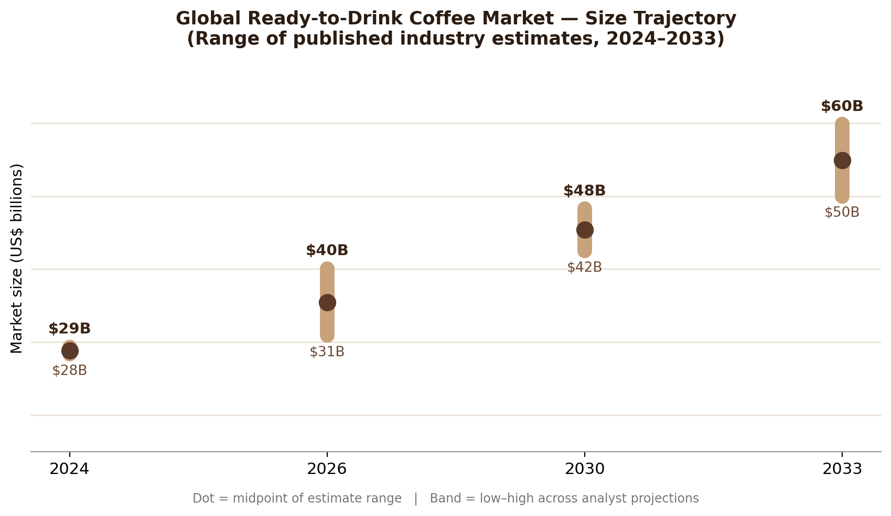
Figure 1: Global industrial private 5G market value and active sites, 2025–2033
Why the Market Is Accelerating Now
The foundation for this growth is already visible. By the end of the second quarter of 2026, the Global Mobile Suppliers Association (GSA) had identified 2,031 organizations across 88 countries running private mobile networks with contracts worth more than €100,000—manufacturing leads by customer count, with 393 manufacturers identified as running pilots or live deployments.
The technology mix is just as important. GSA data shows that 86% of new customer references logged in 2026 used 5G, either on its own or alongside LTE. Private LTE still powers many existing networks, but 5G has become the default for new industrial builds. That means the next decade's expansion and upgrade revenue will concentrate on 5G standalone capabilities.
Three forces are pushing adoption forward:
• Mobile automation. Automated guided vehicles, autonomous mobile robots, connected forklifts and remote-controlled machinery need seamless coverage, predictable latency and reliable handover across large sites.
• On-premise AI. Machine vision, predictive maintenance and AI agents running at the edge depend on large volumes of real-time data moving reliably from the shop floor.
• Accessible spectrum. Regulators in the US, Germany, the UK, Japan and, more recently, India and China have created routes for enterprises to use spectrum for their own networks.
The Use Cases Creating Value Today
Not every industrial use case needs private 5G, and not every use case is equally mature. The Epignosis use-case opportunity matrix maps applications by how widely they are deployed today and how much operational value they unlock.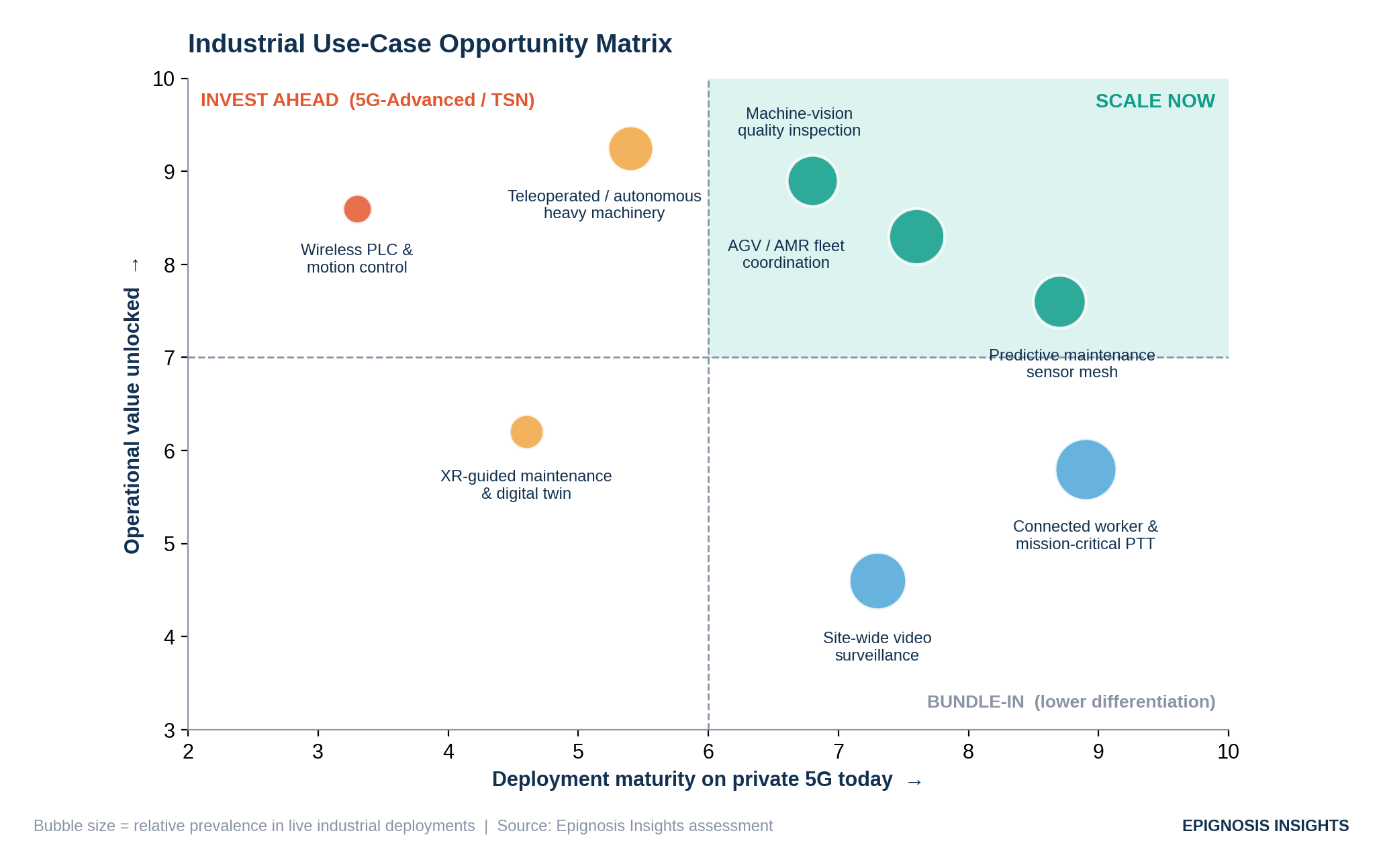
Figure 2: Industrial use-case opportunity matrix: deployment maturity versus operational value
Three applications sit clearly in the scale-now quadrant: AGV and AMR fleet coordination, machine-vision quality inspection, and predictive maintenance sensor networks. These are proven, repeatable, and directly linked to productivity metrics that plant managers already track.Ericsson reports that 60% of the private networks it surveyed were running two or more use cases at the same time, most often combining AGVs, camera-based monitoring, and connected workers.
Recent deployments show how quickly value can be delivered. In January 2026, Deutsche Bahn demonstrated remote control of an S-Bahn train at its Munich-Steinhausen depot over a dedicated 5G campus network, with the full test system assembled in four months. In Utah, Mariana Minerals and Celona connected a roughly 400-acre copper mine and refinery using just five outdoor radios, going live in about 35 days.
Teleoperated and autonomous heavy machinery delivers the highest value, though it demands deeper engineering commitment. At the other end, wireless PLC and motion control remain an invest-ahead opportunity that will depend on 5G-Advanced and time-sensitive networking maturing over the next few years.
Where Money Will Flow
Spending composition is shifting as networks move from pilot to production. In 2026, Epignosis Insights estimates that the radio access network accounts for about 34% of spend, integration and managed services about 32%, edge compute and devices about 20%, and core and orchestration about 14%.
By 2033, services are expected to become the largest layer. Once a network is live, every new use case requires device onboarding, application integration, and ongoing lifecycle support. That creates recurring revenue for integrators, operators and software vendors, and it explains why average annual spend per site is expected to rise from about USD 234,000 in 2025 to about USD 256,000 by 2033.
Policy is reinforcing this shift. Germany's Bundesnetzagentur had made 484 local network assignments in the 3.7–3.8 GHz band by November 2025, the UK's Ofcom prices shared 3.8–4.2 GHz spectrum at £80 per 10 MHz per year, and China has set a target of 50,000 industrial 5G private networks by 2030. As spectrum becomes easier to obtain, enterprise demand has followed, turning private 5G from a specialist project into a product industrial companies can plan and budget for.
What This Means for Industry Leaders
For industrial operators, the practical question is no longer technology risk but prioritization. Sites with moving assets, large coverage areas, and a clear automation roadmap will see the fastest return. For vendors, operators and integrators, the opportunity lies in helping customers bridge the gap between a successful pilot and a production network that supports several use cases at once.
Suppliers that combine connectivity with edge compute, certified devices, and application integration will capture a growing share of a market that is moving from experimentation to everyday operations.
Want the complete picture? The full Epignosis Insights report on the Private 5G Networks Market covers country-level forecasts, component and deployment-model splits by vertical, supplier benchmarking and the full EI-BRI buyer screening framework. Request a free sample to see how the analysis fits your growth plans.