
The Petrochemical Cracker Investment Slowdown: What's Behind It
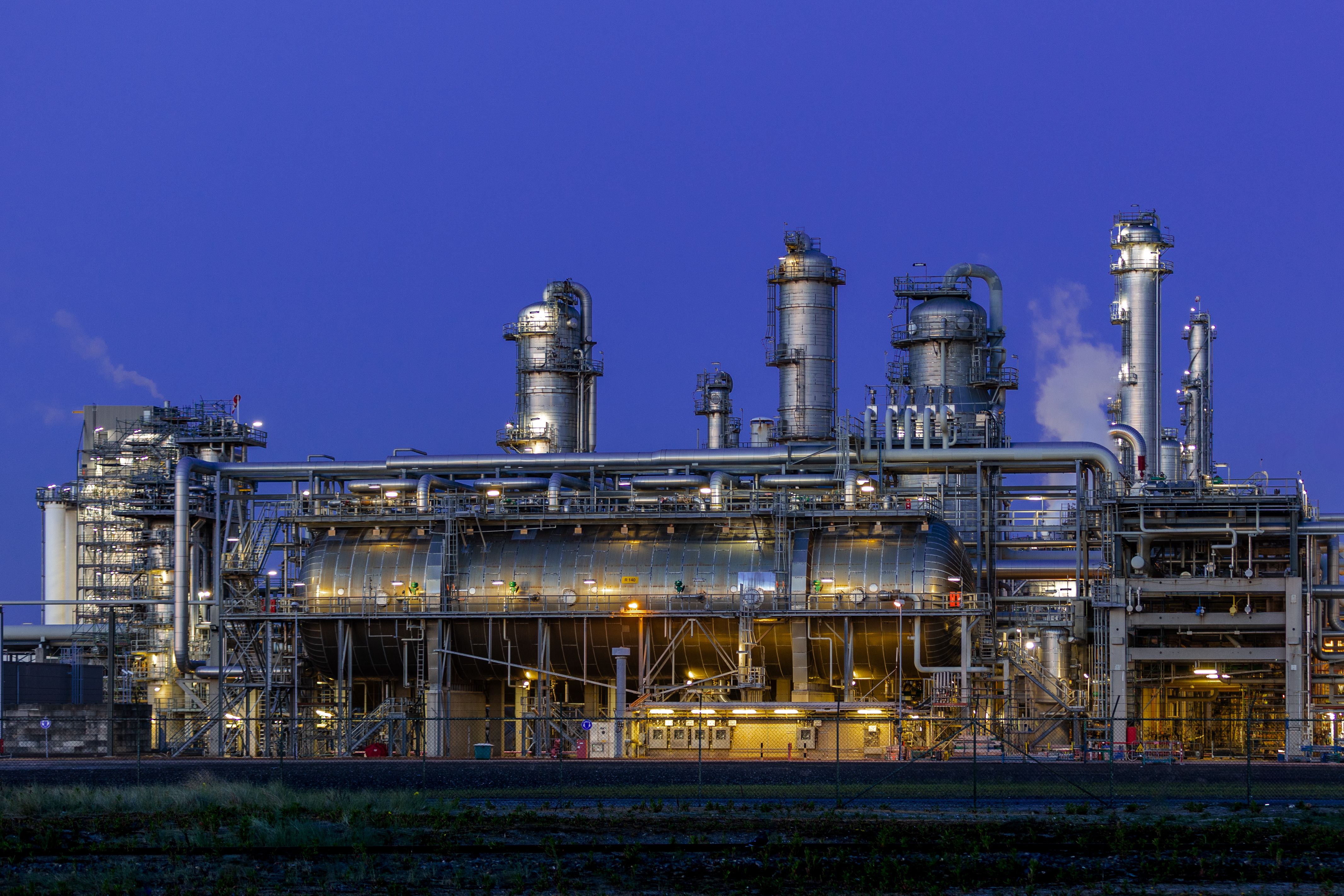
Steam cracker investment, once the flagship capital project of the global chemical industry, has gone quiet. Projects that were sanctioned with fanfare in 2021 and 2022 are now being delayed, downsized, or quietly shelved, while older capacity in high-cost regions is being shut rather than upgraded. This is not a single company's problem; it shows up consistently across government trade data, industry association surveys, consulting-firm capacity trackers, and the capital allocation decisions disclosed in quarterly earnings calls. This piece walks through what the numbers from these sources actually say about why cracker investment has slowed, rather than relying on any single market forecast.
The Oversupply Numbers Behind the Pullback
The core problem is arithmetic, not sentiment. Wood Mackenzie's industry analysis shows global ethylene capacity expanded by more than 40 million tons between 2020 and 2025, with roughly 70 percent of that new capacity built in China, while demand over the same period grew by only about 27 million tons. That imbalance has pushed the average global ethylene plant utilisation rate down to roughly 80 percent, and polyethylene cash margins on an integrated basis have stayed largely negative since mid-2022. S&P Global's commodity insight team has quantified the closure response to this glut: about 4 million tons of cracker capacity have already shut globally, with a further 1 million tons considered at risk, and consolidation is expected to intensify through 2026 and 2027 specifically in high-cost producing regions.
Deloitte's 2026 chemical industry outlook, drawing on S&P Capital IQ data and contemporaneous reporting from Reuters, Chemical & Engineering News, and Chemistry World, documents a wave of specific plant closures across Europe, South Korea, and Japan through 2025, reinforcing that this is a structural rationalisation rather than a temporary pause tied to one region's energy costs.
What Government and Association Data Show About Capital Spending
The American Chemistry Council's economic outlook offers the clearest government-adjacent capital expenditure trendline for the largest single national chemical industry. Capital spending on US chemical projects rose 3.9 percent to 39 billion dollars in 2024, but the ACC's own forecast shows that growth decelerating sharply, to just 1.6 percent in 2025, with capital expenditures for equipment and structures ultimately growing only 1.3 percent for the full year. The Council's chief economist attributed the pullback directly to high interest rates, tariffs on imported equipment and materials, and what the ACC describes as unprecedented decision-making uncertainty that has pushed many firms into a wait-and-see posture on new sanctioned projects. The ACC's Q2 2025 sentiment survey recorded capital spending expectations turning negative for the first time since the index began in 2023, a signal that predates the recovery in sentiment the ACC later reported for the first quarter of 2026.
On the trade side, the U.S. Energy Information Administration's short-term energy outlook adds a feedstock dimension to the story: the EIA projects natural gas prices will rise roughly 33 percent in the coming year even as Brent crude is expected to soften, compressing the oil-to-gas cost ratio that has historically made US ethane-based cracking so competitive. Chemical & Engineering News reporting tied to EIA data also notes that US ethane exports, which rose 26 percent last year, are drawing feedstock away from domestic crackers toward new terminals and Chinese buyers, tightening the domestic supply base gas processors can offer new projects.
Company-Level Evidence: Deferred and Downsized Projects
Individual company disclosures put concrete numbers behind the macro trend. Dow's own investor communications confirm that after sanctioning its Path2Zero integrated ethylene cracker in Fort Saskatchewan, Alberta in November 2023 at an estimated cost of roughly 8.9 to 11 billion Canadian dollars, the company delayed construction in April 2025, cutting its full-year enterprise capital expenditure guidance from 3.5 billion to 2.5 billion dollars and deferring about 1 billion dollars of planned spending. When Dow's fourth-quarter 2025 earnings call confirmed the project would proceed, management pushed the Phase 1 start-up from the original end-2027 target to the end of 2029, a two-year delay explicitly tied to aligning completion with a hoped-for market recovery rather than the originally projected demand curve.
Beyond Dow, Chemical & Engineering News's Global Top 50 ranking for 2026 reports that ExxonMobil and SABIC are both shutting ethylene crackers in Europe, where the downturn has been felt most acutely, and that Sinopec's petrochemical business, sitting at the center of China's capacity glut, posted a loss for 2025. Dow itself announced a workforce reduction of 4,500 jobs, about 13 percent of its headcount, as part of the same cost-management program that produced the Path2Zero delay, a detail that connects capital-project deferral directly to broader balance-sheet stress across the sector.
The Regional Divergence: Who Is Still Building
Not every region is retreating at the same pace. INEOS's Project ONE in Antwerp, a 4 billion euro, 1.45 million tonne per year ethane-fed cracker, remains on track for 2026 start-up and is described in industry trade coverage as the first new cracker built in Europe in roughly three decades, even as older European assets close around it. S&P Global's APPEC 2025 briefing separately flagged that China itself is expected to slow new petrochemical investment beyond 2029, with new sanctioning increasingly limited to projects already under construction, while several Japanese steam crackers face outright decommissioning and South Korea's overhaul is targeting small standalone naphtha units for closure, according to Reuters reporting cited in Deloitte's outlook.
- Global ethylene capacity added 2020-2025: over 40 million tons, roughly 70% in China (Wood Mackenzie)
- Average global ethylene plant utilisation: approximately 80% (Wood Mackenzie)
- Global cracker capacity already closed: approximately 4 million tons, with 1 million tons more at risk (S&P Global)
- US chemical industry 2025 capital spending growth: 1.6%, down from 3.9% growth in 2024 (American Chemistry Council)
- Dow Path2Zero cost: roughly $8.9-11 billion; Phase 1 start-up delayed two years to end-2029 (Dow investor disclosures)
Conclusion
The petrochemical cracker slowdown is not the product of any single headwind; it is the convergence of a genuine supply glut documented by consulting-firm capacity trackers, a capital-spending deceleration confirmed by the American Chemistry Council's own survey data, a feedstock cost shift flagged by the EIA, and company-specific balance-sheet discipline visible in Dow's and other majors' own investor disclosures. Until global ethylene utilisation climbs back toward the mid-80s and integrated margins turn durably positive, consulting-firm and association data alike point to further project deferrals and capacity rationalisation rather than a wave of newly sanctioned crackers, with most forecasts now pushing any broad-based investment recovery into the early 2030s.