
The Global Race for Offshore Wind: Who's Actually Ahead in 2026
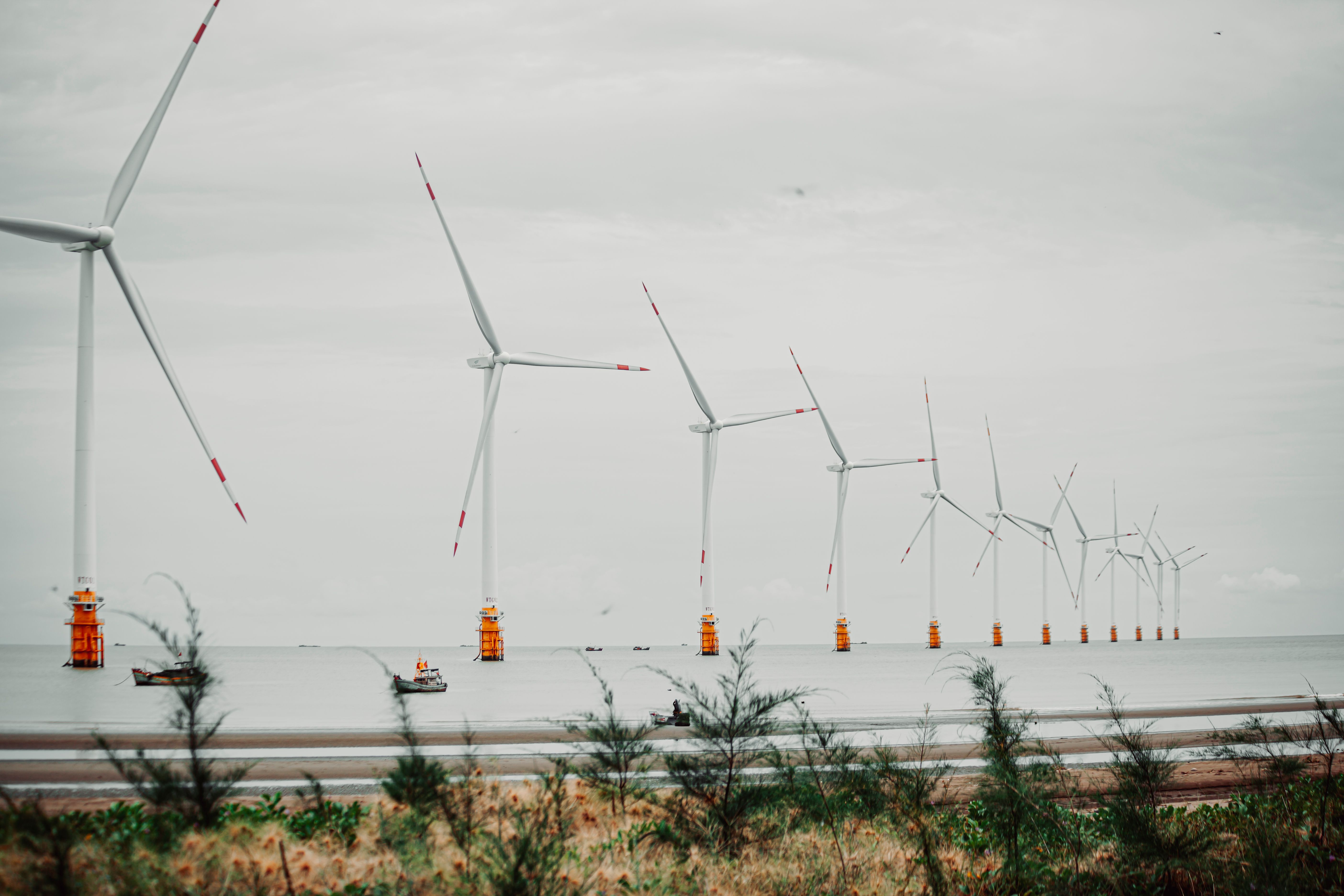
Offshore wind crossed a symbolic threshold in 2025: global installed capacity reached 92.5 gigawatts, enough to power more than 100 million homes, according to the Global Wind Energy Council's 2026 Global Offshore Wind Report. But that headline number obscures a far more lopsided race underneath it. One country now accounts for more than half the world's offshore wind fleet, Europe's build-out has slowed to its weakest pace in nearly a decade, and the United States, once expected to be a major growth market, has seen its federal offshore wind pipeline frozen by policy reversal. The picture in 2026 is not a three-way contest it is a China-led market with Europe defending second place and the US fighting to avoid falling out of the race altogether.
China's Eighth Consecutive Year at the Top
China added 6.6 gigawatts of new offshore wind capacity in 2025, extending a streak of leading global annual installations for the eighth consecutive year, per GWEC's tracking. That brought China's cumulative offshore wind capacity to 48.4 gigawatts by the end of 2025, which the Council calculates now represents 52 percent of all installed offshore wind capacity on the planet. China's dominance has also been structural, not just volumetric: the country's offshore market has moved through three distinct policy phases, from feed-in tariffs that ended in 2021, to a grid-parity model, and now to a market-based renewable pricing system, giving developers a more predictable long-term revenue environment than most Western markets currently offer.
Figure 1: Cumulative offshore wind capacity by market, end of 2025. Source: GWEC Global Offshore Wind Report 2026.
China, the UK, Germany, the Netherlands, and Taiwan together account for over 90 percent of global offshore wind capacity, according to GWEC, underscoring how concentrated this industry remains even as more than 30 countries now have some form of offshore wind ambition on paper, per legal-sector tracking from Orrick's Global Offshore Wind Report, which monitors regulatory frameworks and auction timelines across 31 countries.
Europe's Slowdown: Weakest Offshore Year Since 2016
Europe connected just under 2 gigawatts of new offshore wind capacity to the grid in 2025, the lowest annual installation figure since 2016, according to WindEurope's 2025 Statistics and Outlook report. Only three countries, the UK, Germany, and France, commissioned any new offshore wind turbines at all last year, with the UK contributing just over 1 gigawatt of that total. WindEurope attributes the shortfall largely to construction delays rather than a collapse in ambition, and the trade association still expects Europe to install 73 gigawatts of new offshore wind capacity between 2026 and 2030, with the broader wind sector attracting 45 billion euros of new investment across Europe in 2025 alone.
The bottlenecks are structural. WindEurope's own analysis identifies insufficient grid build-out and grid connection queues as the number one obstacle across the continent, compounding delays already caused by lengthy permitting procedures and a wave of failed or undersubscribed auction rounds. GWEC's global data reinforces the auction-side weakness: the amount of offshore wind capacity procured through auctions worldwide in 2025 was just 11.4 gigawatts, only one-fifth of the record set the year before, and roughly 25 gigawatts of projects outside China remain stuck awaiting a final financial investment decision.
The US Reversal: Projects Frozen, Then Litigated Back to Life
No market illustrates the volatility of the offshore wind race in 2026 more starkly than the United States. A Presidential Memorandum issued in January 2025 withdrew all US Outer Continental Shelf areas from wind-energy leasing and paused new permitting approvals, and the Bureau of Ocean Energy Management followed in July 2025 by rescinding previously designated Wind Energy Areas covering more than 3.5 million acres of federal waters, according to legal tracking published by the Cornell Journal of Law and Public Policy. In August 2025, the administration canceled 679 million dollars in federal funding earmarked for 12 offshore wind projects spanning California, Maryland, Massachusetts, and other states.
The disruption reached even fully permitted, under-construction projects. The Department of the Interior issued stop-work orders against five major US offshore wind farms between mid-2025 and early 2026, including Ørsted's 924-megawatt Sunrise Wind and the 700-megawatt Revolution Wind, an 80-percent-complete project the company was building in a joint venture with Global Infrastructure Partners' Skyborn Renewables, according to Utility Dive's reporting. Every one of those five projects has since won a preliminary injunction in federal court and resumed construction, but the disruption carried a direct financial cost: Ørsted disclosed that BOEM's suspension order alone cost the company 228 million dollars, on top of 580 million dollars in actual and estimated costs tied to Trump-era tariffs, according to the company's own capital budget disclosures reported by the Maritime Executive.
Figure 2: Global annual offshore wind installations, 2022-2030 (actual and GWEC forecast). Source: GWEC Global Offshore Wind Report 2026.
The Cost of US Policy Uncertainty, in Company Numbers
Ørsted's own investor disclosures put a concrete price on US political risk. The Danish developer, Europe's largest offshore wind company, said in August 2025 it needed 9.4 billion dollars in additional capital to complete its two remaining active US projects, Revolution Wind and Sunrise Wind, blaming what it called adverse developments in the American market during its earnings call, as reported by Canary Media. Ørsted's current capital budget for its US pipeline stands at 11.5 billion dollars, with 9.3 billion dollars already invested as of the end of December 2025. Industry analysts quoted in that coverage said Ørsted is unlikely to invest in new American offshore wind projects again, even as it works to finish the two it has already committed to.
Not every US project has been derailed. Equinor's Empire Wind, initially hit with a stop-work order in April 2025, resumed after New York Governor Kathy Hochul intervened directly with federal officials, and Electrek's April 2026 reporting notes that both Revolution Wind and the Coastal Virginia Offshore Wind project have since reached first-power milestones. Ørsted now expects Revolution Wind to be commissioned in the second half of 2026, though Sunrise Wind's timeline has slipped to the second half of 2027, later than originally planned.
Country Comparison: 2025 Offshore Wind Scorecard
The table below summarizes how the leading offshore wind markets compared on 2025 performance and near-term trajectory, drawing on GWEC, WindEurope, and Wood Mackenzie tracking.
| Market | 2025 New Capacity | 2026 Outlook |
| China | 6.6 GW added; 48.4 GW cumulative | Eighth straight year as global leader; market-based pricing now in force |
| United Kingdom | ~1.05 GW added; largest in Europe | Continued auction activity but grid-queue delays persist |
| Germany | ~500 MW added | Grid reinforcement investment of EUR 4.6B committed for 2030 target |
| United States | Multiple projects under stop-work orders | Courts have restored construction; new leasing remains frozen |
| Taiwan | 935 MW-1 GW added | 20 projects awarded grid capacity; seven wind farms now operational |
Table 1: 2025 offshore wind performance by market. Compiled from GWEC Global Offshore Wind Report 2026, WindEurope 2025 Statistics, and Orrick's Global Offshore Wind Report.
What the Next Five Years Look Like
GWEC projects that global annual offshore wind installations will double in 2026 and triple by 2031, with more than 327 gigawatts of new capacity expected worldwide by 2035, bringing cumulative global capacity to roughly 420 gigawatts. That implies a compound annual growth rate near 24 percent between 2026 and 2030, which GWEC's Deputy CEO Rebecca Williams has described as making offshore wind one of the fastest-growing mainstream energy technologies globally. Wood Mackenzie's own 2026 outlook frames the US market specifically as being at a policy crossroads, with a July 2026 production tax credit deadline creating urgent procurement pressure even as tariff and permitting uncertainty continue to weigh on developer decisions.
The net effect for 2026 is a race that looks increasingly unbalanced rather than genuinely competitive. China's scale advantage, backed by a stable pricing framework and an eight-year installation streak, is compounding rather than narrowing. Europe retains the deepest pipeline of any market outside China but is constrained by grid capacity rather than ambition. And the United States, despite billions of dollars in sunk capital and several projects now legally cleared to finish construction, faces a policy environment that has made every major foreign developer reluctant to commit new capital to the market a dynamic that is unlikely to reverse until federal leasing and permitting policy stabilizes.