
Memory Chip Cycles: Why DRAM and NAND Prices Swing So Wildly
A Market Built to Overshoot in Both Directions
Memory is the most violently cyclical segment of the semiconductor industry, and the current cycle is proving the point in real time. Industry pricing tracker TrendForce reported that conventional DRAM contract prices jumped 90% to 95% quarter-over-quarter in the first quarter of 2026, while NAND flash contract prices rose 55% to 60% over the same period among the sharpest quarterly moves the memory market has recorded. The mechanics behind swings this large are structural, not incidental: a new memory fab costs roughly $15–$20 billion and takes two to three years to reach volume production, so once capacity decisions are made, suppliers are largely locked in regardless of what demand does in the interim. When demand outruns that fixed, slow-moving supply, prices spike; when demand falls short, the same suppliers keep running near-complete fabs at a loss rather than idle billions of dollars of sunk equipment, and prices collapse.
The Anatomy of the Current Boom
SK hynix’s own investor disclosures capture the scale of the current upswing. The company posted record fourth-quarter 2025 revenue of KRW 32.8 trillion, up 34% quarter-over-quarter and 66% year-over-year, with DRAM average selling prices rising in the mid-20% range sequentially. That record did not hold for long: in its Q1 2026 earnings call, SK hynix reported revenue of KRW 52.6 trillion up 60% quarter-over-quarter and 198% year-over-year, surpassing the KRW 50 trillion mark for a single quarter for the first time, with operating margin reaching 72%. Samsung’s semiconductor division told investors its Q1 2026 operating profit reached roughly $36.1 billion, accounting for approximately 94% of the company’s total quarterly profit, as the company’s memory chief warned that "significant shortages" across memory products are expected to continue through at least 2027.
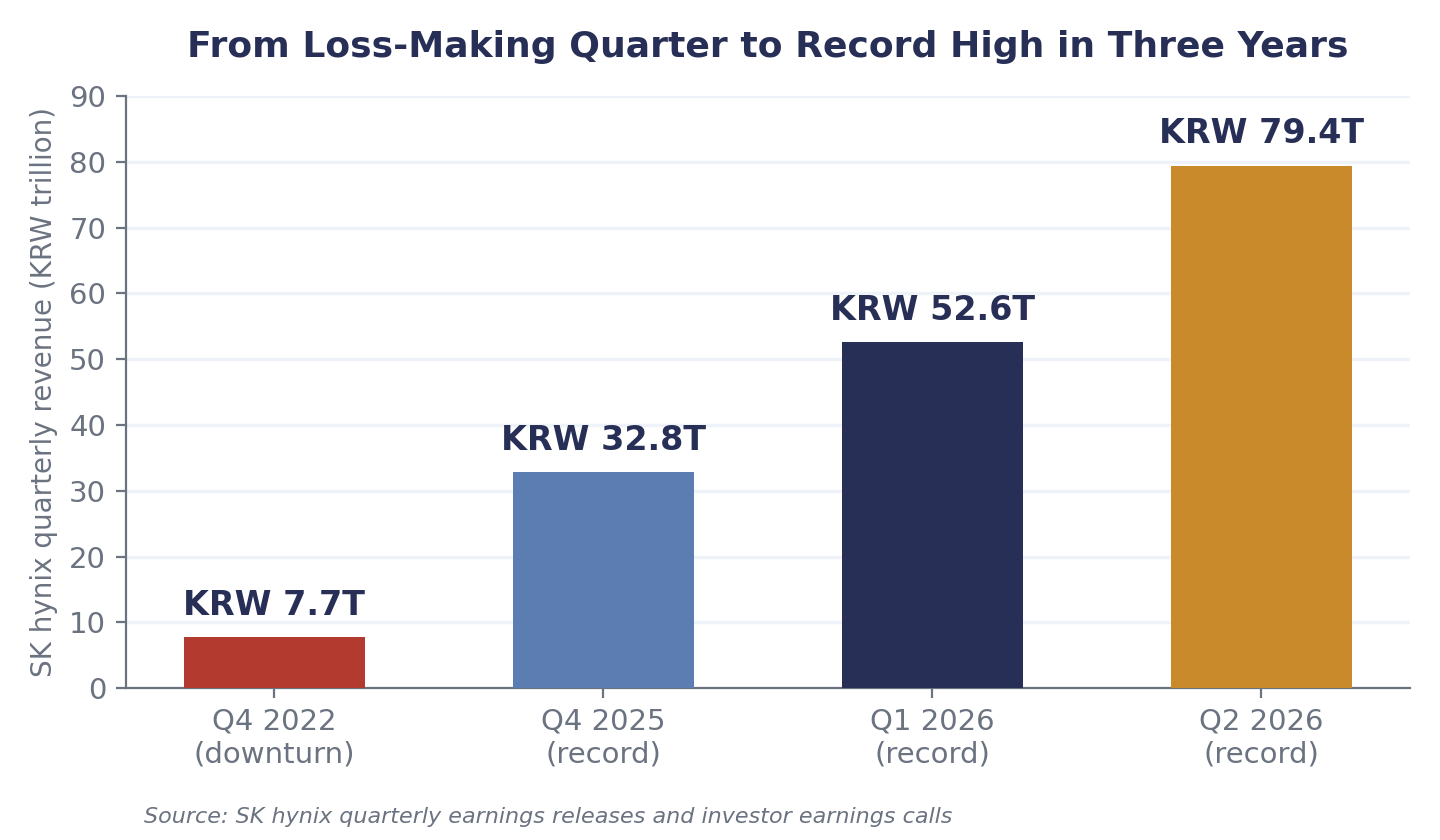
Figure 1: SK hynix quarterly revenue, downturn quarter vs. successive 2025–26 records.
How We Got Here: The Bust That Set Up the Boom
This boom exists partly because of how badly the prior cycle ended. SK hynix posted a full-year 2023 net margin of approximately negative 28%, and Samsung’s profit fell 69% in the fourth quarter of 2022 alone, according to the companies’ own reported results. Facing losses of that scale, manufacturers cut production sharply Samsung reduced output by roughly half during the downturn and largely paused new capacity investment through 2024 and into early 2025. That capital discipline left the industry structurally short just as AI infrastructure demand accelerated in mid-2025, which is a direct, mechanical explanation for why the current price spike has been sharper than prior cycles: the supply side simply was not there to absorb it.
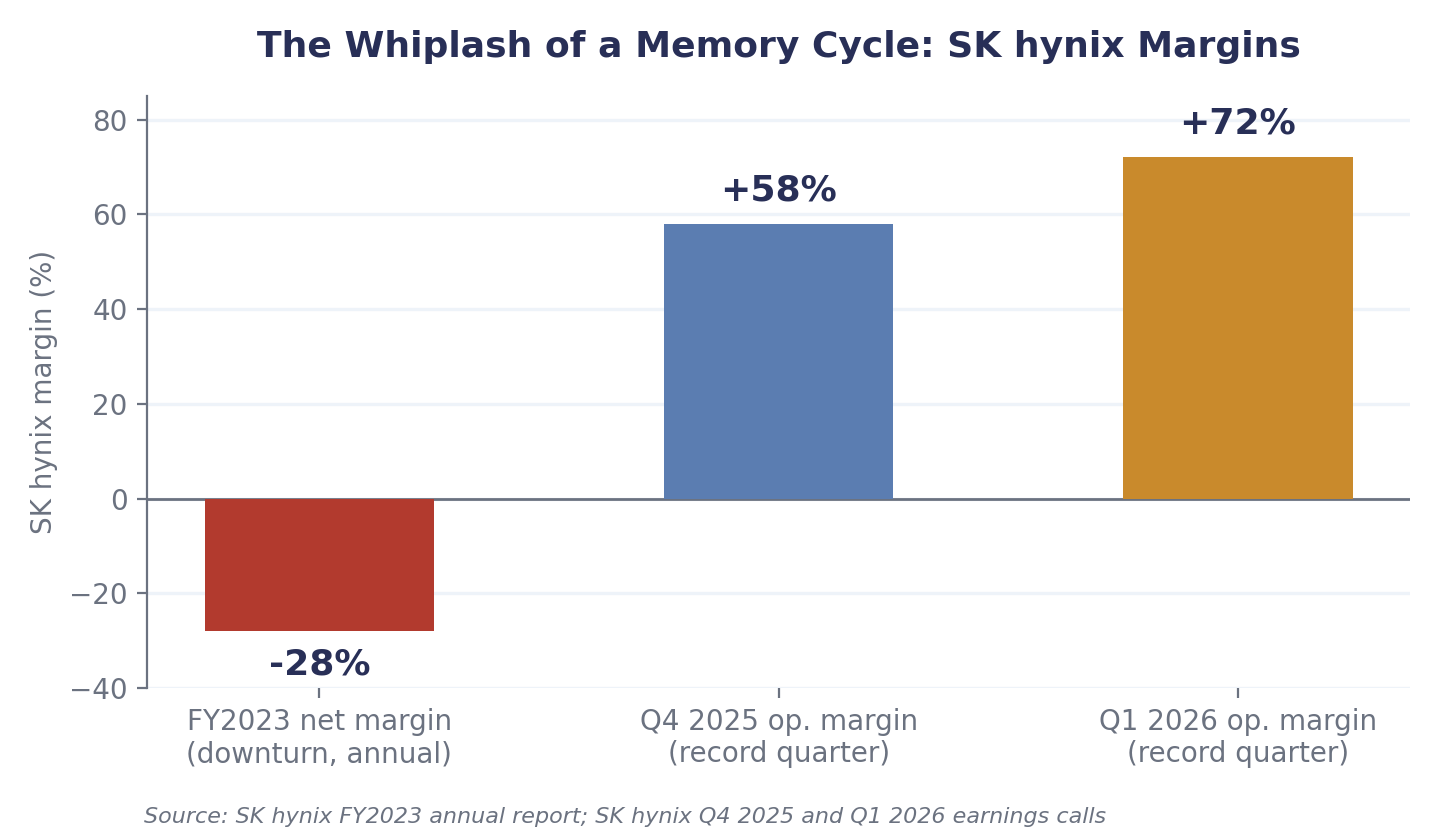
Figure 2: SK hynix margin swing from the 2022–23 downturn to the current boom.
Why This Cycle May Behave Differently
What distinguishes the current cycle from prior ones is what is actually consuming the memory. IDC characterized the situation in December 2025 as "not just a cyclical shortage but a potentially permanent, strategic reallocation of the world’s silicon wafer capacity," noting that manufacturers have redirected production toward high-bandwidth memory and high-capacity server DRAM at the direct expense of conventional consumer-grade chips. McKinsey projects global data center capital spending will reach roughly $7 trillion through 2030, with $5.2 trillion of that AI-related a demand base with a fundamentally different growth trajectory than the smartphone and PC replacement cycles that drove prior memory booms and busts. South Korea’s Ministry of Trade, Industry and Energy recorded this shift directly in trade data: the country’s semiconductor exports reached a record $173.4 billion in 2025, up more than 20% from the prior year, with the ministry attributing the surge specifically to high-value memory such as HBM chips used in AI servers.
What Comes Next
New capacity is finally being committed, but not quickly enough to change the near-term picture. SK hynix has signaled a significant increase in 2026 capital expenditure while aiming to keep spending at roughly the mid-30% range of revenue, and Samsung is reportedly targeting a roughly 50% expansion of production capacity in 2026 — yet new fabs from both Micron and SK hynix are not expected to reach volume production until 2027 at the earliest, meaning current pricing dynamics likely persist for several more quarters regardless of how aggressively suppliers now invest. Whether this cycle ultimately "breaks the pattern," as some investors now argue, or simply produces a larger, later version of the same 2022-style correction, remains the central open question hanging over every memory supplier’s current record quarter.
The Data Table at a Glance
| Metric | Figure | Source |
| DRAM contract price change, Q1 2026 (QoQ) | +90–95% | TrendForce (industry pricing tracker) |
| SK hynix revenue, Q1 2026 (record, QoQ/YoY) | +60% / +198% | SK hynix Q1 2026 earnings call |
| SK hynix FY2023 net margin (downturn) | −28% | SK hynix FY2023 annual results |
| Samsung semiconductor operating profit, Q1 2026 | $36.1B | Samsung Q1 2026 earnings report |
| South Korea 2025 semiconductor exports (record) | $173.4B | Korea Ministry of Trade, Industry & Energy |
| Global data center capex through 2030 (AI-linked) | $5.2T of $7T | McKinsey |