
Medicare Coverage Assessment: How CMS Reimbursement Is Rewiring the U.S. Wearable Medical Devices Market
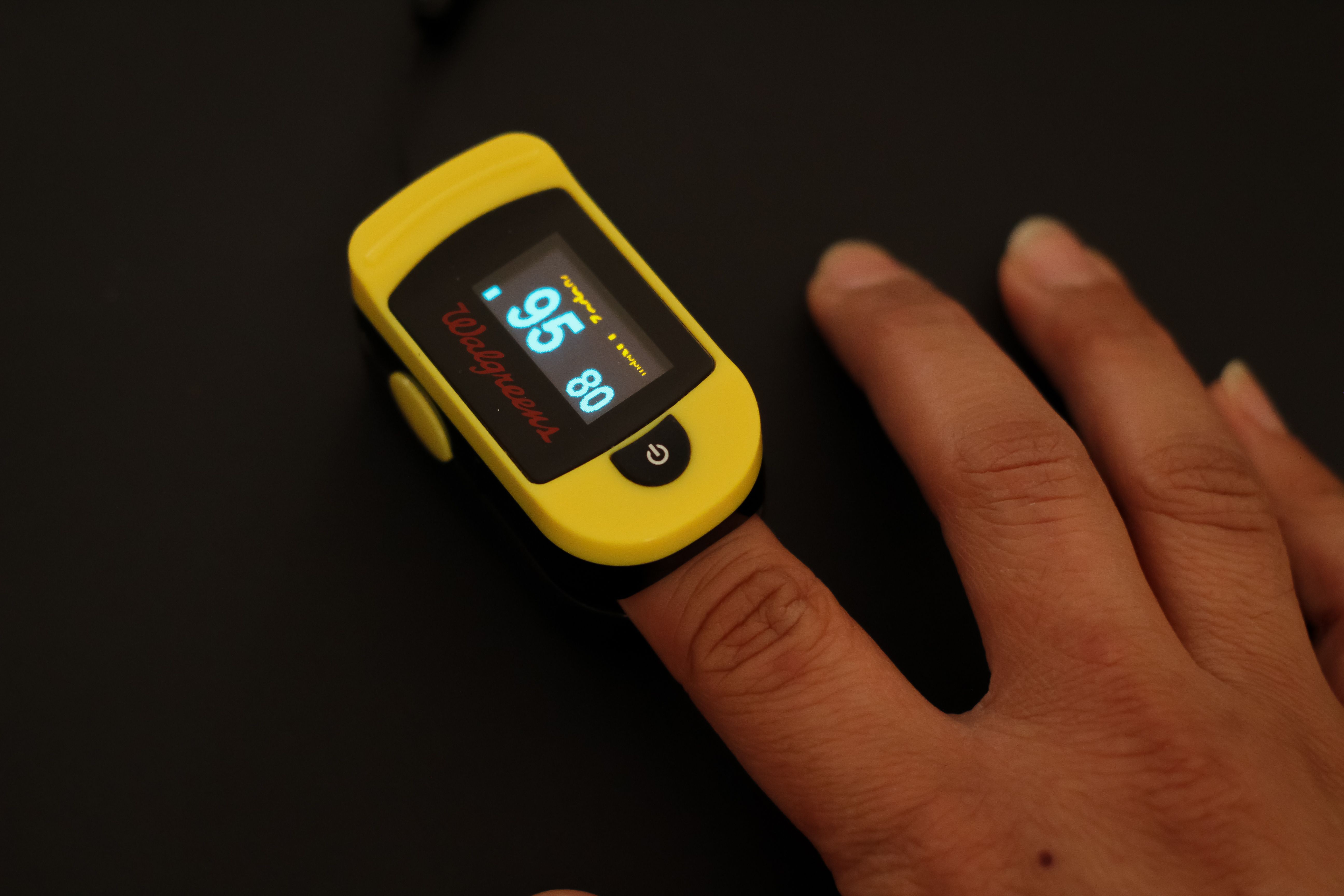
Reimbursement policy, not sensor technology, has become the deciding variable in the U.S. wearable medical devices market. A device can be clinically brilliant and commercially irrelevant if the Centers for Medicare & Medicaid Services (CMS) declines to pay for it, and the reverse is equally true: even a modest incremental improvement in accuracy can unlock a wave of demand once Medicare widens its coverage net. This section assesses how current and emerging Medicare policy is shaping device adoption, payer economics, and competitive positioning across the U.S. wearable medical devices market, translating CMS rulemaking into the volume and revenue signals that matter for manufacturers, health systems, and investors.
Medicare's footprint is disproportionately large relative to its share of the U.S. population because the beneficiaries it covers, adults aged 65 and above along with individuals with qualifying disabilities, carry the heaviest burden of the chronic conditions that wearable sensors are built to manage: diabetes, arrhythmia, heart failure, and hypertension. As a result, every expansion or restriction of Medicare's local coverage determinations (LCDs) and national coverage determinations (NCDs) sends a proportionally larger shock through the U.S. wearable medical devices market than a similar change from any single commercial payer.
Continuous Glucose Monitors: The Reimbursement Engine of the U.S. Wearable Medical Devices Market
Continuous glucose monitors remain the clearest case study of Medicare's power to reshape demand within the U.S. wearable medical devices market. Historically, CMS restricted CGM coverage to beneficiaries on intensive insulin therapy who tested blood glucose multiple times daily, a narrow population that limited addressable volume. Since the 2023 policy update, CMS relaxed the testing-frequency and insulin-intensity requirements, extending eligibility to a broader group of insulin-using diabetics and, in select circumstances, to patients experiencing problematic hypoglycemia even without insulin therapy.
That single rule change materially expanded the Medicare-eligible base for prescription CGMs, and commercial insurers largely mirrored the relaxed criteria, compounding the effect across the U.S. wearable medical devices market. Figure 1 illustrates the trajectory of the Medicare-eligible CGM population, showing an acceleration around the 2023–2024 policy window and continued expansion as CMS considers further loosening criteria for non-insulin Type 2 diabetics, a population roughly ten times larger than the currently eligible intensive-insulin cohort.
Figure 1: Medicare-eligible CGM population, 2019–2033E (illustrative trend derived from CMS policy expansion), U.S. Wearable Medical Devices Market
The eligibility question now under CMS review, whether to extend coverage to non-insulin Type 2 diabetics, is arguably the single largest pending catalyst for the U.S. wearable medical devices market. Given that Type 2 diabetes accounts for nearly 90–95% of diagnosed cases nationally, even a partial extension of Medicare coverage to this cohort would represent one of the largest single-policy demand shocks the category has seen, dwarfing the impact of any individual product launch from Abbott or Dexcom.
Inside the CMS ACCESS Pilot: Outcomes-Based Payment Enters the U.S. Wearable Medical Devices Market
CMS's decade-long ACCESS pilot marks a structural, rather than incremental, shift in how Medicare will pay for connected sensors across the U.S. wearable medical devices market. Instead of a flat per-unit reimbursement rate, the pilot ties manufacturer payment to documented health outcomes, such as reductions in hypoglycemic events, HbA1c improvement, or avoided hospitalizations for arrhythmia and heart failure. This reframes wearable devices as accountable clinical interventions rather than passive monitoring hardware.
For manufacturers competing in the U.S. wearable medical devices market, the ACCESS pilot raises the evidentiary bar substantially. Companies will need robust real-world outcomes data, integration with electronic health records, and clinician-facing dashboards that demonstrate measurable impact, capabilities that favor scaled players such as Abbott, Dexcom, Medtronic, and Boston Scientific over smaller entrants that lack the clinical trial infrastructure or EHR partnerships to generate comparable evidence.
Because outcomes-based payment rewards devices that demonstrably change clinical trajectories, it is also likely to accelerate consolidation within the U.S. wearable medical devices market, as smaller MedTech firms seek clinical validation partnerships, licensing deals, or acquisition by larger manufacturers that already have the reimbursement infrastructure and outcomes data pipelines the ACCESS model demands.
Cardiac Monitoring, RPM, and PCM: The Other Medicare Pathways in the U.S. Wearable Medical Devices Market
Beyond CGMs, Medicare supports several additional reimbursement pathways relevant to the U.S. wearable medical devices market. Ambulatory ECG and Holter monitoring patches are reimbursed under distinct CPT codes depending on monitoring duration, ranging from short 24–48 hour Holter recordings to extended 14–30 day mobile cardiac telemetry, giving companies like iRhythm and AliveCor a defined, durable revenue channel independent of the CGM cycle.
Remote Patient Monitoring (RPM) and Principal Care Management (PCM) codes represent a second structural pathway. CPT codes such as 99453 and 99454 cover device setup and data transmission, while 99457 and 99458 reimburse clinician time spent reviewing physiologic data, creating a recurring monthly revenue stream that extends well beyond the initial device sale. This RPM/PCM framework is one of the fastest-growing reimbursement categories in the U.S. wearable medical devices market because it monetizes the software and clinical-service layer, not just the hardware.
Figure 2: Medicare reimbursement status by device category, U.S. Wearable Medical Devices Market
Insulin delivery wearables, including tubeless insulin patch pumps, also fall within Medicare's Durable Medical Equipment (DME) benefit, though beneficiaries face competitive bidding dynamics and supplier network restrictions that do not apply to CGMs billed as DME supplies. As Figure 2 shows, the coverage line in the U.S. wearable medical devices market falls cleanly along clinical necessity: prescription, FDA-cleared devices with demonstrated therapeutic value are covered, while consumer-oriented wellness wearables remain outside Medicare's benefit design entirely.
Medicare Advantage Supplemental Benefits: A Growing Side Door in the U.S. Wearable Medical Devices Market
Traditional fee-for-service coverage rules are not the only route into the Medicare population; Medicare Advantage (MA) plans have their own, increasingly important channel. Since CMS broadened the definition of Special Supplemental Benefits for the Chronically Ill (SSBCI), MA plans have gained latitude to offer wearable devices, such as blood pressure monitors, fall-detection sensors, and even select smartwatches, as supplemental benefits for enrollees with qualifying chronic conditions, even when those devices would not meet the stricter medical-necessity bar under traditional fee-for-service Medicare.
This MA supplemental-benefit pathway is expanding faster than formal NCD/LCD rulemaking and is becoming a meaningful secondary growth channel within the U.S. wearable medical devices market, particularly for companies like Masimo and GE HealthCare that sell into the remote monitoring and chronic-care-management ecosystems MA plans are building. Because MA enrollment has grown to cover more than half of all Medicare beneficiaries nationally, plan-level benefit design decisions increasingly rival CMS national policy as a driver of device distribution.
For manufacturers, this means the addressable Medicare opportunity in the U.S. wearable medical devices market is no longer defined solely by NCD and LCD criteria; it also depends on winning inclusion in individual MA plans' supplemental benefit catalogs, a fragmented but fast-growing negotiation that rewards companies with strong care-management partnerships and value-based contracting capabilities.
Coverage Gaps: Where Medicare Still Lags Behind the U.S. Wearable Medical Devices Market
Despite meaningful expansion, coverage gaps persist and continue to cap near-term volume growth in the U.S. wearable medical devices market. Over-the-counter CGMs, such as Dexcom Stelo and Abbott Lingo, remain classified as wellness products and are therefore excluded from Medicare and most commercial insurance reimbursement, limiting them to Health Savings Account (HSA) or Flexible Spending Account (FSA) purchase channels rather than first-dollar coverage.
Prior authorization and documentation burdens represent another practical barrier. Physicians must document qualifying diagnoses, insulin regimens, or testing frequency before CMS contractors approve CGM or RPM claims, and inconsistent enforcement across Medicare Administrative Contractors (MACs) creates regional variability in approval rates across the U.S. wearable medical devices market. This administrative friction disproportionately affects smaller physician practices and rural health systems with less dedicated billing infrastructure.
Competitive bidding under the DME benefit further compresses reimbursement rates for some wearable categories, pressuring manufacturer margins even as unit volumes rise. Taken together, these frictions mean that headline eligibility expansions in the U.S. wearable medical devices market do not translate into equivalent real-world utilization, a gap that outcomes-focused pilots like ACCESS are explicitly designed to help close over the coming decade.
Payer Mix and Financial Implications for the U.S. Wearable Medical Devices Market
Medicare's role must be viewed alongside commercial insurance, Medicaid, and out-of-pocket channels to understand the full financing structure of the U.S. wearable medical devices market. Commercial insurers, which mirrored CMS's relaxed CGM eligibility criteria, remain the largest single reimbursement channel, while Medicare's share is concentrated heavily in the 65-plus population where chronic disease prevalence, and therefore device utilization, is highest.
Figure 3: Reimbursement channel share, 2025E (illustrative), U.S. Wearable Medical Devices Market
As shown in Figure 3, roughly three-in-ten dollars of covered device revenue in the U.S. wearable medical devices market currently flow through Medicare Fee-for-Service and Medicare Advantage combined, a share that industry analysts expect to rise as the beneficiary population ages and as CGM and RPM eligibility criteria continue to loosen. HSA/FSA and out-of-pocket spending, while a smaller slice today, is the fastest-growing channel because it captures the OTC wellness-CGM segment that formal insurance still excludes.
Strategic Outlook: What Medicare's Next Moves Mean for the U.S. Wearable Medical Devices Market
Looking ahead, three Medicare policy developments will most directly influence the trajectory of the U.S. wearable medical devices market: a potential extension of CGM coverage to non-insulin Type 2 diabetics, the maturation of outcomes data from the ACCESS pilot, and continued expansion of RPM/PCM billing codes to cover a broader range of biosensors beyond glucose and cardiac monitoring.
Manufacturers that invest early in clinical evidence generation, EHR interoperability, and outcomes reporting infrastructure are best positioned to benefit as Medicare shifts from paying for devices to paying for demonstrated results. For health systems and investors tracking the U.S. wearable medical devices market, Medicare coverage determinations should be treated as a leading indicator of addressable volume, often a more reliable signal than product launches or sensor accuracy improvements alone.