
The Informal Economy: Measuring What GDP Statistics Miss
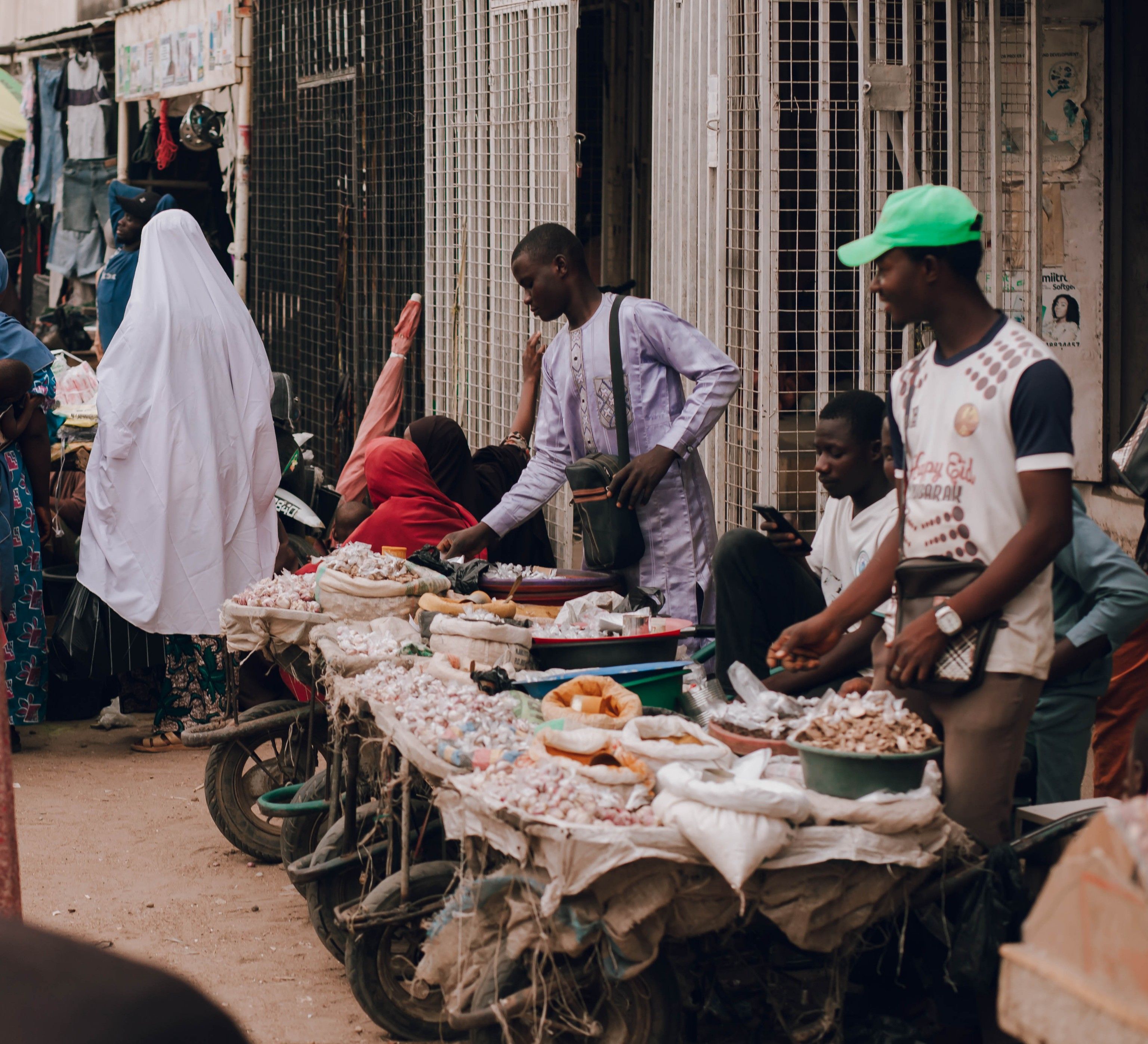
Gross domestic product is built almost entirely from formal records: registered firms, filed tax returns, payroll data. Yet across most of the world, a large share of economic life happens outside that paper trail, in cash transactions, unregistered enterprises, and work with no written contract.
Measuring how much this informal economy is worth, and how many people depend on it, has become its own statistical discipline spanning the International Labour Organization, the IMF, the World Bank, and increasingly private companies whose platforms now capture data formal statisticians never could. This piece pulls together the clearest numbers on the size of that gap and what is being done to close it.
How Big Is Informal Employment, Globally?
The International Labour Organization puts the current scale plainly: over 60 percent of the world's workforce and 80 percent of enterprises operate in the informal economy, a figure the ILO says has been rising in many countries rather than falling as earlier forecasts expected. The ILO's most recent statistical update, based largely on 2019 survey data, found global informal employment at 58 percent of total employment, down slightly from 61 percent in its first global estimate in 2018, comprising close to 2 billion workers. The employment-focused organization WIEGO, which compiles this ILO data, notes that own-account workers, those who are self-employed without hired staff, represent the largest single category at 47 percent of all informal workers worldwide, ahead of informally employed employees at 35 percent.
The regional gap is stark. ILO-based mapping shows low-income countries averaging 88.5 percent informal employment, compared with roughly 13.5 percent in high-income countries, and several countries in West and Central Africa exceeding 90 percent. The United States and Canada sit near the bottom of the global range at an estimated 8 percent, comparable to Poland and the United Kingdom, illustrating just how much national income level predicts informality.
How Much Output Does the Informal Economy Represent?
Employment estimates only capture people; a separate body of research tries to value the output itself. The IMF working paper by economists Leandro Medina and Friedrich Schneider, using a multiple-indicator, multiple-cause statistical model across 158 countries, calculated the average shadow economy at 31.9 percent of GDP between 1991 and 2015, ranging from a low of 7.2 percent in Switzerland to a high of 62.3 percent in Bolivia. A follow-up IMF-affiliated study extending the same methodology through 2017 found the global average had eased slightly to 30.9 percent of GDP, with Sub-Saharan Africa and Latin America averaging around 38 to 39 percent, compared with under 20 percent across OECD member countries. The World Bank's own Informal Economy Database, built by its Prospects Group and covering up to 196 economies from 1990 to 2020, layers eleven separate measures on top of these model estimates, spanning self-employment shares, employment outside the formal sector, and survey-based firm and household perception indicators, precisely because no single method is treated as definitive.
How Companies Are Filling the Data Gap
Where national statistical offices struggle to see informal transactions, some private platforms now capture them by default, because the transactions run through their own infrastructure. Safaricom's fiscal year 2026 annual report discloses that its M-PESA mobile money platform processed 41.68 trillion Kenyan shillings in transactions during the year to March 2026, a figure that dwarfs Kenya's measured GDP and reflects everyday activity, including much of the country's informal trading, remittances, and small merchant payments, that would otherwise leave no official record. The same report states that Safaricom's wider ecosystem now contributes an estimated 5 percent of Kenya's GDP directly and supports more than 1.3 million livelihoods through agents, merchants, and suppliers, most of whom operate as small, informally structured businesses rather than registered corporations. Because mobile money agents must register with Safaricom even when their customers do not report to tax authorities, platforms like M-PESA function as an unintentional census of informal commercial activity, one that is increasingly being used by researchers and central banks as a proxy for cash-based economic activity that traditional GDP compilation would otherwise miss entirely.
Why the Measurement Gap Matters
The World Bank's 2021 cross-country study on informality found that, measured by output, the informal share of GDP ranges from about 10 percent to 68 percent depending on the country, while informal self-employment shares show similarly wide variation, underscoring that no single global figure adequately describes any individual economy. This variance matters for policy: a country's tax base, social protection coverage, and even its measured growth rate can shift substantially depending on which informality estimate a government accepts, and the ILO notes that half of the global workforce currently lacks adequate social security coverage as a direct consequence of working outside the formal system.
- Global informal employment share: 58% of total employment, nearly 2 billion workers (ILO, 2023 statistical update)
- Low-income country informal employment average: 88.5%, vs 13.5% in high-income countries (ILO-based estimates)
- Average shadow economy size, 158 countries, 1991-2015: 31.9% of GDP (IMF, Medina and Schneider)
- OECD average shadow economy size: under 20% of GDP, vs 38-39% in Sub-Saharan Africa and Latin America (IMF-affiliated research)
- M-PESA transaction value, FY2026: KSh 41.68 trillion, exceeding Kenya's measured GDP (Safaricom annual report)
Conclusion
Between the ILO's employment surveys, the IMF's model-based shadow economy estimates, the World Bank's multi-indicator database, and increasingly the transaction logs of mobile money operators like Safaricom, the picture of the informal economy is becoming sharper even as it remains fundamentally incomplete. What all four sources agree on is direction, not precision: informality is not a marginal rounding error in GDP statistics but, in large parts of the world, the majority form of economic activity, and closing that measurement gap will depend as much on new data sources like mobile payment platforms as on better statistical models.