
Hydrogen vs. battery electric trucks: which technology will shape China's freight industry?
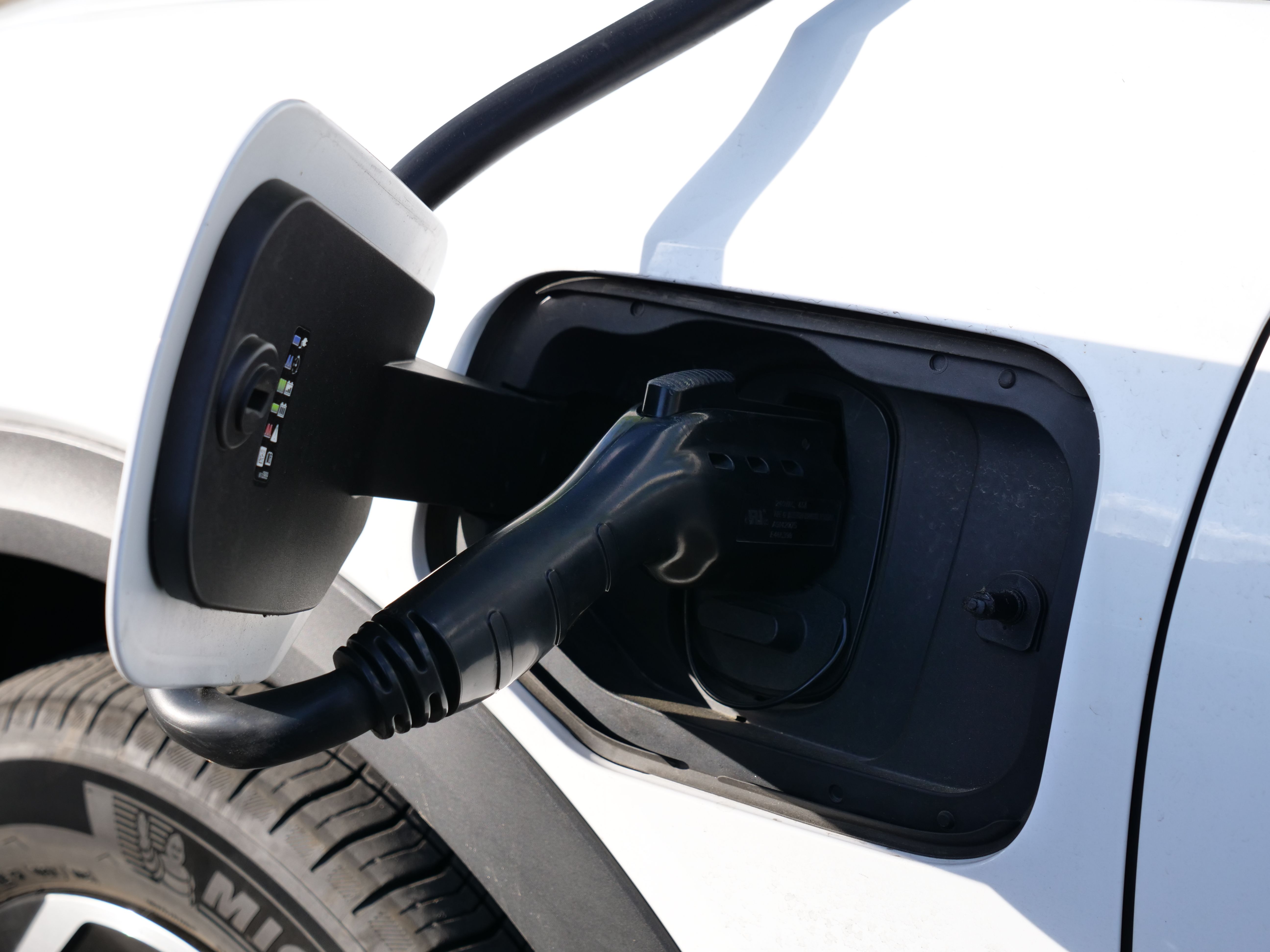
China's freight sector is decarbonizing faster than almost anywhere else in the world, but the China Hydrogen Commercial Vehicles Market is only one part of a much larger contest. In 2025, zero-emission medium- and heavy-duty vehicle sales in China reached a historic 457,000 units, up 98% year-on-year, with battery-electric trucks capturing the overwhelming majority of that volume. Hydrogen, by comparison, remains a smaller but strategically important slice of the transition. Understanding why both technologies are scaling in parallel rather than one simply replacing the other is key to reading where China's freight industry is actually headed.
Battery electric trucks are winning on volume
By raw numbers, battery-electric trucks are dominating China's new-energy freight shift far more decisively than hydrogen. New-energy heavy truck sales hit 231,100 units in 2025, a 182% year-on-year surge, pushing penetration to about 29% for the year and briefly above 50% in December alone. Battery-electric heavy trucks alone sold 40,800 units that same December, taking 48.6% of the monthly heavy-truck market. Against that backdrop, the China Hydrogen Commercial Vehicles Market looks modest: fuel cell heavy-duty truck sales reached just 8,154 units in 2025 meaningful growth, but still a fraction of battery-electric volumes.
Where hydrogen still has an edge
Despite trailing on volume, hydrogen retains real technical advantages that keep the China Hydrogen Commercial Vehicles Market relevant for specific use cases. Tractor-trailers the heaviest, longest-haul segment and traditionally the hardest to electrify had the highest zero-emission market share of any category at 38% in 2025, split between battery and hydrogen platforms. Hydrogen fuel cell stacks now reach 50–60% electrical efficiency, versus 40–45% for comparable diesel engines, and refuel in minutes rather than hours, which matters most on continuous long-haul routes where charging downtime erodes fleet productivity. Cumulative hydrogen vehicle sales in China were approaching 40,000 units by the end of 2025, concentrated almost entirely in exactly this kind of heavy-payload, fixed-route freight application.
Cost and total cost of ownership
Cost dynamics currently favor battery-electric vehicles, but the gap within the China Hydrogen Commercial Vehicles Market is narrowing on high-utilization freight routes. New-energy heavy-duty trucks can generate lifetime operating savings of approximately USD 167,000 over a 10-year operating cycle compared with diesel-powered vehicles. Battery-electric heavy trucks also demonstrate a 10–26% lower total cost of ownership (TCO) than diesel alternatives, despite purchase prices that remain 62–255% higher upfront. Hydrogen-powered trucks have followed a similar cost-reduction trajectory from a higher initial cost base. The list price of a 49-tonne fuel cell tractor has declined from approximately USD 278,000–417,000 in 2020–2021 to around USD 139,000–222,000 in 2025–2026. In hydrogen demonstration regions, government incentives can reduce purchase prices to approximately USD 49,000–69,000, bringing hydrogen heavy-duty trucks closer to cost parity with diesel and battery-electric alternatives. Furthermore, hydrogen fueling economics continue to improve as retail hydrogen prices move toward the USD 3.5–4.2 per kilogram breakeven range, strengthening the commercial viability of the China Hydrogen Commercial Vehicles Market for long-haul and industrial freight applications.
Infrastructure is diverging by technology
Infrastructure build-out is where the two paths inside the China Hydrogen Commercial Vehicles Market and the broader zero-emission truck market look most different. China had over 540 hydrogen refuelling stations by the end of 2025, concentrated along freight corridors linking ports, steel complexes, and industrial hubs. Battery infrastructure is scaling at a different order of magnitude: CATL alone targeted 300 heavy-truck battery-swap stations by the end of 2025, and national plans call for roughly 3,000 heavy-truck charging and battery-swap stations plus 30,000 kilometers of zero-carbon freight corridors by 2030. Battery swapping in particular exchanging a depleted pack in five to ten minutes directly attacks the downtime problem that has historically been hydrogen's main selling point.
A segmented future, not a winner-take-all market
The most likely outcome is not one technology defeating the other but a segmented China Hydrogen Commercial Vehicles Market where each plays to its strengths. Battery-electric trucks are consolidating their lead in regional, depot-based, and short-to-medium-haul freight where charging or swapping infrastructure is easiest to build out. Hydrogen is more likely to hold its ground in long-haul, heavy-payload, and captive industrial corridors mining, steel, ports where fast refuelling and payload capacity outweigh hydrogen's higher fuel cost. With China targeting 40% new-energy heavy truck penetration by 2030 and a fleet exceeding 1.6 million vehicles, both technologies have room to scale without directly cannibalizing each other's core use cases.