
From Defense to Data Centers: Where Will the Next Wave of Growth in the Global Gallium Nitride Semiconductor Market Come From?
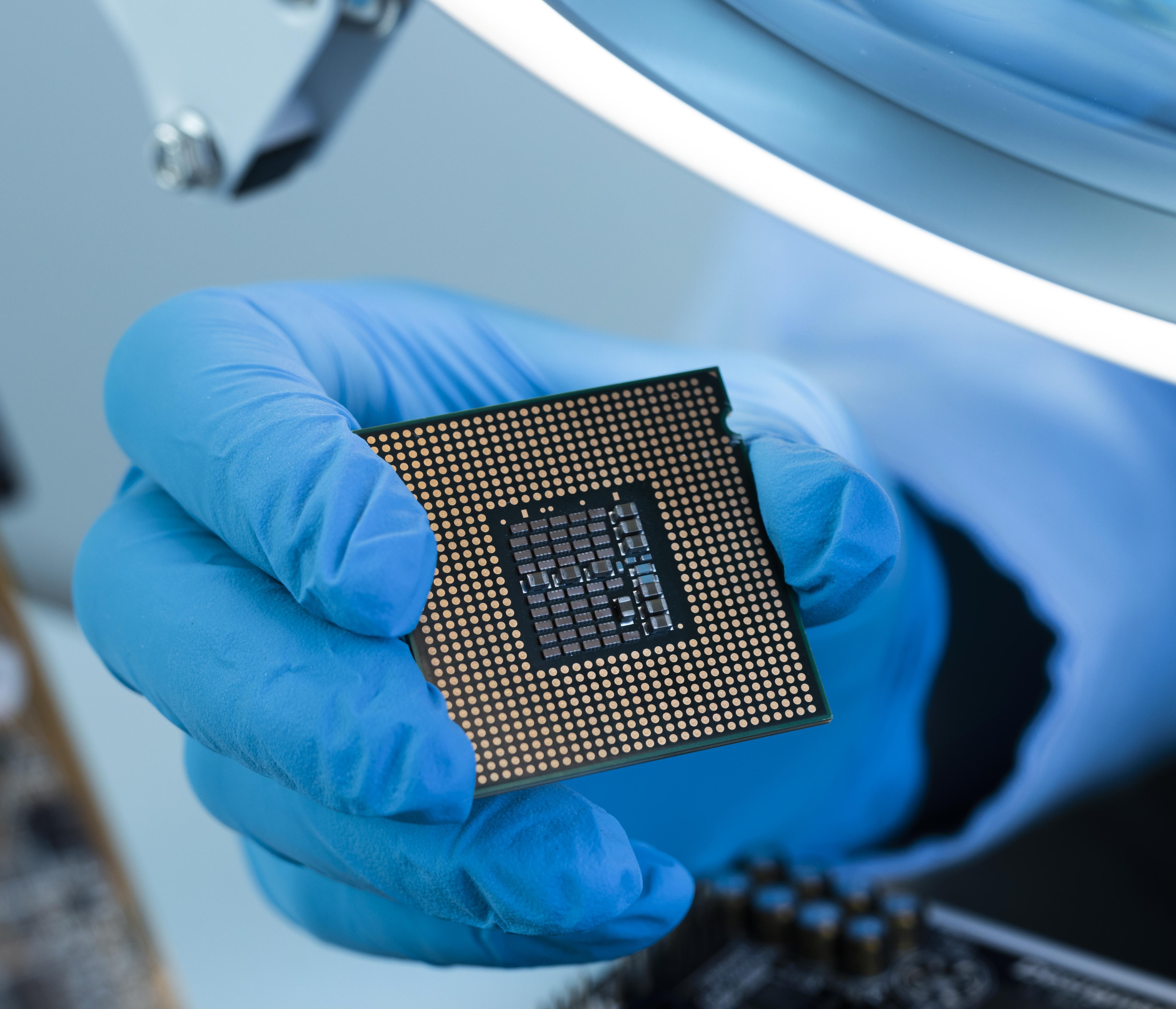
Gallium nitride's origin story runs through military labs, not consumer electronics. Radar systems and electronic warfare platforms were the first buyers willing to pay a premium for a material that could switch faster and run hotter than silicon, and that defense demand quietly funded two decades of process maturation. That history still matters to anyone tracking the Global gallium nitride semiconductor market today, because the segments driving the next leg of growth AI data centers, satellite constellations, and next-generation telecom are all inheriting technology that was proven under military specification first. Understanding where growth comes from next means understanding how those two worlds, defense and data infrastructure, are now pulling on the same supply chain at the same time.
Defense Demand Isn't Fading — It's the Foundation Layer
It would be easy to assume defense GaN is a mature, slow-growing segment now that commercial applications get the headlines. The numbers say otherwise. The GaN radar system market alone is projected to grow from $12.6 billion in 2026 to $22.09 billion by 2033, and the U.S. Department of Defense has designated GaN as Manufacturing Readiness Level 10 the highest classification, signaling full production maturity for critical weapons programs. Active electronically scanned array radar and electronic warfare systems now rely on GaN transmit/receive modules as a baseline requirement, not an upgrade option. For the broader Global gallium nitride semiconductor market, this defense floor matters because it guarantees a stable, long-cycle revenue base that smooths out the volatility of consumer electronics demand cycles.
Satellite Communications: The Fastest-Growing Segment Nobody's Talking About
While radar gets the attention, satellite communications has quietly become the fastest-growing application inside RF GaN. Low-earth-orbit constellation buildouts and high-throughput satellite gateways are pushing GaN devices to replace gallium arsenide in ground-based terminals, and radiation-hardened GaN variants are gaining real traction for space-based use. This segment is a genuinely new growth vector for the Global gallium nitride semiconductor market rather than a repackaged version of legacy defense demand LEO constellations didn't exist at meaningful scale a decade ago, and their expansion is creating orders that didn't have a comparable precedent in the RF GaN industry's earlier defense-only era.
Telecom Infrastructure Still Carries the Volume
Telecommunications remains the single largest application segment by revenue, making up roughly 40% of total RF GaN device sales, with RF power amplifiers alone projected to hold a 48.02% share of the RF GaN market in 2026. GaN-on-silicon-carbide dominates this segment at 66.6% share thanks to its thermal performance in dense base station deployments. What's changing is the pace: 5G-Advanced rollouts and early 6G research are pulling telecom demand into the same purchasing cycles as defense and satellite buyers, which is compressing lead times across the entire Global gallium nitride semiconductor market supply chain and forcing manufacturers to prioritize which customers get capacity first.
Data Centers: The Newcomer With the Steepest Growth Curve
Data centers are the newest entrant to this growth story, and they're scaling faster than any segment that preceded them. Analysts project the data center and telecom power segment of the power GaN market could grow at a 53% compound annual rate, the fastest of any application tracked. GlobalFoundries' 2024 acquisition of Tagore Technology's GaN portfolio was explicitly framed around expanding power management capability for AI data centers, a signal that foundries are now restructuring their roadmaps around this demand rather than treating it as a side application. This is the segment most likely to determine who wins share in the Global gallium nitride semiconductor market over the next five years, simply because AI infrastructure spending is growing faster than any other end market GaN currently serves.
What Determines Who Captures This Growth
- Dual-qualification advantage: suppliers who already meet defense-grade reliability standards can move into data center and satellite contracts faster than commercial-only entrants.
- Substrate choice matters by segment: GaN-on-SiC still leads RF and defense applications, while GaN-on-silicon is winning the cost-sensitive data center and telecom volume race.
- Capacity allocation is becoming a strategic decision, not just an operational one, as defense, satellite, telecom, and data center buyers now compete for the same limited wafer output.
The Bottom Line
The next wave of growth in the Global gallium nitride semiconductor market won't come from a single new application replacing the old one it's coming from defense, satellite, telecom, and data centers all scaling simultaneously and drawing on the same manufacturing base. Defense demand built the reliability track record; data centers are now supplying the growth rate. Companies that can serve both worlds without choosing between them are positioned to capture disproportionate share as this market moves from a collection of niche verticals into genuinely diversified critical infrastructure.