
Europe's Clean Energy Transition and Emerging Markets
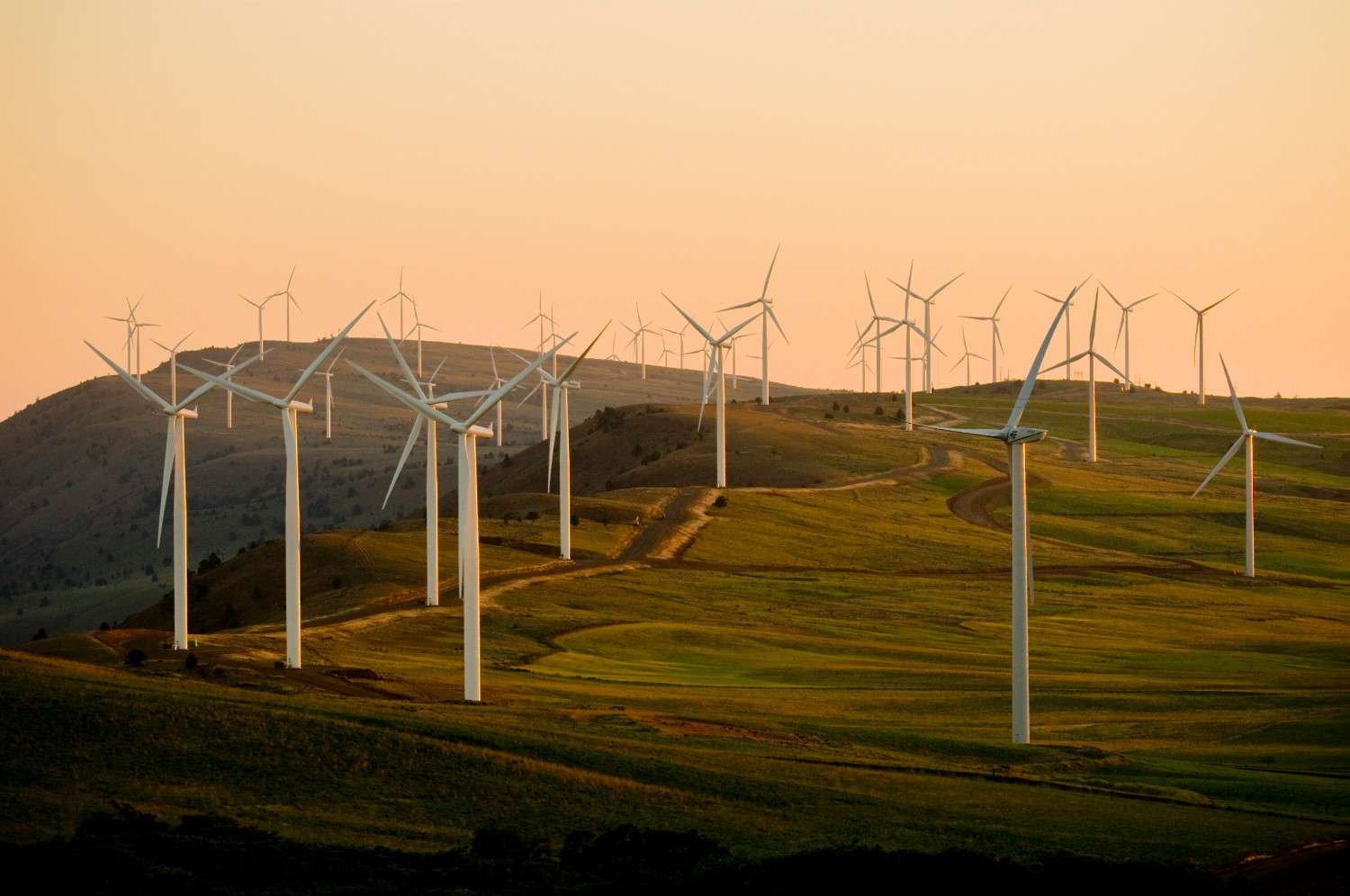
Europe put $162 billion into renewables in 2025 and now accounts for nearly a quarter of global clean energy investment, outpacing both the US and China in year-on-year growth. But the same year that European offshore wind financing jumped fivefold, emerging and developing economies outside China collectively received only 15% of global clean energy spending, despite housing most of the world's future demand growth. This is not a story about the transition slowing down it's a story about where the money stops.
Europe's Investment Surge Is Real and Accelerating
The European Commission has set a target of €660 billion in annual energy-sector investment between 2026 and 2030, rising to €695 billion annually through 2040 nearly triple the €240 billion yearly average seen between 2011 and 2021. To hit that number, the Commission adopted a Clean Energy Investment Strategy in March 2026 built around a simple premise: public money can't cover the gap, so it has to de-risk private capital instead. The European Investment Bank has committed over €75 billion in financing over the next three years toward that goal.
The 2025 numbers already show the shift. Germany remained Europe's largest clean energy market at $148 billion, but the standout was Poland, where investment tripled to $32 billion on the back of offshore wind and EV sales. Across the continent, clean energy supply investment reached 3.5 times fossil fuel spending, and climate tech equity funding jumped 61% to $15 billion with public markets overtaking venture capital as a funding source for the first time.
The Emerging Market Gap Is Structural, Not Temporary
Africa holds roughly 60% of the world's best solar resources but attracts only about 3% of global clean energy investment and hosts just 1% of installed solar PV capacity, according to IEA analysis. Part of the reason is cost, not sunlight: the IEA estimates that financing costs for renewable projects in developing economies run 10 to 20 percent higher than equivalent projects in Europe or the US, purely because of risk premiums and interest rate differentials. Grid capacity compounds the gap emerging markets and developing economies will need to expand their electricity grids by more than 150% by 2050, compared with a 50% expansion requirement in advanced economies, according to the World Resources Institute.
Case Study: Namibia's Hyphen Project and the Limits of Cross-Border Ambition
Namibia's green hydrogen program looked, on paper, like the model for European-African energy partnership. The Hyphen project, backed by German capital, targeted 125,000 tonnes of green hydrogen annually by 2026, scaling to 300,000 tonnes by 2030, with a companion Daures Green Hydrogen Village designed to keep 10% of shareholding and 50% of jobs local. In September 2025, German utility RWE withdrew $10 billion in funding from the Daures project. Separately, developers were denied use of Shark Island for export infrastructure over its unresolved historical significance as a genocide site, with German reparations still unpaid. Of the 35 large-scale green hydrogen projects Global Energy Monitor tracks across Africa, only four currently have public offtake agreements with confirmed buyers meaning most of this proposed capacity, some of it hundreds of times larger than a host country's existing renewable base, has no committed purchaser on the European end.
Where the Partnership Model Is Working: Morocco and Egypt
Not every case tells the same story. Morocco has secured a €624 million package under the EU's Global Gateway strategy, and in March 2025 the Moroccan government approved five investor consortia including Spain's Acciona, Germany's Nordex, and UAE's Taqa for six green hydrogen and green steel projects worth a combined $32.8 billion. Egypt, meanwhile, has attracted more than €1 billion in green hydrogen project commitments from European partners through the H2Global auction mechanism. Both countries share a structural advantage over Namibia: existing fertilizer and steel industries that can absorb green hydrogen domestically, giving projects a local offtaker even before export infrastructure is finished a buffer that reduces the offtake risk that has stalled projects elsewhere on the continent.
Why the Financing Gap Persists — and What Would Close It
Global energy investment is projected to reach $3.4 trillion in 2026, with clean energy technologies accounting for roughly $2.2 trillion of that almost double fossil fuel investment. Yet growth in clean energy spending is running at 7% year-on-year in advanced economies and China, compared with just 4% in other emerging markets, according to IEA's 2026 World Energy Investment report. Closing that gap isn't primarily a technology problem. A Nature Energy geospatial cost study found that without European policy intervention, green hydrogen imported from Africa remains too expensive at €4.2 to €4.9 per kilogram; with de-risking policy support, 214 specific sites across six African countries become cost-competitive, and the cheapest location in Mauritania could reach €3.2 per kilogram by 2030.
What This Means for Businesses and Investors
- Europe's own transition financing is now largely a private-capital story public funds are shifting toward guarantees and blended finance rather than direct grants
- Projects in emerging markets with an existing domestic offtaker (fertilizer, steel, ammonia) are outperforming pure-export models built on projected European demand
- Local benefit-sharing and historical/community due diligence are no longer optional Hyphen's Shark Island setback shows unresolved local issues can stall billion-dollar projects regardless of technical readiness
- De-risking instruments loan guarantees, blended finance, EIB-style securitisation are the mechanism most likely to unlock the 10-20% financing cost gap, not new technology
The Bottom Line
Europe's clean energy transition is no longer a European-only story its €660 billion-a-year investment target and Global Gateway partnerships are actively reshaping where clean energy capital moves globally. But the gap between announced ambition and delivered capital in emerging markets remains wide: Morocco and Egypt show what works when local demand anchors the project, while Namibia's funding withdrawal shows what happens when it doesn't. For businesses evaluating this space, the signal to watch isn't the size of an announced investment package it's whether a confirmed offtake agreement and local financing structure exist behind it.