
Country Circularity Benchmarking: Ranking Europe's Circular Plastics Leaders and Rising Challengers
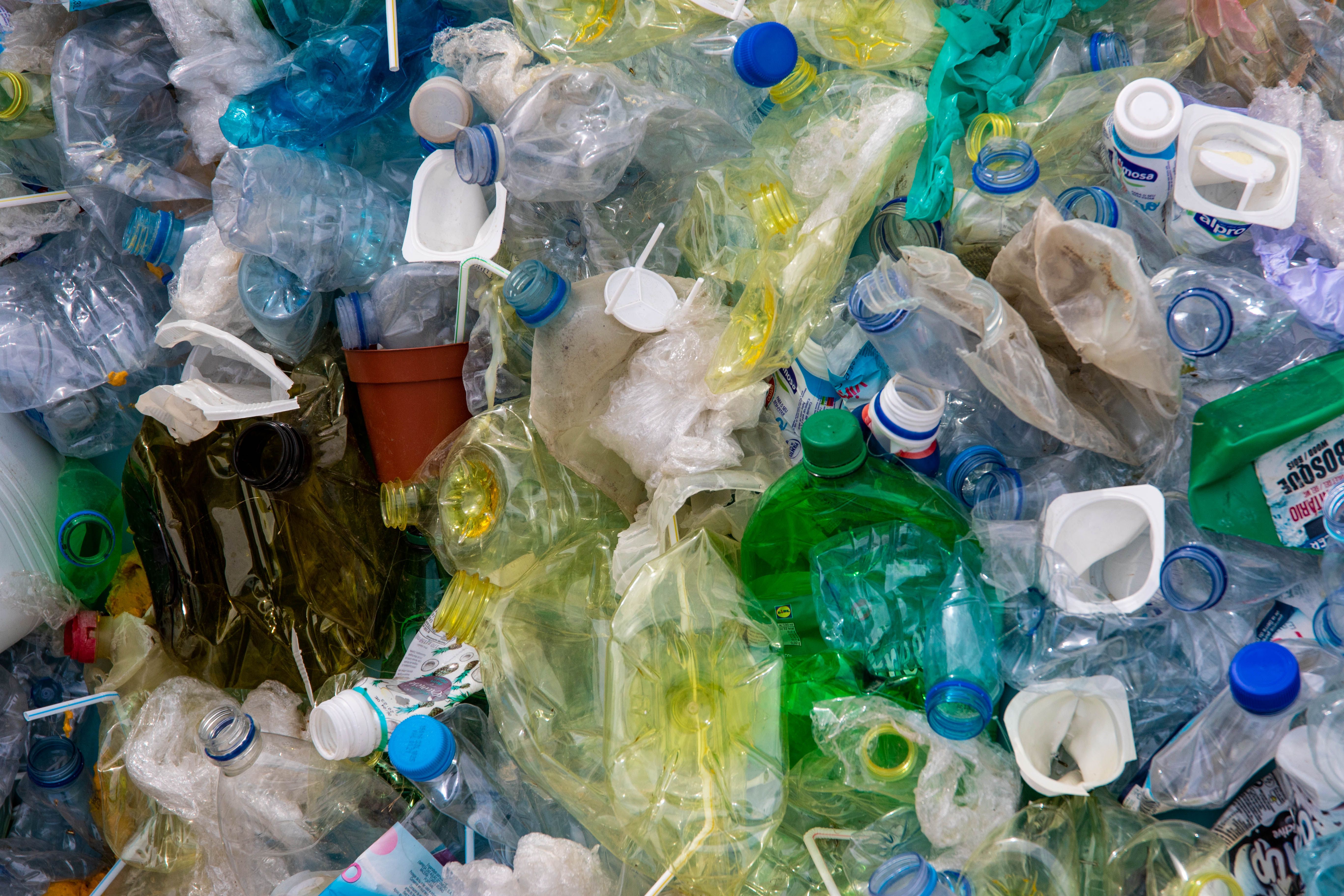
Country performance inside the Europe circular plastics market varies far more than aggregate European statistics suggest. While the region as a whole recycled 9.7 million tonnes of plastic waste in 2024, a 29.6 percent recycling rate against 70.4 percent still lost to landfill or incineration, that headline figure conceals sharply different national stories. Some countries pair large plastics converting bases with mature recycling infrastructure, while others are only beginning to build the collection and sorting networks needed to compete. This benchmarking exercise ranks the six most strategically important countries in the Europe circular plastics market, Germany, Italy, France, Spain, the Netherlands and Poland, against the criteria that matter most to investors: recycling capacity, feedstock availability, converter demand, import dependency, regulatory pressure and pipeline investment.
Benchmarking Methodology: What Defines Circularity Leadership
Before ranking individual countries, it is worth being explicit about what circularity leadership actually means within the Europe circular plastics market. Waste generation volume alone is a poor proxy for opportunity, since a country that generates large volumes of plastic waste but lacks sorting and processing infrastructure will still export feedstock or send it to incineration rather than capturing its value domestically. This benchmarking instead follows the same logic as the Epignosis Insights Competitive Assessment Framework applied to companies earlier in this report, adapted to the country level: recycling capacity and processing footprint, feedstock access and collection infrastructure, converter and downstream demand, import dependency, regulatory intensity, and investment pipeline. Countries that score well across most of these dimensions represent what this report classifies as mature circular markets, while countries that score well on only one or two, typically feedstock volume and manufacturing demand, represent capacity expansion markets where the investment case rests on closing an infrastructure gap rather than optimising an existing one.
Germany: The Industrial Anchor of the Europe Circular Plastics Market
Germany sits at the top of the country circularity benchmark and remains the single most important national market within the broader Europe circular plastics market. It generates approximately 5.9 million tonnes of plastic waste annually, comfortably the largest volume of any European country, and pairs that scale with one of the region's most developed plastics converting industries. This combination of large feedstock generation and large downstream demand is precisely what mature circularity looks like: waste does not need to travel far to reach a buyer, and converters do not need to import material to secure supply. Germany's extensive recycling infrastructure, built over decades of packaging and producer responsibility regulation, also gives it a processing depth that few other European countries can match, spanning mechanical recycling of PE, PP and PET as well as growing investment in chemical and advanced recycling for harder to recycle streams.
For investors evaluating the Europe circular plastics market, Germany's strategic appeal lies less in raw growth potential and more in consolidation and technology upgrading. The market is already large and relatively mature, meaning the more attractive opportunities tend to involve improving yield and recyclate quality at existing facilities, or investing in advanced sorting and chemical recycling capacity that can process the contaminated and multi-layer plastic streams that mechanical recycling struggles with. Germany's regulatory environment, among the strictest in the Europe circular plastics market, also creates a durable floor of demand for recycled content, insulating well-positioned domestic recyclers from some of the price competition affecting less regulated markets.
Italy: A Strong Processing Ecosystem With Deep Recycling Roots
Italy ranks second in this benchmarking exercise, generating approximately 4.0 million tonnes of plastic waste annually and supporting one of Europe's most established plastics manufacturing ecosystems. Italy's recycling sector, particularly in the northern industrial regions, has developed substantial mechanical recycling capability over several decades, and the country's plastics converters maintain strong integration with recyclers supplying PE, PP and PET grades. This depth of processing infrastructure means Italy captures a larger share of its own waste stream domestically than many of its European peers, reducing reliance on cross-border shipments of sorted material.
Within the Europe circular plastics market, Italy's investment case centres on downstream demand strength. The country's plastics converting industry, spanning packaging, automotive components and consumer goods, creates a reliable customer base for recycled polymers, provided pricing remains competitive against virgin resin. Italy's challenge, shared with much of the region, is that converter demand for circular plastics is growing faster than domestic circular production, meaning even a mature market like Italy is not immune to the import dependency pressures affecting the wider Europe circular plastics market.
France: Regulatory Pressure Meets a Large Packaging Market
France occupies a distinctive position in this country circularity benchmark: it generates approximately 3.8 million tonnes of plastic waste annually and carries some of the most assertive regulatory pressure in the Europe circular plastics market, driven by an ambitious domestic circular economy agenda that predates and now reinforces EU-level requirements such as the Packaging and Packaging Waste Regulation. This regulatory intensity is a double-edged strategic signal. On one hand, it creates durable, policy-backed demand for recycled content in packaging, food contact applications and beyond. On the other, it raises compliance costs and can compress margins for recyclers that are not able to meet increasingly specific traceability and quality requirements.
For the Europe circular plastics market, France's large packaging sector represents one of the more concentrated pools of converter demand available anywhere in Europe. Brand owners headquartered in France, spanning food and beverage, personal care and retail, are under sustained pressure to increase recycled content in their packaging, which in turn supports recycled PET and PE pricing domestically.
The strategic opportunity for investors lies in supplying this regulatory-driven demand with high specification recyclate rather than commodity grade material, since France's compliance environment rewards traceability and consistency more than it rewards volume alone.
Netherlands: The Logistics and Polymer Processing Hub
The Netherlands presents the smallest absolute waste generation figure among the six countries benchmarked here, at approximately 1.6 million tonnes annually, yet it occupies a genuinely distinctive strategic position within the Europe circular plastics market. Its advantage is not feedstock scale but logistics: the country's ports and polymer processing infrastructure make it one of the most efficient hubs in Europe for moving waste, recyclate and finished polymer products across national borders. This logistics strength means Dutch recyclers and traders can access feedstock well beyond domestic waste generation, aggregating material from across northwestern Europe and beyond.
Within the Europe circular plastics market, the Netherlands functions less as a self-contained national market and more as a connective hub linking feedstock-rich countries with converter demand across the region. For investors, this creates a different kind of opportunity than the scale-driven case for Germany or the regulatory-driven case for France: the Dutch value proposition rests on trading efficiency, port infrastructure and processing flexibility rather than on domestic waste volumes. Facilities located to take advantage of Rotterdam's and Amsterdam's logistics networks can therefore punch above their weight relative to the country's modest domestic feedstock base.
Spain: Expanding Infrastructure in a Growing Collection Market
Spain generates approximately 2.6 million tonnes of plastic waste annually and is best classified, within this country circularity benchmark, as a capacity expansion market rather than a mature one. Spain has been actively building out its collection and recycling infrastructure in recent years, narrowing the gap with more established Western European markets, but its processing depth still lags Germany and Italy. This positions Spain as a market where the investment case rests on infrastructure build-out rather than optimisation of an already mature system.
For the Europe circular plastics market, Spain's appeal lies in the combination of a sizeable domestic waste stream and continued regulatory tailwinds pushing further collection and sorting investment. Recyclers that can establish early scale in Spain, particularly in PET and PE processing linked to the country's substantial agricultural and packaging sectors, stand to benefit from first-mover advantages as the market matures. The risk, shared with other expansion markets, is that Spain's converter demand could outpace domestic recycling capacity before infrastructure investment catches up, increasing near-term reliance on imported recyclate.
Poland: The Fastest-Moving Expansion Story in Europe
Poland is arguably the most dynamic entrant in this country circularity benchmark, and its trajectory illustrates how quickly infrastructure investment can reshape a country's position within the Europe circular plastics market. Poland generates approximately 2.7 million tonnes of plastic waste annually, narrowly ahead of Spain, but its recent deposit return system rollout has fundamentally changed the quality and predictability of its feedstock pipeline. Since launching in October 2025, Poland's system had collected around 1.6 billion beverage containers by May 2026, supported by roughly 62,000 collection points and 13,000 reverse vending machines, a scale of build-out achieved in a matter of months rather than years.
Within the Europe circular plastics market, Poland's combination of a large manufacturing base and a rapidly maturing collection infrastructure makes it the clearest capacity expansion opportunity among the six countries benchmarked here. Separately collected, high quality PET bottle streams require less intensive sorting than material recovered from mixed municipal waste, materially improving the economics of bottle-to-bottle recycling investment. Recyclers that establish processing capacity aligned with Poland's deposit return system stand to benefit from a feedstock advantage that few other expansion markets in the Europe circular plastics market can currently match.
Mature Markets Versus Capacity Expansion Markets
Stepping back across all six countries, this benchmarking exercise reveals a clear divide within the Europe circular plastics market between mature circular markets and capacity expansion markets. Germany, Italy and the Netherlands represent the mature category: each combines established recycling infrastructure with strong downstream integration, meaning the more attractive investment opportunities involve consolidation, technology upgrades and higher value recycling rather than building basic infrastructure from scratch. Poland and Spain represent the capacity expansion category, where the investment case rests on capturing feedstock that is not yet efficiently processed domestically, with Poland standing out for the sheer pace of its deposit return system build-out. France sits between the two categories: its recycling infrastructure is moderately developed, but its regulatory intensity elevates it toward mature market dynamics even though its per-capita processing depth has not fully caught up with Germany or Italy.
This distinction matters considerably for capital allocation decisions in the Europe circular plastics market. Investment strategies suited to mature markets, such as acquiring and upgrading existing sorting or recycling assets, do not translate directly to expansion markets, where the priority is instead securing long-term feedstock agreements and building new processing capacity ahead of demand. Conflating the two market types risks misjudging both the scale of investment required and the timeline over which returns can reasonably be expected.
Strategic Takeaways for Investors
Three conclusions emerge from this country circularity benchmarking within the Europe circular plastics market. First, waste generation volume alone is an unreliable guide to investment opportunity; Germany's leadership rests as much on its converting and processing depth as on its feedstock scale, while Poland's rapid rise stems from infrastructure quality improvements rather than any change in underlying waste volumes. Second, the mature versus expansion market distinction should directly inform investment strategy, since the two categories reward fundamentally different capital deployment approaches. Third, countries with strong regulatory intensity, notably Germany and France, offer a more durable demand floor for recycled content but require recyclers to meet higher specification and traceability standards to fully capture that demand. Taken together, these findings suggest that the most attractive opportunities within the Europe circular plastics market over the coming years will likely be concentrated in Poland's expanding deposit return infrastructure, Germany's advanced recycling and technology upgrade pipeline, and France's high specification, regulation-driven recyclate demand.
Looking further ahead, this country circularity benchmarking should be treated as a living assessment rather than a static ranking. The Europe circular plastics market is still evolving rapidly, and a country's position can shift quickly when infrastructure investment accelerates, as Poland's deposit return rollout demonstrates. Investors and recyclers evaluating opportunities across Germany, Italy, France, Spain, the Netherlands and Poland should revisit these rankings periodically against updated recycling capacity, feedstock availability and regulatory data, since today's expansion market can become tomorrow's mature market once collection infrastructure, sorting technology and converter relationships fully develop.