
Can Domestic Scrap Supply Keep Pace With Rising Recycling Demand?
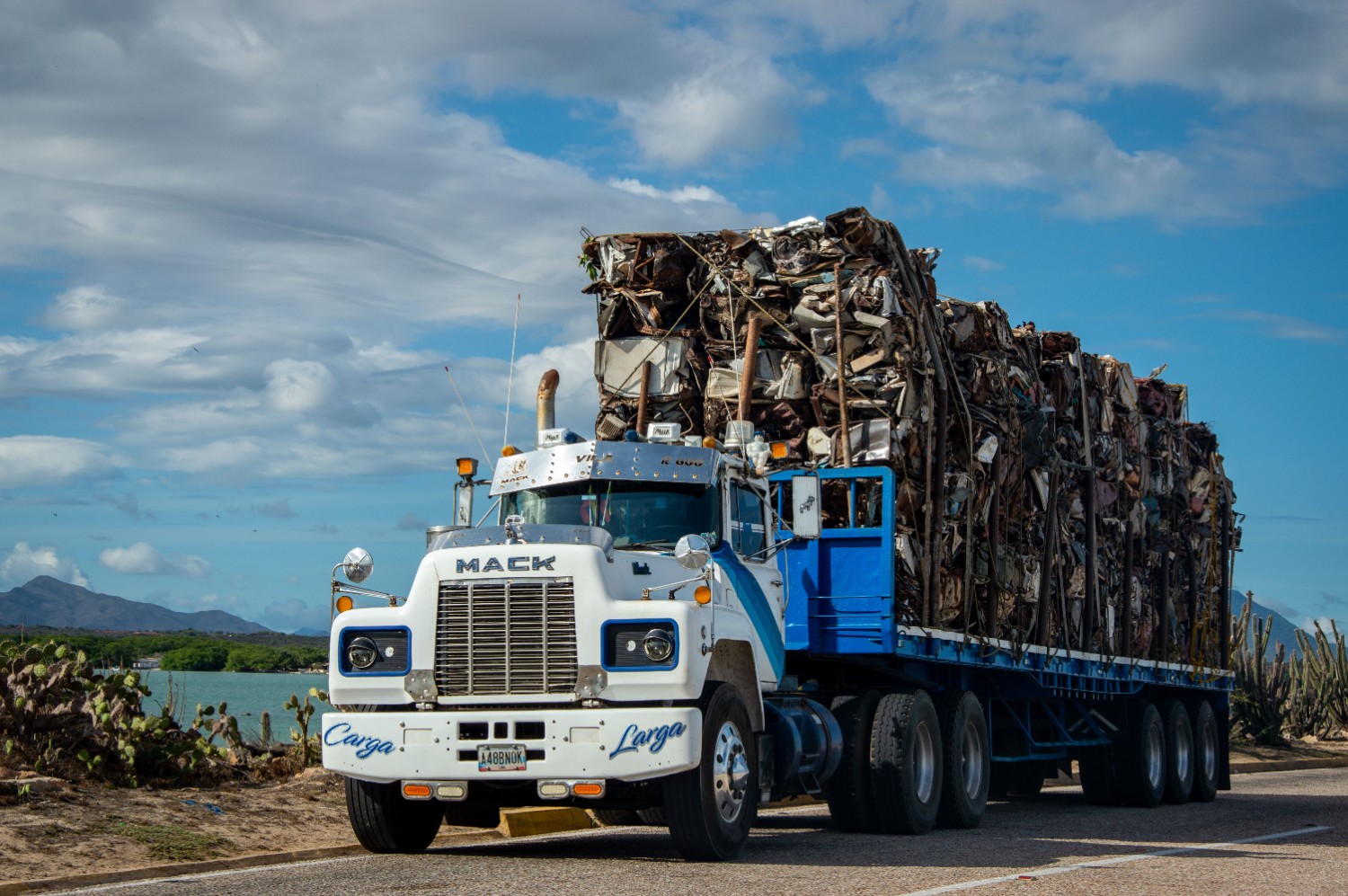
Europe's Aluminium Recycling Market is expanding fast on paper: consumption volume is projected to climb from 8.56 million tonnes in 2025 to 11.97 million tonnes by 2033, and market value is set to grow from roughly USD 17.7 billion to USD 21.5 billion over a similar window. But underneath that growth curve sits an uncomfortable question that every recycler, OEM buyer and policymaker in the region is now asking out loud: is there actually enough domestic scrap to feed it? Aluminium recycling only delivers its full economic and environmental value when scrap stays in the region long enough to be reprocessed locally, and right now a meaningful share of it isn't. This piece walks through the scale of the leakage problem, why it's squeezing recycler margins even as demand rises, what technology and investment are doing to close the gap, and what the numbers suggest about where this goes next.
Europe's Growing Appetite for Recycled Aluminium
Demand for recycled aluminium in Europe is not a modest, steady trend — it's accelerating. The market is forecast to grow from 8.56 million tonnes of consumption volume in 2025 to 11.97 million tonnes by 2033, a 4.5% compound annual growth rate that outpaces most other European industrial materials markets. Value growth is more measured at 3.3% CAGR, reaching approximately USD 21.55 billion by 2033, which itself tells an important story: volume is growing faster than value, meaning the market is scaling primarily through higher recycling throughput rather than pricing power. That combination — rising physical demand for aluminium recycling capacity alongside comparatively restrained pricing growth — is precisely the environment in which a scrap supply shortfall becomes most damaging, because recyclers can't simply pass through higher feedstock costs without eroding the volume-driven growth story that's supposed to be the market's strength.
Figure 1: Europe aluminium recycling market volume, 2025-2033 (million tonnes).
The Scrap Leakage Problem: Why Domestic Supply Is Falling Behind
The core constraint on Europe's aluminium recycling capacity isn't a shortage of scrap being generated — it's where that scrap ends up. European Aluminium reports that the EU exported approximately 1.3 million tonnes of aluminium scrap in 2024, with around 75% of it directed to Asia, representing a substantial volume of secondary raw material leaving the region entirely. The trend is accelerating, not stabilising: between 2019 and 2024, EU aluminium scrap exports grew 53%, while domestic scrap intake by European recyclers grew just 7% over the same period. That gap is the single most important number in this entire market. It means additional scrap generation across Europe is increasingly being captured by overseas buyers rather than feeding the domestic aluminium recycling base that European climate and industrial policy is explicitly trying to build up.
Figure 2: Growth in EU scrap exports vs. domestic recycler intake, 2019-2024.
This divergence matters because it directly caps how much of Europe's own aluminium recycling growth can actually be met from within the region. European Aluminium separately notes that scrap prices have reached approximately 94% of primary aluminium prices on the London Metal Exchange, which illustrates just how thin the margin has become between what it costs to acquire feedstock and what finished recycled metal is actually worth. European recyclers are not losing this scrap because they don't want it — they're losing it because overseas buyers, often operating under different labour, energy and environmental cost structures, can outbid them for the same tonnage.
Margin Pressure: When Feedstock Costs Outrun Selling Prices
Scrap leakage isn't just a volume problem for aluminium recycling — it's actively compressing recycler margins in real time. In the first quarter of 2026, European extrusion-grade scrap averaged 104% of LME aluminium prices, while the average aluminium billet premium climbed to US$565 per tonne, up from US$440 per tonne in the fourth quarter of 2025 — a US$125 sequential jump. Over the same quarter, European secondary scrap prices rose 9% quarter-on-quarter, while DIN226 recycled foundry alloy selling prices increased only 7.8%. That gap between input cost growth and output price growth is the definition of margin squeeze, and it hits hardest at recyclers without long-term supply contracts, since their feedstock costs can reset before customer pricing does. Hydro has specifically flagged that weak downstream aluminium demand combined with elevated scrap prices continued to pressure European recycling margins through the first quarter of 2026 — a signal that this isn't a one-off blip but a sustained structural pressure on the aluminium recycling business model.
Investment Is Flowing In — But Is It Enough?
The encouraging counterpoint is that capital is responding. European companies have invested approximately €700 million in new recycling facilities, capacity expansions and process upgrades, creating processing capability that stands ready to absorb more domestic scrap if the feedstock actually arrives. Individual operators are also targeting efficiency gains that don't depend on winning the scrap-price bidding war at all: Hydro has set a target of US$20 to US$30 per tonne in recycling cost reductions by 2030, treating operational efficiency as a direct competitive lever rather than relying solely on higher selling prices. This is a sensible hedge, because it improves aluminium recycling economics regardless of how the scrap-export story resolves — but €700 million in new capacity is only valuable if there's enough retained scrap to run it at scale, which loops straight back to the export leakage problem described above.
The Technology Gap: Sorting, Alloy Separation and the RecAL Pipeline
Even if Europe successfully retains more scrap, the aluminium recycling sector still has a quality problem to solve: mixed end-of-life scrap increasingly contains multiple alloy families that conventional remelting cannot economically separate. The European Commission's RecAL initiative identifies alloy mixing as a major technical barrier, since alloying elements are difficult to remove once incorporated, which causes mixed scrap to be downcycled into lower-value cast alloys rather than returned to higher-specification wrought products. RecAL is currently developing 14 Circular Amplification Technologies spanning scrap capture, separation, purification and circular reuse, with a target technology readiness of TRL 6 — solid progress, but still short of full commercial deployment. The economic stakes of closing this technology gap are large: RecAL estimates Europe could face 6 million tonnes of surplus scrap by 2030, rising to 18.3 million tonnes by 2050, if current sorting and alloy-separation technology cannot absorb the material becoming available.
Figure 3: Projected surplus aluminium scrap in Europe, 2030 vs. 2050 (million tonnes).
That roughly threefold increase in projected surplus between 2030 and 2050 is a warning sign as much as an opportunity. It means the current pace of aluminium recycling technology development, even with the RecAL pipeline underway, may not scale fast enough to keep up with the volume of scrap that better collection and retention policy could eventually unlock — a genuine risk that more scrap retained domestically simply becomes surplus inventory rather than usable feedstock without parallel investment in sorting and alloy-classification capability.
The Decarbonisation Stakes of Getting This Right
The climate case for solving Europe's scrap retention problem is unusually strong, which is precisely what makes the current leakage rate so costly. Aluminium recycling requires only around 5% of the energy needed for primary production, and recycled aluminium can generate up to 95% fewer CO₂ emissions than primary metal, according to industry estimates. The International Aluminium Institute puts the more specific European figure at approximately 92.4% lower emissions when comparing primary cradle-to-gate emissions with recycling process emissions, though it cautions that the comparison uses different system boundaries. European Aluminium also reports that remelting emissions declined 22% between 2015 and 2021, showing the sector is already improving its own process efficiency independent of the feedstock question. At a more tangible scale, 580,000 tonnes of recycled beverage cans generated 5.4 million tonnes of CO₂e savings in the most recent reported dataset — and European Aluminium projects that if recycling production increases by approximately 70% by 2050, annual CO₂ emissions could fall by up to 39 million tonnes compared with today. Every tonne of scrap that leaves Europe instead of being recycled domestically is, in effect, a forfeited slice of that decarbonisation potential.
Country-Level Signals: Where the Supply-Demand Gap Is Widest
The scrap supply challenge doesn't land evenly across Europe. Germany remains the largest aluminium recycling market by a wide margin, growing from USD 5,729 million in 2027 to USD 6,987 million by 2033 at a 3.4% CAGR, and it also leads on volume, with recycling tonnage rising from 2.46 million tonnes to 3.36 million tonnes over the same period — a 5.4% volume CAGR that outpaces its own value growth, reinforcing the volume-over-value pattern seen at the continental level. Scandinavia is the standout growth story, expanding from USD 2.80 billion to USD 3.65 billion at a 4.5% CAGR, the fastest of any region tracked. France and Rest of Europe also outperform the overall market at 3.6% and 3.7% CAGR respectively, while the UK, Spain and Italy lag at 2.0%, 2.3% and 2.4%. For a market as tight on feedstock as this one, that spread matters: faster-growing regions like Scandinavia will feel scrap constraints sooner and more acutely than slower-growing markets, making regional scrap retention policy — not just EU-wide measures — an increasingly important lever.
Closing the Gap: What Needs to Happen Next
So, can domestic scrap supply actually keep pace with rising aluminium recycling demand in Europe? On current trends, not without intervention. The European Commission is already conducting work on trade measures intended to improve aluminium scrap availability within the EU, which is the most direct lever available to slow export leakage. But policy alone will not solve a problem that is simultaneously about price competitiveness, feedstock quality and processing technology. Recyclers with long-term supply agreements are better insulated from procurement spikes, but they don't eliminate margin risk if downstream aluminium prices soften. The most resilient operators are the ones treating this as a three-front problem at once: pushing for policy that reduces scrap leakage without triggering excessive market distortion, investing in the alloy-separation and sorting technology that the RecAL pipeline is racing to commercialise, and squeezing operational costs the way Hydro is doing rather than waiting for pricing conditions to improve on their own. The aluminium recycling sector has the demand growth, the investment appetite and the decarbonisation case already in place — what it still needs is a domestic scrap base that isn't quietly shrinking relative to the opportunity in front of it.