
How Sustainability Is Rewriting the Rules of the U.S. Power Transformer Market
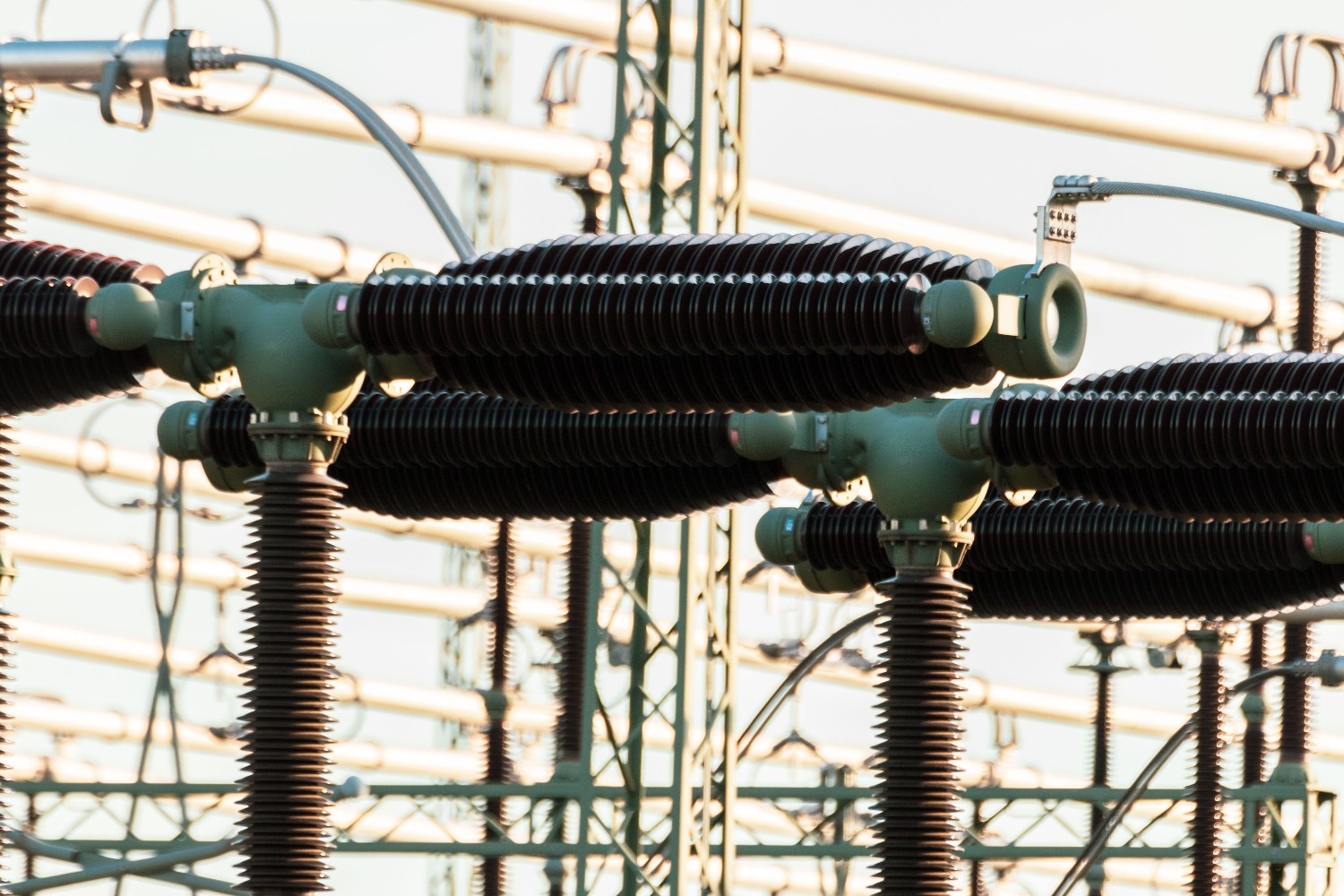
Environmental, social, and governance (ESG) considerations have moved from the sustainability report footnote to the center of procurement strategy across the U.S. power transformer market. Efficiency mandates, greenhouse-gas regulations, and circular-economy commitments are no longer parallel initiatives running alongside core business decisions they are now directly shaping which transformer designs get specified, which materials get sourced, and which manufacturers win long-term utility contracts. This ESG strategy assessment maps the environmental, social, and governance forces converging on the U.S. power transformer market and what they mean for manufacturers, utilities, and investors alike.
What makes ESG strategy assessment particularly urgent for the U.S. power transformer market right now is the sheer density of overlapping deadlines. Federal efficiency standards, state-level SF6 restrictions, and voluntary corporate circularity targets are all converging on roughly the same 2027-2030 window, meaning suppliers and utilities cannot treat these as sequential, one-at-a-time compliance projects. Instead, ESG strategy in the U.S. power transformer market increasingly requires a single, integrated roadmap that addresses material sourcing, insulation chemistry, and disclosure obligations simultaneously.
The Environmental Pillar: Efficiency Standards Reshaping the U.S. Power Transformer Market
Federal energy efficiency regulation is the single most direct environmental force acting on the U.S. power transformer market today. The U.S. Department of Energy finalized new energy conservation standards for distribution transformers in April 2024, with full compliance required by April 2029. Crucially, DOE's final rule struck a middle ground after industry pushback: roughly 75 percent of the market will be able to meet the new standard using conventional grain-oriented electrical steel (GOES), while about 25 percent will require higher-efficiency amorphous steel cores — a significant softening from DOE's original proposal, which would have pushed nearly 95 percent of the market toward amorphous steel. With more than 60 million distribution transformers already mounted on utility poles nationwide, and installations projected to triple by 2050, this single rule will shape material sourcing and manufacturing investment across the U.S. power transformer market for the rest of the decade.
Figure 1: DOE's final 2029 efficiency standard requires only about a quarter of new distribution transformers to shift to amorphous steel cores, easing supply-chain pressure across the U.S. power transformer market.
The regulatory picture remains dynamic, adding an ongoing compliance dimension to environmental strategy in the U.S. power transformer market. In mid-2026, the DOE began reconsidering aspects of the 2024 rule, prompting pushback from utility groups such as the American Public Power Association, which has urged regulators not to reopen a standard that took years of stakeholder negotiation to finalize. For manufacturers and utilities operating in the U.S. power transformer market, this regulatory back-and-forth underscores that efficiency compliance is now a live, moving target rather than a fixed cost of doing business.
The economics behind this standard also matter for anyone assessing environmental strategy in the U.S. power transformer market. DOE estimates the finalized standard will still generate billions of dollars in cumulative energy savings over time, even under the softened GOES/amorphous split, while a $75 million federal grant awarded to domestic GOES producers is expected to lower the emissions intensity of GOES manufactured in the United States. This combination of consumer savings, emissions reduction, and domestic supply chain investment illustrates why efficiency regulation functions as both an environmental and an industrial policy lever for the U.S. power transformer market.
The Environmental Pillar: The SF6 Phase-Out and the Race for Greener Insulation
Alongside efficiency standards, the phase-out of sulfur hexafluoride (SF6) is emerging as a defining environmental storyline for the U.S. power transformer market. SF6 has a global warming potential roughly 23,500 times that of carbon dioxide and can persist in the atmosphere for more than 3,000 years, and the EPA has identified the electric transmission and distribution sector as responsible for approximately 67 percent of all U.S. SF6 emissions as of 2022. That combination has made SF6-insulated equipment one of the most scrutinized product categories in the U.S. power transformer market, even though SF6 is used more heavily in switchgear than in transformers themselves.
Figure 2: A patchwork of state-level SF6 rules is accelerating adoption of low-GWP insulation technologies across equipment sold into the U.S. power transformer market.
Regulatory momentum is building at the state level faster than at the federal level, creating a compliance patchwork that participants in the U.S. power transformer market must navigate market by market. California's Air Resources Board finalized a phase-out of new SF6 gas-insulated equipment acquisitions beginning in 2025, while New York's Part 495 rule, finalized in 2024, introduces a voltage-based phase-out starting in 2027 and a systemwide 1 percent emissions limit by 2030. Massachusetts, Washington, and Oregon maintain their own leak-rate caps and reporting regimes. In response, leading suppliers to the U.S. power transformer market are commercializing lower-GWP alternatives, including fluoronitrile and fluoroketone gas blends marketed under names such as GE's g³ and Hitachi Energy's EconiQ, which can cut GWP by up to 99 percent relative to SF6.
The Environmental Pillar: Circularity and Material Stewardship
Circular-economy commitments are becoming a third environmental axis of competition within the U.S. power transformer market, particularly among the largest global equipment suppliers. GE Vernova's 2025 Sustainability Report disclosed that circular design principles were incorporated into 53 percent of its leading products during 2025, up from 38 percent in 2024, with a formal target of reaching 90 percent coverage by 2030 under its “4R” framework of Rethink, Reduce, Reuse, and Recycle. The same report noted the company energized 68 GW of power transformers globally in 2025 while achieving a 64 percent reduction in Scope 1 and 2 operational emissions since 2019 — concrete evidence that decarbonization and transformer output are being pursued as complementary, not competing, objectives across the U.S. power transformer market.
Figure 3: Leading suppliers to the U.S. power transformer market are rapidly scaling circular design coverage toward a 2030 target.
For transformers specifically, circularity translates into practical design choices that matter to specifiers throughout the U.S. power transformer market: recyclable copper and steel content, biodegradable ester-based insulating fluids as alternatives to mineral oil, and end-of-life recovery programs that reclaim core materials rather than sending retired units to landfill. As utilities increasingly weigh total lifecycle environmental impact alongside upfront cost, these circular design credentials are becoming a genuine differentiator among competing suppliers to the U.S. power transformer market.
The Social Pillar: Workforce, Supply Chain, and Community Impact
The social dimension of ESG strategy in the U.S. power transformer market centers heavily on domestic manufacturing jobs and supply chain resilience. DOE's decision to preserve a strong role for domestically produced GOES in its 2024 efficiency rule was explicitly framed around protecting American manufacturing jobs, including unionized steelworker positions in Pennsylvania tied to GOES production. Congressional engagement on the issue including bipartisan legislation such as the Distribution Transformer Efficiency and Supply Chain Reliability Act reflects how directly workforce and supply-chain considerations now factor into regulatory decisions affecting the U.S. power transformer market.
Supply-chain reliability itself has become a social and operational ESG concern given how acute transformer shortages have become. A February 2024 National Renewable Energy Laboratory study found utility lead times for transformers had stretched to as long as two years a fourfold increase over pre-2022 norms with reported prices rising four to nine times over three years. Manufacturers responding to this constraint, including expanded domestic production capacity announcements from companies such as Eaton and ERMCO, are increasingly framing capacity investment as both a commercial and a social-responsibility imperative within the U.S. power transformer market.
Community and workforce impact also factor into social ESG performance in less visible but still material ways across the U.S. power transformer market. Domestic transformer and steel manufacturing facilities are concentrated in specific regions Pennsylvania and Ohio for GOES production, South Carolina for amorphous steel, and a range of Southeastern and Midwestern states for transformer assembly meaning capacity expansion decisions tied to ESG-driven demand growth carry direct implications for regional employment. Companies that pair capacity investment with local workforce development commitments are increasingly highlighting this as a social pillar achievement in their sustainability disclosures related to the U.S. power transformer market.
The Governance Pillar: ESG Reporting, Compliance, and Investor Expectations
Governance expectations are tightening as investors and regulators demand more granular, auditable ESG disclosure from participants in the U.S. power transformer market. Major suppliers now publish detailed annual sustainability reports with quantified targets GE Vernova's 2025 report, for instance, tracks progress against 11 named sustainability goals across four formal pillars. On the compliance side, EPA reporting rules under 40 CFR Part 98 require large emitters of SF6, including electrical equipment manufacturers, to report emissions above a 25,000 metric-ton CO2-equivalent threshold, adding a formal governance layer to environmental performance tracking across the U.S. power transformer market.
Key Data Point: GE Vernova energized 68 GW of power transformers globally in 2025 while cutting Scope 1 and 2 operational emissions 64% since 2019 a governance benchmark increasingly cited by peers across the U.S. power transformer market.
This governance scrutiny extends to utilities themselves, not just equipment manufacturers. States including Washington and Oregon now require investor-owned utilities and electricity service suppliers to report SF6 emissions above defined thresholds, effectively pulling utility procurement decisions for transformers and switchgear into a formal regulatory disclosure regime. For utilities and their suppliers alike, this means ESG governance in the U.S. power transformer market is no longer a voluntary reporting exercise but an increasingly codified compliance obligation with real financial and legal consequences for noncompliance.
Regional Variation: Why ESG Compliance Is Not One-Size-Fits-All
Because SF6 and emissions-reporting rules are being written state by state rather than through a single federal framework, ESG compliance strategy varies significantly by region across the U.S. power transformer market. A supplier serving California and New York utilities must already account for acquisition phase-outs and voltage-based compliance schedules that do not yet exist in most other states, while a supplier concentrated in states without SF6-specific rules faces a materially lighter near-term compliance burden. This patchwork means national suppliers to the U.S. power transformer market are increasingly designing products to the strictest applicable state standard by default, effectively allowing California and New York to set de facto national specifications.
Green and sustainability-linked financing is reinforcing this regional dynamic. Utilities issuing green bonds or sustainability-linked debt to fund transmission and substation upgrades are increasingly required to demonstrate measurable environmental performance improvements tied to the underlying equipment, including transformer efficiency and insulation gas selection. As this financing structure becomes more common, ESG performance data from transformer suppliers is flowing directly into utility capital-raising documentation, further embedding ESG strategy into commercial decision-making across the U.S. power transformer market.
Why ESG Strategy Assessment Now Determines Competitive Position
Taken together, these environmental, social, and governance forces mean that ESG strategy assessment has become a genuine input into competitive positioning across the U.S. power transformer market, not a peripheral compliance exercise. Manufacturers that can simultaneously meet DOE efficiency standards, offer low-GWP or SF6-free insulation options, demonstrate credible circular-design progress, and publish auditable governance disclosures are increasingly favored in utility procurement processes that now formally weight ESG criteria alongside price and delivery timelines. Utilities, in turn, are using supplier ESG performance as a proxy for long-term supply reliability and regulatory risk management, reinforcing the strategic importance of ESG positioning throughout the U.S. power transformer market.
Looking forward, the trajectory is unambiguous: efficiency standards will tighten further after 2029, state-level SF6 restrictions will continue to spread beyond California, New York, and Massachusetts, and circular-design targets set by leading suppliers will become de facto industry benchmarks. Companies that treat ESG strategy as a forward-looking investment rather than a reactive compliance cost are best positioned to capture share as these standards converge into the baseline cost of doing business across the U.S. power transformer market.
For utility procurement teams, the practical implication is that ESG strategy assessment should now sit alongside price, lead time, and technical specification as a formal evaluation criterion in transformer sourcing decisions. For manufacturers, the implication is equally direct: environmental compliance, workforce investment, and transparent governance disclosure are converging into a single reputational and commercial scorecard that utilities, regulators, and investors are all reading simultaneously. Both dynamics point to the same conclusion — ESG performance is no longer a differentiator at the margins of the U.S. power transformer market, but an increasingly central determinant of who wins and who loses share within it.