
The Business Case for Corporate Renewable Energy Procurement
A Market That Still Outpaces Fossil Alternatives on Cost
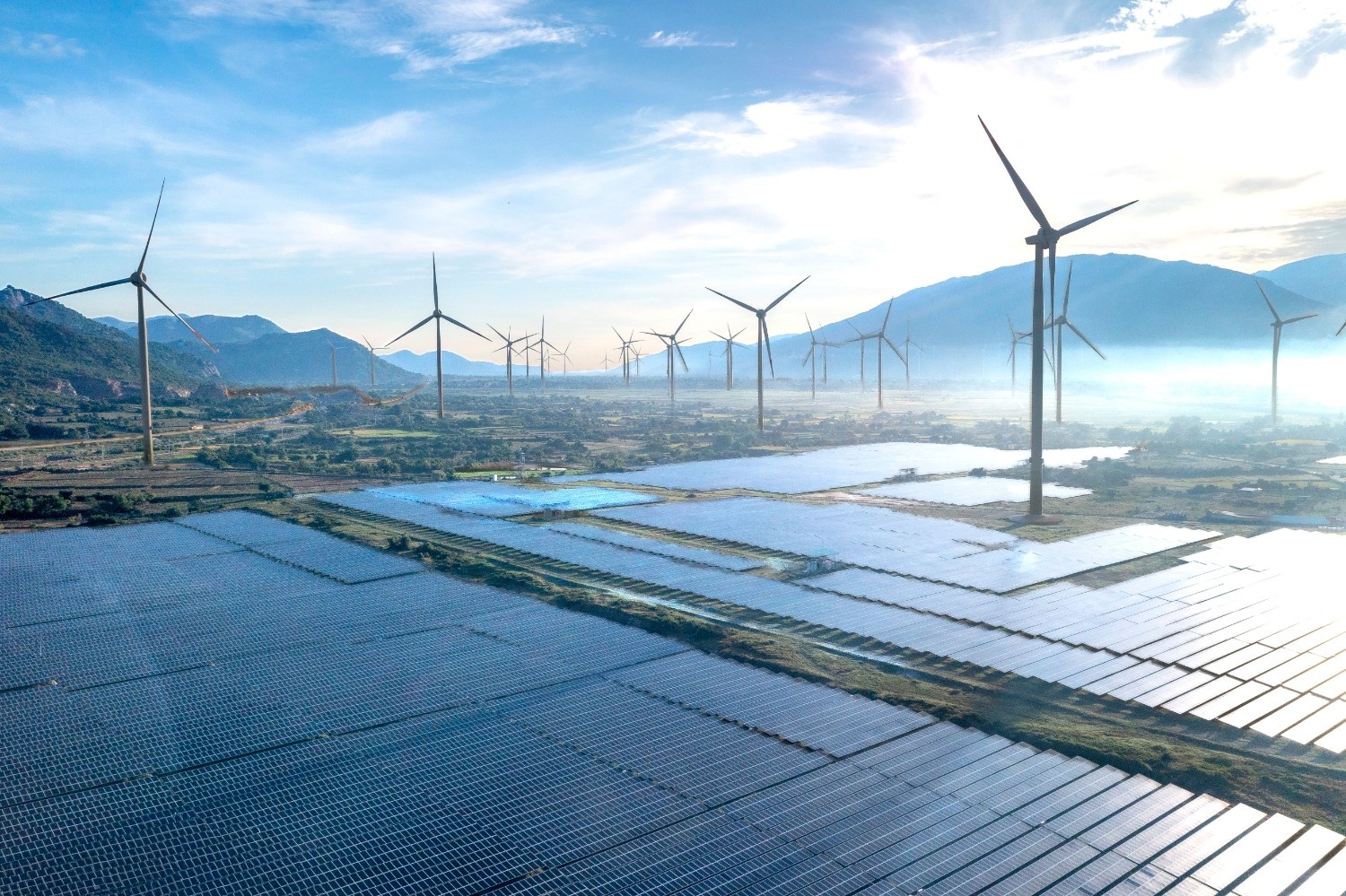
Corporate renewable buying is no longer a sustainability side project it is a hedge against volatile power markets. Lazard's 2026 Levelized Cost of Energy+ report found unsubsidized utility-scale solar costs between $40 and $98 per megawatt-hour, versus $51 to $129 for new combined-cycle gas and $175 to $255 for new nuclear, based on public Vogtle cost data. Onshore wind's low end sits at $37 per megawatt-hour. Lazard also flagged that new-build gas has hit its highest levelized cost in 15 years, having climbed roughly 50% since 2021, while utility-scale solar costs have fallen from $359 per megawatt-hour in 2009 to today's range a multi-decade decline that still leaves renewables as the cheapest new-build option even as near-term price pressure from tariffs and interest rates pushes every technology's costs upward.
Scale of Corporate Demand
The financial logic has pulled in enormous volumes of capital. BloombergNEF's 1H 2026 Corporate Energy Market Outlook recorded 712 offsite corporate clean power purchase agreements totaling 55.9 gigawatts globally in 2025 the second-highest year on record, even after a 10% pullback from 2024's peak. RE100, the Climate Group and CDP-backed coalition of major corporate buyers, reports its 400-plus members now collectively use more than 550 terawatt-hours of electricity a year, a volume exceeding the annual consumption of South Korea. In 2024 alone, RE100 members committed an additional 56 terawatt-hours per year to renewable sourcing, more than the entire annual electricity use of Ireland or Denmark.
Big Tech Is Rewriting the Buyer Profile
Procurement has concentrated sharply among a handful of hyperscale buyers. BloombergNEF found that Amazon, Meta, Google and Microsoft alone accounted for 49% of all corporate clean power purchase agreement volume worldwide in 2025, as AI-driven electricity demand pushed technology firms to lock in supply years in advance. North America was the only region where volumes grew in 2025, reaching a record 29.5 gigawatts in the United States even as Europe fell 13% to 17 gigawatts and Asia-Pacific volumes dropped from 10.7 to 6.9 gigawatts. The number of unique corporate PPA offtakers in the US nearly halved during the same period, according to BloombergNEF's tracker, showing how far procurement has consolidated around a small set of deep-pocketed buyers able to absorb policy and pricing risk that smaller companies increasingly cannot.
Beyond Cost: Carbon and Reputation Returns
Procurement decisions are increasingly judged on emissions avoided, not just megawatts signed. BloombergNEF's emissionality analysis of 2,916 corporate PPAs signed between 2015 and 2024 found they supported 301 gigawatts of new renewable project development, with Amazon ranking as the top corporate buyer globally by carbon emissions avoided. The same analysis found that a megawatt of PPA capacity in Australia displaces roughly four times more carbon than an equivalent megawatt in the United States, because it typically replaces dirtier grid generation a reminder that where a company buys clean power matters as much as how much it buys. Mining company Rio Tinto illustrates this: with a comparatively modest 2.7-gigawatt portfolio, it still ranked among the top five corporate buyers globally for carbon impact by targeting deals in higher-emitting grids.
Structural Headwinds Buyers Must Price In
The business case is not without friction. Deloitte's 2026 Renewable Energy Industry Outlook documented a 41% decline in renewable deal value and a 45% drop in transaction volume during the first nine months of 2025 compared with the prior year, with asset-level deal activity down 89% by volume over the same stretch a sign of genuine financial stress among developers rather than a temporary lull. Rising hours of negative wholesale power prices are also eroding standalone solar and wind economics in parts of Europe, pushing buyers toward hybrid solar-plus-storage or solar-plus-wind structures; BloombergNEF found so-called baseload-like hybrid products accounted for 5.2 gigawatts of all 2025 corporate deals, with seven of the ten largest developers now offering these structured, firmer alternatives to plain vanilla PPAs.
Why Companies Are Still Buying
Even amid the pullback, the underlying rationale for corporate procurement has strengthened rather than weakened. Long-term power purchase agreements lock in prices for 10 to 20 years, insulating buyers from the capacity-price spikes now hitting US grid operators as electricity demand climbs. RE100's own tracking shows member companies raising renewable electricity consumption from 41% in 2019 to 49% by 2021 and higher since, even as many pushed back individual target years in response to supply constraints rather than abandoning commitments. For large energy users, a renewable PPA increasingly functions less as a green marketing exercise and more as a budget-line risk management tool, comparable to a financial hedge against an increasingly unpredictable wholesale power market.
Outlook
The next phase of corporate procurement will likely reward buyers with sophisticated, diversified portfolios over those simply chasing volume. BloombergNEF's corporate energy analysts describe a shift from standalone renewable products toward hybridized, structured solutions that pair generation with storage or firm capacity. Companies that treat renewable procurement as an integrated financial and carbon strategy rather than a single annual contract are best positioned to capture Lazard's persistent cost advantage for renewables while managing the counterparty and pricing risks now reshaping the market.