
Circular Economy Practices: Closing the Loop on Water, Waste, and Energy in the Middle East Vertical Farming Market
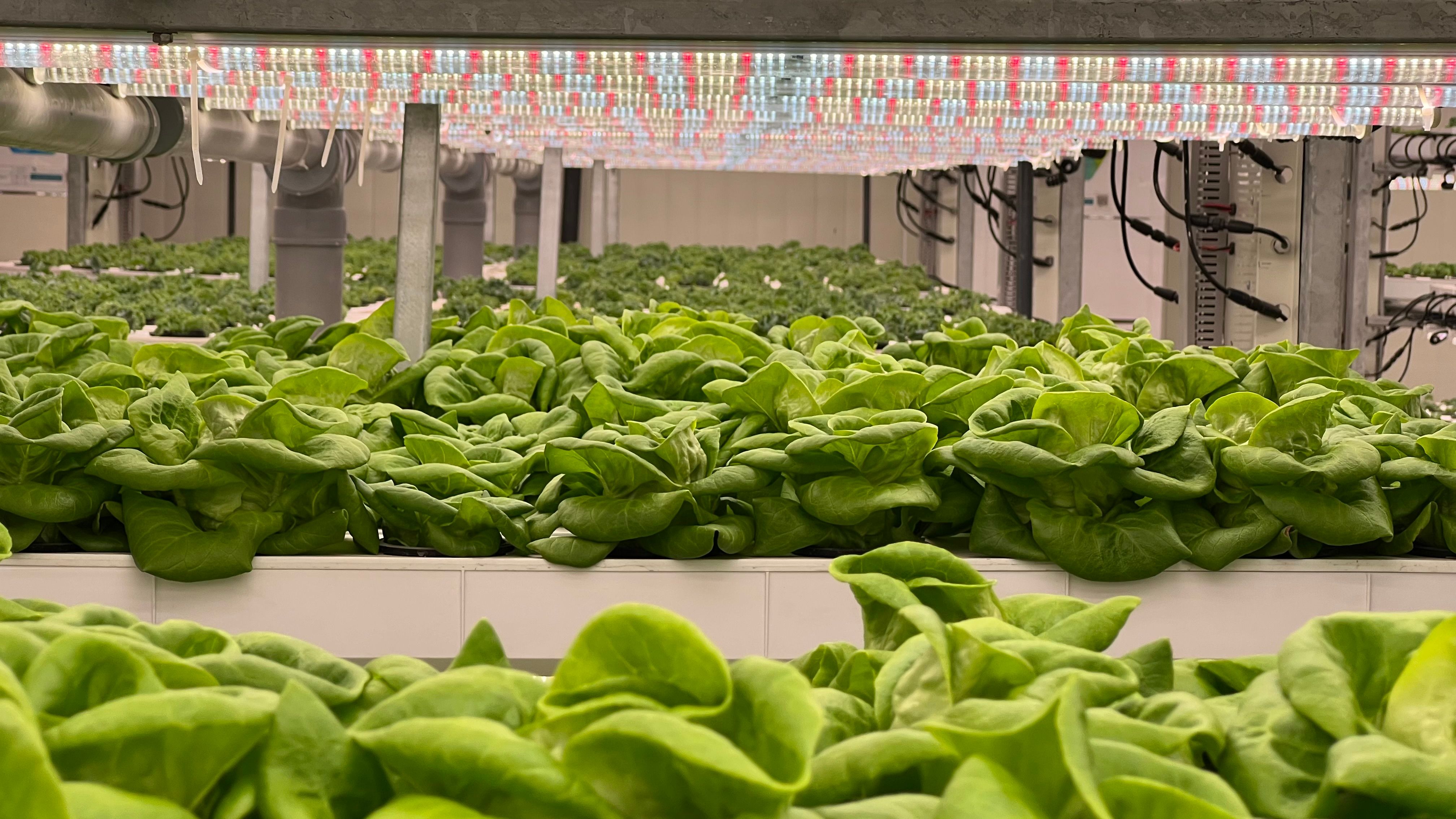
Sustainability is no longer a side narrative in the Middle East vertical farming market; it is the operating logic that underpins how commercial farms are designed, financed, and evaluated by investors and government partners alike. Because the region combines acute water scarcity, extreme ambient temperatures, and heavy reliance on imported fresh produce, circular economy principles, recovering and reusing water, nutrients, growing media, and energy within the production system, have moved from an environmental talking point to a core commercial requirement. This section assesses how circular economy practices are being embedded across the Middle East vertical farming market and what that means for operators, technology suppliers, and policymakers.
Learn how circular economy initiatives are shaping long-term growth in the Middle East Vertical Farming Market.
Unlike open-field agriculture, where water, nutrients, and organic residues largely exit the system as runoff or waste, controlled-environment facilities in the Middle East vertical farming market are engineered as semi-closed loops from the outset. This structural difference is precisely why regional governments, particularly in Saudi Arabia and the United Arab Emirates, increasingly treat vertical farming as a strategic tool for both food security and resource conservation, rather than viewing the two goals as being in tension with one another.
Closed-Loop Water Recirculation: The Foundation of Circularity in the Middle East Vertical Farming Market
Water recirculation is the most mature and commercially proven circular economy practice within the Middle East vertical farming market. Hydroponic and aeroponic systems capture unused nutrient solution after it passes the root zone, filter and re-dose it, and return it to the growing system rather than discharging it, a closed-loop design that can reduce total water consumption by 90 to 95 percent compared to traditional open-field cultivation, a figure that is especially significant in a region where renewable freshwater availability is among the lowest in the world.
Figure 1: Closed-loop water recirculation rate, 2021–2033E (illustrative), Middle East Vertical Farming Market
As Figure 1 shows, the share of water recirculated relative to fresh input has climbed steadily as farm operators in the Middle East vertical farming market adopt more sophisticated filtration, reverse osmosis, and real-time water-quality monitoring technology. Leading operators such as Pure Harvest Smart Farms and Red Sea Farms have publicized recirculation rates approaching the upper end of this range, using the achievement both as an operational efficiency metric and as a differentiator when negotiating long-term supply contracts with premium retailers that increasingly screen suppliers on sustainability credentials.
Explore the relationship between sustainable farming and regional food security.
Beyond conventional filtration, several operators in the Middle East vertical farming market are piloting atmospheric water generation and condensate-capture systems that recover moisture released through evapotranspiration inside climate-controlled growing rooms, feeding it back into the irrigation loop. This represents an incremental but meaningful step toward near-total water closure, an ambition that is increasingly written into government-backed food security roadmaps across the Gulf Cooperation Council.
Nutrient Recovery and Growing-Media Reuse in the Middle East Vertical Farming Market
Nutrient recovery is the second pillar of circularity within the Middle East vertical farming market. Because hydroponic and aeroponic systems deliver nutrients in precisely dosed liquid form, unused nutrient solution can be tested, rebalanced, and redosed rather than discarded, sharply reducing fertilizer waste relative to soil-based cultivation, where a significant share of applied nutrients is lost to runoff or leaching before plants can absorb them.
Discover how leading vertical farming companies are implementing circular economy strategies.
Growing-media and substrate reuse is a related but less mature circular practice. Coconut coir, rockwool alternatives, and other soilless substrates used across the Middle East vertical farming market can often be sterilized and reused across multiple growing cycles, reducing both material costs and the volume of solid waste generated per harvest. Operators that have standardized modular racks and growing trays, a trend highlighted elsewhere in this report's hardware analysis, find it easier to implement substrate reuse protocols consistently across large commercial facilities.
Real-time sensor monitoring, covering pH, electrical conductivity, and dissolved oxygen, plays a supporting but increasingly critical role in nutrient circularity across the Middle East vertical farming market. By continuously tracking nutrient solution quality, automated dosing platforms can recalibrate formulations before degradation forces a full solution discharge, extending the usable life of each nutrient batch and further reducing the fertilizer and water inputs required per crop cycle.
Figure 2: Circularity benchmark, vertical farming vs conventional open-field agriculture (illustrative), Middle East Vertical Farming Market
Figure 2 benchmarks circularity performance across five resource categories, water reuse, nutrient recovery, substrate reuse, renewable energy contribution, and organic waste valorization, comparing controlled-environment vertical farms against conventional open-field agriculture. Across every category, the Middle East vertical farming market demonstrates substantially higher resource circularity, reinforcing the sector's positioning as a climate-resilient alternative to traditional cultivation in an environment where arable land and freshwater are both structurally constrained.
Organic Waste Valorization and Biomass Circularity in the Middle East Vertical Farming Market
Crop residues, trimmings, and unmarketable produce generated during commercial cultivation represent another circularity opportunity within the Middle East vertical farming market. Rather than sending organic waste to landfill, a growing number of operators are composting residues on-site or partnering with regional composting and anaerobic digestion facilities to convert biomass into soil amendments or biogas, closing the loop between crop production and downstream nutrient regeneration.
Some integrated projects are exploring aquaponic configurations, in which fish waste from aquaculture systems supplies nutrients for plant cultivation, effectively linking two production systems into a single circular loop. While aquaponics remains a moderate-adoption segment within the Middle East vertical farming market due to the operational complexity of balancing biological systems, it illustrates the direction in which circular economy thinking is pushing farm design across the region.
 Figure 3: Circular economy value streams by share of circularity initiatives (illustrative), Middle East Vertical Farming Market
As Figure 3 indicates, nutrient-rich spent solution reuse and crop-residue composting together account for the largest share of circularity initiatives currently deployed across the Middle East vertical farming market, followed by substrate recycling, packaging circularity, and early-stage renewable energy co-generation projects that convert farm biomass or waste heat into usable power for facility operations.
Compare cultivation technologies that maximize water efficiency and resource utilization.
Renewable Energy Integration: The Next Frontier for the Middle East Vertical Farming Market
Energy remains the most challenging circularity frontier for the Middle East vertical farming market, since LED grow lighting and climate control systems, both essential for year-round production in desert conditions, are inherently energy-intensive. In response, operators are increasingly co-locating farms with solar photovoltaic installations, and in some cases, waste-heat recovery systems that capture excess heat generated by LED fixtures and climate control equipment for use elsewhere in the facility, partially offsetting the sector's energy footprint.
Government-backed renewable energy targets in Saudi Arabia and the United Arab Emirates are expected to accelerate this transition, as national solar programs make clean electricity increasingly cost-competitive with grid power. For operators in the Middle East vertical farming market, integrating renewable energy is not only a sustainability commitment but also a hedge against volatile electricity costs, which represent one of the largest recurring operating expenses in controlled-environment agriculture.
District cooling integration is another emerging circularity lever for the Middle East vertical farming market, particularly for facilities located near industrial zones or urban developments that already operate centralized cooling infrastructure. By tapping into shared district cooling networks rather than running standalone HVAC systems, some operators are able to lower both energy consumption and capital expenditure on climate control equipment, freeing up investment capacity for other circular economy initiatives such as advanced water filtration or on-site composting.
Packaging Circularity and Supply Chain Sustainability in the Middle East Vertical Farming Market
Packaging is a smaller but increasingly visible circularity dimension within the Middle East vertical farming market, as premium retailers push suppliers toward recyclable, compostable, or reusable packaging formats for leafy greens and herbs. Because vertically farmed produce typically reaches retail shelves within 24 to 48 hours of harvest, shorter supply chains also reduce the need for preservative packaging and extended cold-chain infrastructure, indirectly supporting circularity goals beyond the farm gate itself.
Taken together, these practices, water recirculation, nutrient and substrate reuse, organic waste valorization, renewable energy integration, and packaging circularity, are becoming a defining competitive dimension within the Middle East vertical farming market. As the Epignosis Insights Competitive Assessment Framework referenced elsewhere in this report already assigns explicit weight to resource efficiency and ESG performance, operators that industrialize circular practices at scale are increasingly better positioned to win long-term retail contracts, secure government incentives, and attract sustainability-focused investment capital.
Regulatory and Policy Support for Circular Practices in the Middle East Vertical Farming Market
Government policy is playing an outsized role in accelerating circular economy adoption across the Middle East vertical farming market. National food security strategies in Saudi Arabia and the United Arab Emirates explicitly link support for controlled-environment agriculture to broader water conservation and renewable energy targets, meaning operators that can document strong circularity performance are often better positioned to access subsidized land, preferential financing, and streamlined permitting for large-scale commercial facilities.
Qatar, Kuwait, Oman, and Bahrain are following a similar trajectory, using pilot projects and government-backed sustainable agriculture initiatives to test circular water and energy models before scaling commercial investment. As these programs mature, they are expected to formalize measurement standards for water recirculation rates, nutrient recovery, and renewable energy contribution, giving the Middle East vertical farming market a clearer regulatory framework for benchmarking circularity performance across operators and countries.
For technology suppliers, this policy backdrop is shaping product development priorities. Providers of irrigation equipment, LED lighting, and farm automation platforms serving the Middle East vertical farming market are increasingly designing systems with built-in water and energy monitoring dashboards, anticipating that circularity reporting will become a standard requirement for both government incentive programs and retail procurement contracts in the coming years.