
Capital in Motion: The Capex Story Behind the North America Portable Power Solution Market
Every unit that ships in the North America Portable Power Solution Market is the visible tip of a much larger capital commitment sitting upstream in cell manufacturing, supply chain localization, and product engineering. As demand for off-grid and backup energy accelerates, understanding where capital expenditure is actually flowing has become essential for anyone evaluating the North America Portable Power Solution Market from OEM strategy teams to institutional investors sizing up the category's next growth phase. This assessment breaks down capex trends across manufacturing, R&D, supply chain, distribution, and M&A to show how money is being deployed across the value chain. It also situates that spending within the broader battery and energy storage ecosystem, since very little capital expenditure in this space is committed in isolation — nearly every dollar spent on cell capacity, raw material processing, or software development touches multiple downstream product categories at once, portable power stations included.
Capital Expenditure Trends: Where the Money Is Actually Flowing
Capital expenditure across the North America Portable Power Solution Market is no longer concentrated purely in finished-product assembly. Instead, it is spreading upstream into the cell and battery-pack ecosystem that supplies portable power stations, home backup units, and adjacent energy storage products. Policy-driven incentives, reshoring pressure, and rising consumer demand have combined to pull in capital at a pace few adjacent hardware categories have matched in recent years, and tracking this capital flow is central to understanding the trajectory of the North America Portable Power Solution Market through the rest of the decade.
Domestic Battery Cell Manufacturing Investment Surge
The single largest driver of capex activity touching the North America Portable Power Solution Market is the buildout of domestic battery cell capacity. Policy incentives tied to the Inflation Reduction Act have triggered more than USD 100 billion in cumulative announced battery manufacturing investment across North America, a wave of capital that directly benefits portable power station manufacturers by shortening cell lead times and reducing dependence on overseas suppliers.
Separately, EV and battery manufacturers announced a cumulative USD 52 billion in North American supply chain investment in just an eight-month window between August 2022 and March 2023, illustrating how quickly capital mobilized once incentive structures were in place. While much of this spending targets electric-vehicle-scale cell production, the same LFP and NMC cell lines increasingly supply the North America Portable Power Solution Market, meaning portable power manufacturers are direct beneficiaries of capacity that was originally justified on automotive volume. This spillover effect is one of the more underappreciated dynamics shaping the category: portable power station companies rarely need to fund gigafactory-scale capex themselves, instead riding the coattails of automotive-driven investment while negotiating offtake agreements for a fraction of total cell output.
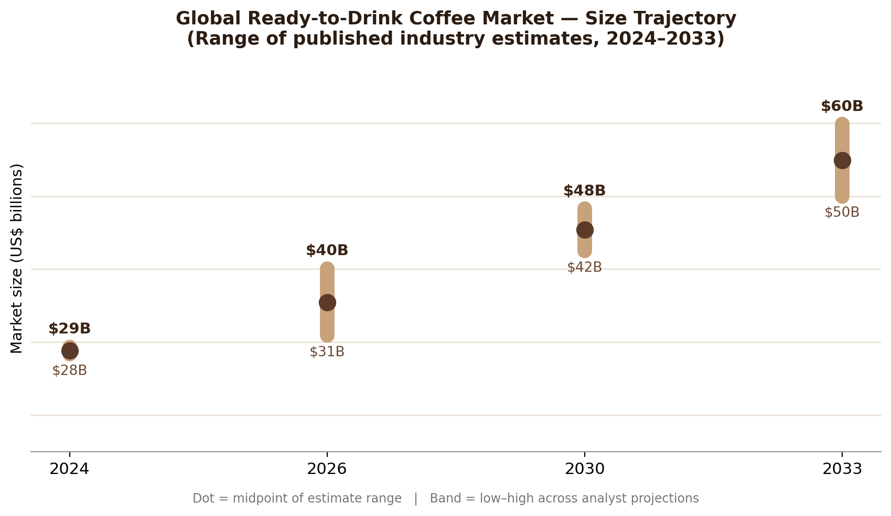
Figure 1: North America battery-sector capital commitments by program and announcement window
Gigafactory Capacity Buildout and Localization
Beyond aggregate investment figures, individual gigafactory projects illustrate just how much capacity is being physically built. Panasonic ramped its De Soto, Kansas facility to 30 gigawatt-hours of annual capacity in 2025, while Toyota opened a North Carolina plant targeting a similar 30 GWh/year output for lithium-ion cells. Samsung SDI and General Motors broke ground on an Indiana facility targeting a 2026 startup, and LG Energy Solution secured an USD 11 billion battery supply deal underpinning further Tennessee capacity. Collectively, these projects lower the breakeven utilization threshold for new plants from roughly 80% down to 60%, which accelerates commissioning timelines across the entire ecosystem feeding the North America Portable Power Solution Market. As utilization economics improve, the marginal cost of the LFP cells used in portable power stations is expected to fall in parallel, reinforcing the affordability gains manufacturers need to address consumer price sensitivity.
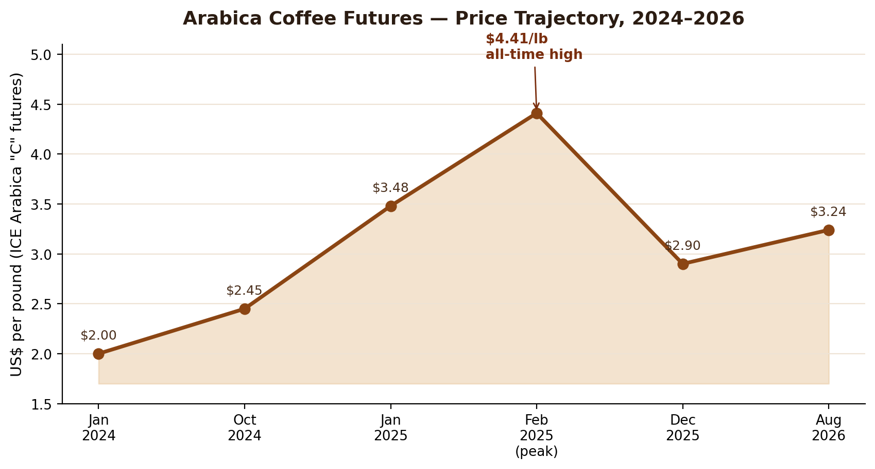
Figure 2: Selected North American battery cell capacity additions by facility (announced annual GWh)
R&D and Product Innovation Spending
A growing share of capex in the North America Portable Power Solution Market is being redirected toward research and development rather than pure manufacturing scale. Investment in faster charge-controller technology, higher-efficiency inverters, and smarter battery-management software is increasingly treated as a competitive necessity rather than an optional differentiator. Companies competing in the North America Portable Power Solution Market are allocating meaningful R&D budgets toward solid-state and sodium-ion chemistries, both of which promise weight reductions and safety improvements that directly address the consumer pain points documented in parallel category research. This R&D-heavy capex profile marks a maturing market, one moving beyond simple capacity expansion toward genuine product differentiation. Notably, several mid-sized manufacturers have begun publishing standalone R&D spending figures for the first time, a transparency shift that mirrors how consumer electronics companies signaled innovation intent in earlier growth cycles, and it suggests the North America Portable Power Solution Market is entering a phase where technical differentiation, not just price or capacity, will decide competitive winners.
Investment in Charging and Solar Integration Technology
Solar compatibility has become a standard expectation rather than a premium feature, and capital expenditure reflects that shift. Manufacturers serving the North America Portable Power Solution Market are investing in proprietary MPPT (maximum power point tracking) charge controllers, foldable solar panel product lines, and dual-input charging architecture that blends AC and solar inputs simultaneously. This capex category matters disproportionately for the outdoor recreation and off-grid living segments of the North America Portable Power Solution Market, where solar-compatible units have become the preferred configuration among camping, RV, and van-conversion consumers seeking sustained energy independence away from the grid.
Supply Chain Localization and Raw Material Capex
Capital is also flowing into securing the raw material inputs that battery cells depend on — lithium, graphite, nickel, and cobalt. Because the North America Portable Power Solution Market draws on the same upstream mineral supply chains as the broader EV and grid-storage industries, portable power manufacturers benefit indirectly from capital committed to domestic and allied-nation mineral processing capacity. North America currently accounts for roughly 16% of global battery manufacturing equipment market share, with a projected compound annual growth rate near 12.8% through 2034, a trajectory that signals sustained equipment and localization capex rather than a short-lived incentive-driven spike. This steady reinvestment cycle is a meaningful structural tailwind for the North America Portable Power Solution Market's long-term cost curve.
Retail, Distribution, and Omnichannel Infrastructure Spend
Not all capex in the North America Portable Power Solution Market sits in factories. A meaningful share is being deployed into distribution infrastructure — regional warehousing to shorten delivery times for bulky power stations, expanded big-box retail placements, and omnichannel fulfillment capability that lets consumers buy online and pick up in-store. Given that portable power stations are heavy, high-consideration purchases, logistics capex directly affects conversion rates and post-purchase satisfaction, making it a quieter but still consequential category of investment across the North America Portable Power Solution Market's broader capital allocation picture. Brands that have invested early in regional fulfillment centers report measurably faster delivery windows during peak hurricane-season demand spikes, turning what was once a pure cost center into a genuine competitive advantage during the exact moments when consumers are most price-insensitive and most in need of fast turnaround.
Mergers, Acquisitions, and Strategic Capital Deployment
Finally, strategic M&A activity is reshaping capital allocation patterns across the North America Portable Power Solution Market. Established players are acquiring smaller battery-technology startups to secure proprietary cell chemistry or software capabilities, while some are entering joint ventures with domestic cell producers to lock in preferential offtake agreements. This capital deployment strategy allows companies to bypass years of organic capacity buildout, and it signals that competitive positioning in the North America Portable Power Solution Market increasingly depends on how effectively a company can access secured, vertically integrated supply rather than simply outspending competitors on marketing. Private equity interest has also picked up meaningfully, with several growth-stage portable power brands attracting institutional funding rounds specifically earmarked for manufacturing partnerships rather than pure marketing spend, a signal that investors increasingly view supply chain control as the durable moat in this category rather than brand awareness alone.
Regional Capex Distribution Across North America
Capital expenditure is not evenly distributed across the continent. The United States accounts for more than 70% of regional gigafactory investment, anchored by cornerstone facilities in Nevada, Texas, Kansas, North Carolina, Tennessee, and Georgia, while Mexico has emerged as a secondary hub attracting supplier-park investment tied to nearshoring strategies. This concentration matters for the North America Portable Power Solution Market because proximity to cell manufacturing reduces logistics costs and lead times for portable power assemblers, reinforcing a self-sustaining cluster effect around established battery manufacturing corridors. Canada, meanwhile, has attracted a smaller but strategically important share of critical mineral processing investment, positioning it as a complementary node in the broader North American battery supply chain rather than a standalone manufacturing hub. As these regional clusters mature, expect portable power station assembly and pack integration to increasingly co-locate near cell production, further compressing the cost and lead-time advantages that domestic capex has already begun to unlock.
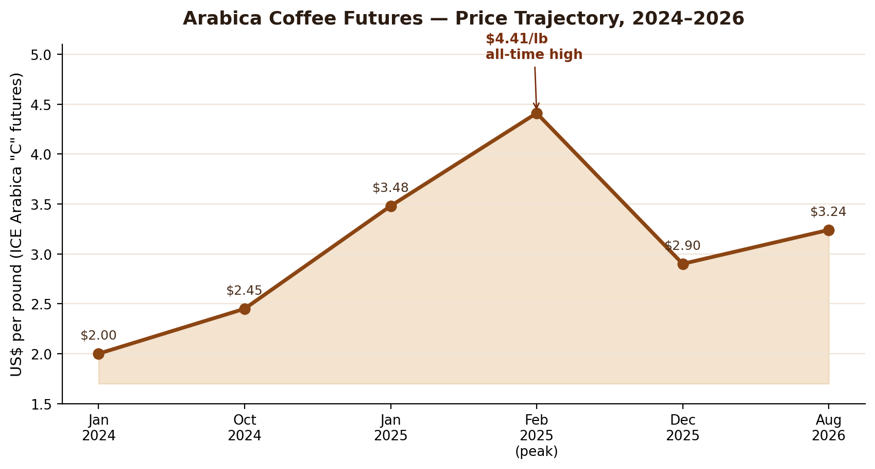
Figure 3: North America's share of the global portable power station market relative to other regions, 2025
What the Capex Trajectory Means for the Market's Next Phase
Taken together, these capex trends point toward a North America Portable Power Solution Market that is maturing from an assembly-and-import model into a genuinely integrated domestic ecosystem. Falling cell costs from gigafactory scale, rising R&D intensity, deeper supply chain localization, and more strategic M&A activity are all converging to support a more resilient, cost-competitive category. For manufacturers, investors, and policymakers tracking the North America Portable Power Solution Market, the capex data suggests the next phase of growth will be driven less by incentive-chasing and more by durable, structurally embedded manufacturing capability.