
Battery Storage Economics: When Does Storage Beat Peaker Plants?
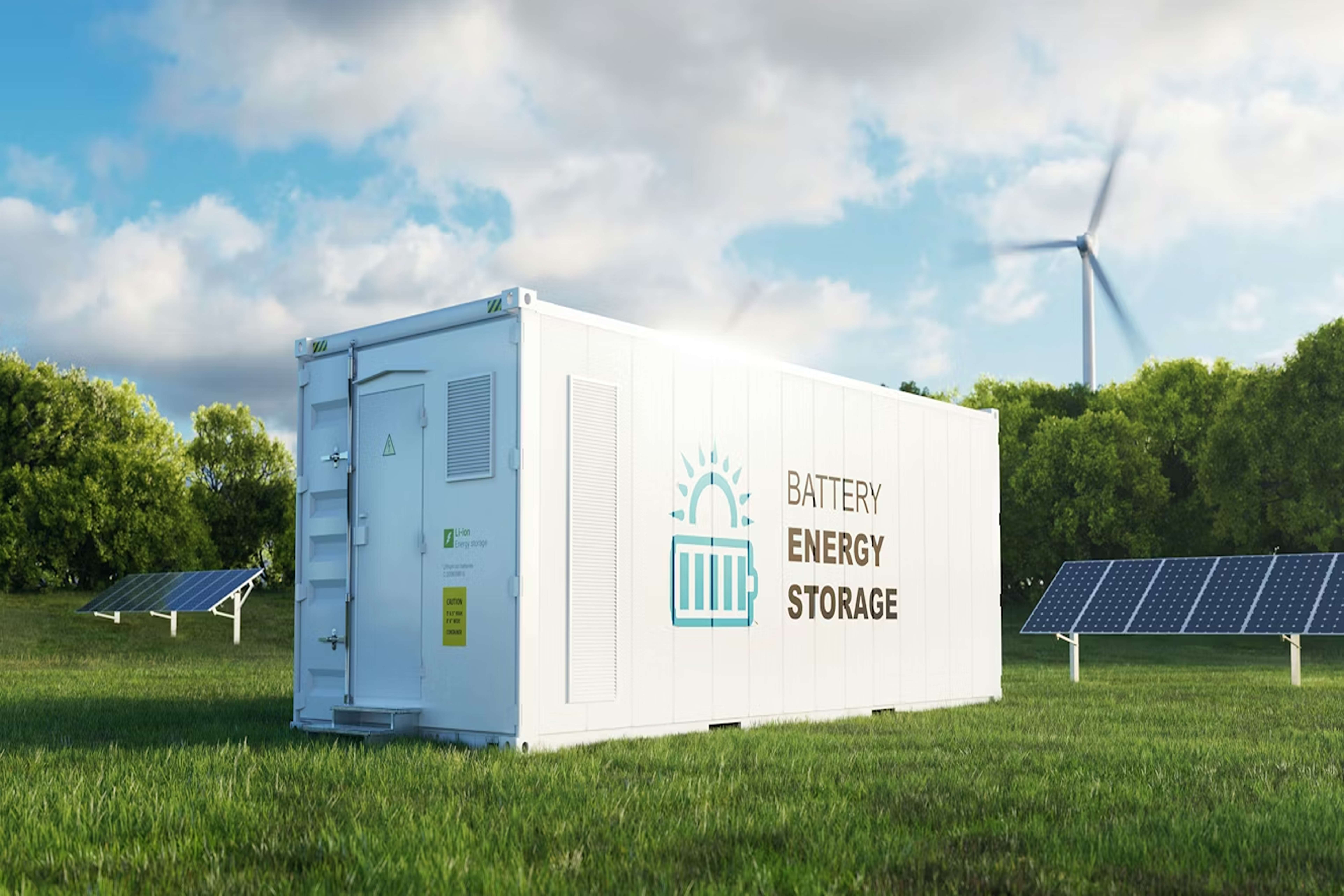
For decades, the answer to "how do we cover the demand spike on a hot afternoon" was to build a gas peaker: a simple-cycle turbine that sits idle most of the year and fires up for a few hundred hours when the grid needs it most. That answer is being rewritten. Battery storage costs have fallen so far, so fast, that in a growing number of markets a four-hour battery beats a new peaker on a straight levelized-cost basis — and utilities are recalculating accordingly.
The Economics in One Number
Storage Now Undercuts New Gas on a Levelized Basis
BloombergNEF's Levelized Cost of Electricity report, published in February 2026, put the global benchmark cost of a four-hour battery storage project at USD 78 per megawatt-hour — a 27% year-on-year decline and a record low since the firm began tracking the metric in 2009. Over the same period, the benchmark cost of a new combined-cycle gas turbine rose 16% to USD 102/MWh, an all-time high driven by turbine shortages and rising equipment costs. Financial advisory firm Lazard's 2024 Levelized Cost of Energy+ report placed unsubsidized gas peaking plant costs even higher, in a range of USD 110 to 228/MWh, reflecting the poor economics of running expensive, inefficient equipment for only a few hundred hours a year. Lazard's 2025 edition found storage costs falling further still, reversing most of the cost increases the technology saw between 2021 and 2024.
Why Peakers Cost So Much to Keep Around
Built for a Few Hundred Hours a Year
The U.S. Government Accountability Office defines a peaker as a fossil-fueled plant generating more than 10 megawatts at a capacity factor of 15% or less — meaning it sits idle at least 85% of the year while its owner still pays to keep it permitted, staffed, and maintenance-ready. The U.S. Energy Information Administration's data on simple-cycle gas turbines shows just how narrow their operating window really is: these units averaged only a 17% capacity factor across summer months from 2020 through 2022, and closer to 10% for the rest of the year. A plant that runs a tenth of the time still has to recover 100% of its capital cost, which is precisely the arithmetic that makes low-utilization gas assets structurally expensive on a per-megawatt-hour basis — and exactly the arithmetic battery storage is built to exploit, since a battery has no fuel cost and can be sized to the hours it is actually needed.
What "Beating" a Peaker Really Means
Duration, Cycling, and the Capacity Factor Math
The comparison depends heavily on how many hours of discharge a grid actually needs. A four-hour lithium-ion battery matches the evening demand ramp most peakers exist to cover, but it cannot substitute for a peaker that must run eight or twelve hours during an extended heat wave or cold snap without recharging. NREL's Annual Technology Baseline models this trade-off, showing combined-cycle gas remains more cost-effective than simple-cycle turbines above a certain annual capacity factor, and that the crossover shifts with fuel prices and daily starts. In practice, storage wins decisively for short, predictable evening peaks and still cedes ground to gas for the rare, extended reliability events only a fuel-backed plant can cover indefinitely.
The Market Is Already Voting
Record Storage Deployment Signals the Shift
Deployment data shows developers are backing the economics with capital. The American Clean Power Association, working with Wood Mackenzie, reported that the U.S. installed a record 18.9 gigawatts of battery energy storage in 2025, a 52% jump over 2024, with utility-scale projects accounting for the bulk of the growth. The same report projects the country will install half a terawatt-hour of storage between 2026 and 2031 — a 250% increase over the prior five-year period — with annual utility-scale additions expected to double between 2025 and 2030.
Utilities Are Hedging, Not Abandoning Gas
Corporate disclosures show a blended strategy rather than a wholesale switch. Vistra Corp., one of the largest competitive power generators in the United States, reported in its 2025 annual filing that it owned 350 megawatts of battery storage in California, 270 MW in Texas, and 4 MW in Illinois, including what it describes as the world's largest battery storage facility at its Moss Landing site. At the same time, Vistra is developing up to 860 MW of new simple-cycle peaking capacity in west Texas, financed partly through a USD 583 million state loan, underscoring that storage and gas peakers are, for now, being built side by side rather than one strictly replacing the other.
Where Peakers Still Win
Gas peakers retain an edge wherever a grid needs assured, long-duration output on demand — during multi-day heat waves, fuel-supply emergencies, or in regions where interconnection queues delay new battery projects as much as they delay new generation. Utility-scale batteries also face their own cost pressures: labor shortages, prevailing-wage requirements, and new tariffs on imported battery cells were all cited by Lazard as factors pushing the high end of storage cost estimates upward even as the low end continues to fall.
The Bottom Line
The crossover is no longer theoretical. On a like-for-like, four-hour basis, storage now beats new-build gas peaking on cost in most U.S. markets, and record 2025 installation volumes show developers acting on that math. The remaining question is not whether storage can beat a peaker, but for how many hours a year — and until batteries can affordably cover the rare, extended reliability events gas still handles best, the two technologies are likely to keep being built together rather than one displacing the other outright.