
Mapping the Aircraft De-Ice System Market: Where Fleets, Factories and Freezing Weather Meet
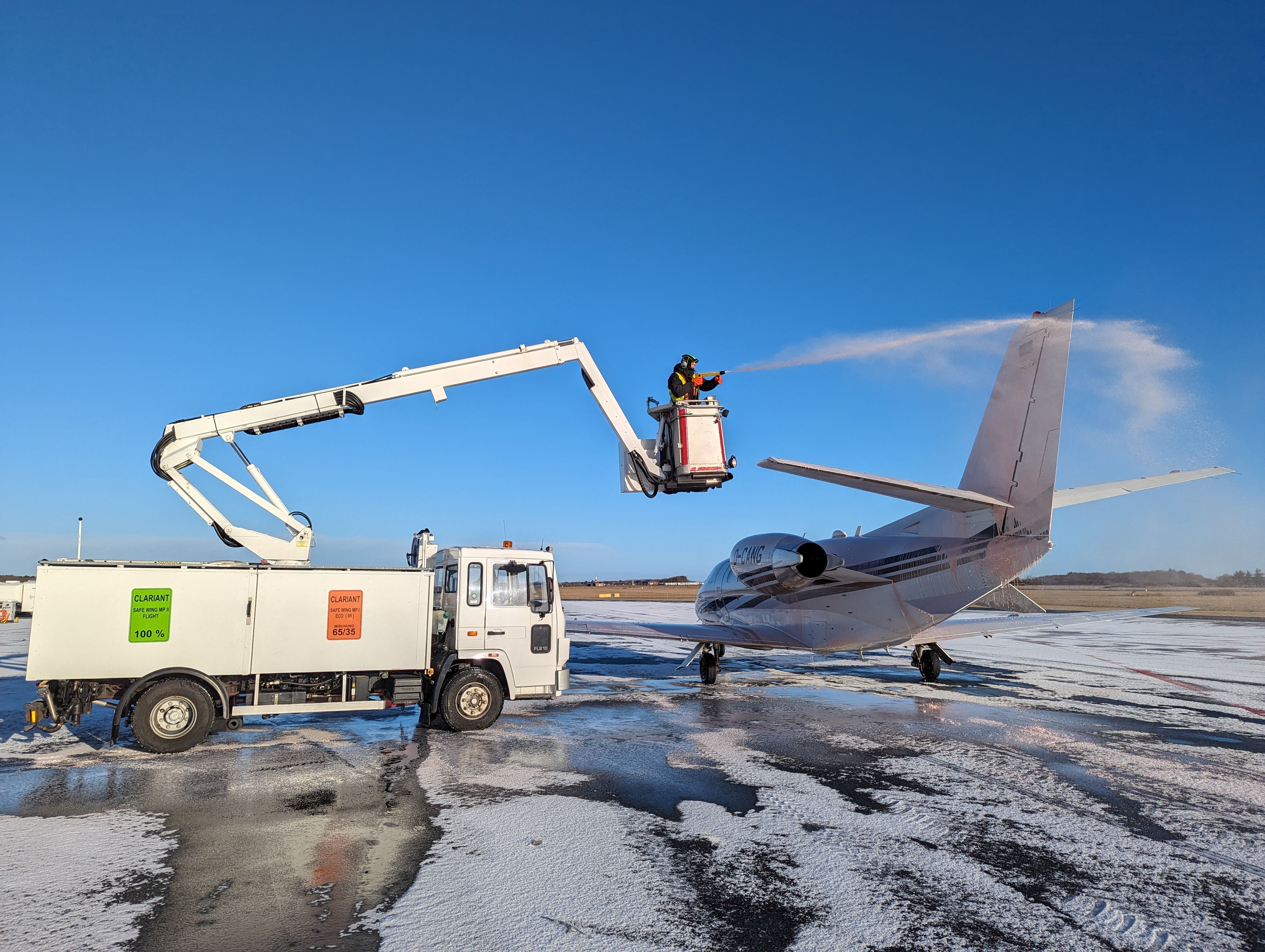
Demand for aircraft ice protection depends on three factors coming together: the size of the fleet, the location of aircraft manufacturing, and exposure to icing weather. Where all three are strong, markets are large. Where fleets are growing quickly, markets are expanding fast. Epignosis Insights data on the Global Aircraft de-ice System Market, valued at US$1,684.1 million in 2025, reveals a geography shaped by these forces.
North America: The Global Heavyweight
North America accounted for US$874.0 million in 2025, or 51.9% of the global market, and is projected to reach US$1,233.1 million by 2032 at a 5.0% CAGR. The U.S. alone represents US$785.4 million. It has the world's largest commercial, business and general aviation fleets, a dense network of aircraft and systems manufacturers, and extensive winter icing exposure across northern states.
North America also has a distinctive technology mix. Its share of electrically heated systems, at around 30% of regional value, is the highest of any region, and it accounts for about two thirds of global demand for weeping wing fluid systems, reflecting the size of its business jet and light aircraft fleet. Canada, valued at US$81.1 million, grows faster than the U.S. at 5.7%, supported by severe winter operations and a strong regional and business aircraft industry. Mexico, at US$7.5 million, grows at 3.8%.
Asia Pacific: The Growth Engine
Asia Pacific is the fastest growing region at a 6.5% CAGR, rising from US$436.5 million in 2025 to US$676.9 million by 2032. Its share of global value increases from 25.9% to 27.6%. The region adds about US$240.4 million in annual revenue over the period, nearly a third of all new market value.
China is the region's largest market at US$211.9 million, growing at 6.4% as airline fleets expand and domestic aircraft programmes mature. India, valued at US$102.4 million, is the fastest growing country market in the world at 7.0%, reaching US$164.5 million by 2032. Rapid airline fleet growth, large aircraft orders, regional connectivity programmes and expanding MRO capacity all support demand. Japan, at US$55.9 million, grows at 5.6%.
Asia Pacific's fleets are dominated by single-aisle jets, so bleed air systems account for about 57% of regional value. However, electro-mechanical systems grow at 8.1% in the region, the highest rate for any technology in any region.
Europe: Manufacturing Strength
Europe is valued at US$306.8 million in 2025 and grows at a 5.8% CAGR to US$453.7 million by 2032. Germany is by far the largest European market at US$153.2 million, roughly half of the regional total, and grows at 6.2%. Its aerospace manufacturing base and large airline fleet underpin demand. France grows fastest in Europe at 6.6%, reaching US$54.9 million by 2032, while the UK, valued at US$61.0 million, grows at 5.4%.
Europe stands out for its technology mix. It has the highest share of electro-mechanical systems among all regions, at about 8% of regional value, and electrically heated systems grow at 6.2%, reflecting strong European research and development in electric ice protection.
Middle East and Africa: Big Fleets, Little Ice
The Middle East and Africa was valued at only US$35.5 million in 2025, growing at 4.0%. The UAE is the largest market at US$20.5 million, larger than Saudi Arabia at US$10.3 million, because its carriers operate large widebody fleets that fly worldwide, including through icing conditions on long-haul routes. Limited local icing exposure keeps regional demand modest relative to fleet size.
Latin America: Steady but Small
Latin America is valued at US$31.2 million in 2025 and grows at 4.4%. Brazil leads with US$21.9 million, supported by its regional aircraft manufacturing industry and domestic airline fleet, and grows at 4.8%. Bleed air systems account for about 64% of Latin American value, the highest share of any region.
Why Weather Is Not Everything
The regional data highlights an important point: icing exposure alone does not determine market size. Scandinavia, Russia and Canada face harsher winters than many parts of Asia, yet Asia Pacific is a far larger and faster growing market because of the sheer scale of its fleet expansion. Conversely, the UAE generates meaningful demand despite a hot climate because its long-haul aircraft encounter icing at altitude and in destination airports worldwide. Fleet size and fleet growth ultimately matter more than local weather.
What the Map Tells Suppliers
- The regional picture suggests three priorities for ice protection suppliers:
- Defend positions in North America and Germany, where installed fleets and manufacturing bases generate both line-fit and aftermarket revenue.
- Build aftermarket and MRO presence in India and China, where fleets are expanding fastest and maintenance demand will grow for decades.
- Align electric and electro-mechanical technology development with European programmes, where innovation in low-energy ice protection is most active.
The Bottom Line
The aircraft de-ice system market is anchored in North America but increasingly driven by Asia. As the market grows to US$2,452.4 million by 2032, nearly a third of new revenue will come from Asia Pacific, with India and China leading the way. Suppliers that follow the fleets, while staying close to the factories that build tomorrow's aircraft, will capture the largest share of that growth.