
From Banks to Hospitals: How Industries Are Putting AI Agents to Work
AI agents are software systems that can carry out multi-step tasks across business applications with limited human involvement. Official data show that AI adoption varies sharply by industry, and company announcements show where the most advanced agents are already running. This post looks at six sectors using both sources.
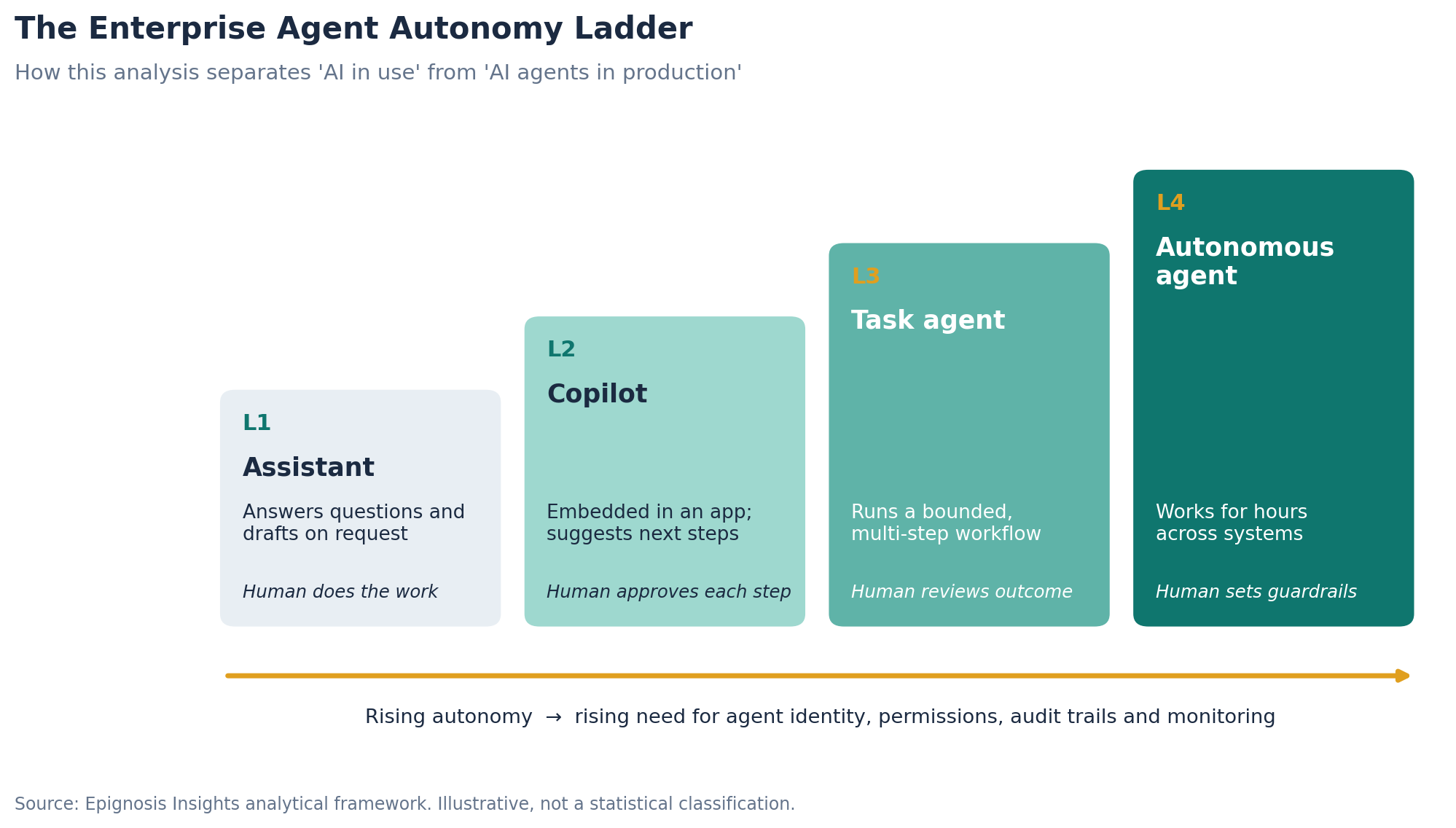
Figure 1: Four levels of enterprise AI, from assistant to autonomous agent.
Which sectors lead in official data
In the EU, 62.5% of enterprises in information and communication used AI in 2025, followed by professional, scientific and technical services at 40.4%. Eurostat reports that every other sector was below 25%. In the United States, the Census Bureau's survey for the period ending 3 May 2026 showed AI use of 39.7% in the Information sector and 33.9% in Finance and Insurance, compared with 19.8% across all businesses. Retail trade was about 14%.
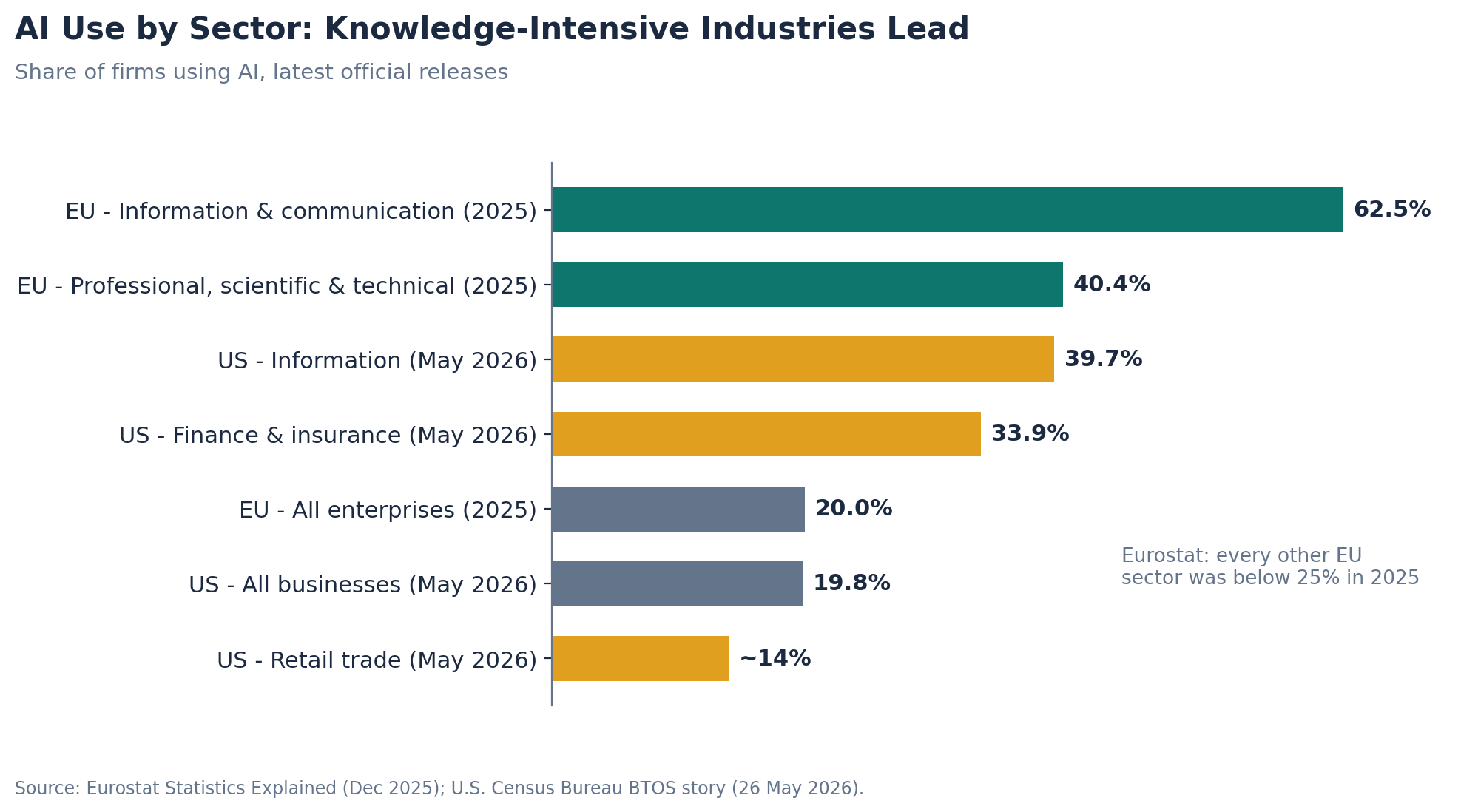
Figure 2: AI use by sector in the EU and U.S. Sources: Eurostat; U.S. Census Bureau.
Information technology and professional services
These sectors lead in every official measure. The Census Bureau found that very large firms in Information, Professional Services and Finance reported AI use rates of 50% to 60%. Software development is one of the most established use cases. Microsoft reported in July 2026 that GitHub Copilot had 50 million users and that its Foundry platform for building AI applications and agents had reached 100,000 customers.
Banking and financial services
Finance is producing some of the clearest public statements about autonomous agents. In June 2026, JPMorgan Chase's chief analytics officer told CNBC that the bank would deploy agents able to work for hours without human intervention during the year. He said AI tools in private banking, which screen market activity, client positions and research overnight, had contributed to a 20% increase in gross sales, and that such tools could eventually let bankers expand client coverage by up to 50%.
Healthcare
Much of the public evidence in healthcare comes from Epic Systems, the electronic health record supplier. At HIMSS 2026, Epic reported that more than 85% of its customers use Epic AI. Its tools are organized into three groups: Art for clinicians, Penny for revenue cycle and back-office work, and Emmie for patients.
Epic has published several customer results. At Summit Health, medication prior-authorization submission time fell by 42%, with 92% of AI-generated responses accepted without edits. Rush University Medical Center reported a sustained 58% reduction in billing-related patient messages. At Ochsner Health, patients rescheduled more than 14,900 appointments through Emmie, saving almost 750 hours of staff time. These are vendor-reported figures.
Epic has also launched Agent Factory, a platform that lets health systems build and monitor their own agents, and has said Penny will move toward autonomous coding, starting with emergency department and radiology visits.
Retail and e-commerce
Retail shows a wide gap between large and average firms. While about 14% of U.S. retail businesses used AI in May 2026, Walmart has organized its approach around four super agents: Sparky for shoppers, an associate agent for store teams, Marty for suppliers and advertisers, and a developer agent. On its first-quarter earnings call in May 2026, Walmart said Sparky's weekly active users rose more than 100% in a quarter.
Shared standards are also emerging. In January 2026, Google unveiled the Universal Commerce Protocol at the National Retail Federation's annual conference. It was co-developed with retailers including Shopify, Etsy, Walmart and Wayfair to let AI agents discover products and complete purchases.
Manufacturing
According to Eurostat, EU manufacturers that use AI apply it mostly to marketing and sales (30.4%) and business administration (27.1%). On the factory side, Siemens announced nine industrial copilots at CES 2026 covering areas such as product lifecycle management, manufacturing execution and simulation. Siemens reported that PepsiCo, using its digital-twin tools with AI agents to simulate changes before making them, recorded a 20% throughput increase on initial deployment.
Public sector
Public-sector deployments reported so far are mostly at the copilot level. Microsoft's largest named deployment in its fiscal fourth-quarter 2026 results was NHS England, with 505,000 Microsoft 365 Copilot seats. Many public-service AI uses fall within the EU AI Act's high-risk categories. NIST's 2026 listening sessions on barriers to AI adoption also included education, alongside healthcare and finance.
Where agents are used inside companies
Across industries, the Census Bureau's 2026 AI supplement found that U.S. firms most often use AI in sales and marketing (52%), strategy and business development (45%), and IT (41%). Most (57%) use AI in three or fewer business functions.
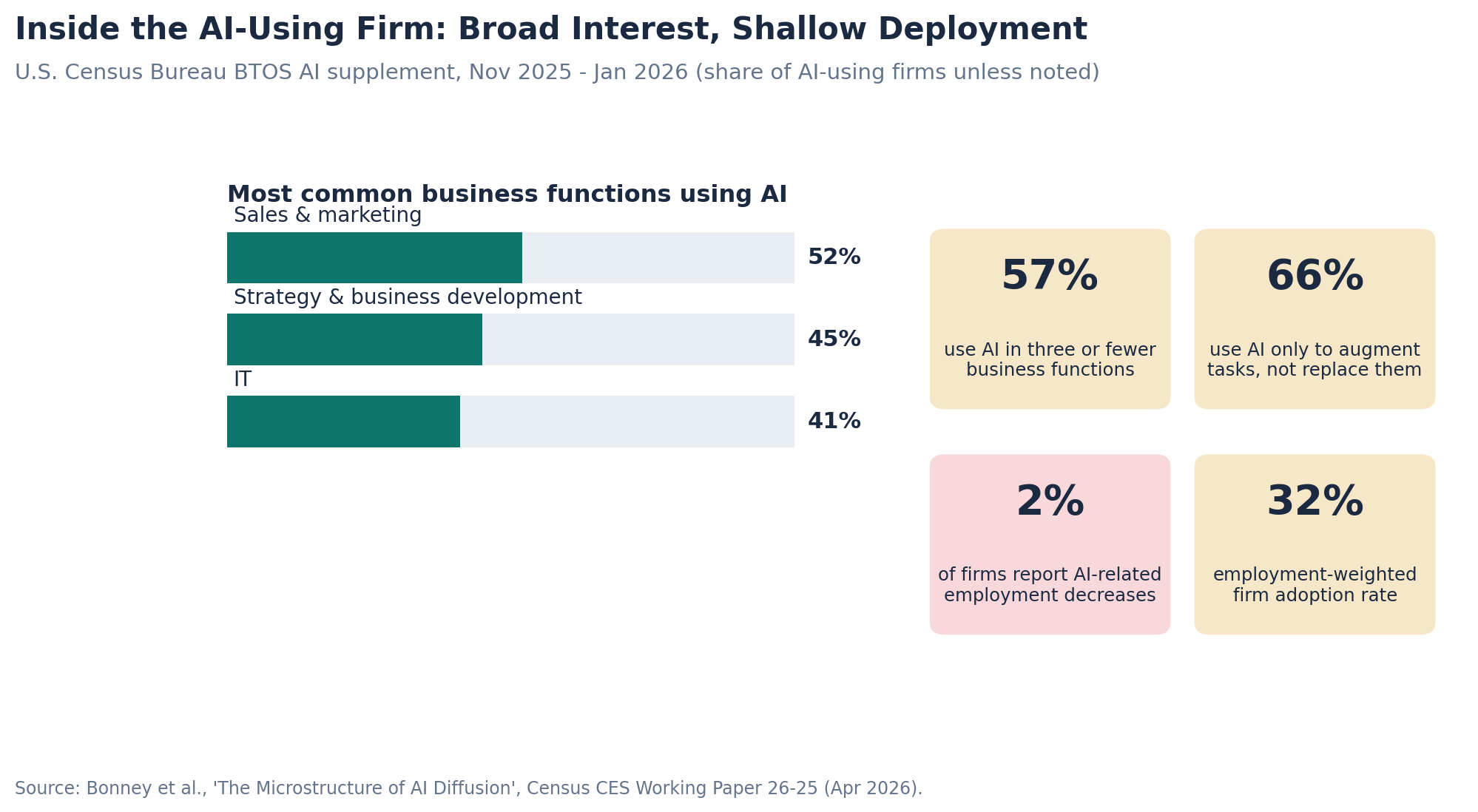
Figure 3: How U.S. firms use AI across business functions. Source: U.S. Census Bureau.
Key takeaways
- Information, professional services and finance have the highest measured AI use.
- Banking, healthcare, and large retailers provide the most detailed public examples of agents in production.
- Retail and manufacturing show large gaps between leading companies and sector averages.
- Within firms, sales and marketing, strategy, and IT are the most common areas of AI use.
The complete industry breakdown is available in the Epignosis Insights report, Enterprise AI Agents Market Outlook: Adoption Trends Across Industries.