Asia ABS Resin Price Tracker
EPIGNOSIS INSIGHTS | MONTHLY COMMODITY PRICE TRACKER

EPIGNOSIS INSIGHTS | MONTHLY COMMODITY PRICE TRACKER
Epignosis Insights compiles this monthly tracker to give procurement, sourcing, and compounding teams a consolidated view of Asia's Acrylonitrile-Butadiene-Styrene (ABS) Resin Market, drawing on government statistics, industry association outlooks, producer investor disclosures, consulting-firm structural analysis, and specialist regional news reporting. This edition covers mid-2026 pricing conditions across the region's three anchor markets, China, South Korea, and Japan, a period defined by a structural mismatch between rebounding producer margins and a still-contracting Chinese chemicals sector.
Asia's ABS market in mid-2026 is best described as a margin recovery unfolding inside a demand-constrained region. South Korea's LG Chem, one of the region's largest integrated ABS and petrochemical producers, reported that its Petrochemical division's operating margin nearly doubled quarter-on-quarter, from 3.7% in the first quarter of 2026 to 8.0% in the second, even as the company's own petrochemical strategy leadership warned that ocean freight rates had surged roughly 60% into the second half and that feedstock volatility tied to Middle East instability was not being matched by proportional gains in finished product prices. At the same time, China's National Bureau of Statistics recorded a 1.2% year-on-year decline in chemical raw materials and products output for July 2026, even as the country's broader industrial production grew 4.5%, underscoring that the region's largest ABS producer and consumer remains the weakest link in the demand chain.
Layered on top of these company- and government-level signals, the Korea Chamber of Commerce and Industry projected South Korean petrochemical exports would fall 6.1% for full-year 2026, citing oversupply from China as businesses restructure and idle capacity. S&P Global Commodity Insights analysts, meanwhile, expect Asian olefins margins, the upstream base for ABS's styrene and acrylonitrile inputs, to remain under pressure and unlikely to turn durably positive before 2030.
Unlike single-monomer resins such as polystyrene or polyethylene, ABS's price is a composite of three independently traded feedstock markets. Styrene, derived from benzene and ethylene, typically represents the largest cost share; acrylonitrile, derived from propylene via ammoxidation, and butadiene, drawn from the C4 stream of steam cracking, round out the remaining inputs. This structure means ABS producers must absorb volatility from three separate commodity cycles simultaneously, and a spike in any single feedstock, even while the other two remain stable, can move finished ABS pricing.
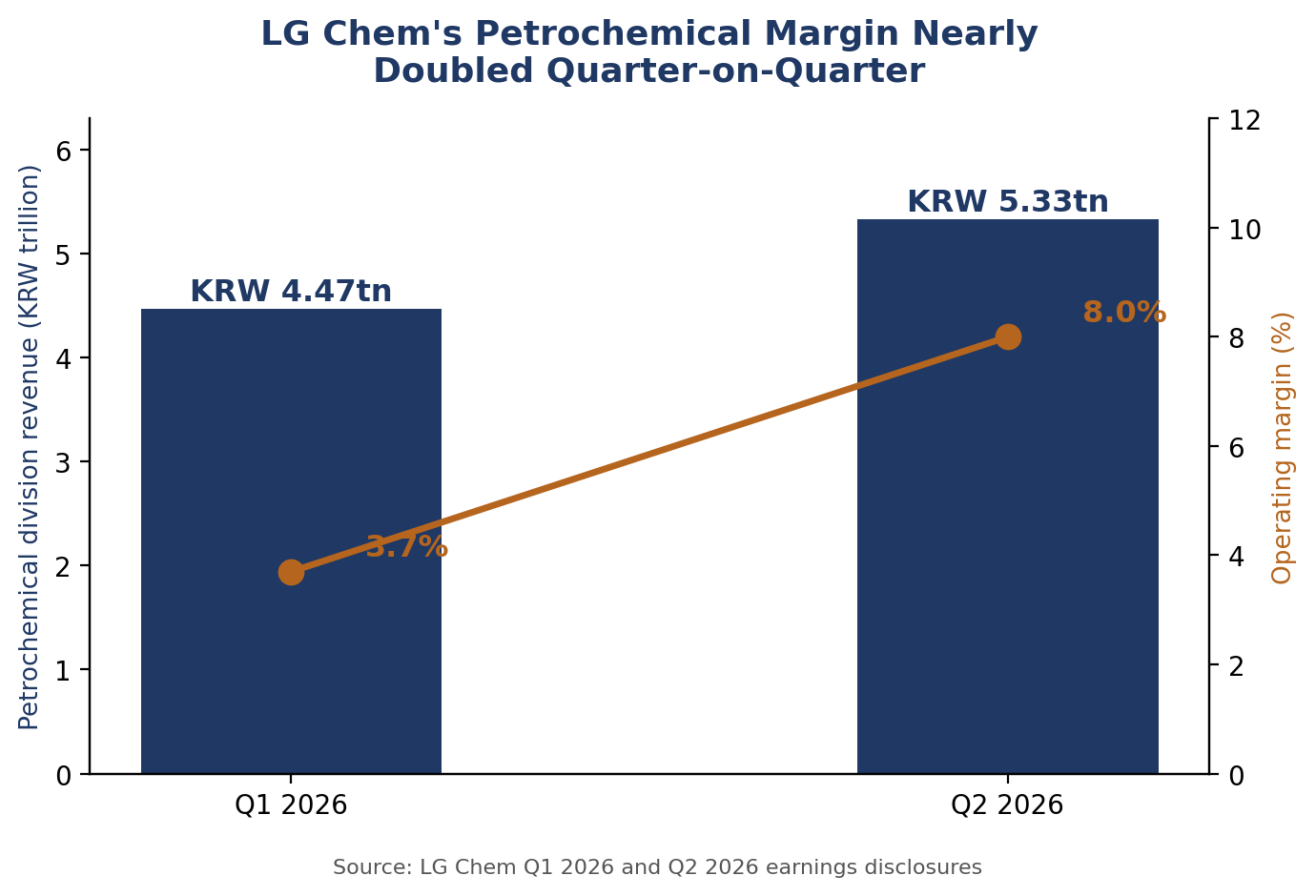
Figure 1: The three-feedstock cost structure of ABS resin.
China remains both the world's largest ABS producer and its largest source of oversupply pressure. The China National Bureau of Statistics reported that industrial production grew 4.5% year-on-year in July 2026, a deceleration from June's 5.3% pace, but within that headline figure, chemical raw materials and products output actually contracted 1.2% year-on-year, one of the few major manufacturing categories to post an outright decline that month. This divergence is significant for ABS specifically: China's capacity additions in styrenic resins have continued even as underlying chemicals demand softens, a combination that has historically compressed regional spot pricing and pushed Chinese producers toward more aggressive export pricing to defend utilization rates.
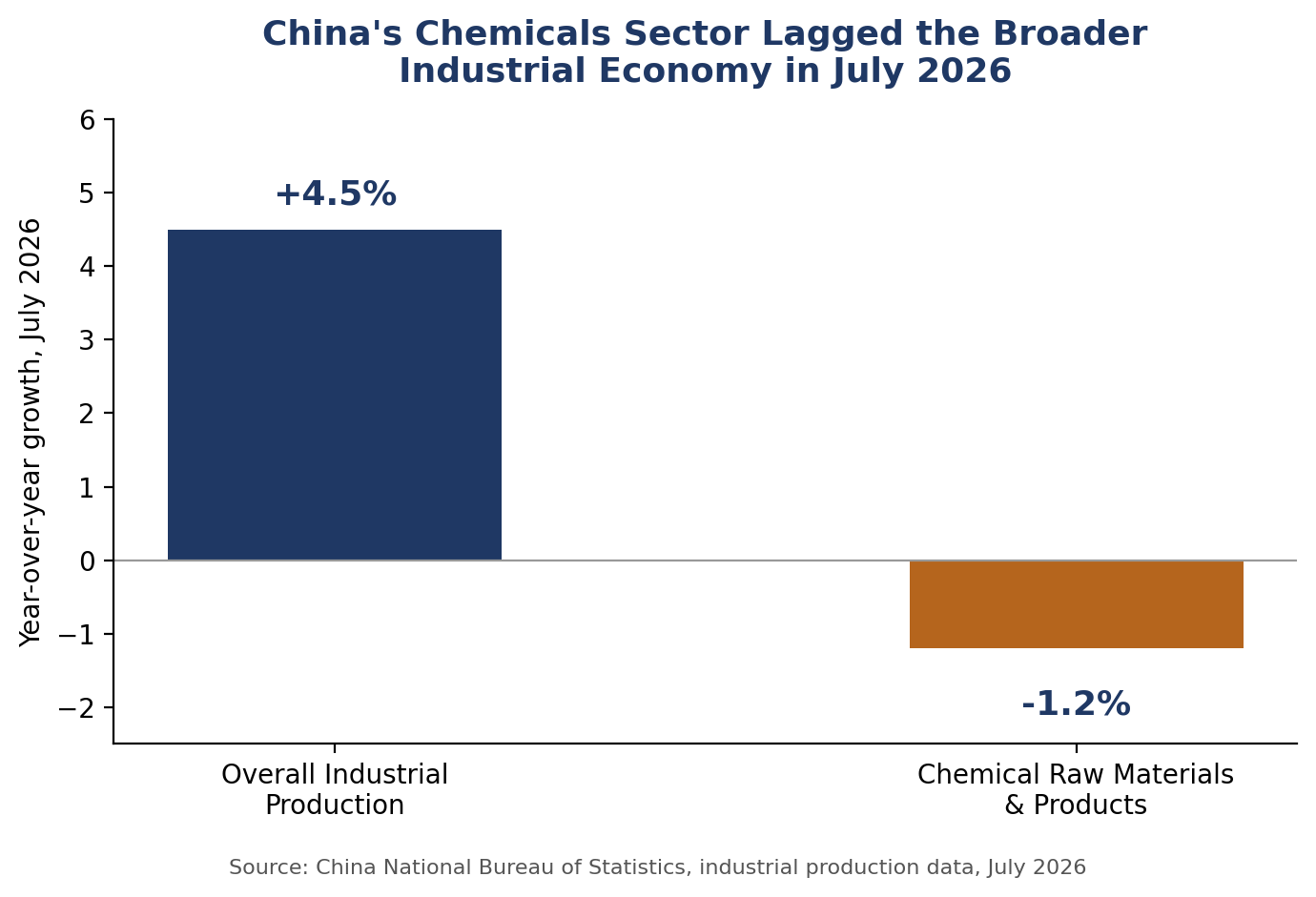
Figure 2: China industrial production versus chemicals sector output, July 2026.
This dynamic has consequences well beyond China's borders. Reporting from Nikkei Asia in April 2026 documented how Middle East turmoil, which throttled naphtha supply into Japan, pushed Japanese manufacturers to source chemicals used in applications ranging from food trays to tires directly from Chinese suppliers, a reversal of the traditional trade flow in which Japan was a net petrochemical exporter to the region. The episode illustrates how China's expanding, and currently underutilized, chemicals capacity is increasingly functioning as a buffer supply for the rest of Asia during feedstock disruptions, even as that same overcapacity depresses regional pricing during calmer periods.
LG Chem, whose Petrochemical division includes ABS alongside other styrenic and olefin derivatives, reported second-quarter 2026 divisional revenue of KRW 5.33 trillion and operating profit of KRW 427 billion, an 8.0% operating margin, up sharply from KRW 4.47 trillion in revenue and an operating profit of KRW 164.8 billion, a 3.7% margin, in the first quarter. The company attributed the improvement to positive inventory lagging effects, wider spreads, and one-off items including a European anti-dumping tariff refund.
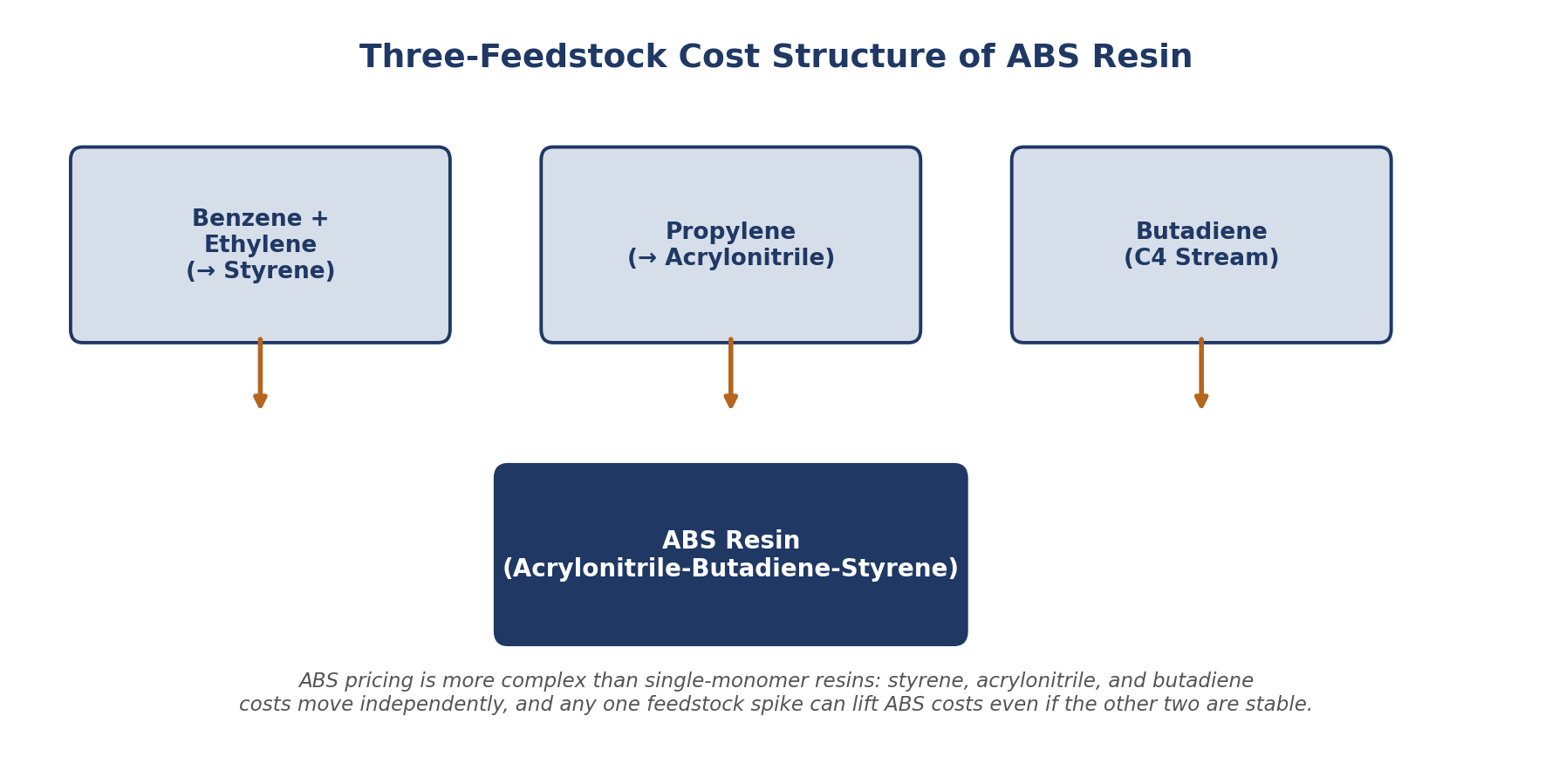
Figure 3: LG Chem Petrochemical division revenue and operating margin, Q1–Q2 2026.
That improvement, however, came with an explicit warning about the second half. Yang Cheol-ho, Senior Vice President and Head of LG Chem's Petrochemical Business Strategy Division, said during the company's earnings call that ocean freight rates for the second half had surged roughly 60% compared with the first half, and that while feedstock price volatility had increased due to Middle East instability, product prices were not rising in tandem because of sluggish downstream demand and a wait-and-see attitude from customers. He further cautioned that a negative reverse-lagging effect, where previously purchased high-cost inventory has to be sold into a falling-price environment, remained a risk for the second half if feedstock prices continued to decline.
LG Chem's company-specific caution is echoed at the industry level. The Korea Chamber of Commerce and Industry, in its 2026 industry outlook reported by ICIS, projected South Korean petrochemical exports would decline 6.1% for the full year, flagging petrochemicals as one of the sectors with a 'cloudy' outlook alongside machinery, steel, and construction. The KCCI report attributed the projected decline to global oversupply, driven in large part by Chinese capacity, and to falling raw material prices such as naphtha stemming from lower oil prices, even as it noted that South Korea's downstream automotive sector, a major ABS end-use market, had a comparatively clear outlook for 2026.
Beneath the quarter-to-quarter swings in producer margins and monthly government statistics, the medium-term structural picture for ABS's upstream feedstocks remains challenging. S&P Global Commodity Insights analysts covering the region's steam cracker and olefins markets have noted that Asian olefins margins have been negative for several consecutive years, as China added more than 10 million tonnes per year of ethylene capacity over 2024 and 2025 alone, a build-out that has already forced steam cracker shutdowns in Northeast Asia. Analysts at the firm expect this margin trough to persist, with a durable recovery unlikely before 2030, even as South Korea's government has separately advised domestic cracker operators to consider reducing ethylene production capacity by as much as 2.7 to 3.7 million tonnes per year to help rebalance the regional market.
For ABS specifically, this matters because styrene, ABS's largest feedstock component by cost share, is itself a derivative of the same ethylene and benzene value chains under structural pressure. A prolonged olefins margin trough tends to keep merchant styrene supply elevated and price-competitive, a dynamic that has already been visible in Chinese domestic ABS pricing, where new capacity from integrated producers has repeatedly outpaced downstream demand growth in appliances, electronics housings, and automotive components.
ABS demand in Asia is concentrated in three end-use sectors: automotive interior and exterior components, home appliance housings, and consumer electronics casings, with automotive increasingly the segment producers point to as the region's most reliable growth driver. South Korea's own automotive sector illustrates this divergence clearly: the Korea Automobile Manufacturers Association's 2026 outlook, cited alongside the KCCI's petrochemical projections, described domestic vehicle production rising 1.2% year-on-year to 4.13 million units with exports projected to grow 1.1%, even as the broader petrochemicals sector outlook was rated 'cloudy.' Electric vehicle production in particular has become a structural support for ABS demand, since automakers increasingly substitute reinforced ABS and ABS-based composites for steel and aluminum components to offset battery mass, a trend that is expected to partially offset the sluggishness seen in appliance and electronics-linked ABS demand across the region.
Appliance and electronics demand has been comparatively softer. Producers across the region have described end-market demand for ABS housings and components as inconsistent through the first half of 2026, with restocking cycles providing only temporary support rather than a sustained recovery. This unevenness matters for how buyers should read headline pricing: a Chinese ABS price move driven by automotive-linked export strength can mask continued weakness in the appliance and electronics-linked portion of the same market, and vice versa, making segment-level demand tracking as important as headline resin pricing for procurement planning.
The gap between Chinese domestic ABS pricing and Korean or Japanese export pricing has remained a defining feature of the Asia market through mid-2026. Chinese integrated producers, benefiting from lower feedstock logistics costs and continued capacity expansion, have consistently been able to offer ABS into export markets at levels Korean and Japanese producers struggle to match once freight and feedstock costs are fully loaded into their pricing. This spread has direct implications for compounders and converters across Southeast Asia and India, who increasingly weigh the landed-cost advantage of Chinese material against the quality consistency and supply reliability historically associated with Korean and Japanese grades. As freight costs rise, as LG Chem's own leadership has flagged, that calculus shifts further in China's favor on a pure cost basis, even as buyers with quality-sensitive applications, such as automotive interior trim with strict surface-finish requirements, continue to pay a premium for Northeast Asian material.
Epignosis Insights expects Asia ABS pricing over the coming reporting cycle to be shaped primarily by the tension between South Korean and Japanese producers' need to pass through elevated freight and feedstock costs, and Chinese producers' continued willingness to defend export volume through aggressive pricing amid domestic demand softness. The KCCI's export-decline forecast and China's July chemicals output contraction both point toward continued regional oversupply, while S&P Global's olefins margin outlook suggests this condition is structural rather than temporary. Buyers should expect Korean and Japanese ABS grades to carry a persistent cost premium over Chinese material, and should treat any near-term Korean margin gains as fragile until sustained by genuine downstream demand recovery rather than inventory and currency effects.