Executive Overview
Ready-to-drink (RTD) Coffee has moved from a convenience niche to one of the most closely watched growth categories in global beverages. Once dominated by canned coffee sold through Japanese vending machines and U.S. convenience stores, the category now spans cold brew, nitro coffee, protein-fortified “profee,” and plant-based formats sold through supermarkets, e-commerce, and quick-service coffeehouses. Independent industry estimates converge on a global market value in the region of $29–30 billion in 2024, rising to roughly $30–40 billion in 2026, with most projections pointing toward $48–60 billion by the early 2030s, implying a compound annual growth rate broadly in the mid-single to high-single digits over the coming decade.
The growth story is being written less by new entrants than by the world's largest beverage and food companies re-platforming around coffee. Nestlé has consolidated Nescafé, Nespresso, and its licensed Starbucks at-home business into a single global “coffee pillar”; Danone has pushed protein-fortified coffee into mainstream retail; and the Starbucks–PepsiCo partnership continues to anchor North American shelf space. For brand owners, retailers, and investors, the category's trajectory now hinges on three forces covered in this analysis: shifting consumption occasions, rising and volatile green coffee costs, and a wave of functional and premium product innovation.
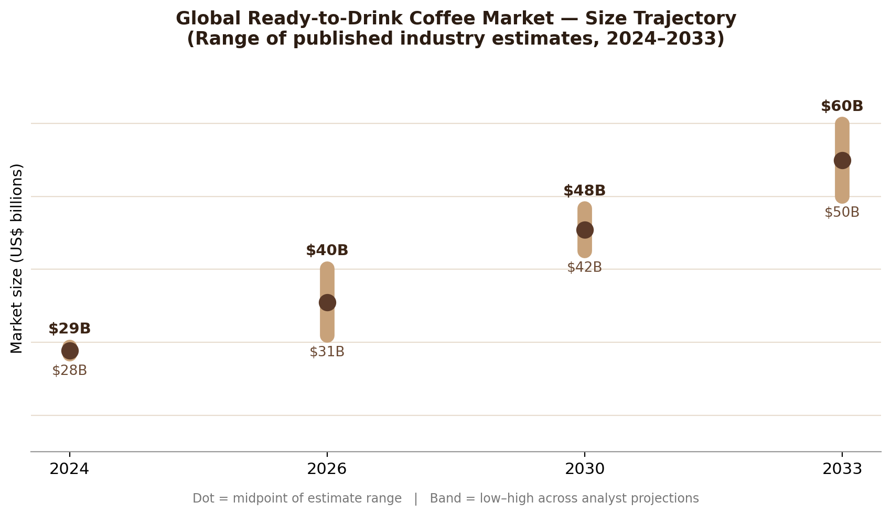
Figure 1: Global RTD coffee market size trajectory, synthesized from published industry projections (2024–2033).
Market Dynamics
Growth Drivers
- On-the-go and at-home cold consumption is now a year-round habit, not a seasonal spike. National Coffee Association (NCA) data for 2026 show that cold or iced formats accounted for 17% of past-day cups, even in a winter survey, while cold brew consumption has risen 31% since 2025, disproportionately driven by Gen Z and Millennial drinkers.
- Functional positioning is reshaping the category. Circana's 2026 beverage research found that roughly 64% of consumers sometimes treat a drink as a snack or meal occasion, rising to 70% among 25–34-year-olds a behavioral shift that protein-fortified RTD coffee is being built to capture.
- Large beverage groups are using existing cold-chain and bottling infrastructure to scale RTD coffee faster than standalone brands can, extending distribution into convenience stores, grocery, and e-commerce simultaneously.
- Coffeehouse chains are converting café-only innovation into packaged formats: Starbucks' Channel Development segment, which includes its RTD coffee business, posted double-digit year-over-year revenue growth in fiscal 2026, aided by new coffee-and-protein launches.
Restraints
- Green coffee costs remain historically elevated and volatile. Arabica futures on the Intercontinental Exchange peaked near $4.41 per pound in February 2025, more than double the price a year earlier, before easing to roughly $3.24 per pound by August 2026, still well above pre-2024 norms.
- U.S. import tariffs on coffee from major origins such as Brazil, Mexico, and Vietnam, introduced in 2025, have added further cost pressure for manufacturers that source and pack domestically.
- Consumer-facing inflation has followed the commodity move: U.S. Bureau of Labor Statistics data showed packaged coffee prices up roughly 17–21% year-over-year through parts of 2026, squeezing margins for value-tier RTD products in particular.
Opportunities
- Protein-fortified and functional RTD coffee is one of the fastest-growing adjacent categories; Danone has described its RTD protein shake line, which includes a coffee variant with 95mg of caffeine per serving, as a top-growing product, in a functional RTD segment industry sources value at roughly $9.7 billion and growing at close to 17% CAGR over the past three years.
- Plant-based and alternative-caffeine formats (oat and almond milk bases, chicory, mushroom coffee, and bean-free fermentation-derived coffee) are emerging as a hedge against both green coffee cost volatility and shifting dietary preferences.
- Premiumization through glass bottling, cold-brew extraction technology, and direct farmer sourcing is allowing brands to defend margin even as commodity costs stay elevated.
Category Trends to Watch
- “Profee” (protein + coffee) launches from Danone, Starbucks, and challenger brands targeting GLP-1 users and high-protein diet trends.
- Consolidation of coffee portfolios under single global brand pillars, as seen with Nestlé's 2026 restructuring around Nescafé, Nespresso, and Starbucks.
- Continued format experimentation: nitro, cold-brew concentrates, and Nespresso's first U.S. RTD launch in 2026, as coffeehouse and CPG brands compete for the same cold shelf space.
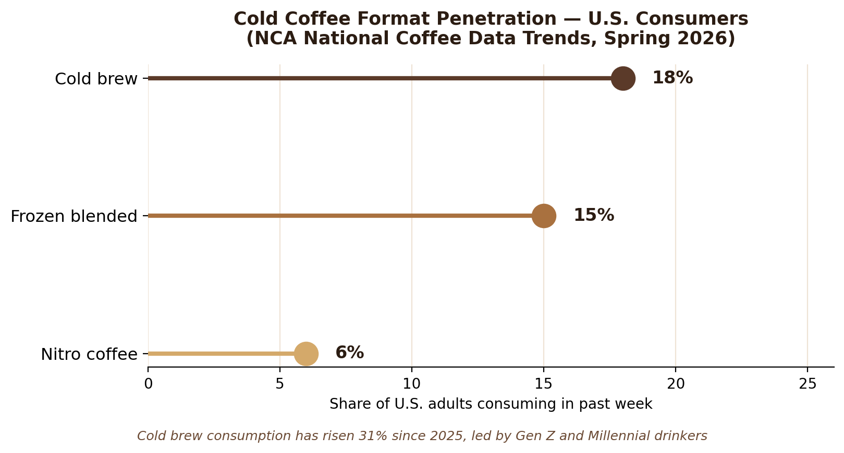
Figure 2: Share of U.S. adults consuming each cold coffee format in the past week, Spring 2026 (National Coffee Association / NCDT).
Regional Landscape
North America and East Asia remain the two most developed RTD coffee markets, though for different structural reasons. In the United States, off-trade retail supermarkets and convenience stores generate the vast majority of RTD coffee revenue, with the Starbucks–PepsiCo North American Coffee Partnership historically holding an outsized share of branded bottled and canned coffee shelf space since its formation more than two decades ago. In Japan and the wider East Asian market, canned and bottled coffee sold through vending machines and convenience stores has been a daily habit for decades, sustaining incumbents such as Suntory (BOSS), UCC Ueshima, DyDo Drinco, Pokka Sapporo, and Kirin.
Asia-Pacific overall is generally cited as the fastest-growing regional market, reflecting rising urban incomes, expanding modern retail infrastructure, and a large youth population increasingly drawn to on-the-go cold coffee formats. Latin America, India, and the Middle East & North Africa (MENA) are frequently highlighted by industry observers as the next tier of growth markets, again driven by young, urbanizing populations and the expansion of convenience retail.
Competitive Landscape: Company Analysis
The RTD coffee category is structurally consolidated around a small group of global beverage and food companies that can combine brand equity with cold-chain distribution, a capital-intensive requirement that limits the threat from smaller independents. The table below summarizes the positioning of the market's most influential players heading into 2026.
| Company / Brand |
Position in RTD Coffee |
Notable 2025–26 Development |
| Starbucks Corporation / PepsiCo (North American Coffee Partnership) |
Long-standing category leader in bottled/canned RTD coffee across North America |
Starbucks' Channel Development segment (which houses its RTD coffee business with PepsiCo) posted double-digit revenue growth in fiscal 2026; the company also expanded Coffee & Protein RTD lines into supermarkets |
| The Coca-Cola Company (Costa Coffee, Georgia) |
Global bottler leveraging Coca-Cola's cold-chain distribution to scale Costa iced coffee and Georgia canned coffee (dominant in Japan) |
Continued expansion of Costa iced coffee latte lines in the U.S. and international markets |
| Nestlé S.A. (Nescafé, Nespresso, Starbucks at-home license) |
Consolidated its coffee brands into a single global “coffee pillar” spanning Nescafé, Nespresso and Starbucks, with RTD positioned as a growth feature across all three |
Nespresso launched its first U.S. ready-to-drink coffee in 2026, and coffee remains a stated priority growth engine within Nestlé's beverage portfolio |
| Danone S.A. (Oikos, International Delight, STOK) |
Expanding from creamers into high-protein RTD coffee to capture the “profee” (protein + coffee) trend |
Oikos Protein Shakes' Mocha Latte variant (95mg caffeine) scaled into Target, Walmart, and Kroger; Danone also acquired Huel for roughly $1 billion to build out its broader functional-nutrition platform |
| Suntory Beverage & Food (BOSS) / Asian canned-coffee incumbents (UCC, DyDo Drinco, Pokka Sapporo, Kirin) |
Dominant in East Asia's mature canned/bottled coffee vending and convenience-store channel |
Continued format and flavor innovation to defend share as APAC RTD growth outpaces other regions |
Two structural patterns stand out. First, RTD coffee is increasingly used by parent companies as a platform for broader functional beverage strategies. Nestlé's beverages division accounted for roughly 28% of total group sales in 2025, and coffee has been explicitly identified as a priority growth engine. Second, competitive intensity is shifting from pure flavor and brand competition toward nutritional positioning, with protein content, sugar levels, and plant-based credentials becoming primary differentiators alongside taste.
Pricing Analysis
Pricing dynamics in RTD coffee are inseparable from the green coffee commodity cycle. Arabica futures more than doubled between early 2024 and their February 2025 peak of roughly $4.41 per pound, driven by drought-reduced Brazilian yields, a Vietnamese robusta shortfall, and speculative buying in futures. Prices have since eased, trading around $3.24 per pound in late August 2026, but remain well above the pre-2024 baseline, and U.S. tariffs on coffee imports from Brazil, Mexico, and Vietnam, introduced in 2025, have added a further, largely non-cyclical cost layer for manufacturers.
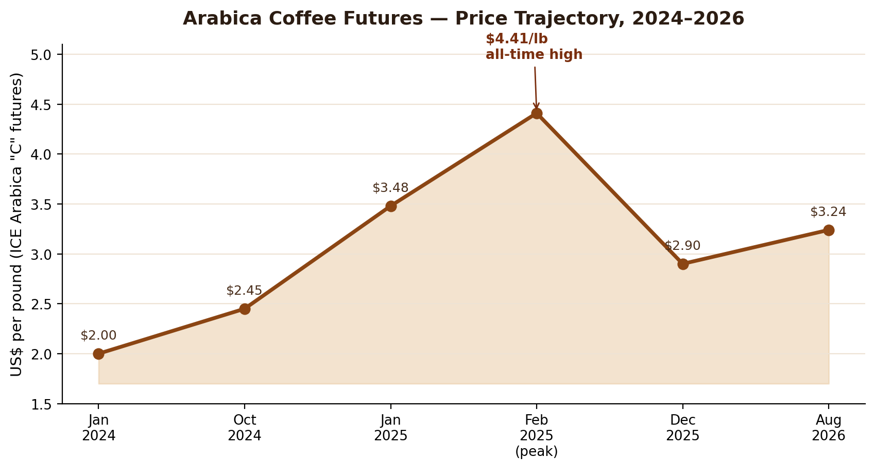
Figure 3: ICE Arabica “C” coffee futures price trend, US$ per pound, 2024–2026.
These upstream moves have flowed through to shelf prices with a lag but real force. U.S. Bureau of Labor Statistics CPI data cited in the trade press showed packaged roasted and ground coffee prices up 17–21% year-over-year at points in 2026, with average U.S. grocery prices for roasted ground coffee reaching a record high per pound in early 2026. For RTD coffee specifically, manufacturers have generally protected margins in two ways: shifting the mix toward premium, higher-margin cold-brew and protein-fortified SKUs, where price elasticity is lower, and absorbing cost increases within larger CPG portfolios rather than passing the full commodity move through to the RTD shelf price. Glass-bottled RTD coffee, which industry sources associate with the premium tier of the category, continues to be positioned explicitly around perceived quality to support higher price points despite input cost pressure.
Packaging & Format Mix
Format choice remains closely tied to channel and price positioning. Canned coffee continues to represent the largest single packaging format globally, reflecting its dominance in the mature East Asian market and its efficiency for value-tier convenience-store sales. PET and plastic bottles are the fastest-growing packaging formats in markets such as the United States, favored for their lightweight, resealability, and improved recyclability. In contrast, glass bottles remain concentrated in the premium and cold-brew tiers, where packaging itself signals quality to consumers.
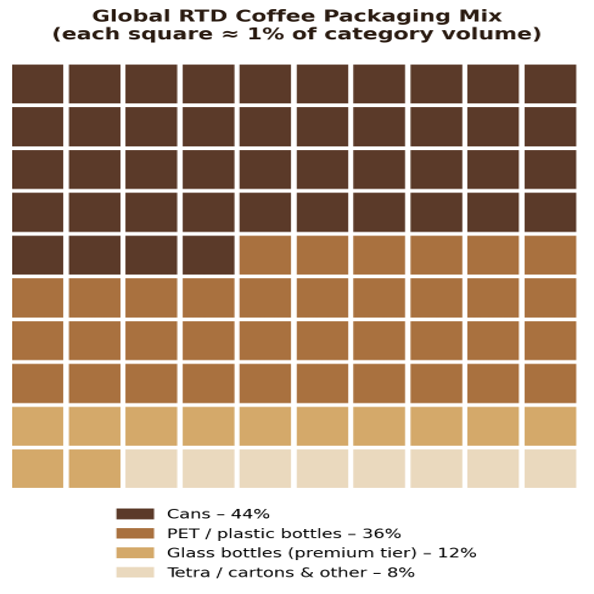
Figure 4: Approximate global RTD coffee packaging mix by category volume.
Strategic Implications for Brand Owners & Investors
The RTD coffee category's next phase of growth will be won less on caffeine delivery and more on how effectively brands connect coffee to adjacent consumer priorities protein intake, sugar reduction, sustainability credentials, and price-conscious value engineering in the face of an elevated green coffee cost base. Companies evaluating category entry, line extension, or M&A in this space face a fast-moving set of questions: Which regional markets offer the most attractive combination of growth and competitive intensity? How exposed is a given SKU portfolio to further volatility in green coffee costs? Which functional positioning protein, plant-based, or reduced-sugar best fits an existing brand's equity?
Epignosis Insights works with beverage manufacturers, private-label retailers, ingredient suppliers, and investors to answer exactly these questions through custom market sizing, competitive benchmarking, consumer segmentation, and go-to-market strategy support tailored to the RTD coffee and broader functional beverage landscape. If your team is evaluating a new RTD coffee launch, assessing category M&A, or building a pricing strategy resilient to commodity volatility, our research team can provide a custom analysis scoped to your specific market and competitive set.