Executive Summary
The Global Personal Luxury Goods Market is exiting its most turbulent stretch since the Great Recession and entering a phase best described as stabilization on new terms. After slipping to an estimated €358 billion in 2025, Bain & Company and Altagamma's spring 2026 Worldwide Luxury Market Monitor projects the category will grow 2% to 4% in 2026, reaching €365 billion to €373 billion, with an upside case of 4% to 6% if Middle East tensions ease further and Chinese demand keeps improving. But the shape of this recovery looks nothing like the last cycle. Growth is now coming from different places: the United States rather than mainland China, jewelry rather than leather goods, experiences rather than acquisitions, and a value-conscious buyer rather than the aspirational shopper who powered the 2015–2023 boom.
Market Overview
Global personal luxury goods spending stood at €364 billion in 2024. It softened to approximately €358 billion in 2025, a decline of roughly 2% at current exchange rates, though broadly flat (between -1% and +1%) at constant exchange rates. Bain's 2026 outlook calls for the category to expand again, projecting a base-case range of €365 billion to €373 billion for the full year, contingent on continued stabilization in the Middle East, resilient local spending in Europe and Japan, and a gradual recovery in Chinese demand.
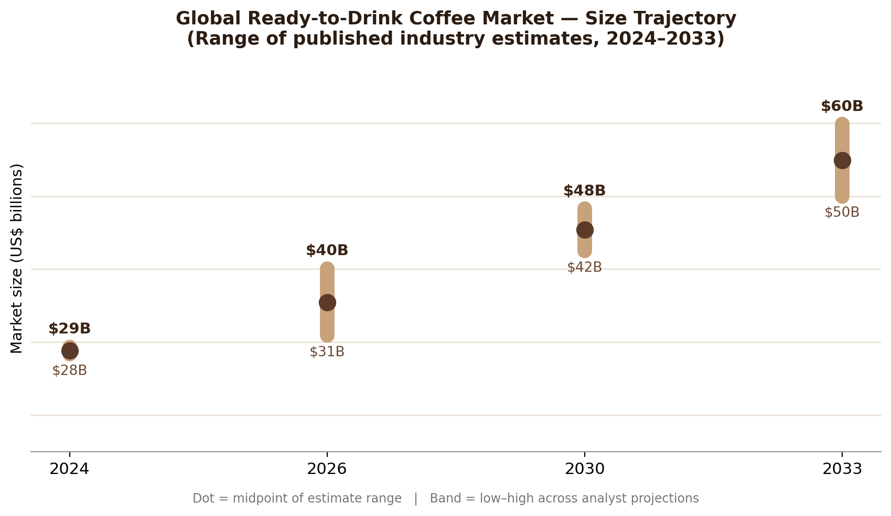
Figure 1: Global Personal Luxury Goods Market 2026 Forecast Dial (€ Billion)
It is important to distinguish personal luxury goods apparel, leather goods, footwear, jewelry, watches, beauty, and eyewear from total luxury spending across all categories (hospitality, fine dining, wines and spirits, high-end automotive, private jets, and yachts), which Bain estimates reached approximately €1.44 trillion in 2025 and is forecast to reach €1.44 trillion to €1.47 trillion in 2026, growth of zero to 2% at constant exchange rates. The broader definition matters because experiential luxury has been growing roughly 1.5 times faster than tangible goods since 2023, at around 5% in 2026, as affluent consumers redirect discretionary spending toward travel, wellness, and dining. Luxury hospitality, private jets, yachts, fine dining, and cruises remain resilient; fine art is returning to growth; luxury automobiles, wines and spirits, and design/furniture are the weakest links within the wider luxury universe.
Geographically, the United States has emerged as the most consistent growth engine in the current cycle, with Europe and Japan holding up on local (rather than tourist) demand, and mainland China showing tentative stabilization after a punishing 2024. Deloitte's Global Powers of Luxury 2026 survey of 420 senior executives across ten countries found that 66.9% expect stable or growing revenues this year and 70.7% expect to maintain or improve margins a cautiously constructive read from the people running these businesses.
Market Segmentation by Category
Category performance has diverged sharply in this cycle, and this divergence is arguably more important for clients than the headline market number. Jewelry has emerged as the standout performer of 2026, a shift Bain attributes to collectors increasingly rewarding craftsmanship and rarity over brand recognition, and to investment-driven purchasing in the Americas as buyers treat fine jewelry as a store of value amid market volatility. Apparel, eyewear, and fragrance are holding up or growing, while growth in prestige cosmetics is slowing after several exceptionally strong years. Leather goods and footwear remain the most pressured categories in the segment, hit hardest by 2023-2025 price elevation and now further squeezed by tariff-driven input costs. However, Bain notes both are on an improving trajectory.
Figure 2: Category Momentum Across Personal Luxury Goods, 2026
| Category |
2026 Momentum |
What's Driving It |
| Jewelry |
Outperforming |
Collectors rewarding craftsmanship and rarity over brand hype; investment-driven buying in the Americas; Richemont Jewelry Maisons +24% constant FX. |
| Apparel |
Growing |
Holding up on the back of evolving fashion cycles and steady demand from core clientele. |
| Eyewear |
Growing |
Consistent performer with resilient demand across price points. |
| Fragrance |
Holding up |
Lower price of entry keeps this category accessible even to a shrinking aspirational base. |
| Cosmetics |
Slowing |
Prestige beauty growth is cooling after several strong years, per Bain-Altagamma commentary. |
| Leather Goods & Footwear |
Improving, still pressured |
Hit hardest by 2023–2025 price elevation and now by U.S. tariff-driven input costs, but trending upward. |
The jewelry outperformance is corroborated at the company level: Richemont's Jewelry Maisons (Cartier, Van Cleef & Arpels, Buccellati, Vhernier) grew 24% at constant exchange rates in the quarter ended June 2026, and LVMH's Watches & Jewelry division posted 9% organic growth in H1 2026, the strongest of any division in the group. In watches specifically, the dynamic has shifted from hype-driven buying toward craftsmanship and rarity, a move that is also feeding momentum in the resale and pre-owned watch market.
3. Market Dynamics
3.1 Key Growth Drivers
- U.S. demand normalization: American consumers, historically the second-largest national buyer group after China, have provided a steadier growth base through 2025–2026, with beauty, apparel, and hard luxury (jewelry and watches) all posting gains, disproportionately fuelled by younger shoppers.
- Jewelry outperformance: A flight to tangible, value-retaining assets is lifting the category well above the rest of personal luxury goods, as detailed in Section 2.
- Gradual Chinese stabilization: mainland China's personal luxury market contracted 18–20% in 2024 but narrowed to a 3–5% decline in 2025, with multiple trackers projecting low-to-mid single-digit growth in 2026 as domestic policy support and consumer sentiment improve.
- Repatriation of Chinese spending: narrower price gaps, expanded flagship openings in cities like Beijing and Chengdu, and reduced reliance on grey-market channels have shifted purchasing back onto the mainland; domestic consumption now accounts for roughly 65% of total Chinese luxury spending, up from about 60% in 2024.
- Emerging growth engines beyond China: Deloitte's executive survey identifies Japan, the Middle East, and India as increasingly important growth centers in their own right, not merely as overflow markets for Chinese tourists.
Key Restraints and Challenges
A shrinking core customer base: the global luxury customer base has contracted from approximately 400 million buyers in 2022 to around 340 million in 2025, and Bain projects a further loss of 20 to 30 million consumers as years of aggressive price increases push aspirational shoppers out of the category.
Price fatigue among top spenders: even the wealthiest clients, who account for roughly 46–47% of total personal luxury goods spending, are showing signs of plateauing engagement. Bain partner Federica Levato has described this cohort as feeling "betrayed" by price increases that outpaced improvements in creativity or service.
Tariff and input-cost pressure: U.S. tariff policy introduced in 2025 raised landed costs on imported leather goods and footwear; analysts covering the leather supply chain project further price increases of up to 22% over the next two years as tariffs, sourcing bottlenecks, and a shrinking U.S. cattle herd compound one another.
Softer tourist retail: reduced tourist spending in Japan and parts of Europe has weighed on flagship-market retail performance even where local demand has held up.
Figure 3: The Shrinking Luxury Customer Base, 2022–2027 (Millions of Global Buyers)
Structural Trend: The Mainstreaming of Resale
Perhaps the most consequential long-term shift in the market is the rise of luxury resale. Reporting on 2025 industry data found the secondhand luxury goods market grew to approximately $59 billion and is now growing faster than the primary luxury market itself. ThredUp's 2026 resale report puts the broader global secondhand apparel market at roughly $393 billion, with the luxury resale segment alone estimated at $41.6 billion and climbing; Business of Fashion's State of Fashion 2026 research, produced with McKinsey, forecasts secondhand luxury will grow two to three times faster than the first-hand market between 2025 and 2027.
Figure 4: Global Secondhand Apparel Market vs. Luxury Resale Segment, 2026 (US$ Billion)
A September 2025 J.P. Morgan Global Research survey found that 60% of consumers across the U.S. and Europe now use resale platforms to purchase secondhand luxury goods, evidence that resale has moved from niche to mainstream faster than most brand strategies have caught up. Brands that once treated resale platforms as adversaries, such as Chanel's litigation against resellers over authentication practices, are increasingly forced into what industry reporting calls an "uneasy truce" with the category.
Digital, AI and Channel Transformation
Luxury retail's channel mix has shifted decisively toward digitally influenced discovery, even where the final transaction still happens in-store. AI adoption is now considered standard practice rather than experimental: BCG's 2026 True-Luxury Global Consumer Insight report, based on more than 10,000 respondents, found that after-sales support, experiential clienteling, and AI-generated product imagery for digital channels met with essentially no consumer resistance, with purchase intent holding steady. EY's 2026 Luxury Client Index found that 94% of aspirational luxury clients believe AI can genuinely enrich their shopping experience through smarter search and sharper recommendations. However, 72% of the same respondents admitted they remain wary of losing the human touch, underscoring that AI adoption in this category has to augment, not replace, personal clienteling.
Deloitte's 2026 research frames this shift within a broader theme of value over volume: luxury executives are prioritizing pricing power, operational discipline, and brand desirability while optimizing store footprints and investing in theatrical, immersive flagships rather than simply expanding store count. For brands and their partners, this means digital investment is increasingly judged not on traffic or reach, but on its ability to replicate the intimacy of one-to-one clienteling at scale: AI-assisted styling, virtual try-on, and clienteling platforms that unify SMS, WhatsApp, and in-store data into a single client view.
Sustainability and Circularity
Regulation and consumer expectation are converging to make circularity a core strategic issue rather than a compliance afterthought. Baker McKenzie's March 2026 cross-jurisdictional ESG analysis found that regulators across Europe, the U.S., Asia-Pacific, the Middle East, and Latin America are converging on more prescriptive, operational sustainability requirements including the EU's Ecodesign for Sustainable Products Regulation and the forthcoming Digital Product Passport framework, both of which require brands to measure and disclose the environmental profile of materials and designs in far greater detail than before.
Figure 5: Circular-Economy Adoption Among Luxury Companies, 2026
Deloitte's Global Powers of Luxury 2026 survey quantifies how far this shift has already progressed inside luxury companies themselves: 68.3% now offer repair or refurbishment services, 53.8% operate certified pre-owned or trade-in programs, and 44.5% partner directly with resale platforms figures that show circularity has moved from pilot projects to mainstream operating practice for a majority of the sector. This aligns naturally with luxury's core value proposition: durability, repairability, and timelessness are the same qualities that circular design seeks to restore, meaning a well-executed sustainability strategy can reinforce brand equity rather than dilute it.
Regional Analysis
The United States has been the most resilient large market throughout the current cycle, with LVMH, Kering, and Richemont all citing accelerating or robust American demand in their most recent results, even as tariff-driven cost pressures build. Europe has held up on the strength of domestic clientele, though tourist spending has softened. Japan posted positive growth across most major groups in H1 2026, aided by continued tourist traffic and a historically weak yen.
Figure 6: Top Growth Engines Named by Luxury Executives for 2026
China remains the market to watch most closely. Chinese consumers still represent an estimated 22% of global luxury spending, a share Bain projects could exceed 30% by 2030, but the composition of that spending has changed materially. In 2025, approximately 65% of Chinese luxury purchases were made domestically, versus roughly 35% overseas, a reversal of the travel-heavy pattern that defined the pre-pandemic era.
Figure 7: Where Chinese Luxury Consumers Spend, 2025
Gen Z and millennial buyers, whose average age in China is around 28 (compared with roughly 42 in Europe), now drive an estimated 70% of Chinese luxury spending, and domestic "Guochao" (national trend) brands are competing seriously with Western houses for this younger, digitally native audience. Beyond China, Deloitte's executive survey ranks Japan (19.0%), the Middle East (17.9%), and India (11.9%) as the next most-cited growth engines for 2026 a meaningfully more diversified geographic picture than the China-centric growth model that defined the previous decade. The Middle East weighed on results through much of 2025 and early 2026 amid regional conflict. However, Richemont's April–June 2026 quarter showed an early return to growth in the region, a signal worth monitoring for brands with Gulf exposure.
Company Analysis: The Competitive Landscape
Three European conglomerates, LVMH, Kering, and Richemont, continue to define the upper end of the global luxury goods market, though their trajectories have diverged sharply over the past 18 months.
| Company |
Latest Reported Revenue Growth Signal |
Strategic Positioning |
| LVMH |
€38.64B (H1 2026) |
+2% organic; Q2 accelerated to +3% (+4% ex-Middle East) Diversified across 75 Maisons; Watches & Jewelry (+9% organic) and Selective Retailing (Sephora) led growth; Fashion & Leather Goods returned to growth in Q2. |
| Kering |
€7.22B (H1 2026) |
+1% comparable; first quarterly comparable growth in 12 quarters Turnaround under CEO Luca de Meo; new Kering Jewelry division and store-network optimization offsetting a still-fragile Gucci recovery. |
| Richemont |
€6.3B (Q1 FY2027, Apr–Jun 2026) |
+20% constant FX; +17% actual FX Jewelry Maisons (Cartier, Van Cleef & Arpels) up 24%; broad-based strength across all regions, including a return to growth in the Middle East. |
Figure 8: The Big Three Latest Reported Revenue and Momentum
LVMH, the world's largest luxury group by revenue, reported first-half 2026 revenue of €38.64 billion, down 3% on a reported basis but up 2% organically, with growth accelerating to 3% in the second quarter alone. The group's diversification across 75 Maisons and six business groups continues to provide resilience that narrower rivals lack; Watches & Jewelry was the standout performer, while Fashion & Leather Goods returned to modest growth after a soft first quarter. LVMH's operating margin of 22.5% remains among the strongest in the sector.
Kering delivered a milestone in its multi-year turnaround: first-half 2026 revenue of €7.22 billion, up 1% on a comparable basis, marking the group's first quarter of comparable growth in 12 consecutive quarters. Under CEO Luca de Meo, Kering has pursued brand distinctiveness, a leaner store network, and a dedicated Kering Jewelry division to capitalize on the category's outperformance even as Gucci, the group's largest house, continues a slower recovery, particularly in mainland China.
Richemont posted the strongest growth of the three in its most recent reporting period, with Group sales of €6.3 billion for the quarter ended June 2026, up 20% at constant exchange rates. Jewelry Maisons grew 24% at constant rates, reinforcing jewelry's position as the standout category across the sector, with strength in every region, including a return to growth in the Middle East.
Beyond the "big three," category-specific players are shaping competitive dynamics in adjacent segments: Hermès continues to expand deliberately in China with new stores planned in Chengdu and Beijing, Burberry has posted modest but consistent sales growth as part of its own turnaround, and brands increasingly treat resale specialists The RealReal, Vestiaire Collective, Fashionphile, and StockX as channel partners rather than adversaries.
Pricing Analysis
Pricing has been the single most important and most contested lever in the luxury industry over the past three years. Business of Fashion's State of Fashion 2026 research, produced with McKinsey, found that approximately 80% of luxury market growth between 2023 and 2025 came from price increases rather than volume gains, and that luxury prices rose an average of 61% between 2019 and 2025, a strategy McKinsey characterizes as unsustainable given the sector's shrinking customer base. Bain's 2025 Worldwide Luxury Market Monitor arrives at a similar conclusion: years of aggressive elevation-era price hikes have left even the wealthiest clients feeling that value has not kept pace with cost.
Tangible evidence of this pricing pressure is easy to find at the product level: industry pricing trackers cited by CNBC show that Chanel's iconic Classic Flap bag rose by approximately 5% over the past year alone, continuing a pattern of annual increases across the segment's most iconic handbags. Compounding the picture, U.S. tariff policy introduced in 2025 has pushed up landed costs for leather goods and footwear; analysts warn of further price increases of up to 22% over the next two years as tariffs, sourcing bottlenecks, and a shrinking U.S. cattle herd continue to squeeze margins. Some companies, such as footwear maker Twisted X, have deliberately limited price increases to 1–3% to protect customer relationships even as competitors pass on steeper hikes.
Looking ahead, several brand executives, including Kering's Luca de Meo, in an internal memo reported by Reuters, have signaled a need to rethink pricing architecture and product range rather than relying on further increases. UBS and HSBC analysts covering the sector for H1 2026 earnings noted that pricing actions taken to offset tariffs and protect margins are unlikely to fully play out until the second half of 2026, meaning further price adjustments and their effect on volume are likely to remain a central theme through year-end.
Strategic Implications & Outlook
For businesses engaging with the luxury sector brand owners, suppliers, retail landlords, marketing and research partners, or investors several implications stand out from this analysis:
- Category selection matters more than ever: jewelry and experiential luxury are structurally outperforming leather goods and traditional apparel, and this divergence is likely to persist through 2026–2027.
- Resale and circularity are no longer peripheral: with over two-thirds of luxury companies now offering repair or refurbishment and more than half running certified pre-owned programs, brands without a resale strategy risk ceding value to third-party platforms.
- China strategy requires a domestic-first lens: with 65% of Chinese luxury spending now happening on the mainland, flagship investment and mainland-price competitiveness matter more than duty-free and travel-retail exposure did in the pre-pandemic era.
- Geographic diversification beyond China is now a credible strategy, not just a hedge: Japan, the Middle East, and India are each cited by roughly one in five to one in eight luxury executives as a top-three growth engine for 2026.
- Pricing strategy needs a reset: with roughly 80% of recent growth attributable to price rather than volume, and a shrinking global customer base, brands and their partners should model demand elasticity carefully rather than assume further price increases will sustain revenue growth.
- AI investment should be judged on intimacy, not reach: the highest-performing AI deployments in luxury retail are those that augment human clienteling rather than replace it.
Bain's base-case scenario for full-year 2026 points to 2–4% growth in personal luxury goods, with an upside case of 4–6% contingent on continued stabilization in the Middle East and an accelerating Chinese recovery, and a downside case of flat to 2% growth if geopolitical or tourism headwinds intensify. Across nearly every credible industry source reviewed for this report Bain-Altagamma, Deloitte, LVMH, Kering, and Richemont's own disclosures, and coverage from Reuters, The Wall Street Journal, and Business of Fashion the consensus is that 2026 will be a year of stabilization and strategic recalibration rather than a return to the rapid, price-led growth of 2019–2023.
How Epignosis Insights Can Help
The luxury goods market's transition from price-led growth to a more fragmented, experience-driven, resale-aware landscape is creating openings for companies that move early and precisely. Epignosis Insights partners with brand owners, private equity investors, retail groups, and suppliers across the luxury value chain to translate market shifts like these into actionable category strategy, market-entry assessments, competitive benchmarking, and custom demand forecasting.
If your organization is evaluating a move within the luxury goods space, whether entering a new region, reassessing pricing architecture, or building a resale or circularity strategy, our research team can build a custom analysis tailored to your specific category, geography, and competitive set.
Get in touch with our analysts at epignosisinsights.com to discuss a custom luxury market study for your business.