
Beyond Transparent: How Specialty BOPS Grades Are Driving Value Growth
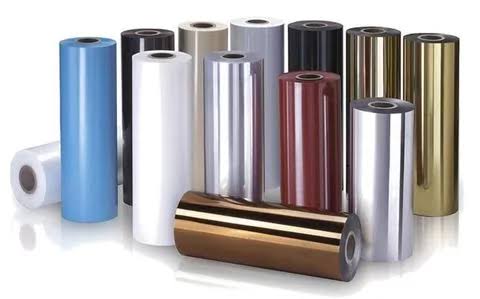
Transparent sheet is the backbone of the BOPS market, but the most interesting growth story lies in specialty grades. Anti-fog, heat-resistant, UV-resistant, coated and coloured BOPS sheets command higher prices and serve demanding applications in food, pharmaceuticals, electronics and construction. Epignosis Insights data on the global BOPS sheet market, valued at US$1,211.6 million in 2025, shows how these grades are reshaping the market's value.
The Transparent Foundation
Transparent BOPS sheets are valued at US$618.9 million in 2025, representing 51.1% of market value and about 58% of volume. Priced at about US$1.80 per kilogram, they are the standard material for clamshells, lids and display packaging. Transparent sheets grow at 7.6% a year to US$1,024.6 million by 2032, providing a large and stable foundation for producers.
Heat-Resistant Sheets: Hot Food and Electronics
Heat-resistant BOPS sheets are the largest specialty grade, valued at US$165.8 million in 2025, and grow at 8.3% to US$286.7 million by 2032. At about US$2.70 per kilogram, they command a 50% premium over transparent sheets. Heat resistance allows containers to hold warm foods, survive hot-fill processes and, in some formulations, tolerate microwave reheating. Electronics manufacturers use heat-resistant trays to protect components during processes involving elevated temperatures.
UV-Resistant Sheets: The Fastest Growing Grade
UV-resistant sheets are the smallest specialty grade at US$39.6 million in 2025 but the fastest growing at an 8.9% CAGR, reaching US$71.3 million by 2032. Priced at about US$2.80 per kilogram, the highest of any grade, they resist yellowing and degradation when exposed to sunlight or intense display lighting. Applications include construction materials, signage, protective panels and packaging for light-sensitive products.
Anti-Fog Sheets: Keeping Fresh Food Visible
Anti-fog sheets, valued at US$71.9 million in 2025 and priced at about US$2.50 per kilogram, prevent condensation from forming inside chilled containers. When packaged salads, fruit or sandwiches move from refrigeration to warmer store environments, moisture can fog standard plastic, hiding the product. Anti-fog coatings spread moisture into a transparent film, maintaining visibility. The segment grows at 6.6% a year, with demand linked to fresh food retail.
Coated and Coloured Sheets
Coated BOPS sheets, valued at US$84.4 million and priced at about US$2.30 per kilogram, carry functional coatings such as antistatic, slip or barrier layers. They grow at 6.9%. Opaque and coloured sheets, valued at US$190.5 million and priced at about US$2.10 per kilogram, are used for branded packaging, trays and applications requiring colour coding or light protection, and grow at 7.7%.
Why Specialty Matters for Producers
Specialty grades matter because of value per tonne. While transparent sheets account for about 58% of market volume, they represent only about 51% of value. Heat-resistant sheets account for about 10% of volume but 13.7% of value. Producers that shift their mix toward specialty grades increase revenue without proportionally increasing production capacity.
Specialty grades also tend to involve closer technical relationships with customers. Pharmaceutical and electronics customers require consistent quality, documentation and compliance, which reduces price competition and supports long-term supply agreements.
Matching Grades to Applications
Different applications favour different grades. Food packaging relies primarily on transparent and anti-fog sheets, with heat-resistant grades for hot foods. Pharmaceutical packaging uses transparent and coated sheets meeting strict quality standards. Electronics packaging increasingly uses heat-resistant, coloured and antistatic coated sheets. Construction applications make use of UV-resistant grades.
The Innovation Pipeline
Producers are developing longer-lasting anti-fog coatings, thinner sheets that maintain stiffness, heat-resistant formulations for wider temperature ranges, improved antistatic performance for sensitive electronics, and specialty sheets incorporating recycled polystyrene. Barrier coatings that extend food shelf life are another area of interest.
Specialty Grades and Sustainability
Specialty grades also play a role in sustainability strategies. Thinner, stiffer sheets reduce material use per container, and longer-lasting anti-fog coatings reduce food waste by keeping products visible and appealing for longer. Heat-resistant containers allow consumers to reheat food in its original packaging, reducing the need for secondary containers. As recycled-content BOPS becomes available, producers will need to ensure that specialty performance can be maintained with recycled polystyrene feedstock.
What Buyers Should Ask
Converters and brand owners evaluating specialty BOPS grades should ask about performance consistency across production batches, compliance documentation for food-contact and pharmaceutical use, compatibility with existing thermoforming tooling, and the availability of recycled-content versions. Technical support during trials can significantly reduce development time and waste.
The Bottom Line
Specialty BOPS grades are where the market's value growth is increasingly concentrated. With heat-resistant and UV-resistant sheets growing faster than the overall market and commanding premiums of up to US$1.00 per kilogram over transparent sheets, producers that invest in specialty capability and technical service will capture a growing share of a market heading toward US$2.0 billion by 2032.